Tag Archives: PAST

DAY 1 — John Berry Meachum & the Floating Freedom School

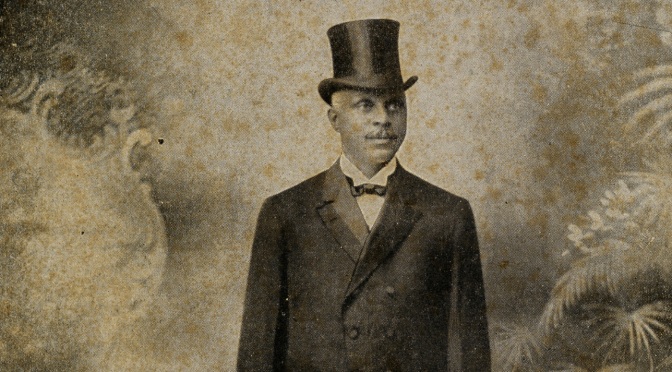
A lithograph portrait of John Berry Meachum, courtesy of the Missouri Encyclopedia.

John Berry Meachum specialized in freedom.

Born enslaved in 1789, it took 21 years and an agreeable owner to purchase his own independence, and the first thing he did with it? Walked 700 miles from Kentucky to Virginia to free his father too.

Together, the pair walked BACK to Kentucky to liberate John’s mother and siblings. Inspired by John’s tenacity and limited in his own old age, John’s former owner, 100-year-old Paul Meachum, made a once-in-a-lifetime offer: he’d free ALL of his 75+ slaves if John would lead them out of Kentucky and into the free state of Indiana. So John did.

John Berry Meachum purchased & freed his own father for 100 pounds when Virginia was still a British colony.

Little did he know there was MUCH further to go. John returned to Kentucky only to find that his wife’s owners had moved to St. Louis, MO in his absence.

Two guesses what he did next.

By 1815, John and Mary Meachum were reunited in St. Louis where he eventually purchased her liberty, that of their children, and 20 more enslaved strangers as well.

The Meachums’ story could have ended there, happily ever after with everyone they loved free.

But in 1825, he set his sights on a new brand of freedom, founding the first Black church west of the Mississippi. It still exists today as the First Baptist Church of St. Louis. Until 1847, the church’s original basement secretly housed the Tallow Candle School, Missouri’s first school for free and enslaved Black children.

Just the year before, Dred Scott threw the entire state of Missouri into turmoil when he and his wife sued for their freedom in a case that went all the way to the United States Supreme Court. Missouri was a slave state, but its laws read that “once free, always free,” and before they were brought to Missouri, the Scotts had lived in two free states. They were also were church-going people, and Black churches provided a wealth of resources rarely accessible to enslaved people in particular: literature, privacy, and abolitionists.

In short, Black churches were a safe haven where slaves might learn to read, and subsequently learn to escape—circumstances that Missouri had to put a stop to. With their 1847 Literacy Act, Missouri forbade Black citizens from being educated, gathering for church services without the presence of law enforcement, and more.

But the state of Missouri didn’t know Reverend John Berry Meachum’s reputation for subverting the system. Where they made laws, he’d find ways… namely, the United States’ second-largest waterway: the Mississippi River. At its banks, Missouri’s state laws ended and federal regulation began.

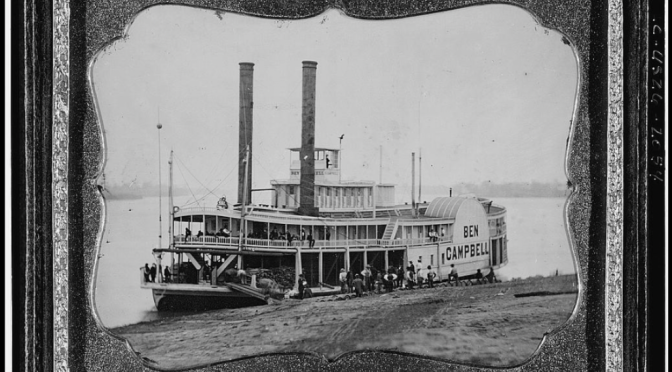
So John bought a steamboat, anchored it square in the middle of the Mighty Mississip’ where neither the state nor any nefarious mischief could touch it, and named it the “Floating Freedom School.”

Equipped with its own library, classrooms, and all the standard trappings of a school, the Floating Freedom School was an act of defiance in broad daylight. And because Reverend John planned so carefully, there was absolutely nothing anyone could do about it. Until at least 1860, 13 years after its commission, the Floating Freedom School remained moored in the Mississippi River.

Unfortunately though, the school outlasted its founder. The good Reverend died the same way he lived: while shepherding his flock. On a Sunday morning in 1854, he suffered a heart attack in the midst of delivering his sermon.

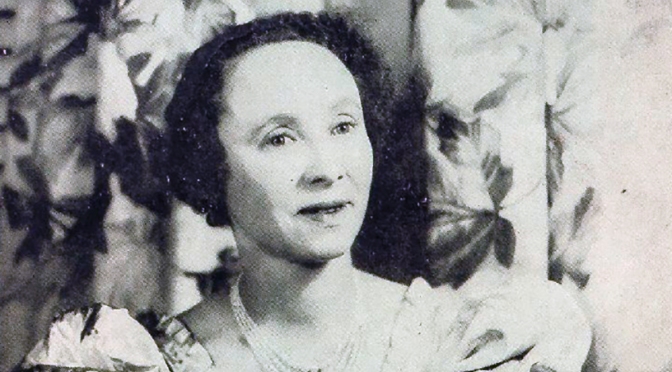
Mary Meachum

But his work lived on. John’s wife Mary, who herself had been bonded out of slavery decades before, went on to free hundreds more as a major conductor of the Underground Railroad. One of the National Park Service’s 700 National Underground Railroad Network to Freedom “depots” across 39 states even bears her name: “The Mary Meachum Freedom Crossing.”

John Meachum’s Floating Freedom School also became the foundation and inspiration for more recently subversive “Freedom Schools,” created during the Civil Rights Movement of the 1960s to combat the “sharecropper education” Black students received in so-called “separate, but equal” schools. While their external reason for existing was to fill educational gaps, internally, the Freedom School curriculums included Black history, literature, theater and more, honoring and preserving Black culture in one of the few places they could outside the home.

All of this, set in motion by the footsteps of a man whose own freedom wasn’t enough if he couldn’t bring his people too.


KEEP GOING BLACK IN HISTORY:

Listen to the Atlas Obscura podcast about the Floating Freedom School as one of the “world’s most wondrous, unexpected, even strange places.”

Dive into more Missouri Civil Rights stories here.

Hear the St. Louis Public Radio‘s take on how “John Berry Meachum defied the law to educate” Black Americans.

Hear first-hand accounts from Freedom School students of the 1960s at the Library of Congress blog.

DAY 28 — The German Coast Uprising

Henrietta Wood’s fight for freedom is documented in federal dockets and case file archives.

Burned ruins bear witness to the Virgin Island Crucians’ final straw .

But the biggest slave revolt in United States history remains one of this country’s best kept secrets.

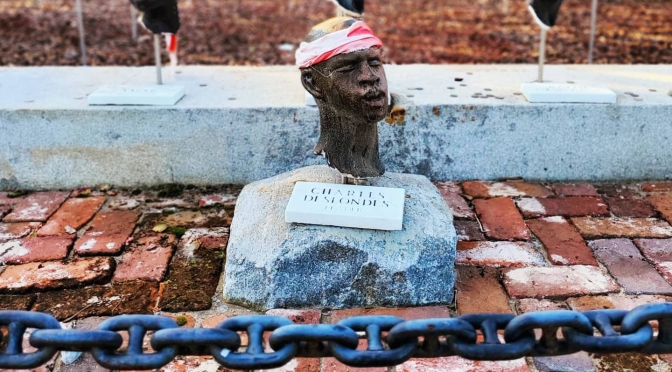
One of many plaques at the monument to the German Coast Uprising at the Whitney Plantation, just across the Mississippi from the former Andry Plantation.

The French, Spanish, and British armed forces couldn’t defeat the Haitians, and when news of enslaved people taking back their freedom spread through the Caribbean, it became literal wildfire on islands like the Virgin Islands, Jamaica, Barbados, Grenada and many more.

In 1811, just 7 years after the Haitian Revolution, that wildfire spread north to the States. Much like those in the Caribbean, climate conditions in Louisiana favored sugar cane, a crop so brutal to harvest, that when slavery ended, laws essentially legally enslaving convicted criminals (many of whom weren’t real convicts, but victims of the Black Codes) were enacted to fill the gap, because even for pay, Black people wouldn’t do it.

“Slave Uprising” by Haitian artist Ulrick Jean-Pierre who frequently paints scenes from the Haitian Revolution.

It was far from the first or last time enslaved people would take their freedom into their own hands. American historian Herbert Aptheker defines a slave revolt “as an action involving 10 or more slaves, with ‘freedom as the apparent aim [and] contemporary references labeling the event as an uprising, plot, insurrection, or the equivalent of these’,” according to PBS. By those standards, there are at least 250 recorded “revolts and conspiracies in the history of American Negro slavery.” 

The largest of them was formed by the 500 participants of the German Coast Uprising that marched on New Orleans on January 8, 1811.

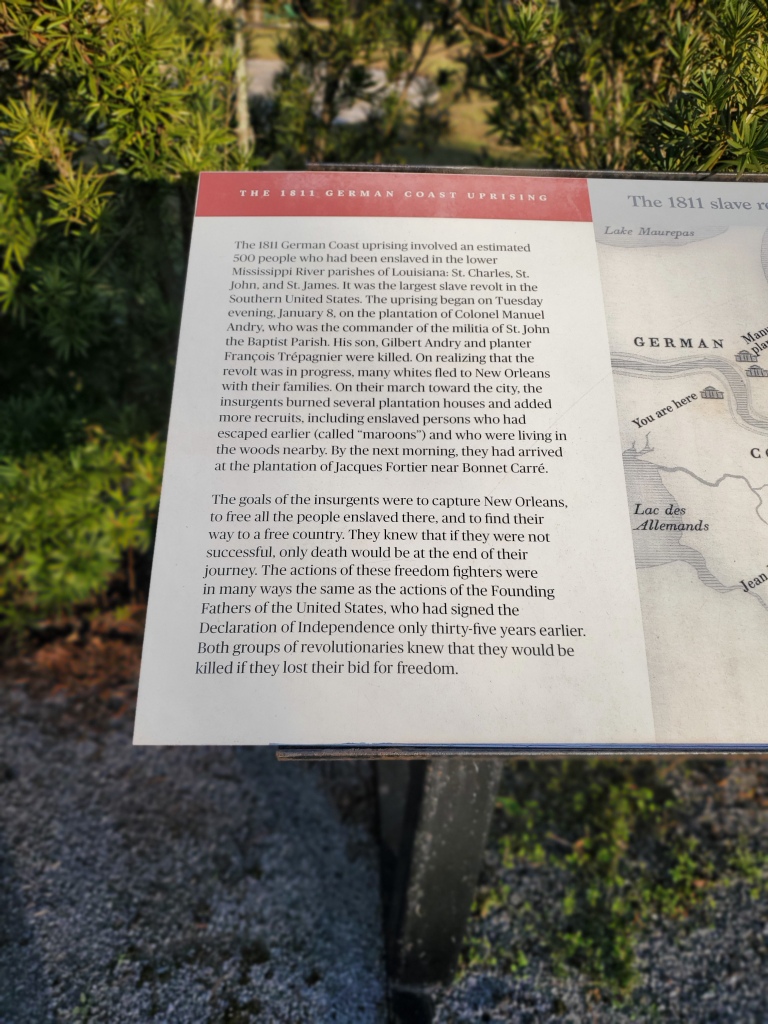
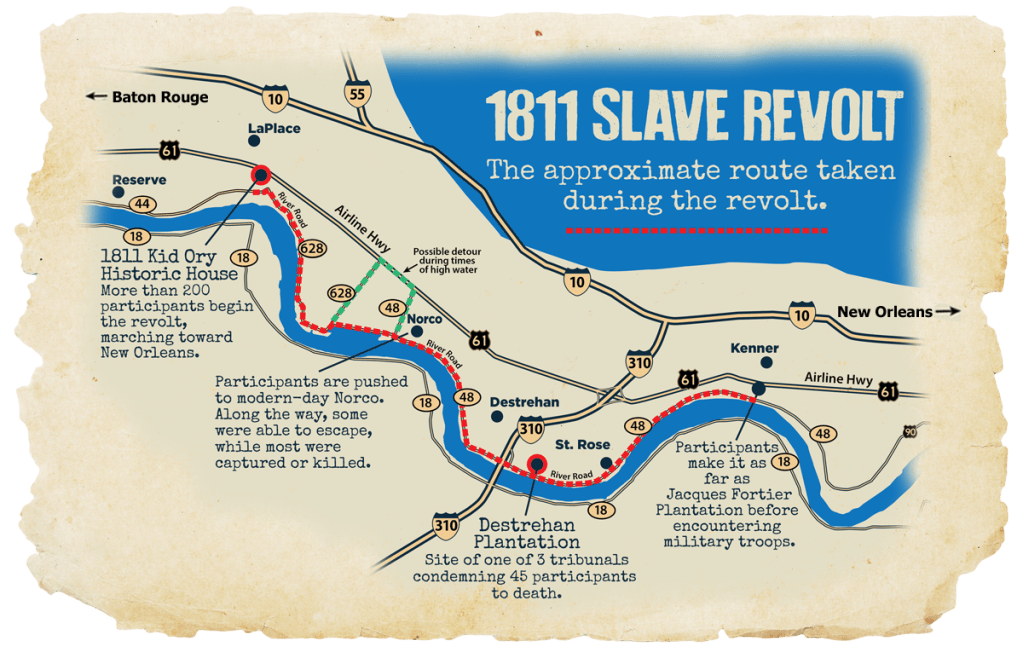
The rural night was even darker than usual 30 miles west of the Crescent City in LaPlace, Louisiana, where thunderheads poured in from the Gulf. Lulled by the rain and a misplaced sense of security, Manuel and Gilbert, father and son masters of the Andry Plantation, slept soundly in the big house, utterly unaware of the forces descending upon them. Led by Charles Deslondes, around a dozen enslaved men stormed the mansion, cornering and killing young Gilbert. His father slipped their grasp, fleeing into the Louisiana swampland with nothing but his jammies and slim chances of survival. And anyway, the rebels’ strategy was sounder than they’d been given credit for. It wasn’t simply an assault on a single plantation – enslaved allies in New Orleans had conspired with Deslondes & Co. to wage their own assault in the city when their reinforcements arrived. From either direction, the Mississippi River Plantations and the New Orleans slave trade were to meet their doom.

From the Andry Plantation, Charles Deslondes and his rebels marched downriver, gaining numbers at each plantation they passed, and leaving fire in their wake. By the time the rebellion reached the outskirts of New Orleans, 5 plantations were in flames and nearly 500 enslaved men and women had joined the cause. Those numbers may well have changed the entire face of the American South if not for one fatal mistake: Master Andry had indeed survived swamp, only to alert his fellow plantation owners. The early warning was still too late for 3 of the 5 plantations that ultimately burned to the ground, but was ultimately sufficient for local militias, 30 Army soldiers, and 40 Navy sailors to respond en force. Armed with very few guns and mostly field tools, the rebels were no match for military strength. On January 11, 4 days after it had begun, the German Coast Uprising was finally suppressed.

A day later, Charles Deslondes was captured, identified as the rebel leader and sentenced to a brutal death, without any trial at all. According to a Navy officer, his slow execution began as he was “shot in one thigh & then the other, until they were both broken – then shot in the body and before he had expired was put into a bundle of straw and roasted!”

But his was only the first of many gruesome executions, designed to terrorize any enslaved person who might ever again consider violence against their captors. A jury of 5 slave owners sentenced almost all of the rebels to death by beheading, with each head mounted on a pike in a 60-mile long stretch between LaPlace and New Orleans, and beyond. Their bodies were hung from the New Orleans levees, rotting in full display. At individual plantations, the same sentences were carried out, with every enslaved member of each house forced to watch.

A recreation of the sentence carried out on the German Coast rebels, erected at the Whitney Plantation.

It was a psychological torture that effectively erased any trace of the uprising. While the legal proceedings were recorded, nothing else about the events of January 8-11 ever saw the light of day, and enslaved people wouldn’t even dare speak of it lest they be accused of conspiracy as well. But they didn’t forget. 50 years later, the children and grandchildren of the German Coast rebels joined forces with the Union Army, numbering among the 28,000 men (only around 5,000 of them white) who left Louisiana to fight against the Confederacy in the Civil War, once again – and this time, more successfully – shedding their ancestors’ blood for freedom.
February 2022’s American Blackstory began with Henrietta Wood’s case for freedom. It ends with a fight for it that while suppressed, couldn’t be extinguished.

Unquenchable fire is our past, present and future, so let this American Blackstory, among the many others that those who’d rewrite history have attempted bury, be a constant inspiration to keep burning bright.

The leaders of the German Coast Uprising. Not slaves. Real men with real names and real lives demonstrating real courage.
The Times-Picayune/New Orleans Advocate documented the rebellion in their Tricentennial spread. Read the text-only version here.

KEEP GOING BLACK IN HISTORY:

Trying to imagine what hundreds of enslaved people marching to New Orleans for their freedom might look like? See it in“Scenes From a Reenactment of a Slave Uprising”

Hear what the re-enactment means to the participants themselves in a short courtesy of PBS News Hour.

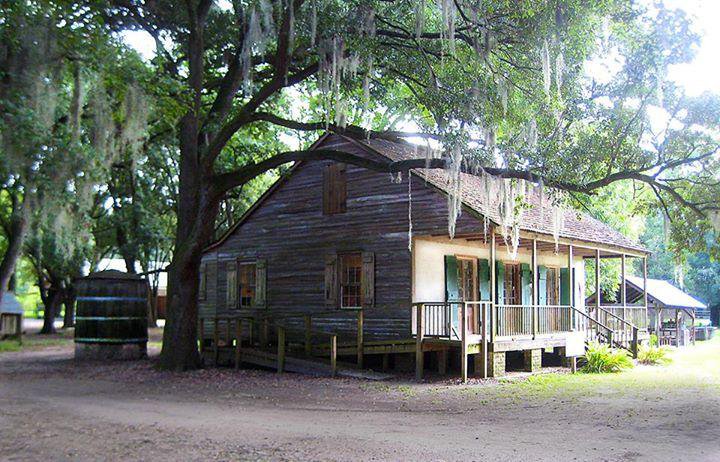
The Whitney Plantation, just across the river from the Andry Plantation (now known as the Kid Ory House), has a series of resources available for those who’d like to learn more about the geographic & historic context of the revolt.

Louisiana’s river parishes are now doing their part to preserve the American history of the 1811 Revolt. Visit their official website documented the events here.

Daniel Rasmussen is an academic with the most extensive knowledge of the 1811 German Coast Uprisings, and you can read everything he’s compiled on the subject in “American Uprising: The Untold Story of America’s Largest Slave Revolt”

Browse NPR’s exclusive excerpt here.

Buy it from our friends at Black-owned Marcus Books.

DAY 27 — Ellen E. Armstrong

In 1939, Ellen E. Armstrong pulled off one of the slickest tricks the performing world had ever seen.

Born in 1914, the 25-year-old daughter of J. Hartford and Lillie Belle Armstrong took over her father’s business – a feat in itself for any woman of the time – and transformed herself into the world’s first headlining African-American female magician.

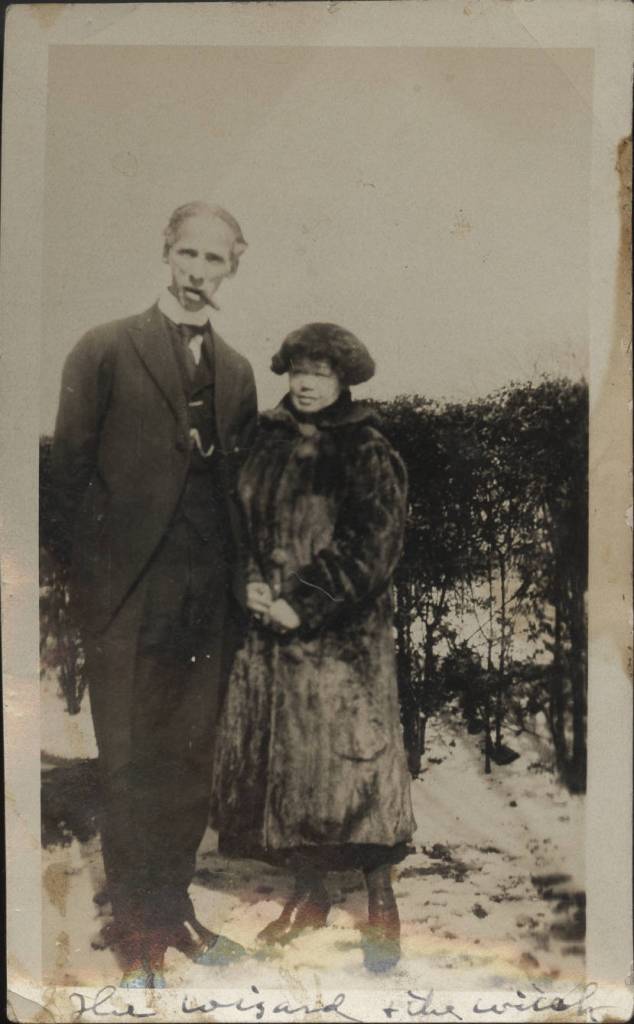
J. Hartford and Lillie Belle: “the wizard & the witch” as they’re labeled in the photo

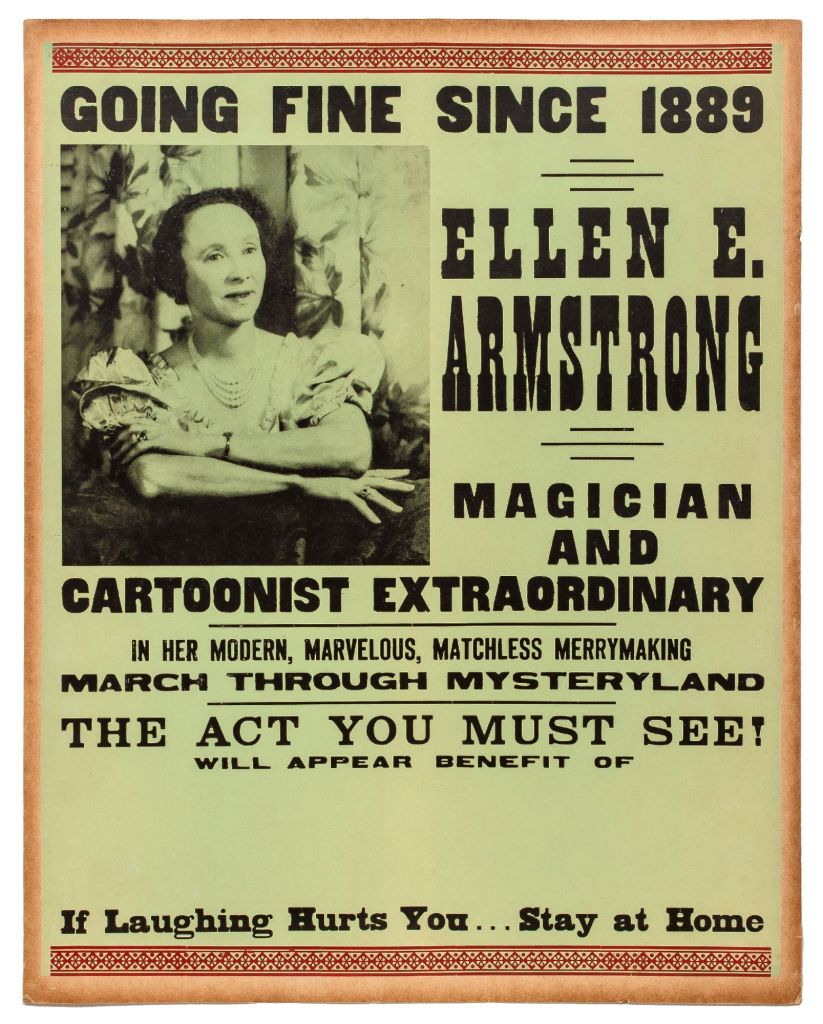
As the only heir to the couple dubbed “the most royal colored entertainers of the century,” Ellen took up her birthright early on, joining her parents in performing at the age of 6. Their tagline “Going Fine Since 1889” During set changes, Ellen would wander through the audience, touch her little index finger to a person’s forehead, and divine what they were thinking about the person sitting next to them. Whether it actually worked, or simply served as adorable comic relief, Ellen’s confidence was boosted, and her act grew to include sleight of hand and card tricks too. Never one to shy away from showmanship, she even created her own signature act, “Chalk Talk,” where she told stories through squiggles and doodles. Each time she’d add a new chalk mark, the doodle would transform into a new character or scene in her story.

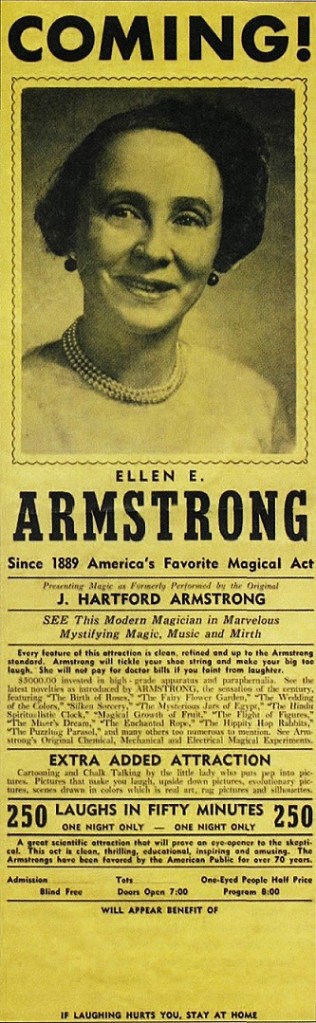
The family business. Ellen, J. Hartford, and Lillie Belle appear in an beautifully printed tour poster.
Just Lillie Belle & Ellen. “Daddy’s Babies” is inscribed below them.

Taking audiences on a journey was Ellen’s talent, regardless of the medium, and “The Celebrated Armstrongs” enjoyed incredible success and critical acclaim as “America’s Greatest Colored Magicians” touring the East Coast, Cuba, and even Europe. But all of that came to a screeching halt in 1939 when J. Hartford Armstrong, “King of the Colored Conjurers,” died suddenly.

Ellen was only 25, and fresh out of college. She could have chosen many paths. Instead, she would rightfully inherit the throne of the King of the Colored Conjurers and his substantial $8,500 in props, taking up her mantle as the unrivaled “Mistress of Modern Magic.”

And she was absolutely terrified. 

American culture has long held taboos against women practicing magic, and even the Salem Witch Trials held a Black women in particular contempt. Even if Ellen’s magic was simply for entertainment’s sake, it was still risky to practice alone, travel alone, and own property alone in the early 20th Century.

But for the next 3 decades, Ellen’s risktaking paid off.

Ellen’s newspaper ads were hilarious, boisterous and entirely unexpected from the lady pictured at the top.

She married in 1940, but Ellen’s headlining act was her only baby and her sole bread and butter. Many of the tricks she performed like the Miser’s Dream, the Mutilated Parasol and the Sand Frame, where a photograph of famous African-American boxer Joe Louis appeared from thin air, are still classics today.

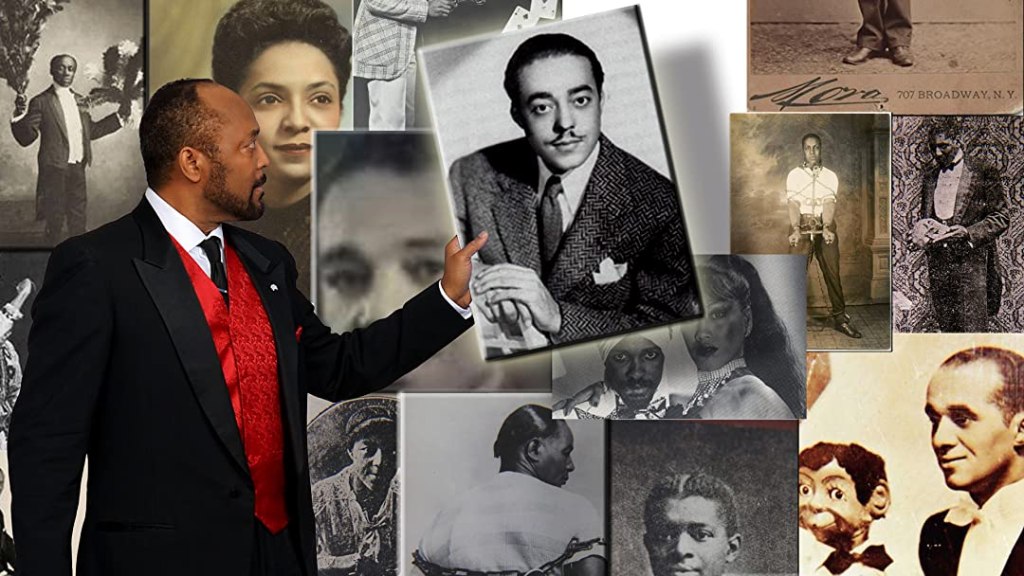
When her “Modern, Marvelous, Matchless Merrymaking March Through Mysteryland” finally came to a close, Ellen retired in Spartanburg, South Carolina, and in 1979, died unceremoniously. Aside from the tricks she practiced, and a handful of her tour posters, little of Ellen or her groundbreaking performance remains. And though that means there’s often very little for me to tell, I am so grateful to feature women like Ellen (and men like Black Herman) here at The American Blackstory, ensuring that if I have anything to do with it, they’ll never disappear.

A letterpress poster touting Ellen’s act printed by historic small press Bower Show Print.

KEEP GOING BLACK IN HISTORY:

Browse the Armstrong Family Papers including photographs, news articles, and letters documenting their lives at the University of South Carolina Libraries.

Listen to podcast “Stuff Mom Never Told You” and their episode on Ellen’s Magical Marvels.

“Quiet Masters: The History and Relevance of the Black Magical Artist” is a documentary featuring many more untold magical stories, and available for rent at Amazon.

Uncover the stories of more Black magic in Conjure Times: Black Magicians in America.

DAY 26 — Georgia Gilmore

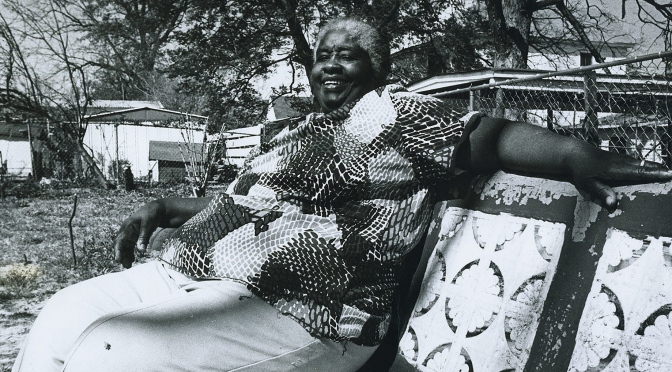
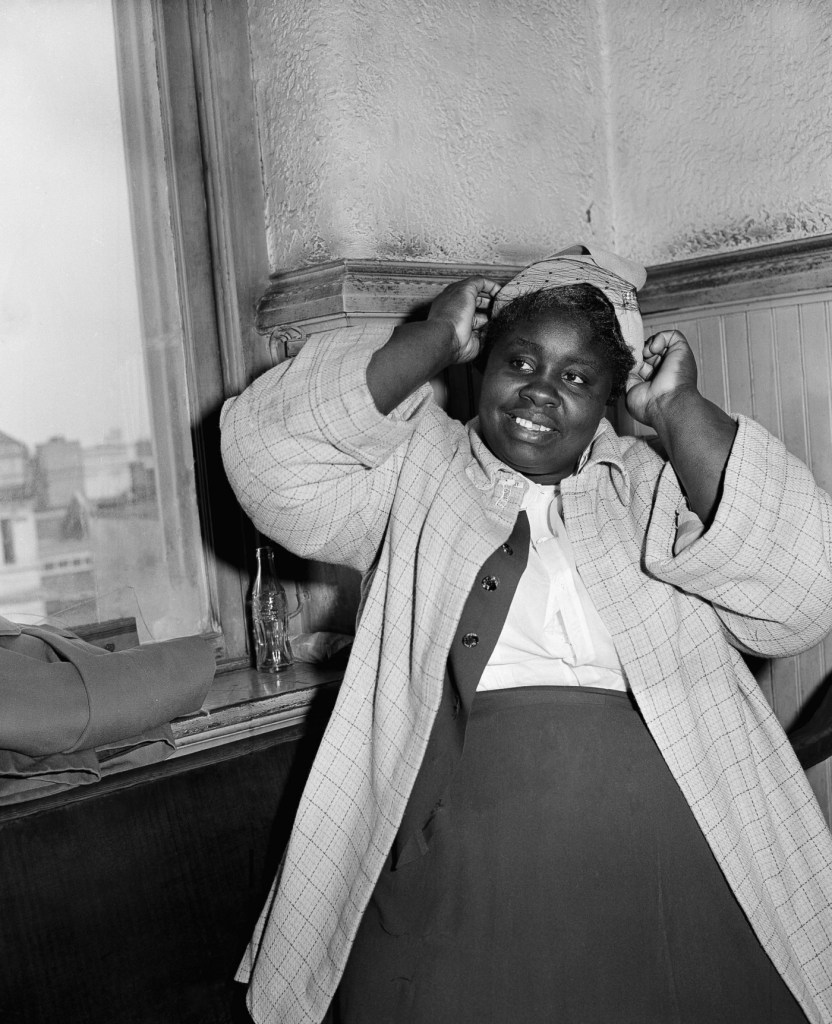
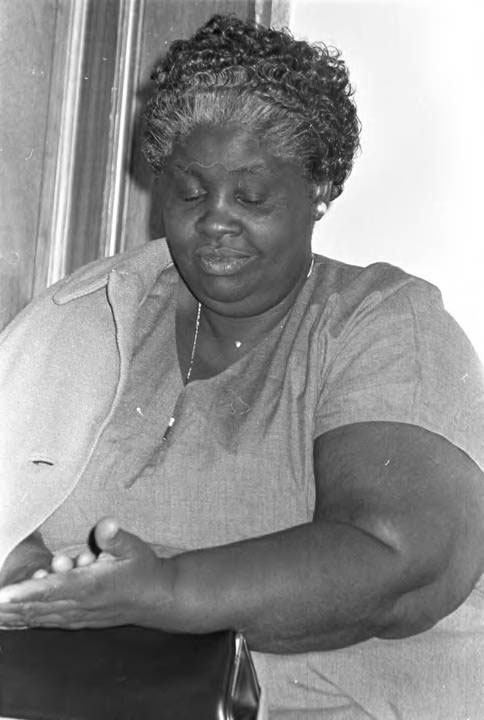
From the local newspaper to the locals themselves, Montgomery’s white folks liked to turn Georgia Gilmore into a fat joke.

They had no idea they were mocking the heart and soul of a movement.

The delightful and effervescent Georgia Gilmore

The Black folks close to her knew Georgia Gilmore had presence. And it had nothing to do with her size.

She was quick-witted, clever, motherly, industrious, and every morsel from her kitchen tasted absolutely divine.

Georgia’s skill was in high demand in Montgomery’s households and lunch facilities, but the hypocrisy everywhere else in town was real. Even though Montgomery’s bus system was almost entirely reliant on domestic workers like maids, nannies, seamstresses (like Rosa Parks) and cooks like Georgia, those women took the brunt of racial abuse from drivers and passengers. By the time Rosa’s turn came around, Georgia’s personal bus boycott had already begun. 

She’d gone through the mortifying motions so often it was automatic: fare at the front, walk of shame to the back. So when Georgia dropped her fare into the box in October 1955, and the driver barked at her to get off and get on again through the back door, she was more than rattled. Georgia was furious. Powerless to do any different, Georgia begrudgingly backed out. When her feet touched the pavement, the driver shut the door and drove away. She vowed to never be humiliated that way again.

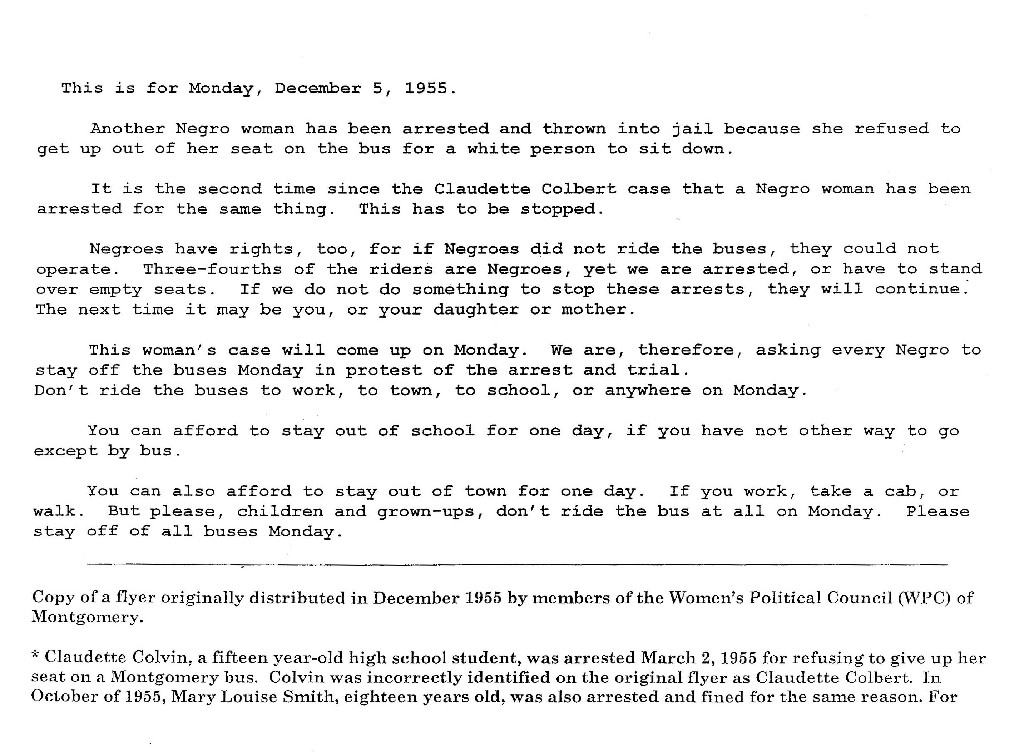
Another Negro woman has been arrested and thrown in jail because she refused to get up out of her seat on the bus for a white person to sit down. It is the second time since the Claudette Colvin case that a Negro woman has been arrested for the same thing. This has to be stopped. Negroes have rights, too, for it Negroes did not ride the buses, they could not operate. Three-fourths of the riders are Negroes, yet we are arrested, or have to stand over empty seats. If we do not do something to stop these arrests, they will continue. The next time it may be you, or your daughter, or mother. This woman's case will come up on Monday. We are, therefore, asking every Negro to stay off the buses Monday in protest of the arrest and trial. Don't ride the buses to work, to town, to school, or anywhere on Monday. You can afford to stay out of school for one day if you have no other way to go except bus. You can also afford to stay out of town for one day. If you work, take a cab, or walk. But please, children and grown-ups, don't ride the bus at all on Monday. Please stay off all buses Monday.

So when flyers went out alerting Black Montgomerians that an upstanding woman had been jailed for protesting the Montgomery Bus System, Georgia hightailed it to Holt St. Baptist Church where those in support of taking action gathered. She was one of nearly 5,000 there on December 5, 1956 who launched the Montgomery Bus Boycott, the first mass public demonstration of the Civil Rights Movement, and she was proud to be counted among its most crucial participants.  “After the maids and the cooks stopped riding the bus, well the bus didn’t have any need to run,” she said. “It was just the idea that we could make the white man suffer. And let the white man realize that we could get along in the world without him.”

“After the maids and the cooks stopped riding the bus, well the bus didn’t have any need to run,” Georgia said. From the LIFE Picture Collection: “Two white women sit in an otherwise empty bus during the African-American boycott of bus companies throughout Montgomery, Alabama. Grey Villet/The LIFE Picture Collection via Getty Images

By simply existing in her Blackness, Georgia had taken some of her power back from her oppressors. And hungry for more, she put her skills to work.

The Montgomery Bus Boycott drew supporters from outside communities too, because even Black people that didn’t live in Montgomery still had to sit in the back of its buses. Georgia had worked as a cook and a midwife, but mass fundraising against racism was brand new to almost everybody participating. But not all were in the position to participate publicly. They cooked, cleaned and cared for the children of white racists, and were suddenly forced into a choice between supporting their people and maintaining a livelihood. Carpools were formed to transport workers and named based on their geographical locations around town. But all of those car clubs needed money for gas, insurance, upkeep, all the costs one takes public transportation to avoid. Georgia rallied all of those domestic workers who wanted to help quietly into the “Club from Nowhere,” a group of women who turned plates, pies, pastries, and whatever their culinary speciality into cash money for the movement.

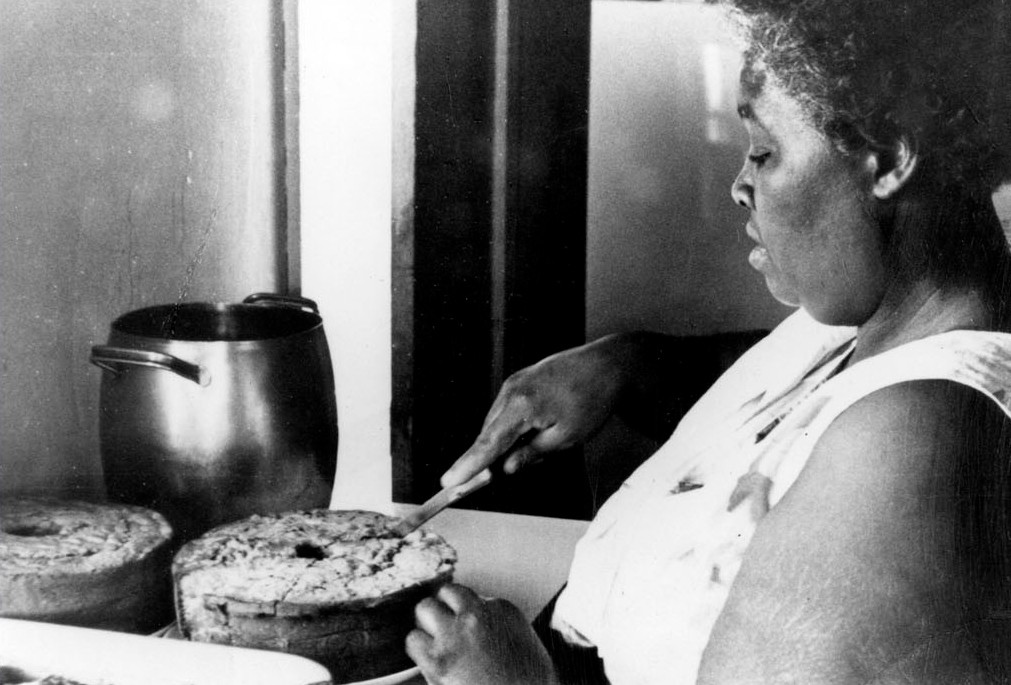
Georgia serving up just desserts in her kitchen.

The Club from Nowhere provided all sorts of strategic cover. A Black maid or cook carrying food was about the least suspicious person in the Jim Crow South. Should any member be questioned about the money they carried after selling their goods, they could answer in two totally truthful ways: say that it was from selling food, OR that it came from/was being taken to “Nowhere.” Finally, white allies who couldn’t realistically attend a planning meeting to donate could write a check to “The Club from Nowhere” without revealing the true recipient of that support. Eventually, the Club from Nowhere was bringing in $200+ dollars a week (about $2K today), more than any other fundraising effort in Montgomery.

A boycott carpool loads up while a bus across the street sits empty. Montgomery, Alabama, February 1956. Don Cravens/The LIFE Images Collection via Getty Images

Nowhere was brilliant, and through it, Georgia came into her own, cooking and hustling for the movement. For the 382 days that the Montgomery Bus Boycott lasted, Georgia Gilmore found one way or another to support it.

The most obvious, and you’d think innocuous, was by walking. “Sometime, I walked by myself and sometime, I walked with different people, and I began to enjoy walking, because for so long I guess I had this convenient ride until I had forgot about how well it would be to walk,” she said. “A lot of times, some of the young whites would come along and they would say, ‘N*gger, don’t you know it’s better to ride the bus than it is to walk?’ And we would say, ‘No, cracker, no. We rather walk.’ I was the kind of person who would be fiery. I didn’t mind fighting with you.”

Three months into the 381-day boycott, African Americans are photographed walking to work instead of riding the bus. Montgomery, Alabama, February 1956. Don Cravens/The LIFE Images Collection via Getty Images

All that fire and fight made Georgia an excellent witness on the stand when Montgomery County Grand Jury indicted Martin Luther King Jr. (and over 100 others) for violating Alabama’s anti-boycott laws. Nobody had a better story to tell than Ms. Georgia who’d been left on the side of the road out of spite. She made an indefensible case for why Montgomery’s buses needed to be desegregated: “When I paid my fare and they got the money, they don’t know Negro money from white money,” Georgia testified.

But that visibility also made Georgia an easy target.

She appeared in the pages of the Montgomery Advertiser repeatedly after that, always as the aggressor, always as a laughingstock.

The Alabama Journal, November 3, 1961: “Huge Negro Woman Draws Cursing Fine.”

The Montgomery Advertiser, on the same story: “A hefty Negro woman who weighed in excess of 230 pounds was fined $25 today in city court on charges of cursing a diminutive white garbage truck driver.”

Hattie McDaniel as America’s cinematic “Mammy” in a press image from “Gone with the Wind.”

As the Safiya Charles of today’s Montgomery Advertiser writes, “he worked a twist on the sassy Black mammy archetype. And he rendered the white male truck driver her victim.”

But Georgia would not be deterred by outside opinions. Because her home was full of love. Though the papers called her the most derogatory names, the people who came from far and wide to buy Georgia’s plates of fried chicken and macaroni and cheese, or sit at her table sipping sweet tea called her “Georgie,” “Tiny,” “Big Mama,” and “Madear.” 

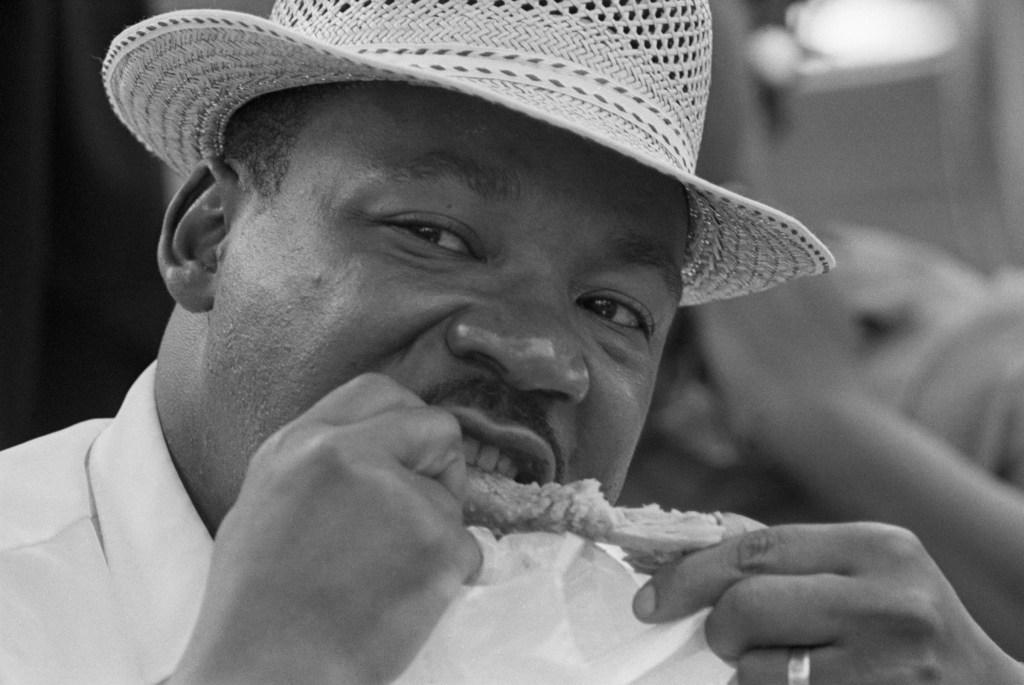
(Those near and dear guests of her kitchen included Martin Luther King, Aretha Franklin, Sam Cooke, and even Lyndon B. Johnson and Robert F. Kennedy.)

On December 20, 1956 the boycotts ended after the Supreme Court ruled the buses’ segregation unconstitutional, but Georgia’s reputation had been so utterly tattered that she was certain her days of working in Montgomery were through. Between her activism, her testimony, her attitude, and the press, she couldn’t even get home insurance.

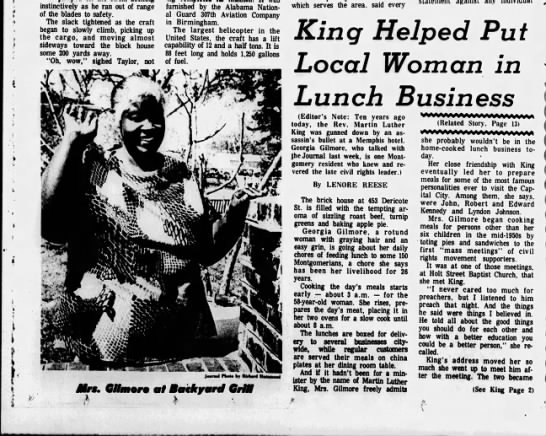
Georgia & Dr. King were featured in the Alabama Journal, but click through for a closer look at how even with a positive spin, the language used to describe Georgia isn’t exactly complimentary.

Georgia deserved to be rewarded for her courage and dedication to the movement, not left in shambles because of it. “She was not really recognized for who she was, but had it not been for people like Georgia Gilmore, Martin Luther King Jr. would not have been who he was,” Rev. Thomas Lilly who participated in the boycott, said. Dr. King himself repaid at least some of that debt with the most valuable piece of advice Georgia ever received. “All these years you’ve worked for somebody else, now it’s time you worked for yourself.” She did, and she never worked for anyone else again.

Still at it decades later, on March 3, 1990, in preparation for the 25th anniversary of the March from Selma to Montgomery, Georgia cooked up her famous macaroni and cheese and fried chicken to feed the revelers. Hours later, she passed and had the honor of watching her table from above as hundreds gathered to grieve her and commemorate so many walks for freedom with one last meal from from nowhere.

The historic marker at the former home of Georgia Gilmore in Montgomery, AL. Mickey Welsh / Montgomery Advertiser

KEEP GOING BLACK IN HISTORY:

Georgia in the New York Times’ Overlooked series.

Southern Foodways collaborated with the Montgomery Advertiser to celebrate Georgia’s life, and make amends for how she’d been represented in the Advertiser’s pages. It’s a beautiful read, by another Black woman and I encourage you to enjoy it.

PBS series “Eyes on the Prize” has captured interviews with members of the Alabama civil rights movements, and you can find Georgia’s here:
INTERVIEW 1 (1979) | INTERVIEW 2 (1986)

Listen in to the personal accounts of many who had the pleasure of eating in Ms. Georgia’s kitchen, including her son, Montgomery City Councilman Mark Gilmore, in NPR’s “The Kitchen of a Civil Rights Hero. “

Councilman Gilmore was gracious enough to share Georgia’s Legendary Sweet Tea recipe so we can raise a glass to her.

DAY 25 — Ruby Doris Smith Robinson

The Freedom Riders exist in American culture as an almost mythical group of heroes, a collective of brave souls, iconic and sympathetic champions of equality.

Don’t worry. You won’t read anything different here.

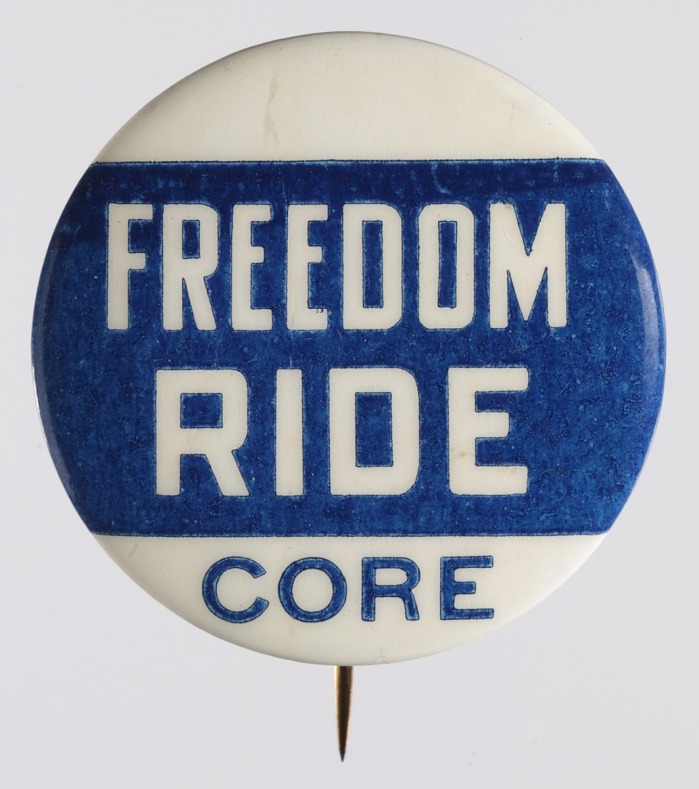
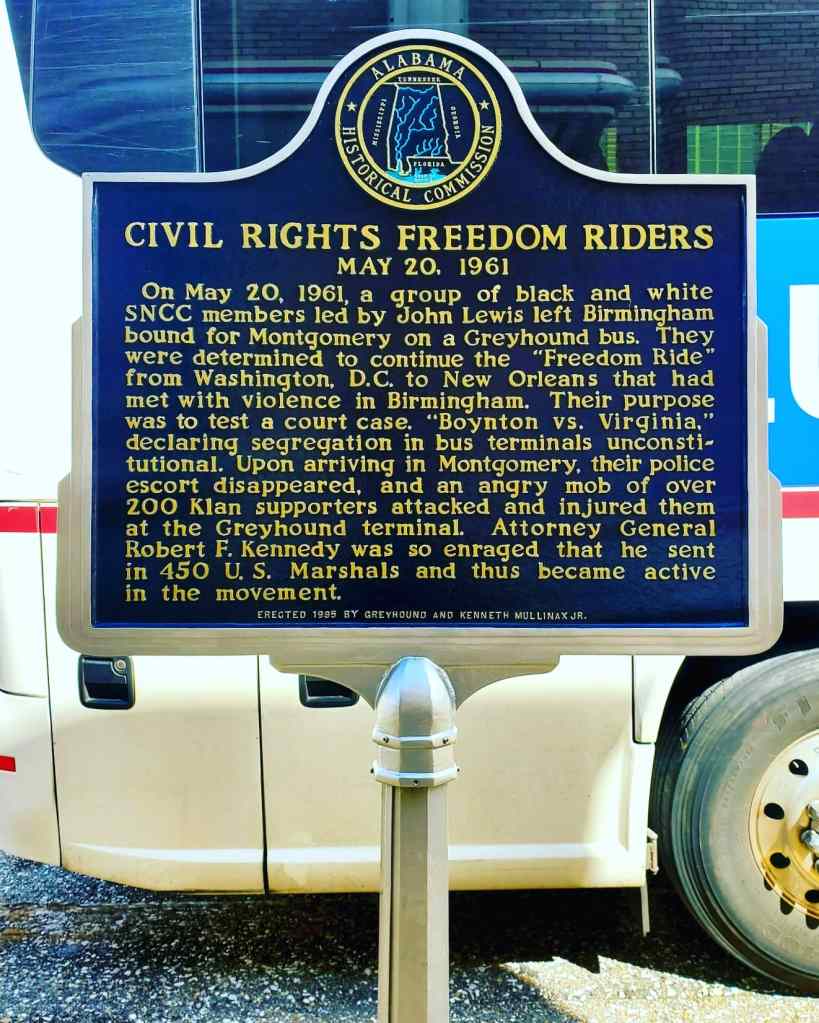
Indeed, the Freedom Riders were all of those things. But they were also 436 individuals who each woke up one day, unwilling to wake up to another where Black people were second-class citizens. As Diane Nash, a founder of the SNCC told us, most had put their affairs in order, and all had signed waivers releasing the Congress of Racial Equality (CORE) from any liability should they be injured or killed. 

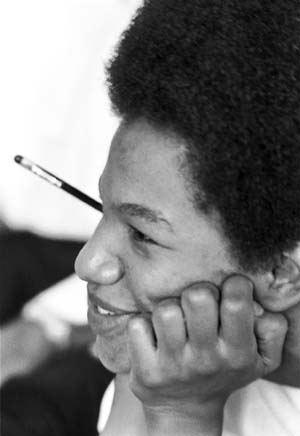
Ruby Doris Smith wasn’t just one among the collective, she led by example. 

Born in 1942, she was one of seven born to beautician Alice and pastor/handyman J.T., both gainfully employed and fully involved in their community, raising their brood in all-Black schools, churches, and other social settings. With the luxury of safe and comfortable financial and social circumstances, wanting for little and surrounded by friendly faces, the Smith children grew up with certain expectations of the world, and against that backdrop, the scenes of white supremacy and racial violence outside of the Smiths’ little bubble seemed absolutely horrifying. Even as a child, Ruby Doris knew she’d been put here with purpose, and once told her sister Catherine, “I know what my life and mission is…It’s to set the Black people free. I will never rest until it happens. I will die for that cause.”

Ruby Doris’s journey started with small protests. She’d throw rocks back at white children who would tease her friends and siblings. When a white sundae shop clerk handed her an ice cream cone with his bare hand, she refused, perfectly aware that cones served to white customers came wrapped in tissue. Those were only embers of the fire still yet to come.

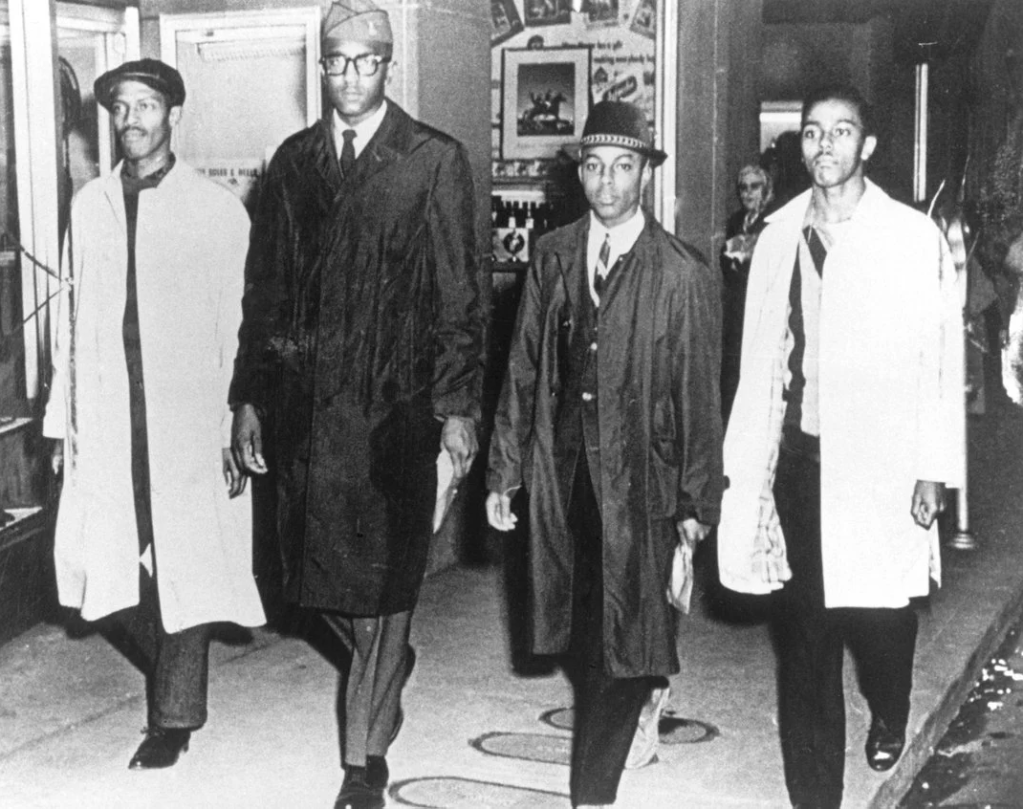
Whipsmart, Ruby Doris graduated high school at 16, and just kept leveling up at the historic Black women’s university of Spelman College. In 1960, Ruby had been at school less than a year and already found her calling. That was the year four well-dressed young Black men walked up to the F. W. Woolworth lunch counter in Greensboro, North Carolina, cemented their place in history and ignited a movement by simply sitting down.

The Greensboro Four: David Richmond, Franklin McCain, Jibreel Khazan and Joseph McNeil

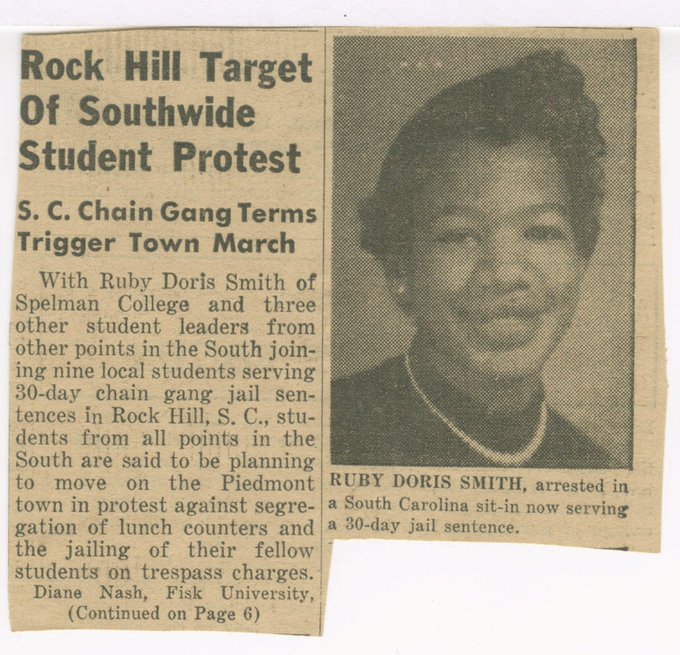
That kind of defiance was right up Ruby’s alley, and she jumped head first into organizing her own publicity-making protests. “Kneel-ins” at white churches were a particular specialty of hers, but outside of holy places, Ruby Doris wasn’t afraid to be loud about her rights. “Have integration will shop, have segregation will not,” she’d chant outside of shops and grocery stores, even if no one else protested with her. By 1961, Ruby Doris had been arrested more times than she could count for her repeated rabble-rousing, and had no intention of stopping as she signed on to become the executive secretary of the Student Nonviolent Coordinating Committee (SNCC), the group that had just begun organizing what they would call “Freedom Rides.”

The KKK firebombed a Freedom Rider bus in May 1961, just outside of Birmingham.

When Ruby Doris set out on her own bus ride from Nashville to Birmingham on May 17, the KKK’s Anniston, AL firebombing had occurred just days before. Diane Nash said, “It was clear to me that if we allowed the Freedom Ride to stop at that point, just after so much violence had been inflicted, the message would have been sent that all you have to do to stop a nonviolent campaign is inflict massive violence.” So undeterred, they pressed on, and as expected, they were indeed met with more massive violence. Ruby Doris was badly beaten, but still rode on from Birmingham to Jackson, MS. And since nothing else so far had kept busload after busload of Freedom Riders from riding into the Deep South, the powers that be decided they’d try another tactic: brutal imprisonment. Parchman State Penitentiary was a Mississippi maximum security prison, and everything about the Freedom Riders’ imprisonment there was designed to be torturous to the hundreds whose rides landed them at those facilities.

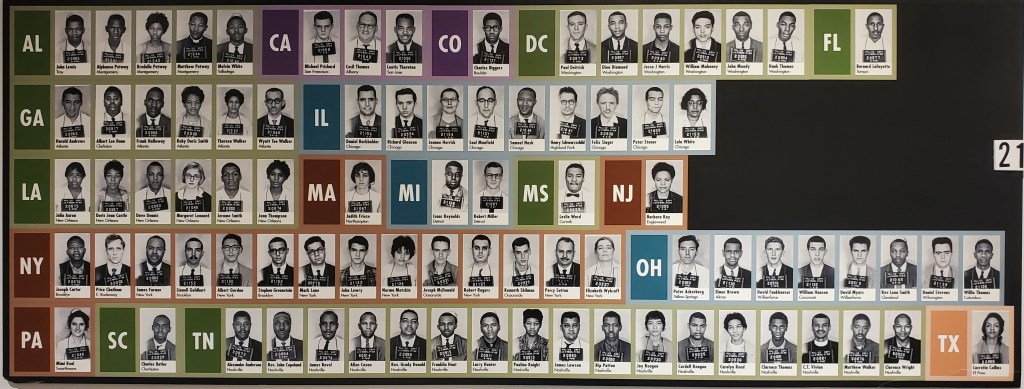
Freedom Riders arrested in Jackson after departing Alabama Greyhound Stations. Ruby Doris Smith is on the second line, fourth from left.

Michael Booth, a member of the Civil Rights Movement remembers, “With the intention to intimidate and instill fear, the women were packed onto a flatbed, in the middle of the night, similar to that which animals are transported in. They were forced to stand the entire drive from Jackson to Parchman, going through Money, Mississippi, the place where Emmett Till was murdered. In a continued effort to break their spirits, when the women were processed into Parchman they were forced to walk through a very large pool of cockroaches before being photographed and fingerprinted. The women were imprisoned on death row where the ‘most cruel and unbelievable things’ were perpetrated on the Freedom Riders. [One woman’s] cell was only 13 footsteps from the gas chamber. The lights were left on 24 hours a day so that the prisoners didn’t know what time it was or what day it was.”

Ruby Doris didn’t document the horrors perpetrated on her at Parchman, but others remembered being scarred by what they saw done to her. The woman jailed next to the gas chamber, Dr. Pauline Knight-Ofusu, watched as Ruby Doris was “dragged barefooted down a concrete hallway to be thrown into a shower and scrubbed with a wire brush. Post traumatic syndrome is a given for every Freedom Rider,” she said. Traumatized, but still not broken. After 45 days in Parchman, Ruby Doris went right back to disrupting the way only she could.

The Kennedys were legislating the bus situation, the lunch counters had been desegregated thanks to the efforts of the protestors, but there was more work to be done. Even hospitals had “white only” entrances, and after months of organizing elsewhere, that’s where Ruby Doris turned her attention. When a receptionist tried to bar protestors from the white-only door, quipping that they weren’t sick anyway, Ruby Doris marched right up to the desk, looked that woman straight in the eye as she vomited, and replied, “Is that sick enough for you?!”

Truth is, Ruby Doris was sick. Dr. Pauline knew back at Parchman that Ruby had ulcers and diabetes. When Ruby Doris was elected as the first female executive secretary of SNCC under Stokely Carmichael, she was a wife, mother, and had a full time job. Her anxiety kept her so tightly wound that she kept a collection of glass bottles in her office specifically to break and sweep up before getting back to work. By the time she was 25, Ruby Doris Smith Robinson was dead.

Officially, a rare blood disease and terminal cancer claimed her life on October 7, 1967, but everyone involved in the movement knew her real cause of death. Stanley Wise, another leader in SNCC put it plainly: “She died of exhaustion… I don’t think it was necessary to assassinate her. What killed (her) was the constant outpouring of work with being married, having a child, constant struggles that she was subjected to because she was a woman… she was destroyed by the movement.”

Officers of the Student Non-Violent Coordinating Committee listen as Stokely Carmichael, right, chairman of the organization, speaks at a news conference in Atlanta, May 23, 1966. Pictured left to right are: James Forman, outgoing executive secretary; Cleveland Sellers, program secretary; and Ruby Doris Smith Robinson, the organization’s first female executive secretary.

Note that Mr. Wise speaks of her death in terms of assassination because Ruby Doris was truly a driving force in the movement, and her sudden loss was deeply felt. What I’ve mentioned to you here is only a fraction of what she accomplished in her 25 years. She led voter registration drives in dangerously racist Mississippi, and single-handedly organized the SNCC’s Sojourner Truth Motor Fleet to keep the organization mobile. The work she did for Civil Rights was incomparable, and so was her mere presence. In eulogy, Stokely Carmichael said Ruby Doris “was convinced that there was nothing that she could not do… she was a tower of strength,” and on her headstone, her own words were engraved: “If you think free, you are free.”


KEEP GOING BLACK IN HISTORY:

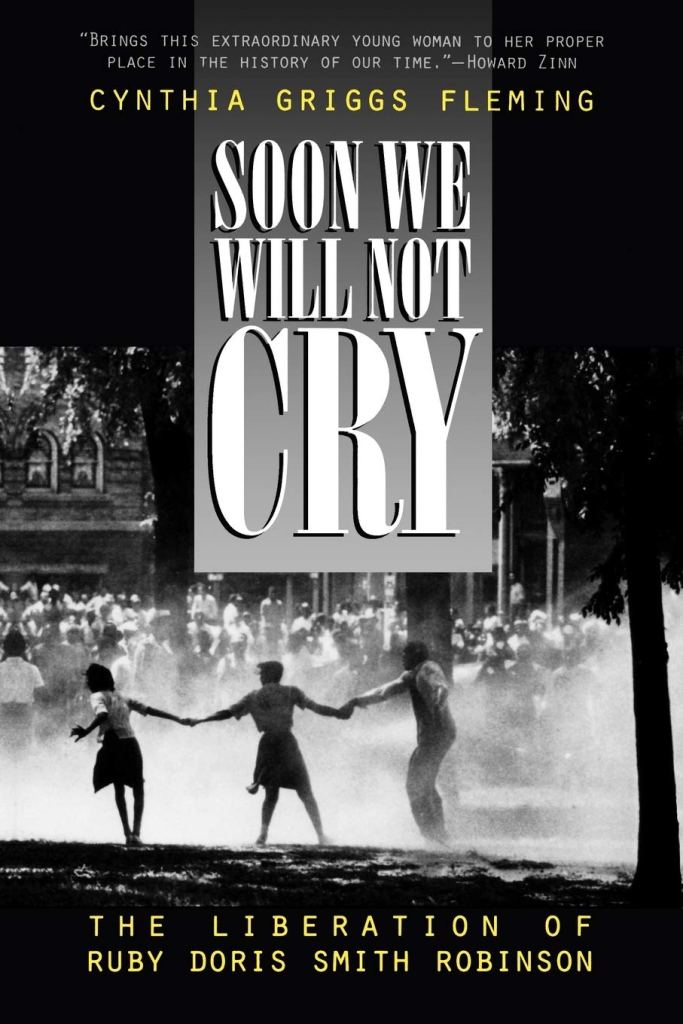
Spend more time getting to know Ruby Doris in her biography, Soon We Will Not Cry: The Liberation of Ruby Doris Smith Robinson.

Read SNCC’s detailing of the impact Ruby Doris left on their organization.

Browse the archives of the Civil Rights Digital Library and the Atlanta University Center Woodruff Library for more articles, letters and clippings from Ruby Doris’ life.

The Smithsonian has gathered powerful archival footage on the events leading up to the Anniston Freedom Rider firebombing.
Hear the experiences of the Freedom Riders in their own words.

DAY 21 — George Edwin Taylor

Shirley Chisholm, first African-American presidential candidate?

Everybody knows that in 1968 Shirley Chisholm was the first African-American candidate to run for United States President, right?

Right! She actually gets a brief mention in American history books, so surely that’s right…

…right?

Not even close.

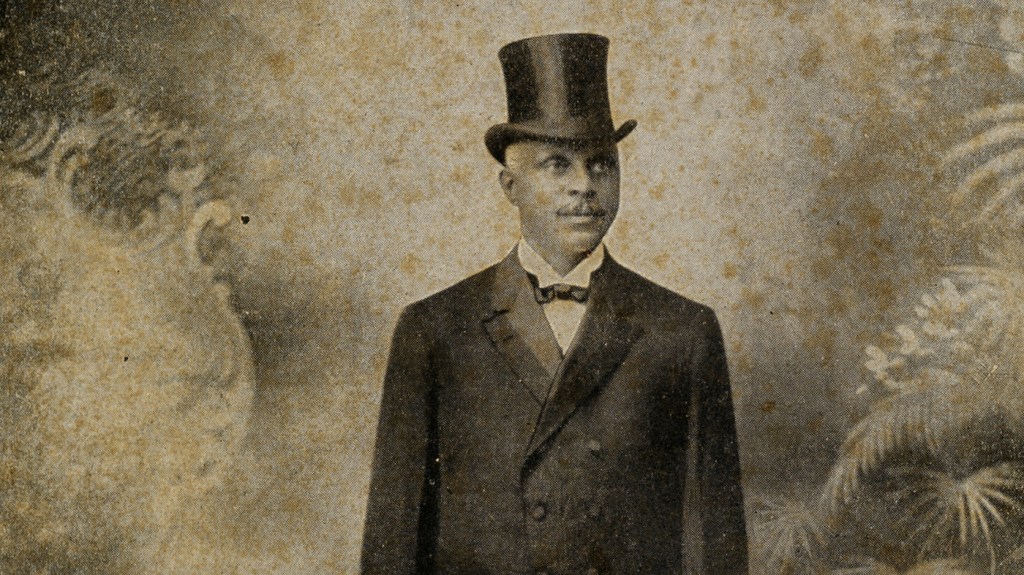
64 years before Shirley, a man you’ve never even heard of tossed his hat into the presidential ring. His name was George Edwin Taylor and the reason you’ve never heard of him is because radical Black independents don’t make the history books.

But before we get into the specifics, let’s start at the beginning, because George lived a life that came full circle.

Born in 1857, he was only two years old when Arkansas passed the Free Negro Expulsion Bill, ordering all free Black people to vacate the state of Arkansas, or else find themselves re-enslaved for a full year to cover their own relocation fees. So to be clear, the offer was leave on your own now, or be enslaved and ultimately put out a year later. Of the state’s 700 free Black people, all but 144 took option A.

George’s mother was one of those people, and fled to the free state of Ohio where she and her son could live in their peace. But their shared peace was short-lived when she died just three years later. George was a 5-year-old orphan, with nothing and no one to call his own. For three years, he survived as a street urchin, until he was finally taken in by one family, assigned to another through foster care, and went on to a Wisconsin prep school. Even if he’d stopped achieving there, folks would have considered George a success for his time, his race, and his circumstances.

But for better or worse, George had a penchant for pushing the envelope, and good enough simply wasn’t. Over the next 20 years, he excelled in writing and operating an assortment of news publications, which gave him an intimate knowledge of political issues facing African-Americans and the country as a whole. And that knowledge came in handy in 1904 when the National Negro Liberty Party asked him to him run as their leading man.

Presidential race poster for George Edwin Taylor, the first African American ticketed as a political party’s nominee for president of the United States, running against Theodore Roosevelt in 1904 .
One bill that was supported by the National Negro Liberty Party. I wish I could tell you that it passed, but there’s no new news here. Read this document and many more on the party at the National Archives.

Here’s the kicker. Founded in 1897, the National Negro Liberty Party, formerly known as the Ex-Slave Petitioners’ Assembly, originated in Little Rock, Arkansas, where George had been born 40 years earlier. After the Free Negro Expulsion Bill that drove George & his mother out of Arkansas, it’s no wonder folks assembled politically against the state’s tyranny, and absolute kismet that the man who would come to represent those people nationally was born amongst them.

The Ex-Slave Petitioners’ Assembly was originally formed seeking legislative reparations of any sort after the “40 acres and a mule” that were promised did not materialize and “the poverty which afflicted [African-Americans] for a generation after Emancipation held them down to the lowest order of society, nominally free but economically enslaved,” as Carter G. Woodson put it in The Mis-Education of the Negro.

After years of trying (and failing) to push bills through Congress, the National Negro Liberty Party decided they’d shake another branch of government. And George was JUST the man for the job. He didn’t have the statesmanship of men like Frederick Douglass or W.E.B. DuBois. Their visibility among Black and White Americans helped them to temper their passions and find delicate ways to deliver harsh words to hearts and minds.

George’s National Appeal unofficially undermined any chance he might have had at running for office with the Democrats or Republicans. Read it in full at the Library of Congress.

George wasn’t that dude. He’d been both a Democrat and Republican, until they’d both offended him by rejecting proposals brought to them by Black delegates, backing candidates with clear racist platforms, and failing to take up issues that only affected people of color, but when George went full scorched earth against the Republican Party by printing “A National Appeal, Addressed to the American Negro and Friends of Human Liberty,” it was game over for any affiliation he might even hope to gain with those parties. He was officially a radical independent.

The National Negro Liberty Party shortened their name to remove “Negro,” as every American ought be in favor of liberty, and delivered their party’s demands:

  • Universal suffrage regardless of race
  • Federal protection of the rights of all citizens
  • Federal anti-lynching laws
  • Additional black regiments in the U.S. Army
  • Federal pensions for all former slaves
  • Government ownership and control of all public services to ensure equal accommodations for all citizens
  • Home rule for the District of Columbia

A very reasonable platform, but one that even George knew was unlikely to be taken seriously. “Yes, I know most white folks take me as a joke,” he said in interviews. “But I want to tell you the colored man is beginning to see a lot of things that the white folks do not give him credit for seeing. He’s beginning to see that he has got to take care of his own interests, and what’s more, that he has the power to do it.”

That Election Day was not a day of power for us. George’s name wasn’t added to a single state’s ballot. Though estimates say he received as many as 70,000 write-ins, none of that can be verified because his votes weren’t tallied in individual state records that only counted Democrats and Republicans. In fact, the only real success that George personally reaped in his presidential bid was that he came out of it alive. “He was a black man running on a third-party ticket in a country that had little interest in black men or third parties,” Trinity College historian Dr. David Brodnax said.

Between that sad but true reality and all the bridges that George had burned to get there, his national political ambitions were essentially one and done, go big or go home. But he actively continued making what strides he could by continuing his publishing career, supporting local politicians and community organizations, and empowering the Black community. He’d implored that same community on Emancipation Day in 1898 to “press on until [you have] reached the top of the ladder and then reach up to see if there isn’t another ladder on top of that one.” Then, in spite of his own certain failure, he took a leap that extended that ladder just a little further for those who’d climb next, even if American history never acknowledged his steps.


KEEP GOING BLACK IN HISTORY:

Discover more about “A Forgotten Presidential Candidate from 1904” and the circumstances that led to his nomination at NPR.

Dive into the photos, articles, and documents on George Edwin Taylor archived at the University of Wisconsin—La Crosse.

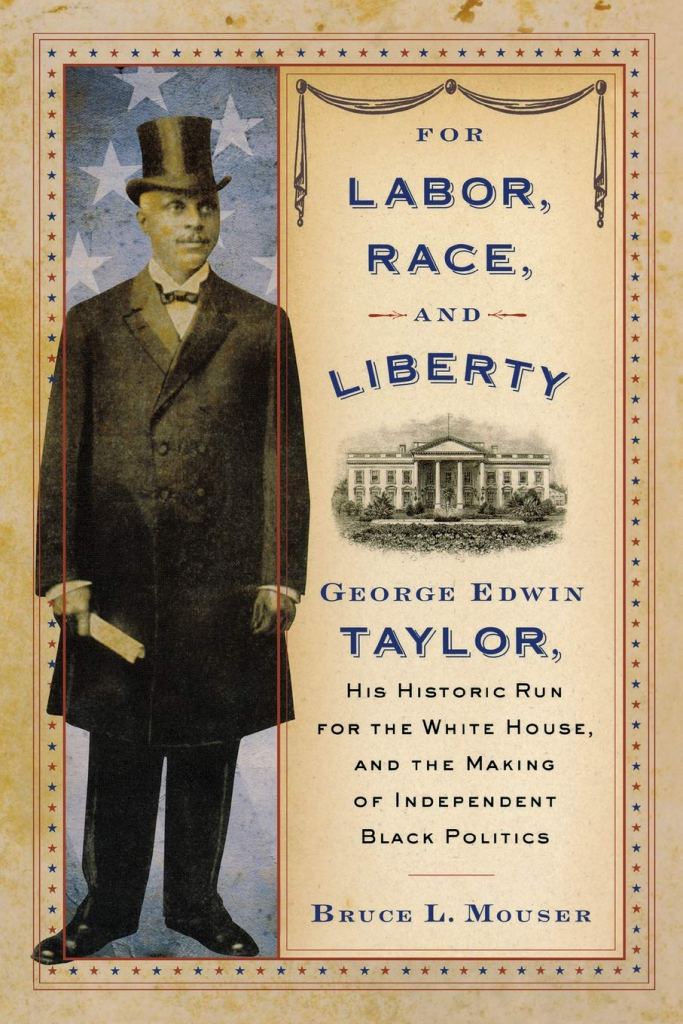
Find out more about the untold presidential run and more background on Black American politics in Bruce Mouser’s George Edwin Taylor, His Historic Run for the White House, and the Making of Independent Black Politics.

Read more about the book at the University of Wisconsin Press here.

DAY 18 — Philip A. Payton Jr.

The major difference between racial terrorism in the North and the South was the publicity.

Escape to the North and you may avoid a spectacle of a lynching, but that still didn’t make you welcome.

Take the case of Harlem, NY.

Now considered one of the most historic African-American communities in the United States, it was once entirely white and there were a lot of folks invested in keeping it that way.

Real estate investors, to be specific.

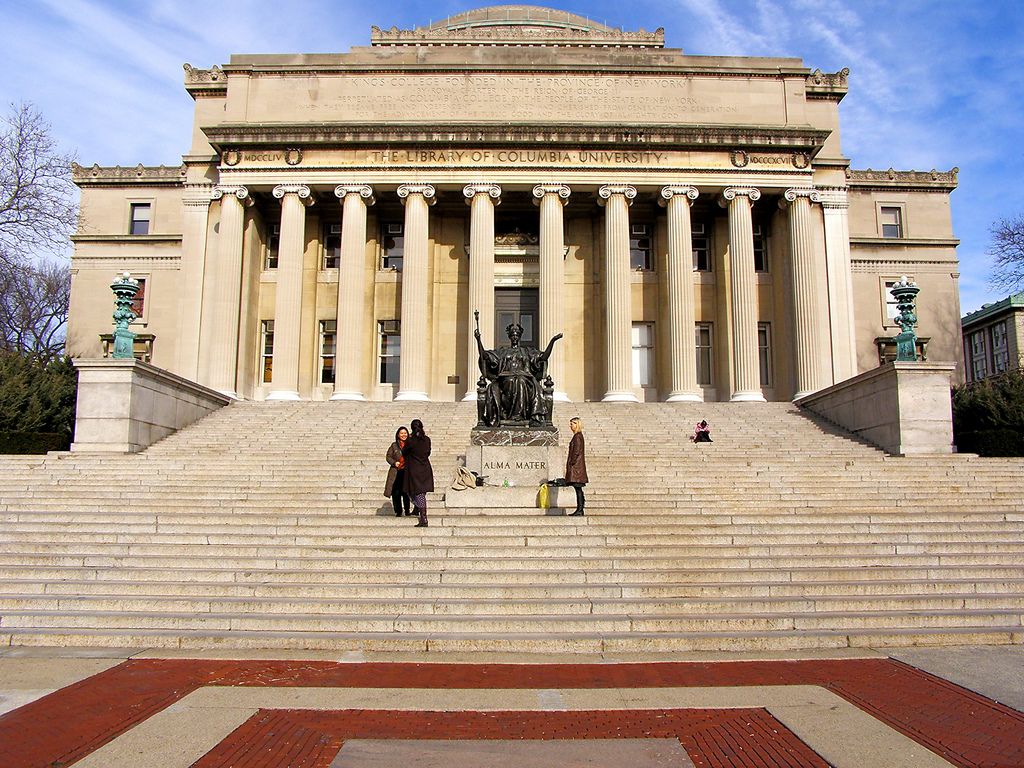
The neighborhood just north of Manhattan was booming in the late 1800s. Oscar Hammerstein’s first opera house, the world’s largest gothic cathedral in St. John the Divine, and Columbia University all opened or began construction in Harlem within 8 years of each other. Property was being snatched up left and right to support new expensive apartments, some priced up to 800% more than those in Manhattan. Harlem was destined to be the height of luxurious living.

But the city was growing everywhere, and by 1904, developers and dwellers were already on to New York’s next hotspot. All those high-dollar rents were plummeting as whole buildings purchased in anticipation of continued growth suddenly stood empty.

But Philip A. Payton Jr. had been biding his time. After a few odd jobs and small business ventures, he’d discovered a passion for real estate. And then spent his last dime on classified ads. 

“COLORED TENEMENTS WANTED | Colored man makes a specialty of managing colored tenements; references; bond. | Philip A. Payton, Jr., agent and broker, 67 W. 134th.”

If it ain’t broke, don’t fix it. A 1907 New York Age classified ad taken out by Mr. Payton reads almost the same as his first.

Whatever property did come his way would have to come cheap. And racism was about to get Philip out of the red.

“My first opportunity came as a result of a dispute between two landlords in West 134th Street. To ‘get even’ one of them turned his house over to me to fill with colored tenants,” Philip recounted to the New York Age.

An ad in a 1906 issue of the New York Age shows how busy Mr. Payton was with Harlem real estate.

The race to own Harlem was on. With a few rent payments in his pocket, Philip purchased even more luxury properties at rock-bottom prices to pass on to new, Black tenants.

And the locals were not happy about it. White New Yorkers weren’t willing to share their space with people of color and their white brokers knew it. If things kept up at this rate, they’d have even more empty buildings on their hands, so the brokers started biding their time too. The second Philip sold some of his predominantly African-American tenements to free up some cash, the white brokers snatched it up, evicted his tenants, and made the buildings white-only again.

Well, Philip knew how to be slick too.

Two buildings managed by those white brokers were up for sale on the same row, sandwiching the ones he’d sold. He bought those two buildings, evicted all of the white tenants, replaced them with Black ones, and created the exact crisis the white brokers were trying to avoid. Suddenly in the middle of a Black block, the white tenants fled and their brokers had to put the buildings back up on the market.

Guess who bought them for even less than he sold them for.

In the midst of all of this buying and selling, Philip recognized that he couldn’t take on the entire Harlem real estate establishment, so he formed an organization that could. On June 15, 1904, the Afro-American Realty Company was chartered and funded. With 50,000 shares issued at $10 each to wealthy African-Americans, the Afro-American Realty Company bought properties throughout the neighborhood, turning Philip’s vision into whole blocks of thriving Black families.

Read the full article at the NYT’s “Times Machine” here.

He saw Black folks using the circumstances stacked against them to come up. The New York Times saw a “Real Estate Race War.”

The Afro-American Realty Company didn’t last, but the trend did. Philip opened the Philip A. Payton Jr. Company, and spurred by his continued success in the neighborhood, many of Philip’s former AARC co-investors followed suit. By 1905, newspapers reported on the shifting demographics in Harlem like a plague had descended. “An untoward circumstance has been injected into the private dwelling market in the vicinity of 133rd and 134th Streets.” the New York Herald reported. “Flats in 134th between Lenox and Seventh Avenues, that were occupied entirely by white folks, have been captured for occupation by a Negro population… between Lenox and Seventh Avenues has practically succumbed to the ingress of colored tenants.”

Read the full article at the NYT’s “Times Machine” here.

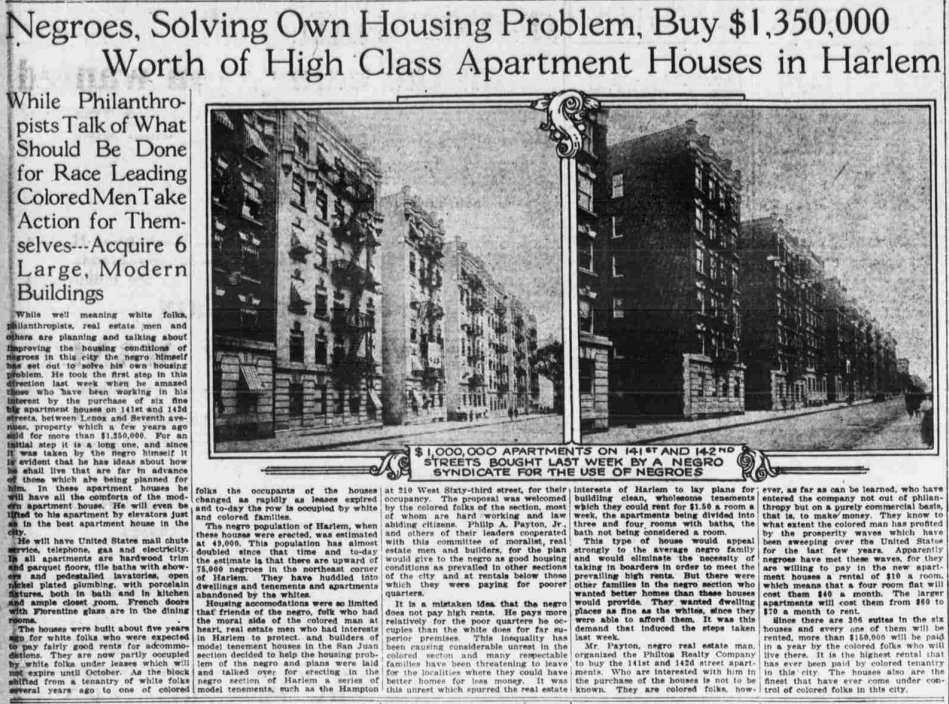
Though their language left something to be desired, the Herald wasn’t wrong about the tidal wave of African-Americans who seemed to own Harlem overnight. By 1915, just over a decade after Philip first moved to an all-white block himself, census records showed nearly 70,000 Black residents had moved in right behind him. In 1917, he officially staked his claim in Harlem with the biggest purchase of property by Black broker that New York had ever seen. Philip bought six buildings at $1.5 million, naming them all for historic Black figures, building more community from that sense of pride.

For his lifetime of groundbreaking development, Philip was called the “Father of Harlem,” and though he died at 41 years old, just a month after his historic $1.5 deal, the foundation he laid lived on. It’s no coincidence that in 1920, the Harlem Renaissance officially began. Even the National Institutes of Health recognize that psychological safety—”the belief that you won’t be punished or humiliated for speaking up with ideas, questions, concerns, or mistakes”—leads “to increased proactivity, enhanced information sharing, more divergent thinking, better social capital, higher quality, and deeper relationships, in general, as well as more risk taking.”

Free from the fear of their homes falling under constant threat from the whims of white people, whether they were southern night riders or northern bankers, African-Americans finally had the luxury of creating something beautiful, and in doing so, absolutely changed the world.

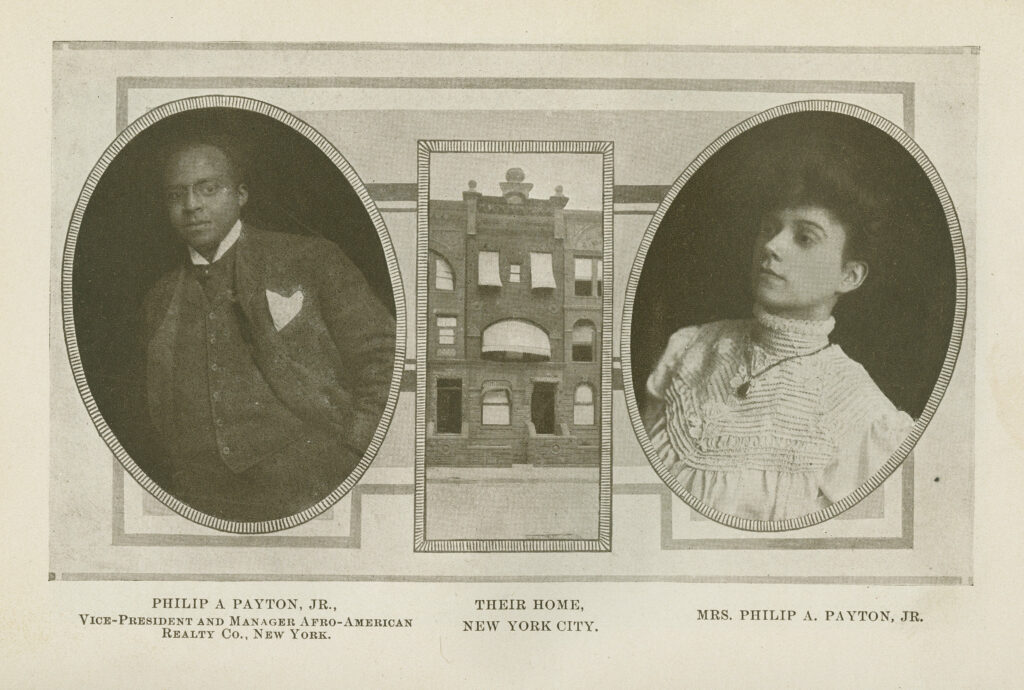
Philip and Mrs. Payton went from rags to riches in Harlem, and were even presented in print like they were royalty.

KEEP GOING BLACK IN HISTORY:

Though the New York Times ran articles about him and what he was doing in Harlem, their Overlooked series is the first to truly acknowledge its positive impact.

Philip wasn’t the only wildly successful Payton. Read through an accounting of his accomplishments, as well as those of his siblings at Westfield State University in the town where the Paytons once flourished.

DAY 17 — Oscarville & Lake Lanier

Death looms so large over Georgia’s Lake Lanier that people say it’s haunted.

Since it was filled in 1956, it’s estimated that nearly 700 people have lost their lives in its waters or at its banks in boating accidents, drownings, and unexplained events. Official reports list at least 24 people as “missing” there because what lies below the lake’s surface makes searching it nearly impossible.

Beneath those unrecovered souls, wrecked boats, discarded nets, and silty waters lie the charred remains of the Africa-American community of Oscarville, GA.

Before 1912, Oscarville’s people thrived as farmers, teachers, ministers and tradespeople of all sorts.

Harrison, Rosalee, Bertie, Fred, Naomi, and Minor Brown were among the thriving residents of Oscarville, in a photo taken in 1896.

Their world started to unravel on September 5th of that year, when a white woman accused a Black man of entering her bedroom and attempting rape. When a local preacher mentioned that perhaps the woman had not been entirely forthcoming in her account, suggesting the encounter may have been consensual, he was nearly beaten to death right in front of the Oscarville courthouse.

Tensions between the segregated populations of Forsyth County were so high that the Governor of Georgia activated the National Guard to stand patrol and keep the peace.

Just 4 days later, that fragile peace was shattered when another white woman was found dying in the local woods, an apparent victim of yet another sexual assault. 

The only evidence police turned up was a pocket mirror claimed to be property of a 16-year-old boy named Ernest Knox. Hardly a smoking gun, but enough to satisfy the white folks of Oscarville, especially when Ernest confessed to the crime and gave up the people who were going to help him dispose of the body. Suppose it didn’t matter much that Ernest made that confession from the bottom of a well just before he was nearly drowned in it.

Ernest and 3 supposed co-conspirators—Oscar Daniel, Oscar’s 22-year old sister Trussie, her boyfriend Big Rob—plus an alleged witness, were all transported to the county jail in Cumming, GA. But there was no point. A mob estimated in the thousands stormed the jail, killed Big Rob, and dragged his body into the street. He was hung from a light post and used as target practice while the others inside could only listen to their potential fate.

A newspaper photo depicts all of the suspects for the rapes of two white women were still alive in their custody.
Left to Right: Trussie Daniel, Oscar Daniel, Tony Howell (defendant in the first case), Ed Collins (witness), Isaiah Pirkle (witness for Howell), and Ernest Knox.

Trussie accepted a plea bargain in exchange for testifying against her brother Oscar and was forced to be his executioner (see the sub-headline in the article above). Charges were dropped against the witness. But Big Rob was already dead, and Ernest and Oscar were doomed to the same fate.

On October 25, 1912, Oscar Daniel and Ernest Knox were publicly lynched before a crowd estimated at as many as 8,000 spectators. People gathered around the gallows for picnics, and PBS reports that one of the boys was so small a special noose was created to ensure the momentum wouldn’t decapitate him and splash anyone’s Sunday dress with blood.

You don’t even have to imagine the scene. You’ve probably seen the images of vast crowds gathering under the feet of a Black man. Though these images are rarities now, in 1908, they were so frequently mailed, the U.S. Postmaster was forced to ban them. “Even the Nazis did not stoop to selling souvenirs of Auschwitz,” TIME Magazine’s Richard Lacayo writes

A postcard shows the sprawling crowd gathered for the 1893 lynching of Henry Smith in Paris, TX.

But the terror didn’t end with two lynchings. Over the next few months, each sunset brought nightmares to Oscarville. 

“Night riders” went door-to-door demanding that Black people vacate the town. When some people didn’t comply, the threat escalated. Their homes were shot into, animals killed, crops destroyed. Anyone who remained after that fled their property in the middle of the night as it went up in flames. Nearly 1,100 African-Americans—around 98% of Forsyth County’s Black population—were forced out of Oscarville, some still paying on property they’d abandoned until it was foreclosed.

Of course, all of that land was immediately seized by you-know-who.

And nearly just as quickly, things started going wrong.

In 1915, a boll weevil infestation killed crops on Oscarville’s land that was illicitly seized by white farmers and banks. Though they ultimately survived the weevils, being one of the few regions in the state to escape total decimation made them eager to share their methods. (It was chicken poop. They got a bunch of chickens to poop in the soil.) Perhaps too eager. They gained the attention of the mayor of Atlanta, who was developing a dam to ensure the city’s water supply, hydroelectric needs, and flood control. He spent 2 years working with the Army Corps of Engineers to seize nearly all of that recovered farmland. What little was actually purchased was far undervalued, and left the handful of African-Americans left who owned their land through generations with nearly nothing.

When the dam was complete, the waters completely submerged charred buildings, cemeteries, bridges, and any trace left of those who lived and died in Oscarville. Then they named those waters after a Confederate soldier. Though Oscarville is the only Black community under Lake Lanier, it wasn’t the only one Black people were run out of. Towns, Union, Fannin, Gilmer and Dawson Counties all have a history of violently exiling its Black residents. Even today, only 4% of Forsyth County’s almost 250,000 residents are Black.

So is Lake Lanier haunted? No one can truly answer that question.

But is it filled with ghosts? Absolutely.

Even Tiktok knows you don’t go on Lake Lanier.

KEEP GOING BLACK IN HISTORY:

A diver captures footage of some of the structures lost under Lake Lanier, both visually and on sonar.
Local news coverage shows the efforts to keep African-Americans and their civil rights out of Forsyth County still alive and well in 1987.

Learn more about the tragic history of Forsyth County, GA in Patrick Phillips’ book, Blood at the Root, then pick up a copy from our friends at Marcus Books.

Get more local articles and historic sources from a story originally published by the Forsyth County News.

The terror in Oscarville and ongoing racial terrorism documented in Forsyth County and throughout the South is detailed at History.com

Read more about the taking of Oscarville and the forming of Lake Lanier at CNN.

Forsyth County church leaders took it upon themselves to create the Forsyth County Descendants Scholarship, “simply an act of love that will be helpful to some descendants whose families have suffered. Is it enough? Of course not. But it is a step.” Learn more & donate here.

Explore an interactive map and see the stories of documented racial terror lynchings throughout the States created by the Equal Justice Initiative.

DAY 15 — Jourdon Anderson

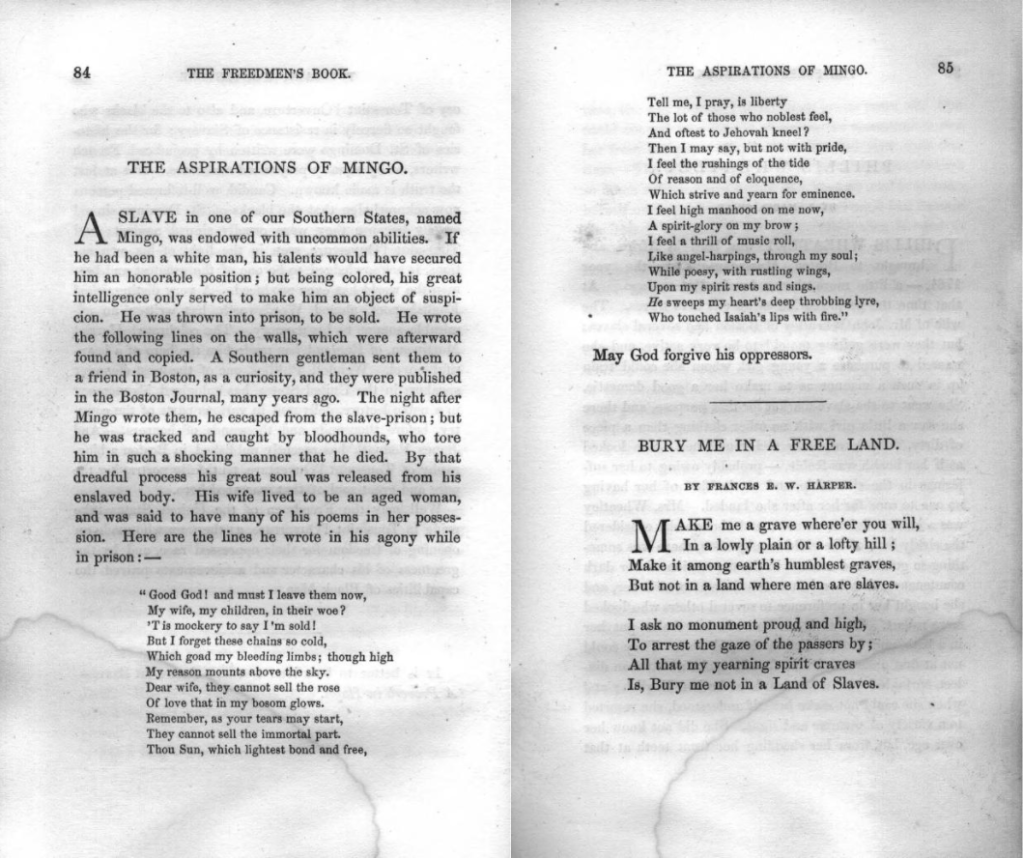
“If he had been a white man, his talents would have secured him an honorable position; but being colored, his great intelligence only served to make him an object of suspicion.”

Those words, written by L. Maria Child, editor of The Freedmen’s Book and an active abolitionist, preface a poem inscribed on a prison wall by an enslaved man named Mingo before he was torn apart by pursuit dogs. 

“The Aspirations of Mingo” was transcribed from a prison wall. Read it in full at the Gutenberg Project’s transcription of the Freedmen’s Book here.

Over 150 years after the Freedmen’s Book went into print, those words still rang true. This time, regarding another writer in the compilation: Jourdon Anderson.

Over the past decade, Jourdon has occasionally gone viral for his response to an 1865 letter from his former owner. Jourdon’s flawless delivery, scathing wit, and audacious request for back pay left “some critics question[ing] the letter’s authenticity,” as Smithsonian Magazine very politely puts it.

Even reputable sources like Business Insider had to publish disclaimers alongside Jourdon’s letter to stifle comments that it was fake.

But it’s also very telling that several outlets that picked up the story compared Jourdon’s writing to another, more famous writer’s style. Mark Twain’s first book was published in 1869, just four years after Jourdon’s letter. If Mark Twain could write so cleverly and with such tremendous style, why couldn’t Jourdon Anderson write like this?:

To my old Master, Colonel P. H. Anderson, Big Spring, Tennessee.

Sir: I got your letter, and was glad to find that you had not forgotten Jourdon, and that you wanted me to come back and live with you again, promising to do better for me than anybody else can. I have often felt uneasy about you. I thought the Yankees would have hung you long before this, for harboring Rebs they found at your house. I suppose they never heard about your going to Colonel Martin’s to kill the Union soldier that was left by his company in their stable. Although you shot at me twice before I left you, I did not want to hear of your being hurt, and am glad you are still living. It would do me good to go back to the dear old home again, and see Miss Mary and Miss Martha and Allen, Esther, Green, and Lee. Give my love to them all, and tell them I hope we will meet in the better world, if not in this. I would have gone back to see you all when I was working in the Nashville Hospital, but one of the neighbors told me that Henry intended to shoot me if he ever got a chance.

I want to know particularly what the good chance is you propose to give me. I am doing tolerably well here. I get twenty-five dollars a month, with victuals and clothing; have a comfortable home for Mandy,—the folks call her Mrs. Anderson,—and the children—Milly, Jane, and Grundy—go to school and are learning well. The teacher says Grundy has a head for a preacher. They go to Sunday school, and Mandy and me attend church regularly. We are kindly treated. Sometimes we overhear others saying, “Them colored people were slaves” down in Tennessee. The children feel hurt when they hear such remarks; but I tell them it was no disgrace in Tennessee to belong to Colonel Anderson. Many darkeys would have been proud, as I used to be, to call you master. Now if you will write and say what wages you will give me, I will be better able to decide whether it would be to my advantage to move back again.

As to my freedom, which you say I can have, there is nothing to be gained on that score, as I got my free papers in 1864 from the Provost-Marshal-General of the Department of Nashville. Mandy says she would be afraid to go back without some proof that you were disposed to treat us justly and kindly; and we have concluded to test your sincerity by asking you to send us our wages for the time we served you. This will make us forget and forgive old scores, and rely on your justice and friendship in the future. I served you faithfully for thirty-two years, and Mandy twenty years. At twenty-five dollars a month for me, and two dollars a week for Mandy, our earnings would amount to eleven thousand six hundred and eighty dollars. Add to this the interest for the time our wages have been kept back, and deduct what you paid for our clothing, and three doctor’s visits to me, and pulling a tooth for Mandy, and the balance will show what we are in justice entitled to. Please send the money by Adams’s Express, in care of V. Winters, Esq., Dayton, Ohio. If you fail to pay us for faithful labors in the past, we can have little faith in your promises in the future. We trust the good Maker has opened your eyes to the wrongs which you and your fathers have done to me and my fathers, in making us toil for you for generations without recompense. Here I draw my wages every Saturday night; but in Tennessee there was never any pay-day for the negroes any more than for the horses and cows. Surely there will be a day of reckoning for those who defraud the laborer of his hire.

In answering this letter, please state if there would be any safety for my Milly and Jane, who are now grown up, and both good-looking girls. You know how it was with poor Matilda and Catherine. I would rather stay here and starve—and die, if it come to that—than have my girls brought to shame by the violence and wickedness of their young masters. You will also please state if there has been any schools opened for the colored children in your neighborhood. The great desire of my life now is to give my children an education, and have them form virtuous habits.

Say howdy to George Carter, and thank him for taking the pistol from you when you were shooting at me.

From your old servant,
Jourdon Anderson.

So why would anyone doubt Jourdon? Because Jourdon was enslaved.

Even before Sojourner Truth’s words were twisted into a mockery, the editor of the Freedmen’s Book knew to defend against the same thing happening to the words within its pages.

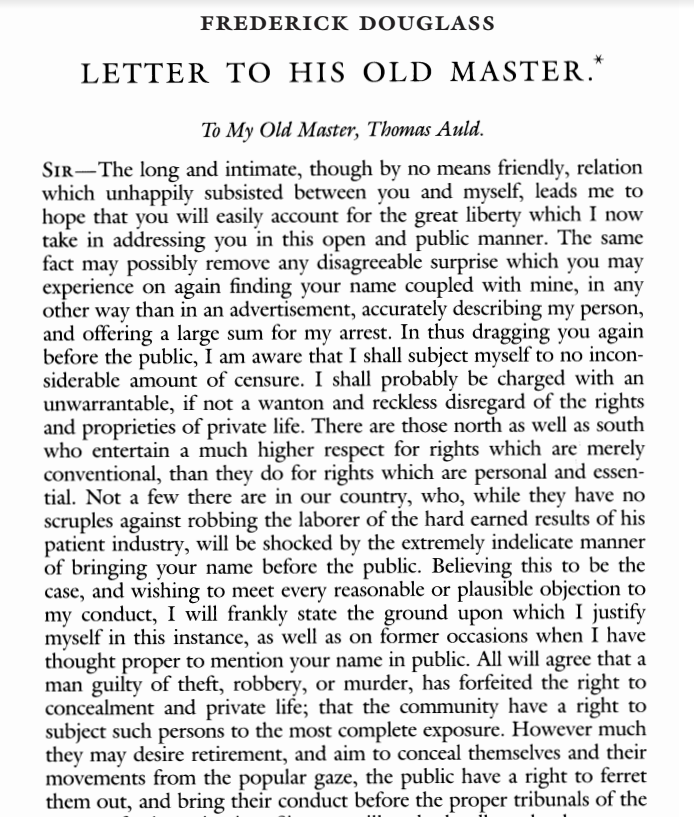
Frederick Douglass also composed a beautifully written yet scathing letter to his former owner, informing him that “I shall make use
of you as a means of exposing the character of the American church
and clergy-and as a means of bringing this guilty nation, with
yourself, to repentance,” and closing with “I am your fellow-man, but not your slave.” Read it in full here.

And again, why?

Because the Trans-Atlantic slave trade couldn’t have survived 400 years if the people enslaved were seen as intelligent, thoughtful, sympathetic and autonomous human beings.

That’s why.

I freely admit bias, so I’ll share independent words from Roy E. Finkenbine, a professor at the University of Detroit-Mercy: “It’s kind of a racist assumption… that when someone is illiterate, we make the assumption they’re stupid. Enslaved people had deep folk wisdom and a rich oral culture,” he adds. “Why would we think that he hadn’t been thinking about these things and couldn’t dictate them to willing abolitionists?” 

The opening quote of this post is just one clear attribution prefacing several inclusions in the Freedmen’s Book, and Jourdon’s letter has one as well: “[Written just as he dictated it.]”

But we don’t have to take the word of the Freedmen’s Book. Historic record backs it up.

Jourdon’s letter is dated August 8, 1865. An issue of The New York Tribune dated August 22, 1865, just two weeks later, ran the same letter (from a Cincinnati paper), with a different certification: “The following is a genuine document. It was dictated by the old servant, and contains his ideas and forms of expression.”

So now that we’ve established a timeline of independent sources, here’s the twist that’s not as frequently reported in this viral tale: Just a month after Jourdon’s letter was written, Col. Anderson was forced to sell his plantation in payment for his debts. The Thirteenth Amendment officially abolishing slavery was ratified by all of the states in December of the same year. Begging Jourdon to come back was quite literally Anderson grasping at straws.

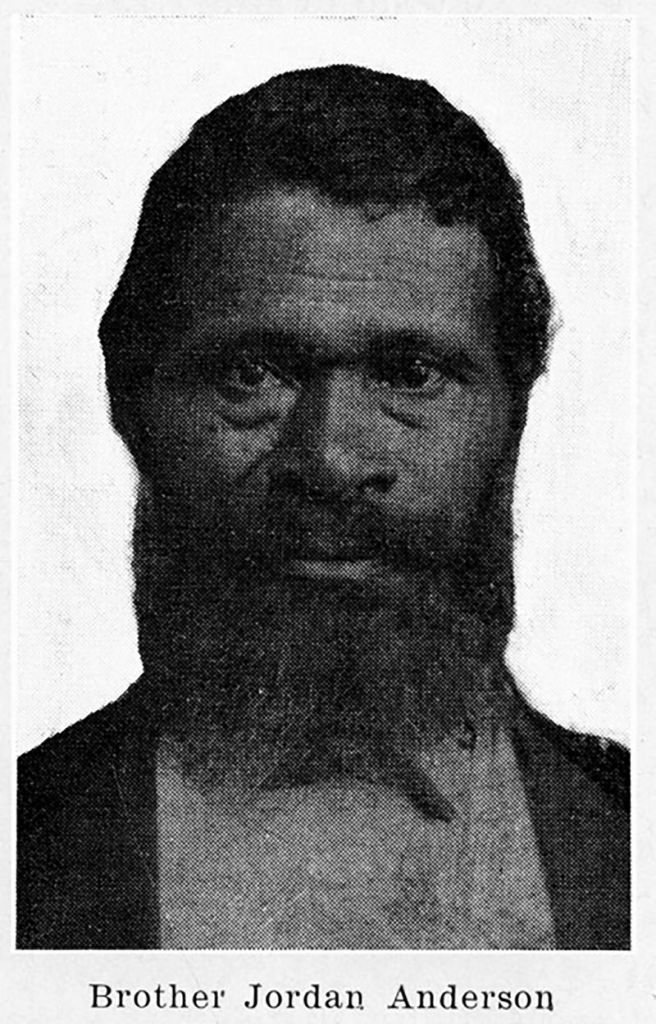
According to Raymond Winbush, director of the Institute for Urban Research at Maryland’s Morgan State University who tracked down some of Col. Anderson’s descendants, to this day, the family is “still angry at Jordan for not coming back, knowing that the plantation was in serious disrepair after the war.” As he’d spent 32 years enslaved by the Andersons, Jourdon was intimately familiar with their plantation, and they’d hoped that if he returned, others they’d enslaved might stay on, even after they’d been freed. Instead, Col. Anderson died destitute in 1867, only two years after his missive to Jourdon.

As for Jourdon, he lived another 40 years in Dayton, OH, passing away at 79 in 1905. His obituary is even referenced in the archives of the Dayton Daily News, and he’s buried next to his Mrs. in Dayton’s Woodland Cemetery and Arboretum.

Jourdon & Mandy, finally resting in peace.

Jourdon’s family and many more prospered too. Among many other achievements in Dayton, Jourdan’s son, Dr. Valentine Winters Anderson, was a supporter of renowned poet Paul Laurence Dunbar in establishing the Dayton Tattler, the city’s first Black newspaper.

Times may change, but Jourdon and his family are shining examples that the power of the written word lives forever… as long as the rewriters of history will let it.

*Ed. Note: As usual, I’ve spelled Jourdon throughout the same way it was spelled in his original letter, not as history recorded him.


KEEP GOING BLACK IN HISTORY:

Read Jourdon’s letter as it was published in the Freedmen’s Book at the Dickenson College Archives.

More records authenticating Jourdon’s life and ancestors, along with those of his enslaver’s, is available with context from current historians, through an article circulated by the Associated Press.

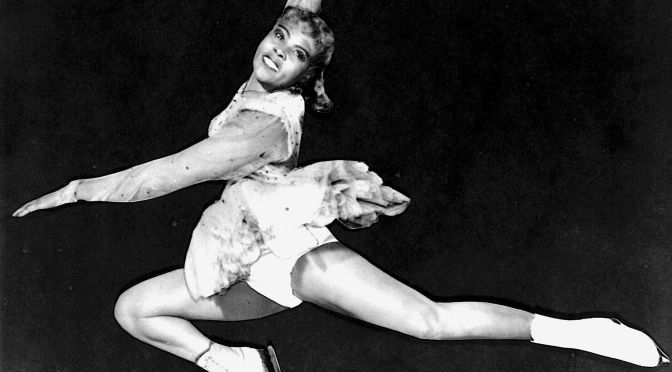
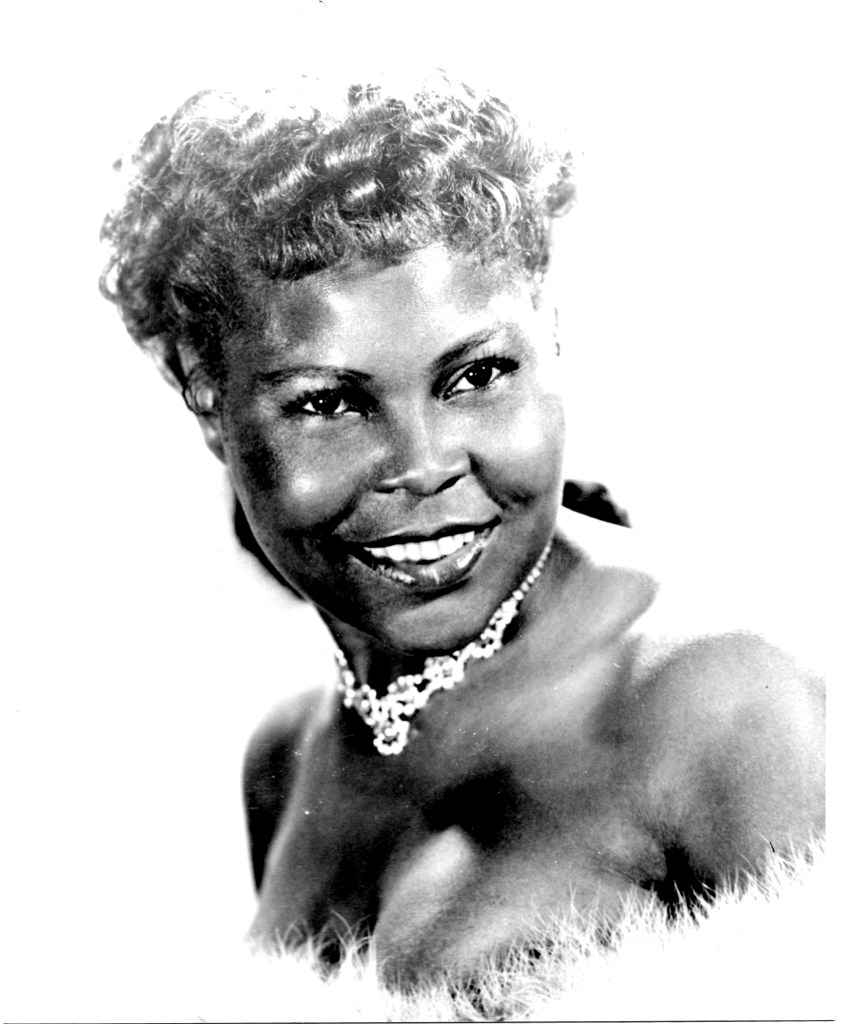
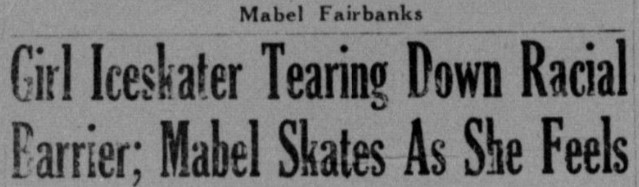
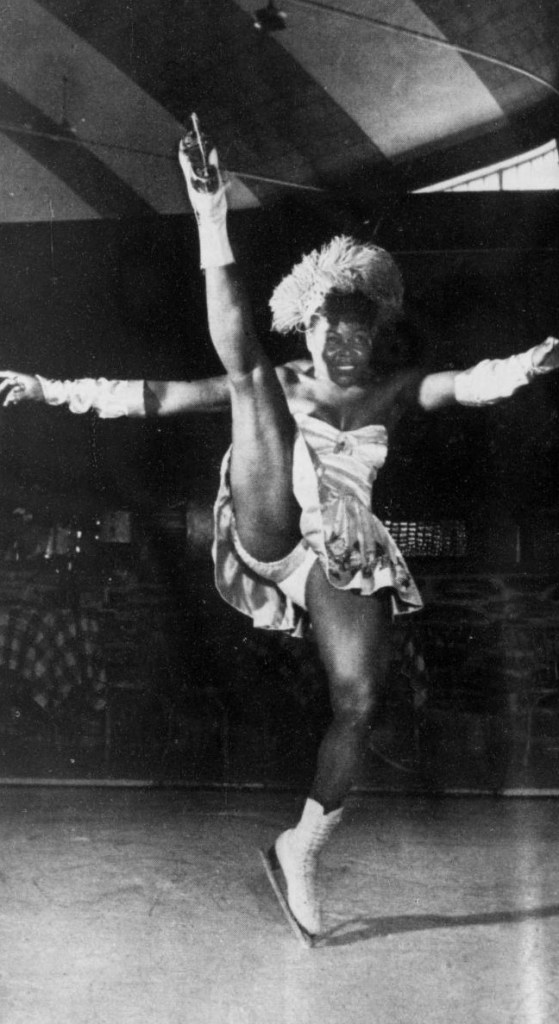
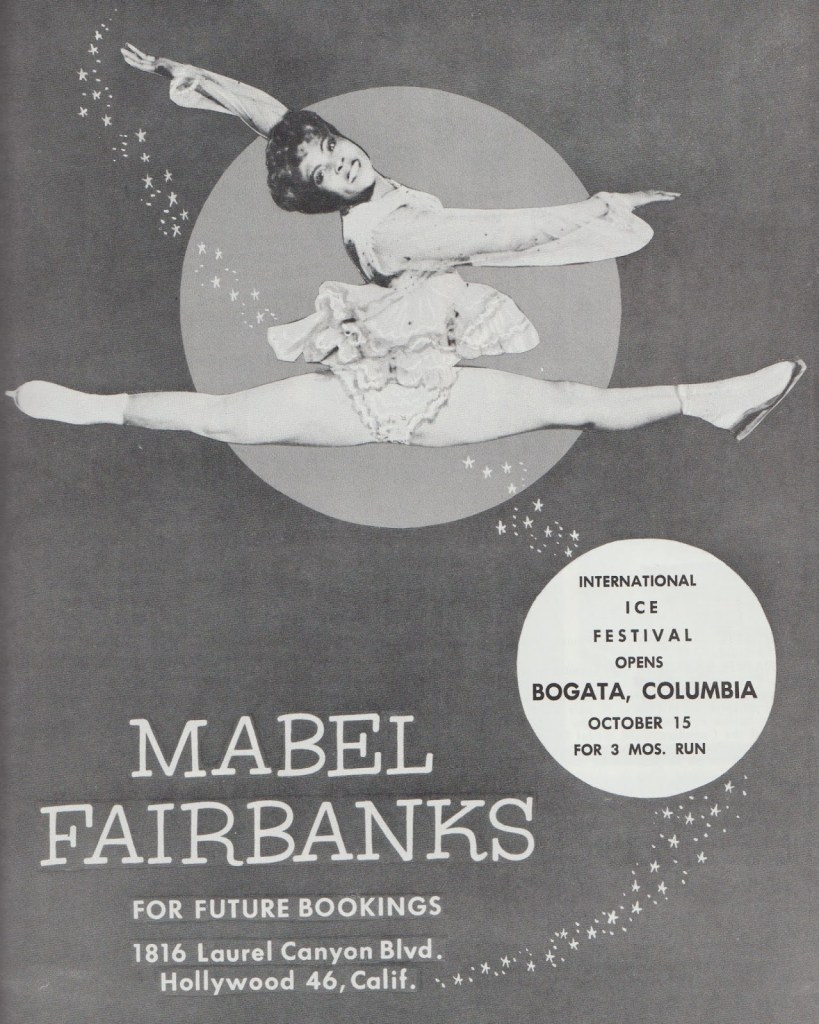
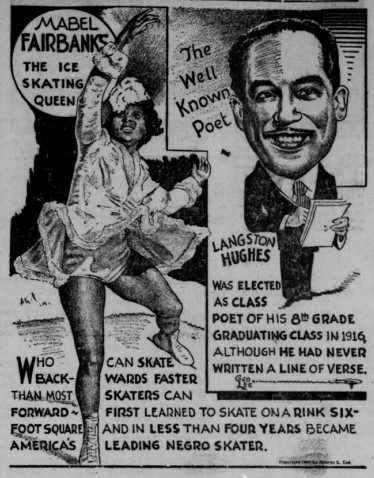
DAY 14 — Mabel Fairbanks

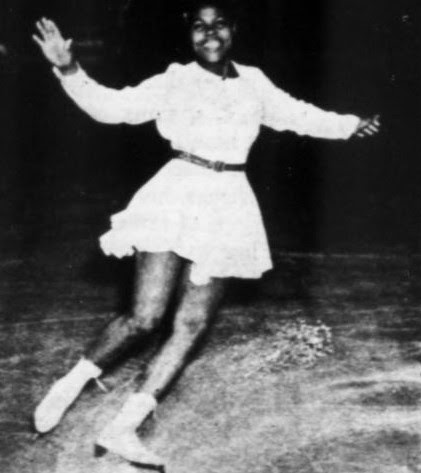
Each winter, from a window high above New York’s Central Park, Mabel Fairbanks gazed down in awe at each of the tiny figures dancing over the frozen pond. One winter, she decided to stop being an onlooker, and with a couple of dollars she’d scraped together from babysitting earnings, Mabel marched down to a nearby pawn shop, and bought herself some brand new used ice skates. Even two sizes too big and stuffed with cotton, they were her first major step toward making it on the rink.

In the late 1920s, she was only fourteen and still too young to know that no matter how much skill she demonstrated on those blades, she’d be iced out of figure skating. Born Black and Seminole, someone like Mabel was a literal blemish against the lily white landscape of the sport.

In fact, Mabel’s first experience on the ice was in Harlem. Even though the ice was better in Central Park, she didn’t have the confidence to skate back where she’d first seen it happen, back where people didn’t look like her. But with a little encouragement, she went for it, and her bravery was rewarded. “I got on the pond and then I discovered that I could skate around too, just like the other kids,” she said. “Blacks didn’t skate there. But it was a public place, so I just carried on.” 

Naturally, she stood out among the crowd.

And for once, the color of her skin wasn’t the only reason.

Spectators took notice of Mabel’s talent and one suggested that skills like hers belonged on a real rink. But when she followed that suggestion, Mabel discovered that talent doesn’t matter when you can’t even get through the front door.

“I stood in line and said, ‘I’m next, I’m next!’ but I’d get up front and they would just push me away,” she recalled.

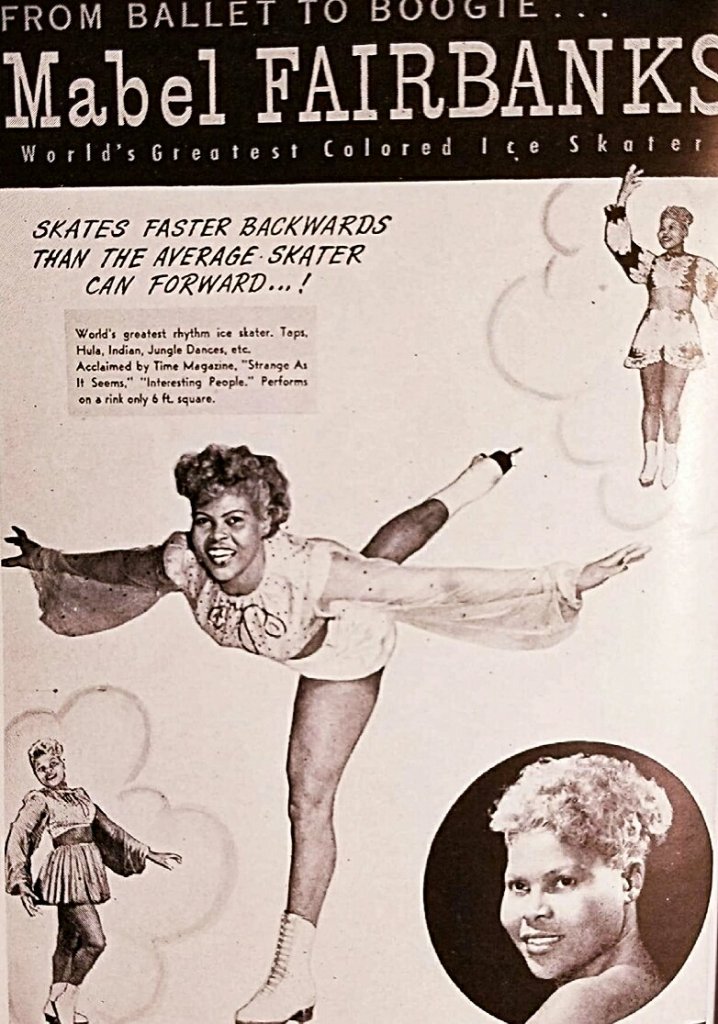
She wasn’t giving up that easily. If Mabel couldn’t get into a rink, she’d bring the rink to her. With the help of a relative, she built her own 6×6 indoor practice rink: a block of wood and dry ice, topped with sheet metal and freezing water.

Mabel’s persistence paid off when she was finally admitted into that real indoor rink (even if it was after hours). She was noticed again, and this time, it was by figure skating royalty. Olympian and nine-time U.S. ladies champion Maribel Vinson Owen helped Mabel perfect her technique and encouraged her to keep going, even if she had to go it on her own.

So Mabel packed up her tiny personal rink and did just that. She took skating places it had never been before like the Renaissance Ballroom, the Apollo Theater, and social clubs all over New York City and Harlem. Each show was more than a novelty; Mabel was skilled enough to perform some of figure skating’s most difficult routines, and create her own moves too. The New York Age, one of America’s most prominent historically Black news publications, credited Mabel as the inventor of the Flying Waltz Jump, the Camel Parade, and the Elevator spin, even though they weren’t named after her as per the standard in figure skating.

By the 1930’s, Little Mabel from Central Park had grown into a sensation.

But she still couldn’t try out for the Olympics, because she couldn’t gain admission to a qualifying event. So once again, Mabel made her own way.

Mabel skated her way through interracial ice tours and USO clubs in France, Germany, Cuba, Japan, and all over the world before coming back to the States as a bonafide star. Her show included flying splits and other death-defying jumps, wildly flexible grabs, and unbelievable balance through it all. When she took that show to Vegas, celebrities and Hollywood flocked to witness Mabel’s talent unlike they had ever seen before, and certainly unlike they’d been allowed to see before from a Black woman.

But she STILL had to run a whole campaign to be able to practice at the Pasadena Winter Gardens, where she and her skates were greeted by a sign reading “Colored Trade Not Solicited” (read: “Melanated people, go elsewhere.”) And even when she toured with the Ice Capades, she was expected to eat separately from the rest of the cast. 

And still, her star power couldn’t be denied. By 1951, Mabel landed a regular role on an LA television show called “Frosty Frolics,” where she could dazzle viewers watching at home. For the next four years, Mabel appeared on television and toured in ice skating shows, until “Frosty Frolics” was finally canceled and she found a new calling. Words from her very first mentor, Maribel Vinson, still echoed in Mabel’s mind: “‘Mabel, there are never going to be Black kids in competitions or even ice shows unless you do something about it.’”

When the Civil Rights Act passed in 1964, Mabel had a stable of Black skaters ready to break into the sport. It was only 2 years before one of her students, Atoy Wilson, became the first African-American figure skating champion. Since then, many more skaters of color like Debi Thomas, Kristi Yamaguchi, and Tai Babilonia have come under her wing and gone on to be champions. She even gave a young Scott Hamilton skating lessons as part of a program she established for skaters whose families couldn’t afford the monumental costs of elite figure skating, as she campaigned for greater accessibility all around in the sport.

Constantly pushing boundaries, Mabel continued coaching, mentoring and financially assisting skaters until she was 79 years old. Though she was never able to skate competitively herself, Mabel’s tireless contributions to the sport did not go unrecognized, and she was inducted into the United States Figure Skating Hall of Fame in 1997, the first African-American to be so acknowledged.

Before her death in 2001, Mabel told the Los Angeles Times, “If I had gone to the Olympics and become a star, I would not be who I am today.”

And who she was changed the face of figure skating forever.


KEEP GOING BLACK IN HISTORY:

Olympic commentator Terry Gannon broadcast a brief tribute to Mabel’s life featuring interviews with a handful of the skaters whose lives she changed.

Teen Vogue compares and contrasts Mabel’s story with the picture of figure skating today.

The LA84 Foundation, created by the Los Angeles Olympic Organizing Committee has preserved and transcribed Mabel’s whole life story in her own words here.

Read about and donate to the U.S. Figure Skating Association’s “Mabel Fairbanks Skatingly Yours” Fund to “financially assists and supports the training and development of promising figure skaters who are Black, Indigenous and People of Color (BIPOC) with the goal of helping them realize and achieve their maximum athletic potential.”

Keep exploring Mabel’s life through Mental Floss’s extremely well-documented article with links to more historical sources to dive into.

Hear from more underrepresented voices carrying Mabel’s torch into figure skating today and the barriers they still face via NBC News.