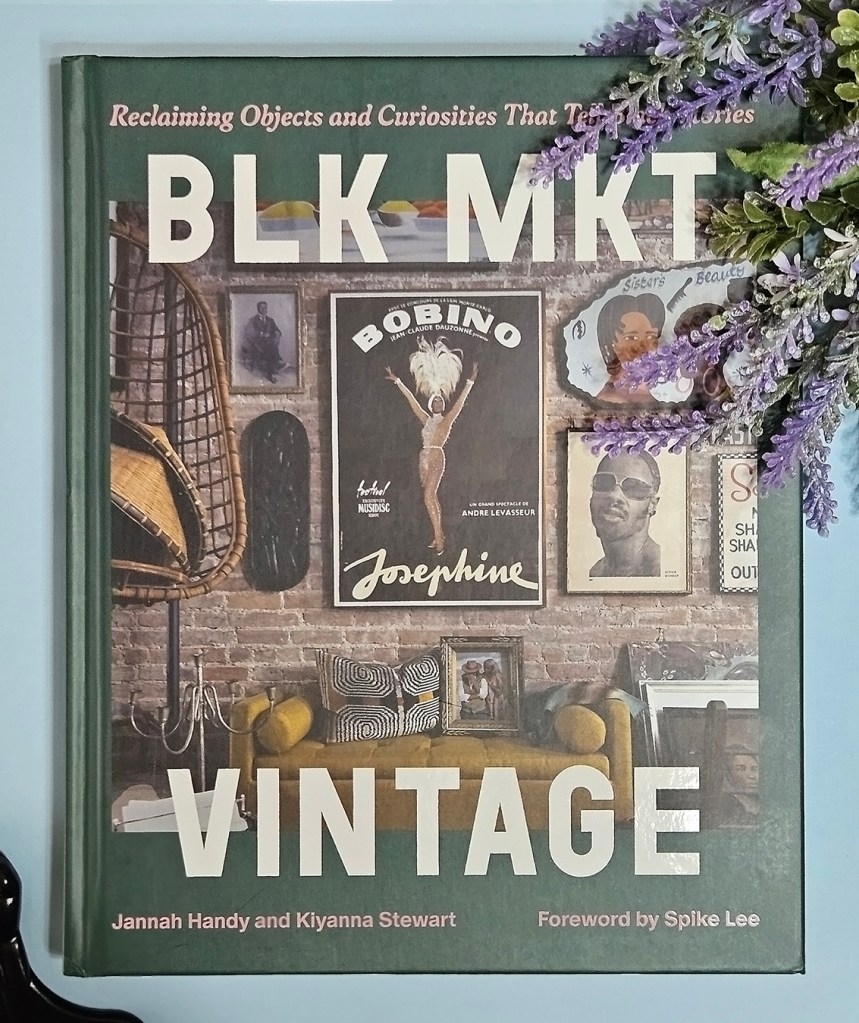
BLK MKT Vintage has seen more of my paychecks than the other three BLACK BAGS shops combined.
Theirs is also the only one I’ve never actually set foot into, and just one reason I try to avoid the phrase “next time.”
I mean… I WAS IN BROOKLYN AND EVERYTHINGGGG!
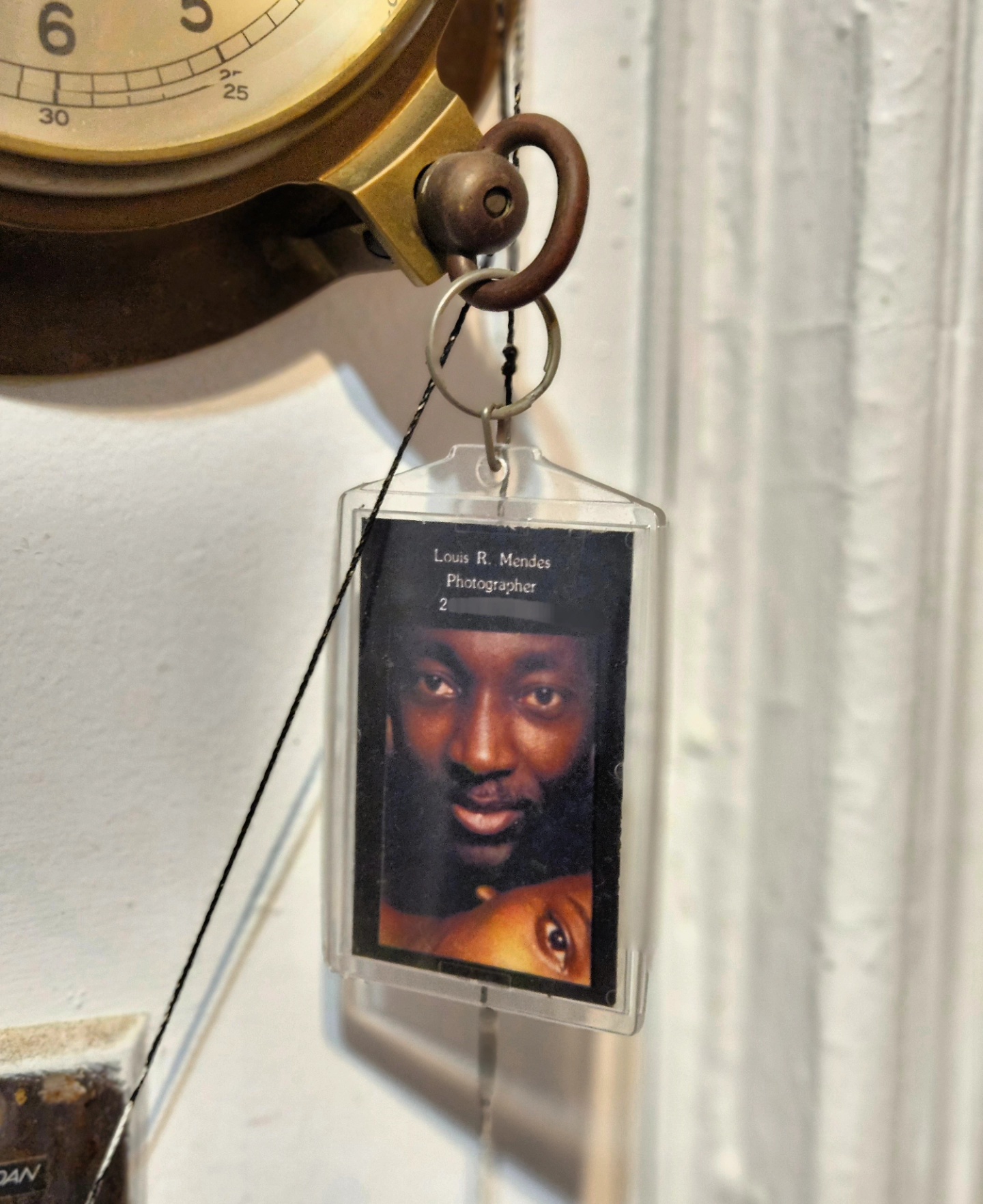
And then NY street photographer Louis Mendez said he wanted to get a picture of me with Spike Lee. 🤷🏽♀️
I regret (almost) nothing.
It even felt like fate that when I went looking for Brooklyn’s Black history, it found me instead.
(TSA and my bank account were also fully on board with fate, tbh.)
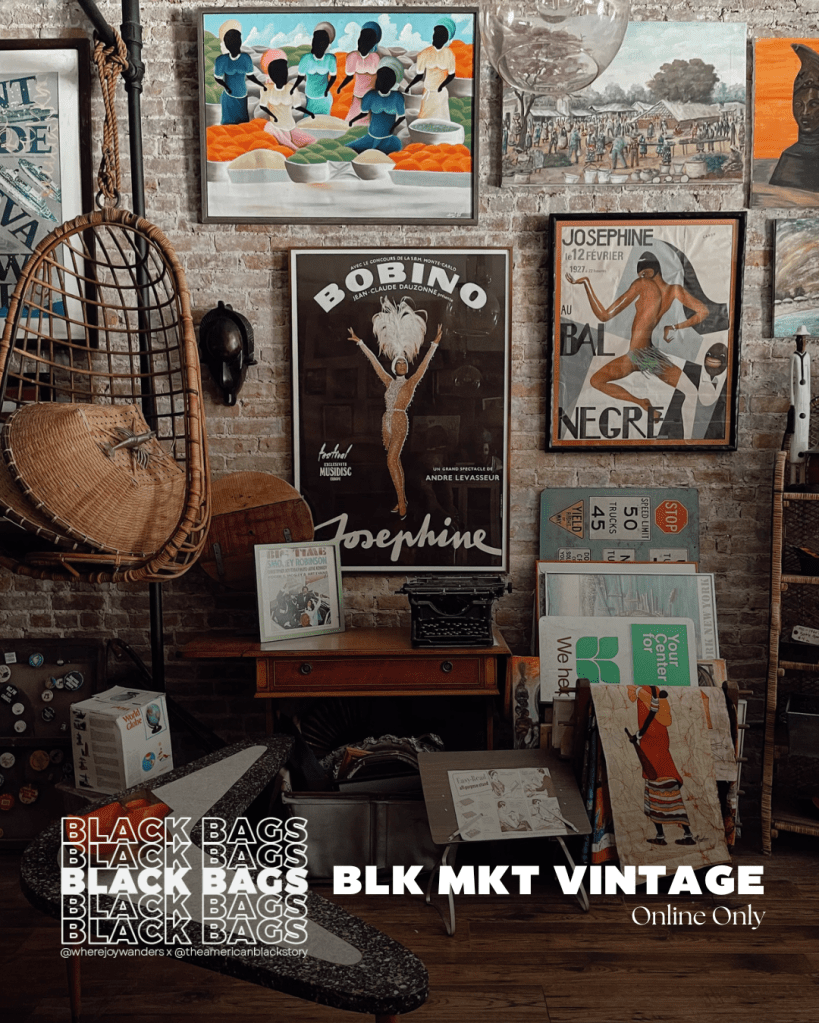
Until… BLK MKT Vintage closed their gorgeous brick-and-mortar, home to “collectibles, cast-offs and curiosities, which represent the richness of Black history.”
My inner antiquer will NEVER recover.
Sure, there’s no shortage of antique piles to comb for treasures.
Those treasures, though, so rarely reflect ME.
Discarded drawers overflow with beautifully illustrated Victorian postcards, maybe five of which feature a dignified representation of Blackness.
Gibson Girls, Norman Rockwell families, and feathered blonde hair grin from vintage ads, as if Coca-Cola and Budweiser bottles were labeled “Whites Only” too.
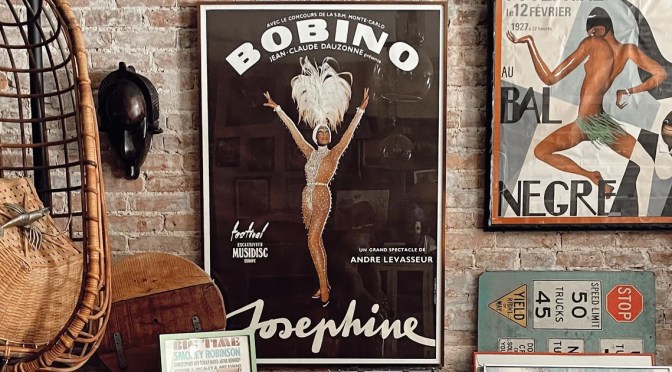
But BLK MKT Vintage curates ephemera that specifically bears witness to the Black lived experience.
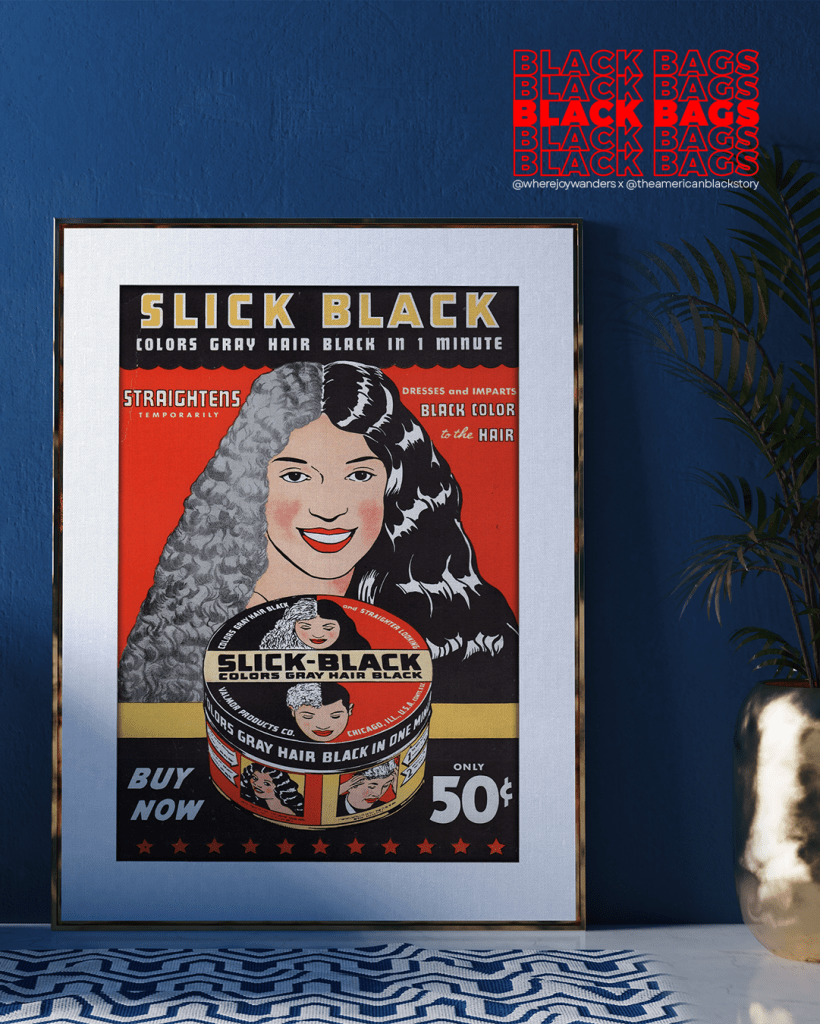
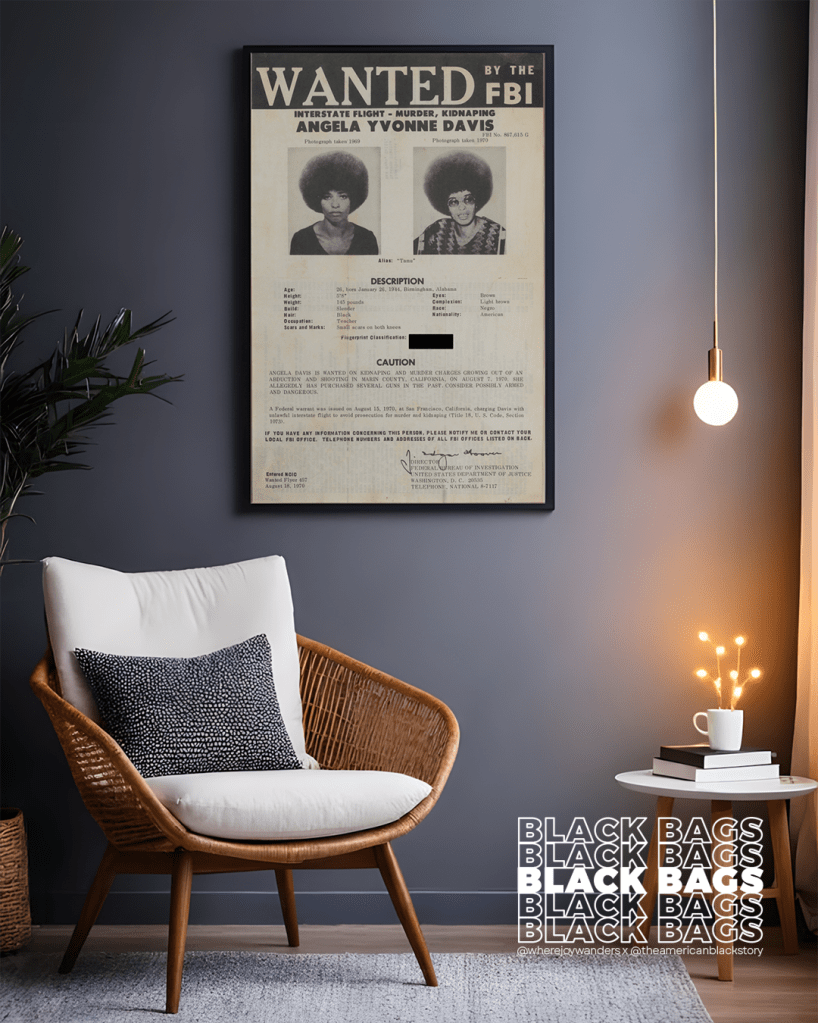
In my case, that’s an original Angela Davis FBI wanted poster and a 1930’s Slick Black hair product ad, two of my most prized BLK MKT Vintage finds.
But they also sell books, photographs, movie memorabilia, home decor and other meaningful cultural objects.
BLK MKT Vintage is the repository where there’s more to Black Americana than Bojangles, pickaninnies, and Aunt Jemima.
It’s a library of the Black diaspora from afros and Maya Angelou to Zambian art and Ziggy Marley.
Scattered throughout, general antiques like Kodak cameras, mid-century tins, even tourism bumper stickers, give BLK MKT Vintage’s inventory added depth that mirrors the Black American experience in itself — we stand at the intersection of American culture. So do they.
And nothing would please me more than helping discover something that fits you at blkmktvintage.com 🖤
Look closely in my “Black Bags” posts and you’ll find the occasional Easter egg.
This might be my favorite of them.
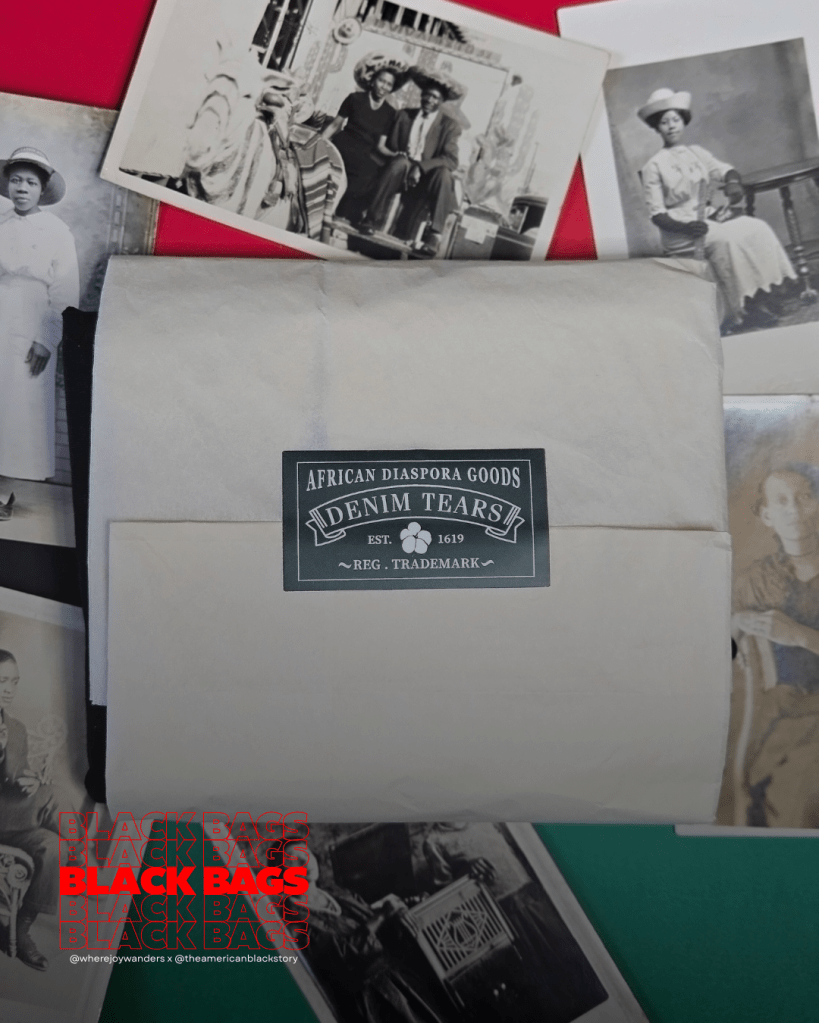
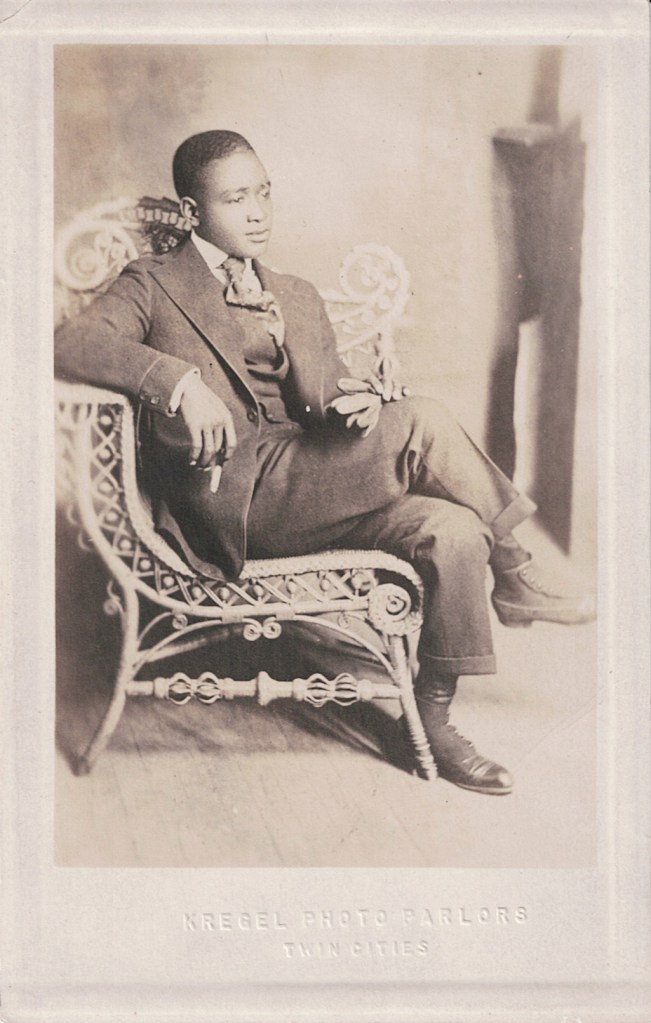
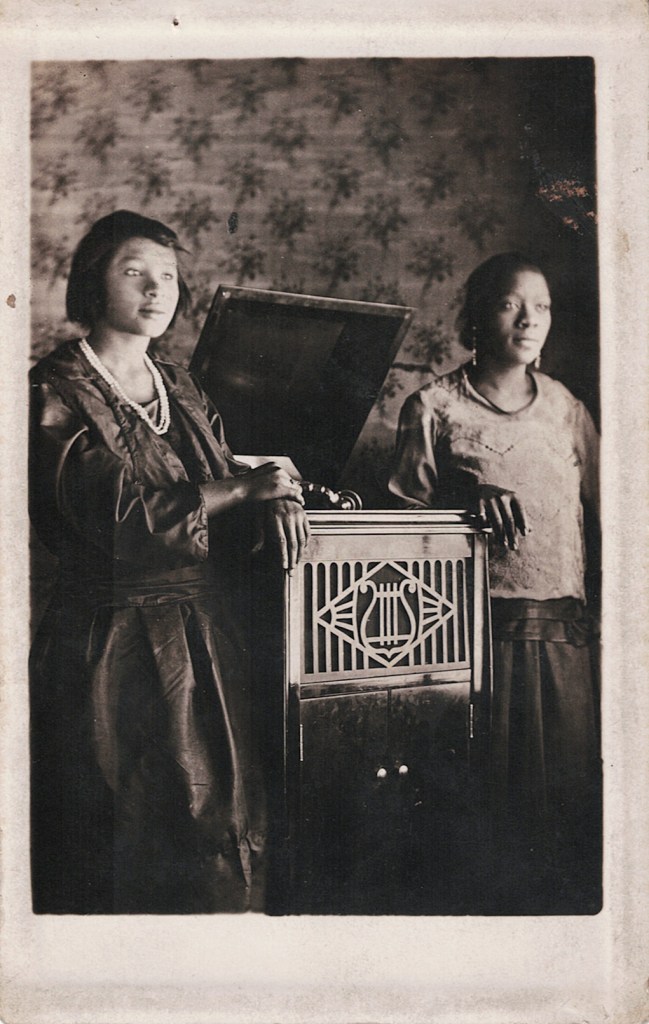
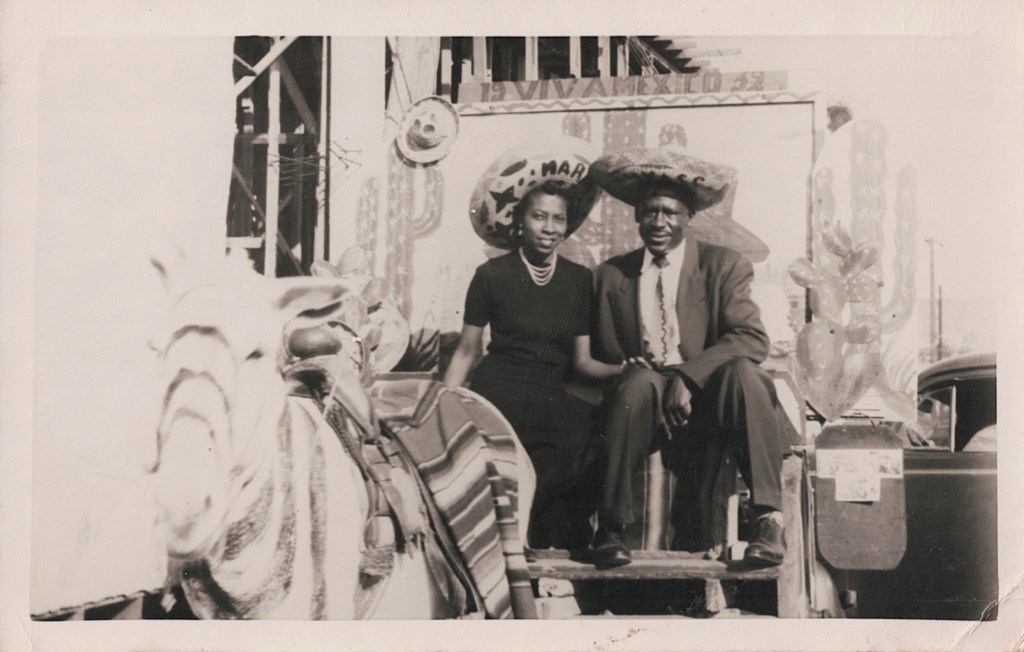
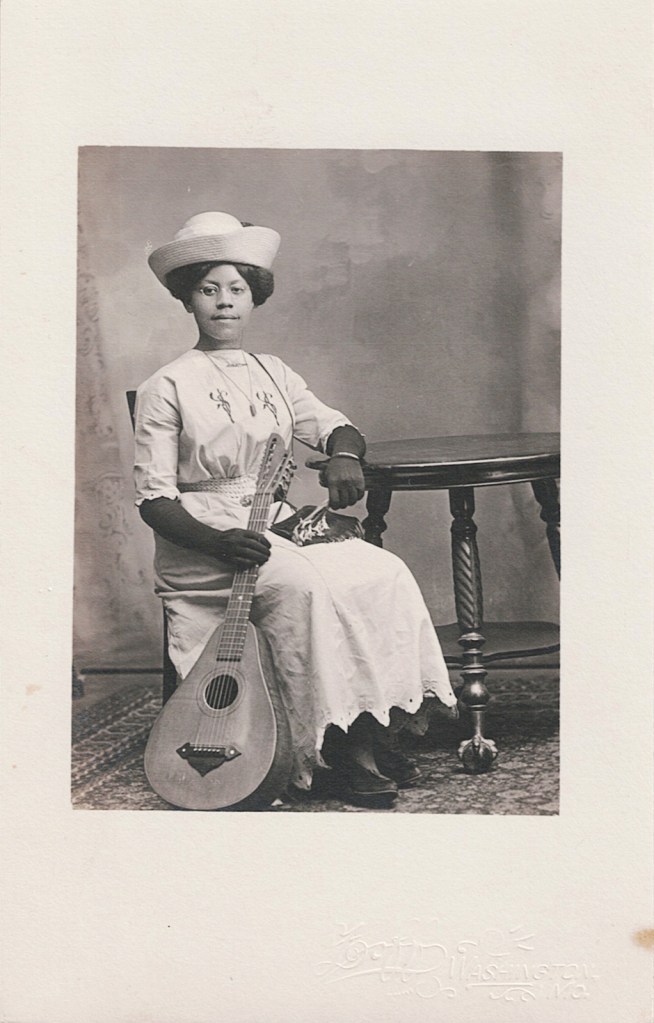
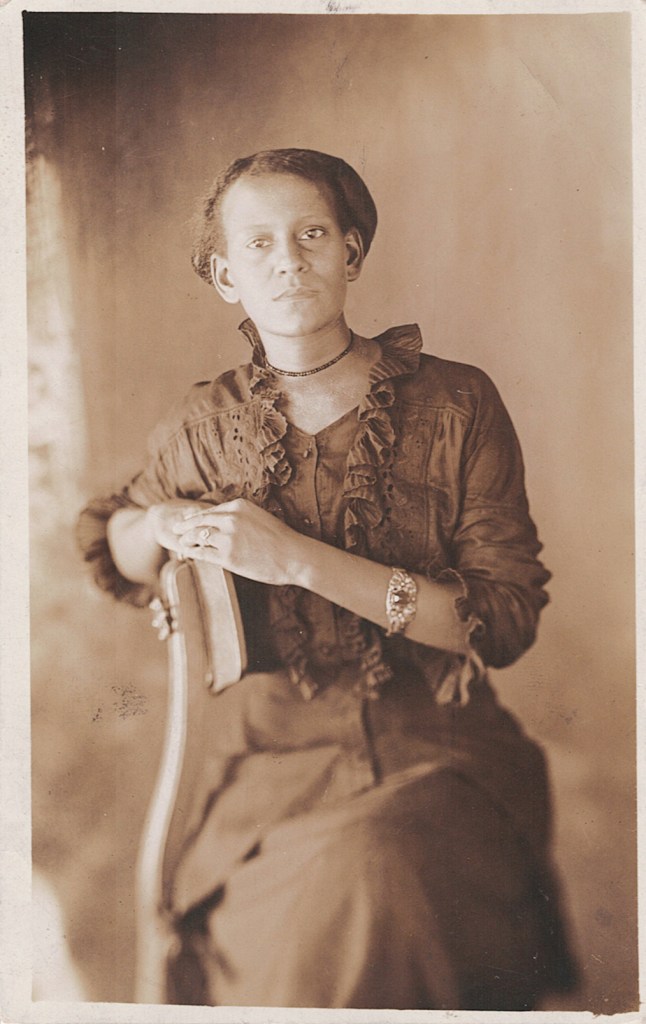
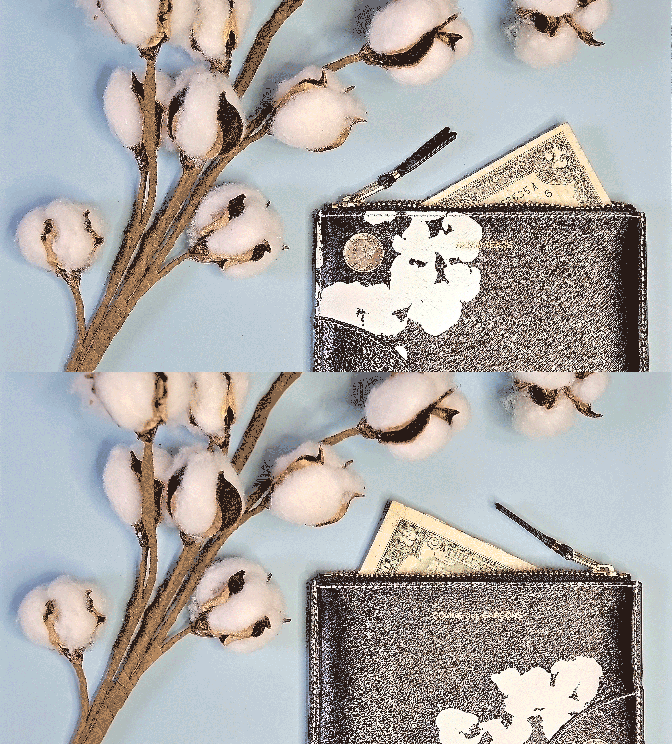
In my last post, peeking from behind my neatly wrapped @denimtears parcel, very real postcard photographs—some even embossed with the studio’s logo—have stories of their own.
These are the faces of the Met Museum’s Superfine exhibit and Denim Tears, hidden behind the veil of American History.
An immaculate gentleman, fitted even to the buttons on his heeled shoes.
Sisters in satin and lace, gazing from a beautiful Victrola.
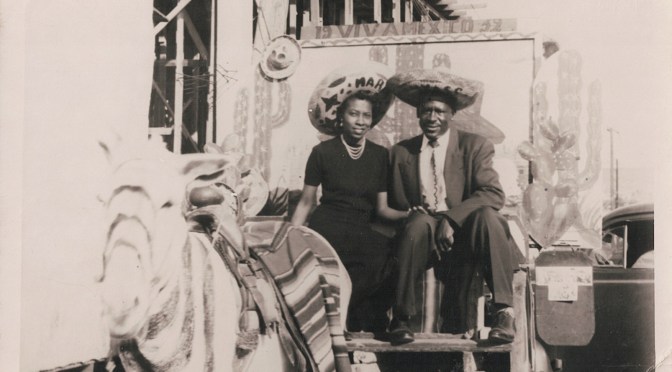
Lovers—maybe even honeymooners?—riding a donkey cart in Mexico.
A bespectacled musician accessorized with elbow-length gloves, perhaps to hide the wear to her hands?
A woman dressed all in black, whose ruffled lace waistcoat is only outdone by the exquisite jeweled bracelet and ring on her hands.
Photographs of Black people from days past already seem rare.
Photographs of them dressed in and surrounded by such luxury feel priceless.
But these five only scratch the surface of my collection.
And Superfine, hosted in the Met Museum’s premier gallery, only housed a fraction of the finery owned, made and inspired by Black Americans.
Denim Tears is their legacy.
And all three—the photographs, the exhibit, and the brand—bear witness that creative, adventurous, romantic, bespoke, affluent, and deserving have never been synonymous with “white.”
KEEP GOING BLACK IN HISTORY:
Get your African Diaspora Goods at denimtears.com
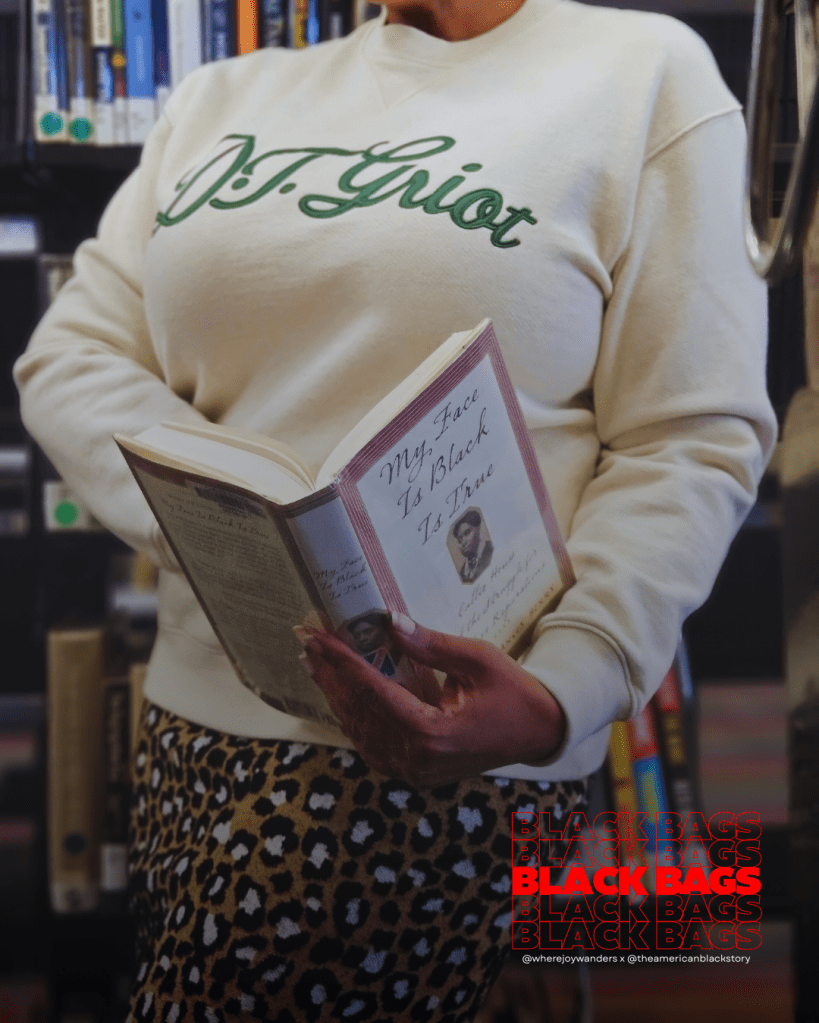
For more photos like these, follow curator at the @schomburgcenter and author, Kimberly Annece Henderson at @emalineandthem.
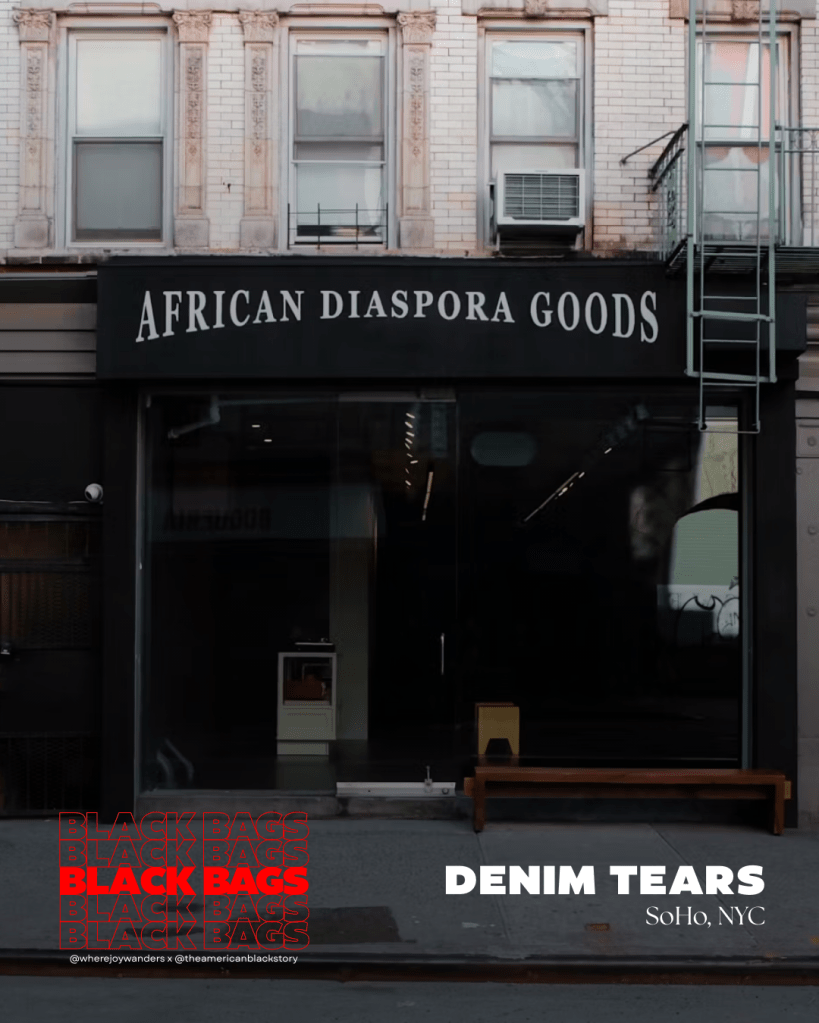
Just around the corner from the likes of Chloë and Alexander Wang, a simple, black sign stands in sharp contrast to its Spring Street neighbors, holding space for an unexpected commodity:
“AFRICAN DIASPORA GOODS.”
There wasn’t a matching sign outside of Gallery 999 at the Met Museum, but my involuntary double-take was surely the same.
Especially after I’d barely escaped the museum gift shop with my life.
Spanning multiple tables outside of the Superfine: Tailoring Black Style exhibit, @denimtears wouldn’t even let me come up for air.
Union Jack and American flag sweaters redesigned in Pan-African green, red, and black.
Plush, leather watermelon wallets in collaboration with Commęs des Garçon and logo baseball hats reminiscent of 1990s Ralph Lauren.
A single t-shirt featuring Andre Leon Talley, Jean-Michel Basquiat, and Andre Walker, makeup-smudged at the collar, hung deep on a rack.
I snatched it like the last loaf of bread before the apocalypse.
And despite being almost that poor… NEXT STOP: 176 Spring Street.
Between the Met Museum merch table and a Denim Tears ensemble featured in the Superfine exhibit (which remains in the Met’s permanent collection), the thread was clear.
Bespoke, imaginative clothing in luxurious fabrics, designed for Black bodies but accessible to anybody with swag (and the money to pay for it).
But on Spring Street, brand new themes like a Black Poseidon threatening a schooner daring to sail the Middle Passage, or cheeky Cotton Club dancers, come to life on shirts.
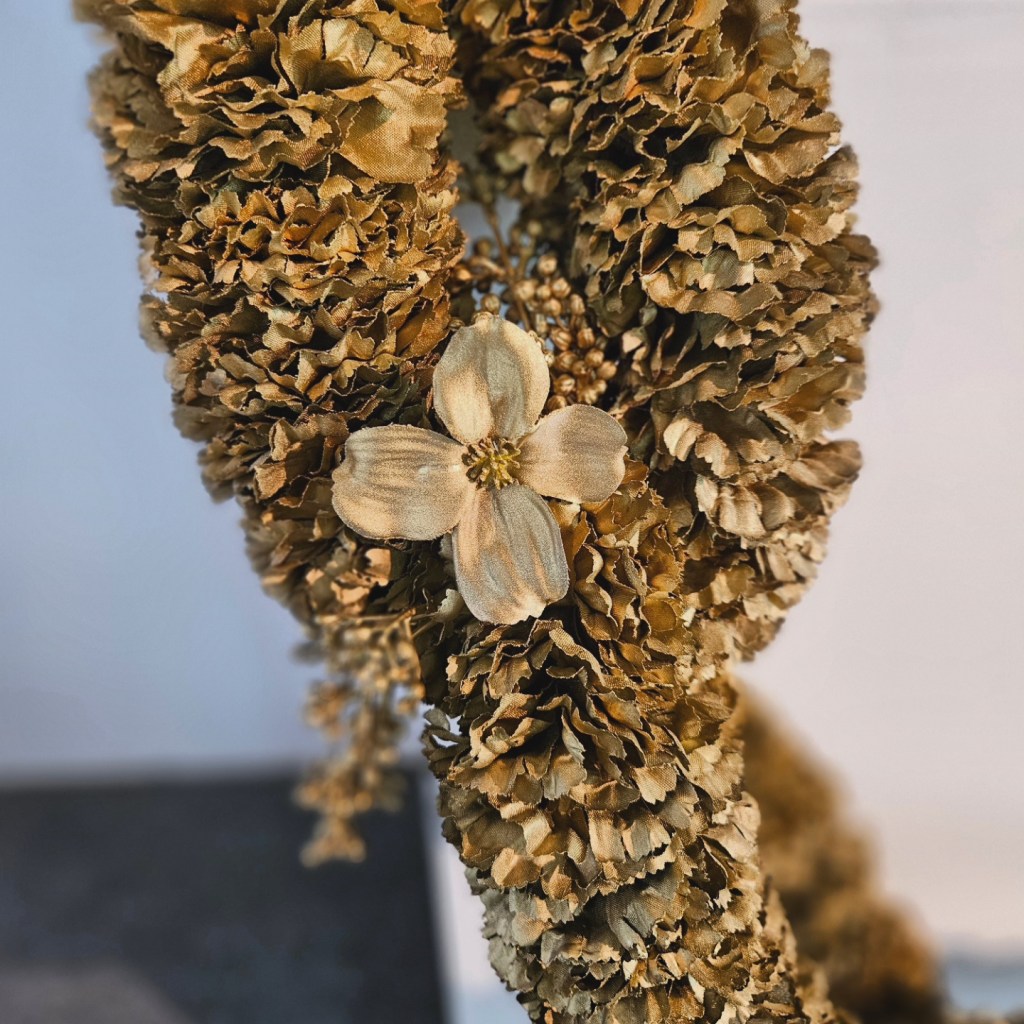
The brand’s signature cotton wreath design adorned sweats in every color, a symbol of cotton’s significance to the fashion industry, and a tribute to the enslaved people who made that possible.
Even the Denim Tears name honors the trials and tribulations Black people have overcome while still serving as the standard in fashion and culture.
If money and carry-on capacity were no object, I’d have taken one of everything.
Before I even walked into Denim Tears, I was a fan.
Since I walked out, that’s MS. Princess of Black Power, you ragamuffins.
Stonewall had a formidable security team, and her name was Stormé.
And though Marsha P. Johnson, another famous face at Stonewall, may not have participated as once believed, everybody agrees that Stormé DeLarverie was not only there on June 27, 1969—she got her lick in.
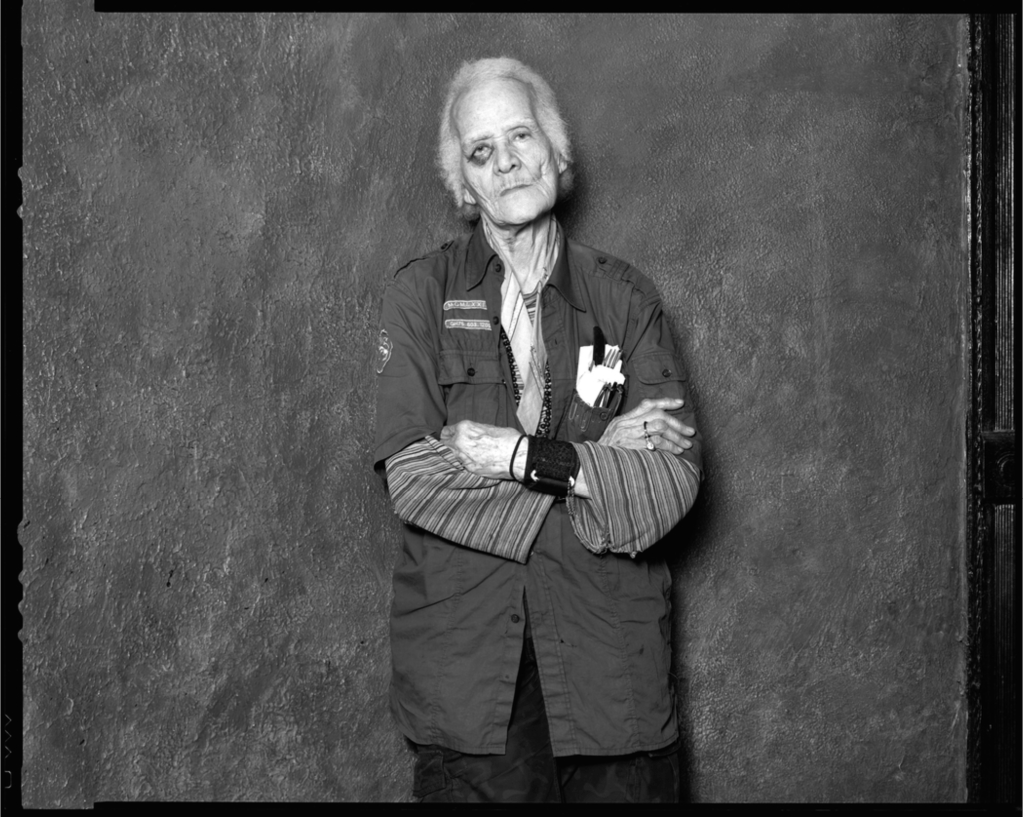
“Storme DeLarverie – January 27, 2010 12:45am,” by Tony Notarberardino. Stormé would have been approximately 90 years old here in a portrait taken at NYC’s Chelsea Hotel. Read the backstory here.
“She literally walked the streets of downtown Manhattan like a gay superhero,” her friend Lisa Cannistraci told the New York Times.
Well-known for her neighborhood patrols—and her gun permit—Stormé didn’t tolerate “ugliness” in her community. But that’s exactly what met her when she rushed to the chaotic raid at the Stonewall Inn.
“Move along, f****t,” NYPD spat at her.
New York penal code prohibited cross-dressing, but police had to know someone was cross-dressing to enforce it. Stormé had been a chameleon all her life.
That night, she lived up to her name.
Stormé defied police orders, insisting on standing watch over their treatment of her “children” at Stonewall.
Her resistance was met with a club to the face.
In return, the man attached to that club officially met Stormé.
“I walked away with an eye bleeding, but he was laying on the ground, out,” she recounted to PBS.
The New York Times features an interesting article comparing Stonewall from the perspectives of two of its major players, Stormé and Deputy Inspector Seymour Pine.
NYPD couldn’t have known it, but never backing down was Stormé’s specialty.
Born in 1920 as Viva May Thomas, the clear offspring of a Black mother and white father in a time when interracial relationships were still illegal, Stormé had grown up a pariah. She was once so badly bullied, she was left hanging from a fence by her leg, an injury she carried her entire life. The trauma stuck with her too. Even as a queer elder, Stormé wouldn’t repeat the names she’d been called as a child.
“Somebody was always chasing me – until I stopped running,” she said in one documentary.
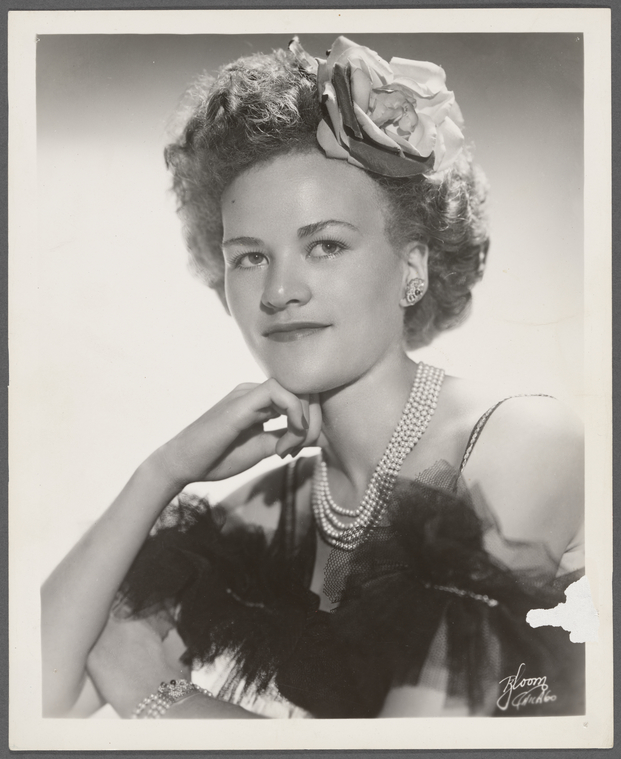
Viva May as a fresh-faced 30 year old, courtesy of NYPL.
Finally done running, Stormé started shining.
From a prolific local singing career to a side-saddle horse act with the Ringling Brothers Circus, Stormé confidently found her place center-stage.
But somewhere along the line—public documentation of Stormé’s life starts to get intermittent as her name changed several times throughout the years—she also discovered that she wanted to shine a little differently.
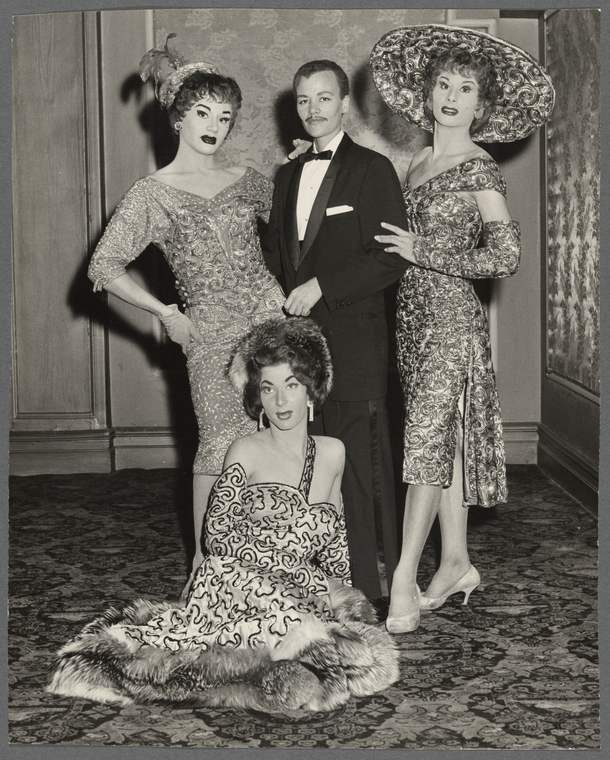
In 1955, Stormé remerged as the only female-born performer at the Jewel Box Revue, a drag burlesque and variety show. At the same time, she unveiled a whole new face.
Stormé remembers that “somebody told me that I would completely ruin my reputation, and…didn’t I have enough problems being Black? I said, I didn’t have any problem with it. Everybody else did.”
Stormé slowly perfected that face until as far as casual observers, paying customers, and consequently, police officers, were concerned, at least on her performance nights, they were looking at a man.
She worked as a bodyguard, volunteer street patrol, and bouncer for several gay clubs still operating in New York like The Cubby Hole and Henrietta Hudson, but hated those titles.
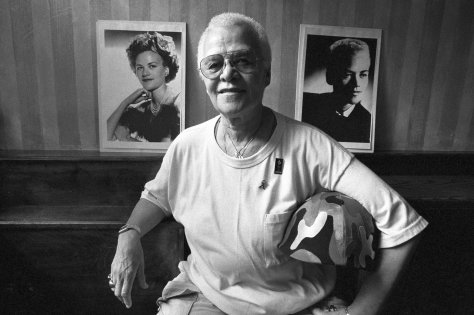
Stormé packing heat in front of the Cubby Hole in 1986.
“I consider myself a well-paid babysitter of my people, all the boys and girls,” a friend recalled her saying.
When AIDS ravaged New York’s gay communities in the 80’s, that same friend asked Stormé for a $5 donation to buy Christmas gifts for those affected.
“Several hours later Stormé walked back into the restaurant with over $2,000,” and subsequently made it her annual tradition, he wrote.
In 1999, Services & Advocacy for LGBTQ+ Elders awarded Stormé their Lifetime achievement award for “crashing the gates of segregation and for the gender-bending example she showed the world,” noting that “she lives her life quietly and does much of what she does very quietly, sometimes anonymously… because what matters to her is that she does what she does, not that it makes a big splash.”
Unfortunately, that quiet life did not serve Stormé well. As she aged and her financial, living, and mental conditions all deteriorated, friends and admirers found themselves rallying others to her aid. Describing her as “someone who gave willingly of herself so that others might live meaningful, fulfilling lives free of discrimination and harassment,” their attempts at supporting an aging Stormé ultimately fell to a non-profit organization.
“I feel like the gay community could have really rallied, but they didn’t,” her friend Lisa told a Times reporter who found Stormé’s absence from NY’s 2010 Pride parade so unusual, he made it his headline.
Four years later, at the ripe old age of 93 (miraculous for anyone, but especially among queer elders), Stormé passed away quietly and alone.
But not forgotten.
When the National LGBTQ Wall of Honor was unveiled inside the Stonewall Inn, 50 names adorned the plaque in honor of the Rebellion’s 50th anniversary.
Listen in on PBS In the Life’s profile and interview with Stormé.
Hear more from Stormé including her singing, perhaps for the very last time, at 2:30.
There’s no more complete history of Stormé’s entire life than the one created by Chris Starfire here.
The Stonewall Veterans’ Association has an extensive entry on Stormé’s activism here.
The Code Switch podcast tackles Stormé’s story through an intersectional lens of queer pride, police brutality and racism, all topics prevalent throughout her life and still relevant today. Listen in here.
Read Stormé’s obituary published in the New York Times on May 30, 2014.
The Third Avenue Trolley conductor had no idea he’d picked the right one on the wrong day.
The organist for New York’s First Colored Congregational Church was running late for Sunday service.
But in her haste, Lizzie Jennings almost single-handedly desegregated the New York Public Transit system…
A full century before Montgomery met Rosa Parks.
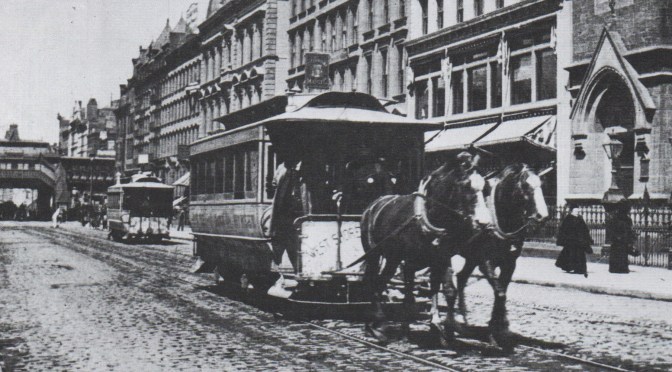
Two types of horse-drawn trolleys operated in the streets of New York: one was designated “colored riders allowed,” and the other’s ridership was left to the whims of the operator and his white passengers.
One trolley ran a regular, timely schedule. Guess which one did not?
New York’s Black citizens had two choices: wait or walk.
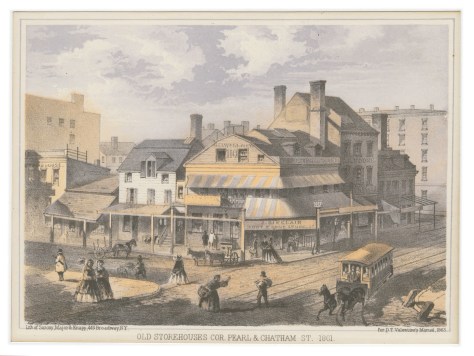
New York as it would have appeared to Lizzie Jennings. See the horse-drawn trolley at the bottom right corner.
On July 16, 1854, Lizzie Jennings didn’t have time for all that and boarded the first trolley she saw.
The operator still tried it.
Wait for the next car, he told her.
But she was in a hurry, Lizzie replied.
That one’s got your people, he persisted.
What people? Lizzie spouted back.
A car that allowed Black riders came and went because it was full.
Lizzie sat unmoved.
“He still kept driving me out or off the car,” Lizzie explained in her account published in the New York Tribune. “Said he had as much time as I had and could wait just as long.”
“I replied, ‘Very well. We’ll see.'”
The trolley operator’s eventual surrender came with a disclaimer: “if the passengers raise any objections, you shall go out… or I’ll put you out,” Lizzie wrote.
Quick to clap back, she “answered again and told him I was a respectable person, born and raised in New York, did not know where he was born and that he was a good-for-nothing impudent fellow for insulting decent persons while on their way to church.”
Big NYC energy from a little lady in 1854.
So big, the operator tried to physically remove her.
Lizzie grasped onto the window, his coat, anything within reach to keep from being forcibly removed. They scuffled for several minutes before the operator called on the trolley’s horse driver for an assist.
If they were going low, she’d meet them in hell.
“I screamed ‘murder’ with all my voice.”
The pair finally resorted to driving the trolley to the nearest police officer, with Lizzie kicking and screaming the whole way.
Pushing her onto the ground, the officer sneered at her to “get redress if [she] could.”
So she did. Remember when I said Lizzie was the right one?
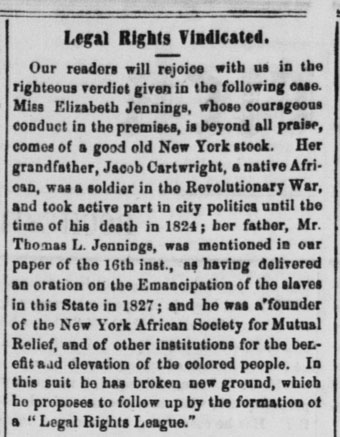
Elizabeth Jennings was the daughter of Thomas Jennings, the first Black person awarded a United States patent, owner of a profitable tailoring business, and a founder of THE Abyssinian Baptist Church, currently active in Harlem.
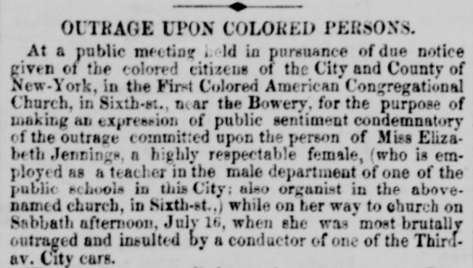
Her paternal grandfather had connections to Frederick Douglass’ Paper, and Lizzie’s personally written account of her mistreatment was published there, The New York Tribune, and many other abolitionist papers.
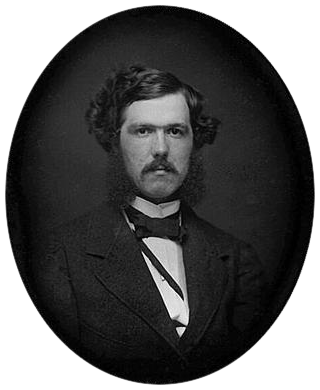
Lizzie’s powerful network didn’t stop there. They brought a 24-year-old upstart fresh out of law school to her door.
That man’s name was Chester Alan Arthur, future 21st President of the United States.
The Historical Society of the New York Courts documents a number of cases Arthur tried in support of African-American civil rights.
Against an all-white, all-male jury, Lizzie & Chester did the seemingly impossible: THEY WON.
News of Lizzie’s historic judgment in Frederick Douglass’ Paper.
Lizzie was awarded cash damages from the Third Avenue Railroad Company, but more importantly, an agreement to desegregate their trolleys, effective immediately.
“Railroads, steamboats, omnibuses, and ferry-boats will be admonished from this, as to the rights of respectable colored people,” The Tribune wrote.
Those who ignored the judgment weren’t far behind on the Jennings’ War Path.
The Legal Rights League, formed by Lizzie’s father Thomas, challenged every last New York transit hold out until in 1861, just seven years after Lizzie’s impromptu sit-in, ALL of them were finally desegregated.
After her case was won, Lizzie largely retreated into ordinary life, but she didn’t stop being an extraordinary person.
Until her death in 1901, Lizzie operated New York’s first kindergarten for Black children from her home.
All that history from a lady who just wanted to go to church, and hardly anybody knows her name.
But the city of New York is working to change that. There’s already a section of Park Row near her historic ride, dedicated to Elizabeth. She Built NYC, an arm of the NY Department of Cultural Affairs has fully funded five statues honoring trailblazing New York women.
Elizabeth Jennings is one of them.
As for the trolley operator, the horse driver and the policeman who abused her? They’ve virtually disappeared from history.
Maybe somebody should check with their people.
KEEP GOING BLACK IN HISTORY:
Lizzie is one of many famous New Yorker’s whose life and death were overlooked by the Times until modern days and their article on her here.
Read over Elizabeth’s first-hand account published in the NY Tribune at the Library of Congress.
Read The Search for Elizabeth Jennings, Heroine of a Sunday Afternoon in New York City for FREE at JSTOR.
STILL can’t get enough Elizabeth? Visit Dr. Katharine Perotta’s award-winning Elizabeth Jennings Project.
“If you walked by a street and you saw a rose growing from concrete, even if it had messed up petals and it was a little to the side, you would marvel.” – Tupac Shakur, Harlem, NYC.
I’ve been to NY many times now, but Louis introduced me to Harlem. Before my Sunday night flight, I revisited and found more than enough reasons to return.
This beauty was just one of them.
Thank you, followers, for indulging my Blackstory side journey.
And my thanks to you, NYC, for the first-hand reminder that Black History is thriving all around us, and for gifting me so many unique experiences with some of your most quintessential history makers.
[Ed. Note: This post is part of a one-time February 2024 mini-series that took me to NYC where I was treated to an abundance of Blackstories first-hand. In place of my usual February content, I chose to share my own real-time (-ish) lived experience to honor the vibrant people New York put in my path.]
Last night in NYC & the city had me fully feeling myself.
Valerie June, Louis Mendes, Joe Hammond, Tiffany & Co., Selena Nelson, Spike Lee.
By this point, you couldn’t tell NYC Joy nothinggg.
And she had a thought.
That first night, no one expected Valerie June to exit into the main hotel.
On my last night, I could use that knowledge to squeeze one more drop of magic from the Big Apple.
Worst case scenario, I was all dressed up for a Saturday evening in NYC. Oh, no.
So I called a car to take me back to Café Carlyle where this all began.
For the next 15 or 20 minutes, I slunk around their lobby trying not to be weird. Temperatures were in the 30s most of my time in NYC, and I’m too old to choose cute over comfortable, so to hotel guests and passersby, I was just some creep in a coat.
Just as I was reaching peak levels of awkwardness, the café door swung open and Valerie June rushed out in a wave of pink tulle…
Until her dress snagged on someone/something along the way, jerking her back like a pull-string doll.
It was the most adorably ordinary thing I may have ever seen.
And snapped me back to the reality that I was WOEFULLY unprepared.
Another fan nearby clutched a VJ album and book with a blue Sharpie.
I’d shown up with absolutely nothing but a story about how I’d seen her in Austin just the week before and my NY-given swag.
You ever looked back on a moment and realized that your brain was the real MVP, working faster than you were actually processing thought?
Did I have any writing utensil? No.
Did I have a single scrap of paper? Of course not.
Would it be silly for her to sign a key card from a totally different hotel? Absolutely.
But Valerie June’s setlist had included one of my favorites, “Workin’ Woman Blues.”
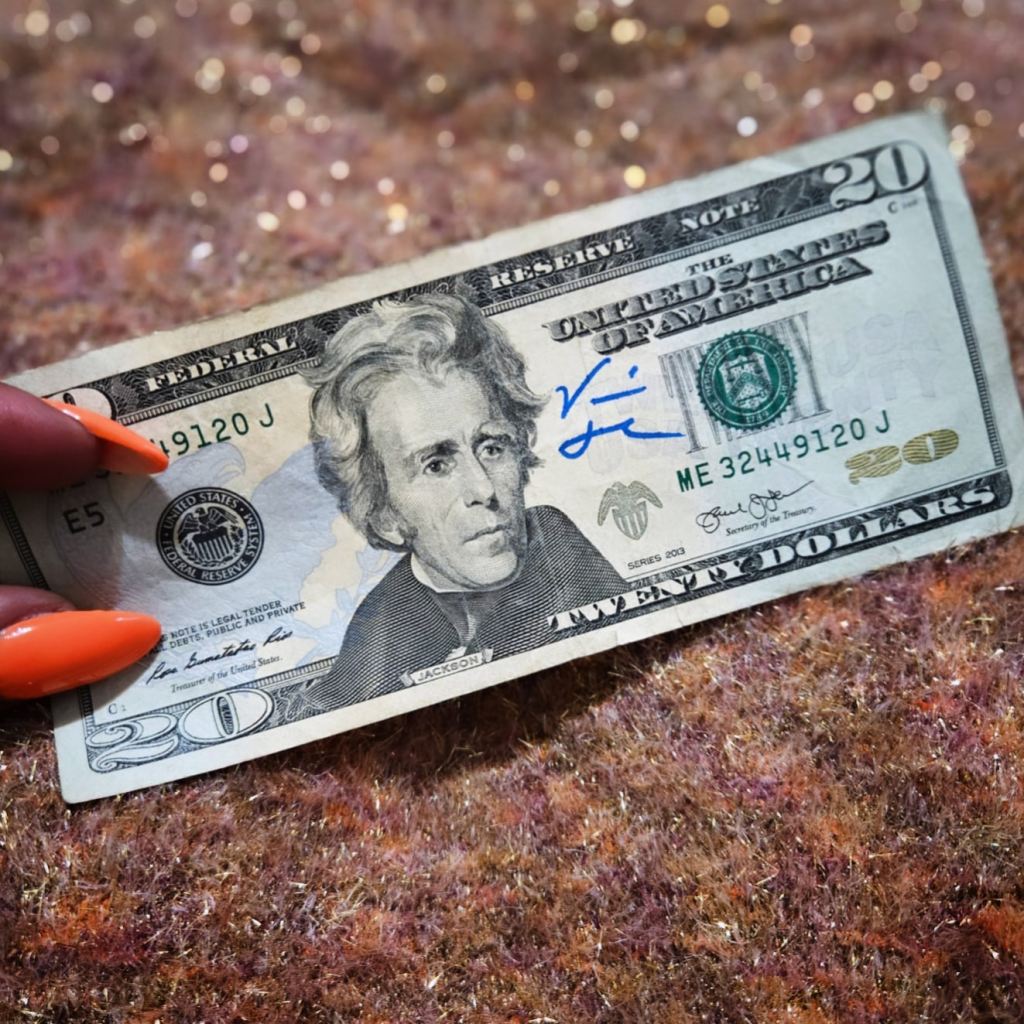
And what I DID have was a $20 bill. And somebody else’s Sharpie.
“Can I ask you to sign something too… And can it be a twenty-dollar bill?”
With an infectious giggle that rippled through her curled locs and pink tulle dress, VJ remarked that nobody had ever asked her that before.
After the way NYC met me, it made my heart happy to leave behind a lasting impression of my own.
[Ed. Note: This post is part of a one-time February 2024 mini-series that took me to NYC where I was treated to an abundance of Blackstories first-hand. In place of my usual February content, I chose to share my own real-time (-ish) lived experience to honor the vibrant people New York put in my path.]
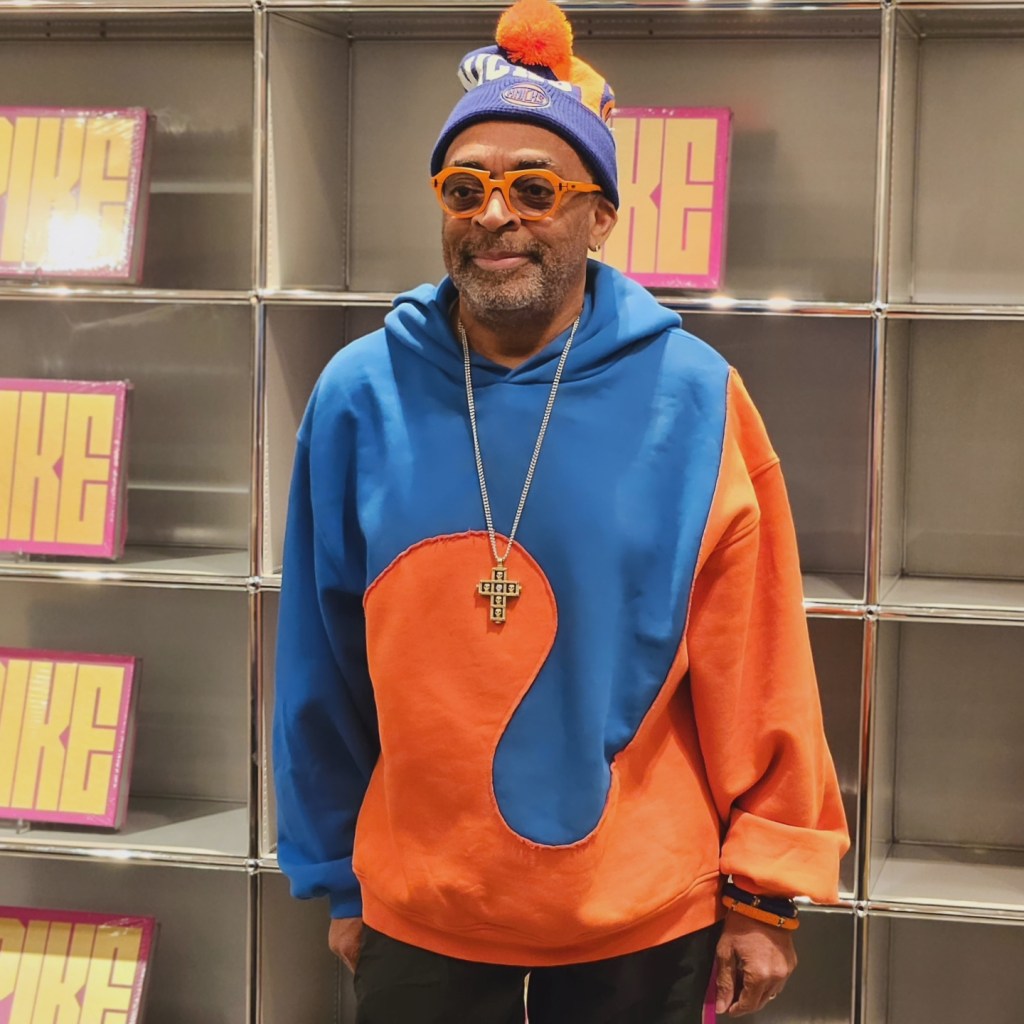
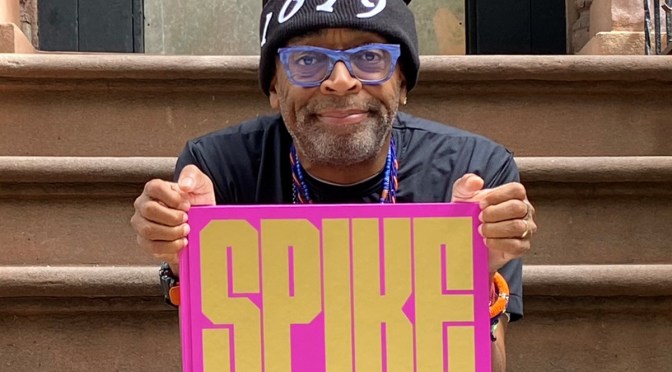
“Spike Lee is having a signing at the Brooklyn Museum on Saturday if you want to go.”
(Tbh, Louis could have asked me to go to Mars at this point, and I’d ask what time.)
So bright and early, we popped up from the Eastern Pkwy station into an entirely empty museum lobby.
OF COURSE only members were allowed before 11. Us plebes were ushered outside where Louis did the mental math. “I’m thinking. Wondering if we should join.”
I reached for my phone. $64 for a dual membership. Joy Barnett & Louis Mendes could swing that.
So with two hours until the signing, we talked. As fans & families gathered, we watched. And through it all, we sat comfortably after Louis pulled the elderly card like he doesn’t put in miles across NYC every day. And when the museum shop opened, we rose to our rightful place at the very front of the line.
Around 11:45, a famous face poked out from a black velvet curtain, scanned the crowd, and did a double-take in our general direction.
That’s when Spike Lee marched over, shook Louis’s hand and picked up the stanchion himself to usher us in.
The two of them fell in so fast it almost felt scripted. Spike posed, Louis clicked. Spike handed Louis a bill, shook his hand again and thanked him. Then Louis went off-script.
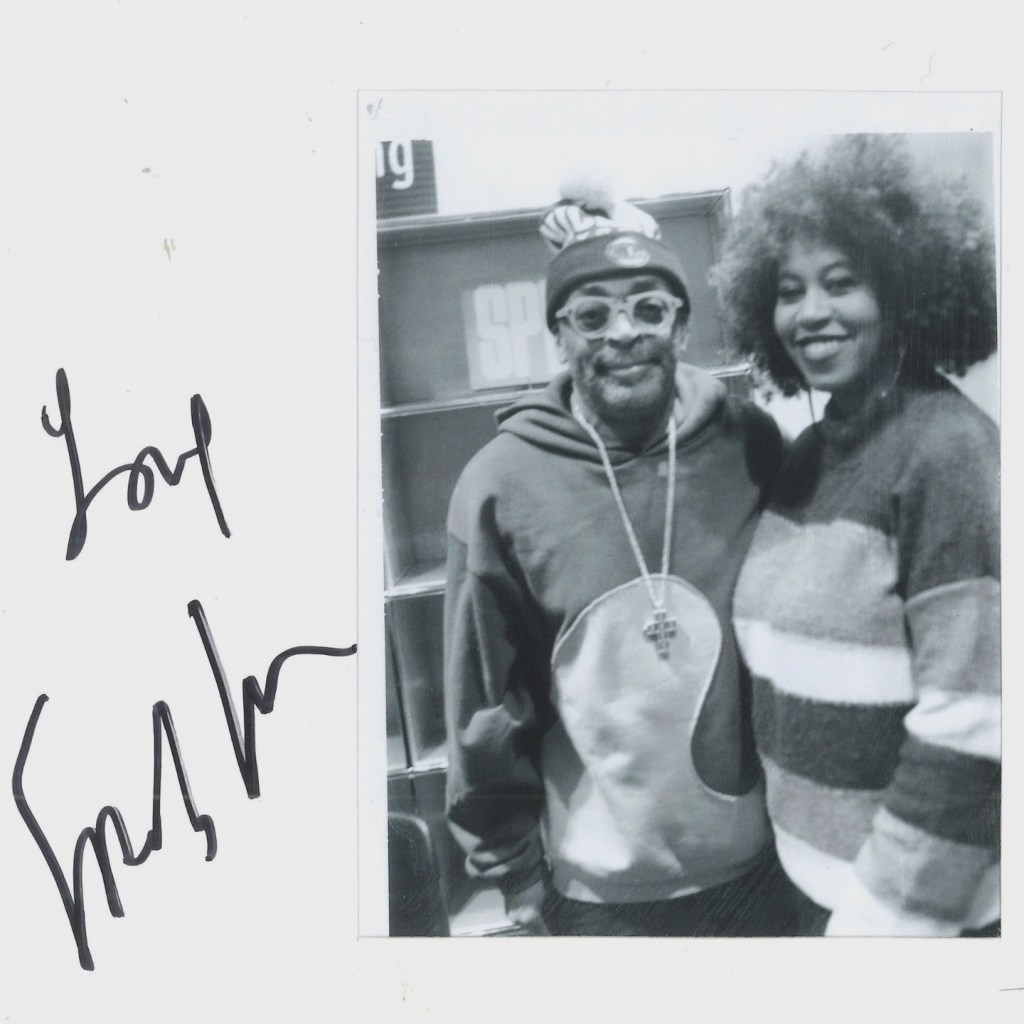
“I wondered if I could get a picture of you and Joy.”
“Come on, baby.”
I scurried over like a rat to a charcuterie board. It’s almost literally written all over my face.
As Louis tucked the photo into his usual cardboard frame, Spike slid it across the table, and wrote without a word: “Love, Spike Lee.”
He began his goodbyes when I awkwardly chimed in to ask if he’d sign our books too.
The relief when he took it as a timely reminder vs. clumsy begging.
“Oh, tell all them people to open their books to THIS page,” Spike pointed a pink spread out to his manager. “I’m only signing THIS page.”
I flipped like my life depended on it, taking the opportunity to thank him for his work. He received my words graciously and signed both books before Louis & I started to slip away.
“Oh…” he called to his manager once more.
“And tell them NO PICTURES either. This is a BOOK SIGNING.”
[Ed. Note: This post is part of a one-time February 2024 mini-series that took me to NYC where I was treated to an abundance of Blackstories first-hand. In place of my usual February content, I chose to share my own real-time (-ish) lived experience to honor the vibrant people New York put in my path.]
After a day of the VIP experience with Louis Mendes, a girl had developed certain expectations. The kind of expectations only another icon could deliver.
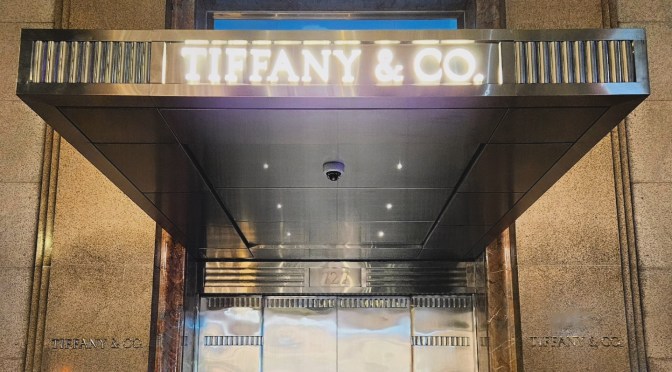
Cleaned up from a long day, I stepped into the newly remodeled Tiffany & Co. flagship (branded “The Landmark”) positively shining. Following a quick introduction to the seven floors awaiting me, I naturally started at the top.
It took about 5 steps for me to be absolutely dazzled.
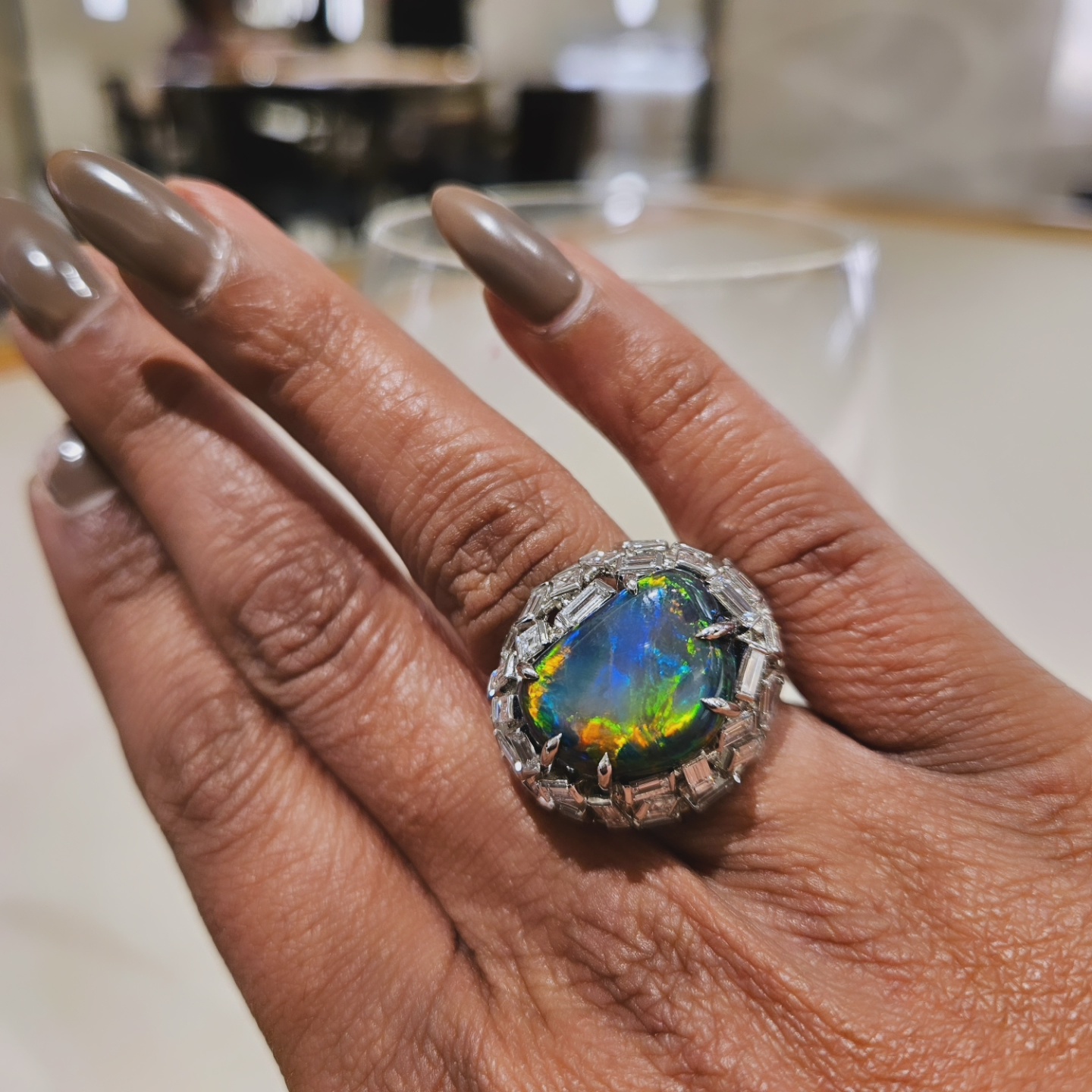
A diamond-encrusted dome ring with a single sapphire set in the center winked in my direction, and I was done for.
“Let me know if you’d like to have a closer look at anything,” a voice offered from behind me.
I turned to meet Daniel, a 12-year Tiffany veteran who recognized my excellent taste and rolled out the red carpet in response.
Together, Daniel and I chose jewels from several floors before returning to the 7th floor where champagne, printed chocolates, and the most adorable pink macarons waited for me.
Two hours later, I’d tried on well over a million dollars worth of diamonds before the sales team and security discreetly closed the building.
And people who try on millions of dollars worth of diamonds don’t walk out the front door at Tiffany & Co.
The only other Black woman in the building, their head of security, escorted me out via a hidden elevator through a velvet curtain, granting us the only moment we’d have alone.
We shared the sweetest conversation that one day I’ll tell you all about in my future book. But for now, I say it was so good, that I asked how I could stay in touch with her.
She rattled off a few contact details, and I promised she’d hear from me soon.
“But if you forget, you can just Google my name: ‘Selena Nelson’.”
With my curiosity solidly peaked, I stood outside at a side door on 57th Street and did exactly that.
Selena Nelson held a starring role during the 2-year run of Sesame Street’s “Big Bag,” before moving on to more mainstream features like “Law & Order: SVU”, “Daredevil”, “The Blacklist”, and “New Amsterdam.”
I walked into Tiffany’s hoping to be treated like a star. I never guessed I’d walk out having met one.
[Ed. Note: This post is part of a one-time February 2024 mini-series that took me to NYC where I was treated to an abundance of Blackstories first-hand. In place of my usual February content, I chose to share my own real-time (-ish) lived experience to honor the vibrant people New York put in my path.]
All this adventure and Louis and I hadn’t even eaten lunch yet. I didn’t anticipate any of his invitations, but there’s one in particular I truly couldn’t have prepared for.
“I’m going home at 1. Do you want to come?”
15 minutes later, we were back on the train, picking up soul food in Harlem before heading to his place.
“Take pictures, video, ask me about anything,” Louis graciously offered as we walked through the door. And it was a good thing, because I think I blacked out.
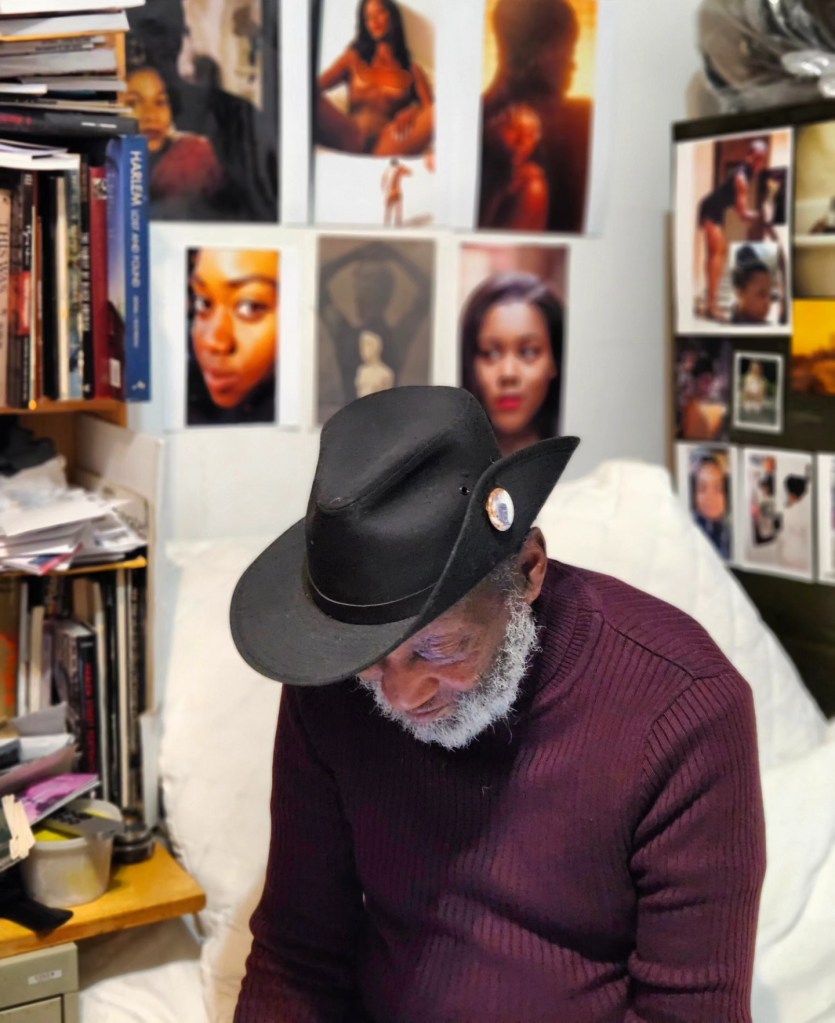
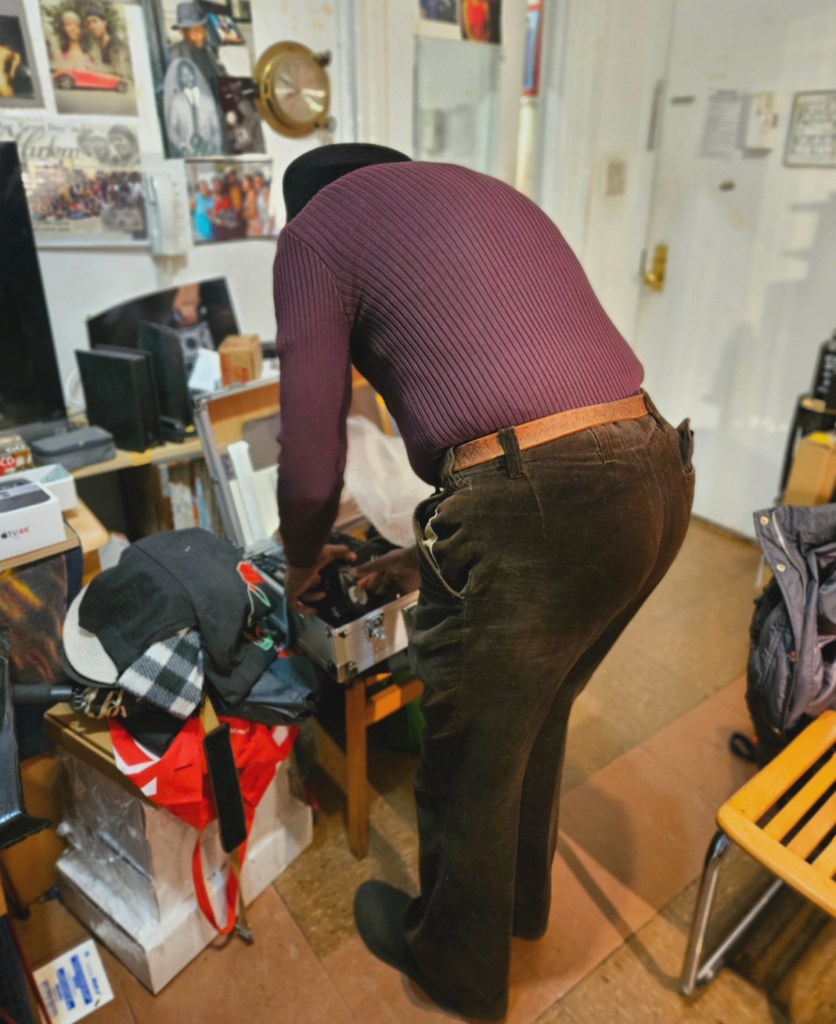
No matter where I lay my eyes, they found a photograph, photography equipment, or a book on photography, history or the Black experience.
Museum, temple, sanctuary.
Despite the ordered clutter, spirits lived here, and I was pushing past the veil.
We ate in near silence while I absorbed my surroundings. A sticky trap on the tile floor had caught a single roach that flipped in every direction before it just laid down. Live footage of the universe watching me in Louis’ apartment.
He answered every question I asked, and a lot that I didn’t. “That girl was a virgin. This man didn’t want his photograph taken. That was the time I put myself in front of the camera at the Macy’s Thanksgiving Parade.” For every picture, there were two or three stories to tell.
As soon as I sat for a moment, he stood and unlatched an aluminum case in a nearby chair.
“Put this around your shoulder.” His worn hands extended a thin leather strap attached to yet another vintage camera.
“Now hold the lens to your eye. You see two of me? Turn that knob until you see one. Then take your left thumb—press that button. That’s it. You’re ready.”
I somehow managed the presence of mind to realize that no matter how many New Yorkers knew Louis Mendes, only a few had ever sat in my place.
I asked for another picture.
He gleefully switched on a lamp that he told me he built himself from spare parts, lightly posed me—something Louis never does with his public subjects—and clicked.
“That’s a good one. That’ll be important,” he pointed and admired his still-developing instant photo.
I can’t remember whether I said out loud that it already is. 🖤
[Ed. Note: This post is part of a one-time February 2024 mini-series that took me to NYC where I was treated to an abundance of Blackstories first-hand. In place of my usual February content, I chose to share my own real-time (-ish) lived experience to honor the vibrant people New York put in my path.]



















 THE AMERICAN BLACKSTORY