Tag Archives: MONTGOMERY

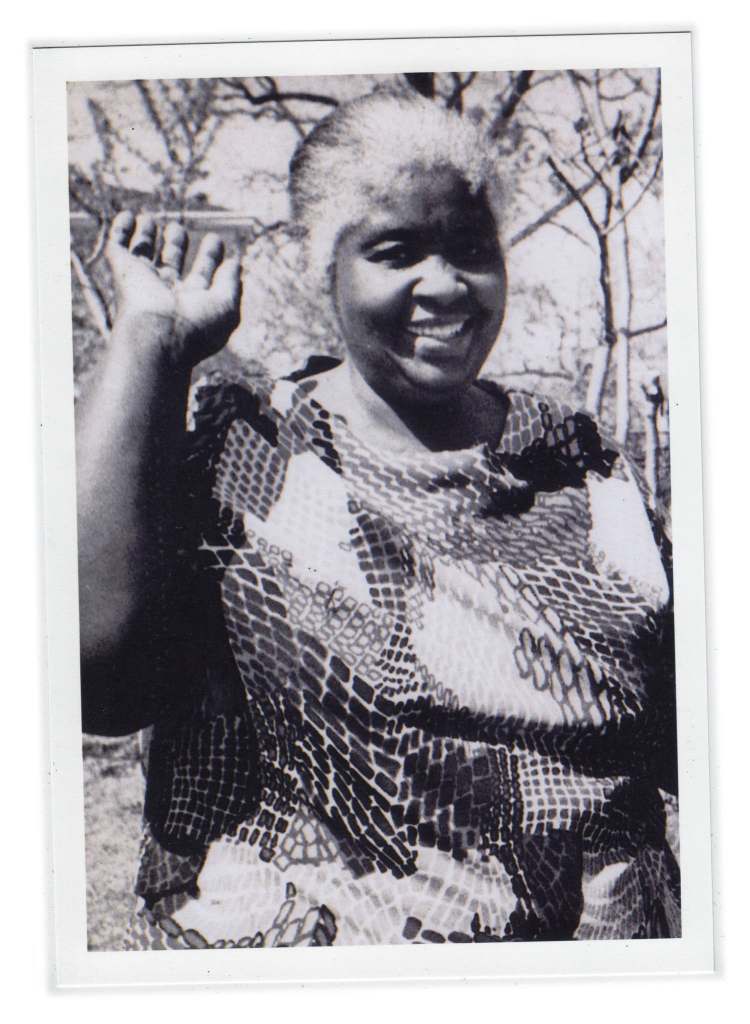
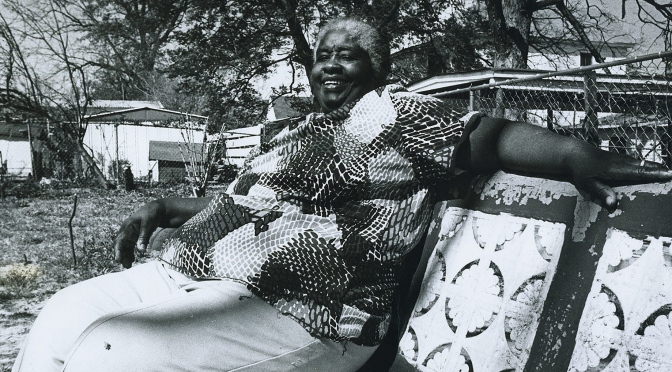
DAY 26 — Georgia Gilmore

From the local newspaper to the locals themselves, Montgomery’s white folks liked to turn Georgia Gilmore into a fat joke.

They had no idea they were mocking the heart and soul of a movement.
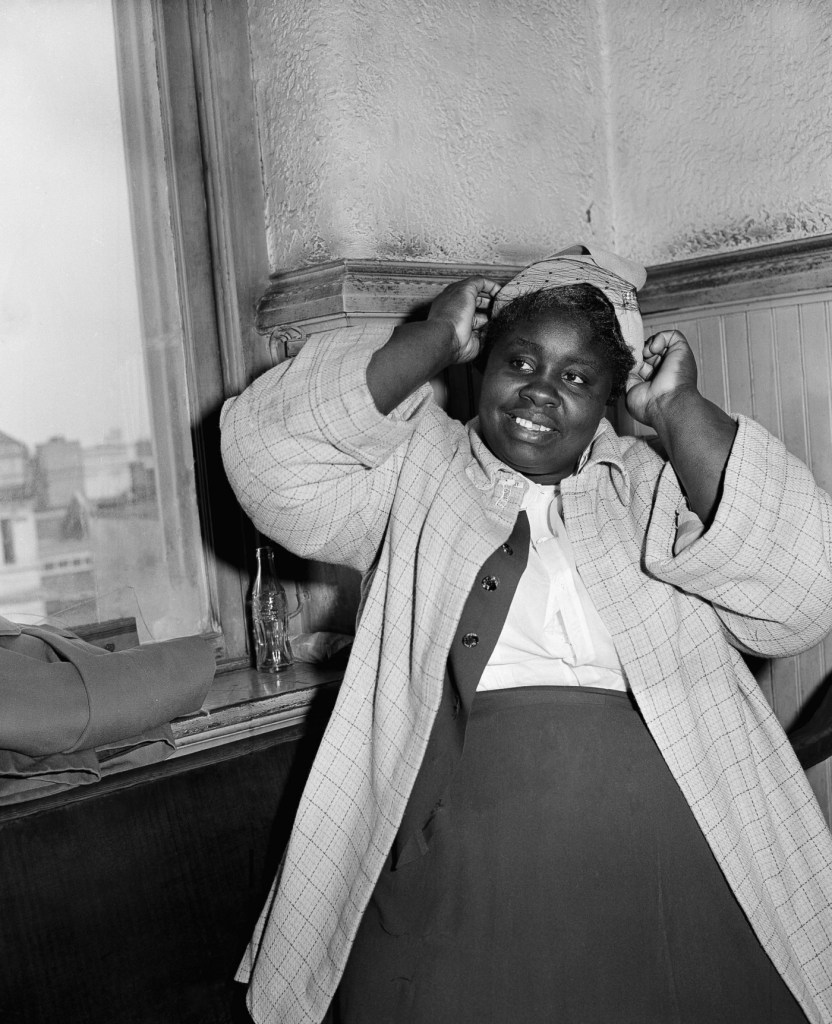
The delightful and effervescent Georgia Gilmore

The Black folks close to her knew Georgia Gilmore had presence. And it had nothing to do with her size.

She was quick-witted, clever, motherly, industrious, and every morsel from her kitchen tasted absolutely divine.

Georgia’s skill was in high demand in Montgomery’s households and lunch facilities, but the hypocrisy everywhere else in town was real. Even though Montgomery’s bus system was almost entirely reliant on domestic workers like maids, nannies, seamstresses (like Rosa Parks) and cooks like Georgia, those women took the brunt of racial abuse from drivers and passengers. By the time Rosa’s turn came around, Georgia’s personal bus boycott had already begun. 

She’d gone through the mortifying motions so often it was automatic: fare at the front, walk of shame to the back. So when Georgia dropped her fare into the box in October 1955, and the driver barked at her to get off and get on again through the back door, she was more than rattled. Georgia was furious. Powerless to do any different, Georgia begrudgingly backed out. When her feet touched the pavement, the driver shut the door and drove away. She vowed to never be humiliated that way again.
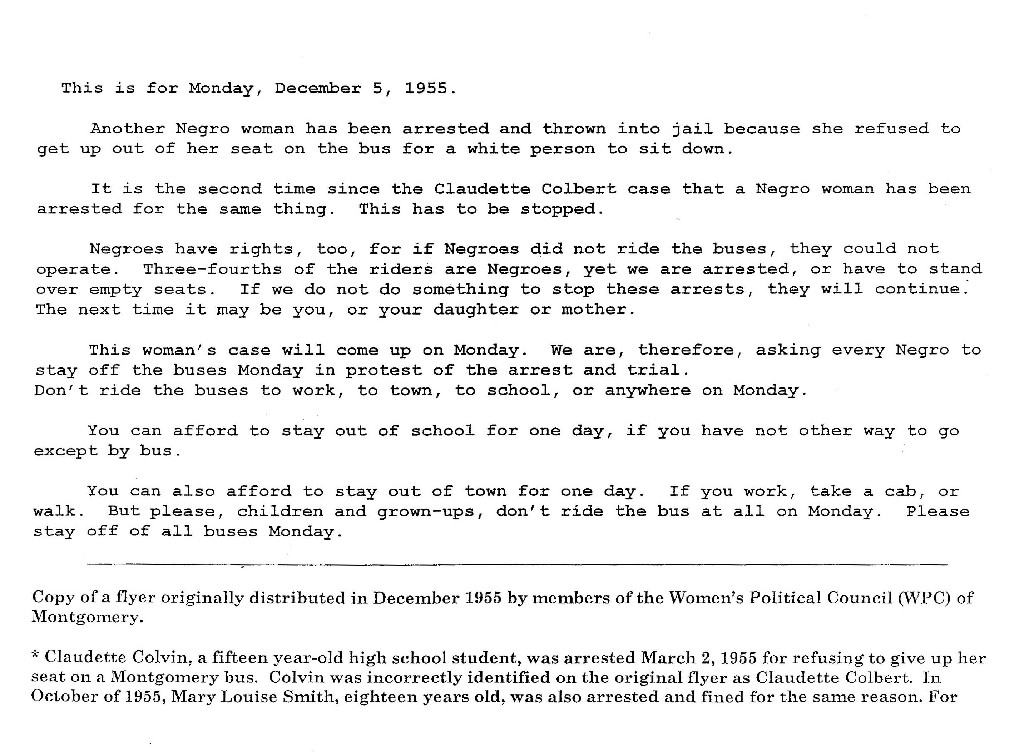
Another Negro woman has been arrested and thrown in jail because she refused to get up out of her seat on the bus for a white person to sit down. It is the second time since the Claudette Colvin case that a Negro woman has been arrested for the same thing. This has to be stopped. Negroes have rights, too, for it Negroes did not ride the buses, they could not operate. Three-fourths of the riders are Negroes, yet we are arrested, or have to stand over empty seats. If we do not do something to stop these arrests, they will continue. The next time it may be you, or your daughter, or mother. This woman's case will come up on Monday. We are, therefore, asking every Negro to stay off the buses Monday in protest of the arrest and trial. Don't ride the buses to work, to town, to school, or anywhere on Monday. You can afford to stay out of school for one day if you have no other way to go except bus. You can also afford to stay out of town for one day. If you work, take a cab, or walk. But please, children and grown-ups, don't ride the bus at all on Monday. Please stay off all buses Monday.

So when flyers went out alerting Black Montgomerians that an upstanding woman had been jailed for protesting the Montgomery Bus System, Georgia hightailed it to Holt St. Baptist Church where those in support of taking action gathered. She was one of nearly 5,000 there on December 5, 1956 who launched the Montgomery Bus Boycott, the first mass public demonstration of the Civil Rights Movement, and she was proud to be counted among its most crucial participants.  “After the maids and the cooks stopped riding the bus, well the bus didn’t have any need to run,” she said. “It was just the idea that we could make the white man suffer. And let the white man realize that we could get along in the world without him.”
“After the maids and the cooks stopped riding the bus, well the bus didn’t have any need to run,” Georgia said. From the LIFE Picture Collection: “Two white women sit in an otherwise empty bus during the African-American boycott of bus companies throughout Montgomery, Alabama. Grey Villet/The LIFE Picture Collection via Getty Images

By simply existing in her Blackness, Georgia had taken some of her power back from her oppressors. And hungry for more, she put her skills to work.

The Montgomery Bus Boycott drew supporters from outside communities too, because even Black people that didn’t live in Montgomery still had to sit in the back of its buses. Georgia had worked as a cook and a midwife, but mass fundraising against racism was brand new to almost everybody participating. But not all were in the position to participate publicly. They cooked, cleaned and cared for the children of white racists, and were suddenly forced into a choice between supporting their people and maintaining a livelihood. Carpools were formed to transport workers and named based on their geographical locations around town. But all of those car clubs needed money for gas, insurance, upkeep, all the costs one takes public transportation to avoid. Georgia rallied all of those domestic workers who wanted to help quietly into the “Club from Nowhere,” a group of women who turned plates, pies, pastries, and whatever their culinary speciality into cash money for the movement.
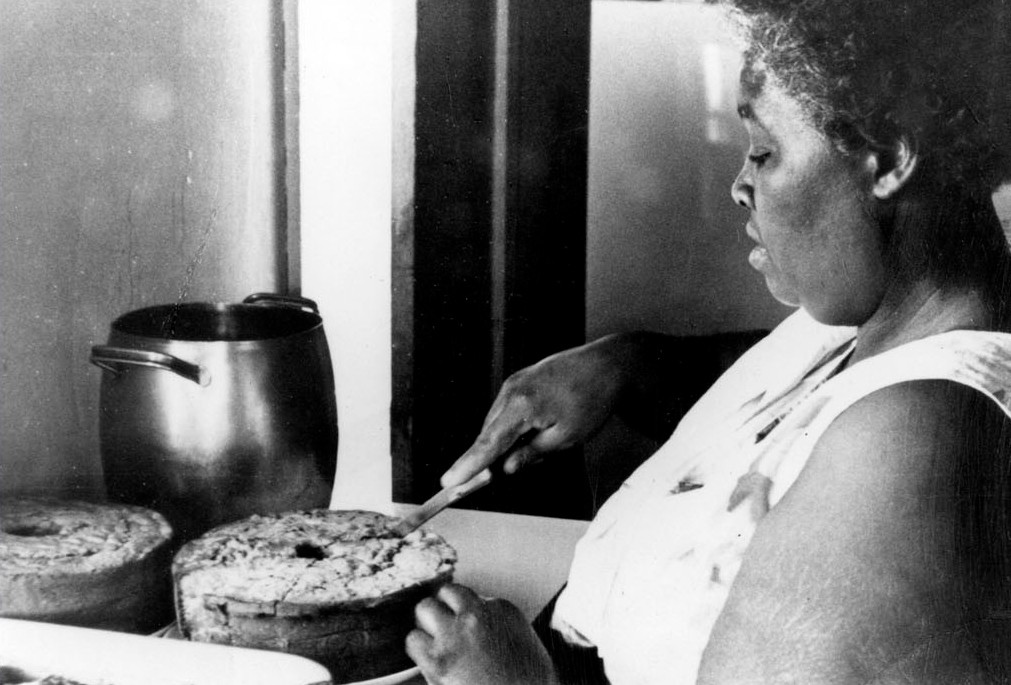
Georgia serving up just desserts in her kitchen.

The Club from Nowhere provided all sorts of strategic cover. A Black maid or cook carrying food was about the least suspicious person in the Jim Crow South. Should any member be questioned about the money they carried after selling their goods, they could answer in two totally truthful ways: say that it was from selling food, OR that it came from/was being taken to “Nowhere.” Finally, white allies who couldn’t realistically attend a planning meeting to donate could write a check to “The Club from Nowhere” without revealing the true recipient of that support. Eventually, the Club from Nowhere was bringing in $200+ dollars a week (about $2K today), more than any other fundraising effort in Montgomery.

A boycott carpool loads up while a bus across the street sits empty. Montgomery, Alabama, February 1956. Don Cravens/The LIFE Images Collection via Getty Images

Nowhere was brilliant, and through it, Georgia came into her own, cooking and hustling for the movement. For the 382 days that the Montgomery Bus Boycott lasted, Georgia Gilmore found one way or another to support it.

The most obvious, and you’d think innocuous, was by walking. “Sometime, I walked by myself and sometime, I walked with different people, and I began to enjoy walking, because for so long I guess I had this convenient ride until I had forgot about how well it would be to walk,” she said. “A lot of times, some of the young whites would come along and they would say, ‘N*gger, don’t you know it’s better to ride the bus than it is to walk?’ And we would say, ‘No, cracker, no. We rather walk.’ I was the kind of person who would be fiery. I didn’t mind fighting with you.”

Three months into the 381-day boycott, African Americans are photographed walking to work instead of riding the bus. Montgomery, Alabama, February 1956. Don Cravens/The LIFE Images Collection via Getty Images

All that fire and fight made Georgia an excellent witness on the stand when Montgomery County Grand Jury indicted Martin Luther King Jr. (and over 100 others) for violating Alabama’s anti-boycott laws. Nobody had a better story to tell than Ms. Georgia who’d been left on the side of the road out of spite. She made an indefensible case for why Montgomery’s buses needed to be desegregated: “When I paid my fare and they got the money, they don’t know Negro money from white money,” Georgia testified.

But that visibility also made Georgia an easy target.

She appeared in the pages of the Montgomery Advertiser repeatedly after that, always as the aggressor, always as a laughingstock.

The Alabama Journal, November 3, 1961: “Huge Negro Woman Draws Cursing Fine.”

The Montgomery Advertiser, on the same story: “A hefty Negro woman who weighed in excess of 230 pounds was fined $25 today in city court on charges of cursing a diminutive white garbage truck driver.”

Hattie McDaniel as America’s cinematic “Mammy” in a press image from “Gone with the Wind.”

As the Safiya Charles of today’s Montgomery Advertiser writes, “he worked a twist on the sassy Black mammy archetype. And he rendered the white male truck driver her victim.”

But Georgia would not be deterred by outside opinions. Because her home was full of love. Though the papers called her the most derogatory names, the people who came from far and wide to buy Georgia’s plates of fried chicken and macaroni and cheese, or sit at her table sipping sweet tea called her “Georgie,” “Tiny,” “Big Mama,” and “Madear.” 

(Those near and dear guests of her kitchen included Martin Luther King, Aretha Franklin, Sam Cooke, and even Lyndon B. Johnson and Robert F. Kennedy.)
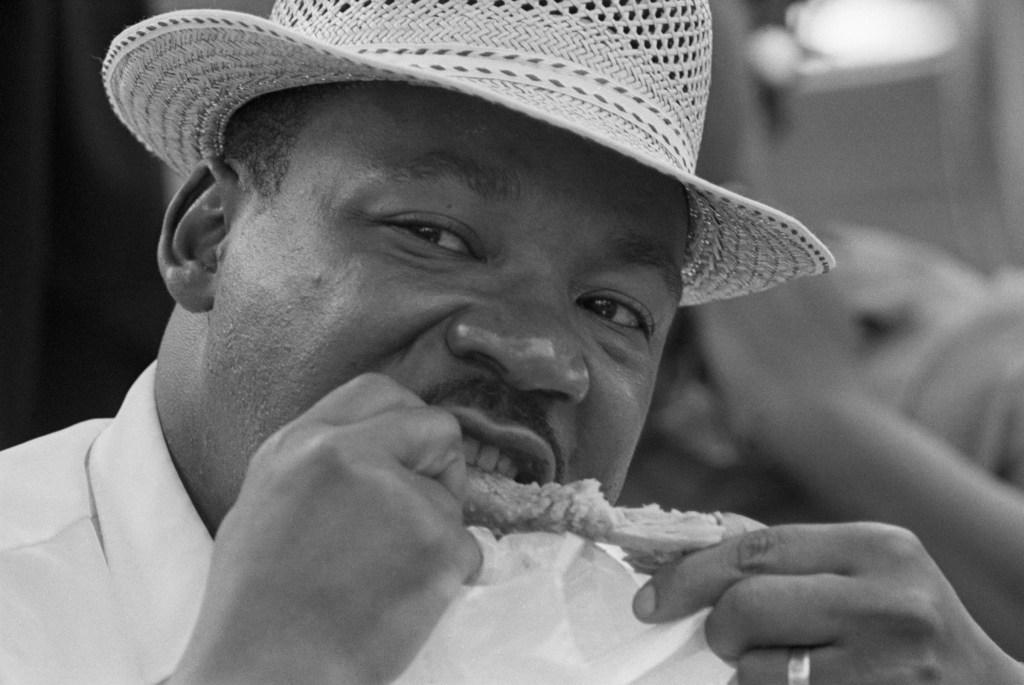
On December 20, 1956 the boycotts ended after the Supreme Court ruled the buses’ segregation unconstitutional, but Georgia’s reputation had been so utterly tattered that she was certain her days of working in Montgomery were through. Between her activism, her testimony, her attitude, and the press, she couldn’t even get home insurance.
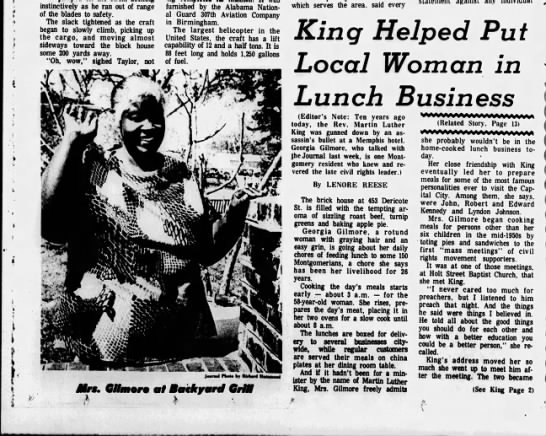
Georgia & Dr. King were featured in the Alabama Journal, but click through for a closer look at how even with a positive spin, the language used to describe Georgia isn’t exactly complimentary.

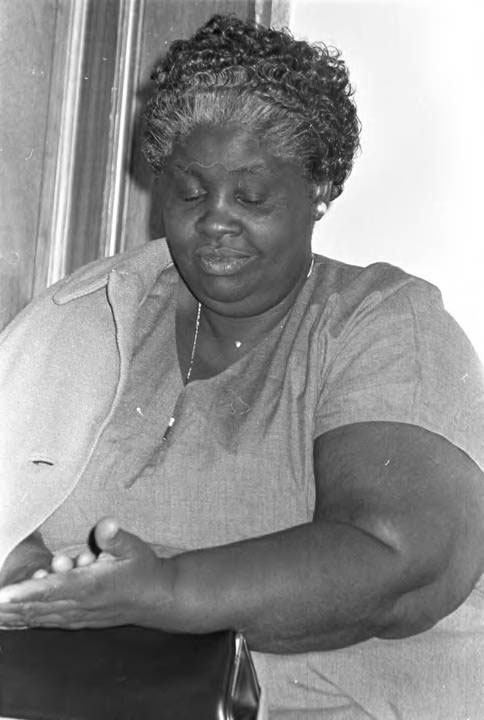
Georgia deserved to be rewarded for her courage and dedication to the movement, not left in shambles because of it. “She was not really recognized for who she was, but had it not been for people like Georgia Gilmore, Martin Luther King Jr. would not have been who he was,” Rev. Thomas Lilly who participated in the boycott, said. Dr. King himself repaid at least some of that debt with the most valuable piece of advice Georgia ever received. “All these years you’ve worked for somebody else, now it’s time you worked for yourself.” She did, and she never worked for anyone else again.

Still at it decades later, on March 3, 1990, in preparation for the 25th anniversary of the March from Selma to Montgomery, Georgia cooked up her famous macaroni and cheese and fried chicken to feed the revelers. Hours later, she passed and had the honor of watching her table from above as hundreds gathered to grieve her and commemorate so many walks for freedom with one last meal from from nowhere.

The historic marker at the former home of Georgia Gilmore in Montgomery, AL. Mickey Welsh / Montgomery Advertiser

KEEP GOING BLACK IN HISTORY:

Georgia in the New York Times’ Overlooked series.

Southern Foodways collaborated with the Montgomery Advertiser to celebrate Georgia’s life, and make amends for how she’d been represented in the Advertiser’s pages. It’s a beautiful read, by another Black woman and I encourage you to enjoy it.

PBS series “Eyes on the Prize” has captured interviews with members of the Alabama civil rights movements, and you can find Georgia’s here:
INTERVIEW 1 (1979) | INTERVIEW 2 (1986)

Listen in to the personal accounts of many who had the pleasure of eating in Ms. Georgia’s kitchen, including her son, Montgomery City Councilman Mark Gilmore, in NPR’s “The Kitchen of a Civil Rights Hero. “

Councilman Gilmore was gracious enough to share Georgia’s Legendary Sweet Tea recipe so we can raise a glass to her.

DAY 25 — Ruby Doris Smith Robinson

The Freedom Riders exist in American culture as an almost mythical group of heroes, a collective of brave souls, iconic and sympathetic champions of equality.

Don’t worry. You won’t read anything different here.

Indeed, the Freedom Riders were all of those things. But they were also 436 individuals who each woke up one day, unwilling to wake up to another where Black people were second-class citizens. As Diane Nash, a founder of the SNCC told us, most had put their affairs in order, and all had signed waivers releasing the Congress of Racial Equality (CORE) from any liability should they be injured or killed. 

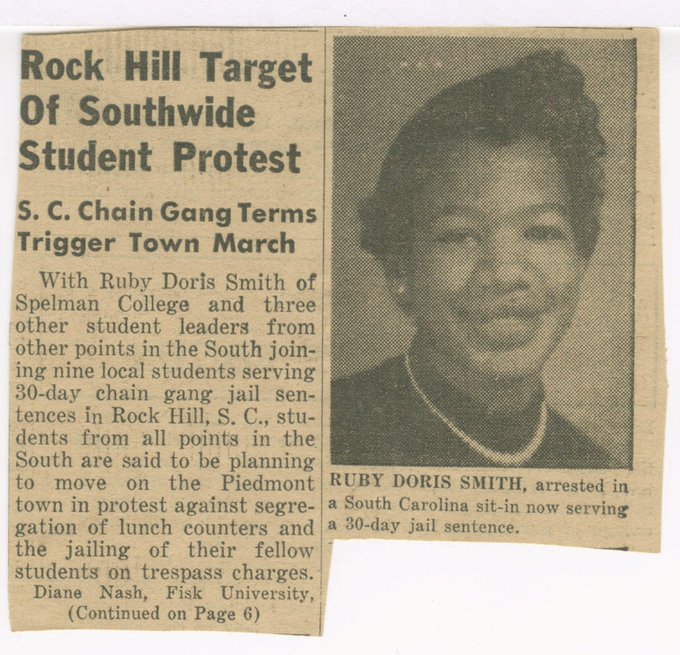
Ruby Doris Smith wasn’t just one among the collective, she led by example. 

Born in 1942, she was one of seven born to beautician Alice and pastor/handyman J.T., both gainfully employed and fully involved in their community, raising their brood in all-Black schools, churches, and other social settings. With the luxury of safe and comfortable financial and social circumstances, wanting for little and surrounded by friendly faces, the Smith children grew up with certain expectations of the world, and against that backdrop, the scenes of white supremacy and racial violence outside of the Smiths’ little bubble seemed absolutely horrifying. Even as a child, Ruby Doris knew she’d been put here with purpose, and once told her sister Catherine, “I know what my life and mission is…It’s to set the Black people free. I will never rest until it happens. I will die for that cause.”

Ruby Doris’s journey started with small protests. She’d throw rocks back at white children who would tease her friends and siblings. When a white sundae shop clerk handed her an ice cream cone with his bare hand, she refused, perfectly aware that cones served to white customers came wrapped in tissue. Those were only embers of the fire still yet to come.

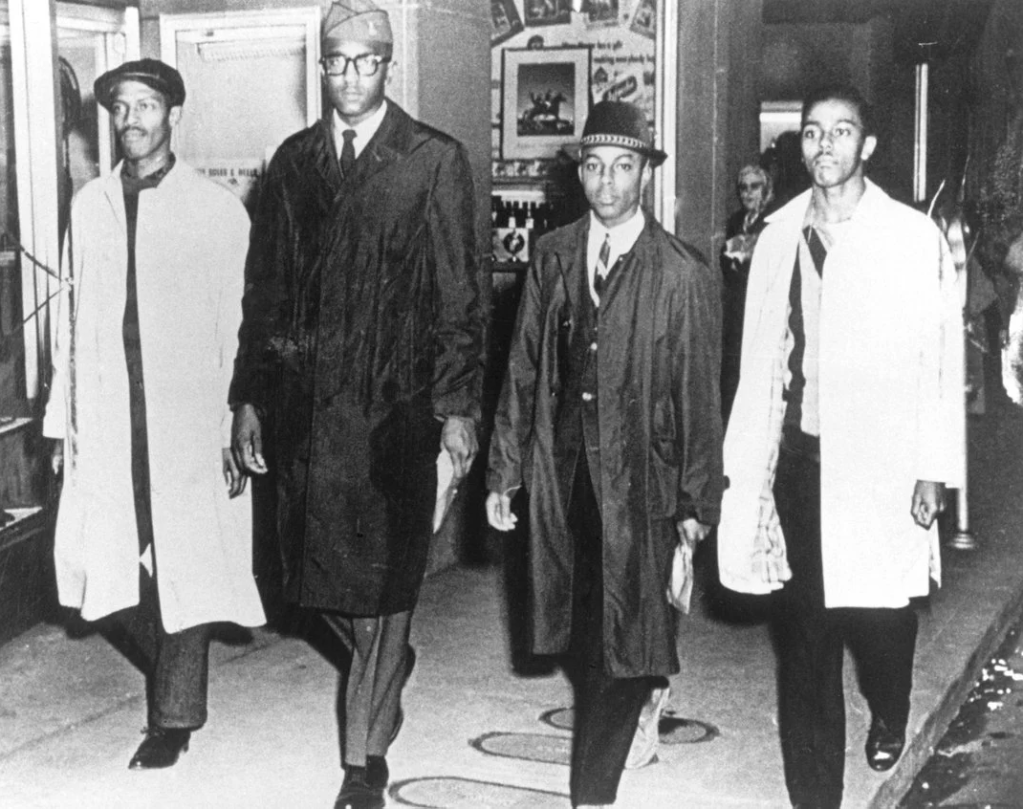
Whipsmart, Ruby Doris graduated high school at 16, and just kept leveling up at the historic Black women’s university of Spelman College. In 1960, Ruby had been at school less than a year and already found her calling. That was the year four well-dressed young Black men walked up to the F. W. Woolworth lunch counter in Greensboro, North Carolina, cemented their place in history and ignited a movement by simply sitting down.

The Greensboro Four: David Richmond, Franklin McCain, Jibreel Khazan and Joseph McNeil

That kind of defiance was right up Ruby’s alley, and she jumped head first into organizing her own publicity-making protests. “Kneel-ins” at white churches were a particular specialty of hers, but outside of holy places, Ruby Doris wasn’t afraid to be loud about her rights. “Have integration will shop, have segregation will not,” she’d chant outside of shops and grocery stores, even if no one else protested with her. By 1961, Ruby Doris had been arrested more times than she could count for her repeated rabble-rousing, and had no intention of stopping as she signed on to become the executive secretary of the Student Nonviolent Coordinating Committee (SNCC), the group that had just begun organizing what they would call “Freedom Rides.”

The KKK firebombed a Freedom Rider bus in May 1961, just outside of Birmingham.

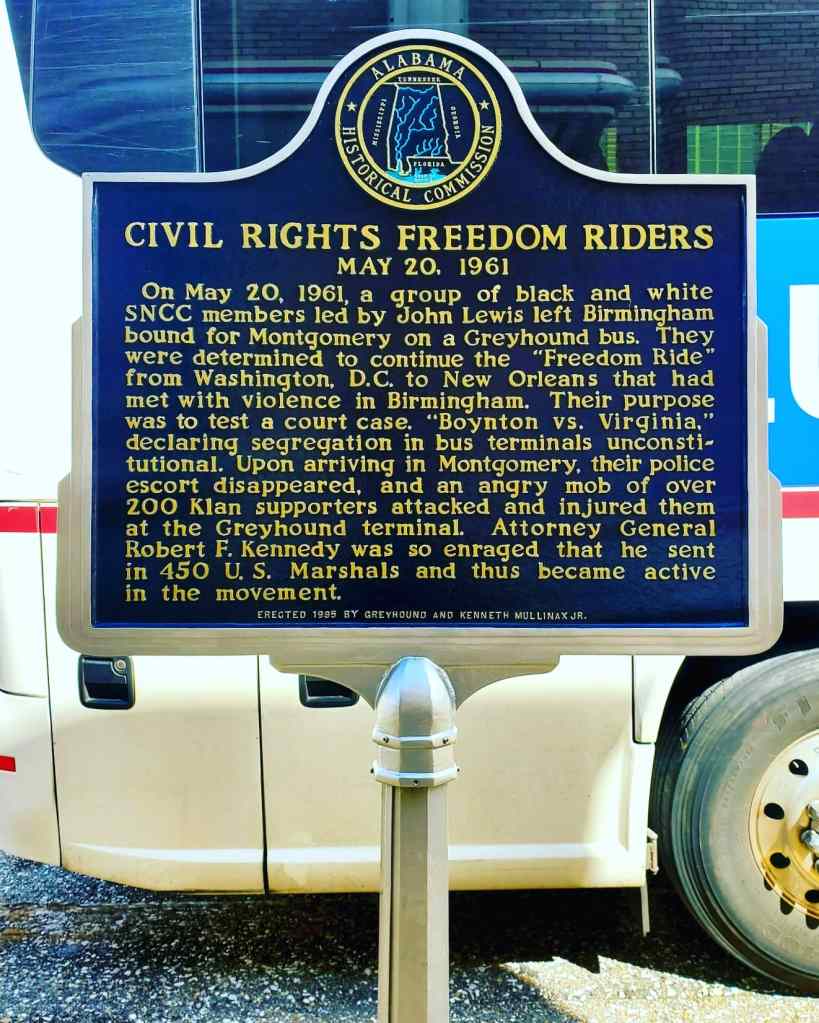
When Ruby Doris set out on her own bus ride from Nashville to Birmingham on May 17, the KKK’s Anniston, AL firebombing had occurred just days before. Diane Nash said, “It was clear to me that if we allowed the Freedom Ride to stop at that point, just after so much violence had been inflicted, the message would have been sent that all you have to do to stop a nonviolent campaign is inflict massive violence.” So undeterred, they pressed on, and as expected, they were indeed met with more massive violence. Ruby Doris was badly beaten, but still rode on from Birmingham to Jackson, MS. And since nothing else so far had kept busload after busload of Freedom Riders from riding into the Deep South, the powers that be decided they’d try another tactic: brutal imprisonment. Parchman State Penitentiary was a Mississippi maximum security prison, and everything about the Freedom Riders’ imprisonment there was designed to be torturous to the hundreds whose rides landed them at those facilities.

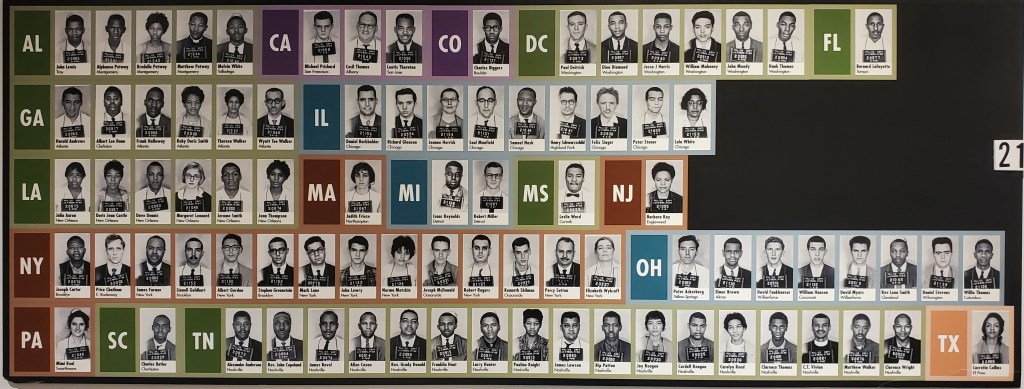
Freedom Riders arrested in Jackson after departing Alabama Greyhound Stations. Ruby Doris Smith is on the second line, fourth from left.

Michael Booth, a member of the Civil Rights Movement remembers, “With the intention to intimidate and instill fear, the women were packed onto a flatbed, in the middle of the night, similar to that which animals are transported in. They were forced to stand the entire drive from Jackson to Parchman, going through Money, Mississippi, the place where Emmett Till was murdered. In a continued effort to break their spirits, when the women were processed into Parchman they were forced to walk through a very large pool of cockroaches before being photographed and fingerprinted. The women were imprisoned on death row where the ‘most cruel and unbelievable things’ were perpetrated on the Freedom Riders. [One woman’s] cell was only 13 footsteps from the gas chamber. The lights were left on 24 hours a day so that the prisoners didn’t know what time it was or what day it was.”

Ruby Doris didn’t document the horrors perpetrated on her at Parchman, but others remembered being scarred by what they saw done to her. The woman jailed next to the gas chamber, Dr. Pauline Knight-Ofusu, watched as Ruby Doris was “dragged barefooted down a concrete hallway to be thrown into a shower and scrubbed with a wire brush. Post traumatic syndrome is a given for every Freedom Rider,” she said. Traumatized, but still not broken. After 45 days in Parchman, Ruby Doris went right back to disrupting the way only she could.

The Kennedys were legislating the bus situation, the lunch counters had been desegregated thanks to the efforts of the protestors, but there was more work to be done. Even hospitals had “white only” entrances, and after months of organizing elsewhere, that’s where Ruby Doris turned her attention. When a receptionist tried to bar protestors from the white-only door, quipping that they weren’t sick anyway, Ruby Doris marched right up to the desk, looked that woman straight in the eye as she vomited, and replied, “Is that sick enough for you?!”

Truth is, Ruby Doris was sick. Dr. Pauline knew back at Parchman that Ruby had ulcers and diabetes. When Ruby Doris was elected as the first female executive secretary of SNCC under Stokely Carmichael, she was a wife, mother, and had a full time job. Her anxiety kept her so tightly wound that she kept a collection of glass bottles in her office specifically to break and sweep up before getting back to work. By the time she was 25, Ruby Doris Smith Robinson was dead.

Officially, a rare blood disease and terminal cancer claimed her life on October 7, 1967, but everyone involved in the movement knew her real cause of death. Stanley Wise, another leader in SNCC put it plainly: “She died of exhaustion… I don’t think it was necessary to assassinate her. What killed (her) was the constant outpouring of work with being married, having a child, constant struggles that she was subjected to because she was a woman… she was destroyed by the movement.”

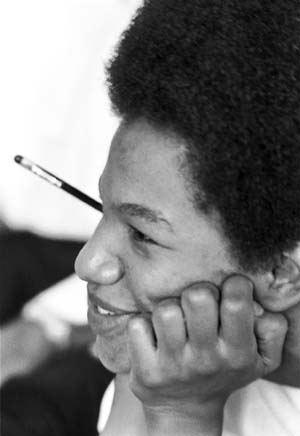
Officers of the Student Non-Violent Coordinating Committee listen as Stokely Carmichael, right, chairman of the organization, speaks at a news conference in Atlanta, May 23, 1966. Pictured left to right are: James Forman, outgoing executive secretary; Cleveland Sellers, program secretary; and Ruby Doris Smith Robinson, the organization’s first female executive secretary.

Note that Mr. Wise speaks of her death in terms of assassination because Ruby Doris was truly a driving force in the movement, and her sudden loss was deeply felt. What I’ve mentioned to you here is only a fraction of what she accomplished in her 25 years. She led voter registration drives in dangerously racist Mississippi, and single-handedly organized the SNCC’s Sojourner Truth Motor Fleet to keep the organization mobile. The work she did for Civil Rights was incomparable, and so was her mere presence. In eulogy, Stokely Carmichael said Ruby Doris “was convinced that there was nothing that she could not do… she was a tower of strength,” and on her headstone, her own words were engraved: “If you think free, you are free.”


KEEP GOING BLACK IN HISTORY:

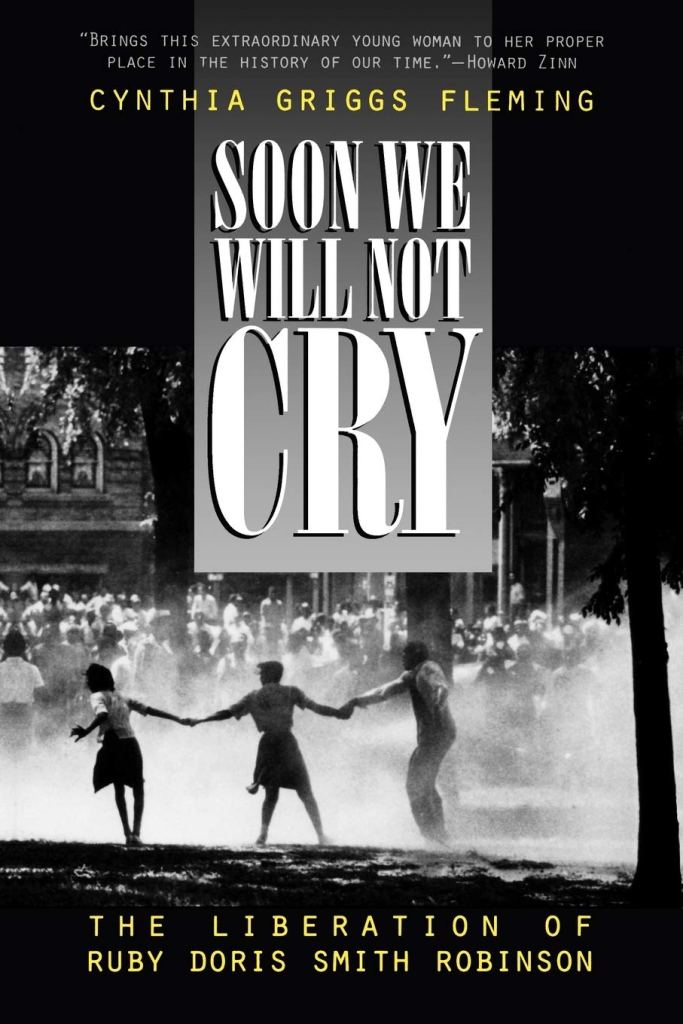
Spend more time getting to know Ruby Doris in her biography, Soon We Will Not Cry: The Liberation of Ruby Doris Smith Robinson.

Read SNCC’s detailing of the impact Ruby Doris left on their organization.

Browse the archives of the Civil Rights Digital Library and the Atlanta University Center Woodruff Library for more articles, letters and clippings from Ruby Doris’ life.

The Smithsonian has gathered powerful archival footage on the events leading up to the Anniston Freedom Rider firebombing.
Hear the experiences of the Freedom Riders in their own words.