All posts by The Griot

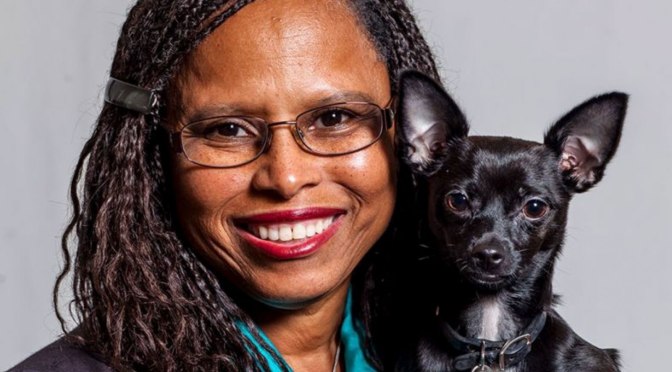
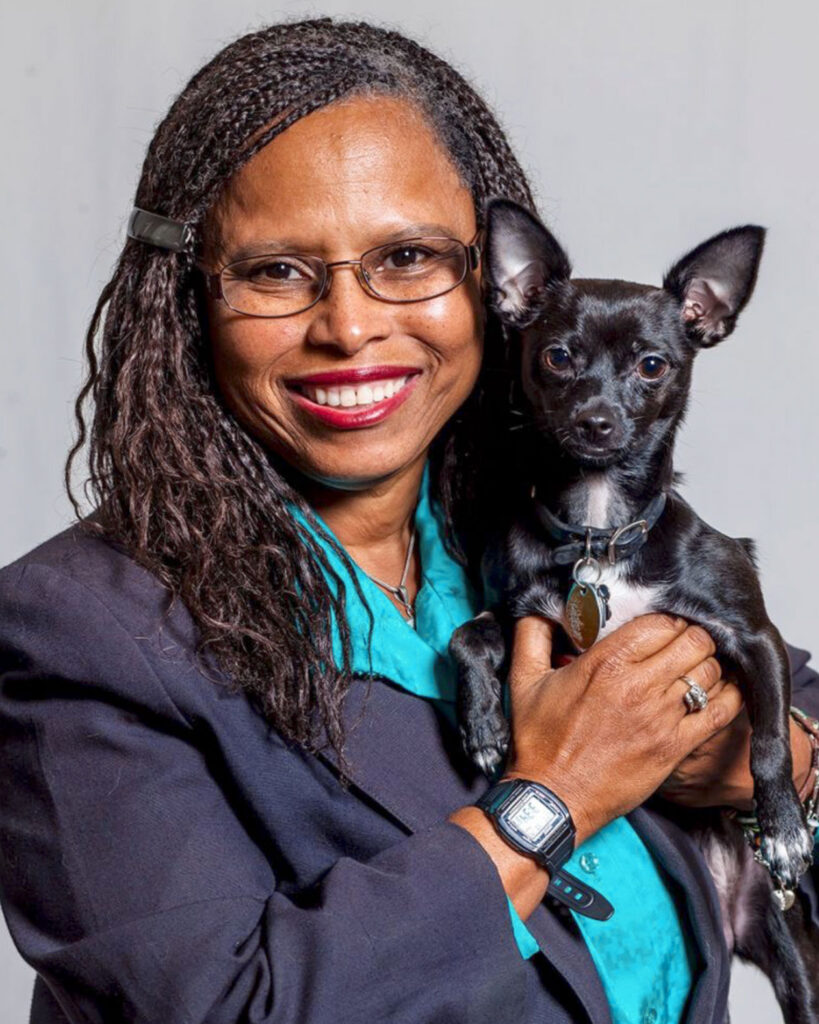
DAY 23 — Dr. Lila Miller

By the time Lila Miller graduated Cornell University in 1977 in pursuit of her dream, she was ready to walk away from it all. Her Doctorate of Veterinary Medicine included more than her fair share of lessons in adversity.

Like so many women and Black people before her, Dr. Lila was deterred from pursuing her passion at all by others who were certain that her success was an impossibility. “There were hardly any women or people of color who were veterinarians [at the time],” she recalls.

When her persistent studies earned her a spot in Cornell, Dr. Lila got an up-close-and-personal look into why. Of the 65 students in Cornell’s veterinary program, only 14 were women, and only one other was Black. Those two women were disparagingly nicknamed “the Black panthers” by a professor, and the only time Dr. Lila can remember being called the n-slur was on campus.

Dr. Lila Miller (left) and Dr. Rochelle Woods (right) were the first two Black women to graduate Cornell’s school of veterinary medicine.

Unfortunate as they were, the external factors were predictable. But there’s only one way to find out you’re deathly allergic to horses. Dr. Lila’s reaction was so severe that she had to be hospitalized, but there’s no skipping the equine section of your veterinary degree, so once again, she had to push through.

It’s enough to bring anyone to their breaking point. So Dr. Lila did what any industrious college student folding under the pressure should do. She paid a visit to the Dean. And was greeted with even more pressure. “He told me, ‘Lila, you’re a guinea pig in this program. If you don’t finish it, they’re not going to let any more Black students in for the foreseeable future,’” she says.

Carrying the weight of her entire race wasn’t fair, but there it was. So instead of dropping out, Dr. Lila just pushed through even faster, graduating as one of the first two Black women ever admitted to Cornell’s program AND a year ahead of her class.

Finally relieved of all that pressure, Dr. Lila found that little had changed. “Cornell was very grueling and when I graduated I was drained and didn’t feel qualified to go into private practice and didn’t want to undergo the rigors of an internship either,” she said. “ In fact, I wasn’t even sure I wanted to be a veterinarian any more.”

Dr. Lila’s mentor happened to be overseeing the New York shelter system, and an invitation to join him while she considered her options suddenly blossomed into her life’s work. “I realized the impact of any improvements I could make would be far greater than I could make for the individual animals I would treat in private practice.”

Within 5 years of joining the NY ASPCA, Dr. Lila had revised old protocols and written new ones that established more humane euthanasia, spay/neuter processes, ongoing animal health care and adoption criteria, and became supervisor of the entire program. In those years, she discovered that the entire national system was in equal disarray. To give you an idea of the scope, before her protocols were written, animals that appeared healthy were treated as such, foregoing vaccinations, blood tests, deworming, and other care that’s now simply a given for animals anticipating forever homes. 

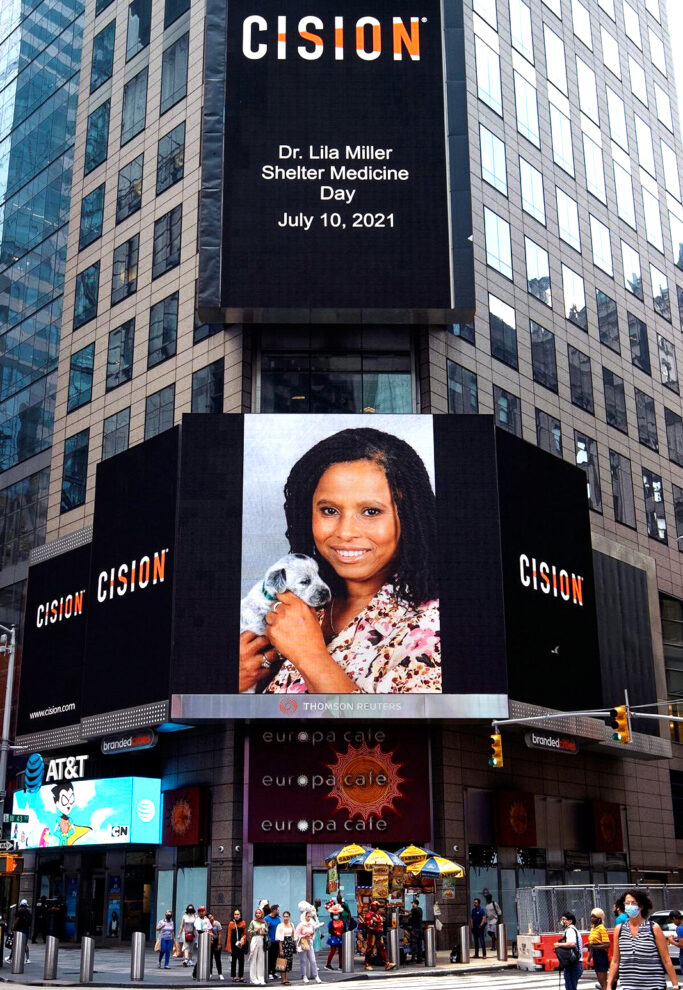
July 10th is Dr. Lila Miller Shelter Day in New York City. When she won a $25K award for her lifelong service to animals on that day, she donated it back to the New York shelter system. What a lady.

Dr. Lila is the reason why. She’s called “The Mother of Shelter Medicine” in veterinary trade circles, because her dedication to improving care for our furry friends combined with the visibility and authority her position at the ASPCA brought led to sweeping changes across shelters and the industry itself nationwide. Before her groundbreaking work, “shelter medicine” didn’t even actually exist. In addition to developing the first ever industry-wide veterinarian-written shelter protocols, Dr. Lila Miller is the co-author of the ONLY three textbooks on the subject, and returned to Cornell to teach the world’s FIRST college curriculum in shelter medicine. She’s an expert in identifying abuse in surrendered animals, and champion of companion animals. In fact, her expertise in that regard has been so critical, she’s the world’s first veterinarian appointed to the human National Board of Medical Examiners. Of course, Dr. Lila’s also on ALL of the veterinary boards you’ve never heard of, and she’s even made another big board. In recognition of her tremendous service, an image of Dr. Lila with one of her charges graced Times Square on Dr. Lila Miller Shelter Medicine Day

Though she retired in 2019, Dr. Lila is still active in teaching, consulting, chairing, speaking, and of course, inspiring. She’s currently out there in the world lobbying for more changes in veterinary medicine like publicly funded veterinary clinics for ANY client, reducing the financial barriers to studying veterinary medicine, and the inclusion of shelter medicine, anti-cruelty training, and animal behavior into the curriculum of every veterinary college. 

When asked what makes a good veterinarian, she responded “A universally compassionate person who doesn’t lose sight of doing what is right for the patient even though it isn’t always possible.”

Of course, when you’re Dr. Lila, impossible is nothing.

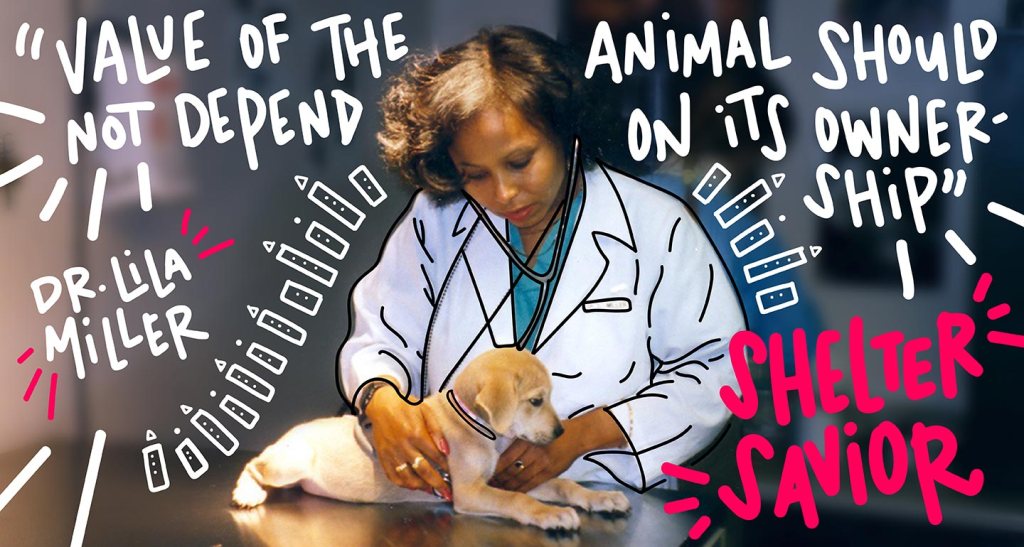
“The inherent value of the animal should not depend on its ownership,” the guiding principle of Dr. Lila Miller’s work. (Quote Illustration courtesy of Chewy.)

KEEP GOING BLACK IN HISTORY:

Spend an hour hearing from Dr. Lila herself on her experiences, her achievements, her hopes for increased diversity in veterinary medicine, and so much more!

Cornell University honors their most illustrious veterinary alum in a featurette here.

Gain more insight on Dr. Lila and the full scope of her work in her interview with Small Animal Talk.

Dr. Lila can’t change everything. Though she opened doors for humans and animals, Black veterinarians still struggle in the field. Read their stories at TIME Magazine.

DAY 22 — Rikki Kelly

Tequila’s got a real image problem.

Actually, maybe a few, but we’ll just stick with one today. For a liquor native to Mexico, the industry is awfully white.

“I thought to myself, ‘The liquor industry is filled with celebrity hotshots and you don’t see a lot of women, especially minority women taking on this industry by themselves’.”

So Rikki Kelly took her shot, and with it, the Fort Worth native became the first Black woman in Texas to own her own tequila brand, and only the third in the United States.

“When I created Ego Tequila, my goals were to make sure it was smooth in quality, approachable for newcomers and tequila loyalists, and out of the ordinary. I believe I understood the assignment,” she quips.

But the assignment wasn’t always easy. The liquor industry’s legal barriers alone are formidable, especially when you have NO funding or business experience. “I came into this industry with not a lot of knowledge and no guidance,” Rikki said. “From working with a distillery in Mexico to developing a consistent brand to securing accounts with wholesalers/retailers, everything was a learning process for me.” In fact, Rikki barely even had drinking experience when she launched Ego Tequila three years ago at just 24 years old. But she wouldn’t let any of that get in the way of her dream.

Rikki’s only startup capital was her weekly paychecks, so she stuck with a toxic, dysfunctional day job until she could make her dream come true. It’s a situation she’s not alone in. Even though Black women start more businesses in the United States than white women or white men, Black women are the most underfunded. Even when there’s verifiable data that they may have the cure for cancer, Black women can’t get funded, while others have gotten rich and famous as total frauds. According to an article in Forbes Magazine, “In the last 20 years, while women-owned businesses have increased by 114%, women of Color owned companies increased by 467%. Out of the 1800 Black-owned businesses that are created every day, only 20% make it above the poverty line. Why? Because of lack of equal access to capital.”

But that wasn’t Rikki’s only brush with inequities in business. “Being a Black woman in this industry, I feel sometimes it’s hard to be taken seriously. There are some people that see my brand and see me and they can’t put two and two together,” she says. “They think, ‘there’s no way you can develop a solid brand like this.’ When I’m talking about the brand, people assume I work for a distribution company or I’m just a brand representative. So the struggle has definitely been real, but I take it in stride and I don’t let it affect me because at the end of the day, this is my story and I’ve worked so hard to create this brand.”

Even though she stood out from the competition herself, Rikki’s Ego Tequila needed to do the same on shelves. Where most tequilas come in tall, slender bottles, RIkki chose one with more weight. Where most other tequilas have brightly colored or clear labels, Ego bears a rich blue and Aztec-inspired elements, because representing the culture where her product originated had just as much importance to Rikki as the product itself. “I knew it needed to stand out. And if we get some people hooked because of the beautiful bottle first, then we can retain them as fans of the juice,” she said.

After all, when it comes right down to it, it’s what’s on the inside that counts, whether you’re a human or a tequila. And Ego delivers the best of both worlds.


KEEP GOING BLACK IN HISTORY:

Track down where you can buy your own Ego at their website here.

And online shipping here!

Keep up with Ego Tequila on their Instagram.

DAY 21 — George Edwin Taylor

Shirley Chisholm, first African-American presidential candidate?

Everybody knows that in 1968 Shirley Chisholm was the first African-American candidate to run for United States President, right?

Right! She actually gets a brief mention in American history books, so surely that’s right…

…right?

Not even close.

64 years before Shirley, a man you’ve never even heard of tossed his hat into the presidential ring. His name was George Edwin Taylor and the reason you’ve never heard of him is because radical Black independents don’t make the history books.

But before we get into the specifics, let’s start at the beginning, because George lived a life that came full circle.

Born in 1857, he was only two years old when Arkansas passed the Free Negro Expulsion Bill, ordering all free Black people to vacate the state of Arkansas, or else find themselves re-enslaved for a full year to cover their own relocation fees. So to be clear, the offer was leave on your own now, or be enslaved and ultimately put out a year later. Of the state’s 700 free Black people, all but 144 took option A.

George’s mother was one of those people, and fled to the free state of Ohio where she and her son could live in their peace. But their shared peace was short-lived when she died just three years later. George was a 5-year-old orphan, with nothing and no one to call his own. For three years, he survived as a street urchin, until he was finally taken in by one family, assigned to another through foster care, and went on to a Wisconsin prep school. Even if he’d stopped achieving there, folks would have considered George a success for his time, his race, and his circumstances.

But for better or worse, George had a penchant for pushing the envelope, and good enough simply wasn’t. Over the next 20 years, he excelled in writing and operating an assortment of news publications, which gave him an intimate knowledge of political issues facing African-Americans and the country as a whole. And that knowledge came in handy in 1904 when the National Negro Liberty Party asked him to him run as their leading man.

Presidential race poster for George Edwin Taylor, the first African American ticketed as a political party’s nominee for president of the United States, running against Theodore Roosevelt in 1904 .
One bill that was supported by the National Negro Liberty Party. I wish I could tell you that it passed, but there’s no new news here. Read this document and many more on the party at the National Archives.

Here’s the kicker. Founded in 1897, the National Negro Liberty Party, formerly known as the Ex-Slave Petitioners’ Assembly, originated in Little Rock, Arkansas, where George had been born 40 years earlier. After the Free Negro Expulsion Bill that drove George & his mother out of Arkansas, it’s no wonder folks assembled politically against the state’s tyranny, and absolute kismet that the man who would come to represent those people nationally was born amongst them.

The Ex-Slave Petitioners’ Assembly was originally formed seeking legislative reparations of any sort after the “40 acres and a mule” that were promised did not materialize and “the poverty which afflicted [African-Americans] for a generation after Emancipation held them down to the lowest order of society, nominally free but economically enslaved,” as Carter G. Woodson put it in The Mis-Education of the Negro.

After years of trying (and failing) to push bills through Congress, the National Negro Liberty Party decided they’d shake another branch of government. And George was JUST the man for the job. He didn’t have the statesmanship of men like Frederick Douglass or W.E.B. DuBois. Their visibility among Black and White Americans helped them to temper their passions and find delicate ways to deliver harsh words to hearts and minds.

George’s National Appeal unofficially undermined any chance he might have had at running for office with the Democrats or Republicans. Read it in full at the Library of Congress.

George wasn’t that dude. He’d been both a Democrat and Republican, until they’d both offended him by rejecting proposals brought to them by Black delegates, backing candidates with clear racist platforms, and failing to take up issues that only affected people of color, but when George went full scorched earth against the Republican Party by printing “A National Appeal, Addressed to the American Negro and Friends of Human Liberty,” it was game over for any affiliation he might even hope to gain with those parties. He was officially a radical independent.

The National Negro Liberty Party shortened their name to remove “Negro,” as every American ought be in favor of liberty, and delivered their party’s demands:

  • Universal suffrage regardless of race
  • Federal protection of the rights of all citizens
  • Federal anti-lynching laws
  • Additional black regiments in the U.S. Army
  • Federal pensions for all former slaves
  • Government ownership and control of all public services to ensure equal accommodations for all citizens
  • Home rule for the District of Columbia

A very reasonable platform, but one that even George knew was unlikely to be taken seriously. “Yes, I know most white folks take me as a joke,” he said in interviews. “But I want to tell you the colored man is beginning to see a lot of things that the white folks do not give him credit for seeing. He’s beginning to see that he has got to take care of his own interests, and what’s more, that he has the power to do it.”

That Election Day was not a day of power for us. George’s name wasn’t added to a single state’s ballot. Though estimates say he received as many as 70,000 write-ins, none of that can be verified because his votes weren’t tallied in individual state records that only counted Democrats and Republicans. In fact, the only real success that George personally reaped in his presidential bid was that he came out of it alive. “He was a black man running on a third-party ticket in a country that had little interest in black men or third parties,” Trinity College historian Dr. David Brodnax said.
Between that sad but true reality and all the bridges that George had burned to get there, his national political ambitions were essentially one and done, go big or go home. But he actively continued making what strides he could by continuing his publishing career, supporting local politicians and community organizations, and empowering the Black community. He’d implored that same community on Emancipation Day in 1898 to “press on until [you have] reached the top of the ladder and then reach up to see if there isn’t another ladder on top of that one.” Then, in spite of his own certain failure, he took a leap that extended that ladder just a little further for those who’d climb next, even if American history never acknowledged his steps.

KEEP GOING BLACK IN HISTORY:

Discover more about “A Forgotten Presidential Candidate from 1904” and the circumstances that led to his nomination at NPR.

Dive into the photos, articles, and documents on George Edwin Taylor archived at the University of Wisconsin—La Crosse.

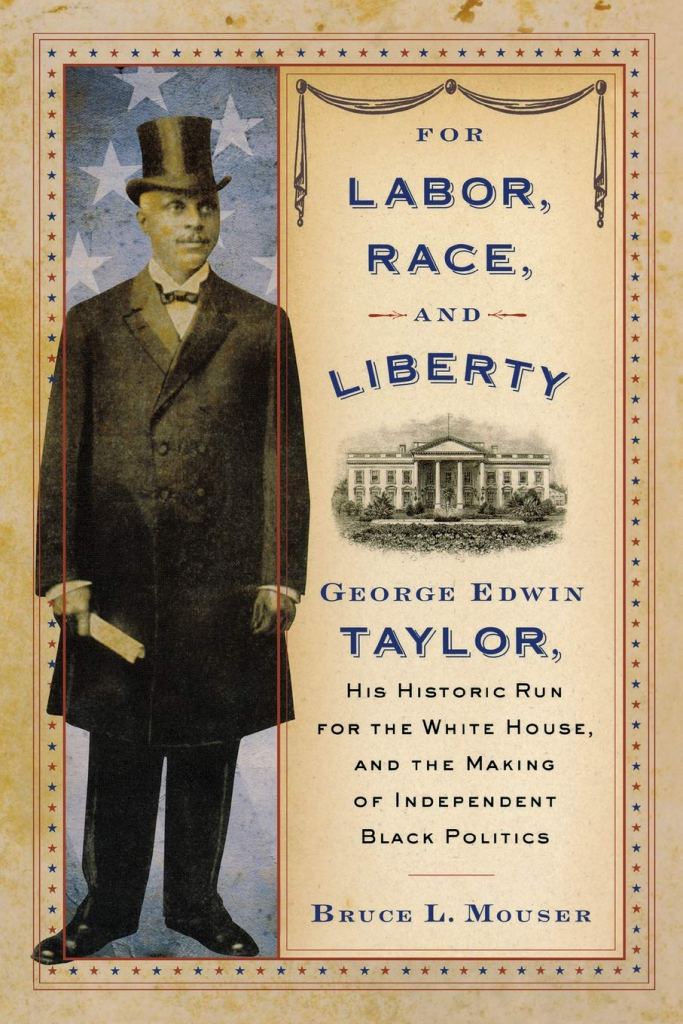
Find out more about the untold presidential run and more background on Black American politics in Bruce Mouser’s George Edwin Taylor, His Historic Run for the White House, and the Making of Independent Black Politics.

Read more about the book at the University of Wisconsin Press here.

DAY 20 — Vanilla Powell Beane

Only a handful of places immediately come to mind as somewhere a hat can transcend accessory to become ceremony.

Royal weddings and the Kentucky Derby have their own hat stories, but they’ve got nothing on the history and tradition a hat carries atop an African-American woman’s head.

Flash back to the Middle Passage, 1518.

Before Africans were transported on ships to the British Empire, the Americas, and all over the colonized world, they were shaved bald. Officially, shorn heads prevented lice and the sanitation issues bound to arise when people are chained in excrement.

“The American Slave,” an illustration in a 1900 issue of Pearson’s Magazine depicts an enslaved man being restrained for examination, shaving, some other nefarious purpose, or all of the above. Read more about violations of bodily autonomy regularly practiced during the Transatlantic Slave Trade at the African-American Intellectual History Society.

But there’s more to the story. Shaving a person’s head is the easiest way to dehumanize them. Throughout the centuries, it’s been used as a tool of war, degradation, and shame. The mighty Sampson lost his identity when his hair was shorn.  Even Nazis knew to shave and commodify their captives. And American slavers did the same, profiting from the hair, teeth, and even living bodies of the enslaved. 

But on glorious Sundays, away from the strict eye of their captors, the enslaved could adorn their shaved heads in any way they pleased. The hair once decorated with beads, shells, feathers and dyes in Africa, was replaced with elaborately tied wraps, some of which used techniques that had been carried across the Atlantic. Community and individuality were both reclaimed, all in a single piece of fabric.

Flash forward to the French colonies, 1685.

The French held a great deal of land in what’s now North America, and enacted the Code Noir enforcing specific (and outrageous) rules on the conduct of Black people throughout their colonies. In 1786 Louisiana, Code Noir was made even more outrageously specific when the governor, lobbied by his white female constituents, ordered that all women of color, free or enslaved, must cover their hair with a scarf or handkerchief called a tignon, devoid of any added embellishments like feathers or jewels. You see, white enslavers had so abused Black women that it had gotten hard to tell who was who anymore. A fair-skinned, well-dressed woman could be an upstanding white woman, a free Black woman, or the slave girl of a wealthy French family, and of course, treating them all the same would be disgraceful. Forcing only enslaved women to cover their hair would create visible classes among Black women, and that wouldn’t do either because the whole point of Tignon Law was to prevent Black women from thinking too highly of themselves and presenting themselves accordingly. Actually, the governor’s exact words were “too much luxury in their bearing.”

How tignons were MEANT to appear is seen in the painting of Dominican women, Free Women of Color with their Children and Servants, by Agostino Brunias, c. 1764–1796.
How tignons turned out. An unknown Creole woman painted by François Fleischbein in 1837.

Those actions backfired in the biggest way when tignons caught the eye of one Empress Josephine Bonaparte who began wearing her own as a fashion accessory. The tignon turned into a trend, and the racist society snobs of Louisiana were right back to square one.

Flash forward to modern day Civil Rights, and today’s story.

Members of the National Association of Fashion and Accessory Designers, an organization created by Mary McLeod Bethune (front center) and others to battle mainstream, white gatekeeping throughout the fashion industry . In 1975, Mrs. Vanilla Beane was inducted into the NAFAD Hall of Fame. Also, the hats, OK?!

African-American churches were the lifeblood of the movement. There, boycotts were organized, flyers were printed, and the people were fed, physically and spiritually, throughout their tireless fight. Those churches were also the only place African-Americans could truly serve as leaders in a culture where work, school, and leisure were segregated. African-American women in particular acted as pioneers and again, head coverings played their part. Women in leadership roles or married to leaders needed to be identifiable among crowds of their congregations and onlookers. A beautiful hat is also a symbol of dignity, status, and taste. Women who marched in the Montgomery Bus Boycotts came dressed not in their typical domestic uniforms, but in their Sunday best, knowing the optics of both their personal presentation, and of violence against a church-going woman. Nothing speaks to religious piety, humility and grace like a woman with her head covered. And when you couldn’t change your skin color, the one thing you could change was your clothes.

Dr. Dorothy Height, immortalized on a US postage stamp, wearing one of Mrs. Vanilla Beane’s hats.

Civil rights pioneer Dorothy Height knew all of this, and there was only one lady she trusted to capture all of that history for her: Vanilla Powell Beane.

If you’ve ever seen a photograph of Dorothy, you’ve almost certainly seen Mrs. Vanilla’s handiwork. 

In 1950s Washington D.C., Mrs. Vanilla was barely out of her 20s, just a working woman with no grand designs towards civil rights, history, or fashion. She didn’t even have hat-making experience. “I [worked] in a building where they sold hat materials, so I bought some and decided to see if I could do it.”

Today, she’s the 102 year old proprietor of Bené Millinery & Bridal Supplies, having built a reputation as hat maker to not only Dorothy Height, but other past and present African American women in power like D.C. Mayor Muriel Bowser and poet laureate Maya Angelou.

Vanilla Powell Beane, then and now.

Her shop opened in 1979 and prior to COVID shutdowns, Mrs. Vanilla still worked 40+ hours per week, crafting hats and styling customers. When she started making hats, segregation and Jim Crow was still very real. But today, her diverse range of hatwear sits atop a diverse range of heads, and she’s glad to teach any woman her “rules”: “Don’t match the hat to the outfit. Just buy a hat you like and the outfit will come. Never wear your hat more than one inch above your eyebrows. Slant it to look more interesting and possibly even risque.”

“She’s at the shop six days a week, and whenever we celebrate her birthday, she typically wants to stay open so people can stop by and get a hat to wear to the party,” Mrs. Vanilla’s granddaughter Jeni Hansen said. Mrs. Vanilla wholeheartedly agrees that it’s the shop and customers that have kept her going. At her age, she’s seen, experienced and overcome so much, including the deaths of her husband and son along the way, and of course most recently, a global pandemic affecting small businesses like never before. But Dr. Dorothy Height’s mother Fannie once said, “No matter what happens, you have to hold yourself together.”

Through Bené Millinery and her extraordinary work in a slowly dying art, Mrs. Vanilla has held herself—and the D.C. African-American culture together through hats, and thankfully, shows no signs of hanging up her own.

Mrs. Vanilla poses in front of creations in her shop, in a photo taken when she was a mere 90 years old.

KEEP GOING BLACK IN HISTORY:

Early last year, Mrs. Vanilla gifted Rep. Cori Bush a hat in recognition of Bush’s work on Capitol Hill. The two ladies shared a chat and showed us a bit of Mrs. Vanilla’s past and process here.
See more of Mrs. Vanilla’s work, her shop and her legacy here.

Inspect one of Mrs. Vanilla’s favorite hats in interactive 3D at the Smithsonian National Museum of African-American History & Culture.

Artist Ben Ferry was so delighted to meet Mrs. Vanilla in her shop that he created a whole art collection featuring the lady herself, her work, and her shop. The cover image for this post shows Mrs. Vanilla posing next to Ben’s work. See the collection here, and read the story of how these two opposite creatives attracted here.

September 19 was designated “Vanilla Beane Day” in the District of Columbia. Read the full proclamation, issued on Mrs. Vanilla’s 100th birthday, here.

Bené Millinery is still working to get online, but in the meantime, browse around and plan an in-person visit by appointment on their website.

Learn more about the history of Black hair, its care and its coverings around the globe and throughout the diaspora at BET.

It’s still not illegal to discriminate against a Black woman’s natural hair in the United States. Find out more about the steps being taken to pass The CROWN Act nationwide.

DAY 19 — Nyla Hayes

Beautiful, gentle, brave, graceful, larger than life…

…the Venn Diagram of amazing ladies and admirable dinosaurs is a circle.

At least that’s the premise behind the wildly successful digital art of Nyla Hayes.

“I fell in love with the Brontosaurus, which I lovingly referred to as ‘long neckie’,” she says. “Their beautiful long neck mixed with their size, gentle nature and bravery was so cool to me. And that’s basically what I want to show for my artwork, how beautiful and strong and powerful women can be.”

Pretty cute, right? You have no idea.

In the 4 years that she’s been creating and selling her work, Nyla’s “Long Neckie Ladies” and subsequent spin-off collections have earned her around $6 million in digital currency and the distinction of being TIME Magazine’s first ever artist-in-residence.

Nyla Hayes is 13 years old.

A tremendous part of her success is, of course, her medium. Nyla’s “Long Neckies” are NFTs (non-fungible tokens). I know this topic can be confusing, so let me attempt to break it down, because even the name is indecipherable, let alone understanding what it actually is. “Non-fungible” is essentially “one-of-a-kind.” Cash is fungible. You can trade it for lots of different things of equal value. When you buy an NFT, you’re buying a guarantee that you are the only owner of that thing. So what sorts of things are sold as NFTs? Anything you can save in digital form. Even tweets.

(I never said these were all worthwhile ways to spend money.)

So when you buy one of Nyla’s pieces, you’re buying her original digital art file, like buying an original painting in real life. Where NFT art differs from physical art though is that depending on the ownership agreement, an NFT may be yours to reprint, recreate, manipulate or display in whatever way you wish. (I say this depends, because when Budweiser entered the NFT market, their agreement demonstrated that “ownership” doesn’t necessarily mean it’s yours.)

What also makes NFTs so very different from physical art is that anyone can create, sell and get paid for them on the open market. NFT’s have all but eliminated the “struggle” from being an artist. Gone are the days of constantly buying new materials, of seeking shops and galleries to sell your art (minus their cut, of course), and all the overwhelming business aspects of making money from your creativity.

Without the accessibility that NFTs bring to the art market, Nyla would never have broken through.

“We really didn’t have enough money to do something with my art,” she recounts

But when NFTs emerged, her path suddenly cleared.

In March of last year, Nyla released her first NFT collection, simply titled “Long Neckies.” It was only the beginning.

Her “Long Neckie Ladies,” a collection of 3,300 diverse women with long necks, launched July 27, 2021. It sold out in 11 hours to the tune of nearly $2 million, many of which came from celebrity pockets.

But even bigger things (and final sale prices) were on the horizon.

Nyla’s work caught the eye of Keith Grossman, president of TIME Magazine. TIME was contracting artists to recreate their Women of the Year covers and thought Nyla perfectly embodied a digital, female, diverse, and future-forward dynamic they wanted to include in the project.

She created 1,000 unique portraits of 100 women who graced the cover of TIME Magazine, and her work was so impressive, so successful, and so iconic that they offered her a residency. “Since launching Long Neckie Ladies, Nyla has inspired many individuals within the NFT community and established herself as a leader amongst the next generation of emerging artists,” Grossman said. “We are thrilled to announce her as our first Artist-in-Residence for TIMEPieces and are excited to see how she applies her talent to our brand.”

There, she’ll have access to the resources, training, tools, and more “essentials needed to advance her career through NFTs.” Considering what she’s managed to accomplish on her own, the support of a media organization with the power of TIME Magazine means the sky’s the limit for Nyla.

Good thing she specializes in long necks.


KEEP GOING BLACK IN HISTORY:

CNN’s Julia Chatterjee spent a few minutes interviewing Nyla, exploring her art, and discussing her accomplishments in just XX short years.

Browse all 100 of Nyla’s Long Neckie Women of the Year at TIMEPieces.

Keep up with all things Long Neckie and Nyla’s big dreams on her Instagram.

The Long Neckies have grown to several different collections. Find links to see and maybe purchase them all on Nyla’s website.

DAY 18 — Philip A. Payton Jr.

The major difference between racial terrorism in the North and the South was the publicity.

Escape to the North and you may avoid a spectacle of a lynching, but that still didn’t make you welcome.

Take the case of Harlem, NY.

Now considered one of the most historic African-American communities in the United States, it was once entirely white and there were a lot of folks invested in keeping it that way.

Real estate investors, to be specific.

The neighborhood just north of Manhattan was booming in the late 1800s. Oscar Hammerstein’s first opera house, the world’s largest gothic cathedral in St. John the Divine, and Columbia University all opened or began construction in Harlem within 8 years of each other. Property was being snatched up left and right to support new expensive apartments, some priced up to 800% more than those in Manhattan. Harlem was destined to be the height of luxurious living.

But the city was growing everywhere, and by 1904, developers and dwellers were already on to New York’s next hotspot. All those high-dollar rents were plummeting as whole buildings purchased in anticipation of continued growth suddenly stood empty.

But Philip A. Payton Jr. had been biding his time. After a few odd jobs and small business ventures, he’d discovered a passion for real estate. And then spent his last dime on classified ads. 

“COLORED TENEMENTS WANTED | Colored man makes a specialty of managing colored tenements; references; bond. | Philip A. Payton, Jr., agent and broker, 67 W. 134th.”

If it ain’t broke, don’t fix it. A 1907 New York Age classified ad taken out by Mr. Payton reads almost the same as his first.

Whatever property did come his way would have to come cheap. And racism was about to get Philip out of the red.

“My first opportunity came as a result of a dispute between two landlords in West 134th Street. To ‘get even’ one of them turned his house over to me to fill with colored tenants,” Philip recounted to the New York Age.

An ad in a 1906 issue of the New York Age shows how busy Mr. Payton was with Harlem real estate.

The race to own Harlem was on. With a few rent payments in his pocket, Philip purchased even more luxury properties at rock-bottom prices to pass on to new, Black tenants.

And the locals were not happy about it. White New Yorkers weren’t willing to share their space with people of color and their white brokers knew it. If things kept up at this rate, they’d have even more empty buildings on their hands, so the brokers started biding their time too. The second Philip sold some of his predominantly African-American tenements to free up some cash, the white brokers snatched it up, evicted his tenants, and made the buildings white-only again.

Well, Philip knew how to be slick too.

Two buildings managed by those white brokers were up for sale on the same row, sandwiching the ones he’d sold. He bought those two buildings, evicted all of the white tenants, replaced them with Black ones, and created the exact crisis the white brokers were trying to avoid. Suddenly in the middle of a Black block, the white tenants fled and their brokers had to put the buildings back up on the market.

Guess who bought them for even less than he sold them for.

In the midst of all of this buying and selling, Philip recognized that he couldn’t take on the entire Harlem real estate establishment, so he formed an organization that could. On June 15, 1904, the Afro-American Realty Company was chartered and funded. With 50,000 shares issued at $10 each to wealthy African-Americans, the Afro-American Realty Company bought properties throughout the neighborhood, turning Philip’s vision into whole blocks of thriving Black families.

Read the full article at the NYT’s “Times Machine” here.

He saw Black folks using the circumstances stacked against them to come up. The New York Times saw a “Real Estate Race War.”

The Afro-American Realty Company didn’t last, but the trend did. Philip opened the Philip A. Payton Jr. Company, and spurred by his continued success in the neighborhood, many of Philip’s former AARC co-investors followed suit. By 1905, newspapers reported on the shifting demographics in Harlem like a plague had descended. “An untoward circumstance has been injected into the private dwelling market in the vicinity of 133rd and 134th Streets.” the New York Herald reported. “Flats in 134th between Lenox and Seventh Avenues, that were occupied entirely by white folks, have been captured for occupation by a Negro population… between Lenox and Seventh Avenues has practically succumbed to the ingress of colored tenants.”

Read the full article at the NYT’s “Times Machine” here.

Though their language left something to be desired, the Herald wasn’t wrong about the tidal wave of African-Americans who seemed to own Harlem overnight. By 1915, just over a decade after Philip first moved to an all-white block himself, census records showed nearly 70,000 Black residents had moved in right behind him. In 1917, he officially staked his claim in Harlem with the biggest purchase of property by Black broker that New York had ever seen. Philip bought six buildings at $1.5 million, naming them all for historic Black figures, building more community from that sense of pride.

For his lifetime of groundbreaking development, Philip was called the “Father of Harlem,” and though he died at 41 years old, just a month after his historic $1.5 deal, the foundation he laid lived on. It’s no coincidence that in 1920, the Harlem Renaissance officially began. Even the National Institutes of Health recognize that psychological safety—”the belief that you won’t be punished or humiliated for speaking up with ideas, questions, concerns, or mistakes”—leads “to increased proactivity, enhanced information sharing, more divergent thinking, better social capital, higher quality, and deeper relationships, in general, as well as more risk taking.”

Free from the fear of their homes falling under constant threat from the whims of white people, whether they were southern night riders or northern bankers, African-Americans finally had the luxury of creating something beautiful, and in doing so, absolutely changed the world.

Philip and Mrs. Payton went from rags to riches in Harlem, and were even presented in print like they were royalty.

KEEP GOING BLACK IN HISTORY:

Though the New York Times ran articles about him and what he was doing in Harlem, their Overlooked series is the first to truly acknowledge its positive impact.

Philip wasn’t the only wildly successful Payton. Read through an accounting of his accomplishments, as well as those of his siblings at Westfield State University in the town where the Paytons once flourished.

DAY 17 — Oscarville & Lake Lanier

Death looms so large over Georgia’s Lake Lanier that people say it’s haunted.

Since it was filled in 1956, it’s estimated that nearly 700 people have lost their lives in its waters or at its banks in boating accidents, drownings, and unexplained events. Official reports list at least 24 people as “missing” there because what lies below the lake’s surface makes searching it nearly impossible.

Beneath those unrecovered souls, wrecked boats, discarded nets, and silty waters lie the charred remains of the Africa-American community of Oscarville, GA.

Before 1912, Oscarville’s people thrived as farmers, teachers, ministers and tradespeople of all sorts.

Harrison, Rosalee, Bertie, Fred, Naomi, and Minor Brown were among the thriving residents of Oscarville, in a photo taken in 1896.

Their world started to unravel on September 5th of that year, when a white woman accused a Black man of entering her bedroom and attempting rape. When a local preacher mentioned that perhaps the woman had not been entirely forthcoming in her account, suggesting the encounter may have been consensual, he was nearly beaten to death right in front of the Oscarville courthouse.

Tensions between the segregated populations of Forsyth County were so high that the Governor of Georgia activated the National Guard to stand patrol and keep the peace.

Just 4 days later, that fragile peace was shattered when another white woman was found dying in the local woods, an apparent victim of yet another sexual assault. 

The only evidence police turned up was a pocket mirror claimed to be property of a 16-year-old boy named Ernest Knox. Hardly a smoking gun, but enough to satisfy the white folks of Oscarville, especially when Ernest confessed to the crime and gave up the people who were going to help him dispose of the body. Suppose it didn’t matter much that Ernest made that confession from the bottom of a well just before he was nearly drowned in it.

Ernest and 3 supposed co-conspirators—Oscar Daniel, Oscar’s 22-year old sister Trussie, her boyfriend Big Rob—plus an alleged witness, were all transported to the county jail in Cumming, GA. But there was no point. A mob estimated in the thousands stormed the jail, killed Big Rob, and dragged his body into the street. He was hung from a light post and used as target practice while the others inside could only listen to their potential fate.

A newspaper photo depicts all of the suspects for the rapes of two white women were still alive in their custody.
Left to Right: Trussie Daniel, Oscar Daniel, Tony Howell (defendant in the first case), Ed Collins (witness), Isaiah Pirkle (witness for Howell), and Ernest Knox.

Trussie accepted a plea bargain in exchange for testifying against her brother Oscar and was forced to be his executioner (see the sub-headline in the article above). Charges were dropped against the witness. But Big Rob was already dead, and Ernest and Oscar were doomed to the same fate.

On October 25, 1912, Oscar Daniel and Ernest Knox were publicly lynched before a crowd estimated at as many as 8,000 spectators. People gathered around the gallows for picnics, and PBS reports that one of the boys was so small a special noose was created to ensure the momentum wouldn’t decapitate him and splash anyone’s Sunday dress with blood.

You don’t even have to imagine the scene. You’ve probably seen the images of vast crowds gathering under the feet of a Black man. Though these images are rarities now, in 1908, they were so frequently mailed, the U.S. Postmaster was forced to ban them. “Even the Nazis did not stoop to selling souvenirs of Auschwitz,” TIME Magazine’s Richard Lacayo writes

A postcard shows the sprawling crowd gathered for the 1893 lynching of Henry Smith in Paris, TX.

But the terror didn’t end with two lynchings. Over the next few months, each sunset brought nightmares to Oscarville. 

“Night riders” went door-to-door demanding that Black people vacate the town. When some people didn’t comply, the threat escalated. Their homes were shot into, animals killed, crops destroyed. Anyone who remained after that fled their property in the middle of the night as it went up in flames. Nearly 1,100 African-Americans—around 98% of Forsyth County’s Black population—were forced out of Oscarville, some still paying on property they’d abandoned until it was foreclosed.

Of course, all of that land was immediately seized by you-know-who.

And nearly just as quickly, things started going wrong.

In 1915, a boll weevil infestation killed crops on Oscarville’s land that was illicitly seized by white farmers and banks. Though they ultimately survived the weevils, being one of the few regions in the state to escape total decimation made them eager to share their methods. (It was chicken poop. They got a bunch of chickens to poop in the soil.) Perhaps too eager. They gained the attention of the mayor of Atlanta, who was developing a dam to ensure the city’s water supply, hydroelectric needs, and flood control. He spent 2 years working with the Army Corps of Engineers to seize nearly all of that recovered farmland. What little was actually purchased was far undervalued, and left the handful of African-Americans left who owned their land through generations with nearly nothing.

When the dam was complete, the waters completely submerged charred buildings, cemeteries, bridges, and any trace left of those who lived and died in Oscarville. Then they named those waters after a Confederate soldier. Though Oscarville is the only Black community under Lake Lanier, it wasn’t the only one Black people were run out of. Towns, Union, Fannin, Gilmer and Dawson Counties all have a history of violently exiling its Black residents. Even today, only 4% of Forsyth County’s almost 250,000 residents are Black.

So is Lake Lanier haunted? No one can truly answer that question.

But is it filled with ghosts? Absolutely.

Even Tiktok knows you don’t go on Lake Lanier.

KEEP GOING BLACK IN HISTORY:

A diver captures footage of some of the structures lost under Lake Lanier, both visually and on sonar.
Local news coverage shows the efforts to keep African-Americans and their civil rights out of Forsyth County still alive and well in 1987.

Learn more about the tragic history of Forsyth County, GA in Patrick Phillips’ book, Blood at the Root, then pick up a copy from our friends at Marcus Books.

Get more local articles and historic sources from a story originally published by the Forsyth County News.

The terror in Oscarville and ongoing racial terrorism documented in Forsyth County and throughout the South is detailed at History.com

Read more about the taking of Oscarville and the forming of Lake Lanier at CNN.

Forsyth County church leaders took it upon themselves to create the Forsyth County Descendants Scholarship, “simply an act of love that will be helpful to some descendants whose families have suffered. Is it enough? Of course not. But it is a step.” Learn more & donate here.

Explore an interactive map and see the stories of documented racial terror lynchings throughout the States created by the Equal Justice Initiative.

DAY 16 — Marcus Books

Writers, photographers, dancers, artists, musicians and so many others Black creatives are represented here at The American Blackstory.

Today, we recognize the keepers of all that Black magic.

Marcus Books is the nation’s oldest Black-owned bookstore, serving San Francisco, Oakland, and now, the world, for over 60 years.

For any small business to survive for that length of time is extraordinary.

For a humble bookstore to do so amidst government suppression, a number of foreign wars, several waves of American social sea change, San Francisco gentrification, technological advances, and many economic recessions is almost unbelievable.

And it all started by accident.

Julian and Raye Richardson met each other at Tuskegee University back in the 30s where Black creativity was thriving around them. Booker T. Washington and George Washington Carver were among the university’s professors at the time, and Julian attended classes with Ralph Ellison. When the couple moved to San Francisco, Julian opened a print shop while Raye earned her doctorate in literature at UC Berkeley. Raye’s love for books spilled onto the Richardsons’ friends and neighbors, and soon they found themselves loaning her collection out from the back room of Julian’s print shop. The operation grew until Marcus Books, named for Marcus Garvey, was born.

“My dad in his print shop would want to share books with his friends and never got his books back so he said, ‘Let’s start selling books,’” the Richardsons’ daughter Karen Johnson said. “I asked him, ‘Will white people let you sell Black books?’ He said, ‘It’s not about them. This is what we need.’”

Blanche, another of the Richardsons’ daughters, explains the urgency behind that need. “They shared a love of reading Black books and found them difficult to find and purchase. They realized that for a Black community to be progressive, it must have its own bookstore as a source of information about itself.”

Blanche Richardson, daughter of Julian & Raye, manages the Marcus Books in Oakland.

A simple, admirable, and aspirational goal, no doubt, but some didn’t see it that way.

Hoover’s memo on “black extremist bookstores”

In October 1968, J. Edgar Hoover issued a COINTELPRO memo warning against “increase in the establishment of black extremist bookstores which represent propaganda outlets for revolutionary and hate publications and culture centers for extremism.” In response to the perceived threat, Hoover ordered every FBI office nationwide to “locate and identify black extremist and/or African-type bookstores,… determine the identities of the owners; whether it is a front for any group or foreign interest; whether individuals affiliated with the store engage in extremist activities; the number, type, and source of books and material on sale; the store’s financial condition; its clientele; and whether it is used as a headquarters or meeting place.” Marcus Books was absolutely one of those places, as within its walls organizations like the Black Firefighters Association, the Association of Black Policeman, the Black Nurses Association, and many more were formed to support the Black working class.

Proudly proclaiming that their “very existence was born out of an awareness of anti-Blackness plus a sense of duty to provide a space where we are not simply respected but affirmed” has always put Marcus Books squarely in the sights of American white supremacists. Marcus Books is a family-owned and operated business, and even the Richardsons’ granddaughter Jasmine Johnson says that the bookstore’s entire staff has been met with “white-only-water-fountain-level racism” often. When Marcus Books was supported in 2020 through a GoFundMe after they couldn’t raise the several million dollars to purchase the Fillmore Street location that housed their first official storefront, they were met with racial aggressions, including but not limited to people hiding behind Twitter profiles trolling and undermining their posts with comments like “Why can’t a Black owned bookstore save themselves?”

Kids from an Oakland school hold their selections donated by Marcus Books, in front of a mural on the shops building depicting Malcolm X armed next to a shelf of Black literature. It alludes to his quote: “Armed with the knowledge of our past, we can with confidence charter a course for our future. Culture is an indispensable weapon in the freedom struggle. We must take hold of it and forge the future with the past.”

The folks at Marcus Books have an answer to both the question and the racism they face. ““It’s pretty deeply connected to what happens when you qualify anything as Black. You’re met with suspicion or dismissal. The publishing industry has had a history of framing us as a ‘diversity section,’” Jasmine explains. The African-American Literature Book Club listed over 200 Black-owned bookstores in the 90s. Today, that number is only 118. And Marcus Books’ experience in San Francisco is only further proof that America doesn’t truly value literary diversity. Though many other San Francisco bookstores have been listed as historical landmarks, despite all of the history and culture built there, Marcus Books has never been awarded that designation. 

But with authors like Malcolm X, Toni Morrison, Maya Angelou, Terry McMillan, Walter Mosley, Muhammad Ali, Ishmael Reed, Michael Eric Dyson, Tannarive Due, Randall Robinson, Nikki Giovanni, E. Lynn Harris, and so many more who’ve passed through their doors and graced their shelves, Marcus Books isn’t just a Black bookstore; it’s an American treasure that celebrates Blackness, in a culture that’s actively censoring that celebration in literary spaces elsewhere. In times like these and many other tumultuous eras, Marcus Books endures, inspires, and encourages us to do the same, reminding us that the “call to write our own story, now more than ever, continues.”


KEEP GOING BLACK IN HISTORY:

A PBS short documents Marcus Books through a tour of the store, interview with the owner, and bits of the business’s history.

Support Marcus Books by shopping their website or their storefront on Bookshop.

Cozy up to all the latest releases, cultural literature and happenings at Marcus Books on Instagram.

The Marcus Books GoFundMe is still open if you’d like to contribute to keeping them alive for future generations.

Learn more about the Richardson family and their storefront’s legacy in a 2010 SFGate article celebrating the Marcus Books 50th anniversary here.

Learn more about “The FBI’s War on Black Bookstores” at The Atlantic.

The New York Times compiles some great infographics and more stats on the lack of diversity in the publishing industry here.

DAY 15 — Jourdon Anderson

“If he had been a white man, his talents would have secured him an honorable position; but being colored, his great intelligence only served to make him an object of suspicion.”

Those words, written by L. Maria Child, editor of The Freedmen’s Book and an active abolitionist, preface a poem inscribed on a prison wall by an enslaved man named Mingo before he was torn apart by pursuit dogs. 

“The Aspirations of Mingo” was transcribed from a prison wall. Read it in full at the Gutenberg Project’s transcription of the Freedmen’s Book here.

Over 150 years after the Freedmen’s Book went into print, those words still rang true. This time, regarding another writer in the compilation: Jourdon Anderson.

Over the past decade, Jourdon has occasionally gone viral for his response to an 1865 letter from his former owner. Jourdon’s flawless delivery, scathing wit, and audacious request for back pay left “some critics question[ing] the letter’s authenticity,” as Smithsonian Magazine very politely puts it.

Even reputable sources like Business Insider had to publish disclaimers alongside Jourdon’s letter to stifle comments that it was fake.

But it’s also very telling that several outlets that picked up the story compared Jourdon’s writing to another, more famous writer’s style. Mark Twain’s first book was published in 1869, just four years after Jourdon’s letter. If Mark Twain could write so cleverly and with such tremendous style, why couldn’t Jourdon Anderson write like this?:

To my old Master, Colonel P. H. Anderson, Big Spring, Tennessee.

Sir: I got your letter, and was glad to find that you had not forgotten Jourdon, and that you wanted me to come back and live with you again, promising to do better for me than anybody else can. I have often felt uneasy about you. I thought the Yankees would have hung you long before this, for harboring Rebs they found at your house. I suppose they never heard about your going to Colonel Martin’s to kill the Union soldier that was left by his company in their stable. Although you shot at me twice before I left you, I did not want to hear of your being hurt, and am glad you are still living. It would do me good to go back to the dear old home again, and see Miss Mary and Miss Martha and Allen, Esther, Green, and Lee. Give my love to them all, and tell them I hope we will meet in the better world, if not in this. I would have gone back to see you all when I was working in the Nashville Hospital, but one of the neighbors told me that Henry intended to shoot me if he ever got a chance.

I want to know particularly what the good chance is you propose to give me. I am doing tolerably well here. I get twenty-five dollars a month, with victuals and clothing; have a comfortable home for Mandy,—the folks call her Mrs. Anderson,—and the children—Milly, Jane, and Grundy—go to school and are learning well. The teacher says Grundy has a head for a preacher. They go to Sunday school, and Mandy and me attend church regularly. We are kindly treated. Sometimes we overhear others saying, “Them colored people were slaves” down in Tennessee. The children feel hurt when they hear such remarks; but I tell them it was no disgrace in Tennessee to belong to Colonel Anderson. Many darkeys would have been proud, as I used to be, to call you master. Now if you will write and say what wages you will give me, I will be better able to decide whether it would be to my advantage to move back again.

As to my freedom, which you say I can have, there is nothing to be gained on that score, as I got my free papers in 1864 from the Provost-Marshal-General of the Department of Nashville. Mandy says she would be afraid to go back without some proof that you were disposed to treat us justly and kindly; and we have concluded to test your sincerity by asking you to send us our wages for the time we served you. This will make us forget and forgive old scores, and rely on your justice and friendship in the future. I served you faithfully for thirty-two years, and Mandy twenty years. At twenty-five dollars a month for me, and two dollars a week for Mandy, our earnings would amount to eleven thousand six hundred and eighty dollars. Add to this the interest for the time our wages have been kept back, and deduct what you paid for our clothing, and three doctor’s visits to me, and pulling a tooth for Mandy, and the balance will show what we are in justice entitled to. Please send the money by Adams’s Express, in care of V. Winters, Esq., Dayton, Ohio. If you fail to pay us for faithful labors in the past, we can have little faith in your promises in the future. We trust the good Maker has opened your eyes to the wrongs which you and your fathers have done to me and my fathers, in making us toil for you for generations without recompense. Here I draw my wages every Saturday night; but in Tennessee there was never any pay-day for the negroes any more than for the horses and cows. Surely there will be a day of reckoning for those who defraud the laborer of his hire.

In answering this letter, please state if there would be any safety for my Milly and Jane, who are now grown up, and both good-looking girls. You know how it was with poor Matilda and Catherine. I would rather stay here and starve—and die, if it come to that—than have my girls brought to shame by the violence and wickedness of their young masters. You will also please state if there has been any schools opened for the colored children in your neighborhood. The great desire of my life now is to give my children an education, and have them form virtuous habits.

Say howdy to George Carter, and thank him for taking the pistol from you when you were shooting at me.

From your old servant,
Jourdon Anderson.

So why would anyone doubt Jourdon? Because Jourdon was enslaved.

Even before Sojourner Truth’s words were twisted into a mockery, the editor of the Freedmen’s Book knew to defend against the same thing happening to the words within its pages.

Frederick Douglass also composed a beautifully written yet scathing letter to his former owner, informing him that “I shall make use
of you as a means of exposing the character of the American church
and clergy-and as a means of bringing this guilty nation, with
yourself, to repentance,” and closing with “I am your fellow-man, but not your slave.” Read it in full here.

And again, why?

Because the Trans-Atlantic slave trade couldn’t have survived 400 years if the people enslaved were seen as intelligent, thoughtful, sympathetic and autonomous human beings.

That’s why.

I freely admit bias, so I’ll share independent words from Roy E. Finkenbine, a professor at the University of Detroit-Mercy: “It’s kind of a racist assumption… that when someone is illiterate, we make the assumption they’re stupid. Enslaved people had deep folk wisdom and a rich oral culture,” he adds. “Why would we think that he hadn’t been thinking about these things and couldn’t dictate them to willing abolitionists?” 

The opening quote of this post is just one clear attribution prefacing several inclusions in the Freedmen’s Book, and Jourdon’s letter has one as well: “[Written just as he dictated it.]”

But we don’t have to take the word of the Freedmen’s Book. Historic record backs it up.

Jourdon’s letter is dated August 8, 1865. An issue of The New York Tribune dated August 22, 1865, just two weeks later, ran the same letter (from a Cincinnati paper), with a different certification: “The following is a genuine document. It was dictated by the old servant, and contains his ideas and forms of expression.”

So now that we’ve established a timeline of independent sources, here’s the twist that’s not as frequently reported in this viral tale: Just a month after Jourdon’s letter was written, Col. Anderson was forced to sell his plantation in payment for his debts. The Thirteenth Amendment officially abolishing slavery was ratified by all of the states in December of the same year. Begging Jourdon to come back was quite literally Anderson grasping at straws.

According to Raymond Winbush, director of the Institute for Urban Research at Maryland’s Morgan State University who tracked down some of Col. Anderson’s descendants, to this day, the family is “still angry at Jordan for not coming back, knowing that the plantation was in serious disrepair after the war.” As he’d spent 32 years enslaved by the Andersons, Jourdon was intimately familiar with their plantation, and they’d hoped that if he returned, others they’d enslaved might stay on, even after they’d been freed. Instead, Col. Anderson died destitute in 1867, only two years after his missive to Jourdon.

As for Jourdon, he lived another 40 years in Dayton, OH, passing away at 79 in 1905. His obituary is even referenced in the archives of the Dayton Daily News, and he’s buried next to his Mrs. in Dayton’s Woodland Cemetery and Arboretum.

Jourdon & Mandy, finally resting in peace.

Jourdon’s family and many more prospered too. Among many other achievements in Dayton, Jourdan’s son, Dr. Valentine Winters Anderson, was a supporter of renowned poet Paul Laurence Dunbar in establishing the Dayton Tattler, the city’s first Black newspaper.

Times may change, but Jourdon and his family are shining examples that the power of the written word lives forever… as long as the rewriters of history will let it.

*Ed. Note: As usual, I’ve spelled Jourdon throughout the same way it was spelled in his original letter, not as history recorded him.


KEEP GOING BLACK IN HISTORY:

Read Jourdon’s letter as it was published in the Freedmen’s Book at the Dickenson College Archives.

More records authenticating Jourdon’s life and ancestors, along with those of his enslaver’s, is available with context from current historians, through an article circulated by the Associated Press.

DAY 14 — Mabel Fairbanks

Each winter, from a window high above New York’s Central Park, Mabel Fairbanks gazed down in awe at each of the tiny figures dancing over the frozen pond. One winter, she decided to stop being an onlooker, and with a couple of dollars she’d scraped together from babysitting earnings, Mabel marched down to a nearby pawn shop, and bought herself some brand new used ice skates. Even two sizes too big and stuffed with cotton, they were her first major step toward making it on the rink.

In the late 1920s, she was only fourteen and still too young to know that no matter how much skill she demonstrated on those blades, she’d be iced out of figure skating. Born Black and Seminole, someone like Mabel was a literal blemish against the lily white landscape of the sport.

In fact, Mabel’s first experience on the ice was in Harlem. Even though the ice was better in Central Park, she didn’t have the confidence to skate back where she’d first seen it happen, back where people didn’t look like her. But with a little encouragement, she went for it, and her bravery was rewarded. “I got on the pond and then I discovered that I could skate around too, just like the other kids,” she said. “Blacks didn’t skate there. But it was a public place, so I just carried on.” 

Naturally, she stood out among the crowd.

And for once, the color of her skin wasn’t the only reason.

Spectators took notice of Mabel’s talent and one suggested that skills like hers belonged on a real rink. But when she followed that suggestion, Mabel discovered that talent doesn’t matter when you can’t even get through the front door.

“I stood in line and said, ‘I’m next, I’m next!’ but I’d get up front and they would just push me away,” she recalled.

She wasn’t giving up that easily. If Mabel couldn’t get into a rink, she’d bring the rink to her. With the help of a relative, she built her own 6×6 indoor practice rink: a block of wood and dry ice, topped with sheet metal and freezing water.

Mabel’s persistence paid off when she was finally admitted into that real indoor rink (even if it was after hours). She was noticed again, and this time, it was by figure skating royalty. Olympian and nine-time U.S. ladies champion Maribel Vinson Owen helped Mabel perfect her technique and encouraged her to keep going, even if she had to go it on her own.

So Mabel packed up her tiny personal rink and did just that. She took skating places it had never been before like the Renaissance Ballroom, the Apollo Theater, and social clubs all over New York City and Harlem. Each show was more than a novelty; Mabel was skilled enough to perform some of figure skating’s most difficult routines, and create her own moves too. The New York Age, one of America’s most prominent historically Black news publications, credited Mabel as the inventor of the Flying Waltz Jump, the Camel Parade, and the Elevator spin, even though they weren’t named after her as per the standard in figure skating.

By the 1930’s, Little Mabel from Central Park had grown into a sensation.

But she still couldn’t try out for the Olympics, because she couldn’t gain admission to a qualifying event. So once again, Mabel made her own way.

Mabel skated her way through interracial ice tours and USO clubs in France, Germany, Cuba, Japan, and all over the world before coming back to the States as a bonafide star. Her show included flying splits and other death-defying jumps, wildly flexible grabs, and unbelievable balance through it all. When she took that show to Vegas, celebrities and Hollywood flocked to witness Mabel’s talent unlike they had ever seen before, and certainly unlike they’d been allowed to see before from a Black woman.

But she STILL had to run a whole campaign to be able to practice at the Pasadena Winter Gardens, where she and her skates were greeted by a sign reading “Colored Trade Not Solicited” (read: “Melanated people, go elsewhere.”) And even when she toured with the Ice Capades, she was expected to eat separately from the rest of the cast. 

And still, her star power couldn’t be denied. By 1951, Mabel landed a regular role on an LA television show called “Frosty Frolics,” where she could dazzle viewers watching at home. For the next four years, Mabel appeared on television and toured in ice skating shows, until “Frosty Frolics” was finally canceled and she found a new calling. Words from her very first mentor, Maribel Vinson, still echoed in Mabel’s mind: “‘Mabel, there are never going to be Black kids in competitions or even ice shows unless you do something about it.’”

When the Civil Rights Act passed in 1964, Mabel had a stable of Black skaters ready to break into the sport. It was only 2 years before one of her students, Atoy Wilson, became the first African-American figure skating champion. Since then, many more skaters of color like Debi Thomas, Kristi Yamaguchi, and Tai Babilonia have come under her wing and gone on to be champions. She even gave a young Scott Hamilton skating lessons as part of a program she established for skaters whose families couldn’t afford the monumental costs of elite figure skating, as she campaigned for greater accessibility all around in the sport.

Constantly pushing boundaries, Mabel continued coaching, mentoring and financially assisting skaters until she was 79 years old. Though she was never able to skate competitively herself, Mabel’s tireless contributions to the sport did not go unrecognized, and she was inducted into the United States Figure Skating Hall of Fame in 1997, the first African-American to be so acknowledged.

Before her death in 2001, Mabel told the Los Angeles Times, “If I had gone to the Olympics and become a star, I would not be who I am today.”

And who she was changed the face of figure skating forever.


KEEP GOING BLACK IN HISTORY:

Olympic commentator Terry Gannon broadcast a brief tribute to Mabel’s life featuring interviews with a handful of the skaters whose lives she changed.

Teen Vogue compares and contrasts Mabel’s story with the picture of figure skating today.

The LA84 Foundation, created by the Los Angeles Olympic Organizing Committee has preserved and transcribed Mabel’s whole life story in her own words here.

Read about and donate to the U.S. Figure Skating Association’s “Mabel Fairbanks Skatingly Yours” Fund to “financially assists and supports the training and development of promising figure skaters who are Black, Indigenous and People of Color (BIPOC) with the goal of helping them realize and achieve their maximum athletic potential.”

Keep exploring Mabel’s life through Mental Floss’s extremely well-documented article with links to more historical sources to dive into.

Hear from more underrepresented voices carrying Mabel’s torch into figure skating today and the barriers they still face via NBC News.