Tag Archives: THE AMERICAN BLACKSTORY 2025

DAY 3 — Jesse Stahl

Every 8 seconds, Jesse Stahl’s life must have flashed before his eyes.

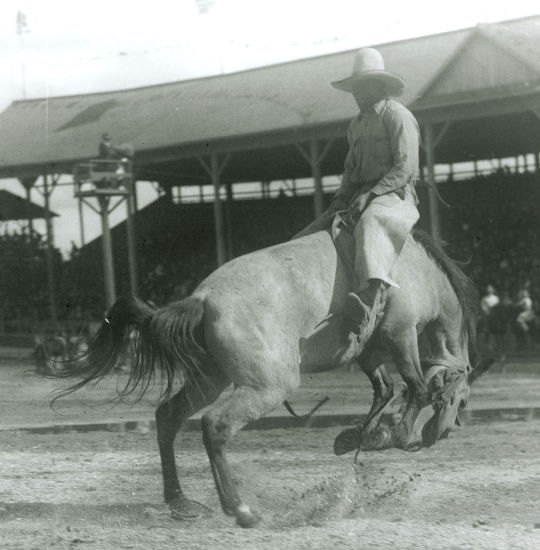
Jesse Stahl at the Pendleton, Oregon Roundup. (Courtesy of Oregon Historical Society)

He was more than “just” a rodeo rider.

Jesse Stahl demonstrated some of the most legendary horsemanship the world’s rodeo circuit has ever seen.

When his name was called, the whole arena knew they were about to see the show of a lifetime.

They also knew that no matter how skilled, how risky, or how dazzling Jesse’s ride, there was no way he’d actually win.

Though his talent was famously touted far and wide, Jesse Stahl was infamous, even among his competitors for “winning first, but getting third.”

No matter how hard Jesse rode, almost all of the judges he faced refused to score his ride higher than a white man’s. Dozens of others would allow him to ride for show, but wouldn’t let him compete at all.

The adage is that we have to work twice as hard to get half as far. And Jesse worked even harder, becoming widely renowned for feats of horsemanship no other cowboy would even attempt.

His pièce de résistance was riding a bucking bronco backwards. As if that weren’t already incredible, Jesse’s routine variations on that trick were almost superhuman.

He and Kentucky Black cowboy Ty Stokes often teamed up for what they called the “suicide ride,” where both men rode a bucking bronco simultaneously, with Ty facing forward and Jesse facing backward. According to another cowboy, Jesse even rode at least once backwards with a suitcase in his hand, exclaiming “I’m going home!”
But riding backwards was hardly the only trick up Jesse’s sleeve.

Hoolihanding,” the act of jumping from the back of a horse directly onto a bull’s before taking it down by the horns was invented and perfected by Jesse before it was eventually outlawed as too dangerous for the animals.

(Fellow Black cowboy Bill Pickett altered the move, jumping from a horse to simply wrestle a steer down by the horns, inventing what’s today known as “bulldogging.”)

A 1912 rodeo in Salinas, CA brought Jesse one of his most fearsome opponents, a bucking bronc forebodingly named Glass Eye. This unbroken horse terrified other competitors, but Jesse handled the gravity-defying ride with such ease, he even had time to ham it up.

Jesse Stahl and Glass Eye, 1912.

Despite these daring displays that literally put his life on the line, most sources—from fellow cowboys to local oral histories to museums—all agree that Jesse rarely ever won.

But as 2019 Blackstory feature Shelby Jacobs said, “If you impress the crowd, the coach can’t put you on the bench.”

Jesse may not have been able to win the judges, but he had so much crowd appeal, that today, some local writers credit Jesse for putting whole rodeos on the map, while giving him the superstar status of a “cowboy Steph Curry.”

Jesse is spoken of warmly as news of his passing is publicized in the April 24, 1935 Corning (CA) Daily Observer

And his fellow riders loved him most of all. Because Jesse depended on rodeos that would allow him to ride AND place well AND pay him—all tall orders for a Black person in the early 20th century—he died penniless. Rather than allow a legend to rest in a pauper’s grave, friends and competitors paid for his proper burial.

And though his name receded into history for a while, he was finally honored by the whole of the rodeo industry with his 1979 induction into the National Rodeo Hall of Fame, only the second Black cowboy after his friend Bill Pickett.

Like so many other incredible Black people, Jesse’s only just recently begun to receive his flowers. It speaks not only to the resurgence of Black cowboy culture, but why it had to resurge in the first place.

Leaps and bounds beyond his competitors, one single attribute kept Jesse Stahl’s name in the depths of history: his Blackness.

In the wake of that resurgence, we’re celebrating brand new milestones like the 8 Seconds Juneteenth Rodeo where I first learned of Jesse’s marvelous rides, and most recently, Beyoncé’s wins for her debut country record Cowboy Carter, including Best Country Album, the first EVER in the genre by a Black woman.

One of many unsung Black rodeo cowboys, and perhaps one of the best of any race, Jesse Stahl’s legacy made way for the spectacular accomplishments Black people are making in the rodeo, Western lifestyle, and country music industries today. Every moment of it that we’re able to enjoy now, he fought for 8 seconds at a time.


KEEP GOING BLACK IN HISTORY:

Learn more about Jesse’s exploits and those of many other Black Cowboys at the Oregon Historical Society.

Browse a more complete list of Jesse’s nationwide appearances & accomplishments over his decades on the rodeo circuit at The Active Historian.

Read “Let’s Go, Let’s Show, Let’s Rodeo: African-Americans and the History of Rodeo” at JSTOR.

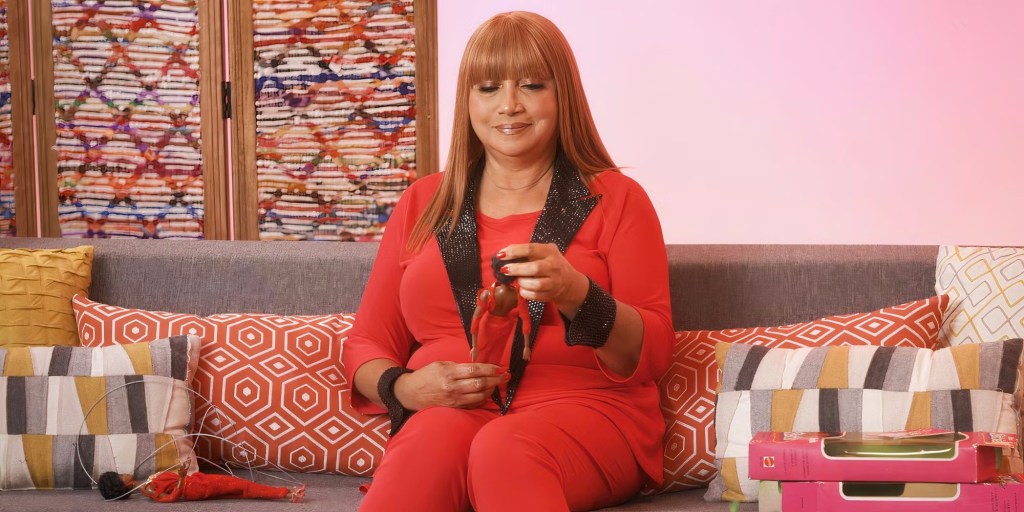
DAY 2 — Kitty Black Perkins

Before President Barbie could run, a woman named Kitty dreamed big.

Louvenia “Kitty” Black was born in the late 1940s before Barbie existed.

But even then, she’d sit at home in Spartanburg, SC, coloring paper dolls into her own image.

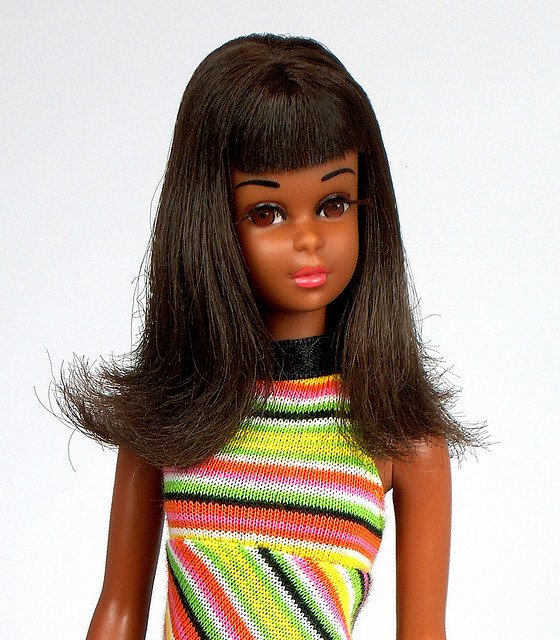
It’d be 12 more years before Barbie came on the scene in 1959, and 7 more before Francie—Mattel’s first “Black” doll—was released in 1967.

“Black” because Francie was essentially a Barbie in blackface. Skin color aside, Francie was indistinguishable from her white counterpart.

Two years later, Christie was introduced as the Civil Rights Movement swept the nation. Her unique face mold and hair styles finally gave Black women a progressive, fashionable vision of themselves in mainstream toys, but…

Francie, Christie, Curtis, Cara, Brad and all the other Black skinned dolls Mattel introduced weren’t Barbie.

Barbie had shifted from just a doll to a symbol of what was possible for modern women. Even Mattel’s other white dolls were still just sidekicks.

That is, until 1980—four years after Kitty Perkins walked through the door, and two years after Mattel promoted her to Principle Designer.

Kitty didn’t even own a Barbie before before her 1976 interview with Mattel. But she bought one, made six outfits for her—all of which were subsequently put into production—and was hired on the spot.

It was Kitty’s presence at Mattel that made an authentic Black Barbie an actual possibility, and it all boiled down to one simple desire: “I wanted my Black Barbie doll to look more like me.”

“I had a person that was in the hair department, a sculptor, a face painter, and most of their direction would come from me because I was Black,” she recounted to the New York Post.

It was 1980, and for the first time in American history, children of ALL races saw ordinary store shelves consistently stocked with Black dolls that were fashionable, authentic, and most importantly, beautiful.

Dr. Mamie Phipps-Clark‘s “Doll Test” found that among white and Black children, almost all of them associated only the white doll with being “good” and other positive qualities.

Some people probably ignored her, some probably hated her, but for others, especially those who’d lived the Doll Test first-hand, Black Barbies were monumental.

At the same rate, some Black girls didn’t want a Barbie. She’d been a white doll for so long that some people didn’t care that Mattel finally got around to representing them.

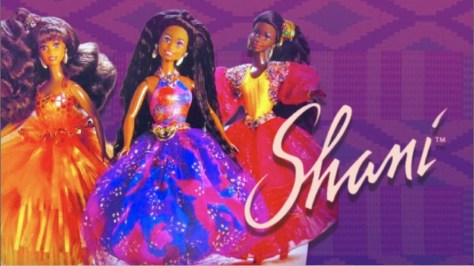
In 1991, Shani & Friends, a Mattel subsidiary also led by Kitty, introduced an entirely new line of Afrocentric Black dolls. From their clothes and jewelry featuring African prints and hoops, even down to their names borrowed from Swahili and real-life Black Barbie Nichelle Nichols, everything about Shani & Friends was inspired by the diaspora. The trio even had different body molds. And though they only lasted 3 years as an independent line, Shani, Asha, and Nichelle’s face and body sculpts were reintegrated into the Barbie line to increase their range of representation.

By 1989, nine years after the first Black Barbie found shelves, Mattel sold 22 million Barbies globally that year alone. By 2021, that number was 86 million, or 186 Barbies every MINUTE.

Today, you can buy a Barbie in almost every single physical representation you wish. They come in all colors—including vitiligo, all shapes and sizes, and even have a range of disabilities from prosthetic users to Down’s syndrome.

And though you can find just about any Barbie these days, in 2019, Mattel’s best-seller was Black with an Afro.

Kitty retired from Mattel in 2004 after 30 years leading Barbie’s design, but the company’s commitment to diversity is stronger than ever, and so are their profits.

Barbie isn’t just a doll these days. She’s graced countless cartoons and movies (including 2023’s live action), costumes, self-care products, bags and accessories and so much more. If it exists, Barbie’s probably been there.

And Barbie certainly wouldn’t be the doll she is without the Black woman who made Barbie more like her.

An array of today’s Black Barbies, representing a range of our beauty.

KEEP GOING BLACK IN HISTORY:

Watch “Black Barbie: The Documentary” on Netflix and visit the official website.

Learn more about Kitty’s life and work at ScreenRant.

DAY 1 — Elizabeth Jennings Graham

The Third Avenue Trolley conductor had no idea he’d picked the right one on the wrong day.

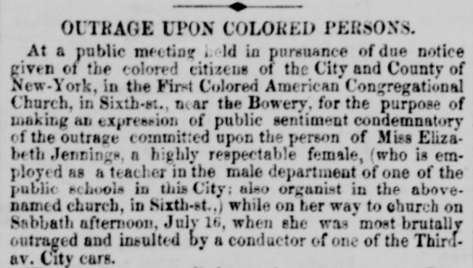
The organist for New York’s First Colored Congregational Church was running late for Sunday service.

But in her haste, Lizzie Jennings almost single-handedly desegregated the New York Public Transit system…

A full century before Montgomery met Rosa Parks.

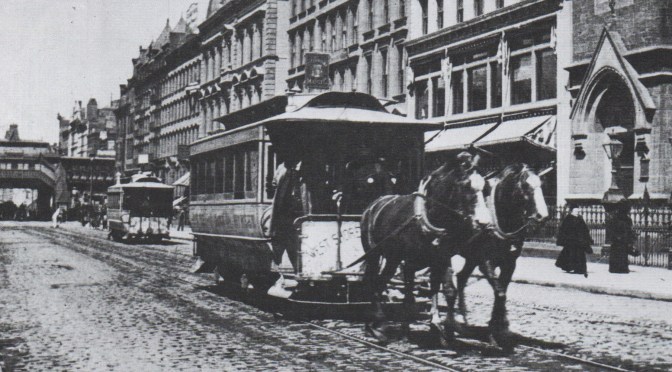
Two types of horse-drawn trolleys operated in the streets of New York: one was designated “colored riders allowed,” and the other’s ridership was left to the whims of the operator and his white passengers.

One trolley ran a regular, timely schedule. Guess which one did not?

New York’s Black citizens had two choices: wait or walk.

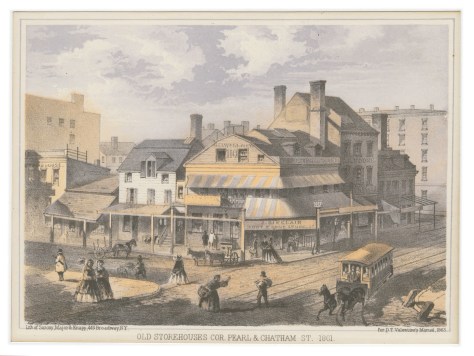
New York as it would have appeared to Lizzie Jennings. See the horse-drawn trolley at the bottom right corner.

On July 16, 1854, Lizzie Jennings didn’t have time for all that and boarded the first trolley she saw.

The operator still tried it.

Wait for the next car, he told her.

But she was in a hurry, Lizzie replied.

That one’s got your people, he persisted.

What people? Lizzie spouted back.

A car that allowed Black riders came and went because it was full.

Lizzie sat unmoved.

“He still kept driving me out or off the car,” Lizzie explained in her account published in the New York Tribune. “Said he had as much time as I had and could wait just as long.”

“I replied, ‘Very well. We’ll see.'”

The trolley operator’s eventual surrender came with a disclaimer: “if the passengers raise any objections, you shall go out… or I’ll put you out,” Lizzie wrote.

Quick to clap back, she “answered again and told him I was a respectable person, born and raised in New York, did not know where he was born and that he was a good-for-nothing impudent fellow for insulting decent persons while on their way to church.”

Big NYC energy from a little lady in 1854.

So big, the operator tried to physically remove her.

Lizzie grasped onto the window, his coat, anything within reach to keep from being forcibly removed. They scuffled for several minutes before the operator called on the trolley’s horse driver for an assist.

If they were going low, she’d meet them in hell.

“I screamed ‘murder’ with all my voice.”

The pair finally resorted to driving the trolley to the nearest police officer, with Lizzie kicking and screaming the whole way.

Pushing her onto the ground, the officer sneered at her to “get redress if [she] could.”

So she did. Remember when I said Lizzie was the right one?

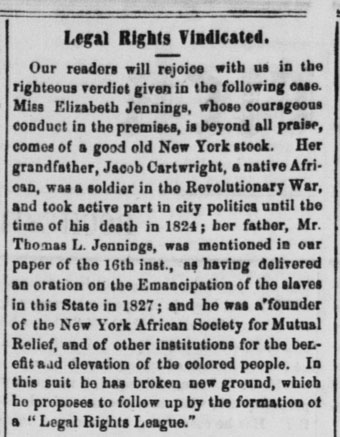
Elizabeth Jennings was the daughter of Thomas Jennings, the first Black person awarded a United States patent, owner of a profitable tailoring business, and a founder of THE Abyssinian Baptist Church, currently active in Harlem.

Her paternal grandfather had connections to Frederick Douglass’ Paper, and Lizzie’s personally written account of her mistreatment was published there, The New York Tribune, and many other abolitionist papers.

Lizzie’s powerful network didn’t stop there. They brought a 24-year-old upstart fresh out of law school to her door.

That man’s name was Chester Alan Arthur, future 21st President of the United States.

The Historical Society of the New York Courts documents a number of cases Arthur tried in support of African-American civil rights.

Against an all-white, all-male jury, Lizzie & Chester did the seemingly impossible: THEY WON.

News of Lizzie’s historic judgment in Frederick Douglass’ Paper.

Lizzie was awarded cash damages from the Third Avenue Railroad Company, but more importantly, an agreement to desegregate their trolleys, effective immediately.

“Railroads, steamboats, omnibuses, and ferry-boats will be admonished from this, as to the rights of respectable colored people,” The Tribune wrote.

Those who ignored the judgment weren’t far behind on the Jennings’ War Path.

The Legal Rights League, formed by Lizzie’s father Thomas, challenged every last New York transit hold out until in 1861, just seven years after Lizzie’s impromptu sit-in, ALL of them were finally desegregated.

After her case was won, Lizzie largely retreated into ordinary life, but she didn’t stop being an extraordinary person.

Until her death in 1901, Lizzie operated New York’s first kindergarten for Black children from her home.

All that history from a lady who just wanted to go to church, and hardly anybody knows her name.

But the city of New York is working to change that. There’s already a section of Park Row near her historic ride, dedicated to Elizabeth. She Built NYC, an arm of the NY Department of Cultural Affairs has fully funded five statues honoring trailblazing New York women.

Elizabeth Jennings is one of them.

As for the trolley operator, the horse driver and the policeman who abused her? They’ve virtually disappeared from history.

Maybe somebody should check with their people.


KEEP GOING BLACK IN HISTORY:

Lizzie is one of many famous New Yorker’s whose life and death were overlooked by the Times until modern days and their article on her here.

Read over Elizabeth’s first-hand account published in the NY Tribune at the Library of Congress.

Read The Search for Elizabeth Jennings, Heroine of a Sunday Afternoon in New York City for FREE at JSTOR.

STILL can’t get enough Elizabeth? Visit Dr. Katharine Perotta’s award-winning Elizabeth Jennings Project.