Tag Archives: THE AMERICAN BLACKSTORY 2022

DAY 8 — Kendall Jackson

Scouting is in Kendall Jackson’s blood.
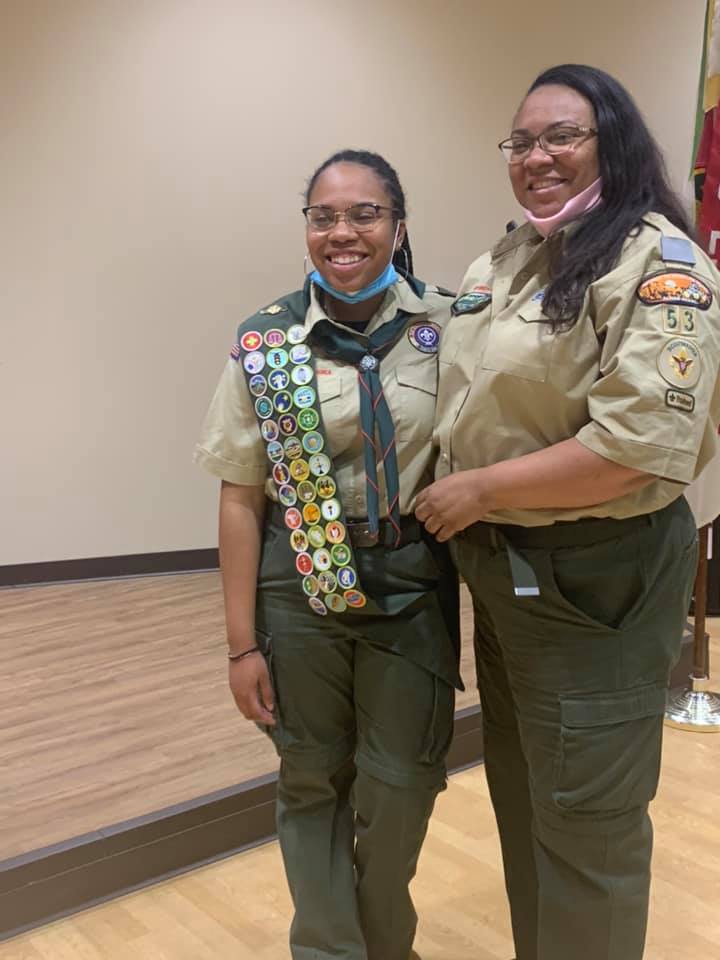
Kendall & her scoutmaster mom, Kellauna

Her mother, Kellauna Mack, is a scoutmaster, an assistant scoutmaster, and an executive with the Scouts’ Pathway to Adventure Council.

Kendall’s brother Kenneth earned the rank of Eagle Scout way back in 2011.

The Girl Scouts Gold Award is their organization’s equivalent to Eagle Scout, and many say its requirements are actually more difficult to meet.

But I bet you still didn’t know what it was called until you read it just now.

The rank of Eagle Scout is recognized by most Americans as one of the highest honors a minor can receive. In 2019, only 8% of eligible scouts earned Eagle, and since the inception of the Eagle Scout badge in 1912, only around 2% of scouts in Boy Scouts of America history have earned it.

It’s kind of a big deal.

And until February 1, 2019, it was a big deal Kendall Jackson wouldn’t get to have a part in.

But that was the day the Boy Scouts of America became Scouts BSA, opening its ranks to girls. Kendall was 15, and most Boy Scouts join their troops at around 10 or 11, earning their Eagle by 18. Eagle Scout badges are designed to be a process, requiring 7 ranks, 21 merit badges, an Eagle Service Project, demonstration of leadership within one’s troop, participate in a Scoutmaster conference and complete a board of review. Kendall had a lot of catching up to do, and wasted no time doing it. 

To be fair, she did have a bit of a leg up. “I had picked up certain skills, like learning the Scout Oath and the Scout Law, I had been saying it since I could talk,” she said.

Seems that it all stuck because in 2021, just two years after the Boy Scouts of America admitted girls, Kendall was among their inaugural class of 1,000 earning the title of Eagle Scout. But that’s not all. She also earned the honor of becoming the United States FIRST African-American Eagle Scout, among 21 other African-American girls in the thousand.

Kendall poses for her official Eagle Scout photo.

Needless to say, Kellauna was over the moon. And probably all of her ancestors with her.

Backpacker Magazine says that “When the BSA began allowing young women to join its programs, it faced criticism from those who believed that girls like Jackson would be better served by girls-specific programs and that the organization was not equipped to accommodate female scouts.”

That language sounds familiar.

Though the first African-American troops were formed in the early 1910s, due to segregation, it wasn’t until the 1920’s, that the Boy Scouts established “Project Outreach” as a recruitment effort. Project Outreach split its non-traditional (read: non-suburban, non-white) troops into categories: “feeble-minded, orphanages, settlements, and delinquent areas.” But let’s not mince words. The Boy Scouts of America categorized being Native, African, or Latino American alongside mental deficiency and homelessness.

That’s not necessarily a surprise if you know that one of the biggest financial supporters of the Boy Scouts was the Ku Klux Klan. When the Boy Scouts began to allow integration, but ultimately left those decisions up to the troops themselves, the KKK was so furious, they began attacking scouts of color.

The Sept. 4, 1921 Houston Post recognizes facilities donated to local Boy Scouts by the KKK. Read the page in full here.

The Girl Scouts didn’t make any landmark strides in integration either, according to Stacy A. Cordery, author of Juliette Gordon Low: The Remarkable Founder of the Girl Scouts. “Daisy Low had proclaimed in 1912 that she had ‘something important for the girls of Savannah and all America. […] It is safe to say that in 1912, at a time of virulent racism, neither Daisy Low nor those who authorized the constitution considered African-American girls to be part of the ‘all,'” she writes.

Of course, the BSA has had lots of very public struggles with inclusion, none more public than their 2000 Supreme Court case upholding their right to exclude LGBTQ scouts, a decision the Scout Council rescinded just 5 years later. The inclusion of women, especially Black women, as recipients of their highest award is monumental progress.

“I don’t think any of us really thought this day would come. To say I have made Black history is a blessing. It is very humbling,” Kendall said. “For me to be a part of that first class and say that I did it, I’m really proud of myself.”

Proud and prepared, that is.
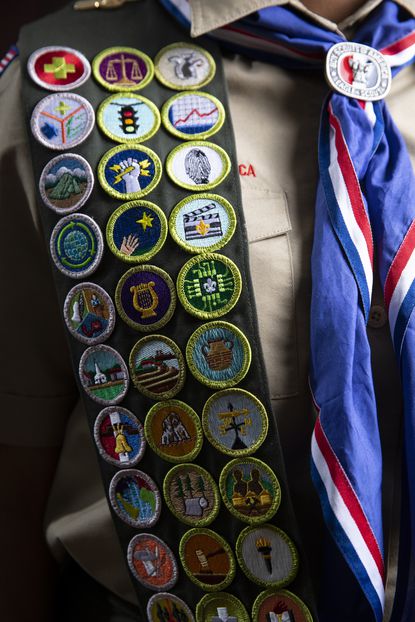
All of Kendall’s badges, earned just 2 years after she was admitted to Scouts BSA.

KEEP GOING BLACK IN HISTORY:

Get a few more details of Kendall’s amazing story at the Chicago Tribune.

Kurt Banas of Wake Forest University writes for the the African-American Registry about what it meant to minorities to become a scout.

Scouting Magazine begins a conversation about the first Black troops and what they overcame to be included in an organization of distinction.

The Smithsonian Magazine details a short history of integration in the Girl Scouts and the African-American women who made it happen.

Browse the issue of Scout Life Magazine celebrating the journeys of BSA’s brand new Female Eagles.
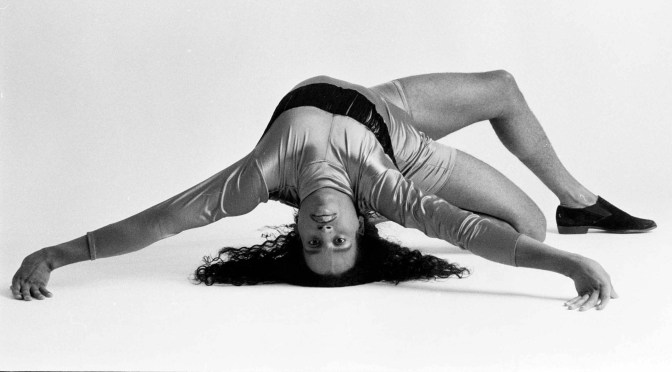
DAY 7 — Willi Ninja

Greta Garbo, Marilyn Monroe, Marlene Dietrich, Joe DiMaggio, Marlon Brando, James Dean, Grace Kelly, Jean Harlow, Gene Kelly, Fred Astaire, Ginger Rogers, Rita Hayworth, Lauren Bacall, Katherine Hepburn, Lana Turner, and Bette Davis.

Notice anyone missing?

(Aside from a single Black person? I digress.)

If there’s one name that unequivocally belongs among those listed in Madonna’s “Vogue,” it’s Willi Ninja.

He’s frequently described as “the Godfather of vogueing,” but I’m not sure he’d care for that title because Willi Ninja was a mother, honey.

And he got it from his own. 

If you recall from Marie Van Britten Brown’s post, being a mother in Queens where Willi was born in 1961, was a tough gig. The borough was in the thick of a heroin epidemic, civil rights protests, and turmoil over the Vietnam War. Hardly what we’d call a “safe” neighborhood for raising children, but Ms. Esther Leake did her best. That included recognizing when her son (then known by William Roscoe Leake), who was a brilliantly budding dancer, was also quietly but deeply struggling with being “different” than the other boys on the block.

Willi never exactly “came out” to his mother. She coaxed him out, and not only supported his pursuits of dance and fashion, but encouraged them. Willi developed his own approach to voguing, the Harlem gay underground’s preeminent dance form, closely studying the movements of dancers like Michael Jackson and Fred Astaire, Olympic gymnasts, Asian martial artists, and the figures drawn in Kemetic hieroglyphics. (“Kemetic” refers to ancient Egypt, known as Kemet, or “black land”) And then he perfected it, diving headfirst into gay dance communities popping up around New York’s famous queer outdoor gathering places like Christopher Street Pier. 

Those spaces became the forerunners and foundations of New York’s LGBTQ ballroom culture. Technically, ballroom culture has existed globally for centuries, but its earliest appearances in New York were to flout laws against wearing “clothes associated with the opposite gender.” Though those early balls were integrated, the judge’s panels were all-white, driving African- and Latino-American dancers back to Harlem’s underground in the 60s and 70s where they established their own balls . Fresh off the heels of Marsha P. Johnson’s stand-off at Stonewall, New York’s gay culture had been empowered to stand its ground, and ballroom culture let them claim space where gender, race, sexuality, and class had no place to define them.

Having always known acceptance, thanks to his mother, in the ballrooms, Willi danced with a freedom and confidence unlike anyone else in the scene, and those iconic moves made him a fixture of New York ballroom culture. But the society Willi and his fellow pioneers rejoined outside of the balls cast all the glam and good vibes they celebrated inside into stark contrast.

There, LGBTQ teenagers outcast from their families after coming out or running away had nowhere else to go but the streets. Gentrification was beginning to push lower-income families in Brooklyn and Manhattan out of their homes already. Non-profit organizations and shelters in the midst of a Reaganomics depression had less to go around than ever. Unemployment was at an all-time high. If that New York was unsafe and uncertain for everyone, it was especially so for a 16-year-old transgender person.

From those circumstances, houses were born. Each “house” specializes in an aspect of ballroom culture. They’re headed by a mother or father, and its children are cared for with food, shelter, clothing, or simply love and encouragement, by all their brothers and sisters. And the House of Ninja grew to become one of the most long-lasting and well-respected of them all. Willi welcomed people from all walks of life into his house, becoming “mother” to one of the most inclusive houses in ballroom culture, even as it endures today. That influence Willi brought to ballroom is also reflected today in long-running and tremendously diverse TV representations of LGBTQ characters like those in “Pose,” “Ru-Paul’s Drag Race,” and “Queer Eye.”

As the ranks of his house expanded, so did Willi’s own dance skills, becoming so absolutely flawless and otherworldly that even mainstream entertainment took notice. Willi danced alongside Janet Jackson in two of her Rhythm Nation videos, walked runways for couturiers Thierry Mugler and Jean-Paul Gaultier, and even taught supermodels like Iman and Naomi Campbell how to own a catwalk in ways only he could.

Of course, all of that was behind the scenes. If you’ve ever heard Willi Ninja’s name before, it is almost undoubtedly associated with the landmark documentary “Paris is Burning.” The film, preserved by the Library of Congress’s National Film Registry, is compiled from six years of study, interviews, first-person footage, and immersion into the African-American, Latino-American, gay and transgender communities forming New York ballroom culture. The filmmaker Jennie Livingston describes it not as a dance documentary, but a tale of “people who have a lot of prejudices against them and who have learned to survive with wit, dignity and energy.”

But not all did survive. Willi’s endlessly shooting star was snuffed out by yet another American social ill: the AIDS epidemic. In his 45 short years, Willi Ninja was instrumental in launching vogue and ballroom culture into the global phenomenon it is today, and brought the community, the triumphs and the plights of Black and Latino LGBTQ faces to the forefront of mainstream culture. Willi died on September 2, 2006 from AIDS-related heart failure, giving everything he had for his children, right down to the last beat. As family does, the House of Ninja returned that love, using their ballroom winnings to care for Willi’s mother in his absence.

All no thanks to Madonna.


KEEP GOING BLACK IN HISTORY:

If you’ve never seen “Paris is Burning,” have a look at the trailer where you’ll see a few of Willi’s moves & a bit of his personality.

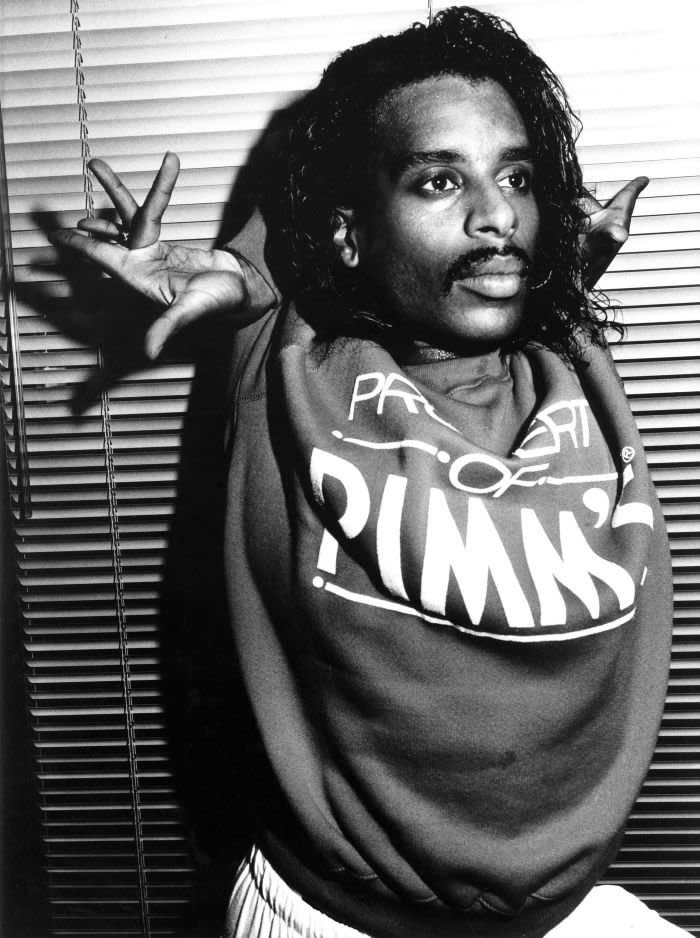
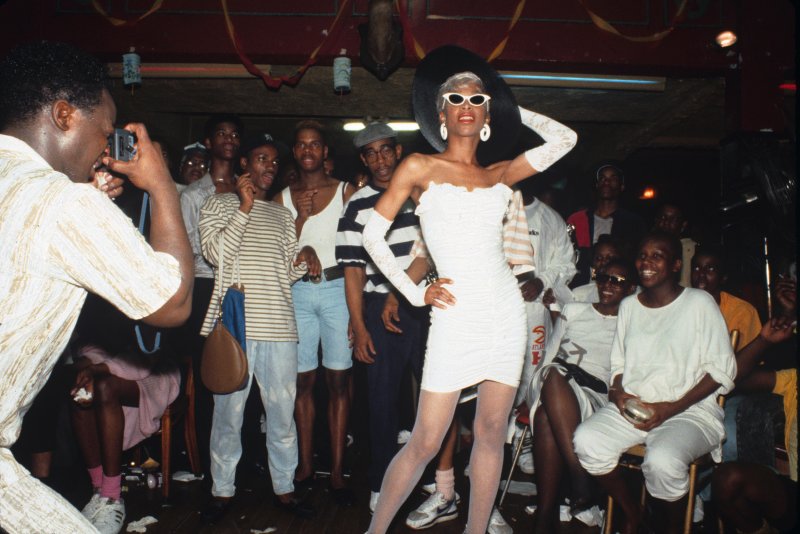
French photographer Chantal Regnault spent 3 years photographing Willi & the Harlem ballroom scene. This post’s cover photo is from her series, and accompanies Chantal’s first-person account of her ballroom experience, which you can read here.

TIME Magazine recognizes the history of voguing and the importance its culture still holds for marginalized people today.

Even the Financial Times has in-depth articles on “how the mainstream discovered voguing.” My how far we’ve come.

One last look as Vox spends a few minutes with a member of a house to dive into ballroom’s past, present and future.

DAY 6 — Kadir Nelson

There’s a not-so-secret slander running through the undercurrent of American history & media. It’s fairly obvious if you know what to look for… or if you’re a Black American.

For example, Sojourner Truth’s “Ain’t I a Woman?” is one of the earliest pieces of African-American literature introduced in elementary & middle-school curriculums. Most famously appearing in an April 1863 issue of the New York Independent, transcribed by Ms. Frances Gage (an associate of Susan B. Anthony and Elizabeth Cady Stanton) twelve years after the speech was delivered, “Ain’t I A Woman” is written in thick southern colloquialisms and the supposed vernacular of an enslaved person, 

But journalist Marius Robinson published the same speech on June 21, 1851 in The Anti-Slavery Bugle, and not only is it written in clearly decipherable King’s English, the words “ain’t I a woman?” NEVER appear in that version, approved for print by Sojourner Truth herself.

Compare journalist Marius Robinson’s transcription of Sojourner Truth’s speech to suffragette Frances Gage’s version of the same at The Sojourner Truth Project.

Not convinced? Think she pulled a favor from a friend? Think again. Sojourner Truth’s first language wasn’t English or an African language, but Dutch. She was born in Swartekill, NY. The only evidence that Sojourner would have spoken as presented in “Ain’t I A Woman?” is Frances’ Gage’s account itself, appearing second in historical records and over a decade later.

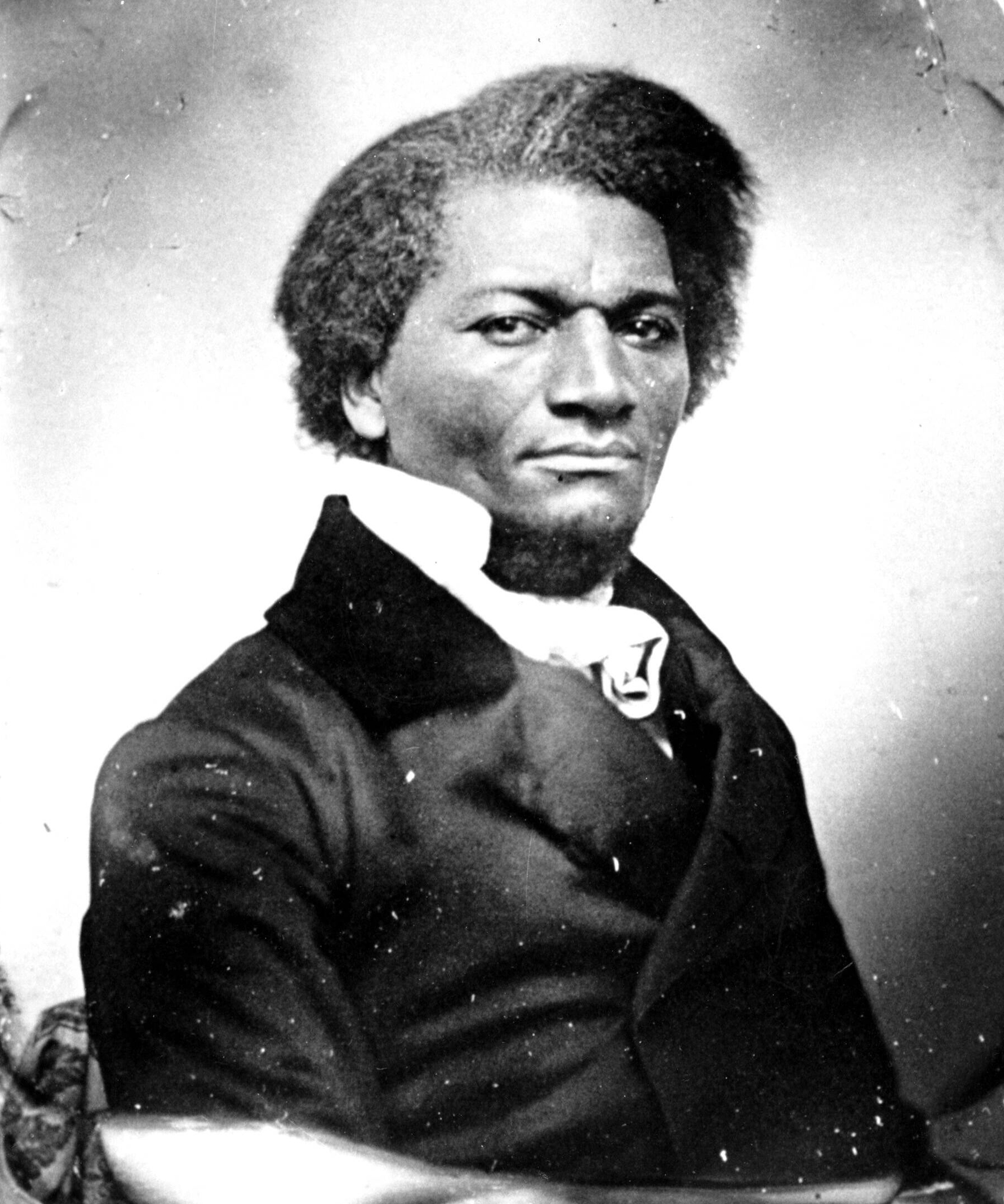
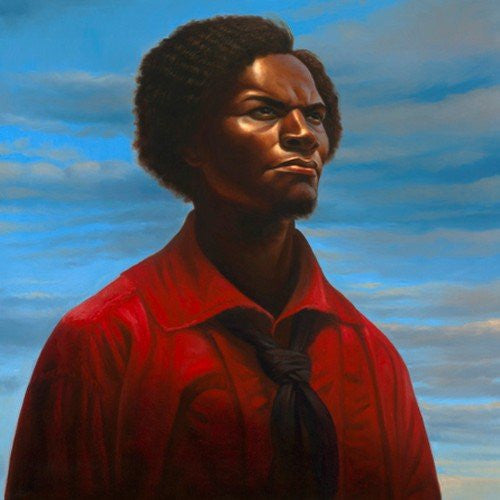
For a more visual representation, consider another of the few African-American figures who frequents American history books: Frederick Douglass. There are 160 known photographs of Frederick Douglass, more even than President Abraham Lincoln. And yet, the image of Mr. Douglass we know best is most likely that of a stern-faced, graying, relatively unapproachable man. No one ever sees the young Frederick Douglass, proud, handsome, full of personality.

LEFT: A generous version of the Frederick Douglass we know.
RIGHT: the Frederick Douglass we COULD know.
Frederick Douglass was the most photographed person in his lifetime, and though he rarely smiled because he didn’t want to be seen or represented as a “happy slave,” why do we only see the harshest version of him when so many exist?

Even today, media representations of African-Americans tend toward extremes. Criminals or memes. Rappers or impoverished. Jezebel, Mammy. Sapphire.

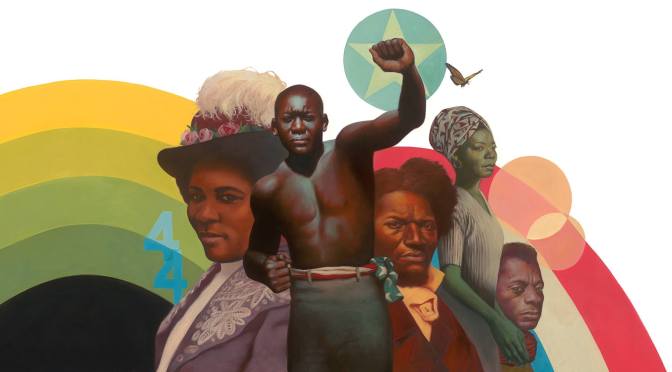
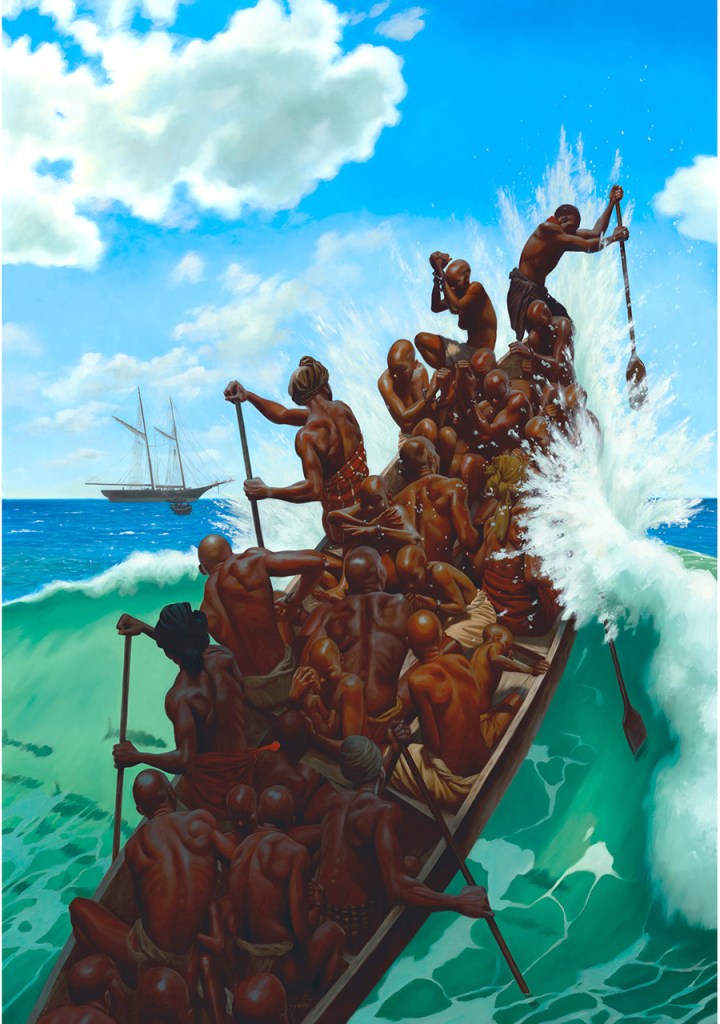
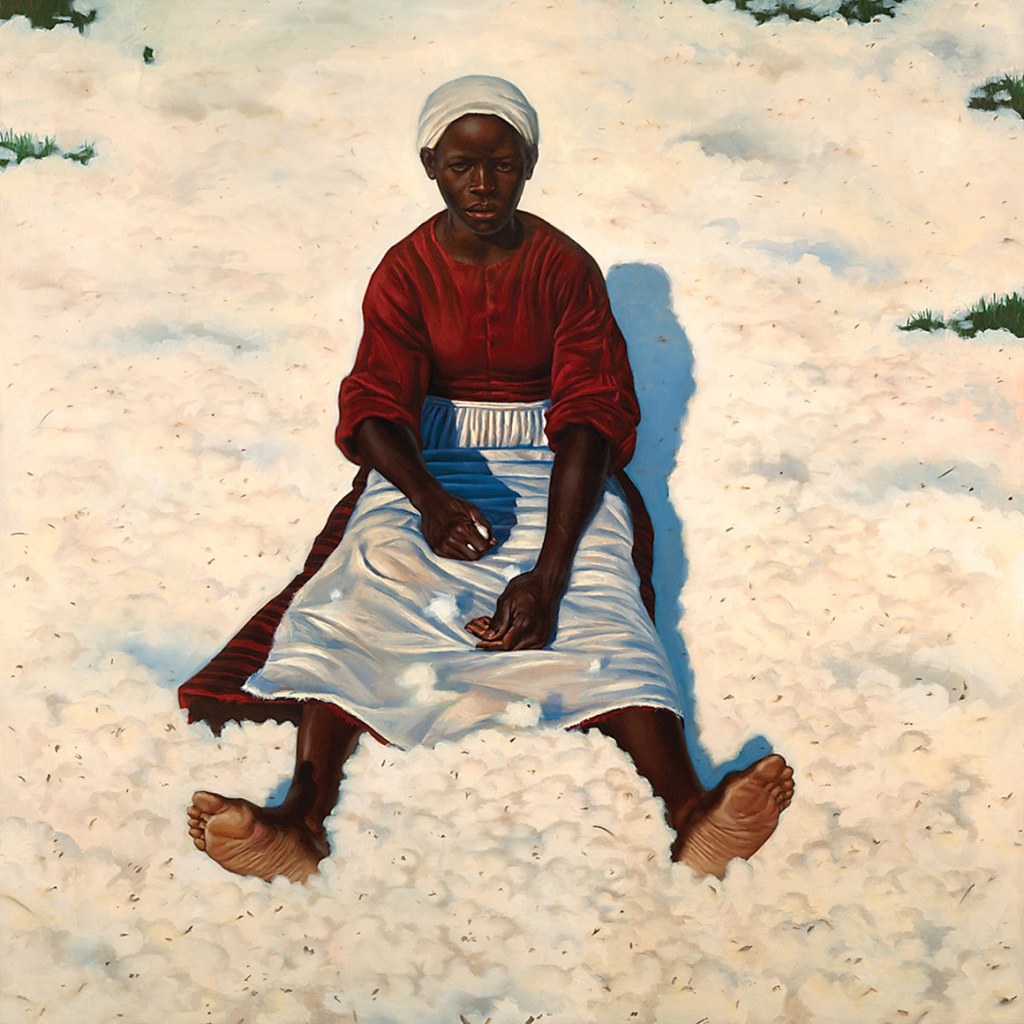
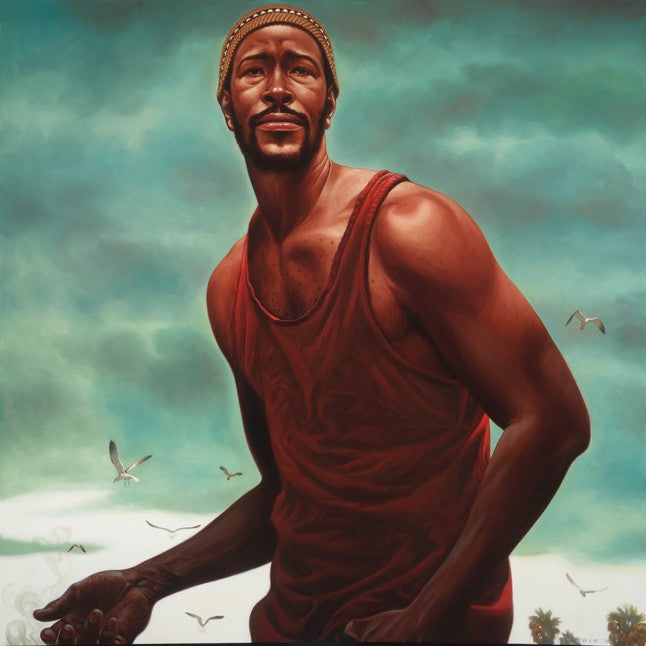
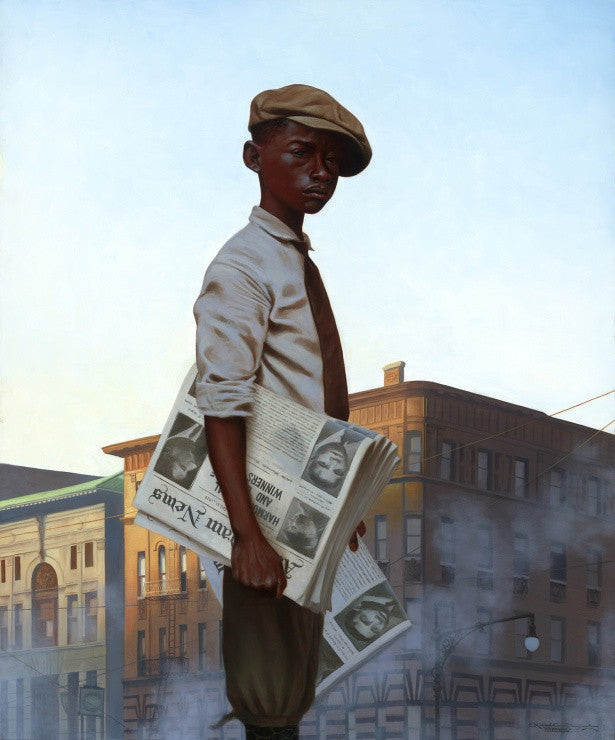
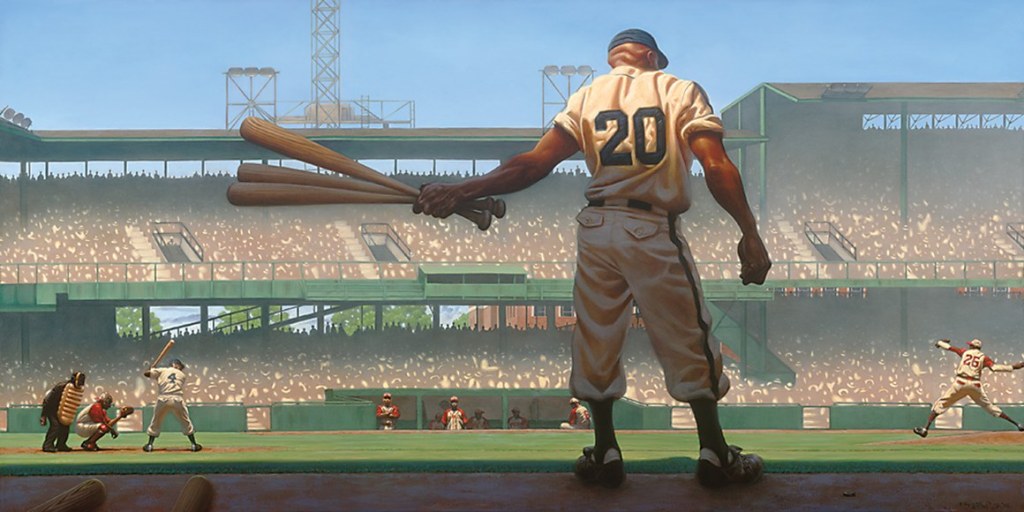
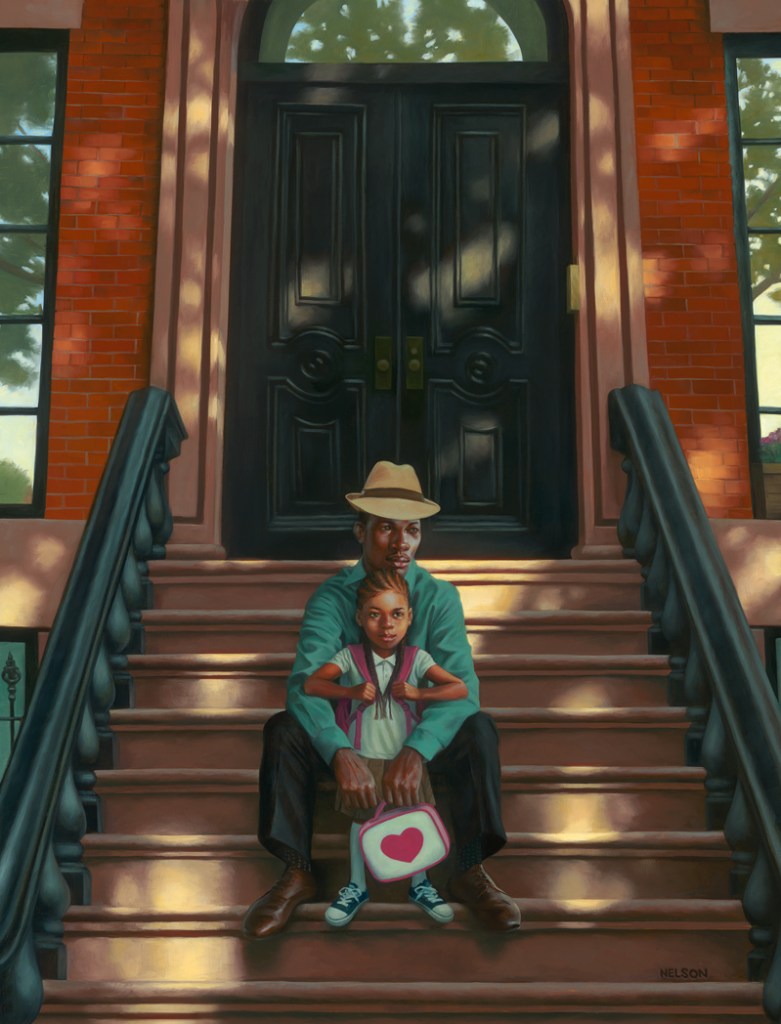
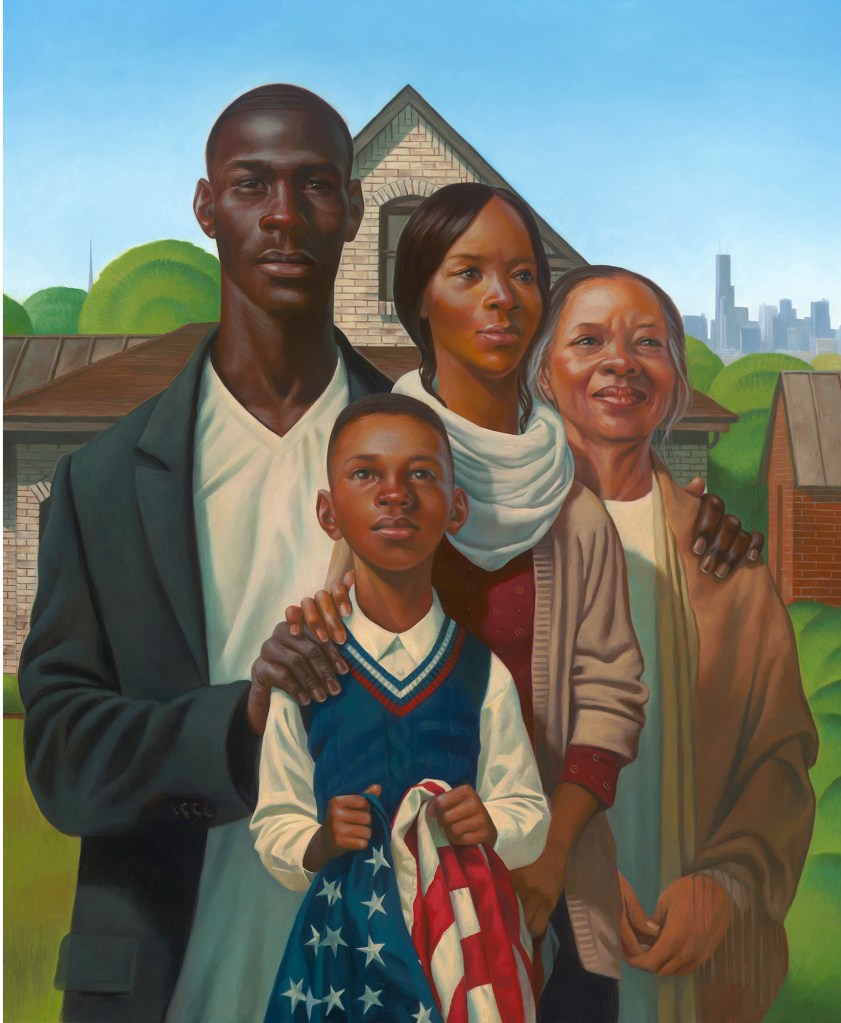
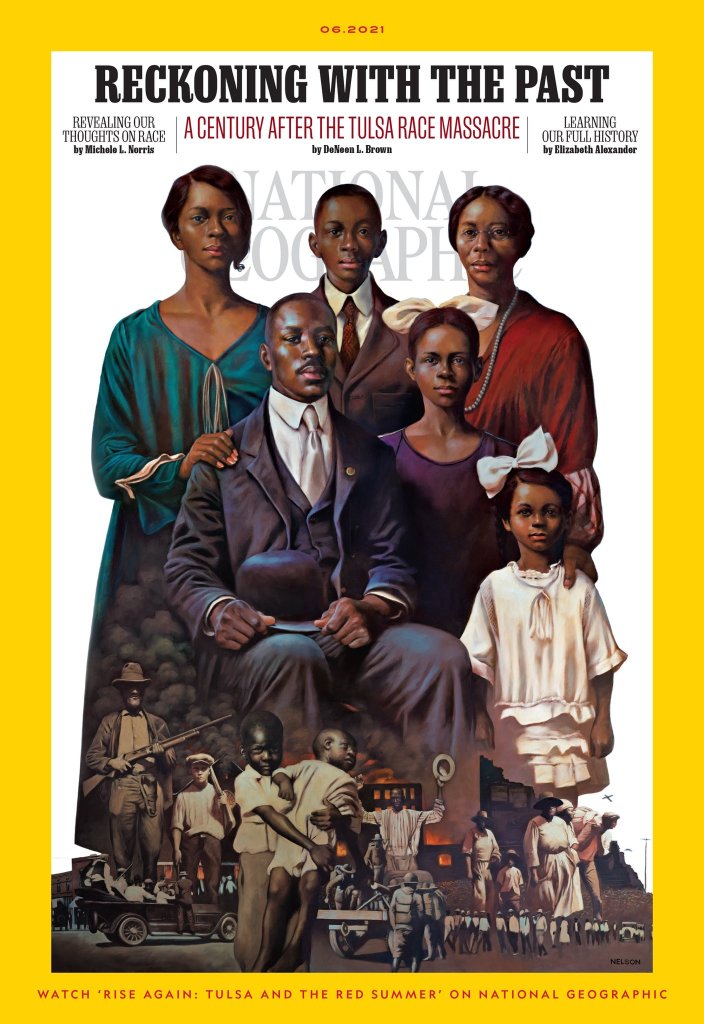
In this historical context, Kadir Nelson is more than an illustrator. He’s the hand holding a mirror to the truth.

Through Kadir’s paintings and illustrations, we see Black people from all over the world represented through eyes that adore them, not by those who would use them for their own gains, those who would undermine their credibility, or those who’d keep them out of positions of power.

But Kadir’s artistic vision wasn’t always so clear. As a child, his mother, who didn’t pursue her own passions for art, highly encouraged his. Nevertheless, he attended the illustrious Pratt Institute as an architecture major for the age-old reason: money. Despite the idealized “starving artist” archetype, the “unemployed, impoverished and Black” stereotype deters so many African-American creatives from pursuing their true calling. Luckily, only a year in, Kadir couldn’t resist his, changing his major to illustration instead.

“I have taken on the responsibility of creating artwork that speaks to the strength and inner beauty and outer beauty of people from all over the world,” Kadir said. “I like to create paintings of people who have overcome adversity but by being excellent or being strong or intelligent or having big hearts to remind people that they share those same qualities. When they see the paintings and feel the spirit of the people I am depicting, they are reminded of that within themselves. It all speaks to the story of the triumph and the hero that lives in all of us. If people take anything away from my work, that’s what I hope they take away from it.”

They most certainly did. Kadir’s first job was as a concept artist for the critically acclaimed film, Amistad. Since then, his work has lived in The National Baseball Hall of Fame, the US House of Representatives, the Smithsonian National Portrait Gallery, the National Museum of African American History and Culture, and many, many more.

But Kadir’s work isn’t out to glorify the myth of Black exceptionalism. He recalls a moment of everyday Blackness as inspiration he holds onto still. “My family was piling into my grandmother’s white Cadillac and I stood and waited for everyone to get inside. It was cold and breezy, and warm streetlights reflected off the shiny bluish sidewalk. I stood there feeling warm, wrapped up in my heavy winter coat, enjoying the breeze and the scenery. I remember thinking to myself, ‘This is beautiful.’ I was a six-year-old kid savoring the moment. It felt pretty special to me.”

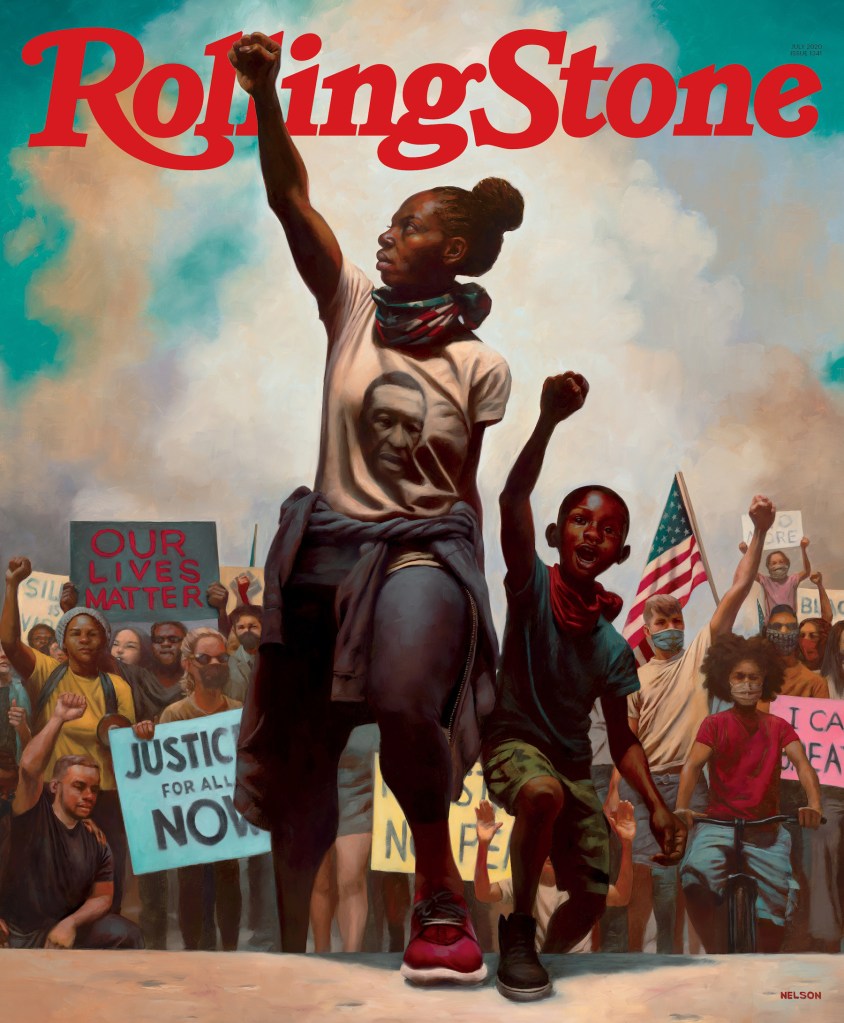
Life’s littlest moments always are the most special, and those moments are so rarely seen occupied by Black faces. While validation from the mainstream was never necessary, the wider world has definitely taken notice of Kadir’s celebration of authentic Blackness as well. His art has been commissioned by HBO, Nike, Coca-Cola, National Geographic, Rolling Stone, and the list goes on and on.

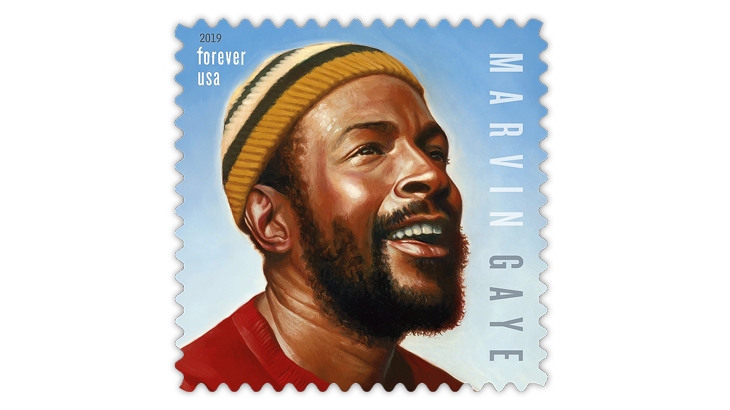
The illustration work that he’s personally published or collaborated on outnumbers everything I’ve mentioned so far. His book illustrations have won too many awards to count from names like Caldecott, Scholastic, New York Times, and more authorities in the field. Kadir’s paintings also hang for purchase in high-end galleries, grace an assortment of music album covers, and have even appeared on USPS stamps. He might well be one of the most saturated African-American visual artists of the 21st Century, if not all the centuries. Perhaps because the truth resonates.

“I feel that art’s highest function is that of a mirror, reflecting the innermost beauty and divinity of the human spirit; and is most effective when it calls the viewer to remember one’s highest self… as it relates to the personal and collective stories of people,” he says.

If a picture is worth a thousand words, Kadir’s speak volumes upon volumes.


KEEP GOING BLACK IN HISTORY:

Kwame Alexander’s “The Undefeated,” illustrated by Kadir Nelson, is one of the most decorated picture books of all time. Take a peek inside here.

Browse Kadir’s portfolio of illustrations and commissions, and shop his gorgeous prints at his website.

Keep Kadir’s beautiful representations of Blackness and other Americana close at hand with a follow on Instagram.

DAY 5 — June Bacon-Bercey

June Bacon-Bercey was called by a lot of things, but there was one she simply could not abide: weather girl.

“My mom was always about definitions. When she was called a weather girl, she would smile and say how proud she was to be a meteorologist,” her daughter Dail St. Claire says.

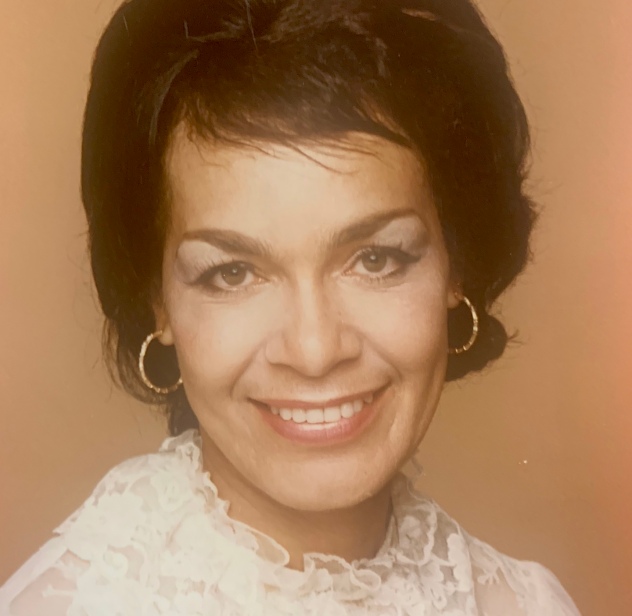
June Bacon-Bercey, proud meteorologist. NOT a weather girl.

After all, June earned it. Because June Bacon-Bercey was the first African-American woman to graduate with a degree in meteorology, and the first female broadcast meteorologist in the United States.

Dianne White, the first African-American “weather girl”

Words matter here because June wasn’t the first African-American woman to present the weather on broadcast TV. That designation belongs to Dianne White Clatto, an Avon saleswoman whose poise and beauty earned her a spot in front of the camera, even though she had no idea what to do. “‘When those two red lights come on, start talking.’ And I said, ‘About what?’,” she recounted. “And they said, ‘Preferably something about the weather.’ ”

But June’s fascination with the weather was spurred by much higher stakes. Just a child when the atomic bombs were dropped on Hiroshima and Nagasaki, she wondered what effects nuclear fallout might have on the global atmosphere.

That curiosity propelled her through earning one math degree (with honors) in Kansas before transferring to UCLA for her 4-year degree in atmospheric sciences, where she was highly encouraged to seek another field.

“When I chose my major, [they] advised me to go into home economics… I got a D in home economics and an A in thermodynamics.”

Earning that degree despite her naysayers, June immediately put it to work at the National Meteorological Center (now the National Oceanic Aviation Administration), then at tech/aerospace corporation Sperry Rand (now Unisys), and at the United States Atomic Energy Commission (now the U.S. Department of Energy) while earning a journalism degree at night school, before finally joining a Buffalo NBC affiliate in 1970 as their science broadcast reporter. It didn’t take long for June to gain national exposure thanks to her coverage of the Attica prison uprising in 1971.

June, reporting live with WGR-TV 2 (now WGRZ) in Buffalo, NY

But why not the weather? All of her training was PRECISELY why June was adamantly against broadcasting the weather. Before women broke into the field of atmospheric science, news stations hired “weather girls” like Dianne to broadcast the day’s highs and lows. These women weren’t actually expected to know anything about the weather, and in the worst cases, were trotted out in swimsuits to sensationalize summer segments. June found it wholly demeaning, and she soundly refused. Until the day that her station’s weatherman got caught up in a scandal, and the station manager, knowing June’s wide-ranging talents and skilled background, begged her to step in.

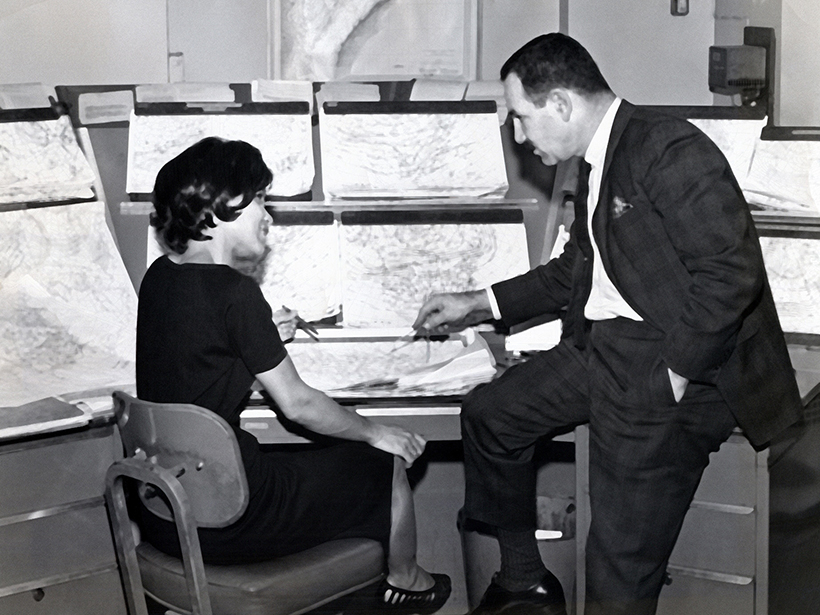
June, stepping in as on-set meteorologist. Clearly the star of the show.

“All hell broke loose at the station when our weather guy robbed the bank, and they needed someone who was there to fill in for the day,” she recounted. “I already knew from my calculations that there was going to be a heat wave. When the heat wave hit the next day, the job was mine.”

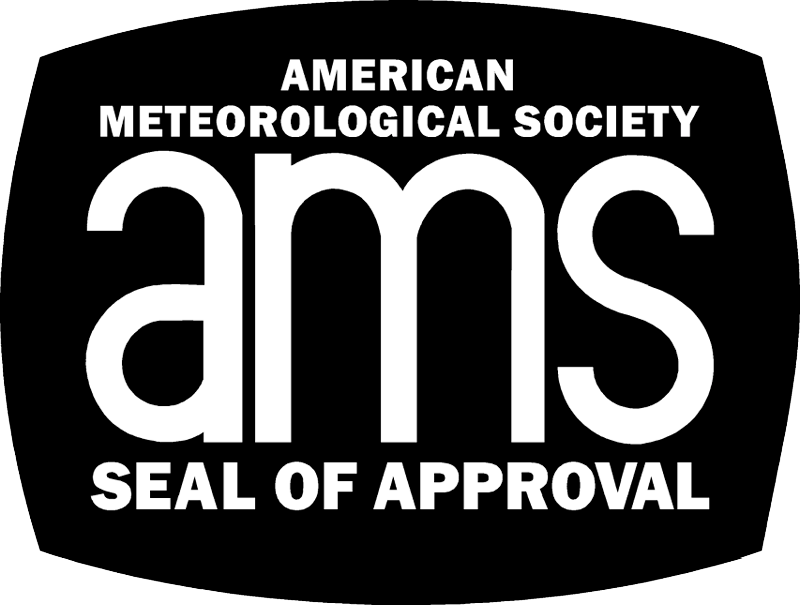
The AMS Seal of Approval launched in 1957, recognizing on-air meteorologists for sound delivery of the weather to the public.

Little did her station manager know that June’s forecasted heat wave would usher in a whole new era of equality for women—especially Black women and other women of color on broadcast television. By 1972, June was honored as both the first female and African-American recipient of the American Meteorological Society Seal of Approval for Excellence in Television Weathercasting.

4 years after a chance occurrence found her breaking weather barriers on TV, June thirsted for more science, and took her talents back to the NOAA. But her passion for paving the way persisted.

A capture from broadcast footage shows June in action, predicting a wet winter for the greater Buffalo area.

She became a contestant on a game show called “The $128,000 Question,” winning $64,000 after correctly answering a series of questions about John Philip Souza, her favorite composer. June studied ruthlessly with the goal of using her prize money to establish a scholarship fund for women of color studying meteorology. “That was my plan at the beginning, and it’s still my plan,” she told the Washington Post after her win. “I was discouraged (from becoming a meteorologist), and other women were discouraged. If they feel they’ve got some money behind them, it might be better.”

Applications for the June Bacon-Bercey Scholarship in Atmospheric Sciences for Women opens in TWO days, on February 7, 2022!

With that seed money, The June Bacon-Bercey Scholarship In Atmospheric Sciences For Women was established. Working into her 80s, June never ceased earning awards and degrees, serving her country in meteorology, and creating ways for more underrepresented faces to be seen in the atmospheric sciences. “She made personal sacrifices for those who would come after her to give them a fighting chance at success in her field,” Dorothy Tucker, president of the National Association of Black Journalists, said. Her trail blazed so brightly in fact, that just last year, the American Meteorological Society officially renamed their most prestigious and coveted Broadcaster of the Year award to the June Bacon-Bercey Award for Broadcast Meteorology in recognition of her impact on the field.

June passed away in 2019, leaving a stunning legacy as proof of her dedication to making science more equitable, but even she acknowledged that one person can only do so much. “Society, too, has a moral obligation to put aside the past myths about black Americans not only in the meteorological field but in all of the technical fields.”

Until that day is fully realized, her daughter Dail continues sharing June’s story saying, “Her legacy serves as inspiration for all and is a powerful example of our limitless capability and strength.”

Of that, there is a 100% chance.


KEEP GOING BLACK IN HISTORY:

June’s daughter Dail St. Claire spoke with The Weather Channel about her mother’s legacy in meteorology and broadcast television.

Visit AccuWeather for “the untold story of the 1st American woman to become a TV meteorologist.”

EOS, the American Geophysical Union‘s news site, thoroughly details of June’s life and accomplishments.

Between 1978 and 1990, 13 women received funding for their studies in atmospheric science. It was June’s dying wish that her scholarship be reinstated. Donate now, or apply starting February 7, 2022.

DAY 4 — Kimberly & Jehvan Crompton

To an outsider, Kimberly and Jehvan Crompton seem like your run-of-the-mill mother and son. Jehvan is 15, introverted and loves science, English and video games. His mom describes herself as a “mommypreneur steady grinding.” Jehvan lives with his mom, sister and brother, and stays up too late. The Cromptons’ lives look pretty ordinary.

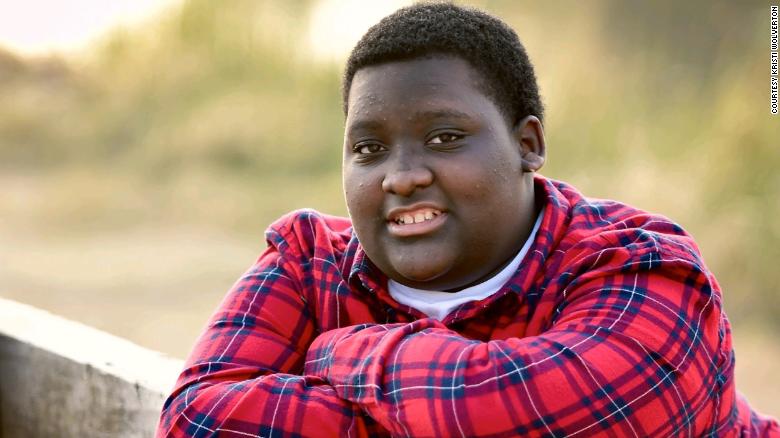
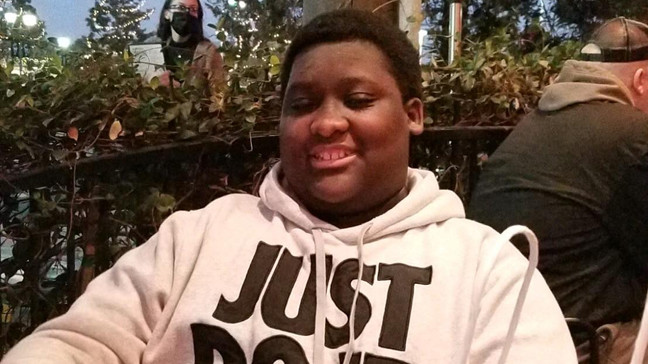
Just a handsome teenager.

And until late 2019, they would have thought so too.

But that was the year that routine blood work Jehvan had done ahead of a foot surgery revealed news no mother with a symptom-free child is prepared for: his results showed Chronic Myeloid Leukemia (CML).

CML is a cancer that starts in blood-forming cells of the bone marrow. It almost always occurs in adults, but Jehvan was that 1 in millions. And even worse, no one in his family was a full match.

As rare as childhood CML is, turns out Jehvan’s story isn’t very out of the ordinary at all.

“Right now, the make-up of the registry, it’s just overwhelmingly white,” according to reps at Be the Match, the national marrow registry. While 77% of all white patients find a match within its records, only 23% of Black patients ever do. (Notice that number adds up to 100%, so donor rates from other racial segments–along with the likelihood of donees finding a match–is infinitesimal.)

Aside from the many structural and social obstacles preventing Black patients from finding a match, there’s a genetic variable too. “Overall, blood cancers tend to be less common among African-American populations, but distinctly, multiple myeloma is the one blood cancer that’s seen at two times as high a rate in African Americans compared to other ethnicities,” Dr. Adrienne Phillips, medical oncologist at Weill Cornell Medicine says. Other blood diseases like sickle-cell also disproportionately affect Black and Hispanic patients, too often resulting in preventable deaths simply because these patients don’t have the same visibility and their cancers don’t have the same awareness or organizational support as the other 77%.

So instead of waiting for the odds to fall in Jehvan’s favor, Kimberly decided to put her own numbers up against CML. “I believe this was God’s plan. But I have to do my work,” she said.

Her goal was 200. If she could get just 200 more Black donors on the Be The Match registry, her son’s chances of matching one would increase dramatically.

As of January 2021, Kimberly’s campaign alone has brought 13,000 fully registered donors to Be The Match. That number has no doubtedly continued to skyrocket.

I know Kimberly’s numbers have kept going up because Jehvan’s targeted ad came up multiple times for me as I researched this post. I’ve linked it with his affiliate code, just as Be the Match did elsewhere.

Thousands, but still no match for the one patient who mattered most.

But Jehvan was already prepared for that outcome: “Even if I don’t get a match out of the 13,000 or more that come up, it’ll just be great to see that everyone else got a match,”

Her son’s optimism and selflessness only made the doctors’ next call that much harder to hear: Jehvan’s leukemia had become resistant to chemotherapy, the cancer cells were multiplying and a blood stem-cell transplant was his only hope.

“It’s like getting hit by a dump truck and then that dump truck hitting you again and going back over you again,” Kimberly said.

The news forced them to resort to a half-match, which was just as likely to lead to Jehvan’s death as it was to his cure. The closest half-match doctors could find turned out to be Jehvan’s adult half brother, with whom he “didn’t have much of a relationship before this happened,” Jehvan said. 

“This” is a successful transplant in March 2021, leaving Jehvan cancer-free.

He says his relationship with his brother is “getting better and better by the day,” especially now that he has so many more ahead.

And 13,000 more people of color on the bone marrow registry are getting that same opportunity now, all thanks to one “ordinary” little boy.

Kimberly, Jehvan and Patrick Crompton continuing to raise awareness about Chronic Myeloid Leukemia

“At first I didn’t think my story was so much different than anyone else’s, but apparently people think otherwise. So, I guess I’m very special,” Jehvan said.


KEEP GOING BLACK IN HISTORY:

Read more of Kimberly & Jehvan’s story and the science about how race affects blood cancers at SurvivorNet.

Bakersfield news station 23ABC followed Jehvan from half-match to cancer-free, and as its the most visible and vulnerable I’ve seen a Black family fighting cancer represented in the media in some time, I found both articles worthy of sharing.

And once more for good measure… please consider signing up. Click through to see how for patients like Jehvan, a cure can be as simple as a tiny blood draw.

DAY 3 — Myron Rolle

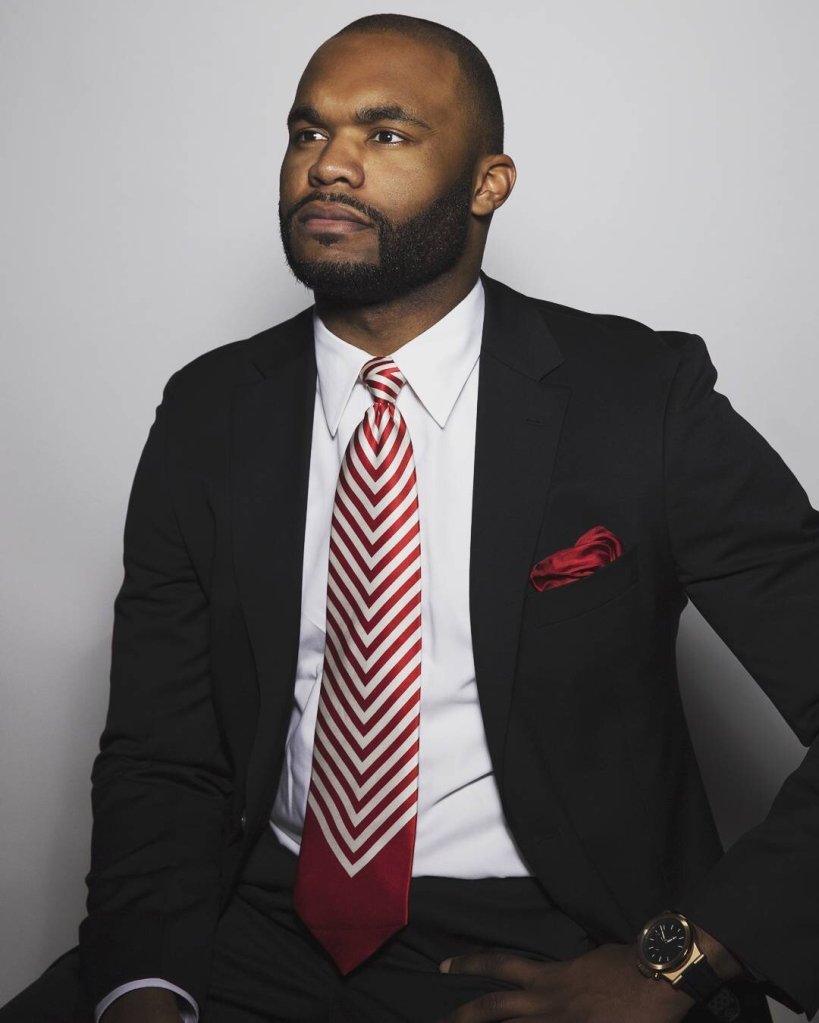
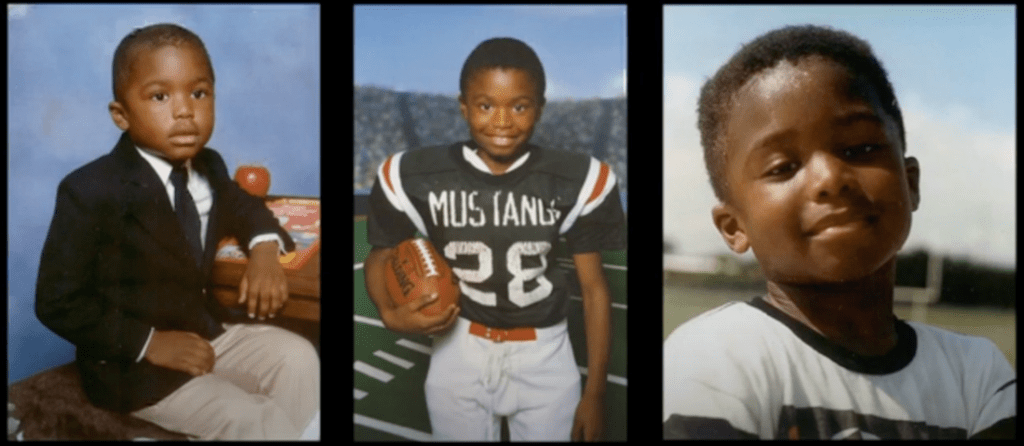
Myron Rolle has spent a lifetime suiting up.

The only thing that’s changed along the way is the suit.

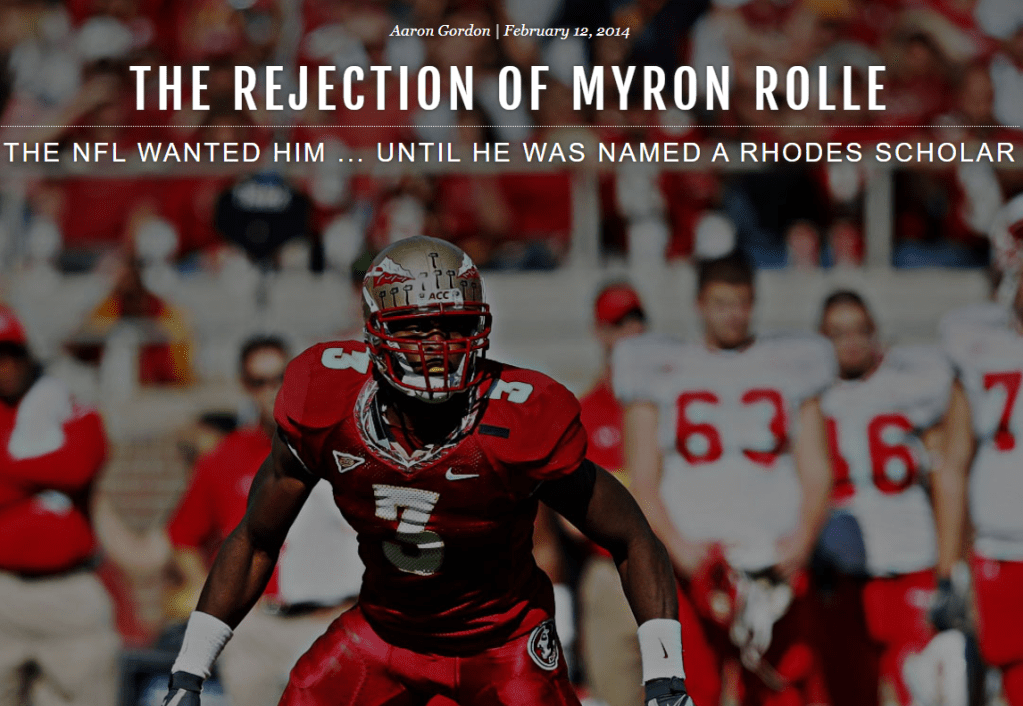
If you happen to recognize his face, it MIGHT be from the time when his suit looked something like this:

Myron Rolle signed with Florida State University as ESPN’s number one high school prospect in 2006. And his performance there was impressive in ways FSU’s coaches couldn’t have anticipated. In just two and a half years, Myron had earned his bachelor’s degree in Exercise Science with a 3.75 GPA, fulfilled all pre-med requirements, AND qualified as a first-round NFL Draft pick as a junior.

Before he could enter the draft, another suit came into play. And this one would demand sacrifice.

Myron Rolle at Oxford University

Myron also qualified for the Rhodes Scholarship, the oldest and most prestigious international graduate program in the world and his interview was scheduled at the same time as the Florida State vs. Maryland game. 

Faced with two paths that most people could only dream of, Myron chose the one that gave him options. Though he arrived from his interview just in time to defeat Maryland, Myron made the fateful decision to sit out of the Draft, pursuing his Masters in Medical Anthropology at Oxford.

Myron Rolle with the Tennessee Titans.

A year later, and back at FSU, Myron was drafted after all, going to the Tennessee Titans, then the Pittsburgh Steelers, but never fully realizing his football potential.

Facing a disappointing future on the gridiron, Myron suited up for a whole new team.

Today, DR. Myron Rolle is a neurosurgery resident, specializing in pediatrics.

Dr. Myron operates on a child with hydrocephalus in Ghana.

And his experience as a pro safety, playing defense against anything that comes at him, has proven priceless.

When the Neurosurgery floor at Massachusetts General in Boston shut down, Dr. Myron, like many other medical professionals, was asked to step up in other capacities to manage the pandemic’s load.

His experience has also made him one of the only people in the world qualified to speak on COVID’s impact to and handling by professional sports leagues, so you may also have seen his face on ESPN, NBC, CNN, and other broadcast networks seeking his one-of-a-kind expertise.

But Myron has even bigger dreams than neurosurgery, professional football and broadcast television. He’s putting all of his life’s work to use building better medicine as chairman of the Myron Rolle Foundation. Its initiatives include the Myron Rolle Wellness & Leadership Academy that teaches athletics, health & wellness, teamwork, character building, self-esteem and leadership to Florida foster kids; the Exuma Project, a state-of-the-art medical, wellness and training facility in the Bahamas where his parents are from; and the CARICOM Neurosurgical Initiative, designed to improve neurosurgical care within the Caribbean nations. 

All of this in pursuit of Myron’s “passion to deliver good quality health care to underserved people” and a calling that truly suits him.


KEEP GOING BLACK IN HISTORY:

Catch up on all the good work Myron is doing for the underserved in the world at the Myron Rolle Foundation‘s website.

Last Black History Month, Myron spoke with NBC Sports Boston about all the different suits he’s had to wear growing up as a Black man in the States with Bahamian parents.

SBNation thoroughly detailed how Myron’s football career could have gone much differently if his time away from football hadn’t dropped his rank in the NFL Draft.

Keep up with all the ways Dr. Myron’s suiting up these days on Instagram.

DAY 2 — Barbara Hillary

Now on the other side of the ceremony from where she’d once stood, Barbara Hillary captivated fresh New School graduates with 88 years worth of experience boiled down into a 10-minute commencement speech.

Among so many gems, one piece of advice stood out: “At every phase in your life, look at your options. Please, do not select boring ones.”

Oh, sure.

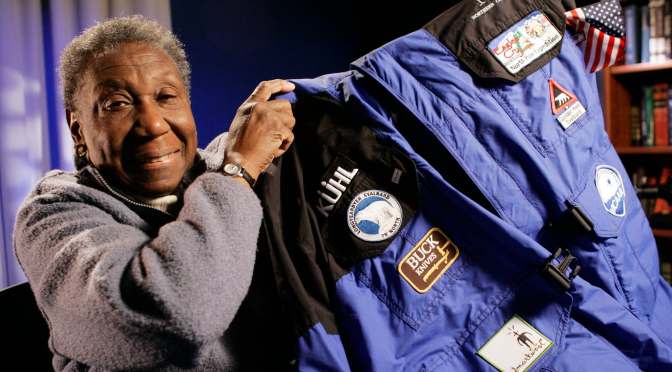
No problem, ONLY Black woman in the world known to set foot on both the North AND South Poles.
Before we proceed, a little perspective.

Matthew Henson, Black American explorer is photographed in tight frame, in a hooded fur parka, exposing only his mustached face.
Matthew Henson, photographed in 1910.

One of the first men ever recorded at the North Pole was free Black American Matthew Henson in 1909.

In 1986, the first woman accomplished the feat.

George W. Gibbs became the first African-American in the Antarctic as a member of Admiral James Byrd’s third expedition to the South Pole in 1939.

Nearly a century after Henson’s journey, Dwayne Fields was the first Black Briton to follow suit in 2010.

And that’s it. That’s the summation of Black diversity at the Poles. 
(Ed. Note: Here comes the part where you feel ashamed of yourself and your boring choices, so you’ve been warned.)

For Barbara Hillary to have done so at the age of 79, becoming the first Black woman to visit either pole AND both, as well as the first Black person to visit both, is nothing short of astonishing.

Even before her adventures, Barbara had already lived a life beyond most folks’ expectations.
“We were Depression-poor,” she said in her commencement address, “but there was no such thing as mental poverty in our home.”

That mindset had propelled her through a Master’s degree from the New School, a 55-year long career as a nurse, and not one, but two separate bouts with cancer, the last of which had left her with 25% reduced breathing capacity. 

But the last thing anyone expected was a trip to the North Pole.

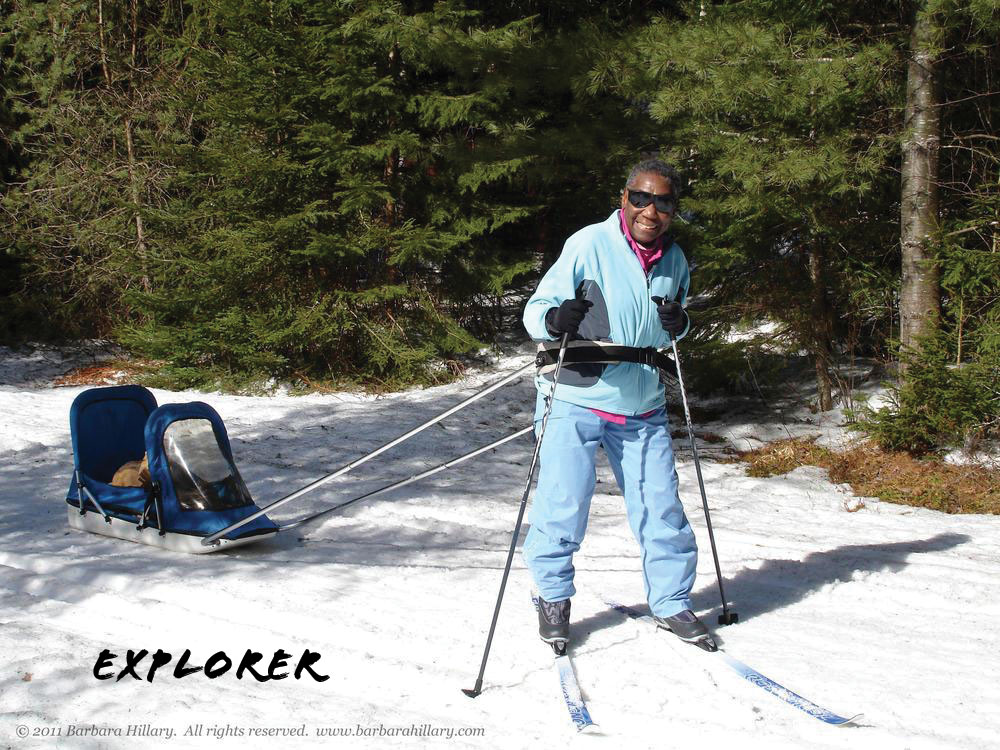
And with good reason. One does not simply GO to a Pole. Barbara grew up in Harlem, where cross-country skiing, a necessity to cross the pole’s frozen terrain, was hardly second-nature. Her nurse’s salary, swallowed by medical costs, didn’t leave much for globe-trotting. And the physical toll dealt by polar regions is unlike any other in the world.

Barbara, in a red and black snow jacket and wide goggles, smiles with her hands raised above her head in celebration. She isn't wearing gloves.
That feeling when you forgot you were at the North Pole.

Barbara found out first-hand when she overcame all of those obstacles to arrive at the North Pole on April 23, 2007. She took her gloves off for just a minute to celebrate, left with frostbite as a souvenir, and the frigid travel bug too.

Less than 4 years later, on January 6, 2011, Barbara landed on the South Pole, where she skipped the frostbite, celebrating with chocolate instead. It’s not that chocolate has any secret warming properties, but when you’re a 79 year old Black lady at the South Pole, nothing’s taken for granted. Barbara explains, “If I had frozen to death down there, wouldn’t it be sad if I’d gone to hell without getting what I want?”

A figure clad in a blue snow jacket with yellow layers underneath and a face shield on, stands in front of a sign that reads "Geographic South Pole."
Lessons were learned.

Thankfully, Barbara didn’t freeze to death down there, else this would be a terrible story.

But her journeys to far-flung places soon revealed one. Inspired to continue adventuring beyond the Poles, Barbara discovered climate change closing chapter after chapter on small, indigenous communities as old as the world itself, forcing them into poverty, starvation, relocation, or dissolution altogether.

For the next 11 years, she turned her adventuring spirit into a boon for those communities, using her newfound fame to bring visibility and aid to Mother Earth’s First People in places like Manitoba and Outer Mongolia. As a descendant of the Gullah Geechee, the Atlantic Lowcountry’s coastal people known for their African traditions, it’s no surprise that she’d have a special place in her heart for those preserving ancient culture at the outskirts of the world.

Barbara in a blue beanie and blue jacket, stands next to a Mongolian woman in a fur hat, coat, and falconers glove and a Mongolian man in a brown beanie and black coat. They are laughing together with a desert and mountain ridge behind them.
One of Ms. Barbara’s favorite people was Akelik (center), one of the few indigenous female falconers left in the world. (Their guide and translator Tudevee stands right.)

In 2019, the 88-year-old wanderer left her earthbound body, still dreaming of where to next. “I find that it’s like looking at a great dessert in the window of a store and saying, ‘I’m going to have that.’ And if I don’t? Look at all the people who have unbelievably boring lives…” she mused. “Am I a hopeless dreamer, or was I born at the wrong time?”

Surely both are options.


KEEP GOING BLACK IN HISTORY:

Listen in on Ms. Barbara’s commencement speech. Her smile alone makes it worth it.
Barbara and a man sit on folding lounge chairs between two yurts in Mongolia.

In case you didn’t notice, Ms. Barbara Hillary was a spitfire of a lady and her personality absolutely shines in this article detailing her accomplishments by the New Yorker.

Do yourself a favor and head on over to Ms. Barbara’s website for a full rundown of all her accomplishments and stunning accolades.

DAY 1 — Henrietta Wood

The President may issue each year a proclamation designating February 1 as National Freedom Day to commemorate the signing by Abraham Lincoln on February 1, 1865, of the joint resolution adopted by the Senate and the House of Representatives that proposed the 13th amendment to the Constitution.

U.S. Code § 124 – National Freedom Day

But in 1853, Henrietta Wood couldn’t afford to keep waiting.

Until that year, her life had not been unlike that of most African-Americans. Henrietta was born into slavery around 1818 in northern Kentucky, worked for one master until he died, was sold to another, relocated elsewhere, rinse and repeat.

Until the day in 1844 when one of her masters, a merchant and French immigrant took leave from his New Orleans estate, and its mistress stole Henrietta away to the free state of Ohio, seeking to make her own fortune by hiring Henrietta out to Northerners in need of help. That plan backfired as creditors left high & dry in New Orleans saw Henrietta’s value too. Rather than allow her to be seized as an asset, the mistress begrudgingly granted Henrietta’s freedom. 

And for nine years, Henrietta savored it. But unwilling to let their dowry slip away, the master’s daughter and son-in-law hired Zebulon Ward, a notorious Kentucky deputy sheriff, slave trader, and future Father of Convict Leasing, to kidnap Henrietta back across state lines.

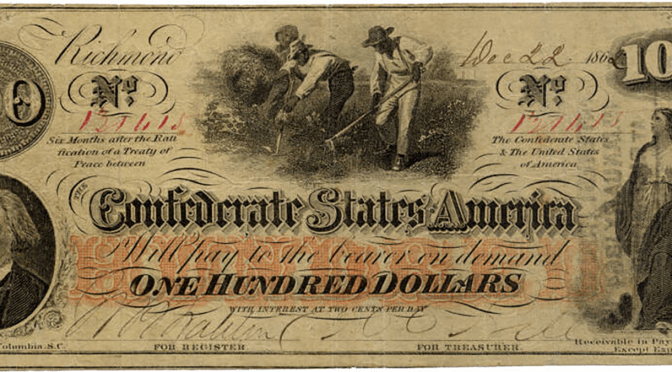
Slavery as the literal currency of the South. A Confederate States of America $100 bill bears enslaved people in cotton fields as its central image.

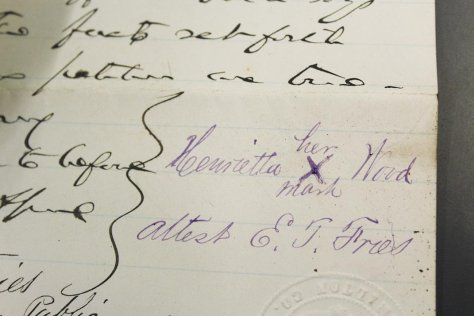
Despite her status, The Fugitive Slave Act of 1850 legislated Henrietta’s silence. Under its rule, enslaved people were not entitled to a trial, and were forbidden from speaking in their own defense should they obtain one. Adding insult to injury, Federal commissioners overseeing these sham proceedings were paid $10 for every person they deemed a fugitive, but only $5 for every freedman. Anyone mounting a case against the system was already at a loss.

But against those insurmountable odds came an intervention. John Joliffe—the same lawyer who’d defended Margaret Garner—argued a 2-year long lawsuit on Henrietta’s behalf. And once more, freedom seemed futile. The Cincinnati courthouse where Henrietta’s papers had been filed had burned to the ground, and any hope of defense with it.

She’d spend the next 14 years re-enslaved, sold this time to Gerard Brandon, the son of a Mississippi governor, in 1855. With the Brandons, freedom would only continue to be snatched from Henrietta’s grasp. Afer the Emancipation Proclamation was issued, Master Brandon marched all 300 of his slaves over 400 miles to Texas where it’d take Union soldiers another 2 years to arrive on June 19, 1865.

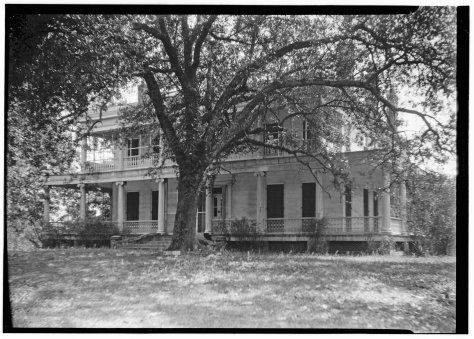
A 1936 photo of Brandon Hall in Natchez, MS, where Henrietta Wood was re-enslaved (via Library of Congress Prints and Photographs Division) vs. today (via Brandon Hall Plantation).

But papers and proclamations hardly made enslaved people free, and Henrietta was living proof. Slavery was still legal in many islands off the coast of the United States, and her own story demonstrated the lengths that slavers would go to profit off “free” human beings. Henrietta reluctantly accepted a formal employment contract from the Brandons promising $10 a month, which she held was never actually paid. Either way, the score was far from settled, her worth was much higher, and Henrietta had every intention of pursuing both.

A diagram of the arduous path Henrietta endured before finally gaining her freedom (via Smithsonian Mag)

In 1878, Federal Judge Philip Swing presided over Wood vs. Ward, where the plaintiff sought $20,000 in restitution for her kidnapping and re-enslavement. Black people weren’t allowed to sit in juries until a 1935 case brought to the Supreme Court by one of the Scottsboro Boys made it illegal to systematically exclude Black people from service (note: systematically). So the notion that an all-white jury would see fit to award a formerly enslaved woman without documentation any dollar amount was likely more about the principle than the actual court judgment.

“Henrietta Wood V. Zeb Ward — Verdict
We the jury on the above titled cause, do find for the plaintiff and assess her damages in the premise of Two thousand and five hundred dollars $2500. (signed), Foreman.”

But in 1879, twenty-six years after Henrietta was sold back into slavery, a jury handed down $2,500—nearly $90,000 today—the highest dollar amount ever awarded by a court in restitution for enslavement.

That award funded her son Arthur’s college education. Born early into Henrietta’s re-enslavement, Arthur Simms had also lived on both sides of freedom, and took full advantage of his newfound rights. In 1889, he graduated as the first Black man to earn a degree from Northwestern University’s Union College of Law, and died as the school’s oldest living alumnus in 1951 at 95 years young, a testament that true freedom keeps paying dividends.

Happy Freedom Day & Happy Black History Month, y’all. Let it ring.


KEEP GOING BLACK IN HISTORY:

W. Caleb McDaniel, the same historian who allied against Fort Bend ISD in support of preserving the Sugar Land 95 uncovered Henrietta’s story. Read his take on her story and interact with Henrietta’s route to freedom at the Smithsonian.

Mr. McDaniel continued over at the New York Times, explaining how Henrietta’s case has re-opened a “dark chapter in American history that in many ways remains open.”

McDaniels’ book Sweet Taste of Liberty: A True Story of Slavery and Restitution in America won a 2020 Pulitzer Prize. Read an excerpt at the National Endowment for Humanities and see more about Harriet’s case at the book’s page.

In 1876, Henrietta told her own story to the Cincinnati Commercial newspaper. It’s collected here in four parts and is the most complete accounting of her story that survives.

Even Henrietta’s descendants didn’t know about her until Mr. McDaniel shared her incredible story. Read how they put together the pieces, and unknowingly, made her fight for freedom “worth it.”