Tag Archives: THE AMERICAN BLACKSTORY 2017

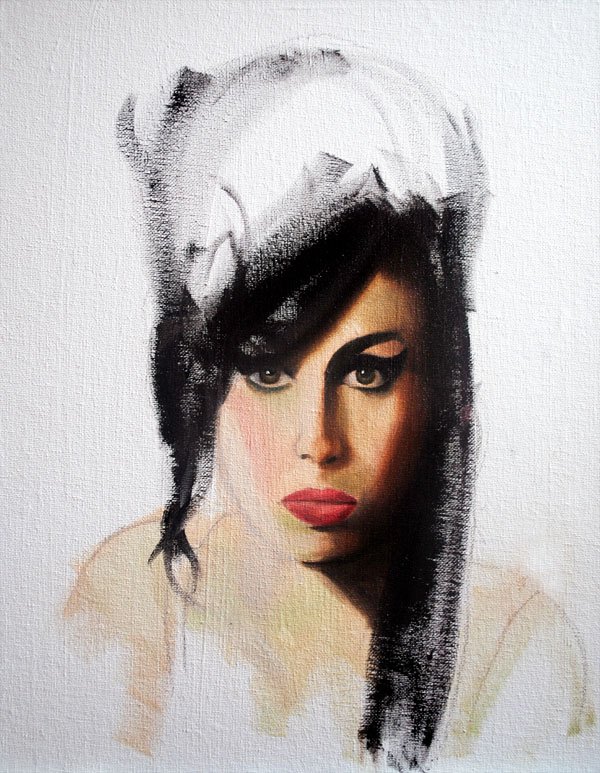
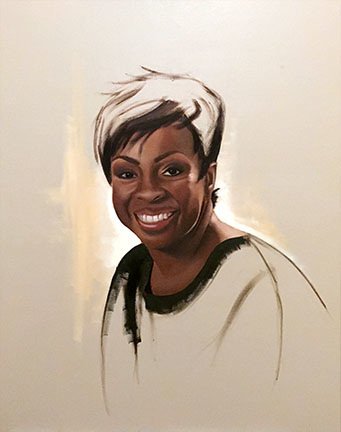
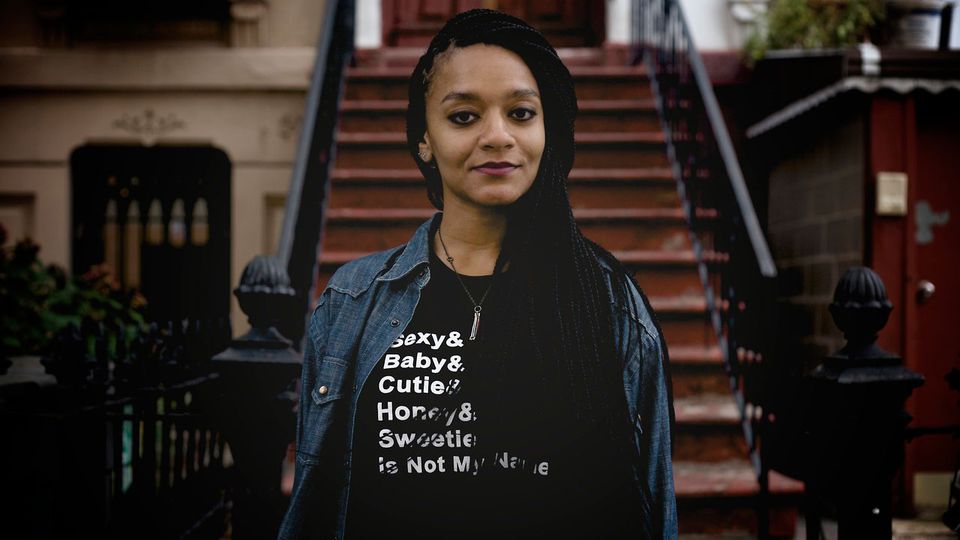
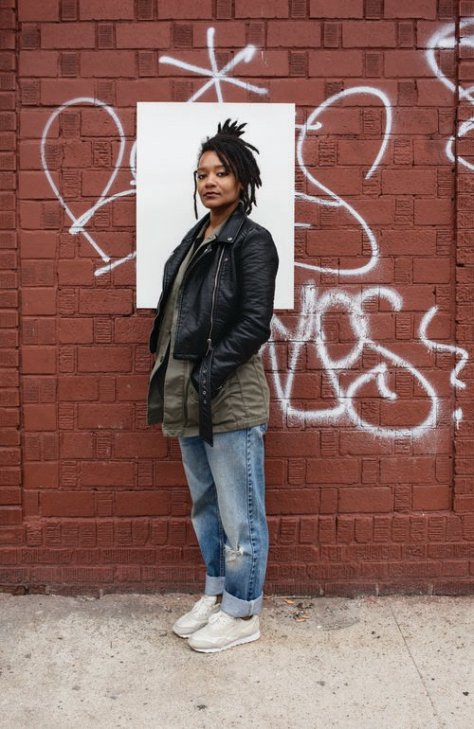
DAY 18 — Tatyana Fazlalizadeh

Tatyana Fazlalizadeh - Street Artist

Tatyana Fazlalizadeh is inspired by the world she sees & experiences around her, so it’s no wonder that her art is charged with female, black, musical and diasporic energy. And you might have even seen it, even if you don’t know her name.
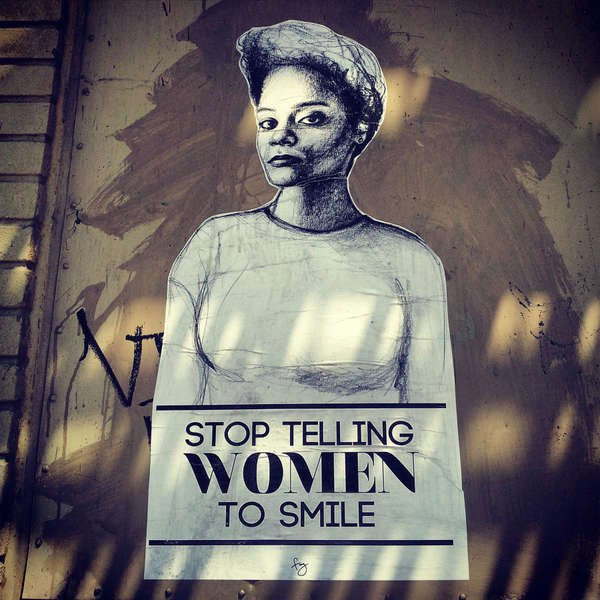
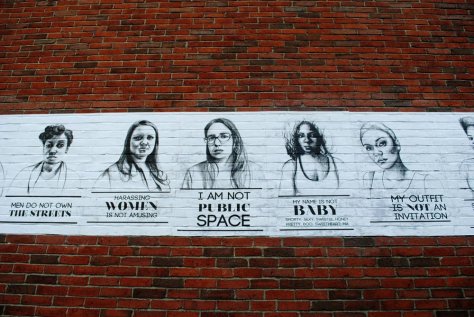
She’s the artist behind the Stop Telling Women to Smile campaign that started with her wheat paste posters on the streets of New York, combining hand-drawn sketches of diverse women, with their often non-verbalized responses to street harassment. It’s estimated that over 80% of women worldwide have experienced street harassment, and her art so resonated with them that its further development was crowdfunded through Kickstarter. Her work is now in cities nationwide, plus Paris & Mexico City, with many more being requested daily.
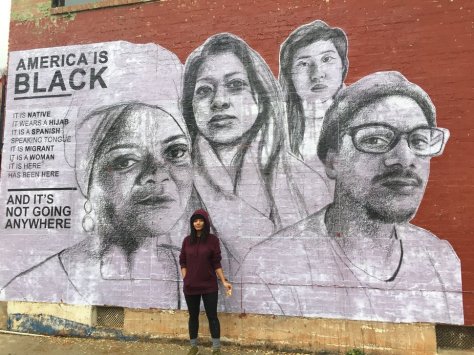
As a black & Iranian woman, Tatyana’s art reflects her identity, and is first and foremost art, not a political statement. So when she created her “America Is…” mural in her home state of Oklahoma, a state that’s 72% white, 9% Native American, 8% Hispanic, and 7% black, it was an affirmation that even though we aren’t always exposed to others like us, we’re ALL what makes and has made America what it is.

Tatyana’s also been commissioned by BET to paint portraits for their Black Girls Rock! music series and her work has appeared on book covers & movies posters. She’s created murals at Coney Island and for the musical group The Roots, and is skilled in oil painting, illustration and photography as well.
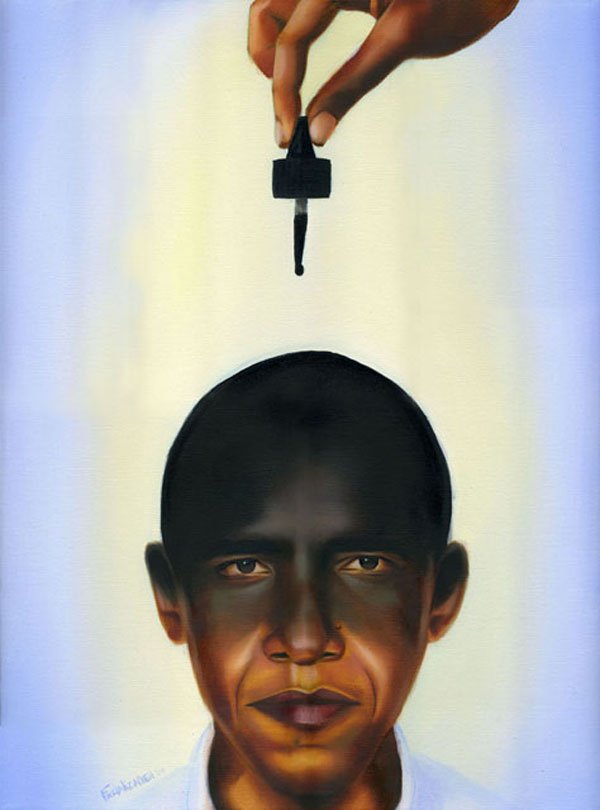
When asked about why she does what she does, Tatyana says “I’m telling the stories of the people who I know, who look like me, whose lives I think need to be told, [those] who aren’t really represented in these traditional oil paintings, who aren’t represented in art, in mainstream media. So how do I tell those stories? How do I make it clear that these people and these stories are important?”

For her, one way is by literally taking it to the streets.


KEEP GOING BLACK IN HISTORY:
Check out Tatyana’s Instagram for more of her street art and her full portfolio.
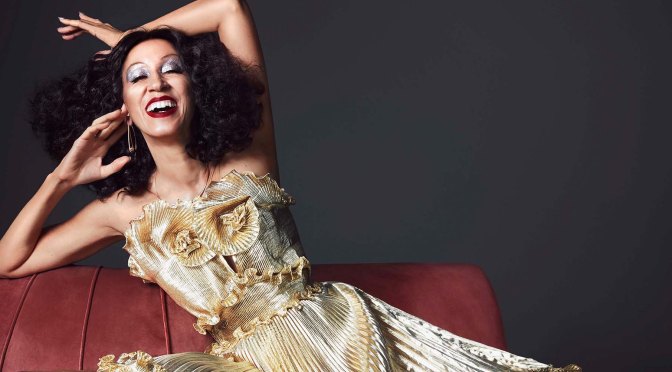
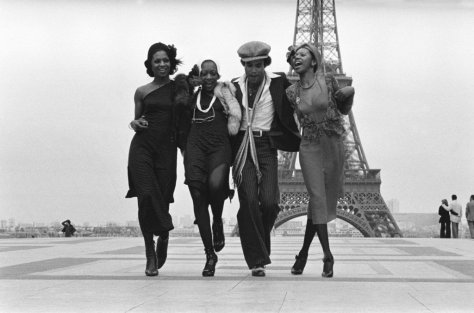
DAY 17 — Pat Cleveland

Pat Cleveland - International Cover Girl

“Patricia, we have very few colored girls in our agency. The only reason I took you is because Oleg Cassini recommended you. But I really think you will never make it in the modeling business. You see, you don’t look like an American. Your face is not pretty. Your nose is strange.”

Pat Cleveland was 18 in the late 60s when she sat in the Ford Models Manhattan headquarters, listening to the company’s founder tell her that her beauty, her allies & her goals didn’t matter because she was black.

But she kind of already knew that. Pat’s career started at 14 with the Ebony Fashion Fair Tour, a traveling showcase of black models in high fashion. In northern states & abroad, the tour drew middle- and upper-class black audiences in droves. In the South, they attracted an entirely different crowd. In Arkansas, the KKK threw Molotov cocktails at their bus & one of the girls was nearly raped. Even using a restroom and going for a walk turned violent against them.

But working with black agencies had been limiting too, because for the black culture of the time, darker skin was in. (Although she did appear in Essence Magazine repeatedly.) She was too light-skinned to be successful on one hand, and too dark-skinned on another. Since the problem was with American society, not Pat’s skin, she solved it the only way she knew how & left for Paris, home to many black creatives seeking opportunities they weren’t afforded in America.

Her success was almost immediate. She graced runways for designers like Yves Saint Laurent, KENZO, KARL LAGERFELD, Halston, and Valentino; posed for Andy Warhol, Salvador Dali & illustrator Antonio Lopez; and appeared in high-end fashion magazines regularly. And once she was in demand, she leveraged that success & refused to return to the U.S. until a black model had appeared on the cover of American Vogue. (Ms. Beverly Johnson became their first in 1984.)

Before pioneering black models like Iman, Naomi Sims, and Beverly Johnson, there was Pat Cleveland, and as early as 1980, she was recognized as the world’s first black supermodel, strange nose and all.


KEEP GOING BLACK IN HISTORY:

Vogue Paris created a reel of Pat’s runway walks as a Chloé model from 1978-1986, looking completely fabulous in her own skin.

Listen in or read through NPR’s interview about the tradition of black American migration to Paris since the 19th Century.

DAY 16 — Wereth 11

Wereth 11 - Heroic Artillery Battalion

World War II’s 333rd Field Army Battalion was composed of some of the first black enlisted men trained in combat, rather than service positions.

The 11 men who were the 333rd’s Charley Battery quickly made names for themselves through their deadly accuracy with artillery, destroying a German tank 9 miles away in 90 seconds. But that fame also made them targets to a German army gasping for its last breath.

On December 16, 1944, Charley Battery was separated from their unit. They found safety in the tiny 9-house hamlet of Wereth, Belgium, just on the German border. The Nazi SS was tipped off & raided the village, demanding the soldiers’ surrender. To prevent any harm to the locals, Charley Battery surrendered peacefully.

Rather than being kept as prisoners of war or executed immediately, the 11 men were brutally tortured. Many were missing fingers, had broken legs, suffered bayonet & barrel stock wounds to the eyes & head, and suffered multiple, non-lethal gunshot wounds before they were finally killed & left in the snow, where their bodies remained until documented by the Army in February 1945.

These weren’t the only American soldiers the SS committed war crimes against. But they were the only soldiers whose sacrifice went seemingly ignored. The 1949 Senate Armed Forces subcommittee recorded a dozen similar SS atrocities, but omitted the massacre of Charley Battery. On the 50th Anniversary of the soldiers’ deaths, the son of the man who’d sheltered them erected the monument pictured here, memorializing them as the “Wereth 11.” It’s the only known monument in Europe that honors the black soldiers who fought in World War II.

In 2013, Congress passed a resolution reissuing the original 1949 subcommittee report to include the Wereth 11, awarding them with multiple combat medals, including the Bronze Star and the Purple Heart.

Like many black soldiers who fought in American wars at home & abroad, the Wereth 11 bravely defended a country that didn’t defend them. Throughout our country’s history, but now more than ever, we’ve needed to be reminded that red-blooded Americans come in every color.

In honor of the sacrifices of:
Corporal Bradley Mager
Staff Sergeant Thomas J. Forte
Technical Corporal Robert L. Green
Technical Sergeant William E. Pritchett
Technical Sergeant James A. Stewart
PFC George Davis
PFC Jimmie L. Leatherwood
PFC George W. Moten
PFC Due W. Turner
Private Curtis Adams
Private Nathaniel Moss


KEEP GOING BLACK IN HISTORY:

Read the resolution that finally officially recognized the Wereth 11.

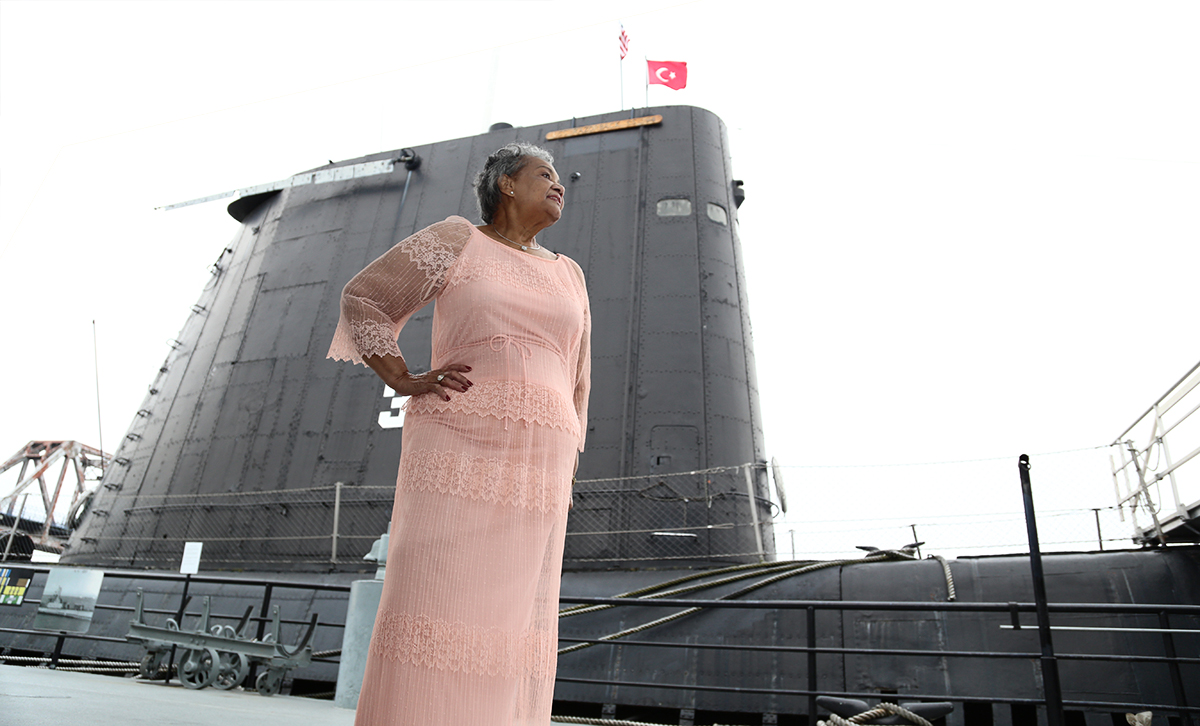
DAY 15 — Raye Montague

Raye Montague - Submarine Engineer

Raye Montague was 7 years old when she first saw the control panel of a submarine at a museum. When she asked the tour guide how it worked, he replied that understanding that was a job for engineers & she would never have to worry about it.

He was almost right. Because when little Raye grew up & graduated high school, still with a passion for understanding how things worked, she couldn’t get into a single engineering school. Because it was 1952 and she was black. So she went to business school instead.

Being black, female, and in the South, Raye knew that she had three strikes against her when it came to a career, but she also had a slight advantage in that her name was ambiguously gendered, so as long as hiring managers only received her resume, they had no idea that the person behind all that education was a black woman.

When her resume reached the U.S. Navy, someone assumed that with her degree, she knew computers. (She didn’t.) So she taught herself how to use one & write code, and for the next 14 years, she worked her way up the ranks from a system operator to a system analyst. She did her job so well that when President Richard Nixon tasked the Naval Ship Engineering Center with creating a new ship design in 2 months, Raye completed the task in just over 18 hours, becoming the first person to design a U.S. Navy ship with a computer & revolutionizing naval ship design in the process. (For reference, that ship became the USS Oliver Hazard Perry.) She was eventually the U.S. Navy’s first female Program Manager of Ships, as well.

Raye retired in 1990, but along the way, she won a slew of awards, including the Navy’s Meritorious Civilian Service Award and the Society of Manufacturing Engineers Achievement Award, the first woman to receive the honor.

Raye suffered tremendous racism and sexism as a black female civilian in the military, even receiving death threats & being warned not to accept one of her awards because a white woman hadn’t accomplished the same. (She accepted it anyway.) But she kept on working & in the end, she didn’t worry about controlling ships – she just designed them from the ground up.


KEEP GOING BLACK IN HISTORY:

Raye is not only brilliant, she’s a delightfully animated storyteller too. Enjoy a couple of minutes with her.

DAY 14 — John Dabiri

John Dabiri.jpg

You don’t even know it, but with John Dabiri’s help, the jellyfish has changed your future.

He’s one of Popular Science’s “Brilliant 10,” a Bloomberg BusinessweekTechnology Innovator, an MIT Technology Review “35 Under 35,” and a MacArthur Fellows Program “Genius” Grant recipient, because his research combining fluid mechanics, energy & environment, and biology – a field called bio-inspired engineering – has already influenced our lives.

John created reflective particles to track how jellyfish propel themselves through water, and in the process, learned about the human body & the atmosphere too.

Applying the jellyfish’s fluid dynamics to the human heart, he can detect signs of heart failure years in advance. When using his findings in the field of wind energy, he was able to develop a wind turbine that’s 10x smaller than the standard model. The U.S. Navy has him at work developing unmanned submarines that are 30% more efficient than the current design. His research is also inspiring other scientists who before, hadn’t even explored the effect that marine animals could have on how the ocean moves, the same way currents do.

At just 35, John’s entire future (and ours) is still ahead of him. He currently heads Stanford University’s Dabiri Lab, named after him in honor of his groundbreaking discovery & the continued applications of his science. But his brilliance wasn’t always so recognized. When John graduated from high school, the only college he applied to was Princeton. And when he got in, his HS biology teacher told the next class that it was only because he was black.

So much for that idea.


KEEP GOING BLACK IN HISTORY:

John’s MacArthur Fellows video is several years old, but it’s a great place to start understanding more about his research and its future implications.

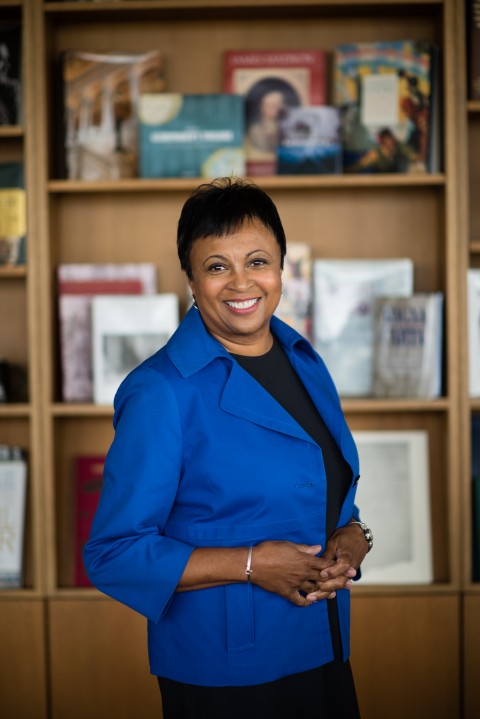
DAY 13 — Dr. Carla Hayden

No one would have blamed Dr. Carla Hayden, Baltimore’s chief librarian, for closing the library that night. It was April 2015 and the neighborhood was burning.

After Freddie Gray died in police custody and riots broke out, Dr. Hayden was pressured to close a nearby library temporarily. But the next morning, it opened faithfully, welcoming her neighbors who were tired, afraid, and looking for a place to find peace after a long night of chaos.

In those days, her libraries were more than a repository of books; they were a symbol. Of enduring strength, comfort, community, and maybe most importantly, hope.

It’s no wonder that just over a year later, she was sworn in as the first black person, first woman, and most experienced librarian to head The Library of Congress in its 216-year history. She’s also only the third Librarian to have actually trained in library science, a surprising fact for the largest library system in the world.

That day in Baltimore wasn’t the first time she’d stood up for the people. As head of the American Library Association in 2003, she was one of the most vocal opponents of provisions of the Patriot Act allowing the government to access library & bookstore records. She believed that it was fully possible to both “ensure national security and protect a person’s right to know.”

Her experience advocating for the public in Baltimore, against the Patriot Act and throughout her career, made her the perfect person to fill the role, which hadn’t been vacant since 1987. The world had changed in that time and needed a librarian who knew how to change with it.

Since her start last September, Dr. Hayden’s Library has already digitized some of their most important documents, like Rosa Parks’ handwritten notes and maps from the Revolutionary and Civil Wars, making them available to anyone, anywhere for the first time ever.

And the significance of a person like her in a role like this at time like now isn’t lost on her. She said, “To be the head of an institution that’s associated with knowledge and reading and scholarship when slaves were forbidden to learn how to read on punishment of losing limbs, that’s kind of something.”


KEEP GOING BLACK IN HISTORY:

Meet Dr. Carla Hayden, and be absolutely enthralled by the way she talks about her job.

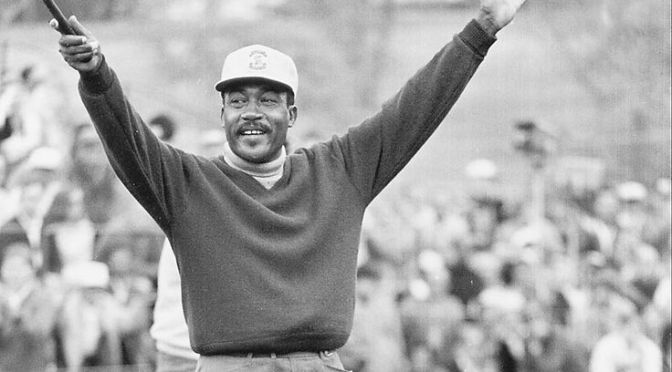
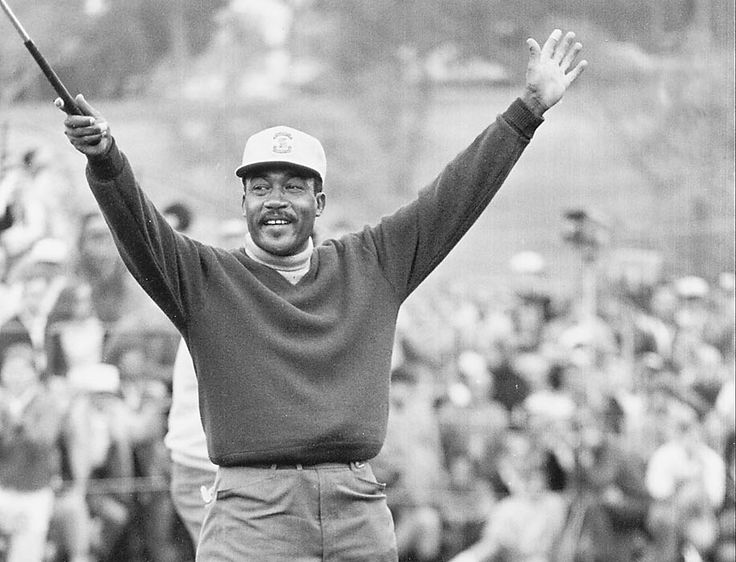
DAY 12 — Charlie Sifford

Charlie Beer Ad.jpg

When Charlie Sifford was a teenage caddy breaking par on white-only golf courses in the 1930’s, he couldn’t have known he was developing the skill to break barriers.

Charlie was 18 in 1947 when he met Hall of Fame baseball player Jackie Robinson, who warned him that overcoming the racial barriers in sports would feel near impossible, but that if he wanted to succeed, he couldn’t let that stop him.

And he didn’t. In 1948, Charlie began golfing professionally in all-black tournaments, the only ones he was allowed to enter. And he was so dominant that he won their top tournament, the Negro National Open, six times in the 1950s. In 1957, he was finally allowed to play in the Long Beach Open, which he won by a stroke to become the first black golfer to beat white players in a PGA-sponsored event.

The PGA had long held that black golfers couldn’t compete on the same level as white golfers, so there was no reason to allow them on the tour. Charlie shattered that logic, and with a little legal pressure from the state of California, the PGA dropped their “caucasian-only” clause. Charlie became the first black man with full PGA membership in 1961.

He played in 422 PGA tournaments, coming in second twice, getting five third-place finishes, and winning almost $350,000.

In 2004, Charlie Sifford was the first black man inducted into the World Golf Hall of Fame and in 2014, he received the Presidential Medal of Freedom in recognition of his trailblazing that allowed not only black golfers to compete in the PGA, but all minorities who’d previously been excluded.

Charlie once said, “Hell, I knew I’d never get rich and famous. All the discrimination, the not being able to play where I deserved and wanted to play — in the end I didn’t give a damn. […] in the end I won; I got a lot of black people playing golf. That’s good enough. If I had to do it over again, exactly the same way, I would.”


KEEP GOING BLACK IN HISTORY:

The PGA produced a lovely video featuring black golfers sharing Charlie’s story & his career’s impact on theirs.

DAY 11 — Blanche Calloway

Blanche Pearls.jpg

Blanche Calloway’s younger brother may be the sibling history remembers, but she was the real headliner.

When Blanche sang with the big band Andy Kirk’s 12 Clouds of Joy, she knew she had the charisma & experience to front the whole show, so in 1931, she formed Blanche Calloway and the Joy Boys.

And just like that, she was the first female leader of a major American dance band.

That same year, the Pittsburgh Courier called her “one of the most progressive performers in the profession.” Blanche’s loud, flamboyant & provocative style made her a standout with critics & audiences, and she was soon touring the country plus regularly headlining at illustrious black theaters like the Harlem Opera House & The Apollo.

She was even kind enough to invite her little brother Cab to make guest appearances while he was building his own career, and lend him some of her vocal stylings, like the “Hi-Di-Hi-Di-Hi-Di-Ho” call & response that he’s best known for.

But it was her fame & the state of American society at the time that lead to her downfall.

In 1936, while Blanche & the Joy Boys were on tour in Mississippi, she made the fatal error of using a white-only restroom. The police were called, one of the band members was pistol-whipped and the two of them were jailed. They came up enough money to bail themselves out, but while they were in jail, another band member collected their gig payments & skipped town.

The band never recovered and in 1938, Blanche filed for bankruptcy. She continued her solo career, but never regained the fame she had before, and settled in Philadelphia where she was active in politics & the black community.

She didn’t stop setting milestones though. She moved to Miami and became their first female disc jockey in 1953, and the first black woman to vote in there in 1958.

One of the constant criticisms Blanche faced as a performer is that she wasn’t a proper & respectable lady. So, if well-behaved women rarely make history, it’s no wonder that all of her life, Blanche did exactly that.


KEEP GOING BLACK IN HISTORY:

Hear Blanche’s personality shine through her vocals in “I’m Gettin’ Myself Ready for You,” recorded March 27, 1931 with the Joy Boys.
Take one more spin with Miss Blanche & the Joy Boys in “It Looks Like Susie.”

DAY 10 — Brooklyn Mack

Brooklyn 2.jpg

Brooklyn Mack’s mother fooled him.

You see, Brooklyn wanted to play football. But every time there was a football tryout, somehow, something always “came up.” When his school had a field trip to the local ballet, he wasn’t too enthused. But he’d heard that ballet was a useful tool for agility & athleticism in football, so he went.

When he saw the male dancers in action though, he was impressed. So he made a deal with his mother: he’d settle for ballet lessons if she would take him to football tryouts.

He never made football tryouts.

But he did become a principal male dancer for The Washington Ballet.

And back in 2012, he became the first black man to win a senior gold medal at the VARNA International Ballet Competition, the world’s oldest & most prestigious ballet competition. For reference, Mikhail Baryshnikov is another winner of the same medal.

Not too shabby for a 25-year-old from tiny Elgin, South Carolina.

Brooklyn started ballet at age 12, and his mother knew he had a natural talent. She didn’t tell him until he was already hooked that she too had been a skilled ballet dancer, and although none of his other siblings were interested, she knew that Brooklyn could excel.

And he has. He’s been a featured ballet performer in Venezuela, Latvia, Japan, Bulgaria, Korea, Istanbul, Finland & many other countries around the world. His list of awards is even longer. And in 2015, he starred in the Washington Ballet’s production of “Swan Lake” opposite acclaimed black ballerina Misty Copeland. Their performance was the first time two black ballet dancers had EVER starred in ANY full-length production of “Swan Lake,” and they had fought history, exclusion and gravity for the leading roles.


KEEP GOING BLACK IN HISTORY:

Watch Brooklyn perform beautifully at the 2012 International Ballet Competition.

Explore how the tradition of Black ballet dancers is being preserved in the Digital Age.

DAY 9 — Oscar Micheaux

Oscar.jpg

It was 1918 when Oscar Micheaux’s second book, The Homesteader, attracted Hollywood’s attention. The deal was done until Oscar made his final negotiating point – he wanted direct involvement with the production. The Lincoln Motion Picture Company refused Oscar’s demand, and it was the best thing that ever happened to him.

…because Oscar founded the Micheaux Film & Book Company, and in 1919, he became the first black major feature filmmaker. And a good one at that. His all-black films written for black audiences also made him the most successful black filmmaker of the first half of the 20th century, and one of the most prolific filmmakers in American cinema.

His work was so successful with black audiences because it addressed deeply polarizing & very authentic issues black Americans faced in the early 20th century. His film adaptation of “The Homesteader” revolved around an interracial relationship and the conflict between love & racial solidarity. It was met with both critical & commercial acclaim.

In 1920, he released “Within Our Gates” as a response to the 1915 racist propaganda film “Birth of a Nation,” one of the most popular movies of the time. “Within Our Gates” told the story of a black man wrongly accused of killing a white man & the tragedy that befell his family as a result. Unlike Oscar’s first film, this one was widely protested, deemed divisive and even banned from many theaters.

But Oscar refused to shy away from the truth of the black experience in early 20th century America. His movies unflinchingly confronted lynching, job discrimination, rape, mob violence, and economic exploitation, and his craft flourished. He produced over 40 feature films, and became the first black filmmaker to produce a movie with sound.

In 1987, Oscar got his props from Hollywood after all.

His dedication to the real, complex & well-made stories of black Americans led to another first for Oscar that was perhaps his (and our) most important – in 1948, his final film “Betrayal” became the very first black­-produced movie to premiere in white theaters.


KEEP GOING BLACK IN HISTORY:

Lucky us, Oscar’s work has been largely preserved, so today, you can watch “Within Our Gates” right from the comfort of home.