

Spools, scraps, and stitches are the tools with which Tina Williams Brewer delicately crafts her stories.
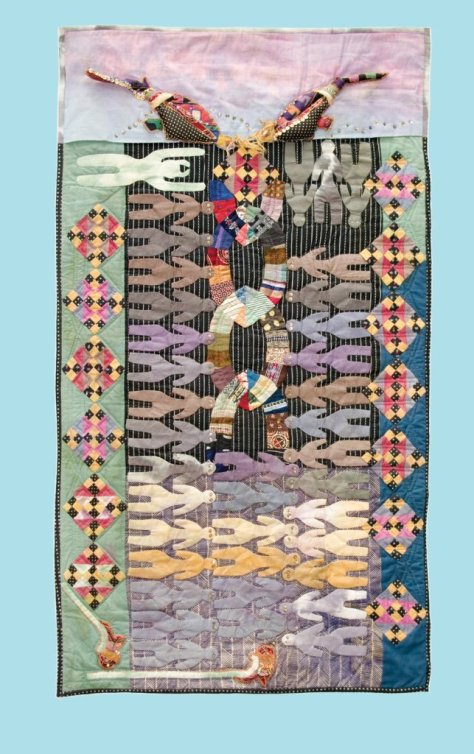
“‘The Harvest’ was created in 1989, during Tina’s first decade of quilting. The door-sized piece is done in muted grays and dusky browns. Appliqued figures are lined up in two columns as if men were stacked on the deck of a ship. The quilt is about slave trade and forced relocation. Brewer said the quilt evokes dark reactions but she is unrepentant. ‘It’s really hurtful, the harshness of the topic,’ Brewer said. ‘It’s something people should see and begin to talk about. I needed to understand more about this. It was so liberating.'”
(Read More)
For over 30 years, her hands have documented intimate family moments and cultural milestones in black history, shaping those stories into the centuries-old tradition of story quilting.
In Tina’s hands, fabric scraps, including some from her former life as an interior designer, are transformed into the tragedies of the Middle Passage, the path that slaves journeyed from west Africa to the West Indies. Her photo-transferred panels pay respect to the memory of black people forgotten by history, and prevent the racist places and spaces of the world from hiding behind the folds of time. And when she stitches diamonds, with their four points symbolizing birth, life, death and rebirth in African cultures, the significance of her fingers moving with the same intention of those who came before her is almost divine.
“When I am working,” Brewer writes, “I often feel as if my fingers are being guided by forces I don’t completely understand, but that help me create far more insightfully and knowledgeably than I would be able to otherwise. I believe these forces are the thoughts, feelings and insights of my ancestors – those whose stories I try to tell.”
But the stories of her ancestors are even intertwined in the craft itself. There’s a rich legacy of black seamstresses, tailors, and clothworkers that goes untold because of its roots in slavery. Without the skills to craft their own garments, in a time when little was store-bought, members of the antebellum high society attended balls, cotillions and galas in only the finest fabrics and elaborate designs, hand-crafted by their slaves. The same was true, of course, for everything from saddles to household textiles, especially quilts which are arduous and painstaking pieces to sew entirely by hand. Though the households they worked in demanded strictly traditional quilts, slaves preserved cultural roots by sewing their own quilts in the African tradition, with abstract patterns, meaningful symbols, and mythologies representative and reminiscent of their homelands.
When Tina started quilting in the early 1980s, she too worked in traditional American and European patterns, taking up the trade as a way to spend more time with her children. But when her own research and trips to Africa taught her the history behind her hobby, she abandoned her former Western designs for something more culturally familiar.
Since finding inspiration in her history, Tina’s become widely recognized as the premier black story quilter of the modern era. Her quilts hang in places as far-flung as U.S. Embassies in Sudan and Ghana, but as close to home as New York, Dallas and Baltimore, mimicking the widespread nature of the African diaspora itself.
These stunning works of art often hold a dark history, sometimes avoided intentionally, sometimes simply left untold, but Tina makes it her goal to bring everyone to the conversation that’s been lingering for centuries.
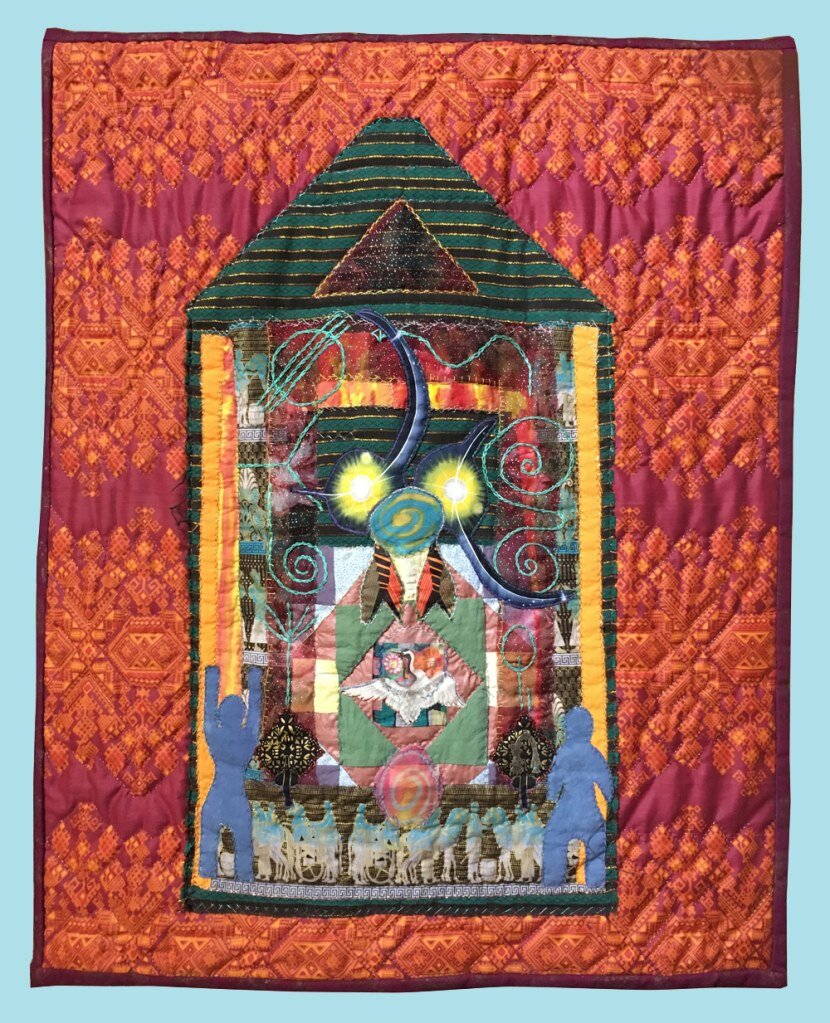


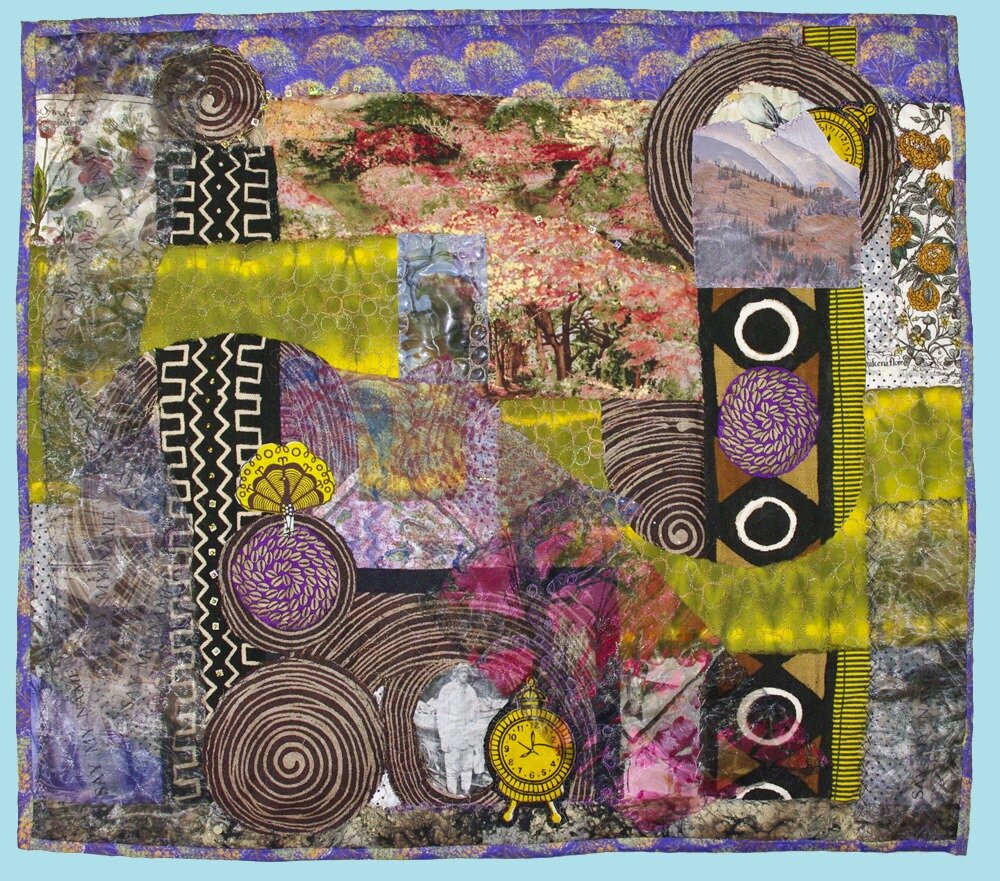
“I think people don’t always understand the volume of history that’s taken place and sometimes they need someone to point it out to them with something that’s soft,” she muses. “I speak for those who have no voice, and I’m very blessed to be a conduit.”
Despite quilting for the last three decades, Tina has no intention of stopping, recognizing that by pouring her heart and history into each piece, and inspiring others to tell their own stories through quilting, her work sustains black history the way this medium was intended: through the hands of generations.
KEEP GOING BLACK IN HISTORY:

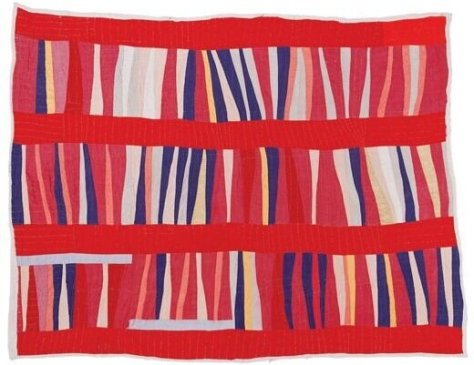
Read up on and see the work of the women of Gee’s Bend, some of the most highly-skilled and historically-treasured black quiltmakers in American history.

Explore more quilts and the history of black quilting here.
 THE AMERICAN BLACKSTORY