Tag Archives: PRESENT

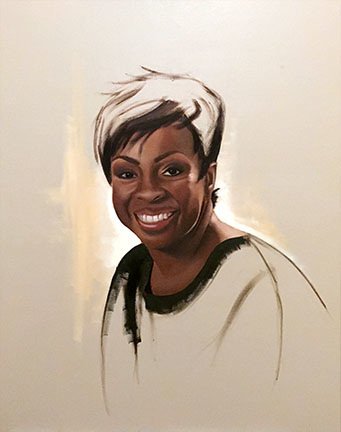
DAY 18 — Tatyana Fazlalizadeh

Tatyana Fazlalizadeh - Street Artist

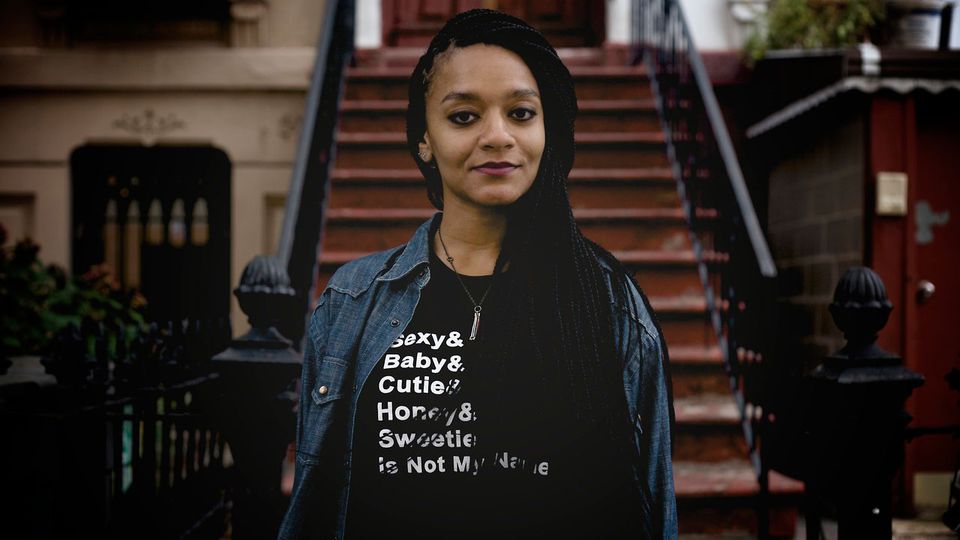
Tatyana Fazlalizadeh is inspired by the world she sees & experiences around her, so it’s no wonder that her art is charged with female, black, musical and diasporic energy. And you might have even seen it, even if you don’t know her name.

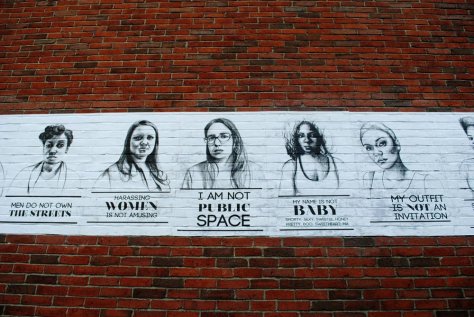
She’s the artist behind the Stop Telling Women to Smile campaign that started with her wheat paste posters on the streets of New York, combining hand-drawn sketches of diverse women, with their often non-verbalized responses to street harassment. It’s estimated that over 80% of women worldwide have experienced street harassment, and her art so resonated with them that its further development was crowdfunded through Kickstarter. Her work is now in cities nationwide, plus Paris & Mexico City, with many more being requested daily.
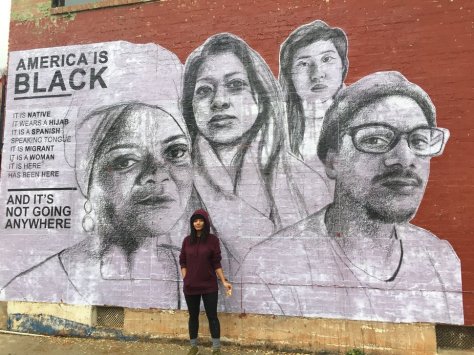
As a black & Iranian woman, Tatyana’s art reflects her identity, and is first and foremost art, not a political statement. So when she created her “America Is…” mural in her home state of Oklahoma, a state that’s 72% white, 9% Native American, 8% Hispanic, and 7% black, it was an affirmation that even though we aren’t always exposed to others like us, we’re ALL what makes and has made America what it is.

Tatyana’s also been commissioned by BET to paint portraits for their Black Girls Rock! music series and her work has appeared on book covers & movies posters. She’s created murals at Coney Island and for the musical group The Roots, and is skilled in oil painting, illustration and photography as well.

When asked about why she does what she does, Tatyana says “I’m telling the stories of the people who I know, who look like me, whose lives I think need to be told, [those] who aren’t really represented in these traditional oil paintings, who aren’t represented in art, in mainstream media. So how do I tell those stories? How do I make it clear that these people and these stories are important?”

For her, one way is by literally taking it to the streets.


KEEP GOING BLACK IN HISTORY:

Check out Tatyana’s Instagram for more of her street art and her full portfolio.

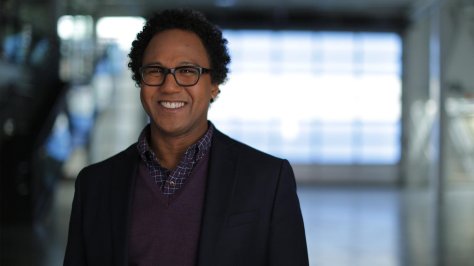
DAY 14 — John Dabiri

John Dabiri.jpg

You don’t even know it, but with John Dabiri’s help, the jellyfish has changed your future.

He’s one of Popular Science’s “Brilliant 10,” a Bloomberg BusinessweekTechnology Innovator, an MIT Technology Review “35 Under 35,” and a MacArthur Fellows Program “Genius” Grant recipient, because his research combining fluid mechanics, energy & environment, and biology – a field called bio-inspired engineering – has already influenced our lives.

John created reflective particles to track how jellyfish propel themselves through water, and in the process, learned about the human body & the atmosphere too.

Applying the jellyfish’s fluid dynamics to the human heart, he can detect signs of heart failure years in advance. When using his findings in the field of wind energy, he was able to develop a wind turbine that’s 10x smaller than the standard model. The U.S. Navy has him at work developing unmanned submarines that are 30% more efficient than the current design. His research is also inspiring other scientists who before, hadn’t even explored the effect that marine animals could have on how the ocean moves, the same way currents do.

At just 35, John’s entire future (and ours) is still ahead of him. He currently heads Stanford University’s Dabiri Lab, named after him in honor of his groundbreaking discovery & the continued applications of his science. But his brilliance wasn’t always so recognized. When John graduated from high school, the only college he applied to was Princeton. And when he got in, his HS biology teacher told the next class that it was only because he was black.

So much for that idea.


KEEP GOING BLACK IN HISTORY:

John’s MacArthur Fellows video is several years old, but it’s a great place to start understanding more about his research and its future implications.

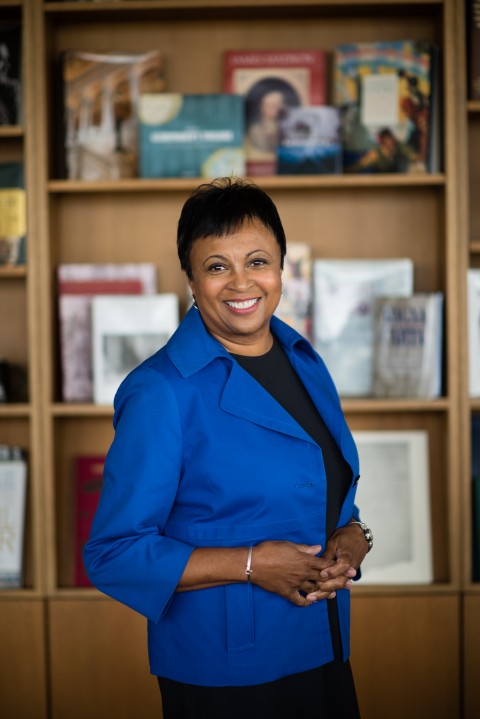
DAY 13 — Dr. Carla Hayden

No one would have blamed Dr. Carla Hayden, Baltimore’s chief librarian, for closing the library that night. It was April 2015 and the neighborhood was burning.

After Freddie Gray died in police custody and riots broke out, Dr. Hayden was pressured to close a nearby library temporarily. But the next morning, it opened faithfully, welcoming her neighbors who were tired, afraid, and looking for a place to find peace after a long night of chaos.

In those days, her libraries were more than a repository of books; they were a symbol. Of enduring strength, comfort, community, and maybe most importantly, hope.

It’s no wonder that just over a year later, she was sworn in as the first black person, first woman, and most experienced librarian to head The Library of Congress in its 216-year history. She’s also only the third Librarian to have actually trained in library science, a surprising fact for the largest library system in the world.

That day in Baltimore wasn’t the first time she’d stood up for the people. As head of the American Library Association in 2003, she was one of the most vocal opponents of provisions of the Patriot Act allowing the government to access library & bookstore records. She believed that it was fully possible to both “ensure national security and protect a person’s right to know.”

Her experience advocating for the public in Baltimore, against the Patriot Act and throughout her career, made her the perfect person to fill the role, which hadn’t been vacant since 1987. The world had changed in that time and needed a librarian who knew how to change with it.

Since her start last September, Dr. Hayden’s Library has already digitized some of their most important documents, like Rosa Parks’ handwritten notes and maps from the Revolutionary and Civil Wars, making them available to anyone, anywhere for the first time ever.

And the significance of a person like her in a role like this at time like now isn’t lost on her. She said, “To be the head of an institution that’s associated with knowledge and reading and scholarship when slaves were forbidden to learn how to read on punishment of losing limbs, that’s kind of something.”


KEEP GOING BLACK IN HISTORY:

Meet Dr. Carla Hayden, and be absolutely enthralled by the way she talks about her job.

DAY 10 — Brooklyn Mack

Brooklyn 2.jpg

Brooklyn Mack’s mother fooled him.

You see, Brooklyn wanted to play football. But every time there was a football tryout, somehow, something always “came up.” When his school had a field trip to the local ballet, he wasn’t too enthused. But he’d heard that ballet was a useful tool for agility & athleticism in football, so he went.

When he saw the male dancers in action though, he was impressed. So he made a deal with his mother: he’d settle for ballet lessons if she would take him to football tryouts.

He never made football tryouts.

But he did become a principal male dancer for The Washington Ballet.

And back in 2012, he became the first black man to win a senior gold medal at the VARNA International Ballet Competition, the world’s oldest & most prestigious ballet competition. For reference, Mikhail Baryshnikov is another winner of the same medal.

Not too shabby for a 25-year-old from tiny Elgin, South Carolina.

Brooklyn started ballet at age 12, and his mother knew he had a natural talent. She didn’t tell him until he was already hooked that she too had been a skilled ballet dancer, and although none of his other siblings were interested, she knew that Brooklyn could excel.

And he has. He’s been a featured ballet performer in Venezuela, Latvia, Japan, Bulgaria, Korea, Istanbul, Finland & many other countries around the world. His list of awards is even longer. And in 2015, he starred in the Washington Ballet’s production of “Swan Lake” opposite acclaimed black ballerina Misty Copeland. Their performance was the first time two black ballet dancers had EVER starred in ANY full-length production of “Swan Lake,” and they had fought history, exclusion and gravity for the leading roles.


KEEP GOING BLACK IN HISTORY:

Watch Brooklyn perform beautifully at the 2012 International Ballet Competition.

Explore how the tradition of Black ballet dancers is being preserved in the Digital Age.

DAY 8 — Haben Girma

Haben1.jpg

30 years after her mother fled the Eritrean War, American-born Haben Girma graduated from Harvard Law School in 2013.

Then she was named a White House Champion of Change, an American working to advance technology, platforms, educational opportunities or spaces to empower other Americans.

Then she became a disability rights lawyer & helped win a major legal victory ensuring that people with disabilities had full access to e-commerce under the Americans with Disabilities Act.

And THEN she was chosen as one of 2016’s Forbes Under 30, that year’s brightest young entrepreneurs, breakout talents & change agents.

She’s accomplished incredible things in her 28 years.

Haben Girma is also deaf and blind.

In fact, she’s the first deaf-blind graduate of Harvard Law, where she found ways to innovate to succeed. But she knows that it’s the legal access & opportunity in America that made her success possible. Her older brother was also born deaf-blind, but in Eritrea, where schools told their mother he simply couldn’t be educated. Haben’s experiences with vastly different countries helped her recognize that her barriers weren’t in her disability, but in the physical, social & digital environments around her.

And that led to a key insight: there are over 1 billion people worldwide with a disability. Making the world accessible for them not only improves their quality of life in infinite ways, but also creates new disability-accommodating technologies that are ultimately beneficial to EVERYONE.

In 2016, Haben quit her law career to pursue advocacy full-time. When she’s not advocating, she’s a speaker & global consultant for companies like Google & Apple who recognizing the opportunities they have to improve the lives of disabled people and in turn, change the world.


KEEP GOING BLACK IN HISTORY:

Enjoy more of Haben in her 2014 TED Talk about why her work matters.

DAY 6 — Dr. Andre Fenton

andre.jpg

The human mind is still vastly uncharted, but if you want directions, ask Dr. Andre Fenton.

He’s one of two scientists credited with the discovery of PKM-zeta, the physical molecule linked to human memory. It might not sound like much, but in 2006, Science magazine identified it as one of the ten most important breakthroughs in any discipline of science that year.

When Dr. Fenton was researching, he asked three questions:

How do brains store information in memory?

How do they sort relevant and irrelevant information?

How can we record electrical activity from individual brain cells in human subjects?

PKM-zeta is one piece of that puzzle. Because they can identify it, they can also limit and increase it. Limiting the levels of PKM-zeta in the brain affects the long-term memories it can access. Increasing PKM-zeta results in higher and faster levels of long-term memory access.

So what?

So now we have a crucial piece of the puzzle in diseases that affect brain function & memory. Alzheimer’s can now be evaluated from a physical level instead of just an electrical one, and theoretically stopped or even reversed, because of his work. People suffering from traumatic brain injury now have hope of recovering long lost memories because of his work. These things are still far on the horizon, but they’re real possibilities now because of his work.

That was in 2006. Today, Dr. Fenton is back in the lab as a Professor of Neural Science at New York University. He’s applying his research to autism to determine how neurons and PKM-zeta might interact differently in people on the spectrum, hopefully allowing us to understand and engage with them better than ever before.

He writes, “It seems there is nothing better to do for myself, and possibly everyone else, than to think clearly and well. I work to understand the nuts and bolts of how thinking works.”


KEEP GOING BLACK IN HISTORY:

In 2013, Dr. Fenton spoke at the Smithsonian “The Future Is Here” Conference. Read his write up and watch his talk here.

PBS’s NOVA has a whole page dedicated to Dr. Fenton’s science videos and blog posts. Dive in here.

DAY 4 — Drs. Vince & Vance Moss

Moss.jpg

Vance & Vincent Moss are twins. And surgeons. And heroes.

Back in 2006, when they were treating injured veterans at Ft. Bliss and Ft. Jackson as part of their duties in the U.S. Army Reserves Medical Corps, the vets told them stories of how the people who really needed help were the innocent Afghani civilians who’d been injured too, but had no sufficient medical services or facilities. The women & children were in especially dire need.

The brothers went to Army leadership to make a special request to provide their services in treating those civilians, but while the Army supported them, it couldn’t send them in an official capacity. So the brothers hired their own intelligence and security, bought their own medical supplies, chartered their own plane and went.

In between their duties in the Reserves and their joint practice at home as a urology specialist & kidney transplant surgeon (Vince) and a cardiothoracic surgeon (Vance), they’ve treated well over 6,000 Afghanis and performed surgery on 2,000 of them. Their service has been emotional and dangerous, putting them and their patients in dangerous situations – they’ve been robbed, they’ve negotiated with drug lords, and operated in caves, but they’re currently planning another trip to provide free care to anyone who needs them and anyone they can reach. Their rapport with the locals in the regions they serve has allowed them access to places that Army forces couldn’t go themselves.

In recognition of their service that’s included several active duty tours in Operation Enduring Freedom, the brothers have been promoted to Major and received the Army Commendation Medal for distinguishing themselves through heroism, meritorious achievement or meritorious service.


KEEP GOING BLACK IN HISTORY:

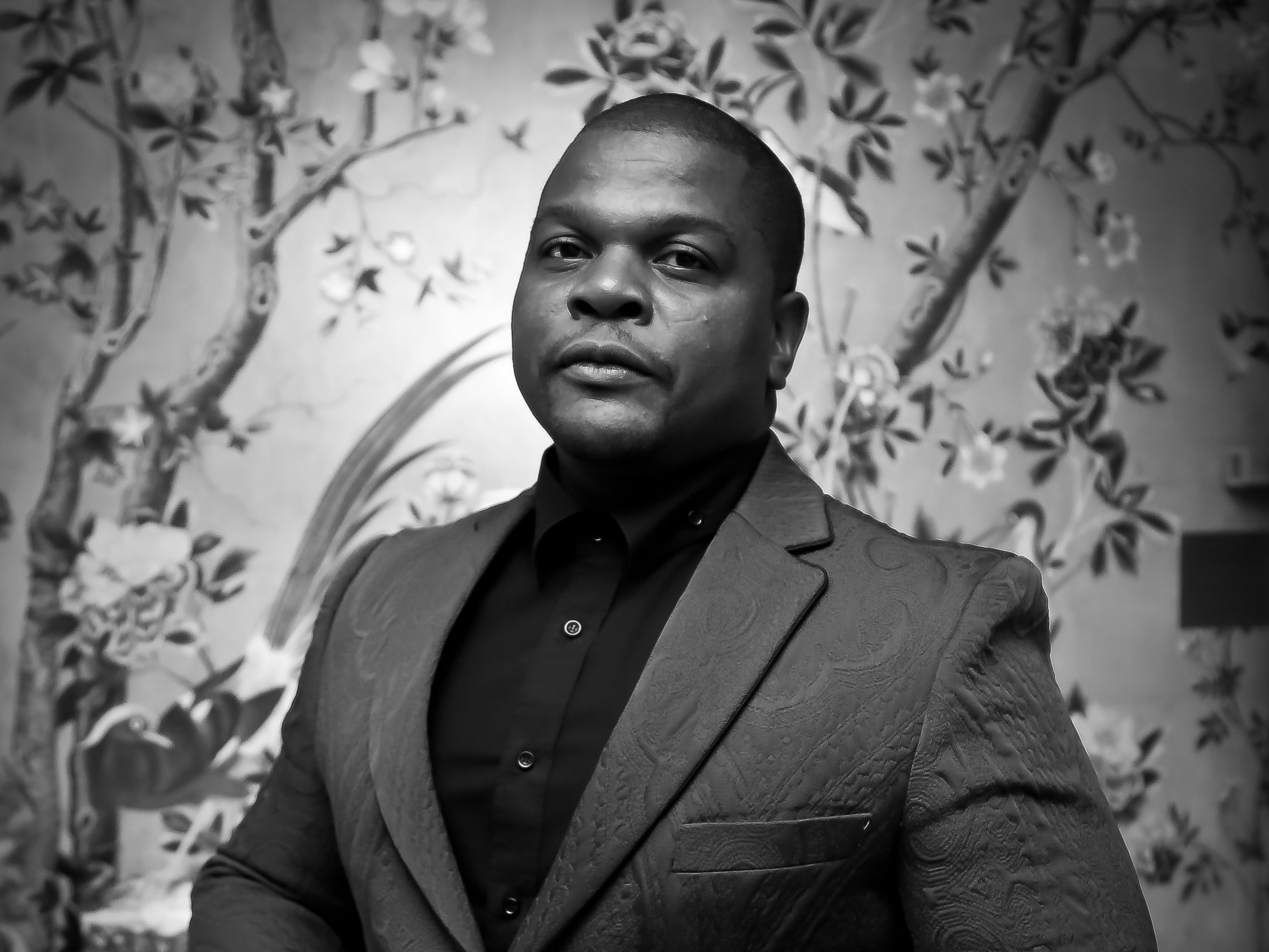
DAY 2 — Kehinde Wiley

Kehinde Wiley - Artist, painter, scupltor
Kehinde’s stained glass rendering of “Mary, Comforter of the Afflicted I” (2016).

Kehinde Wiley creates vibrant images of black & brown bodies in classical & religious scenes reminiscent of historical masterpieces. His work has been featured in exhibitions domestically and abroad, including his most recent at the Paris Museum of Fine Arts.

And in Lucious’ office in Fox’s Empire. 😂

“Bound” – 6 ft. bronze sculpture (2014)

He writes, “I loved when I walked into Los Angeles County Museum of Art as a kid and seeing Kerry James Marshall’s grand barbershop painting. But it was thrown into very sharp relief when thinking about the absence of other black images in that museum. There was something absolutely heroic and fascinating about being able to feel a certain relationship to the institution and the fact that these people happen to look like me on some level.”

He continues, “At its best, what art does is, it points to WHO we as human beings and WHAT we as human beings value. And if Black Lives Matter, they deserve to be in paintings.”

Kehinde’s “Princess Victoire of Saxe-Coburg-Gotha” (2012) vs. the painting of the same name by Edwin Landseer (1839)

KEEP GOING BLACK IN HISTORY:

Follow along with what’s keeping Kehinde busy these days on his Instagram.