Tag Archives: PRESENT

DAY 12 — Brandon P. Fleming

Brandon P. Fleming - Diversifying Harvard

Walking onto the campus of Harvard University, 26-year-old Brandon Fleming was overcome with the gravity of his past, present and future. After dropping out of high school due to a basketball injury, finally landing at one of the most prestigious universities in the world to coach their highly acclaimed debate program seemed surreal. He’d put in work to recover from the feeling of crippling failure and arrive at this proud moment. But being here, in such dramatic contrast from where he’d come, Brandon couldn’t help but remember so many just like him. And for that matter, a question began to form – one that surely he wasn’t the first to ask… where WERE all the black people?

And soon after came an answer: why wonder, when he could bring them along?

His experience tutoring students in Georgia had given him first-hand knowledge of just how much things could change for kids who were given the tools and opportunity to succeed. But without intervention, that was most unlikely in Atlanta, the Bloomberg-described “inequality capital of the United States.” So with his past and present circumstances well in mind, a little persuasion and lots of fundraising, the permission of his new employers at the Harvard Debate Council Summer Workshops, and the help of countless other professionals who’d been in his shoes elsewhere, Brandon created an intensive 10-month “diversity pipeline to recruit, train & feed students of color into the Harvard Debate Council’s Summer Institute” – a program he named the Harvard Debate Council Diversity Project.

Designed to help Atlanta’s best, brightest and most marginalized “gain a level playing field in society and leading academic, social, and political institutions” where black Americans are still struggling for representation, Brandon’s coaching has led 120 students in his Harvard Diversity Project to do much more than just level the playing field. In their inaugural 2018 summer cohort at Harvard, the Diversity Project WON, becoming the only all-black debate team in the program’s now 128-year history to do so.

Their success might have shocked the other 100 competing teams from 15 countries, and perhaps even the Atlanta kids themselves. The viral news on nearly every media outlet was proof that it shocked the country. But of course, the one person who wasn’t surprised at all was their coach, Brandon Fleming.

From day one, he knew that compared to the preparatory and internationally educated students they were competing against, his were “just as good, just as talented & it [was] up to us to create opportunities for them to show the world exactly that.”

But Brandon’s always been clear that when it comes to opportunity, there’s only so much that he or Harvard can do. “Be intrusive in places that are not inclusive,” he insists. “Trailblazers don’t wait for opportunities – they create them.”

And intrude they have. Not only did Brandon’s second year cohort at the Harvard Debate Council Summer Tournament win AGAIN in 2019, his championship team went undefeated, by all accounts dominating the competition.

In words shared by one of his scholars, Brandon identified that “academic debate is the single most powerful tool that equips students to increase standardized testing, gpa, and overall college readiness but most importantly, the intellectual and socioemotional skills needed to emerge as world leaders and changemakers.”

And when it comes to being a changemaker, the man who embodies his mantra “excellence is attainable” by inviting black students to claim their seat with him at one of the oldest and most exclusive debate circles in America couldn’t be a better example of how much can change for so many when just one makes himself heard.
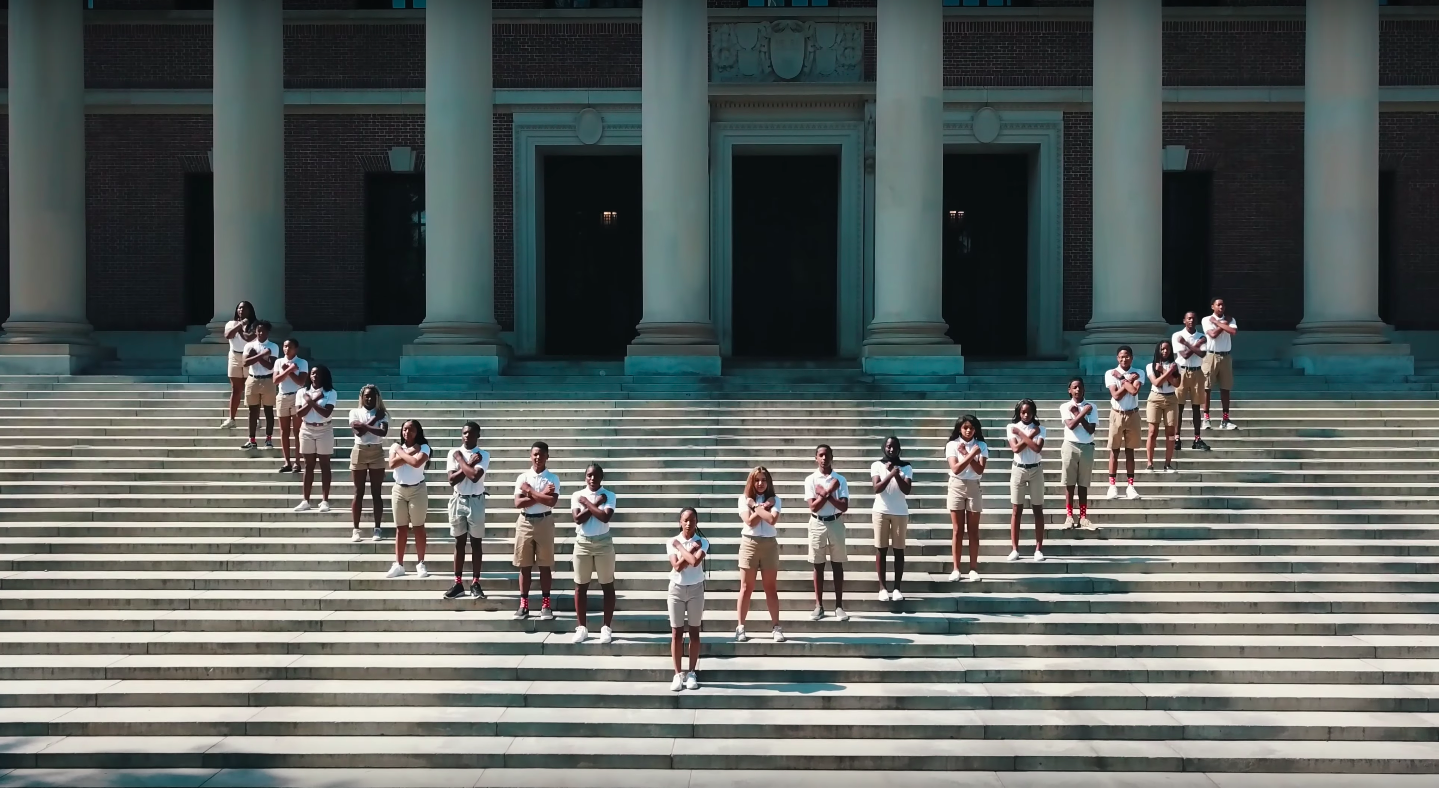
The Harvard Debate Council Diversity Project students are changing the narrative about black Americans by combining scholarship and culture.

KEEP GOING BLACK IN HISTORY:

Learn more about the Harvard Diversity Project and donate to their efforts here.

Watch the students of the Harvard Debate Council Diversity Project shine while sharing their experience themselves.
Listen to founder Brandon Fleming share how coming so far has prepared him for helping others.

DAY 9 — Hair Love

“Hair Love” - A Crowning Achievement in Film

“It’s just hair, it’ll grow back,” or so the saying goes.

But millions of little black girls’ and womens’ earliest memories are of their daily hair ritual beginning and ending at their parents’ feet.

And black boys, well-groomed by cultural standards, regularly submit to biased dress codes that force a choice between their educational and extracurricular activities or their hair.

Between daddy-daughter videos and the national news, Matthew Cherry saw commenters and media outlets sharing raw reactions to hallmarks of black hair as though they were novel occurrences. But in black communities, “hair is such an intimate thing,” he told Good Morning America. Where the world saw viral moments and dress code violations, Matthew saw centuries of culture, tradition, and most of all, love.

It inspired him to capture all of that emotion in a creative suite he ultimately titled “Hair Love.”

“Hair Love is more than a film. It is more than a book. It is the buoyed confidence of a little black kid. It is the flickering screen commanding the rapt attention of a little black girl who sees herself. It is the collective embrace of a young loc’d black boy discriminated against at his school. It is the ally of a progressive law,” he explains.

The CROWN Act currently being legislated in California “recognizes that continuing to enforce a Eurocentric image of professionalism through purportedly race-neutral grooming policies that disparately impact Black individuals and exclude them from some workplaces is in direct opposition to equity and opportunity for all.” Its language is intended to extend to housing and school codes for full protections against the policing of black hair in any government-regulated setting.

The irony of that legislation isn’t lost on black Americans familiar with 18th-century “Tignon Laws” that attempted to dehumanize black women by forcing them to cover their hair under penalty of arrest, but ultimately backfired when their extravagant hair wraps became fashionable and coveted by everyone. Past and present, hair that’s regulated, exoticized, appropriated and misunderstood also runs deep throughout the history of black American culture.

So it’s no wonder that when Matthew pitched it to her, Sony Pictures Animation’s Executive Vice President of Creative (and black woman) Karen Rupert Toliver saw something truly special in “Hair Love” and the universal black experiences it communicated – something she knew had to be shared. “I think images are so important to changing people’s perceptions [of others] and changing their own perceptions of themselves,” she says. And Matthew agreed that “if you focus on how you’re affecting the culture and you’re affecting change… even if [awards] don’t come, you’re still doing great work.”

But tonight, at a ceremony with fewer black nominees than it’s seen in the last 3 years, The Academy Award for 2020’s Best Animated Short DID come.

For a not-quite-7-minute short that Matthew created for the purpose of “see[ing] more representation in animation, but also wanting to normalize black hair,” this evening’s win was monumental in the hearts of black people, in the extremely white landscape of the Oscars, and surely in the future history books of a country still learning through the centuries that “just hair” can mean so much more.


KEEP GOING BLACK IN HISTORY:

Grab tissues before you press play. You’ve been warned.

DAY 6 — Christopher John Rogers

Christopher John Rogers - The Black Fashionista with Southern Flair

Emblazoned across the back of a sheer fuchsia Christopher John Rogers ensemble, in vintage script lettering and thousands of painstakingly placed blue & purple Swarovski crystals is a single word:

“DRAMA!”

That extravagant expression reveals not only his approach to fashion with his voluminous and kaleidoscopic designs, but also a few simple truths about his eccentric perspective.

“I grew up gay, black, Southern Baptist and my grandmother was the head of our church,” the 25-year-old explains. “For me, there’s nothing wrong with effortful dressing.”

It seems that some of fashion’s most esteemed names agreed when they awarded him the prestigious 2019 Council of Fashion Designers of America (CFDA) / Vogue Fashion Fund, a prize designed “to help emerging American design talent find continued success in the business of fashion” with an intensive design mentorship and $400,000 pocket change, too.

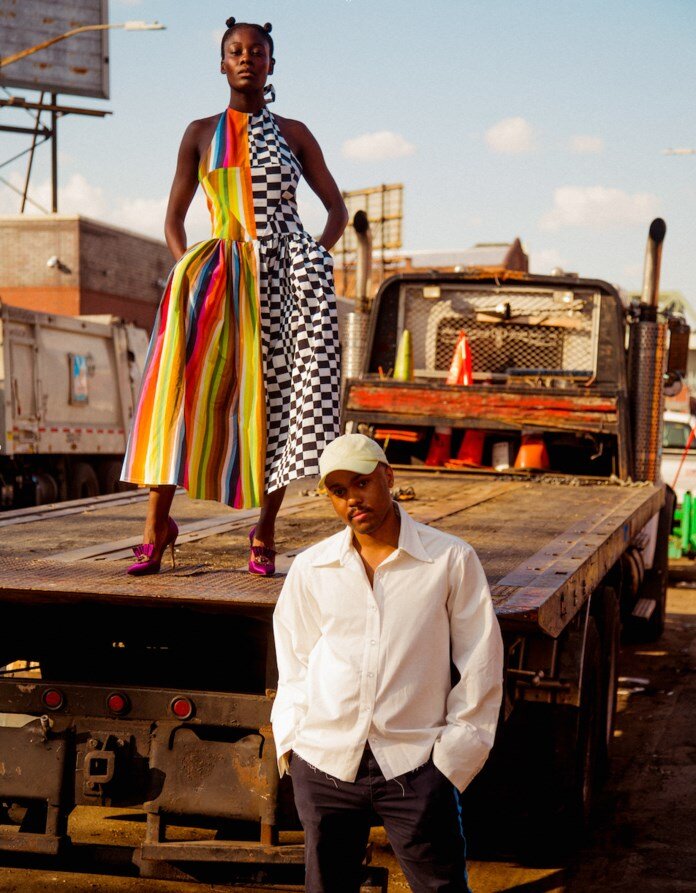
It’s a monumental accomplishment for the Baton Rouge, Louisiana designer who only just debuted at 2018’s New York Fashion Week with a collection that he delightfully characterized as “a debutante ball thrown at Stonehenge and illustrated by Dr. Seuss,” and sewed from his Brooklyn living room while working full-time at Diane von Furstenberg. His win goes deeper than what’s on the surface, though. On Christopher John’s runways, the models themselves complete his vivid vision, running the gamut of race, gender and age. Recognizing his work so prominently is in turn a recognition of the diversity he brings to a woefully misrepresentative industry.

“I’ve always known variety to be standard,” he recalls, and it shows in every detail of his presentation. “’Inclusion’ and ‘diversity’ are trending right now, but I feel like there’s also a real opportunity to encourage permanence on that front by celebrating the excellence and hard work of those people. The more colorful the room is, the better everything is for everyone.”

And so far, his brand of color and variety have kept Christopher John Rogers in high demand. Since his NYFW debut, he’s dressed some of the most famous and fashionable black women in the world – Tracee Ellis Ross, SZA, Regina King, Lizzo and former First Lady Michelle Obama (after whose message he says, “I immediately threw my phone across the room”) among them. True to his desire to better things for everyone, this year, Christopher John’s ready-to-wear designs will be sold in stores nationwide and online, and almost certainly inspired by one of the many key messages in his collections: “It’s not about a girl wearing a suit or a guy wearing a heel, it’s about fully embodying the nuances of yourself when dressing up. It’s about you feeling yourself.”


KEEP GOING BLACK IN HISTORY:

Follow Christopher John on Instagram.

Browse Christopher John Rogers’ bold collections at his website here.

DAY 4 — Liz Montague

Liz Montague - Drawing on Her Experience

Liz Montague doesn’t eat her feelings. She’s proud to say that she draws them instead.

But after a few years in the design industry, the young cartoonist who centers black characters in her art found herself with one particular feeling that most marginalized creatives can’t escape: “the white male perspective is the universal perspective, and everyone else is niche.”

So as a black woman with something to say, she did just that – with a strongly worded letter to the editorial desk of The New Yorker, famously known for its excellence – and limited creative viewpoints – in cartooning.

Liz brings a fresh, black perspective to current events and news satire.

Little did she know that letter would land in the inbox of the New Yorker’s brand new and first ever female cartoon editor, Emma Allen, who couldn’t have agreed with Liz more. When Emma took the refreshing step of asking for suggestions on diverse up-and-coming cartoonists for possible inclusion, Liz took a deep breath, a leap of faith, and responded boldly:

“Me.”

And that’s the story of how in 2019, 23-year-old Liz Montague became the first ever black female cartoonist published in the New Yorker.

But Liz’s hand up was far from a hand out. As a weekly magazine, the New Yorker receives thousands of cartoon submissions per issue, and only selects 10 to 20 for publication. Last year, an impressive 4 of those belonged to first-timer Liz, but she’s transparent about the fact that in such a competitive pool, the publication of those 4 was only after submitting over 150 cartoons and drawing countless more. Perhaps she’s TOO humble though. One of those 4 cartoons made the New Yorker’s Top 25 Cartoons of 2019 as voted by its 2.4 million Instagram followers.

Liz’s top 25 cartoon of 2019 according to The New Yorker’s Instagram followers. Read more about it here.

“It’s a dream come true,” she marvels, but the gravity of her accomplishments isn’t lost on her either. “Unfortunately, the standard for people of color is that we don’t get to tell our own stories,” and having the rare privilege to be a black woman in creative control of her storytelling is something she says “I don’t take for granted. I don’t take that lightly.”

And she’s got a vast portfolio to prove it. When she’s not putting in work to make the New Yorker’s pages more inclusive, she’s drawing for her weekly comic in the Washington City Paper, “Liz at Large.” There and on her Instagram, she’s practicing self-care through illustration – sketching out her inner anxieties, personal victories, shower thoughts, and encouraging herself too. It’s also where she doubles down on her commitment to diversity, using bright colors and simple text blocks in nearly all of her panels to make her comics as accessible to all readers as possible.

It’s a labor of love that means more to Liz than just likes, laughs or critical acclaim. It’s how she’s dedicated her gift to a world where it’s perhaps more important than ever that “stories lead to understanding, understanding leads to empathy, and empathy leads to equality.”


KEEP GOING BLACK IN HISTORY:

Follow the hilarious adventures of “Liz at Large” on Instagram!

Explore Liz’s published and unpublished cartoons (and her award-winning digital senior thesis, “Cyber Black Girl”) on her site here!

DAY 3 — Amoy Antunet Shepherd

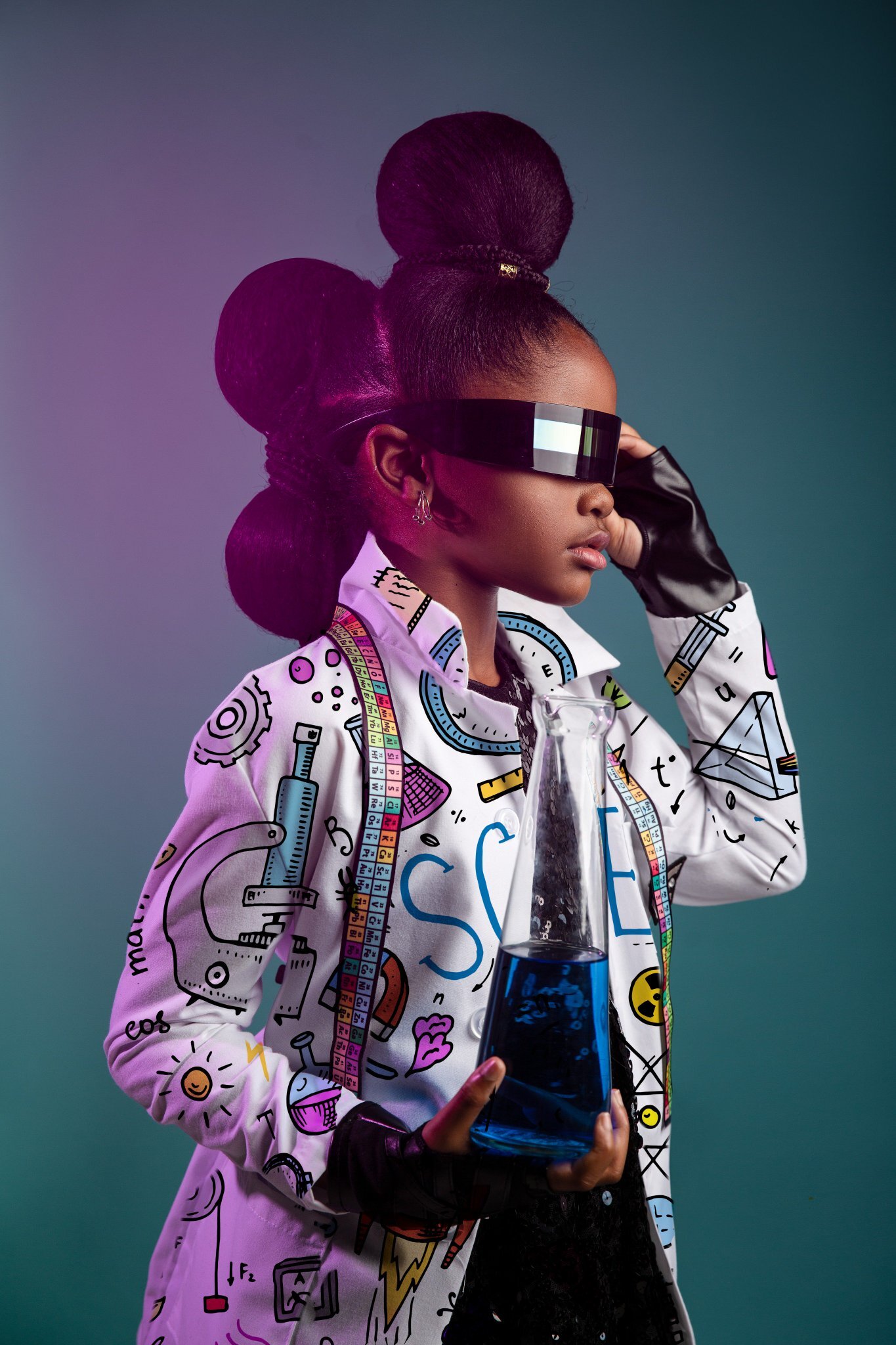
Amoy Antunet - Black Girl Science

Metabotropic. Transient Receptor Potential Cation Channel Subfamily M Member 8. Gamma aminobutyric acid.

Most people would be hard-pressed to pronounce those terms, let alone define them, but Amoy AntuNet Shepherd rattles them off with ease.

That she knows them at all makes her rather impressive.

That she’s only 9 years old and teaching them to millions worldwide makes her extraordinary.

“If you scratch out the science stuff, I’m actually pretty normal,” she quips.

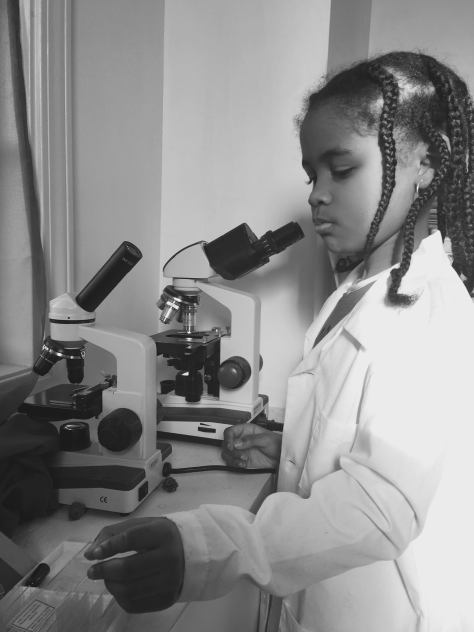
It’s hard to scratch out the science stuff when it comes to little Amoy though, because between games of Minecraft, she’s dissecting sheep brains, experimenting with pH balances, and even has a neuroscience mentor in Dr. Farah Lubin at UAB – The University of Alabama at Birmingham.

But there’s someone else that she turns to when she wants to get hands-on:

“My daddy will teach me.”

That’s because when Amoy was only 3 years old, her dad realized that her fascination with his college biology studies was more than just childlike curiosity; it was a gift. And one that he gleefully encouraged, teaching her the parts of his microscope, how to handle it safely, and eventually, how to collect, examine and identify samples. All on her own.

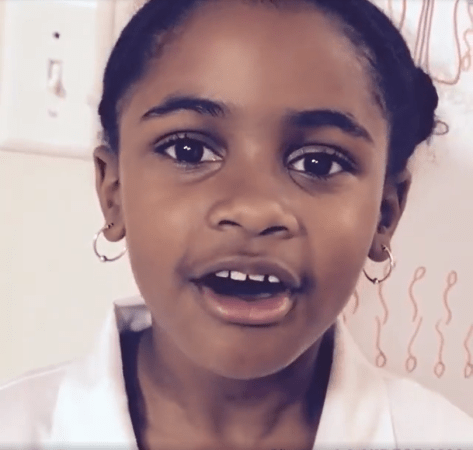
But she didn’t stop there. Those adventures with her microscope opened a whole new world of questions that needed answers. Before her dad knew it, Amoy wanted her own equipment and his guidance in conducting experiments, too. It was when she started narrating those experiments like a teacher presenting to her class that his spur-of-the-moment decision to record her little lessons led to her own Facebook channel, Science for children with Amoy AntuNet. With her natural charm, enthusiasm for science, and absolutely infectious smile, that either of them was surprised when Amoy’s videos started racking up thousands, and then millions of views is hard to believe.

Amoy is a tiny force presenting at an Alzheimer’s conference.

Today, having grown her scientific knowledge, her lab and her social media following, she’s advanced to teaching adults, too. As the keynote speaker at last year’s Triangle Uplift Foundation Youth Innovation Summit, opener at the 2018 UAB Neuroscience Roadmap Scholars Program, and TV personality appearing on The Kelly Clarkson Show, The View, CNN, BBC News and many more outlets, Amoy’s shared the wonder of science with people many years her elder.

But despite her media success, Amoy’s sticking to science, not celebrity. She hopes to keep teaching other kids while she lays the groundwork for a career in neuroscience “to learn about Multiple Sclerosis so I can help sick people like my aunt,” and that her headstart helps her to become the hands behind the world’s first brain transplant.

They’re lofty aspirations for such a tiny girl, but what she’s accomplished in her few short years only reinforces her resolve that anything is possible when you “act on your potential.”


KEEP GOING BLACK IN HISTORY:

Follow Amoy on Facebook and Instagram!

Watch her dazzle the world in her BBC appearance here!
Let Amoy teach you why York Peppermint Patties give you the sensation!

Get a lesson from Amoy about the neurotransmitter GABA on her Facebook video here!

DAY 28 — Vilissa Thompson

Vilissa Thompson - Bringing Black Disability Awareness

“Children like you didn’t go to school when I was your age—you stayed at home.”

Vilissa Thompson’s grandmother Viola constantly reminded her that every day with her disability was an opportunity.

Back in her day well before Vilissa was born, Viola had seen black children with disabilities become disposable to others – left out of school, left out of activities, and resigned to watching life pass them by.

Viola refused to let that be Vilissa’s story too. Her granddaughter had been born with a genetic disorder called Osteogenesis Imperfecta (OI), better known as Brittle Bone Disease, and was only expected to live a few years at best. Overwhelmed with the prospects of being a single parent with a terminally ill child, Vilissa’s mother placed her in a children’s home where they’d have the support to care for her. But Viola refused. Rather than leave Vilissa to strangers, she’d love her, teach her and encourage her to lead a full and happy life, no matter how long it might be.

“My Grandmother ensured that I received a quality education and healthcare during a time when such rights were in their infancy. She knew that I deserved the same opportunities as everyone else, and her determination, unconditional love, and support were instrumental to my growth as a disabled young girl.”

They were also instrumental to Vilissa’s future calling.

Whether it was Viola’s nurturing or just Vilissa overcoming the odds, turns out, Vilissa had many more years to live and turn her story into one that made a difference for disabled people.

In 2012, she graduated with a Master’s degree in social work and founded her own organization the next year. Vilissa’s Ramp Your Voice “spotlight[s] the issues and barriers of disabled people, as well as create[s] effective social and political changes to ensure that all people have the ability to succeed and prosper, regardless of their ability, ethnicity, religion, educational level, or place of origin.”

Just as she’d had an advocate in her life, Ramp Your Voice helped Vilissa empower other disabled women of color, especially black women, to live their lives out loud instead of locked away – physically or mentally – and ashamed.

But one fateful day on Twitter, the community that Vilissa’d created in her little corner of the internet went global.

She, like so many other disabled women, were thrilled to see an article on xoJane about how disability and beauty were not mutually exclusive, but as they scrolled through, the story was that of three traditionally beautiful white women’s experiences in the world with their disabilities. It even included the line “If we don’t truly see the diversity, we don’t see the injustice. In race or gender this translates to things like discrimination and income inequality. In disability this can mean lack of accessibility, or issues of employability.”

It was an interesting take for an article that didn’t include a single person at the intersection of all of those issues, like a disabled black woman. So in one quick tweet, Vilissa called it out:

Unsurprisingly, Vilissa’s hashtag went viral, with over 13,000 tweets in 24 hours as more disabled voices joined the chorus:

#DisabilityTooWhite when you have to wait twice as long for a medical diagnosis or to receive adequate medical care b/c of medical racism.”

#DisabilityTooWhite when people still think ‘#autism is a white people thing’ and black children go undiagnosed”

#DisabilityTooWhite when so many disabled PoC, especially black folks, end up in jail because they’re being ‘odd in public’. Ex: Neli Latson”

Vilissa was stunned and spurred by the firestorm one little tweet had set off. “I don’t think I’ve seen so many disabled POC speak so freely about themselves in my life,” she recalled.

That tweet, backed by Vilissa’s strong academic pedigree and the bold spirit instilled in her by her grandmother, helped boost her visibility beyond a niche community and out into the world. Today, at 31, Vilissa’s a public disability rights expert, featured in media outlets worldwide speaking to the black disabled experience and how easily it’s excluded from both mainstream representation AND black social movements. And as if that’s not enough, she’s still hard at work as a social worker and now a disability rights consultant, challenging ableism at national, global and cultural levels to ensure that there’s an equal playing field for everyone, no matter what body they’re born in.


KEEP GOING BLACK IN HISTORY:

Find empowerment, education, inclusion, and self-advocacy for disabled people and their allies at Ramp Your Voice!

Vilissa’s Tools You Can Use section is filled with free or low-cost resources to help disabled individuals improve their quality of life.

DAY 25 — Edouardo Jordan

Edouardo Jordan - Five-Star Soul Food

When Edouardo Jordan won the James Beard Foundation’s 2018 Best Chef: Northwest Award, it celebrated the eccentric story of a black chef innovating Italian and French food in Seattle.

When he won a second James Beard award recognizing his second establishment as 2018’s Best New Restaurant, he became a trailblazer as the first black chef to receive one of cooking’s top honors.

That this second and now Best New Restaurant serves a cuisine most easily described as “black southern soul food” could not have been a sweeter cherry on top.

Visit the website of any given national award-winning chef, and you might find technical definitions for cuts of meat, the terminology of a cocktail, or the difference between poaching and sous-vide.

But at Edouardo Jordan’s JuneBaby, food isn’t just defined, it’s given a place in history.

There, you’ll learn the branches of the African Diaspora; find cool cups, yams and chitlins on the menu; discover why Aunt Jemima has racist roots; and of course, leave with a deeper appreciation of why black food is American food and has been since our ancestors arrived here.

So when JuneBaby’s unapologetically black cuisine won it the equivalent of the “Best Picture of the Food World,” yeah, it was a really big deal.

And yet, Edouardo wasn’t always so bold.

His first establishment Salare Restaurant (the one for which he won Best Chef: Northwest) was born from his journey to master and then personalize the classic arts of Italian and French cuisines. But Eduardo readily admits it was also where he started to avoid being known as “THAT chef.”

“I didn’t want to become ‘the chef that opened a black restaurant because he’s a black chef and that’s what he’s supposed to do.’ I wanted to bring another aspect to who I am and showcase myself as a chef. I trained to become a great chef. That’s what I want to be recognized as: a great chef — not a great Southern chef, not a great black chef, but a great chef.”

But as the reservation list at Salare grew and his name gained status in culinary circles, Edouardo realized that rather than becoming cliche and niche, he had an opportunity to cast a new light on the black Southern food he grew up with in the Deep South and bring it the reverence it deserved.

He had a new ambition to break “the stereotypes of like, ‘Oh, that’s black-people food.’ No, actually, it’s the food that fed America. That’s the reality. There were many hundreds and thousands of people that were not slaves that ate that food and really enjoyed that food and took something away from that food. We’re talking about what’s American cuisine.”

The fact that soul food itself wasn’t exactly new to the modern culinary world actually gave him even more motivation to push ahead in getting back to his roots.

“There’s some great chefs of non-color telling beautiful stories about Southern food, and that’s appreciated and needed. That helped put Southern food back on the map, but my issue was, well, what happened to all the African-American chefs that been grinding it all this time and may have had a small shop and never got recognized? Because I’m like, wow, this is not the Southern food that I know of. There was no one of color truly talking about the food from their perspective, in their eyes,” he observed.

It feels like such a poetic storybook ending that the food Edouardo once shied away from cooking for an elite audience is that one that earned him the most acclaim, but he wouldn’t have done it any other way, explaining that “the path I was on helped me to express myself as a culinarian first.”

Anyone who’d doubt his dedication to his second and Best New Restaurant need only read how he describes his menu to understand that he’s in it for the long haul: “Southern food reflects hard times and resourcefulness and is nothing short of beautiful. It is a cuisine to be respected and celebrated.”

And with that outlook, it’s not hard to imagine that Edouardo Jordan’s got many more successes and culinary delights to share with the world – his award-winning reputation and personal investments notwithstanding, he’s literally got generations of skin in the game.


KEEP GOING BLACK IN HISTORY:

Visit JuneBaby’s website (especially their extensive and informative encyclopedia)!

Chef Edouardo Jordan discusses the global diaspora and complicated history of fried chicken in Season 1, Episode 6 of Netflix’s “Ugly Delicious.”

Don’t miss Junebaby’s Instagram for the perfect (mouthwatering) representation of how the restaurant blends black food & history.

Chef Edouardo was even listed among People’s 10 Sexiest Chefs of 2018 too. He’s truly highly acclaimed.

DAY 24 — Aesha Ash

Aesha Ash - Real Life Black Swan

Aesha Ash was living the dream.

Sort of.

She’d attended the prestigious School of American Ballet by 13, and joined the New York City Ballet by 18. Both achievements no one could ever have imagined for the black girl from Rochester, a city whose claim to fame was an astronomical crime rate.

But this talented dancer would cry herself to sleep at night because despite performing on some of the world’s biggest stages and among some of its brightest talents, every day was a reminder that she couldn’t be more alone.

Being a ballerina at such an elite level was a challenge for anyone. But being a black ballerina at this level came with its own unique set of difficulties to overcome. Other girls teasing her about hair that didn’t gracefully tumble from its bun so much as it slowly fluffed, being turned away from the backstage makeup chair because there was nothing in her shade, and feeling every eye in the room burn into her when a tactless director scolded dancers who were spending too much time in the sun saying, “I don’t want to see any dark skin on that stage” were just a few of the thousand tiny cuts Aesha endured daily.

It reminded her of growing up in Rochester, where she & other inner-city students were bussed to suburban schools and the local kids couldn’t wait to remind her where she came from, constantly asking about drug dealers and shootings instead of accepting her as a regular kid not all that different from them. It seemed that no matter where you go, some things never change.

But there were also the handful of other times when a lone black woman would approach her after a show or recognize her on the street to thank her for just being present as an inspiration. It was those moments that revitalized and reassured her that she wasn’t as alone as she thought.

She spent 8 years with the New York City Ballet before dancing as a soloist in Switzerland, and finally moving back to dance in San Francisco, all along noting that no matter what stage she found herself on anywhere in the world, she was almost always the only person who looked like her. She retired in 2008, but not without realizing that she had a special insight and a special story that could change the whole landscape of ballet and black representation.

Her task was a tricky one though. The problems she identified were intersectional and that made them hard to attack from just one angle. Ballet is an art form with a constant financial commitment that she knew firsthand by how hard her parents had worked and how much they’d sacrificed to fund her continuing training. A lot of families couldn’t afford it, but inner-city black families disproportionately affected by poverty, single households and lack of transportation especially struggled to participate. Just coming from where they did made it hard for city dancers to break the class ceiling on a high art like ballet. And of course, like Aesha had, black ballerinas also find themselves fighting racism within the craft because no one checks their biases at the door, and since black women are constantly represented as angry, overly built, vulgar, loud and hypersexual, that’s how ballet’s elite who were so rarely exposed to real black women saw her too. In short, everything a stereotypical ballerina is not.

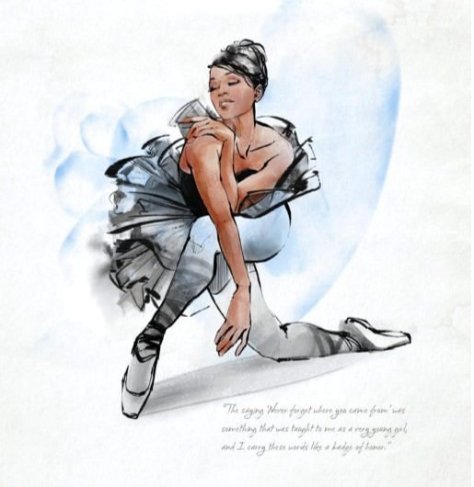
“That always frustrated me,” she recalls. “We’re human beings. We also have moments of weakness, of softness and sweetness and gentleness. Ballet embraces the soft, ethereal and majestic side to women, and yet we often don’t see the media portray black women in this light. I wanted to help change the demoralized, objectified and caricatured images of African-American women by showing the world that beauty is not reserved for any particular race or socio-economic background.”

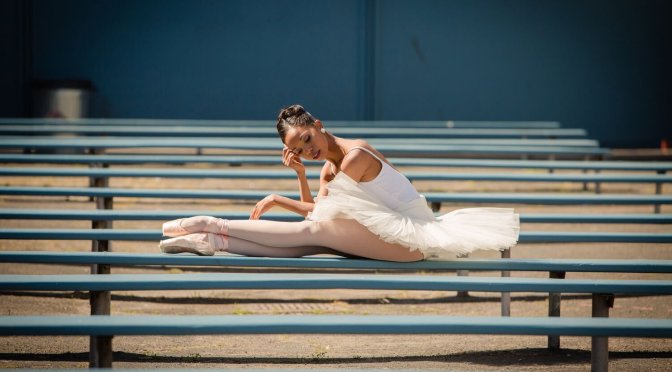
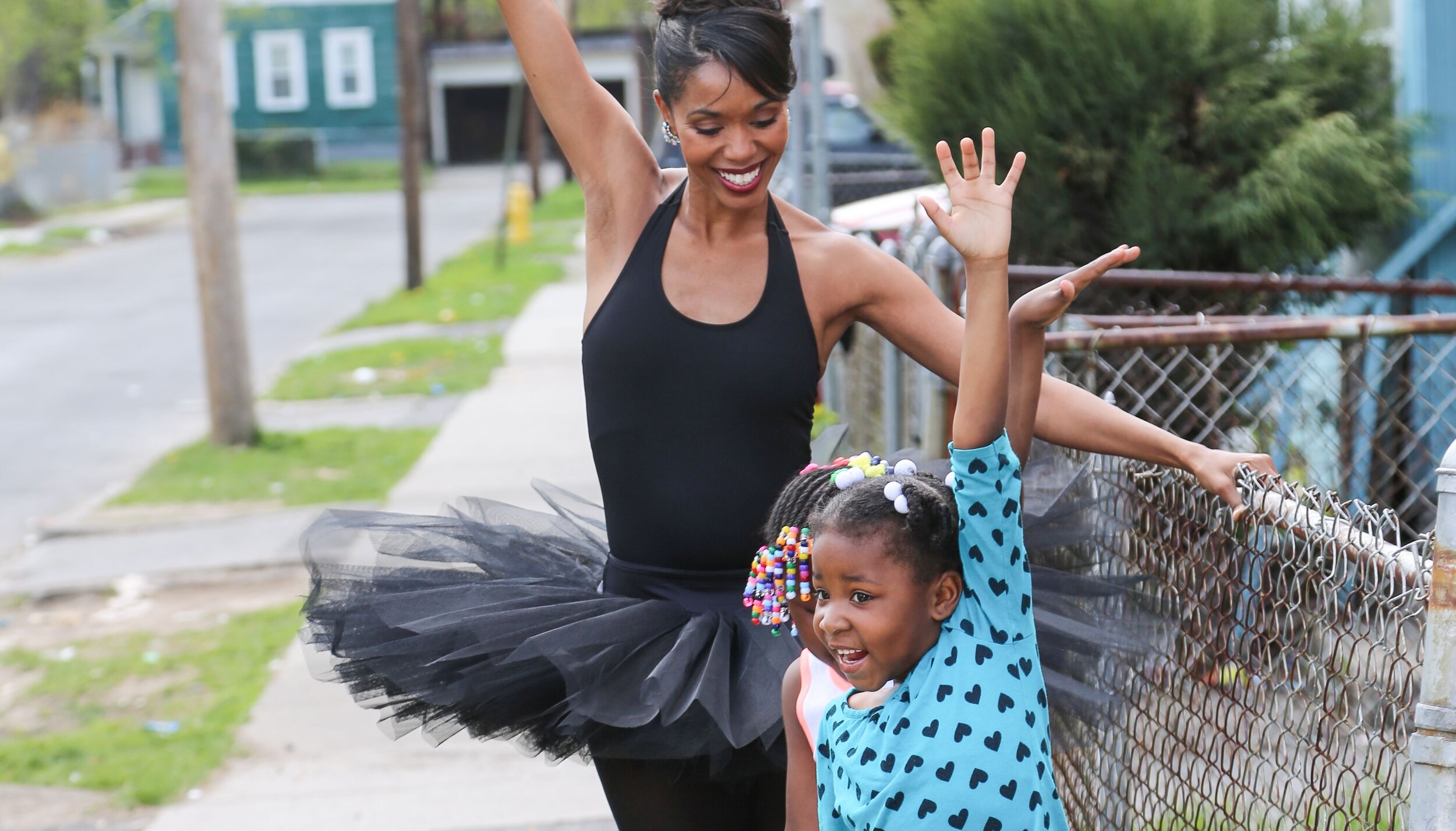
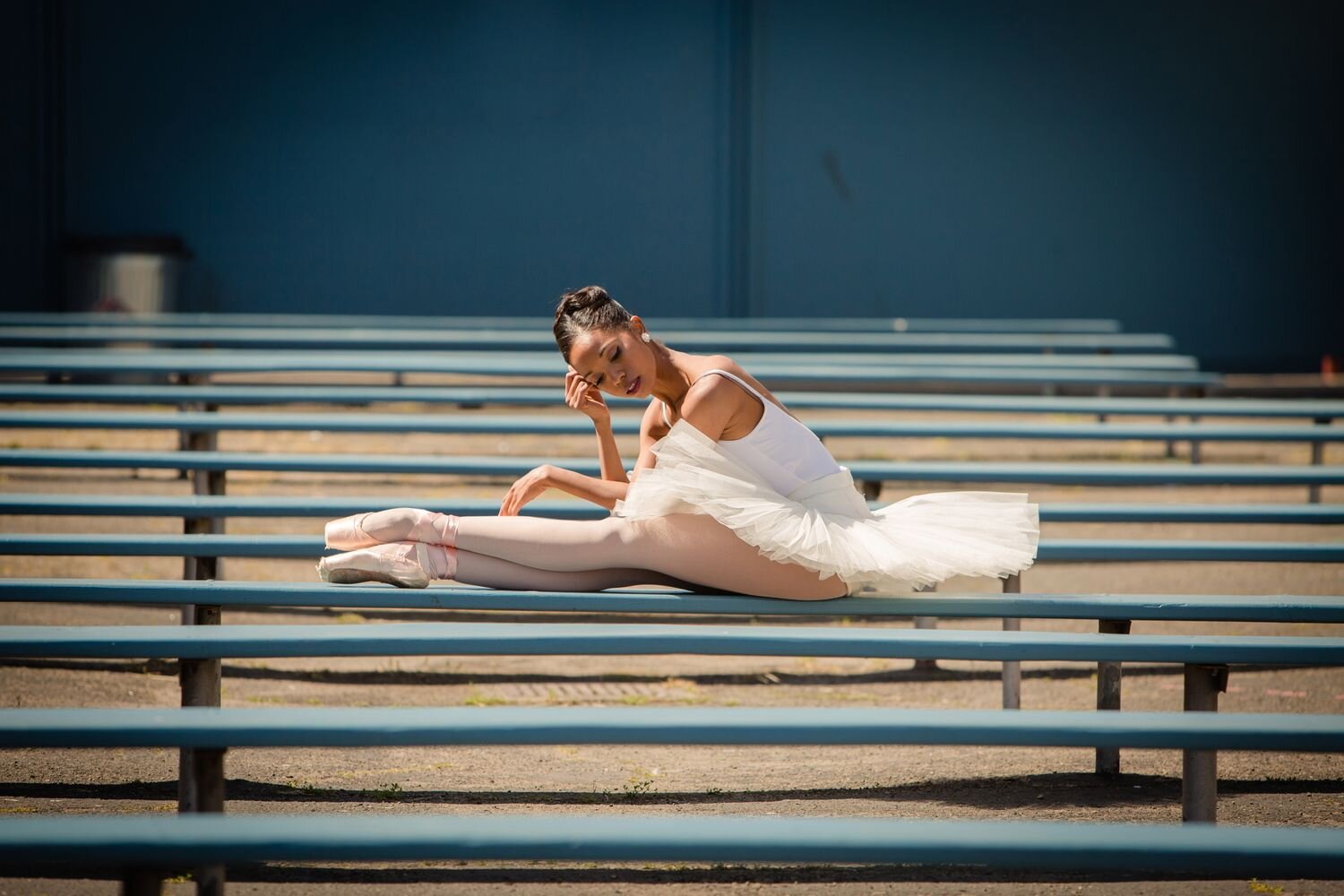
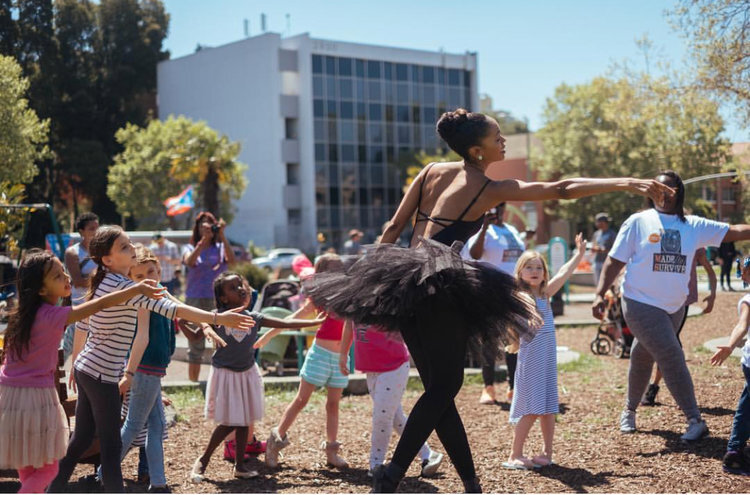
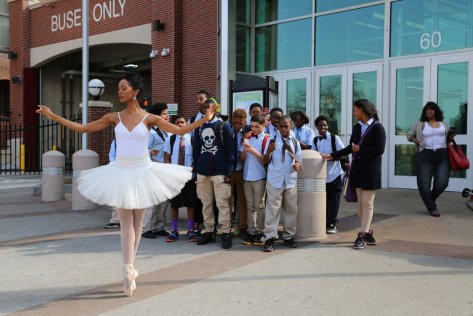
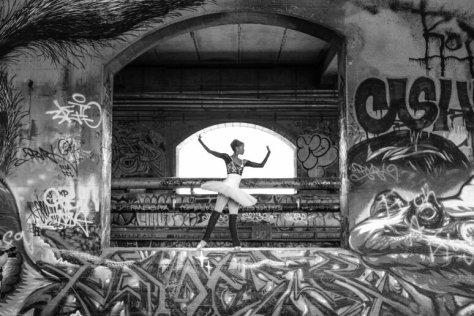
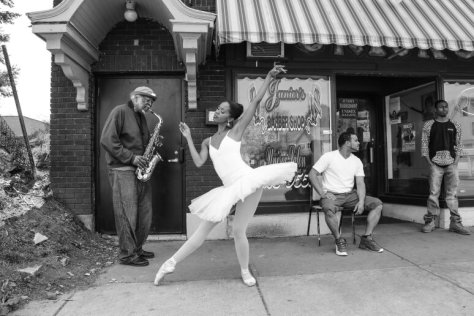
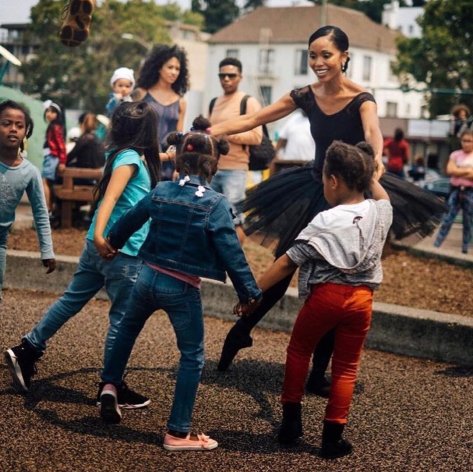
Aesha decided that despite being retired, she could start by being an image of what was possible for little girls in her own community. So she began dancing right there in it, on the streets, sidewalks, anywhere. And then she photographed and shared those moments on social media. What she initially created to uplift girls in her own community soon became a global phenomenon, and The Swan Dreams Project was born.

“I was expecting young girls to like the images or say they were powerful for them,” she recalls. “But it was adult women [emailing me], saying the image brought them to tears, wishing they would never have given up their dreams. What not having representation meant to them. I found it very powerful.”

Swan Dreams isn’t just an inspirational and aesthetic project though, it’s functional too. Through it, Aesha’s raised money to create pointe shoe funds for students at the City Ballet of Los Angeles school to help relieve the equipment burden that forces many of them out of ballet. She’s remodeled run down ballet schools with new barres and floors so that students could receive proper training. She’s even teaching a free after-school program herself so that those who might go without the joy of ballet altogether have the opportunity to be a part of it. And when she was honored in 2016 by the National Women’s History Museum for her contribution to diversifying the arts, it was just one more step to making a difference beyond her little corner of the world.

After 13 years dancing professionally, Aesha’s pirouetted right back to where she began, carving out space for little girls to reach beyond their limitations to bring diversity to ballet and claim a new image for themselves where their dreams don’t take second stage to the color of their skin.


KEEP GOING BLACK IN HISTORY:

Learn more about The Swan Dreams Project, make an immediate donation, or purchase prints and other merch featuring gorgeous photos of Aesha dancing in the inner-city with the proceeds benefiting her organization.

DAY 21 — Maurice Ashley

Maurice Ashley - Chess’s Dark Knight

“Survive. Just survive.”

Maurice Ashley couldn’t stress that enough to the defeated young man in front of him.

He’d carried that advice with him from his early childhood in Jamaica, to skirmishes in Brooklyn’s Prospect Park, and on through college. It had been just as true in each of those places as it was in this moment right now, consoling a child whom he had just squarely beat the pants off in chess.

It was lesson he didn’t mind teaching: he’d been that kid once.

After being defeated within a few minutes by one of the old masters in Prospect Park, well known for its revolving chess games, Maurice went to a local library, buried his head in chess books, and learned the game forwards and especially backwards.

“There are consequences to every single move you make in life,” he said.

And growing up in a rough part of Brooklyn, he knew it firsthand. Chess had kept him at home on Friday nights, learning strategies, building character and practicing with his friends instead of selling drugs or running with gangs like a lot of the other kids in his neighborhood did.

It certainly didn’t make him very popular, but it did put him on the path to the success that brought him full-circle.

After nearly 20 years of dedication to the craft, in 1999 Maurice Ashley became Grandmaster Maurice Ashley, the world’s very first black man to hold the chess title.

And then, he immediately went back to work in the community where it all started, founding the Harlem Chess Center just 6 months later to bring chess out of academic settings and into communities, bridging the gap between formal competition and street matches.

“People who think the game is slow and boring should come in here,” he said. ”Kids eat it. It takes nothing to get kids excited about chess. I put the pieces down, and the kids want to touch them — they’re alluring, tactile. The game is magic for kids.”

Since then, he’s channeled his competitive nature into sharing a love of chess with as many people as possible, starting with those with the least access.

In 2005, he wrote “Chess for Success” to share chess with beginners in a context that he’s always espoused: when you learn about chess, you learn about life. It’s full of lessons that “build determination, focus concentration, and teach you about yourself” but it also teaches players how to approach the world around them too.

In fact, being a chessmaster has already taken him places in the world no one would have anticipated a kid like him could go. In 2016, he was inducted into the Chess Hall of Fame for his combined professional success and efforts to bring more diverse groups of people everywhere into the game. In addition to his local grassroots work, he’s traveled the Caribbean teaching children how to play, built a critically acclaimed chess app, and he’s currently working with MIT Media Lab to integrate games like chess and their foundations into school curriculums to improve learning comprehension and application for all students.

In particular, Maurice wants to share a strategy that he uses to play, learn and live called “retrograde analysis.” Rather than teaching players to anticipate things out of their control, it teaches them to focus on the patterns, read their opponents’ previous moves, and force simple outcomes from complex, chaotic scenarios.

It’s a strategy that hasn’t just paid off for Maurice personally, or the people who are fortunate enough to learn from him, but motivates every move he makes today to benefit the kids who’ll lead our world tomorrow.

“When the kids see me walk in, they say, ‘Here’s a brother who looks like me and who is at the pinnacle of his field. I can do that, too.’ And when I see chess captivates their eyes as they’re trying to solve these complicated problems, that’s the most beautiful picture for our people to see.”


KEEP GOING BLACK IN HISTORY:

In 6 minutes, Maurice can teach you the quick steps to “retrograde analysis” so you can learn to look at things differently, even if chess isn’t for you.
Mashable produced a great 5-minute short on Maurice & it’s a fun little watch!

DAY 20 — Jessamyn Stanley

Jessamyn Stanley - Fat Girl Yogi

In a sea of thin, blonde, yoga moms, to say that Jessamyn Stanley is the odd woman out would be an understatement.

As a fat, black, queer woman, she is the polar opposite of not only the yoga stereotype, but also the media representation of a “fit woman.” And yet, in a radical move, the 30-year-old yoga instructor, author and social media maven loves herself anyway.

“The idea that you would be showing this body that society has deemed unacceptable in a way that’s actually glorious, people were thrown [by it],” Jessamyn said.

But she also had the savvy to realize that it wasn’t just A “body that society has deemed unacceptable,” it was that everything that made HER body what it was – skin color, size, and sexual orientation – was all outside the boundaries of what our society calls normal, let alone celebrates.

She’d become a regular yoga practitioner back in 2011, and when she started taking pictures of her poses to check her form, she figured she’d post them to her Instagram for a little social accountability. She wasn’t prepared for the huge response those pictures would get. She’s now just over 400,000 followers, many of whom identify with less visible communities – from plus-sized women, to the elderly and those with disabilities as well.

Jessamyn’s yoga resonates with so many because she practices what she calls “body liberation,” a theory that goes beyond body positivity to recognize that the body each of us has – whatever the race, size, gender, ability, or age – brings us joy, takes us through a lifetime of experiences and is capable of being used in whatever way we channel its energy.

“The point of wellness is that you take care of yourself so that you can be of service to others and be of service to the universe. We can’t even have that conversation because everyone is so obsessed with the way that we look for each other,” she muses.

It’s a message that’s still in stark contrast to the image-obsessed social and digital age we live in, but one that’s incredibly relevant for everyone, and especially those who already don’t “conform.”

In 2015, her blog and Instagram began catching media attention and by 2017, she’d collaborated with the The New York Times in a series to help regular people confidently break into yoga practice, and even won a Tribeca Disruptive Innovation Award “celebrat[ing] disruptive innovation across the full spectrum of traditional and non-traditional domains…at the intersection of technology and culture where frequent clashes and resistance to change impede social progress.” All of that recognition for her message, but Jessamyn didn’t see that energy paying off where it counted.

One of the premiere yoga magazines still hadn’t even had a person of color on the cover. She still didn’t see her skin color or body type featured in yogawear ads or retail stores. The yoga retreats were still largely inaccessible in so many ways. And if someone like her who’d been practicing for years felt uncomfortable navigating that landscape, how would anyone outside of the norm ever start to love yoga too?

“We have this massive visibility issue because the media only puts attention on white, slender, cisgender, heteronormative bodies. I’ve always felt as though I’m representative of the majority and not the minority….get your eyes open, boo,” she quips.

And so represent, she did. Last year, just 2 months before her 30th birthday, Jessamyn’s “Every Body Yoga” became the book version of her digital presence, with step-by-step images of her poses, tips for how to practice yoga with a non-traditional body, and encouragement to give the body you have the grace to do what it can, rather than what you (or others) think it should.

Whether she’s teaching a yoga class, posting to her Instagram, or speaking worldwide, Jessamyn encourages her audiences, and especially women in a constant battle with society about image: “Don’t feel like you need to make excuses for your body or who you are. Your body is not standing in your way. Only your mind is.”


KEEP GOING BLACK IN HISTORY:

Follow her on Instagram! You’ll be happier for it.