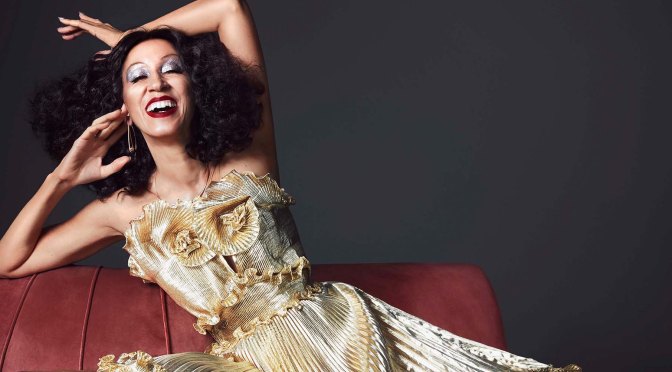


“Patricia, we have very few colored girls in our agency. The only reason I took you is because Oleg Cassini recommended you. But I really think you will never make it in the modeling business. You see, you don’t look like an American. Your face is not pretty. Your nose is strange.”
Pat Cleveland was 18 in the late 60s when she sat in the Ford Models Manhattan headquarters, listening to the company’s founder tell her that her beauty, her allies & her goals didn’t matter because she was black.

But she kind of already knew that. Pat’s career started at 14 with the Ebony Fashion Fair Tour, a traveling showcase of black models in high fashion. In northern states & abroad, the tour drew middle- and upper-class black audiences in droves. In the South, they attracted an entirely different crowd. In Arkansas, the KKK threw Molotov cocktails at their bus & one of the girls was nearly raped. Even using a restroom and going for a walk turned violent against them.
But working with black agencies had been limiting too, because for the black culture of the time, darker skin was in. (Although she did appear in Essence Magazine repeatedly.) She was too light-skinned to be successful on one hand, and too dark-skinned on another. Since the problem was with American society, not Pat’s skin, she solved it the only way she knew how & left for Paris, home to many black creatives seeking opportunities they weren’t afforded in America.

Her success was almost immediate. She graced runways for designers like Yves Saint Laurent, KENZO, KARL LAGERFELD, Halston, and Valentino; posed for Andy Warhol, Salvador Dali & illustrator Antonio Lopez; and appeared in high-end fashion magazines regularly. And once she was in demand, she leveraged that success & refused to return to the U.S. until a black model had appeared on the cover of American Vogue. (Ms. Beverly Johnson became their first in 1984.)
Before pioneering black models like Iman, Naomi Sims, and Beverly Johnson, there was Pat Cleveland, and as early as 1980, she was recognized as the world’s first black supermodel, strange nose and all.

KEEP GOING BLACK IN HISTORY:
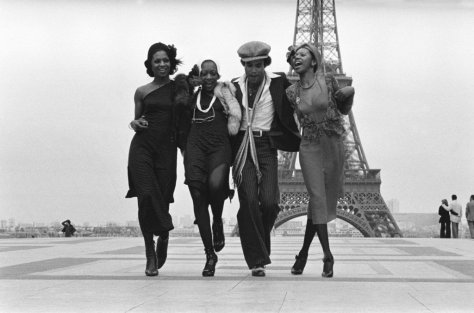
Listen in or read through NPR’s interview about the tradition of black American migration to Paris since the 19th Century.








 THE AMERICAN BLACKSTORY