Tag Archives: PAST

DAY 21 — Major Taylor

Before boxer Jack Johnson, before sprinter Jesse Owens, and 50 years before first baseman Jackie Robinson all broke color barriers in professional sports, Marshall “Major” Taylor rode for 142 of the most agonizing hours of his life to international cycling stardom.

“The Six Days of New York” cycling event held December 6-12, 1896 at Madison Square Garden drew massive global crowds and 28 cyclists, all there for one of the greatest sporting events of the era. For six straight days, riders would circle the specially-constructed velodrome until the completion of the event, or until only one exhausted competitor remained, whichever came first.
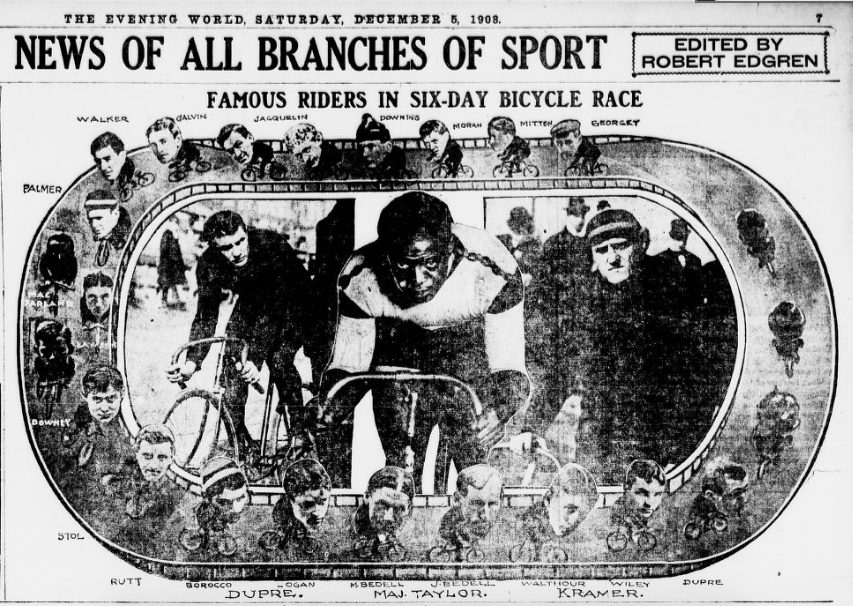
It was 18-year-old Major’s first professional race, and for every ounce of anticipation running through his veins, there was a gallon of fear right behind it. Only 30 years beforehand, slavery had been abolished by the 13th Amendment, so a black man in an elite sport was not only uncommon – he was unwanted. But this black man had earned his place among the talented white cyclists, all many years his senior. He’d blown through amateur bike records on his way to the professional league, and despite the naysayers convinced he was a fluke who could never match up to “real” talent, here he was, the only black competitor among a sea of white racers, journalists and 5,000 spectators on the world stage.

It’d been a rough road to ride though. He’d been threatened, sabotaged, and even banned from tracks in his climb to the top – at one point, resorting to bleaching his skin in an attempt to gain entry as a “white” cyclist. The lightening process was so physically and mentally painful that he vowed he’d never do it again. Besides, their racism pushed him to be stronger, faster, and better than every other rider in the field. He said, “My color is my fortune. Were I white I might not amount to a row of shucks in this business.” Still, as proud as he was to be who he was, Major couldn’t deny his “dread of injury every time I start in a race.”

As he expected, Major spent the next several days being elbowed, boxed in, and even deliberately crashed by the competitors. Each time, he righted his bike, bloodied and bruised, but determined to continue. After day 5 and having ridden for 1,732 miles – the distance between New York and Austin – over 142 hours with no sleep, very little food, and in the throes of hallucination, Major withdrew from the contest, finishing in 8th place.

But it didn’t matter. In those 5 days, Major Taylor had become a legend to the international sporting community, the first black man to ever compete in a six-day race and in impressive fashion. So jarring was the experience, Major never entered another six-day race again, and that didn’t matter either. He won 29 of the next 49 races he DID enter, securing 7 world records along the way – all before he turned 20. It was over 30 years later before the last of his records was finally broken.

Still, Major wanted it all. In 1897, his championship hopes had been dashed when southern promoters and cyclists refused to allow him on their tracks, making it impossible to compete in enough races to qualify for world championships. When their threats, physical attacks, and petty tricks like throwing ice water on him and dropping nails in his path forced Major to avoid the chaos by sprinting to the front of the pack and ultimately still winning, racist cyclists conspired to move races to Sundays in 1898. His devout Christianity was a priority, and once again, despite being in contention for the title, Major fell short of the race requirement.

In 1899, that all changed, and finally, Major dodged every physical, structural, and mental roadblock the all-white establishment threw in his path to become the first African-American world champion in ANY sport, and only the second black athlete in the world to hold a title.
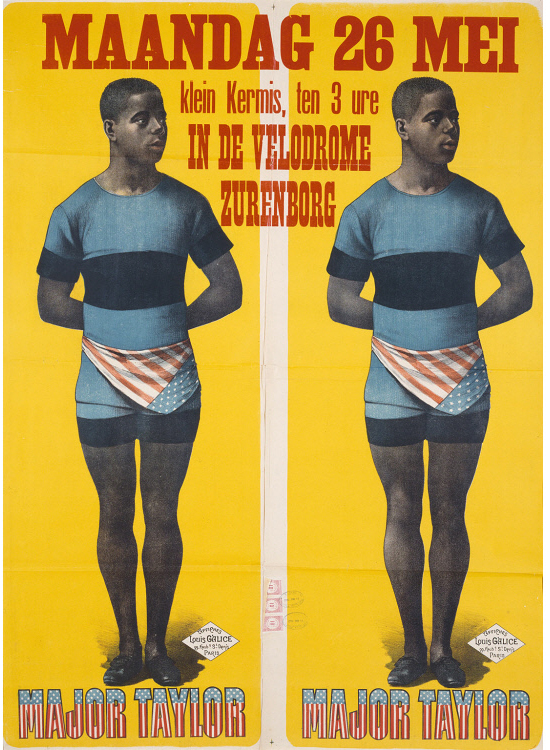
The championships had been held in Montreal, and hearing the “The Star-Spangled Banner” played in celebration of his success, Major later wrote, “I never felt so proud to be an American before, and indeed, I felt even more American at that moment than I ever felt in America.” Despite his global recognition and clear talent, like so many gifted black Americans who came before and after him, Major’s skill amounted to nothing in the face of segregation in the United States. In contrast, he enjoyed superstardom abroad and when he raced in Australia and Europe, including France where he eventually moved, the people and press loved him, nicknaming him “Le Negre Volant,” the flying black man.

At just 32 years old in 1910, Major decided that the round-the-clock schedules, heavy toll on his body, and dangerous racism he still faced from American competitors entered in races abroad had taken enough from him. So with the millions he’d earned from brand endorsements, promotional jobs, and of course, prize winnings from the nearly 20 years he’d competed in amateur and professional cycling, Major retired with all the comforts money could buy. Which was unfortunate, because in the stock market’s decline and eventual historic 1929 crash, Major’s investments were lost as well, and he was penniless. Still, one to overcome every adversity, Major recorded his extraordinary story in his book “The Fastest Bicycle Rider in the World: The Story of a Colored Boy’s Indomitable Courage and Success Against Great Odds: An Autobiography,” which he sold from the trunk of his car.

Only 53 when he died in a Chicago hospital alone and estranged from his family, Major’s death was the polar opposite of his life – unceremonious and unrecognized. By the time his family was notified of his passing, he’d been buried in a pauper’s grave. But even death couldn’t silence his legacy. Learning of Major’s contributions to the sport, iconic bicycle manufacturer Frank Schwinn donated the funds to give him a proper burial in 1948. Major’s newly-placed gravestone was inscribed “World’s champion bicycle racer who came up the hard way without hatred in his heart,” in recognition of a career colored with pioneering achievements and of the equally remarkable content of his character.


KEEP GOING BLACK IN HISTORY:

Watch ESPN’s compelling 7-minute short on Major Taylor’s 6-day triumph.

Read Sports Illustrated’s take on the full fascinating life of Major Taylor.

Browse digitized historic news coverage of Major’s career and his autobiography at The Library of Congress.
DAY 18 — Gordon Parks

Gordon Parks - Melanin on Both Sides of the Lens

“I saw that the camera could be a weapon against poverty, against racism, against all sorts of social wrongs. I knew at that point I had to have a camera.”

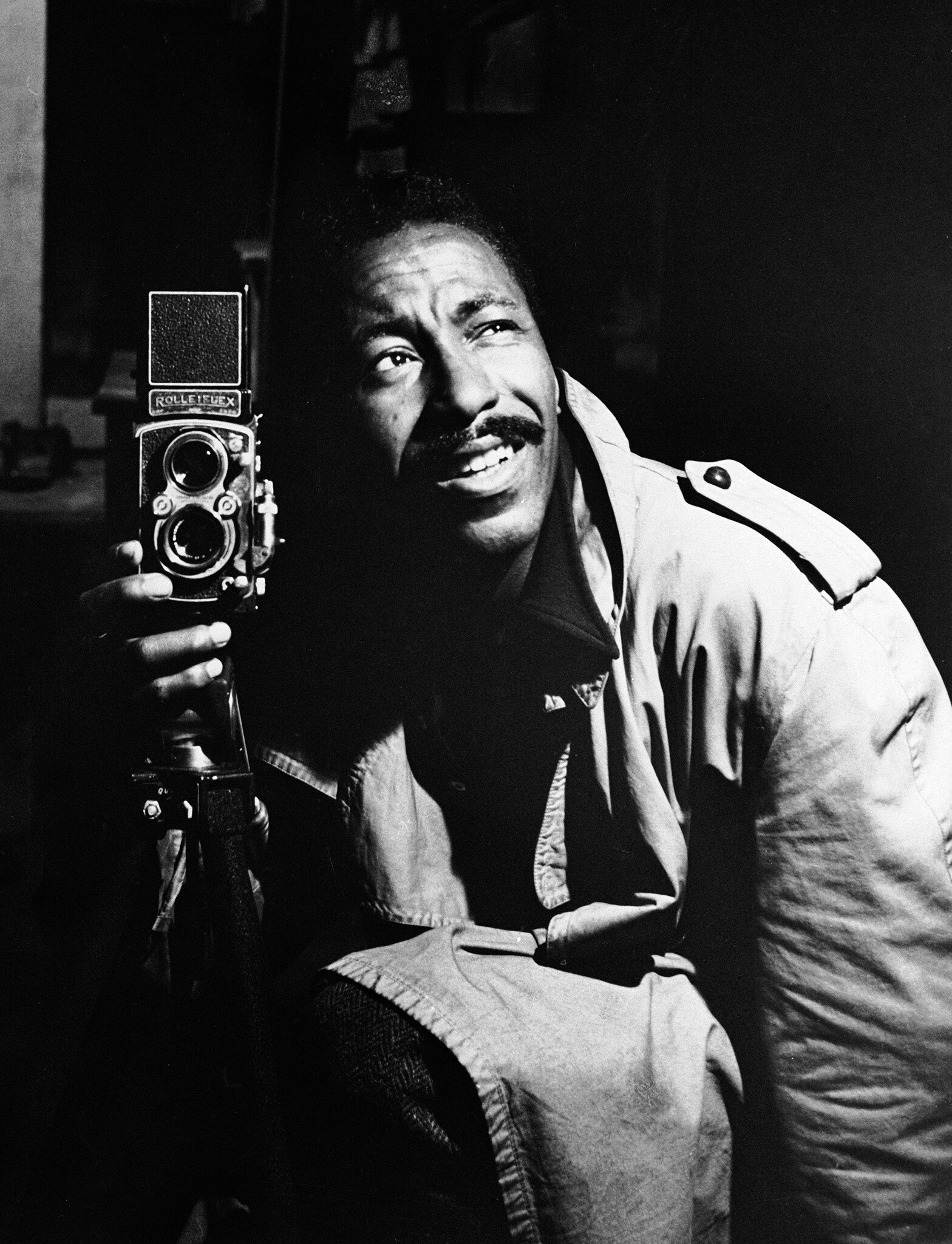
In 1938, Gordon Parks bought that camera, and for just $7.50, he became the first black man to make the world truly see its reflection through his eyes.

And those eyes had seen more in his 26 years than most had seen in a lifetime. Gordon lost his mother as a teenager and had subsequently been homeless, a high school dropout, a piano player and singer, busboy and waiter, semi-pro basketball player, and worked for the Civilian Conservation Corps. But when he chanced upon a discarded magazine featuring photojournalistic images of migrant workers, immediately Gordon envisioned himself as the man behind the camera. “Still suffering the cruelties of my past, I wanted a voice to help me escape it,” Gordon recounted in his autobiography. “I bought that Voightlander Brilliant at a Seattle pawnshop; it wasn’t much of a camera, but.. I had purchased a weapon I hoped to use against a warped past and an uncertain future.”

Whether his camera was a weapon or a good luck charm, right away, things started looking brighter for the young man. From one of his very first rolls of film came his first exhibition, a window display of his images by his developer, the local Eastman Kodak store. On their recommendation, he charmed his way into a job shooting for a women’s clothing store where his good luck just kept on growing. That store happened to cater to Marva Louis, wife of heavyweight champion Joe Louis. In Chicago, there was a true demand for a photographer of his caliber, she teased.

In hindsight, Gordon wrote, “a guy who takes a chance, who walks the line between the known and unknown, who is unafraid of failure, will succeed.” It was easy advice for the man who’d arrived in Chicago and taken freelance jobs shooting on the South Side before winning a fellowship to work in the Washington D.C. Farm Security Administration, the very same agency that’d published the photos inspiring his photography in the first place.

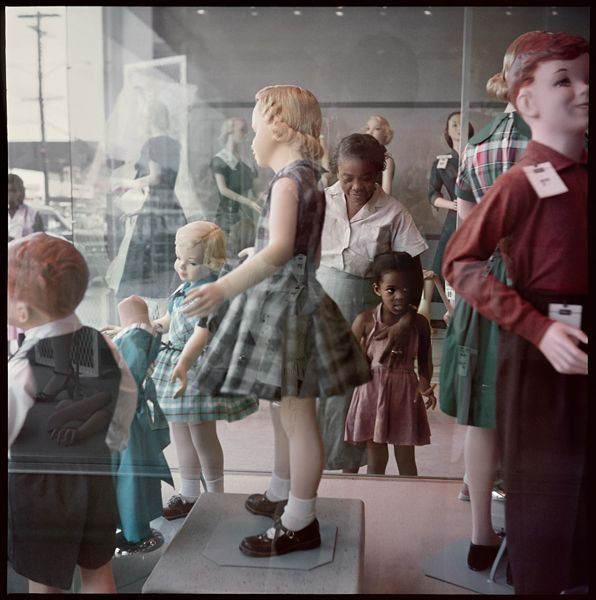
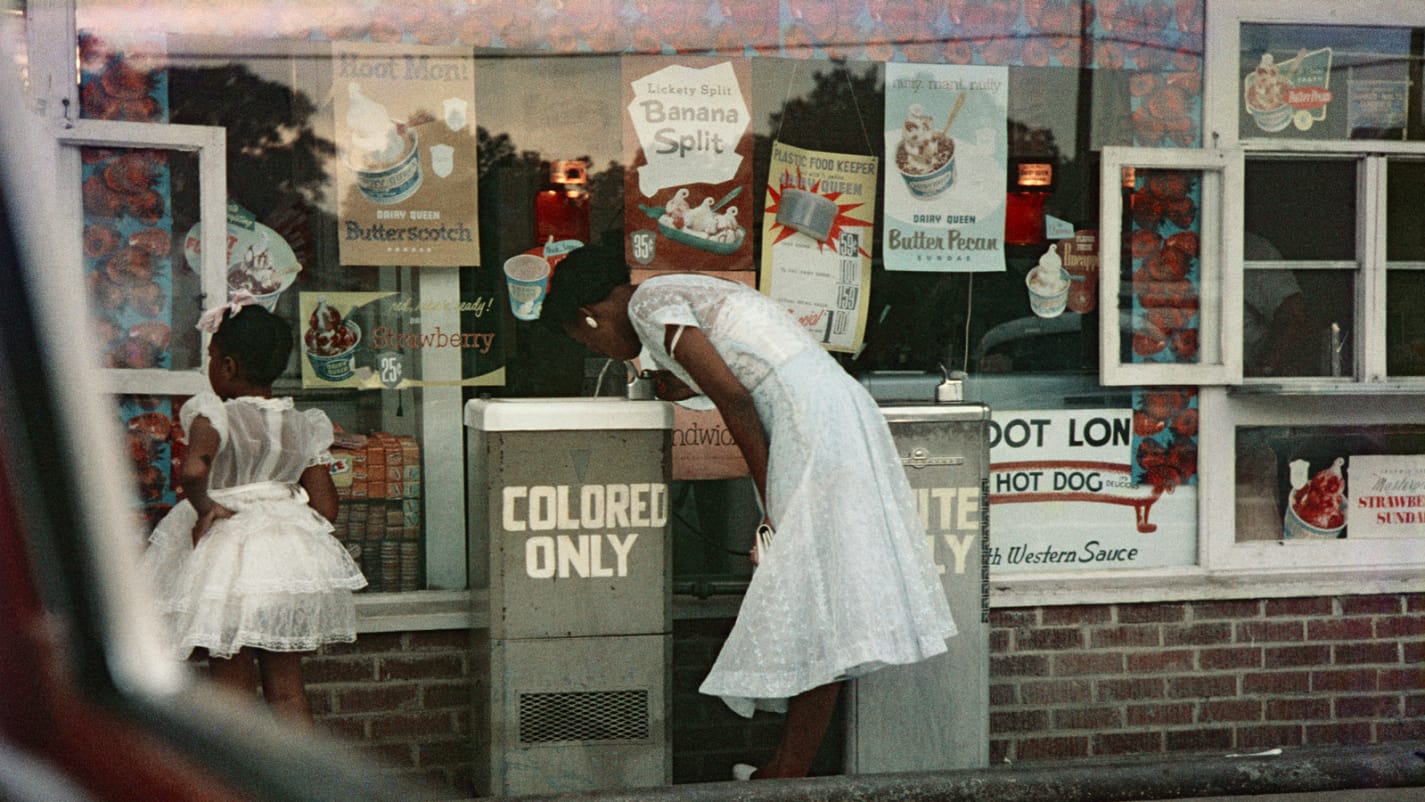
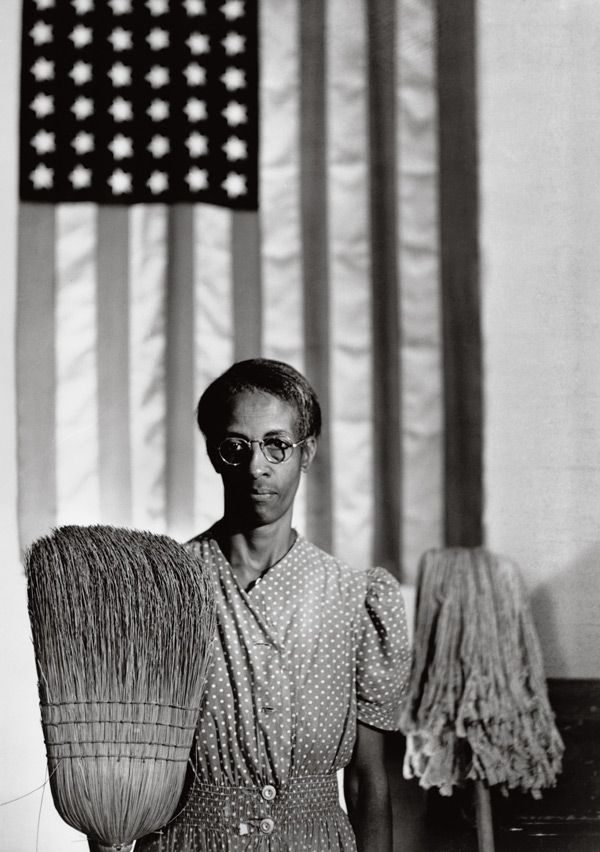
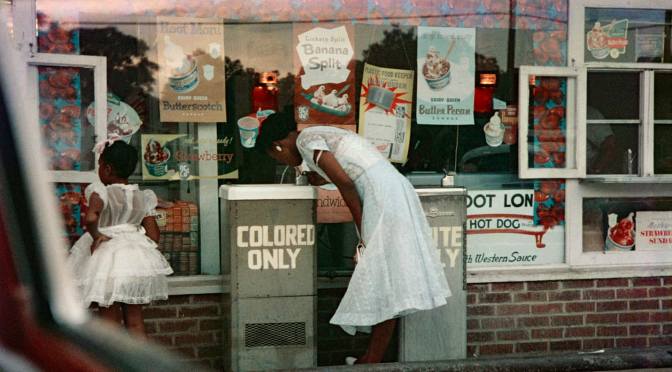
Gordon became an undeniable asset to the FSA in the middle of their campaign to win the hearts and minds of Americans for Roosevelt’s New Deal. Since many voting Americans didn’t know the plights of farmers, migrant workers and rural towns the New Deal was expected to help most, the FSA had been tasked with photographing that demographic sympathetically. Gordon was crucial in that effort. The extremely poverty-stricken (of all races) and people of color could allow themselves to be vulnerable to a black man who was himself already accustomed to being invisible. His photographs, including one of his most famous taken right in the offices of the FSA, were full of raw emotion and evocative scenery unlike any other captured during the mid-30s and 40s.

By then, his humanizing eye had gained a following of its own beyond the public sector, and when Gordon finally hung up his government service hat in 1943, he relocated to Harlem, where a very famous name was waiting for his services next: Vogue Magazine. At a time when some black American men were still being lynched for looking at white women, one of the world’s most recognized fashion publications sought out Gordon’s gaze as their first black photographer.

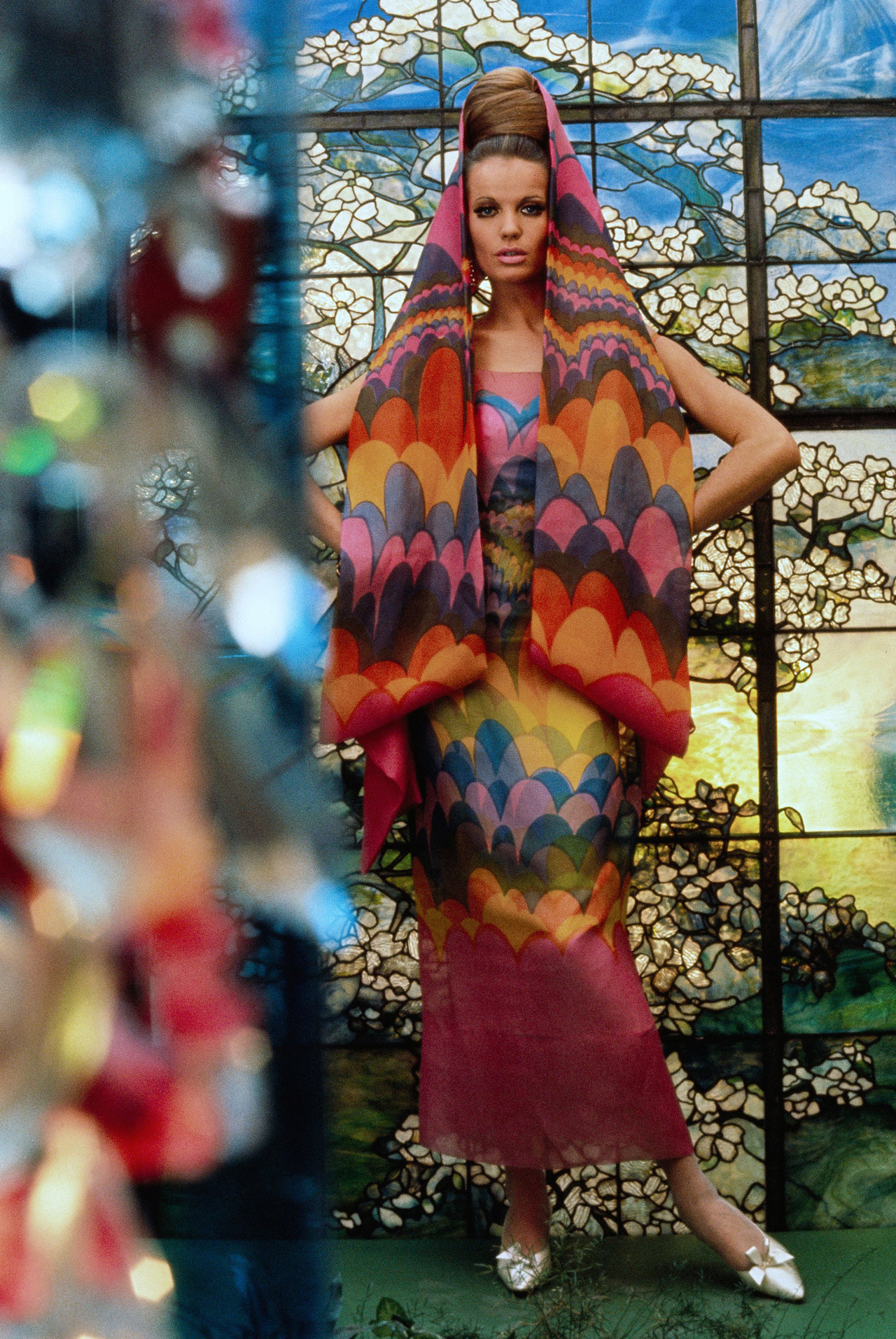
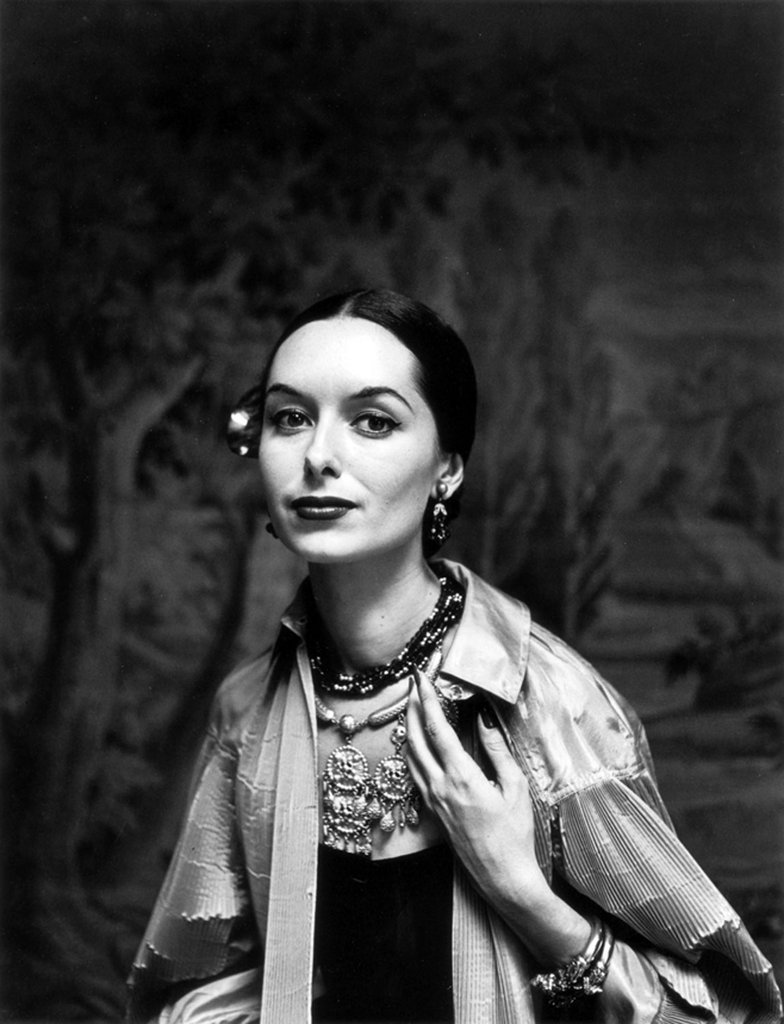
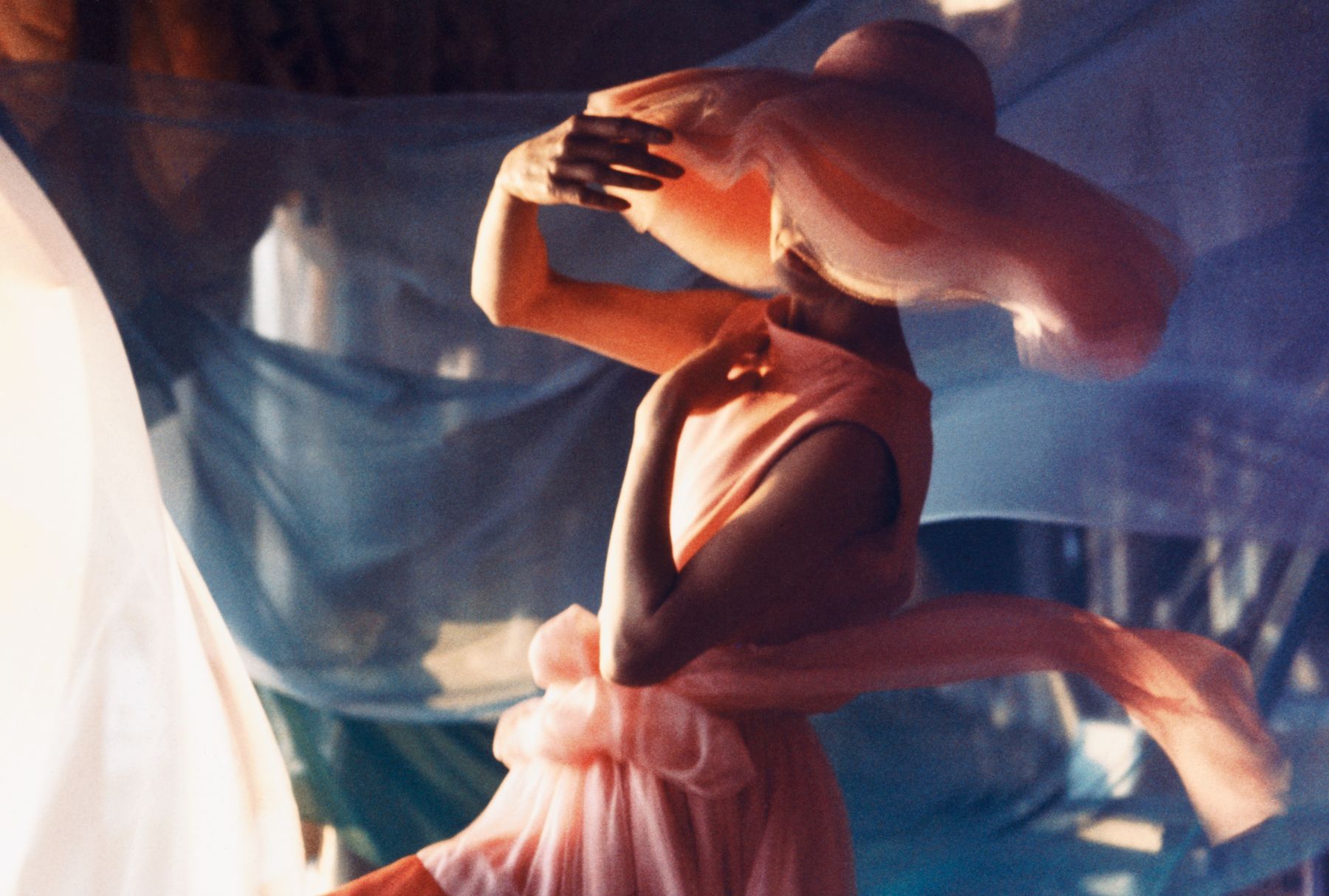
With fashion came with its own vast new world of photographic techniques, settings and points of view. Gordon dominated them all. But for a photographer used to shooting portraits and candids, fashion photography came with its own challenges. Namely, models. Their over-posing and intense awareness of the camera didn’t fit his vision of how real women wanted to see fashion, and though he’d spent 5 years delighting Vogue’s readers with his fresh new approach, when LIFE Magazine came calling next, he quickly answered, becoming their first black photographer as well.

It wasn’t all roses for Gordon though. His willingness to work for white-owned publications made him an outcast in some black communities, and a still racist society meant there were no protections for him, neither in-office nor on assignment. But navigating extremes was nothing new for Gordon, who’d seen some of the best and worst life had to offer before he’d even turned 40. “The pictures that have most persistently confronted my camera have been those of crime, racism and poverty. I was cut through by the jagged edges of all three. Yet I remain aware of imagery that lends itself to serenity and beauty, and here my camera has searched for nature’s evanescent splendors,” Gordon mused.

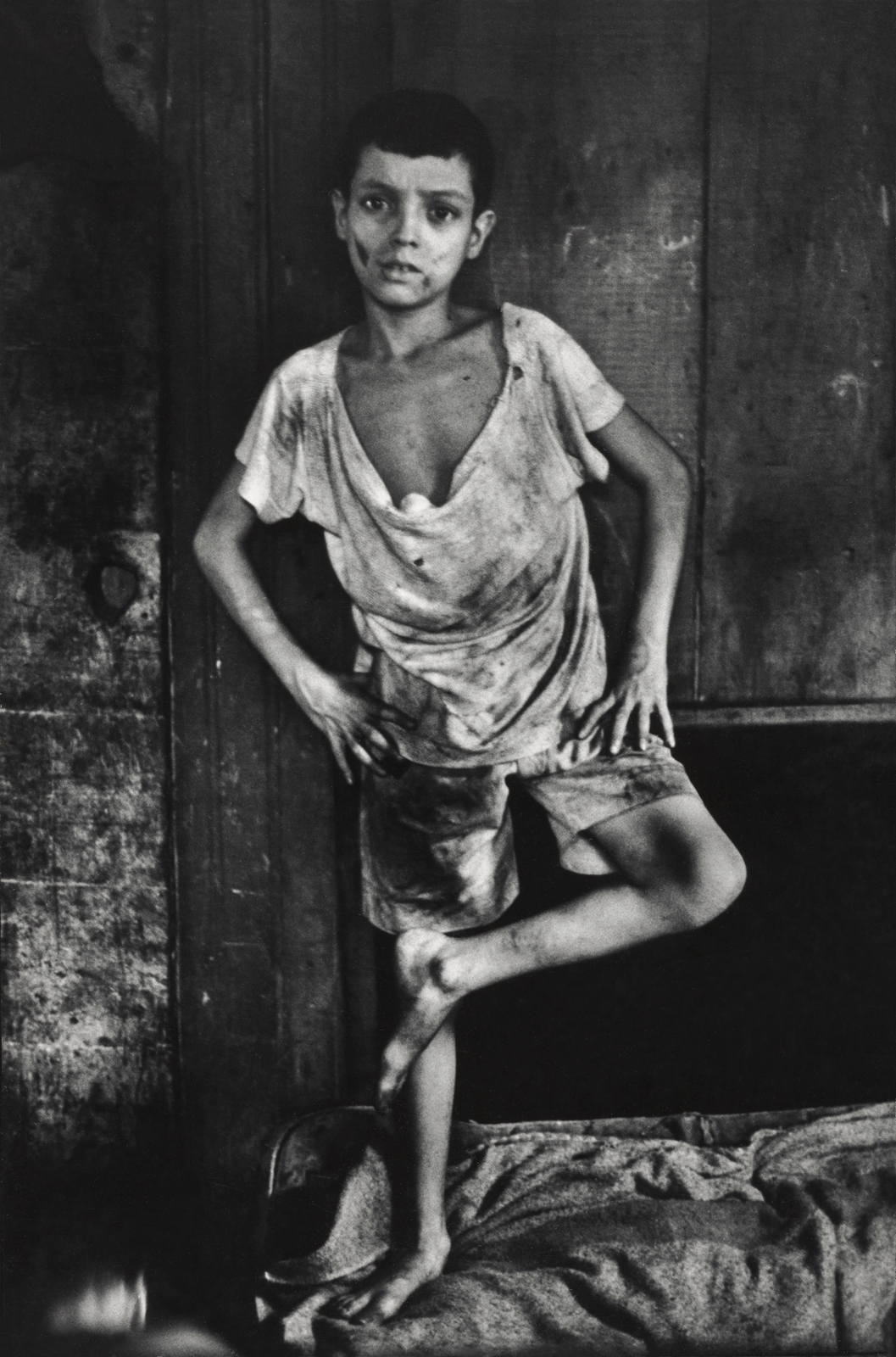
Flavio da Silva, 1961

And for the next 20+ years, LIFE made the most of his vast wellspring of talent, access, and life experience, sending him on assignments that included the Black Panthers and Harlem gangs, celebrities, Parisian life, and even the slums of Rio de Janeiro, where he quite possibly launched the world’s first Kickstarter. When LIFE published his 1961 photo-documentary of a sick little boy named Flavio and the struggle his family faced in Brazil, the magazine’s readers spontaneously donated over $30,000 for the boy’s medical treatment in the States as well as a new home for his family. There were few clearer examples of the weapon he’d formed against poverty and racism doing its work to breaking barriers.

But Gordon had so much more to do. By 1962, he was writing books. By 1968, he was producing his own movies. And finally, by 1971, “Shaft,” his blueprint for the blaxploitation movie, made him the first black man to release a major motion picture, too. “Like souls touching… poetry, music, paint, and the camera keep calling, and I can’t bring myself to say no.”

By the time he died in 2006 at the age of 93, Gordon had won too many photography awards to count, 40 honorary doctorate degrees, the National Medal of Arts, the NAACP’s Spingarn Medal, and hundreds more. But even more significant are the millions of photographs, 12 films written or directed, 12 books and countless other artworks by a man who showed American society how much more of its beauty is visible when seen through a darker lens.


KEEP GOING BLACK IN HISTORY:

Browse the archives spanning Gordon’s years and genres of work.

Read Gordon’s compelling life story in his New York Times’ obituary.

See Gordon Parks’ images brought to life in Kendrick Lamar’s “Element” video.

DAY 17 — Ann Lowe

Ann Lowe - White Society’s Secret Seamstress

Jacqueline Bouvier’s perfect day couldn’t have gone worse for Ann Lowe.

The cover of an article in the 1964 Saturday Evening Post captures Ann carefully detailing her signature flowers.

She’d lavishly fit celebrities, debutantes, and wealthy women with last names like Rockefeller, DuPont, and Roosevelt, but the Kennedy wedding was the moment that made Ann’s over 4 decades of sewing and sacrifice all worthwhile.

And everything that could go wrong most certainly did.

Just 10 days before the 1953 American royal event of the century, a ruptured pipe flooded Ann’s Harlem studio, waterlogging 10 of the 15 dresses Jackie’s mother commissioned Ann to create – including the bride’s, which had taken 8 weeks to construct.

With no time for tears, Ann buckled down, hired backup, rush-ordered hundreds more yards of ivory and pink silk taffeta at a loss of thousands of dollars, and still remade all 10 dresses in record time, saving her business and her well-earned reputation as high society’s master dressmaker.

Only to be humiliated when she tried to personally hand-deliver them.

The staff at the bride’s family’s Newport, Rhode Island oceanfront estate only saw a black woman arriving at the front door, and attempted to intercept her creations and steer her to the rear service entrance instead. Well aware of her value and having already established good rapport with the Bouviers from past commissions, Ann insisted that the dresses go with her through the front door or not at all. Indeed they did.

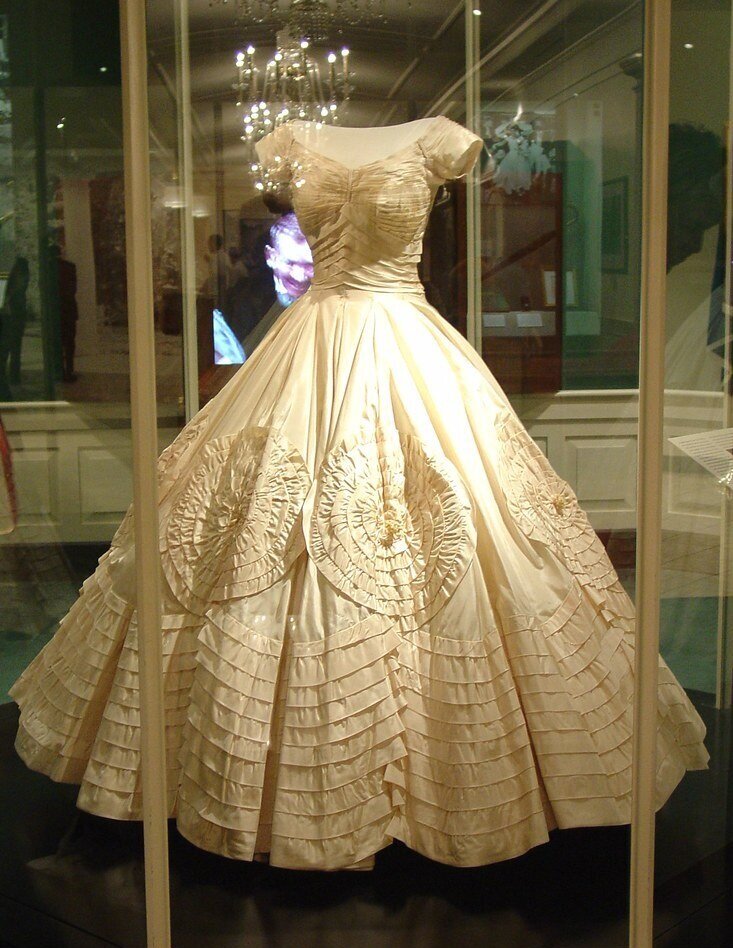
Jackie’s opinions on her wedding gown’s portrait neckline and “lampshade” skirt didn’t stop the gown from making a stunning attraction at the John F. Kennedy Presidential Library and Museum.

Finally, the moment nearly everyone had been waiting for arrived. Jackie’s first appearance before the public and press was breathtaking, and photos published in the classic pages of Life and TIME Magazines memorialized what’s now widely regarded among fashion and wedding industry professionals as one of the most iconic bridal gowns dresses of all time. “The oohs and ahs as they come in… that’s what I like to hear,” Ann told EBONY.

But stolen breaths and gasps of wonder were no comparison to awestruck journalists and photographers clamoring to ask the new First Lady what surely everyone would want to know: WHO was the designer of her exquisite gown? Ann’s heart stopped. Having come this far had been nothing short of a miracle, but behind the scenes, so much had been beyond her control, including one secret then yet to be revealed: Jackie HATED the dress.

The worldly socialite’s trips to Paris, where slender dark-haired women like her set trends in slim and simple silhouettes, had inspired her to be wed in a fitted and fashionable number. But John’s overly-involved father Ambassador Kennedy wouldn’t have it. His son would be married to a woman wearing something traditional, American-made, and the elder Kennedy saw to it, requiring his approval for every detail of the wedding, including the final dress sketch. Ann’s close collaboration with all of her brides ensured that Jackie’s opinion at least factored in, but what would she SAY?

“Oh, a colored dressmaker did it.”

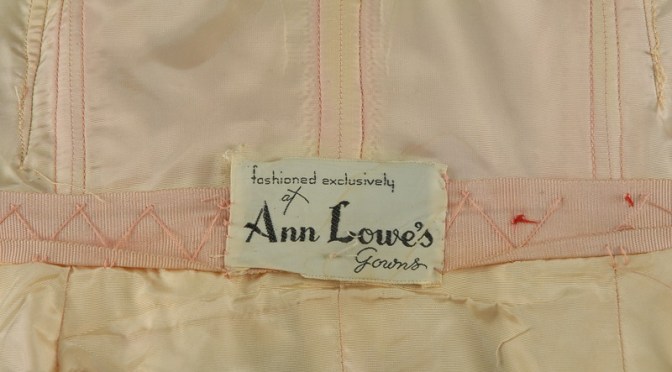
Actress Olivia de Havilland won her 1947 Oscar in a dress Ann Lowe not only made, but also hand-painted. The label inside bore the name of designer Sonia Rosenberg, who’d styled de Havilland and contracted Ann’s work.

Ann was heartbroken. Crestfallen. Utterly devastated. Not receiving credit for her designs was typical. When starlets like Olivia de Havilland walked the red carpets, they’d hoped everyone would believe they were donning the latest European fashions, not those made by a black woman in Harlem, even going so far as to have another designer’s label stitched in. But this was different. This had been Ann’s chance to go from “secret designer for the high society” to a household name. Instead, she’d been brushed aside by the most fashionable woman in the world.

Though her designs were among some of the most sought after of the time, Ann’s financial prowess left much to be desired, and the loss she’d taken from the Kennedy flood incident, combined with the fact that her race gave her little negotiating power with the most wealthy women in the world, continued to affect her bottom line. Despite gaining the favor of Christian Dior and designing in-house for Neiman Marcus, Henri Bendel, Saks Fifth Avenue, and of course, countless ladies of fame and fortune, by 1962, only 9 years after the Kennedy wedding, Ann was bankrupt. Too few profits, IRS troubles, and slowly failing vision that led to the removal of her right eye that same year, had together been too much to overcome, even though she’d regularly earned over $300,000 annually.

“I ran sobbing into the street,” Ann recalled, this time, with no dressmaking in the world distracting enough to dry her tears. In a spectacular and long overdue change of luck, she soon received notice that an anonymous donor had paid her entire $30,000 debt to the government and her suppliers. Until her dying day, Ann held fast to the belief that her benefactor was Mrs. Kennedy-Onassis, simply repaying what she owed.

Her spirits and coffers renewed, in 1968, Ann became the first black woman to open her own fashion label on New York’s illustrious Madison Avenue, but by 1972, working by describing designs to her assistants and stitching fine details through touch alone just couldn’t be sustained. Ann finally retired, ultimately passing away in 1981 as an 82-year-old legend to only a very few.

But when one of her dresses was exhibited at the newly-opened Smithsonian National Museum of African American History and Culture in Washington, D.C., Ann’s whole life came to light. One visitor’s tweet thread was all it took for major media outlets to uncover the heirlooms and finally honor the heritage of the vibrant black woman who clothed American royalty, proving that chic comes in all colors.


KEEP GOING BLACK IN HISTORY:

View the The Metropolitan Museum of Art, New York Costume Institute’s Ann Lowe collection.

Ann was commissioned as the exclusive designer for Ak-Sar-Ben, a Nebraska festival and ball. Read how her dresses came into such high demand for such a niche event here.

Read EBONY Magazine’s December 1966 interview with Ann and peek into her adorable studio.

DAY 15 — Mary Ellen Pleasant

Mary Ellen Pleasant - Investor in Good Trouble

All of the money in California might not have been enough to buy freedom for black Americans still enslaved and oppressed in the mid-to-late 1800s.

But free woman Mary Ellen Pleasant sure had enough to try.

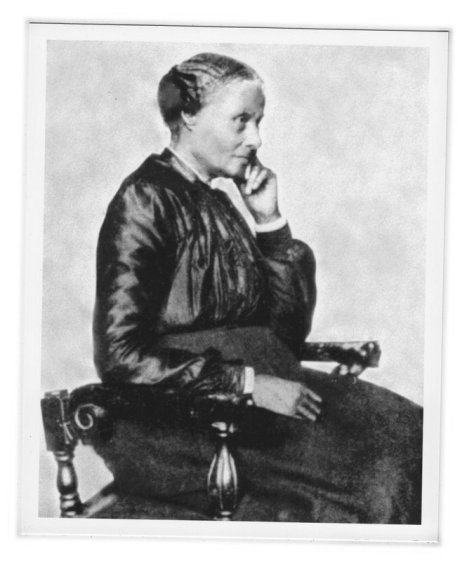
Through an early life enshrouded in mystery and speculation, by the 1840s, a twenty-something Mary Ellen was coming into her own and creating her story, both literally and figuratively. Mary Ellen and her first husband James, both born from mixed-raced parents, could easily pass for white, but rather than benefit selfishly, they put themselves at risk freeing the enslaved. With the fortune James inherited from his white father, he and his “white” wife financed all manner of slave escapes – purchasing their deeds only to release them later, funding their travels along the Underground Railroad, and even providing shelter in the couple’s own home, a monstrous Virginia plantation with no staff because they’d all been set free.

When James died only 4 years after they were married, Mary Ellen embraced her newfound freedom, living her life in a way that only a single woman with light skin, lots of money, and a little backbone could. She and James had been rebellious, but Mary Ellen became an unrepentant renegade who preferred to dress in disguise and concoct elaborate back stories that allowed her to “steal” slaves right off the plantation. Her brilliant surprise attacks were the stuff of legend, but after 4 years of these ruses, she was infamous among southern plantation owners and had to make an escape of her own.

Slowly moving west in the direction of growing cities and eventually remarrying along the way, Mary Ellen was soon forced to pick up the pace by the Fugitive Slave Act of 1850. Although she’d never technically been a slave (Massachusetts was a free state when she lived there as an indentured child servant instead), she also didn’t have the necessary papers to prove her freedom should anyone question her skin color and lineage. In a stroke of extraordinary luck, the free state of California was in the infancy of a Gold Rush and she had an eye on growing her fortunes. So with all of her money and her moxie, Mary Ellen landed in San Francisco, where she only became an even more formidable woman.

Gliding effortlessly between both white and black communities, Mary Ellen amassed millions. When she arrived in San Francisco, surveillance was her top priority. A brilliantly clever and well-educated woman, she relied on her domestic skills and society’s traditional gender roles to blend into the background of the upper-crust homes and restaurants she worked, knowing that no man would pay much attention to a servant woman, white or black, while discussing important financial business.

A photo of the home Mary Ellen shared with her business partner and also rented out for secondary income, reveals a sprawling property overlooking early San Francisco.

Her eavesdropping paid off extravagantly, granting her insider information on precious metals, natural resources and the stock market. Though she had to combine her investments with that of a white partner, since women – especially those masquerading as white – still didn’t have full property or financial rights, Mary Ellen’s savvy made them both rich to the tune of $30 million ($327 million today).

But Mary Ellen wasn’t the only transplant growing wealthy from California’s bounty. Southern slaveowners were migrating too, and though California was a free state, that didn’t apply to those who came as slaves. Her riches were propelling her rapid rise in San Francisco society, but Mary Ellen couldn’t overlook those who didn’t have the luxury of freedom she enjoyed.

Instead, she used her money and power to take her abolition efforts to the next level: California law. When black citizens were discriminated against on San Francisco’s trolleys, she sued on their behalf, winning multiple cases against the city and the state over the course of the 1860s. Forbidden from testifying in California courts, black defendants often found themselves robbed of any chance of a fair trial, an injustice that Mary Ellen saw to in 1863, successfully repealing the law. Those who needed the means to escape could rely on her to front the money, transportation, food and any other necessities. She was so beloved among the black citizens of California that they soon called her home “The Black City Hall.”
When Mary Ellen’s white partner suffered an untimely death, all of that began to change. His wife ran a full-page smear campaign on Mary Ellen in the San Francisco Chronicle that destroyed what was left of her fast-crumbling reputation. After the Civil War and free from any fear of retribution (or so she thought), Mary Ellen stunned all of San Francisco when she submitted her census documents with an extravagant checkmark through the box labeled “black.” Racist rumors circulated about voodoo and black magic being the source of her wealth and social graces, and soon, unable to defend against the crushing public opinion or to distinguish her finances from her partner’s, she was left destitute and living with friends, where she died in 1904 at the age of 90.

As civil rights were won though, the details of Mary Ellen’s philanthropic and strategic impacts on black communities nationwide finally began to be revealed. All of her efforts in aiding the black people of California came to light, but on her deathbed, Mary Ellen still had one more secret to share with the world. When abolitionist John Brown – famous for the 1859 rebellion in Harper’s Ferry, West Virginia where he and a small group of enslaved men stormed a confederate arsenal – was captured & hanged, a coded letter was found crumpled in his front pocket. “The ax is laid at the foot of the tree. When the first blow is struck, there will be more money to help,” it read. It was she who’d written that note, Mary Ellen revealed, and the “more money” she’d promised was in addition to the already $30,000 invested in Brown’s cause, just shy of $90K by today’s standards.

Her life of covert deeds now public knowledge and the record of her reputation set straight, the woman who once presided over “Black City Hall” and defiantly told those who tried to deter her she’d “rather be a corpse than a coward” is now known to all as “The Mother of California Civil Rights” and the “Harriet Tubman of the California Underground.”

Mary Ellen Pleasant’s contributions to California civil rights were memorialized in this Pacific Heights plaque reading:
”Mary Ellen Pleasant Memorial Park 1814 – 1904
Mother of Civil Rights in California
She supported the Western Terminus of the Underground Railway for fugitive slaves 1850-1865. This legendary pioneer once lived on this site and planted these six trees.
Placed by the San Francisco African American Historical and Cultural Society.”

KEEP GOING BLACK IN HISTORY:

The New York Times briefly chronicled Mary Ellen’s dramatic and eventful life in their “Overlooked” series.

Read more about Mary Ellen’s powerful sway in San Francisco and the wild scandals that led to her downfall in the Paris Review.

DAY 14 — The Scottsboro Boys

The Scottsboro Boys - Railroaded by History

There was no room left for the truth, the whole truth, and nothing but the truth on the train leaving Chattanooga one fateful March day.

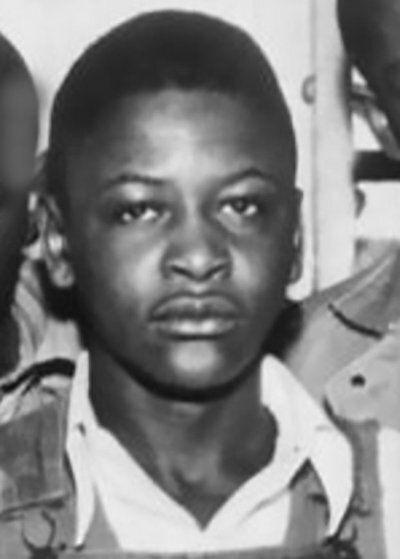
Unbeknownst to the conductor, along with its standard cargo, his freighter carried a truly volatile situation. When nine assorted black teenagers, a motley crew of white men, plus two white women all happened upon each other while trainhopping on March 25, 1931, their trip aboard the Southern Railroad line sparked one of the most documented, protested, and historically significant miscarriages of justice in United States history.

Four of the nine teenagers – Haywood Patterson (18), Eugene Williams (13) and brothers Roy (12) and Andy Wright (19, and the oldest of all) – traveled west together looking for more job opportunities. From seeking medical care to simply heading home, the five additional black men, who were otherwise strangers, had their own reasons to hop the railways. For all nine, the risk of riding trains illegally and their vulnerability to others’ misdeeds or undue punishment should they be caught, was worth the reward waiting at their final stops.

But when someone intentionally stomped young Roy’s hand, the perils of confronting white men didn’t stop his brother and two friends from rushing to his aid, overpowering and throwing Roy’s aggressors from the train. Relieved to have avoided worse, the boys looked forward to finishing their trip with racism behind them. They couldn’t have imagined the lifelong misery that lie ahead.

The story of Roy’s attack had been refabricated into one where he and the three companions defending him were suddenly the villains who started the fight, and according to the two women attempting to avoid trainhopping charges themselves, rapists as well. A mob waiting at the next stop in Paint Rock, Alabama ransacked each car in search of the black men who’d dared to forget their place in the still intensely racist South, snatching all nine.

Fortunately, starting in 1918, anti-lynching bills continually introduced in Congress – though none of the 200 actually passed until 2018 – signaled a growing distaste of lynching by the American public, who beforehand had only taken a stance of disapproving passivity at best. Rather than being handed over to the mob, the nine were imprisoned in Scottsboro, Alabama, and granted one laywer who hadn’t practiced in over a decade, another who practiced real estate law, and a sham of a two-week trial in which eight were immediately convicted and sentenced to death by an all-white jury.

Nearly two years of appeals later, the Alabama Supreme Court STILL upheld all eight convictions. But the scandalous trial had seized the attention of almost every major American news outlet, with even The New York Times urging President Roosevelt to intervene in the glaring discrimination against the Scottsboro Boys. Global protests as far as Cape Town, South Africa and Delhi, India erupted, until finally, the case made its way to the U.S. Supreme Court where in 1932, the convictions were overturned on the grounds of insufficient counsel.

But Alabama was relentless, and despite representation from renowned and undefeated New York defense attorney Samuel Leibowitz, when the trials reconvened in 1933, even Samuel’s legal prowess was no match for the all-white jury’s determination to turn eight innocent black teenagers into scapegoats. Doomed to become eight more anonymous black prisoners victimized by a racist justice system, the Scottsboro Boys instead inspired an unexpected moral stand from Judge James Horton who suspended their sentences and any further trials until he could ensure a “just and impartial verdict.” The details from the trial and the tribulations faced by both the Scottsboro Boys and anyone who publicly interfered with their unjust convictions inspired one of America’s greatest pieces of modern literature, Harper Lee’s “To Kill a Mockingbird.”

Protestors of every race, color and creed joined to show their support for the Scottsboro Boys.

And still Alabama persisted. The judge was replaced with another who hadn’t attended a single day of law school, and after shutting down any attempt at a defense by their northern Jewish lawyer who offended every possible Southern sensibility, two of the eight men were again convicted of a crime they obviously hadn’t committed, while the others awaited retrial. But Samuel wasn’t done fighting for the Scottsboro Boys quite yet. Once again appealing to the U.S. Supreme Court in 1935, he protested Alabama’s use of all-white juries, proving that the state forged names to create the appearance of having even considered black jurors. For a second time, the convictions were federally overturned.

Refusing defeat, the state of Alabama continued their legal lynching, seeing the defendants in and out of prison repeatedly after paroles, parole violations, and new convictions for the next 20 years until their releases, plea bargains or deaths. Finally, in 2013, the Scottsboro Boys were officially exonerated of any crime and pardoned in 2013, over 80 years after their arrest and long after all nine had died.

Despite the “unmitigated tragedy” that Alabama now admits that the Scottsboro Boys suffered at the hands of a racist system clinging to its former glory, those two Supreme Court cases set landmark precedents in jury selection and defendants’ rights. But still, mirrored by modern day cases like the plight of the Central Park Five, that the Scottsboro Boys’ story remains unfinished is a national shame beyond all reasonable doubt.

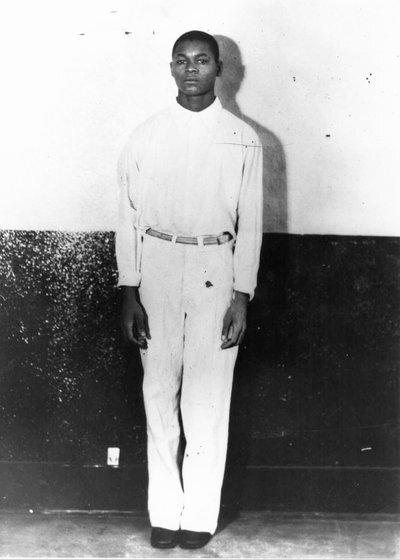
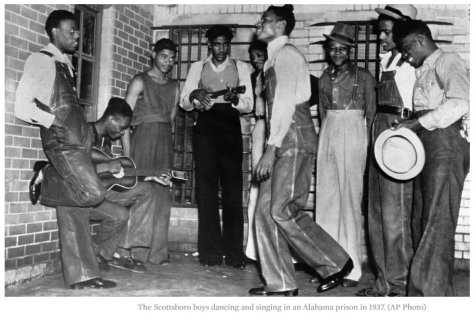
From the Smithsonian National Portrait Gallery:
“This 1936 photograph—featuring eight of the nine Scottsboro Boys with NAACP representatives Juanita Jackson Mitchell, Laura Kellum, and Dr. Ernest W. Taggart—was taken inside the prison where the Scottsboro Boys were being held. Falsely accused of raping two white women aboard a freight train in 1931, the nine African American teenagers were tried in Scottsboro, Alabama, in what became a sensational case attracting national attention. Eight of the defendants were found guilty and sentenced to death; the trial of the ninth ended in a mistrial. These verdicts were widely condemned at the time. Before the young men eventually won their freedom, they would endure many years in prison and face numerous retrials and hearings. The ninth member of the group, Roy Wright, refused to pose for this portrait on account of his frustration with the slow pace of their legal battle.”
(NOTE: Juanita Jackson was the first black woman to practice law in the state of Maryland.)

KEEP GOING BLACK IN HISTORY:

Read individual profiles of the Scottsboro Boys, and find more in-depth coverage of every aspect of their shocking trial here.

The Nation revisits their real-time 1930s coverage of the Scottsboro Boys’ cases in recognition of the men’s 2013 posthumous pardons.

DAY 11 — Marie Van Britten Brown

Between civil rights, gay rights, and war protests, the New York City of the 1960s seemed in constant unrest.

Marie Van Brittan Brown just wanted to go to work and come home.

As a wife, mother and nurse, caring for others was a round-the-clock task, and in the little downtime she had, feeling safe in her own home didn’t seem like much for 43-year-old Marie to ask.

But with riots and crime falling so close to her Queens doorstep and an overextended police force, the chain lock on Marie’s front door was barely an obstacle to the discontent outside threatening the peaceful home she’d made for her babies. Like so many working parents, opposing schedules between Marie and her electronics tech husband often found them passing each other in the night, and spending her alone time wondering who might be on the other side of the door didn’t sit well with her.

So she stepped up.

And when she did, Marie’s creation didn’t just protect her family – it’s protecting yours, too.

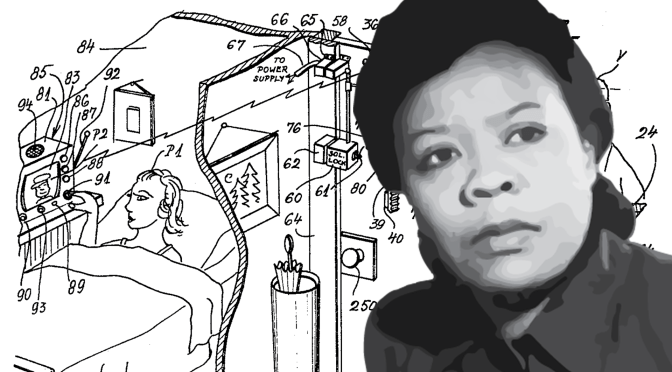
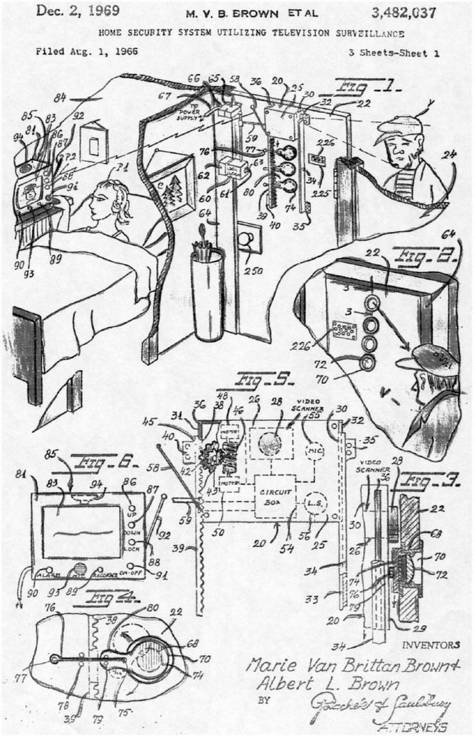
On August 1, 1966, Mrs. Brown’s “Home Security System Utilizing Television Surveillance” was filed with the United States Patent and Trademark Office, and three years later when it was approved, the mother of 2 became the mother of modern home security as well.

Sketching a concept with the working mother in mind, Marie designed the system to operate from one central and special place to her: the bed. When the little ones climbed in or she’d just gotten settled after a long shift, the last thing she wanted to do was make herself more vulnerable to the world by leaving her bed to crack the front door. Her design took every one of those considerations in mind.

Fitted with 4 peepholes and a cabinet housing a video camera, the door’s mechanical system could be remotely operated to put her face-to-face with tall strangers or her children’s tiny playmates, and even unlock to welcome trusted guests in. An integrated audio channel allowed two-way communication with visitors as well, and should what she saw or heard give her cause for alarm, Marie’s system was so sophisticated, it could alert the authorities too.

Just days after her patent was approved, Marie, her husband and her original concept sketch were photographed for the pages of The New York Times, which had already recognized the magnitude of her achievement. After pages and pages of newsprint, department store ads and classifieds, Marie and Albert Brown appear in a rare image of the quiet couple, one of the few photographs found there at all.

While little else is known about them and Marie passed away in 1999, the Browns’ 54-year-old invention is still a global technology. In a market that’s expected to be valued at $75 billion by 2032, most modern home security patents – some filed as recently as 2013 – still reference Marie’s original design.

That design has even been broken down into its components to create the everyday security measures we take for granted. Remote-controlled doors and gates, button-trigger alarms, closed-circuit video monitors, and even instant alerts to home security agencies from your open front door each reference Marie’s patent in their builds. But the design isn’t only operational on the small scale. Global security firms, multi-unit dwellings, and military communication and surveillance systems all utilize the invention born from one mother’s necessity to protect her own.


KEEP GOING BLACK IN HISTORY:

Follow the evolution of Marie’s design to today’s Ring doorbell and the social implications of a Black woman’s design being used for surveillance rather than safety.

“You could imagine that in the late ’60s and early ’70s, as a Black woman, she wasn’t going to get accolades and money because the world wasn’t built for us in that way.” Read on about what Marie built in a world that wasn’t built to recognize her.

DAY 10 — Sepia Magazine

Sepia Magazine - Putting Melanin in Print

In the spectrum of great black publications like JET Magazine and EBONY, there’s one often left out of the conversation: Sepia Magazine.

For almost 40 years, Sepia pushed the boundaries of design, content, and photography in black publications, positioning itself as a LIFE Magazine for black readers.

Where Jet covered a wide range of general interest topics, and Ebony documented current events in news, culture and entertainment, Sepia took a decidedly different tack, turning its pages into a in-depth, photojournalistic view into the lives of everyday black people and celebrities in arts, music and civil rights in particular.

First published one year after Ebony in 1946, Fort Worth, TX headquartered Sepia entered the black publishing landscape during a curious time for America. Although they’d suffered racism in their own armed forces, black soldiers and the valor with which they fought for a country that still hadn’t afforded them full civil rights had been recognized globally and back in the States. Those unexpected but significant gains in equality, and the fact that a newly enfranchised black populace naturally wanted to be more informed about its government, led to one of the biggest black publication booms in American history.

And while Ebony and later, Jet, had things covered on the national front, the pages of Sepia were where black Americans could feel seen and heard. Headlines like “The Black School That’s the Best in Los Angeles,” “The Ghetto Through the Eyes of Youthful Photographers,” and “The Black Chinese: How Africa and the Orient mixed in the U.S.” are just a small smattering of the diverse topics Sepia featured. So keenly were they attuned to the mindset of the middle-class black American that they soon became the highest selling magazine among that demographic. That targeting strategy paid off two-fold in that black soldiers still fighting wars abroad could browse its pages for a true temperature check on the state of affairs at home, and vice versa.

Sepia’s dual and rather polar audiences provided the opportunity to establish a dialogue unlike that of any American publication. Their column “Our Men in Vietnam” gave black soldiers a platform to sound off about their experiences in the United States military. Whether writing about the continued racism in their ranks, or having personal reservations about their role in white Western imperialism, black soldiers found a safe space in Sepia’s column that encouraged them to send their “experiences, heartaches and joys while fighting communism” and black Americans could sympathize with them like never before.

Although Sepia’s staff and content was primarily black, its original owner was a Jewish man, and that culturally rich start to the magazine led to content that eventually expanded to include Hispanic and Asian Americans as well, as their communities often faced the same institutional racism. It also gave Sepia an interesting new perspective from which they could tackle issues of racism – one they pushed to its absolute limit in their stunning exposé, “Life As a Negro.”

After controversially semi-permanently darkening his skin, a white Sepia contributor named John Howard Griffin traveled the Deep South for 6 weeks as a black man, and so eye-opening was the experience that when the magazine series ended, he expanded upon it in his iconic 1961 book, Black Like Me. John himself admitted that upon undertaking this “anthropological study” as he called it, he was embarrassed to find that even “[his] own prejudices, at the emotional level, were hopelessly ingrained in [him].” In response, one black reviewer wrote “since there are white people who doubt everything a Negro says, perhaps now they will hear us when we say the plight of the American Negro is a disgrace.” In the 1977 reprint of his book, John’s epilogue astutely and mournfully pointed out that in the years since that original printing, his “personal experience was that whites still didn’t hear.”

The 7-month long series further solidified and legitimized Sepia’s place in the American landscape and the black American experience it so richly captured. With its ambitious journalism alongside beautifully photographed moments, Sepia simultaneously shared the essence of black America and exposed a quintessentially American contradiction that John Howard Griffin himself articulated so well: “those who embrace the strangely shallow dream of white supremacy are the true killers of society based on freedom, equality and justice.” Sepia published its last issue in 1983 after being bought out by Ebony and quietly shut down, but in the 37 years that it graced newsstands, black households, and trenches worldwide, the magazine carved out a space where blackness had permission to be complex, curious, and most of all, authentic.


KEEP GOING BLACK IN HISTORY:

Read some of the letters from Sepia’s armed forces column in the essay “Our Men in Vietnam: Black Media as a Source of the Afro-American Experience in Southeast Asia”.

Read the Smithsonian’s chronicle of John Howard Griffin’s Sepia Magazine series-turned-book, “Black Like Me” here.

View a small selection of Sepia photos featured at the Rock & Roll Hall of Fame in their Flickr album.
Watch the Fort Worth Public Library’s brief vignette on their 2017 Sepia Magazine photography exhibit here.

DAY 8 — Henry Box Brown

Henry Brown - An Out-of-the-Box Escape Plan

In the months he spent writing letters, devising plans and scheduling secret rendezvous, Henry Brown was resolved to “conquer or die.”

But as he lay terrified and motionless to avoid detection, confined to a 3 x 2 x 2.5 foot crate onboard a steam ship en route to Philadelphia in 1849, Henry was convinced that the latter would indeed be his fate. “I felt my eyes swelling as though they would burst from their sockets,… and a cold sweat coming over me that seemed to be warning that death was about to terminate my earthly miseries,” he later recalled.

And there was nothing but misery. The only joy in Henry’s enslaved life – his pregnant wife Nancy and their three small children – had been torn away, sold to a distant plantation. “My agony was now complete, she with whom I had traveled the journey of life in chains … and the dear little pledges God had given us I could see plainly must now be separated from me forever, and I must continue, desolate and alone, to drag my chains through the world.”

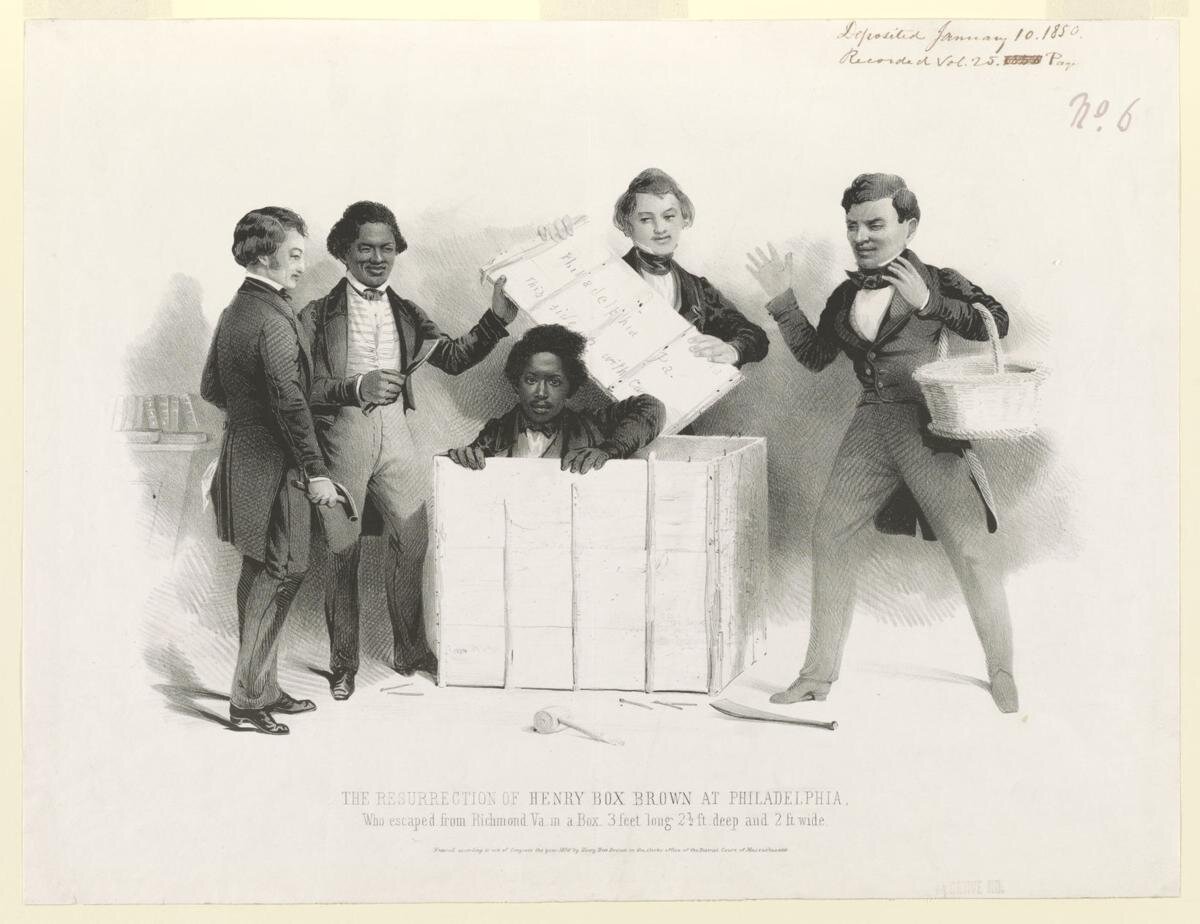
With that utter sorrow in his heart and nothing left to lose, Henry was ready to risk his physical and mental well-being if that’s what it took to escape what he’d endured. And so, with the help of a number of abolitionists and today’s equivalent of $2700 to cover his transport fees, Henry left Richmond, VA and never looked back. Packing only a small bladder canteen and a couple of biscuits, he spent 27 hours contorted into an express crate addressed to a trusted member of the Pennsylvania Anti-Slavery Society 244 miles away.

“If you have never been deprived of your liberty, as I was,” he wrote in his memoir, “you cannot realize the power of that hope of freedom, which was to me indeed, an anchor to the soul both sure and steadfast.”

Henry transfixed his thoughts on that hope the entire journey, trying not to move or make a sound, and praying he wouldn’t suffocate before he arrived, whenever that might be.

Luckily, on the morning of March 30, Henry’s hope of freedom was realized when from outside of the darkness, there came a polite knock and four short words:

“All right in there?”

And with a little help, Henry climbed out of his box, exhausted, drenched in sweat, but alive.

The tale of the man who’d shipped himself out of slavery swept through the abolitionist community like wildfire. Many wanted to publicize Henry’s fantastic getaway, hoping it’d inspire others to devise their own similarly ambitious plans for escape. Others like Frederick Douglass saw greater strategy in keeping the details quiet, utilizing this covert operation to free as many others as possible themselves.

In the end, it was decided that Henry’s story would go public. And for a short time, Henry’s past miseries were replaced by his newfound freedom and fame. A memoir was written, lithographs memorializing his “resurrection” were printed, and “Henry Box Brown’s Mirror of Slavery,” a stage show complete with dioramas depicting various scenes from Henry’s life alongside his original, full-sized shipping box, played to New England audiences until October 1850, when enslavement threatened again.

The newly-passed Fugitive Slave Act entitled slave owners and the federal government to retrieve and punish escaped slaves, even if they’d found freedom in northern states. For a man who’d earned fame because of his daring escape and whose livelihood depended on retelling that story, it spelled grave danger. This time, Henry determined to put even more distance between him and his former life, sailing to England as a free man.

He continued to perform there, remarried, and eventually returned to the States, but his real work had been done. Henry Brown’s widely publicized escape made him a symbol of the Underground Railroad’s growing power and massive organization efforts, and inspired many more slaves, freedmen and abolitionists with the courage to be creative in the fight for life, liberty and the pursuit of happiness, even if it meant risking everything, every step of the way.


KEEP GOING BLACK IN HISTORY:

Read the “Narrative of the Life of Henry Box Brown” written by the man himself here.

DAY 7 — Black Herman

Black Herman - Dark Magic

Ladies, gentlemen, and non-conforming friends! Read closely, for the man I’m about to introduce was an instigator of illusion, master of mysticism, and a benefactor of black advancement the likes of which the early 1900s had never seen.

Come and read of the great enigma, Black Herman.

A traveling ruse is where young Benjamin Rucker’s fortuitous future first took shape. While his mentor and fellow black magician Prince Herman drew crowds with his sleight-of-hand roadshow, 17-year-old Benjamin oversaw the real money-making part of their venture: African tonics to satisfy the superstitions of both black and white audiences.

Black Herman performs for a captive audience.

Upon Prince Herman’s departure to the afterlife in 1910, Benjamin took the moniker for himself, dispensed with the side hustle, and immersed himself in magic as “Black Herman.” One part of the original show he preserved was the tie to his roots. Intertwined in his traditional magic act were hallmarks of the black experience, African religion and voodoo practice. Audiences flocked to be mesmerized by the show that only a magician of Black Herman’s caliber and race could put on. His fantastic escapes from impossible rope bindings were passed down from African tribes who evaded enslaving captors, he crooned. His communion with the spirit world could only be attempted by those with intensive mystical training by Zulu priests, he warned. And no Klansman could be his match as he was an immortal black being, insusceptible to the physical assaults of white men. Make no bones about it, Black Herman became a legend in the eyes of audiences, newspapers, and even among other magicians who nicknamed him “Black Houdini.”

So all-encompassing was the god-like persona that Black Herman built for himself, even institutional racism became a part of his marvelous lore. Repeated arrests and imprisonments for performing his act, despite white magicians regularly performing with impunity, only lent themselves to the tale that Black Herman couldn’t be held by even the most fearsome human authority.

Unbelievably diligent and favored by fortune, Black Herman eventually made a home for himself in the heart of the Harlem Renaissance, where steeped in the rising black cultural class and befriended by the likes of Marcus Garvey and Booker T. Washington, his dedication to the black cause only grew with his celebrity. In 1923, his show having exceeded his wildest dreams and sole capabilities, Black Herman employed as many as 50 black men and women in his production, and transformed his profits into loans for black business owners. Behind his dark persona, Black Herman’s devout Christianity inspired substantial donations to churches, especially those active in the civil rights movement.

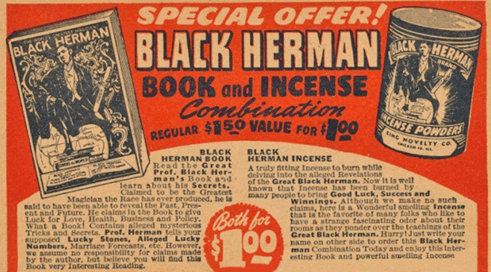
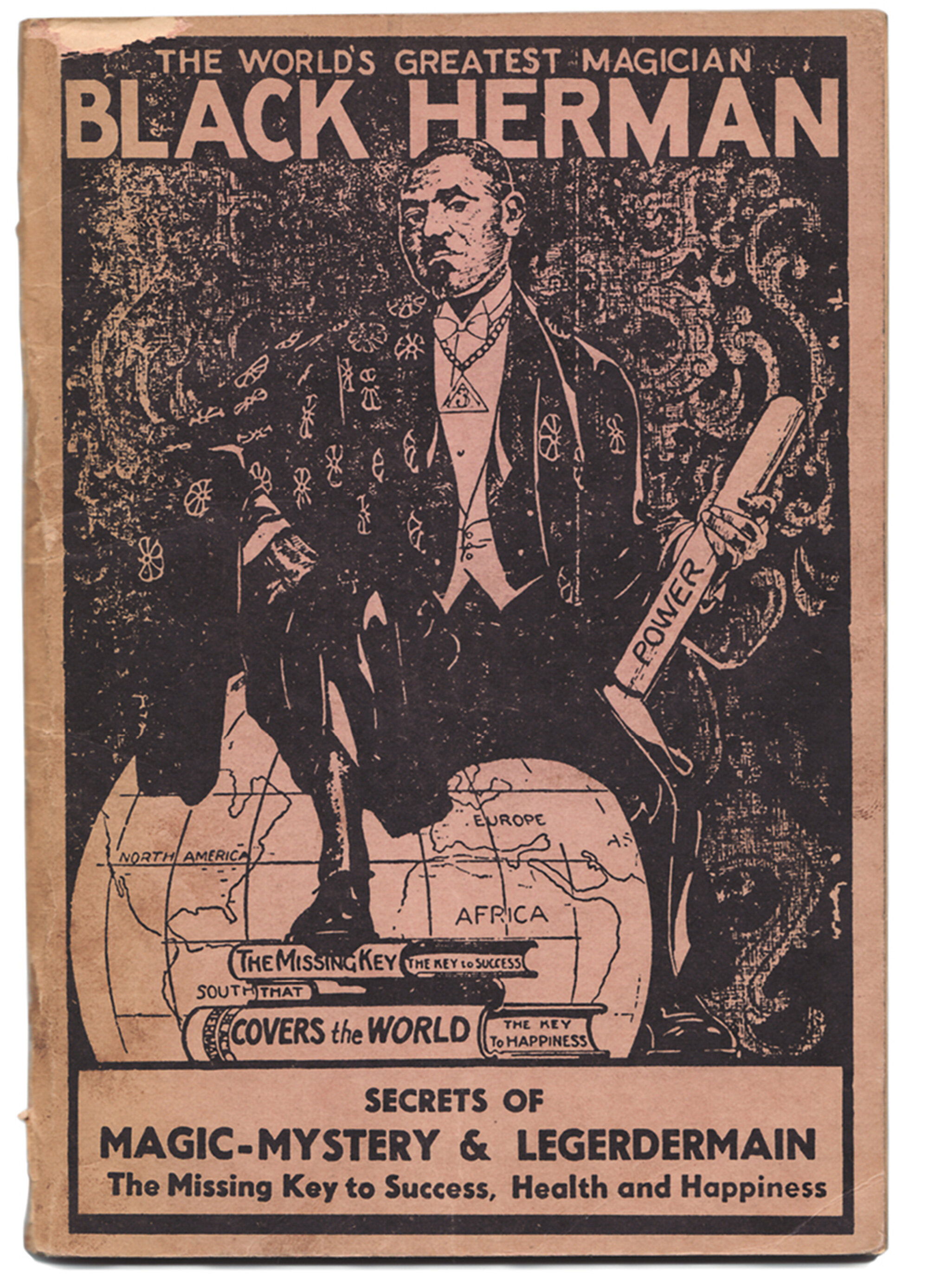
Having conjured up a rather comfortable life for himself, Black Herman reincorporated his early experiences into a whole new series of ventures. To protect from the threat of outside forces, he purchased his own printing company for the production of his widely circulated 1925 book, “Secrets of Magic, Mystery, and Legerdemain,” sold at his shows and even by mail. Voodoo potions and African tonics, incense and other spiritual ephemera were included in Black Herman’s menagerie of self-produced goods available to the public. And when Black Herman predicted a great financial disaster, advising his audiences to cease their Wall Street activities and put their money into more tangible commodities, the 1929 Black Friday Stock Market Crash diverted that money right into his pocket, and by extension, once again, the black community.

An ad for a Black Herman book and incense bundle offers the best that life has to offer.
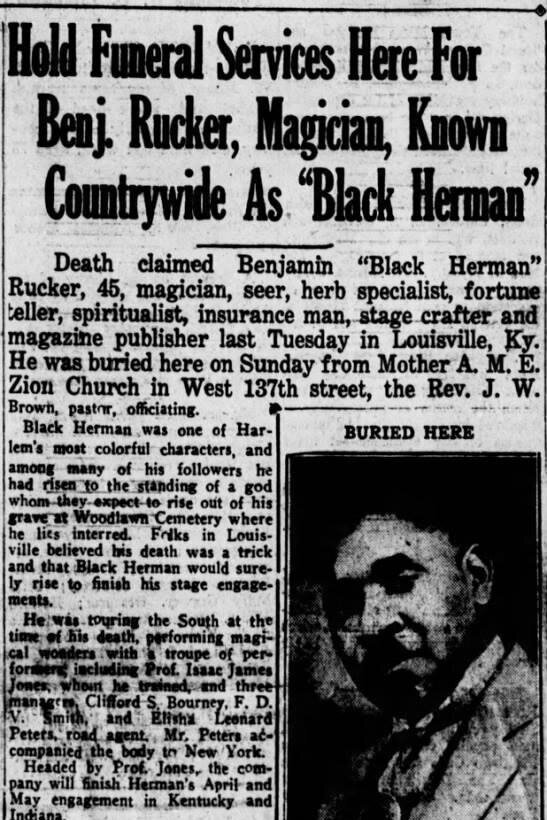
The New York Age, a black newspaper published from 1887 to 1960, dedicated tremendous column space to documenting Benjamin “Black Herman” Rucker’s life and passing. Click through to newspapers.com to read it in full.

Despite his claims of immortality, Death eventually came for Black Herman. Ever a man enshrouded in mystery, even the circumstances of his 1934 demise at only 45 years old are questionable. Some report that he collapsed in the middle of a stage show, baffling audiences who weren’t sure if it was part of the act. Others report that he had a premonition of his death, wrote a letter to his wife, and upon signing it, died in his bed. Either way, so widely regarded was Black Herman’s showmanship, particularly in his variation of the “Buried Alive” trick that saw him resurrected after three days in the grave, no one believed that he was actually dead until his assistant arranged for a public viewing where thousands astonished by Black Herman could see the proof with their own eyes.

Or did they? As many as 5 different men reportedly masqueraded as Black Herman during his imprisonments and after his death, though none came close to matching his character in either performance or virtue. In perhaps his greatest feat of all, Black Herman inspired and embodied a whole race’s determination to transcend the limitations of an oppressive society and be recognized as truly amazing.


KEEP GOING BLACK IN HISTORY:

DAY 5 — Hazel Scott

Hazel Scott - The Civil Rights Movement’s Shining Star

She could transform Beethoven and Debussy into swing music, single-handedly derail a movie production for days, and charm millions of TV viewers in her own nationally syndicated program.

But all of her talent, charisma, and determination couldn’t free Hazel Scott from the wrath of the 1950 House Un-American Activities Committee accusing her as an enemy of democracy.

She was a renaissance woman who wore many hats, but communist subversive was never one of them.

She’d once quite plainly reminded her husband, civil rights leader Adam Clayton Powell Jr., that “it ha[d] never been [her] practice to choose the popular course.” And it was that flair for being exceptional that had led to both her fame and her political predicament.

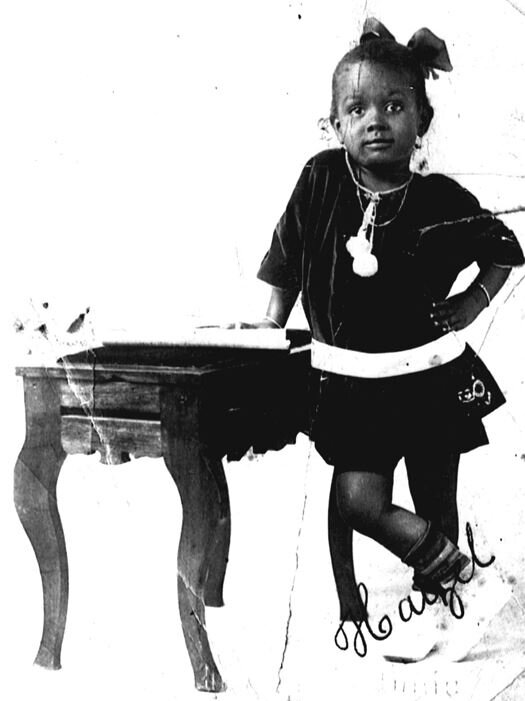
At just 3 or 4 years old, sweet baby Hazel gave the world an early glimpse of exactly who she would become.

She’d displayed such a budding talent for classical piano that in 1928, 8-year-old Hazel didn’t just audition for The Juilliard School; she stopped the school’s founder in his tracks and left the auditioner awestruck, saying “I am in the presence of a genius.”

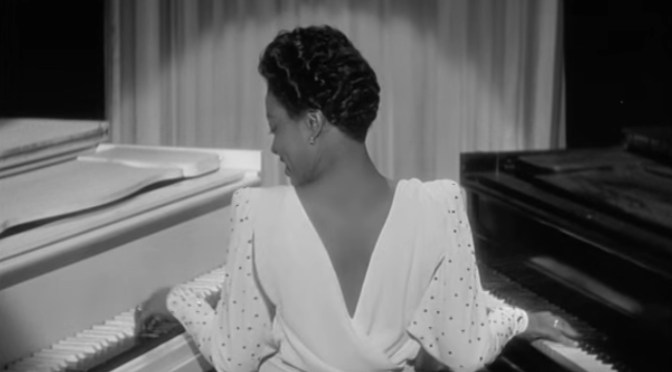
Like her piano playing, Hazel’s personality was magnetic, a combination that made her nearly unstoppable. Her teenage years were a musical whirlwind, seeing her perform in historically monumental venues like the 1939 New York World’s Fair, at Roseland Ballroom with Count Basie, and eventually, Cafe Society, New York’s first integrated nightclub, where at 19 years old, she succeeded Billie Holiday as the headliner and was favored by First Lady Eleanor Roosevelt.

With that kind of attention, Hollywood soon came calling, and Hazel acted and performed as herself, right up until she was personally blacklisted by the president of Columbia Pictures. On the set of “The Heat’s On” starring Mae West, a scene where other black actresses wore dirty aprons so angered her that Hazel refused to return to the set, delaying filming for days. (It worked; those women are seen in lovely floral dresses in the final production.)

You see, Hazel wasn’t just an incredible musician; she was a staunch civil rights advocate. Her talent afforded her exceptions that few others might have received and she took advantage of it. She’d refused to perform in any segregated venue, was escorted (but not arrested!) from an Austin restaurant by the Texas Rangers when she made a scene after discovering it was segregated, and included riders in her acting contracts ensuring that she never played a derogatory role and had full creative control over her wardrobe and characters.

In spite of, or perhaps because of, her admitted boldness for a black female performer of the time, by the time she was 25, Hazel Scott was a jazz legend, earning the equivalent of over $1 million dollars a year between her tours, standing performances, and acting jobs.

Her universal popularity among black and white audiences made her such a sensation that she signed on as the first black person to solo host a nationally syndicated television program, “The Hazel Scott Show.” It was the summer of 1950 and Hazel was in the prime of her life.

This one-sheet announcing the premiere of “The Hazel Scott Show” advertised a single Friday night show, but by the time she faced the House Un-American Activities Committee, Hazel charmed viewers three times weekly on Mondays, Wednesdays and Fridays.

By September 22 of that same year, Hazel would trade her piano bench for a congressional witness stand. Accused of supporting communists by performing at their events, endorsing politicians who’d also been endorsed by communists, and suspected of being a communist herself due to her dedication to equal rights, Hazel implored the committee to “protect those Americans who have honestly, wholesomely, and unselfishly tried to perfect this country and make the guaranties in our Constitution live.” But in the paranoia of the World War II Red Scare, the damage had been done.

Sponsors and advertisers fled, the network cancelled her show despite its tremendous success, and while Hazel continued to perform globally and fight for civil rights, her career never recovered. But most of all, her dream of using her talent and the privileges it afforded as a weapon to dismantle black stereotypes, was utterly dashed just as it had truly come to fruition.

Hazel emanated light whether she was seated at her piano or championing civil rights.

Her light was dimmed for shining too brightly, but as her biographer wrote, “with Hazel Scott, there would be no obsequious smiles, no hunched shoulders, downcast eyes, or shuffling of any kind.” Having lived to see enormous strides in racial equality, particularly in the performing arts, Hazel Scott passed away in 1981 with an unflinching pride in her work and herself, a shining example of modern black female empowerment who once proclaimed, “Who ever walked behind anyone to freedom? If we can’t go hand in hand, I don’t want to go.”


KEEP GOING BLACK IN HISTORY:

Go in depth into Hazel’s life in Narratively’s detailed article here!

Read a vivid 1942 TIME magazine review of one of Hazel’s Cafe Society performances here.

Watch Hazel dazzle on 2 grand pianos in this clip from “The Heat’s On” that Alicia Keys once paid tribute.

Listen to Hazel, who immigrated to New York from Trinidad as a 4-year-old, tell Philadelphia radio station WFIL “What America Means to Me”.