Tag Archives: NAACP

DAY 26 — Ms. Mary Hamilton

“We had to practice nonviolence because if we didn’t, we’d get the sh*t kicked out of us.”

Mary Hamilton was non-violent all right. But the lady had a tongue sharp enough to commit murder, and when the state of Alabama refused to put some respect on her name, she showed them just how deeply she could cut. Like most of the Freedom Riders, Mary was no stranger to gross insults, physical and mental humiliation, petty imprisonments, and violent beatings. Unlike many of her companions, turning the other cheek didn’t come so easily, so if she couldn’t fight back with her hands, Mary wielded words as her weapon of choice. As her daughter later told NPR, “Dr. King called my mother Red, and not for her hair but for her temper. For a nonviolent movement… she was one to get pissed off.” Jailers, doctors, not even the mayor of Lebanon, Tennessee escaped the righteous indignation spoken from the mouth of this black woman.

Men with that level of status were especially not accustomed to such treatment from a woman who could pass for white but self-identified as black, even in the worst of circumstances. In a book of letters from Freedom Riders, she recalled, “The official who checked our money and belongings had put on my slip I was white. When the girl behind me told me, I notified him otherwise. He was very angry. He told me that I was lying. He then took it upon himself to decide what other races I could be, and told the typist to put down that I am Negro, white, Mexican, and I believe that’s all. This made me very angry.”

Identity was everything for Mary DeCarlo who was so committed to living her truth that she dropped her father’s Italian surname in favor of her mother’s more nondescript maiden name. So when all of her activism finally landed her in court and the attorney had the gall to call her by her first name, Mary couldn’t let it go and gave him hell instead. Jailed over yet another act of civil disobedience, Mary’s 1963 hearing in Gadsden, Alabama should have been just another ordinary procedural matter. But Mary Hamilton was anything but ordinary.
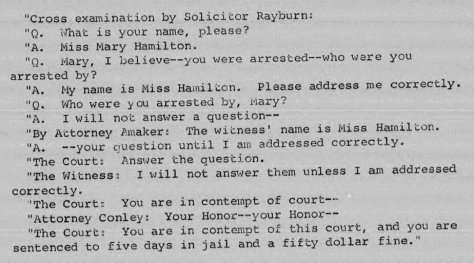
A court transcript of Mary Hamilton’s witness stand exchange.

“Mary, I believe you were arrested…” the prosecuting attorney started. “My name is Miss Hamilton… and I will not answer a question unless I am addressed correctly,” she quickly interjected. Her insubordination wasn’t just shocking, it was an audacious protest right in the middle of open court.

Referring to black people by first name, regardless of rank, class, educational background, or social situation was the norm before the Civil Rights Movement. Dr. Barbara McCaskill from the University of Georgia gives more context, explaining, “Segregation was in the details as much as it was in the bold strokes. Language calls attention to whether or not we value the humanity of people that we are interacting with. The idea was to remind African-Americans, and people of color in general, in every possible way that we were inferior, that we were not capable – to drill that notion into our heads. And language becomes a very powerful force to do that.” Calling grown black men and women “boy” or “girl” was another common linguistic tool that passively reinforced the American social and racial hierarchy.
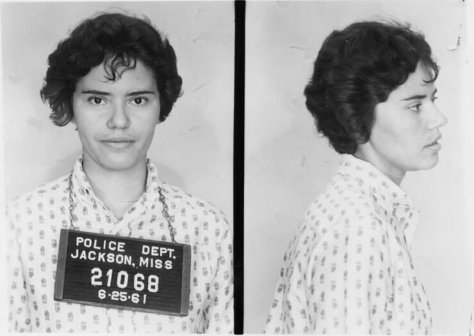
Mary Hamilton’s iconic mugshot from her arrest as a Freedom Rider in Jackson.

Mary had endured stifling southern summers in segregated cells where the black inmates were denied air conditioning, physically invasive jail exams that amounted to sexual abuse, and so many police assaults in her pursuit of freedom that her health was already starting to deteriorate by the time she was 28. After all of that, she’d be damned if she was going to let someone turn her name into a slur.

Absolutely enraged at her calm but repeated refusals to comply until she was addressed respectfully, the judge found Mary in contempt of court that day, and her minor charge escalated to a $50 fine and 5 more days in jail. She dutifully served her sentence, and then appealed her case all the way to the United States Supreme Court. The NAACP filed documents arguing that Alabama’s use of first names perpetuated a “racial caste system” that violated the Equal Protection Clause of the 14th Amendment guaranteeing the same rights, privileges and protections to all citizens of the United States. The Alabama court’s transgression was so evident that without hearing a single oral argument, the Supreme Court decided in Mary’s favor, establishing the 1964 case of Hamilton v. Alabama as the legal decision that gave black adult plaintiffs, witnesses, and experts the same respect granted to white children and convicted criminals for the first time in American history.

Just a year later, Mary married out of the activism circles, but someone close to her had found major inspiration in a minor detail of her story. When Mary received a letter regarding her case, her white roommate and best friend Sheila Michaels couldn’t help but notice how the letter was addressed: Ms. “That’s ME!” she exclaimed. The honorific was rarely used, and even then, only for business correspondence where a woman’s race and marital status might be unknown, not in popular culture and most certainly not by women to describe themselves. Unmarried women in proper society were “miss” and married women were “mrs.” Mainstream language didn’t account for anyone in between. “The first thing anyone wanted to know about you was whether you were married yet,” Sheila said. “Going by ‘Ms.’ suddenly seemed like a solution; a word for a woman who did not ‘belong’ to a man.” Sheila’s campaign to popularize the term led to its adoption as the title of Ms. Magazine, and a new way to show respect was once again inspired by Mary’s work.

Despite Sheila’s best efforts to preserve the story of how Mary’s triumph lead to her linguistic epiphany, the tale of Ms. ultimately overshadowed the struggle to be called anything respectable at all. While Mary’s sharp tongue and unflinching rebellion against systematic racism ended up mostly buried in legal texts, black women today like NAACP lawyer Sherrilyn Ifill who’ve personally experienced the long “fight for respect and dignity against demeaning and ugly stereotypes in the public space” still find inspiration and courage in the woman who’d endured too much of this country’s worst to be called by anything but the best.


KEEP GOING BLACK IN HISTORY:

Read all about Mary’s life and even listen to Mary & Sheila chat together in NPR’s story & archival audio.
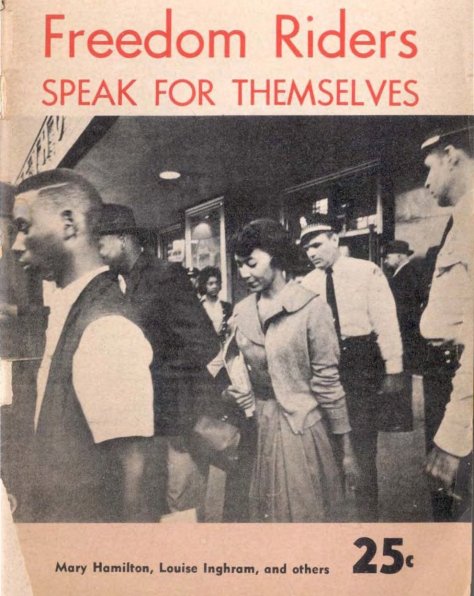
Dig into Mary’s first-hand account of her jailhouse treatment published in a book of letters from Freedom Riders.

The New York Times documented Mary’s historic 1964 Supreme Court win.
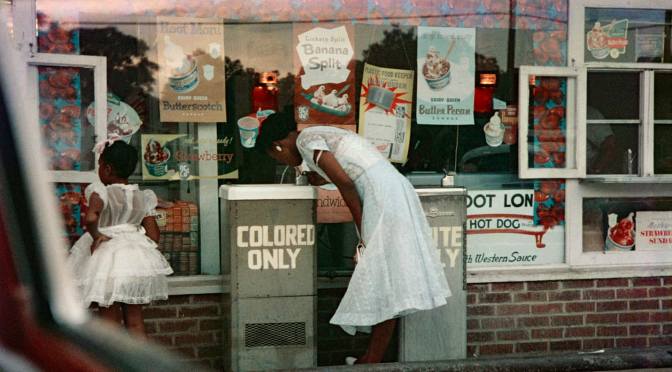
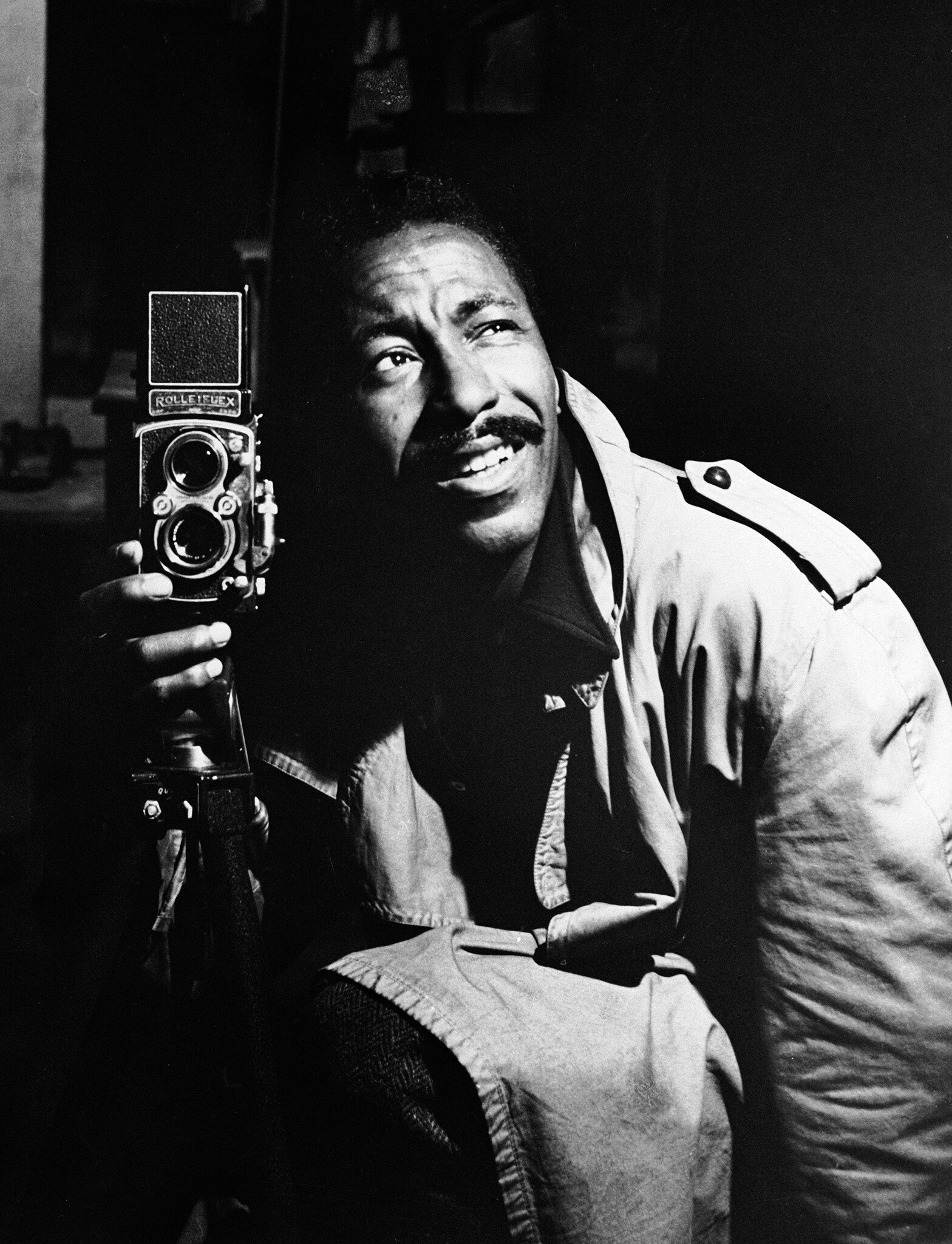
DAY 18 — Gordon Parks

Gordon Parks - Melanin on Both Sides of the Lens

“I saw that the camera could be a weapon against poverty, against racism, against all sorts of social wrongs. I knew at that point I had to have a camera.”

In 1938, Gordon Parks bought that camera, and for just $7.50, he became the first black man to make the world truly see its reflection through his eyes.

And those eyes had seen more in his 26 years than most had seen in a lifetime. Gordon lost his mother as a teenager and had subsequently been homeless, a high school dropout, a piano player and singer, busboy and waiter, semi-pro basketball player, and worked for the Civilian Conservation Corps. But when he chanced upon a discarded magazine featuring photojournalistic images of migrant workers, immediately Gordon envisioned himself as the man behind the camera. “Still suffering the cruelties of my past, I wanted a voice to help me escape it,” Gordon recounted in his autobiography. “I bought that Voightlander Brilliant at a Seattle pawnshop; it wasn’t much of a camera, but.. I had purchased a weapon I hoped to use against a warped past and an uncertain future.”

Whether his camera was a weapon or a good luck charm, right away, things started looking brighter for the young man. From one of his very first rolls of film came his first exhibition, a window display of his images by his developer, the local Eastman Kodak store. On their recommendation, he charmed his way into a job shooting for a women’s clothing store where his good luck just kept on growing. That store happened to cater to Marva Louis, wife of heavyweight champion Joe Louis. In Chicago, there was a true demand for a photographer of his caliber, she teased.

In hindsight, Gordon wrote, “a guy who takes a chance, who walks the line between the known and unknown, who is unafraid of failure, will succeed.” It was easy advice for the man who’d arrived in Chicago and taken freelance jobs shooting on the South Side before winning a fellowship to work in the Washington D.C. Farm Security Administration, the very same agency that’d published the photos inspiring his photography in the first place.

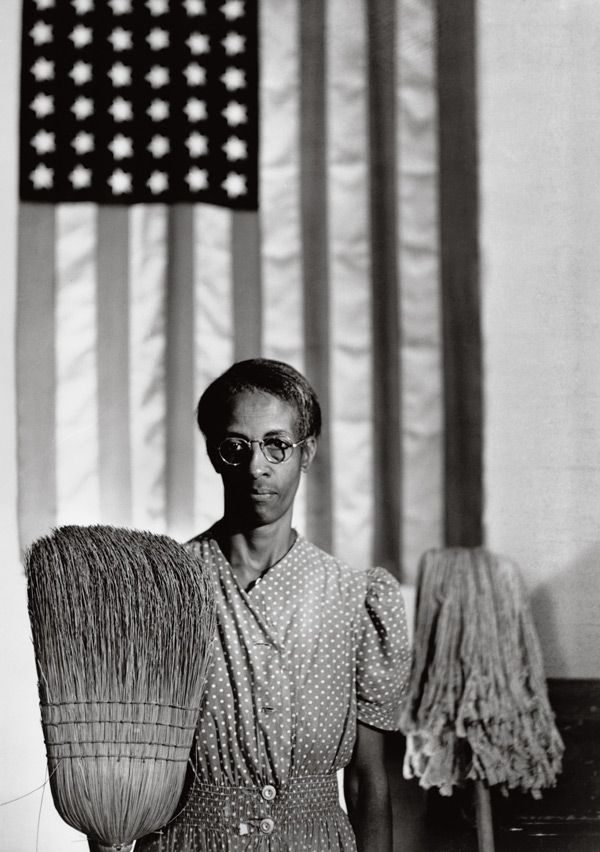
Gordon became an undeniable asset to the FSA in the middle of their campaign to win the hearts and minds of Americans for Roosevelt’s New Deal. Since many voting Americans didn’t know the plights of farmers, migrant workers and rural towns the New Deal was expected to help most, the FSA had been tasked with photographing that demographic sympathetically. Gordon was crucial in that effort. The extremely poverty-stricken (of all races) and people of color could allow themselves to be vulnerable to a black man who was himself already accustomed to being invisible. His photographs, including one of his most famous taken right in the offices of the FSA, were full of raw emotion and evocative scenery unlike any other captured during the mid-30s and 40s.

By then, his humanizing eye had gained a following of its own beyond the public sector, and when Gordon finally hung up his government service hat in 1943, he relocated to Harlem, where a very famous name was waiting for his services next: Vogue Magazine. At a time when some black American men were still being lynched for looking at white women, one of the world’s most recognized fashion publications sought out Gordon’s gaze as their first black photographer.

With fashion came with its own vast new world of photographic techniques, settings and points of view. Gordon dominated them all. But for a photographer used to shooting portraits and candids, fashion photography came with its own challenges. Namely, models. Their over-posing and intense awareness of the camera didn’t fit his vision of how real women wanted to see fashion, and though he’d spent 5 years delighting Vogue’s readers with his fresh new approach, when LIFE Magazine came calling next, he quickly answered, becoming their first black photographer as well.

It wasn’t all roses for Gordon though. His willingness to work for white-owned publications made him an outcast in some black communities, and a still racist society meant there were no protections for him, neither in-office nor on assignment. But navigating extremes was nothing new for Gordon, who’d seen some of the best and worst life had to offer before he’d even turned 40. “The pictures that have most persistently confronted my camera have been those of crime, racism and poverty. I was cut through by the jagged edges of all three. Yet I remain aware of imagery that lends itself to serenity and beauty, and here my camera has searched for nature’s evanescent splendors,” Gordon mused.

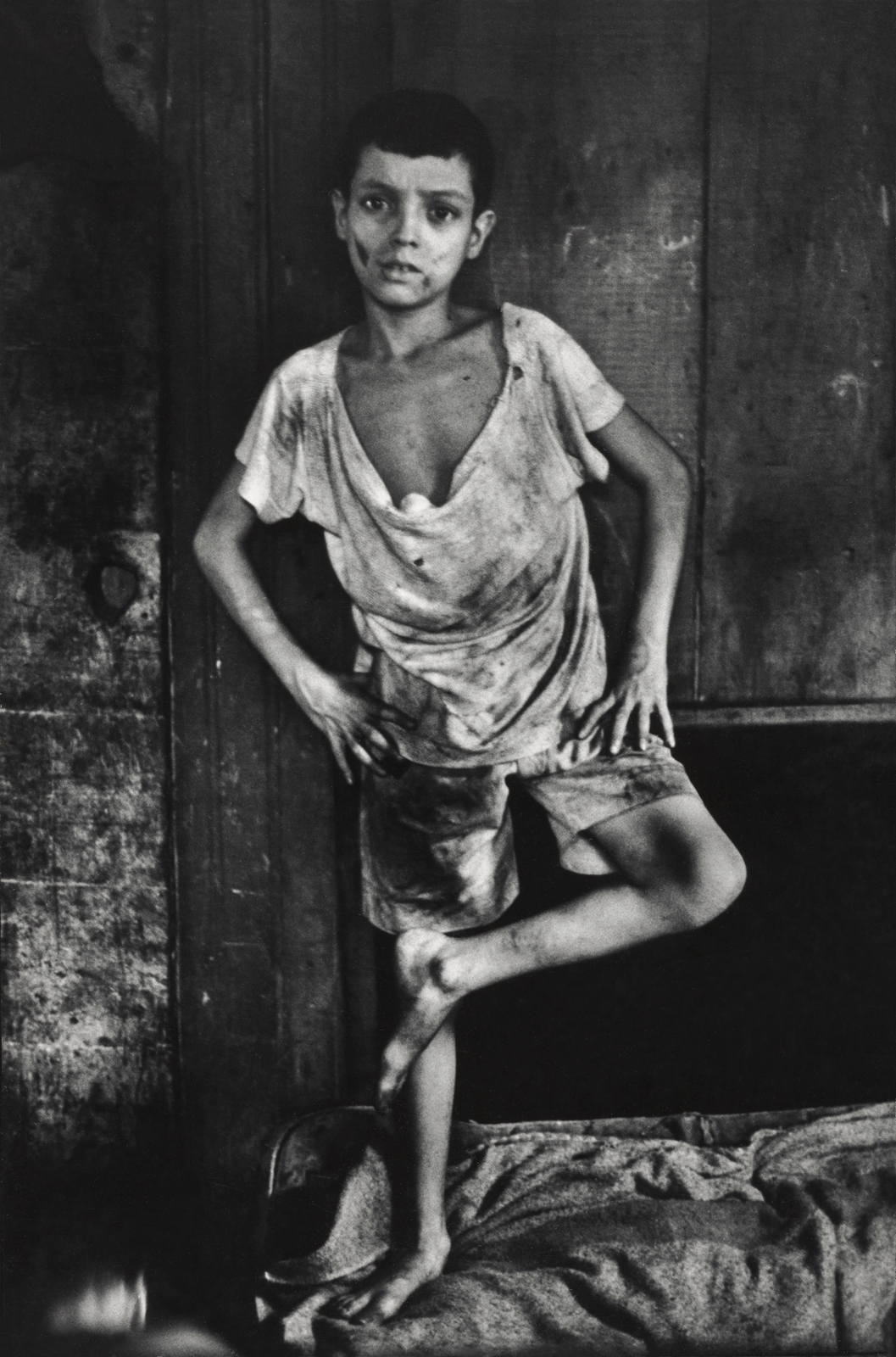
Flavio da Silva, 1961

And for the next 20+ years, LIFE made the most of his vast wellspring of talent, access, and life experience, sending him on assignments that included the Black Panthers and Harlem gangs, celebrities, Parisian life, and even the slums of Rio de Janeiro, where he quite possibly launched the world’s first Kickstarter. When LIFE published his 1961 photo-documentary of a sick little boy named Flavio and the struggle his family faced in Brazil, the magazine’s readers spontaneously donated over $30,000 for the boy’s medical treatment in the States as well as a new home for his family. There were few clearer examples of the weapon he’d formed against poverty and racism doing its work to breaking barriers.

But Gordon had so much more to do. By 1962, he was writing books. By 1968, he was producing his own movies. And finally, by 1971, “Shaft,” his blueprint for the blaxploitation movie, made him the first black man to release a major motion picture, too. “Like souls touching… poetry, music, paint, and the camera keep calling, and I can’t bring myself to say no.”

By the time he died in 2006 at the age of 93, Gordon had won too many photography awards to count, 40 honorary doctorate degrees, the National Medal of Arts, the NAACP’s Spingarn Medal, and hundreds more. But even more significant are the millions of photographs, 12 films written or directed, 12 books and countless other artworks by a man who showed American society how much more of its beauty is visible when seen through a darker lens.


KEEP GOING BLACK IN HISTORY:

Browse the archives spanning Gordon’s years and genres of work.

Read Gordon’s compelling life story in his New York Times’ obituary.

See Gordon Parks’ images brought to life in Kendrick Lamar’s “Element” video.

DAY 14 — The Scottsboro Boys

The Scottsboro Boys - Railroaded by History

There was no room left for the truth, the whole truth, and nothing but the truth on the train leaving Chattanooga one fateful March day.

Unbeknownst to the conductor, along with its standard cargo, his freighter carried a truly volatile situation. When nine assorted black teenagers, a motley crew of white men, plus two white women all happened upon each other while trainhopping on March 25, 1931, their trip aboard the Southern Railroad line sparked one of the most documented, protested, and historically significant miscarriages of justice in United States history.

Four of the nine teenagers – Haywood Patterson (18), Eugene Williams (13) and brothers Roy (12) and Andy Wright (19, and the oldest of all) – traveled west together looking for more job opportunities. From seeking medical care to simply heading home, the five additional black men, who were otherwise strangers, had their own reasons to hop the railways. For all nine, the risk of riding trains illegally and their vulnerability to others’ misdeeds or undue punishment should they be caught, was worth the reward waiting at their final stops.

But when someone intentionally stomped young Roy’s hand, the perils of confronting white men didn’t stop his brother and two friends from rushing to his aid, overpowering and throwing Roy’s aggressors from the train. Relieved to have avoided worse, the boys looked forward to finishing their trip with racism behind them. They couldn’t have imagined the lifelong misery that lie ahead.
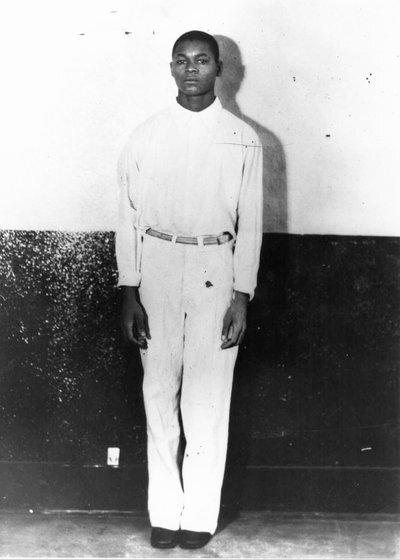
The story of Roy’s attack had been refabricated into one where he and the three companions defending him were suddenly the villains who started the fight, and according to the two women attempting to avoid trainhopping charges themselves, rapists as well. A mob waiting at the next stop in Paint Rock, Alabama ransacked each car in search of the black men who’d dared to forget their place in the still intensely racist South, snatching all nine.

Fortunately, starting in 1918, anti-lynching bills continually introduced in Congress – though none of the 200 actually passed until 2018 – signaled a growing distaste of lynching by the American public, who beforehand had only taken a stance of disapproving passivity at best. Rather than being handed over to the mob, the nine were imprisoned in Scottsboro, Alabama, and granted one laywer who hadn’t practiced in over a decade, another who practiced real estate law, and a sham of a two-week trial in which eight were immediately convicted and sentenced to death by an all-white jury.

Nearly two years of appeals later, the Alabama Supreme Court STILL upheld all eight convictions. But the scandalous trial had seized the attention of almost every major American news outlet, with even The New York Times urging President Roosevelt to intervene in the glaring discrimination against the Scottsboro Boys. Global protests as far as Cape Town, South Africa and Delhi, India erupted, until finally, the case made its way to the U.S. Supreme Court where in 1932, the convictions were overturned on the grounds of insufficient counsel.

But Alabama was relentless, and despite representation from renowned and undefeated New York defense attorney Samuel Leibowitz, when the trials reconvened in 1933, even Samuel’s legal prowess was no match for the all-white jury’s determination to turn eight innocent black teenagers into scapegoats. Doomed to become eight more anonymous black prisoners victimized by a racist justice system, the Scottsboro Boys instead inspired an unexpected moral stand from Judge James Horton who suspended their sentences and any further trials until he could ensure a “just and impartial verdict.” The details from the trial and the tribulations faced by both the Scottsboro Boys and anyone who publicly interfered with their unjust convictions inspired one of America’s greatest pieces of modern literature, Harper Lee’s “To Kill a Mockingbird.”

Protestors of every race, color and creed joined to show their support for the Scottsboro Boys.

And still Alabama persisted. The judge was replaced with another who hadn’t attended a single day of law school, and after shutting down any attempt at a defense by their northern Jewish lawyer who offended every possible Southern sensibility, two of the eight men were again convicted of a crime they obviously hadn’t committed, while the others awaited retrial. But Samuel wasn’t done fighting for the Scottsboro Boys quite yet. Once again appealing to the U.S. Supreme Court in 1935, he protested Alabama’s use of all-white juries, proving that the state forged names to create the appearance of having even considered black jurors. For a second time, the convictions were federally overturned.

Refusing defeat, the state of Alabama continued their legal lynching, seeing the defendants in and out of prison repeatedly after paroles, parole violations, and new convictions for the next 20 years until their releases, plea bargains or deaths. Finally, in 2013, the Scottsboro Boys were officially exonerated of any crime and pardoned in 2013, over 80 years after their arrest and long after all nine had died.

Despite the “unmitigated tragedy” that Alabama now admits that the Scottsboro Boys suffered at the hands of a racist system clinging to its former glory, those two Supreme Court cases set landmark precedents in jury selection and defendants’ rights. But still, mirrored by modern day cases like the plight of the Central Park Five, that the Scottsboro Boys’ story remains unfinished is a national shame beyond all reasonable doubt.

From the Smithsonian National Portrait Gallery:
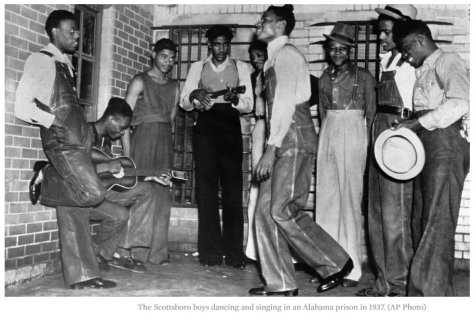
“This 1936 photograph—featuring eight of the nine Scottsboro Boys with NAACP representatives Juanita Jackson Mitchell, Laura Kellum, and Dr. Ernest W. Taggart—was taken inside the prison where the Scottsboro Boys were being held. Falsely accused of raping two white women aboard a freight train in 1931, the nine African American teenagers were tried in Scottsboro, Alabama, in what became a sensational case attracting national attention. Eight of the defendants were found guilty and sentenced to death; the trial of the ninth ended in a mistrial. These verdicts were widely condemned at the time. Before the young men eventually won their freedom, they would endure many years in prison and face numerous retrials and hearings. The ninth member of the group, Roy Wright, refused to pose for this portrait on account of his frustration with the slow pace of their legal battle.”
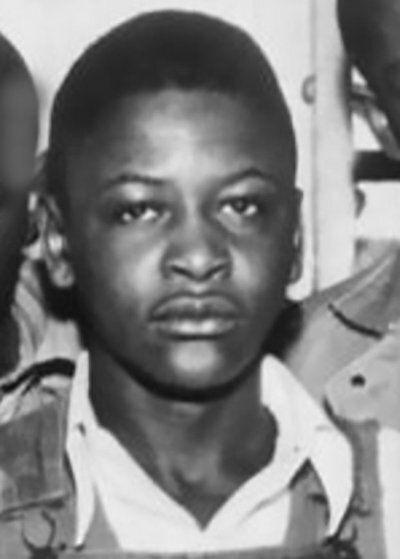
(NOTE: Juanita Jackson was the first black woman to practice law in the state of Maryland.)

KEEP GOING BLACK IN HISTORY:

Read individual profiles of the Scottsboro Boys, and find more in-depth coverage of every aspect of their shocking trial here.

The Nation revisits their real-time 1930s coverage of the Scottsboro Boys’ cases in recognition of the men’s 2013 posthumous pardons.

DAY 26 — Victor Green & The Green Book

Victor Green - The Black Guide to America

“Would a Negro like to pursue a little happiness at a theater, a beach, pool, hotel, restaurant, on a train, plane, or ship, a golf course, summer or winter resort? Would he like to stop overnight at a tourist camp while he motors about his native land ‘Seeing America First?’ Well, just let him try!”

That was the state of affairs according to the NAACP’s magazine in 1947, as they warned black people against buying into the Great Northern Railway & National Park Service’s ad campaign encouraging Americans to vacation close to home. And lest someone doubt it, they need only look to examples of the plain warnings posted just outside thousands of “sundown towns”:

“N—–, Don’t Let The Sun Go Down On You.”

These weren’t just occasional backwoods towns. As late as the 1960’s there were still as many as 10,000 active sundown towns documented in the United States, some that were well-known and well-populated like Glendale, CA and over half of the incorporated towns in Illinois.

It was a difficult dilemma for black people who’d been encouraged to buy cars as soon as they could to avoid the humiliation of being forced to the back of public transportation vehicles, but couldn’t freely use those cars to travel beyond the relative safety of their immediate surroundings. If they did, they often packed extra food, gas and portable facilities to avoid being forced in dangerous situations for necessities.

Victor Hugo Green had done his share of getting around. As a postal worker, and later World War II soldier and music manager, he’d learned to navigate where he was welcome and would repeatedly visit those same establishments for both his own safety and to contribute to their continued success.

After some close calls himself and hearing stories from strangers and friends alike about running into racism whether traveling for business or pleasure, he decided that he’d curate a book to help “give the Negro traveler information that will keep him from running into difficulties, embarrassments and to make his trip more enjoyable.”

When he ran his inaugural 10-page issue in 1936, it was titled the “Negro Motorist Green Book,” and it primarily focused on lodgings, gas stations, restaurants and travel advice in New York, but by the very next year, it was popular enough to reach national distribution. By picking the brains of his fellow postal workers and offering to pay the Green Book’s readers $1 for providing new leads, Victor grew his publication annually until he left for the war in 1940, and when he returned in 1946, he began expanding the Green Book to include safe spaces in international destinations like Mexico, Canada, the Bahamas and Europe. By 1949, the Green Book was up to 80 pages including ads, many of which were from black female entrepreneurs who found freedom and greater personal wealth in running their own businesses and benefited from the word-of-mouth.

But what the Green Book omitted was as much a warning as inclusion was a welcome. Not a single restaurant was featured in Alabama in the 1949 issue. In Texas, only Austin and Waco were included in ANY Green Book. On the contrary, New Mexico was highlighted as a state that primarily practiced “cash over color.” The information contained (or not) within the pages of the Green Book was so extensive and reputable, a member of the Little Rock Nine even called it “one of the survival tools of segregated life.”

Recognizing that ultimately, black travelers just wanted to have positive experiences, Victor always ensured that the tone of the Green Book, while cautious was always uplifting, and he often featured travel quotes like his twist on Mark Twain’s “Travel is fatal to prejudice” to reassure black travelers that eventually things would change. In fact, at their peak of printing 15,000 copies annually, Victor himself once wrote, “There will be a day sometime in the near future when this guide will not have to be published… It will be a great day for us to suspend this publication for then we can go wherever we please, and without embarrassment.”

Victor passed away in 1960 and didn’t live to see the signing of the Civil Rights Act of 1964 outlawing discrimination on the basis of race, but his hope was indeed realized. With the passage of the Act, the dire necessity for his guide slowly decreased, and after nearly 30 years in circulation, the Green Book was finally retired in 1966, having made a whole era of travel possible for black people who wanted to take their growing freedoms on the road too.


KEEP GOING BLACK IN HISTORY:

Explore the New York Public Library’s digital catalogue of Green Books published 1936-1967.

The Bitter Southerner created a really lovely featurette illustrating personal vignettes about using the Green Book.

DAY 13 — Cheryl Brown

Cheryl Brown - The Realest Representation of Miss America

“Contestants must be of good health and of the white race.”

Rule 7 of the Miss America Pageant Handbook had been on paper since 1930, and finally overturned in 1950, but here it was 1970 and still not a single black contestant.

Even that hadn’t been without a fight though. Two years beforehand, the NAACP had challenged the lack of diversity in the pageant, and the Miss America organization had responded less enthusiastically than they’d hoped. So black entrepreneurs created their own Miss Black America Pageant in 1968 and held it in Atlantic City on the very same day as their counterpart to point out the hypocrisy in a “Miss America” without women of color, and to challenge European beauty standards that automatically disqualified black women’s dark skin, full lips, round noses, kinky hair and thick curves.

A 1968 clipping from The New York Times features the Miss America and Miss Black America pageant winners side-by-side. Read both articles for a good laugh, especially from the first blonde Miss America in 11 years.

At the same time, feminists from all races were protesting the existence of the Miss America Pageant altogether, with white women likening it to a meat market and women of color calling it “racism with roses,” in reference to their official and unofficial exclusion for so many years.

Amidst all this ongoing unrest, a black ballet dancer from New York won the title of Miss Iowa 1970, allowing her to compete as the Miss America Pageant’s first black contestant in their then 50-year history.

Cheryl Adrienne Browne was only in Iowa to attend Luther College at her pastor’s recommendation. She had participated in the pageant to win scholarship money to support her while she was away from her family, and was just as surprised as anyone else when she actually won both the swimsuit and talent competitions, and then the whole thing.

But that success didn’t come without its share of obstacles, too. When she wasn’t fighting the criticism that a black woman wasn’t worthy of a pageant win, she had to answer to those who didn’t want a non-native Iowan representing them, and those who fell into both camps. Between this and the other protests, there was so much controversy surrounding Cheryl’s win that even other Miss America contestants couldn’t help but notice the increased security presence in and around their rehearsals, travel routes and hotels.

Cheryl and Miss Maryland Sharon Ann Cannon, on the Atlantic City Boardwalk just before the Miss America 1971 pageant.

On September 12, 1970, Cheryl didn’t win the Miss America 1971 crown. She didn’t even place in the Top 10. But she did go on to represent the pageant on USO tours in one of the last groups to visit Vietnam, and served as a judge to bring equality to subsequent competitions. Today, she’s very humble about her place in history, saying “I don’t feel I personally changed the pageant, but I feel that my presence expanded people’s minds and their acceptance. And, in subsequent years, they were much more open to African-American candidates.”

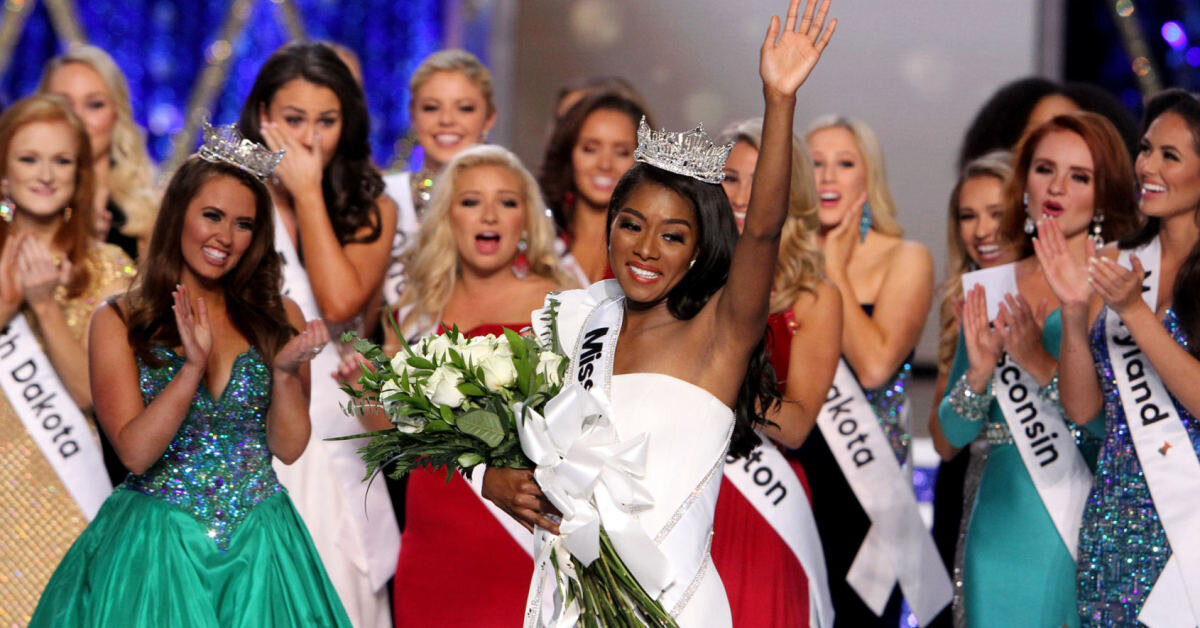
Nia Imani Franklin, Miss America 2019.

And indeed they were. 13 years later, Vanessa Williams was crowned the first black Miss America in 1983, and there have been 8 more since, including this year’s Nia Franklin, all living proof that beauty, talent and brains know no racial boundaries.


KEEP GOING BLACK IN HISTORY:

DAY 24 — Adm. Michelle Howard

Michelle Howard - First Female Four-Star Admiral

Michelle Howard just wanted to do her job. She was a black woman who’d excelled in the U.S. Navy for years, so naturally, all sorts of organizations wanted her to come share her stories, or to clink glasses with her at their parties.

In 1999, she’d become the first black woman to command a Navy ship, the USS Rushmore (LSD 47). And over the years, she’d also commanded tsunami rescue efforts, maritime security operations, and counter-piracy strikes. In fact, just three days into her counter-piracy command, she successfully led the well-documented rescue of Captain Richard Phillips from Somali pirates who’d hijacked & kidnapped him from the Maersk Alabama.

By then, she’d also won the Women of Color STEM Career Achievement Award, the USO Military Woman of the Year Award, the NAACP Chairman’s Award, and the Secretary of the Navy’s Captain Winifred Collins Award. She’d even started her career famously as one of the first women admitted to the United States Naval Academy.

Michelle didn’t get where she was by entertaining distractions. Back when she was little, she’d learned to stay focused after kids on the playground called her a n*gger and when she ran home crying, her father told her “You gotta toughen up. This is the country you live in.”

She wanted to shut out everything but the job when a few words from her mother changed her entire perspective: “You are where you are historically.”

So she embraced her place in history, and anything else that came along with it. Two years later, Michelle came to take it all.

Adm. Howard is pictured here with Rear Adm. Annie B. Andrews (L) and Rear Adm. Lillian E. Fishburne (C, ret.) as the first three black female admirals in the Navy.

On July 1, 2014, she became the first female four-star admiral, as well as the first black person and first woman to serve as Vice Chief of Naval Operations.

On June 7, 2016, she stepped down as Vice Chief of Naval Operations… to lead U.S. Naval Forces Europe-Africa/U.S. Sixth Fleet, becoming the first female four-star admiral to command operational forces in the process. She also leads NATO’s Allied Joint Force Command Naples – JFCNP in Italy. All that, and she’s only 56.

So when it comes to doing her job, as the highest ranking female in U.S. military history, I think it’s safe to say that she’s doing an all-around damn good one.


KEEP GOING BLACK IN HISTORY:

Adm. Howard discusses her experiences overcoming race & gender barriers with The Empowerment Project.