Tag Archives: MAGIC

DAY 27 — Ellen E. Armstrong

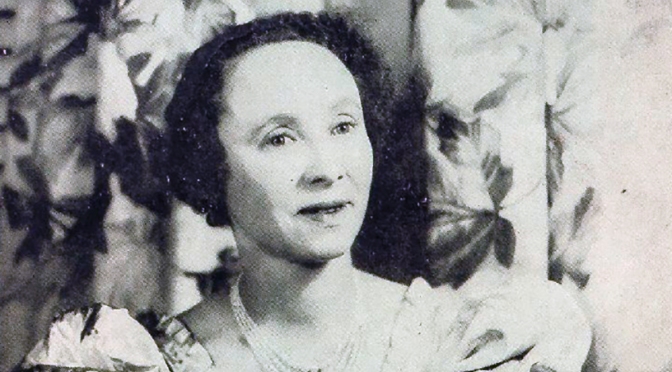
In 1939, Ellen E. Armstrong pulled off one of the slickest tricks the performing world had ever seen.

Born in 1914, the 25-year-old daughter of J. Hartford and Lillie Belle Armstrong took over her father’s business – a feat in itself for any woman of the time – and transformed herself into the world’s first headlining African-American female magician.
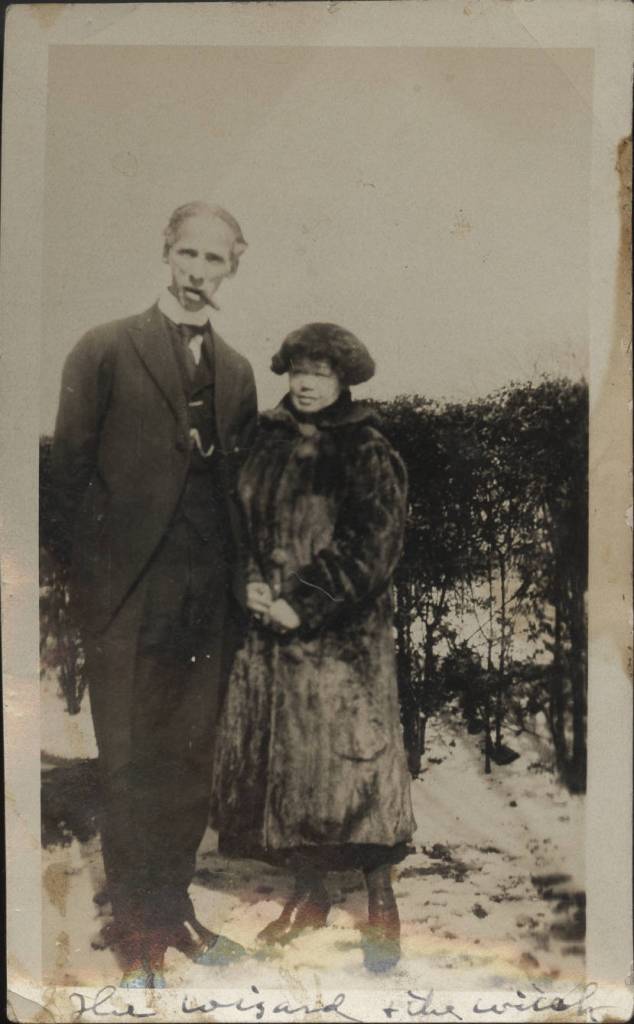
J. Hartford and Lillie Belle: “the wizard & the witch” as they’re labeled in the photo

As the only heir to the couple dubbed “the most royal colored entertainers of the century,” Ellen took up her birthright early on, joining her parents in performing at the age of 6. Their tagline “Going Fine Since 1889” During set changes, Ellen would wander through the audience, touch her little index finger to a person’s forehead, and divine what they were thinking about the person sitting next to them. Whether it actually worked, or simply served as adorable comic relief, Ellen’s confidence was boosted, and her act grew to include sleight of hand and card tricks too. Never one to shy away from showmanship, she even created her own signature act, “Chalk Talk,” where she told stories through squiggles and doodles. Each time she’d add a new chalk mark, the doodle would transform into a new character or scene in her story.

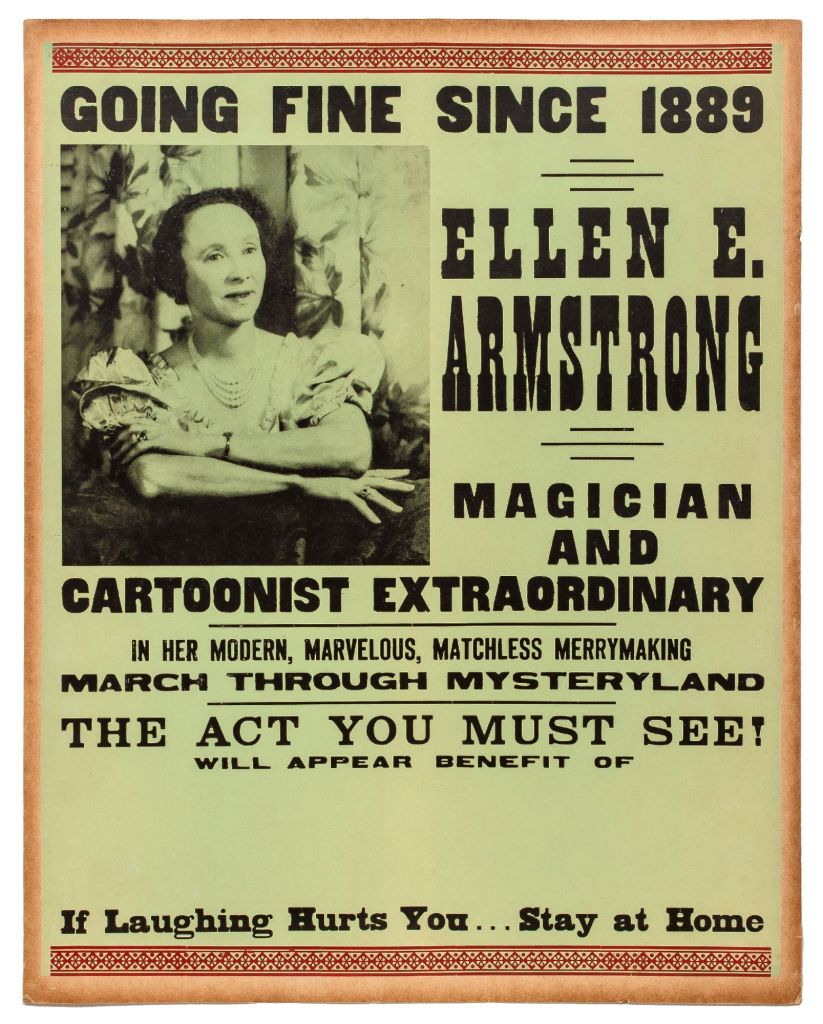
The family business. Ellen, J. Hartford, and Lillie Belle appear in an beautifully printed tour poster.
Just Lillie Belle & Ellen. “Daddy’s Babies” is inscribed below them.

Taking audiences on a journey was Ellen’s talent, regardless of the medium, and “The Celebrated Armstrongs” enjoyed incredible success and critical acclaim as “America’s Greatest Colored Magicians” touring the East Coast, Cuba, and even Europe. But all of that came to a screeching halt in 1939 when J. Hartford Armstrong, “King of the Colored Conjurers,” died suddenly.

Ellen was only 25, and fresh out of college. She could have chosen many paths. Instead, she would rightfully inherit the throne of the King of the Colored Conjurers and his substantial $8,500 in props, taking up her mantle as the unrivaled “Mistress of Modern Magic.”

And she was absolutely terrified. 

American culture has long held taboos against women practicing magic, and even the Salem Witch Trials held a Black women in particular contempt. Even if Ellen’s magic was simply for entertainment’s sake, it was still risky to practice alone, travel alone, and own property alone in the early 20th Century.

But for the next 3 decades, Ellen’s risktaking paid off.
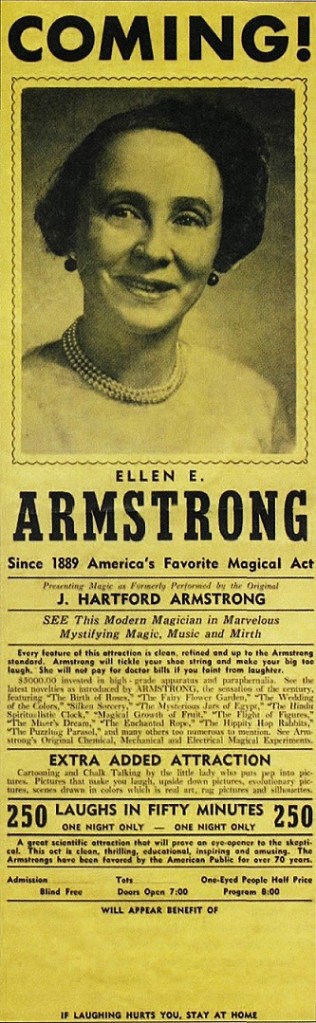
Ellen’s newspaper ads were hilarious, boisterous and entirely unexpected from the lady pictured at the top.

She married in 1940, but Ellen’s headlining act was her only baby and her sole bread and butter. Many of the tricks she performed like the Miser’s Dream, the Mutilated Parasol and the Sand Frame, where a photograph of famous African-American boxer Joe Louis appeared from thin air, are still classics today.

When her “Modern, Marvelous, Matchless Merrymaking March Through Mysteryland” finally came to a close, Ellen retired in Spartanburg, South Carolina, and in 1979, died unceremoniously. Aside from the tricks she practiced, and a handful of her tour posters, little of Ellen or her groundbreaking performance remains. And though that means there’s often very little for me to tell, I am so grateful to feature women like Ellen (and men like Black Herman) here at The American Blackstory, ensuring that if I have anything to do with it, they’ll never disappear.

A letterpress poster touting Ellen’s act printed by historic small press Bower Show Print.

KEEP GOING BLACK IN HISTORY:

Browse the Armstrong Family Papers including photographs, news articles, and letters documenting their lives at the University of South Carolina Libraries.

Listen to podcast “Stuff Mom Never Told You” and their episode on Ellen’s Magical Marvels.
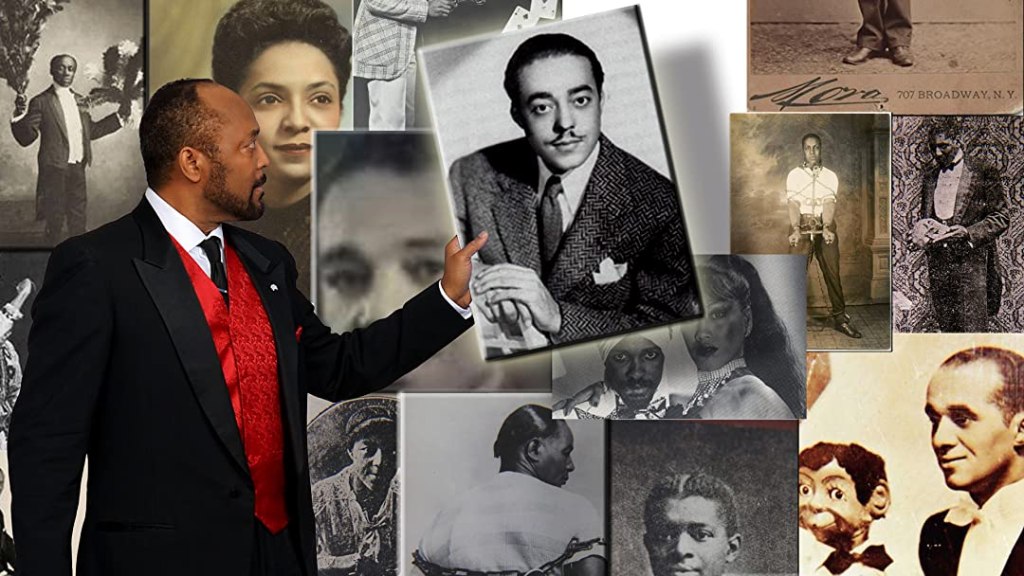
“Quiet Masters: The History and Relevance of the Black Magical Artist” is a documentary featuring many more untold magical stories, and available for rent at Amazon.

Uncover the stories of more Black magic in Conjure Times: Black Magicians in America.
DAY 7 — Black Herman

Black Herman - Dark Magic

Ladies, gentlemen, and non-conforming friends! Read closely, for the man I’m about to introduce was an instigator of illusion, master of mysticism, and a benefactor of black advancement the likes of which the early 1900s had never seen.

Come and read of the great enigma, Black Herman.

A traveling ruse is where young Benjamin Rucker’s fortuitous future first took shape. While his mentor and fellow black magician Prince Herman drew crowds with his sleight-of-hand roadshow, 17-year-old Benjamin oversaw the real money-making part of their venture: African tonics to satisfy the superstitions of both black and white audiences.

Black Herman performs for a captive audience.

Upon Prince Herman’s departure to the afterlife in 1910, Benjamin took the moniker for himself, dispensed with the side hustle, and immersed himself in magic as “Black Herman.” One part of the original show he preserved was the tie to his roots. Intertwined in his traditional magic act were hallmarks of the black experience, African religion and voodoo practice. Audiences flocked to be mesmerized by the show that only a magician of Black Herman’s caliber and race could put on. His fantastic escapes from impossible rope bindings were passed down from African tribes who evaded enslaving captors, he crooned. His communion with the spirit world could only be attempted by those with intensive mystical training by Zulu priests, he warned. And no Klansman could be his match as he was an immortal black being, insusceptible to the physical assaults of white men. Make no bones about it, Black Herman became a legend in the eyes of audiences, newspapers, and even among other magicians who nicknamed him “Black Houdini.”

So all-encompassing was the god-like persona that Black Herman built for himself, even institutional racism became a part of his marvelous lore. Repeated arrests and imprisonments for performing his act, despite white magicians regularly performing with impunity, only lent themselves to the tale that Black Herman couldn’t be held by even the most fearsome human authority.

Unbelievably diligent and favored by fortune, Black Herman eventually made a home for himself in the heart of the Harlem Renaissance, where steeped in the rising black cultural class and befriended by the likes of Marcus Garvey and Booker T. Washington, his dedication to the black cause only grew with his celebrity. In 1923, his show having exceeded his wildest dreams and sole capabilities, Black Herman employed as many as 50 black men and women in his production, and transformed his profits into loans for black business owners. Behind his dark persona, Black Herman’s devout Christianity inspired substantial donations to churches, especially those active in the civil rights movement.

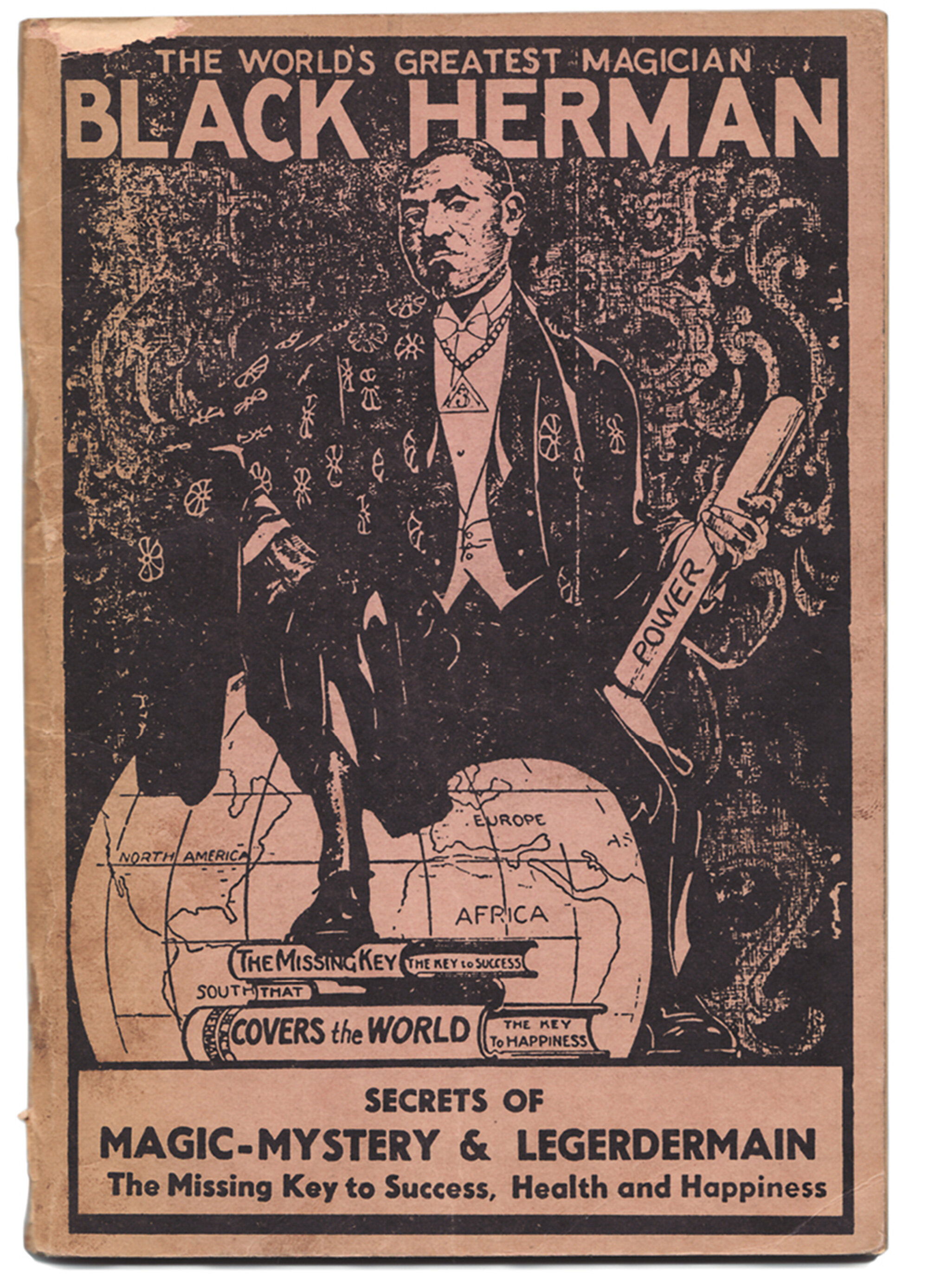
Having conjured up a rather comfortable life for himself, Black Herman reincorporated his early experiences into a whole new series of ventures. To protect from the threat of outside forces, he purchased his own printing company for the production of his widely circulated 1925 book, “Secrets of Magic, Mystery, and Legerdemain,” sold at his shows and even by mail. Voodoo potions and African tonics, incense and other spiritual ephemera were included in Black Herman’s menagerie of self-produced goods available to the public. And when Black Herman predicted a great financial disaster, advising his audiences to cease their Wall Street activities and put their money into more tangible commodities, the 1929 Black Friday Stock Market Crash diverted that money right into his pocket, and by extension, once again, the black community.

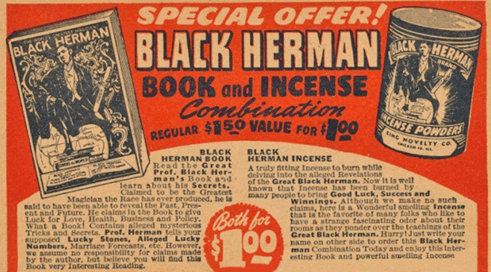
An ad for a Black Herman book and incense bundle offers the best that life has to offer.
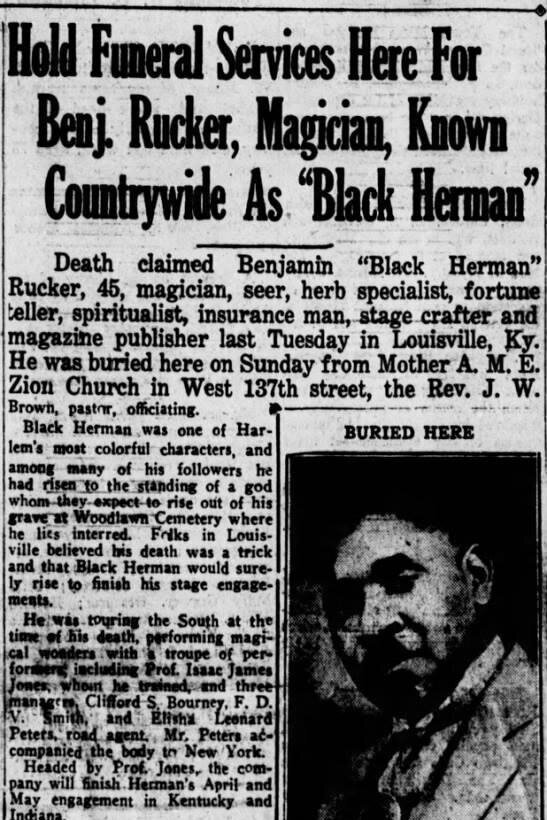
The New York Age, a black newspaper published from 1887 to 1960, dedicated tremendous column space to documenting Benjamin “Black Herman” Rucker’s life and passing. Click through to newspapers.com to read it in full.

Despite his claims of immortality, Death eventually came for Black Herman. Ever a man enshrouded in mystery, even the circumstances of his 1934 demise at only 45 years old are questionable. Some report that he collapsed in the middle of a stage show, baffling audiences who weren’t sure if it was part of the act. Others report that he had a premonition of his death, wrote a letter to his wife, and upon signing it, died in his bed. Either way, so widely regarded was Black Herman’s showmanship, particularly in his variation of the “Buried Alive” trick that saw him resurrected after three days in the grave, no one believed that he was actually dead until his assistant arranged for a public viewing where thousands astonished by Black Herman could see the proof with their own eyes.

Or did they? As many as 5 different men reportedly masqueraded as Black Herman during his imprisonments and after his death, though none came close to matching his character in either performance or virtue. In perhaps his greatest feat of all, Black Herman inspired and embodied a whole race’s determination to transcend the limitations of an oppressive society and be recognized as truly amazing.


KEEP GOING BLACK IN HISTORY: