Tag Archives: LGBTQ+

DAY 5 — Stormé DeLarverie

Stonewall had a formidable security team, and her name was Stormé.

And though Marsha P. Johnson, another famous face at Stonewall, may not have participated as once believed, everybody agrees that Stormé DeLarverie was not only there on June 27, 1969—she got her lick in.
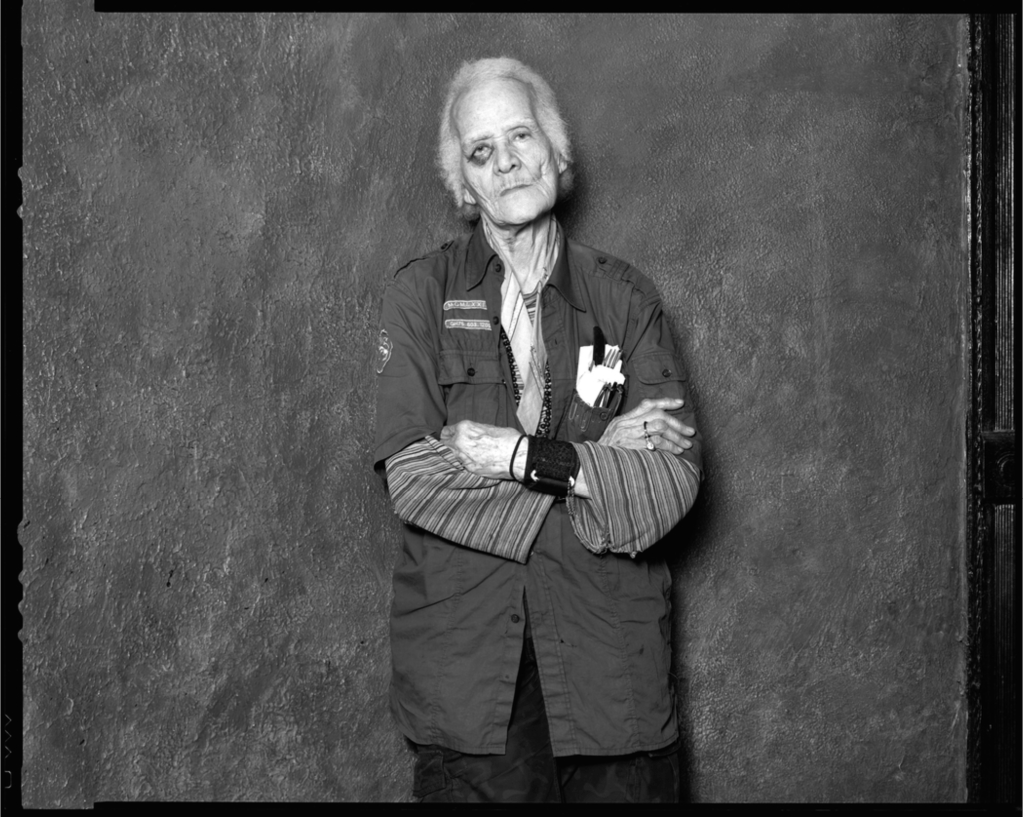
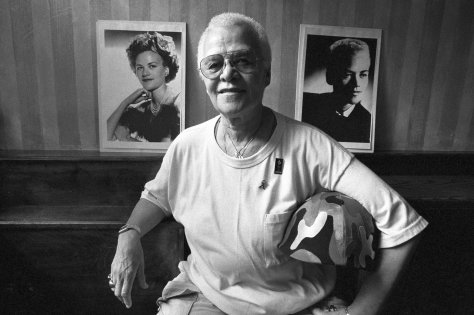
Storme DeLarverie – January 27, 2010 12:45am,” by Tony Notarberardino. Stormé would have been approximately 90 years old here in a portrait taken at NYC’s Chelsea Hotel. Read the backstory here.

“She literally walked the streets of downtown Manhattan like a gay superhero,” her friend Lisa Cannistraci told the New York Times.

Well-known for her neighborhood patrols—and her gun permit—Stormé didn’t tolerate “ugliness” in her community. But that’s exactly what met her when she rushed to the chaotic raid at the Stonewall Inn.

“Move along, f****t,” NYPD spat at her.

New York penal code prohibited cross-dressing, but police had to know someone was cross-dressing to enforce it. Stormé had been a chameleon all her life.

That night, she lived up to her name.

Stormé defied police orders, insisting on standing watch over their treatment of her “children” at Stonewall.

Her resistance was met with a club to the face.

In return, the man attached to that club officially met Stormé.

“I walked away with an eye bleeding, but he was laying on the ground, out,” she recounted to PBS.

The New York Times features an interesting article comparing Stonewall from the perspectives of two of its major players, Stormé and Deputy Inspector Seymour Pine.

NYPD couldn’t have known it, but never backing down was Stormé’s specialty.

Born in 1920 as Viva May Thomas, the clear offspring of a Black mother and white father in a time when interracial relationships were still illegal, Stormé had grown up a pariah. She was once so badly bullied, she was left hanging from a fence by her leg, an injury she carried her entire life. The trauma stuck with her too. Even as a queer elder, Stormé wouldn’t repeat the names she’d been called as a child.

“Somebody was always chasing me – until I stopped running,” she said in one documentary.
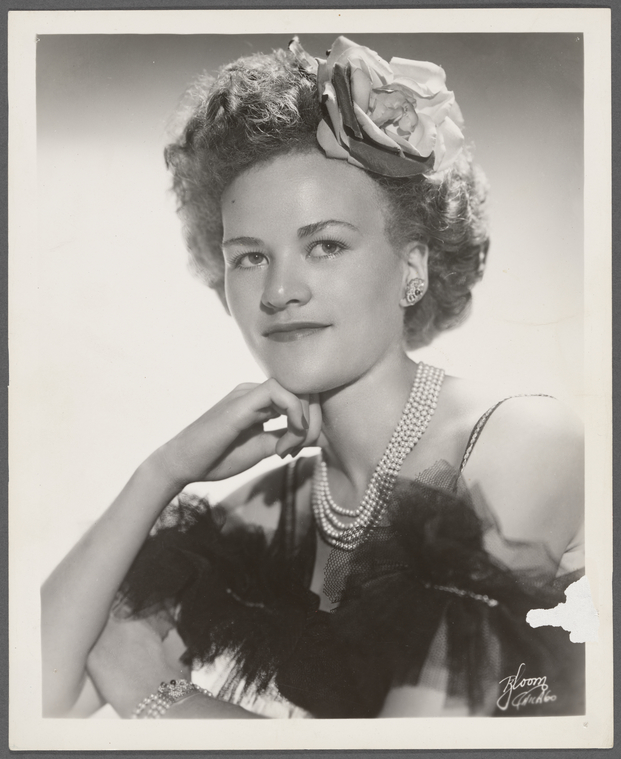
Viva May as a fresh-faced 30 year old, courtesy of NYPL.

Finally done running, Stormé started shining.

From a prolific local singing career to a side-saddle horse act with the Ringling Brothers Circus, Stormé confidently found her place center-stage.

But somewhere along the line—public documentation of Stormé’s life starts to get intermittent as her name changed several times throughout the years—she also discovered that she wanted to shine a little differently.

In 1955, Stormé remerged as the only female-born performer at the Jewel Box Revue, a drag burlesque and variety show. At the same time, she unveiled a whole new face.

Stormé remembers that “somebody told me that I would completely ruin my reputation, and…didn’t I have enough problems being Black? I said, I didn’t have any problem with it. Everybody else did.”

Stormé slowly perfected that face until as far as casual observers, paying customers, and consequently, police officers, were concerned, at least on her performance nights, they were looking at a man.
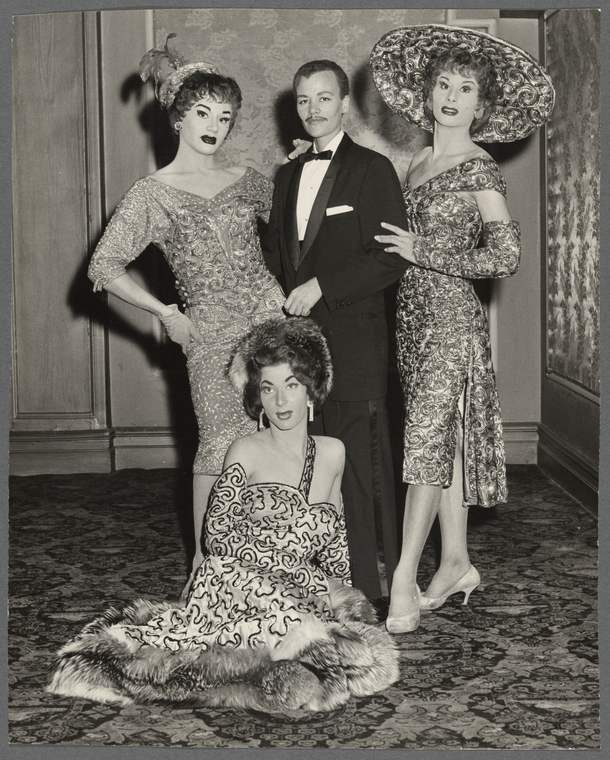
June 27, 1969 was one of those nights.

And though Stormé faded from the straight gaze once again, from that night on, she symbolized security in her community in more ways than one.

On July 11, just two weeks after the incident, Stormé became a founding member and Chief of Security of the Stonewall Rebellion Veterans Association

She worked as a bodyguard, volunteer street patrol, and bouncer for several gay clubs still operating in New York like The Cubby Hole and Henrietta Hudson, but hated those titles.

Stormé packing heat in front of the Cubby Hole in 1986.

“I consider myself a well-paid babysitter of my people, all the boys and girls,” a friend recalled her saying.

When AIDS ravaged New York’s gay communities in the 80’s, that same friend asked Stormé for a $5 donation to buy Christmas gifts for those affected.

“Several hours later Stormé walked back into the restaurant with over $2,000,” and subsequently made it her annual tradition, he wrote.

In 1999, Services & Advocacy for LGBTQ+ Elders awarded Stormé their Lifetime achievement award for “crashing the gates of segregation and for the gender-bending example she showed the world,” noting that “she lives her life quietly and does much of what she does very quietly, sometimes anonymously… because what matters to her is that she does what she does, not that it makes a big splash.”

Unfortunately, that quiet life did not serve Stormé well. As she aged and her financial, living, and mental conditions all deteriorated, friends and admirers found themselves rallying others to her aid. Describing her as “someone who gave willingly of herself so that others might live meaningful, fulfilling lives free of discrimination and harassment,” their attempts at supporting an aging Stormé ultimately fell to a non-profit organization.

“I feel like the gay community could have really rallied, but they didn’t,” her friend Lisa told a Times reporter who found Stormé’s absence from NY’s 2010 Pride parade so unusual, he made it his headline.

Four years later, at the ripe old age of 93 (miraculous for anyone, but especially among queer elders), Stormé passed away quietly and alone.

But not forgotten.

When the National LGBTQ Wall of Honor was unveiled inside the Stonewall Inn, 50 names adorned the plaque in honor of the Rebellion’s 50th anniversary.

One of those names was Stormé DeLarverie.

Stormé DeLarvarie’s name holds a central place on the National LGBTQ Wall of Honor.

KEEP GOING BLACK IN HISTORY:

Listen in on PBS In the Life’s profile and interview with Stormé.
Hear more from Stormé including her singing, perhaps for the very last time, at 2:30.

There’s no more complete history of Stormé’s entire life than the one created by Chris Starfire here.

The Stonewall Veterans’ Association has an extensive entry on Stormé’s activism here.

The Code Switch podcast tackles Stormé’s story through an intersectional lens of queer pride, police brutality and racism, all topics prevalent throughout her life and still relevant today. Listen in here.
Read Stormé’s obituary published in the New York Times on May 30, 2014.
DAY 2 — Mary Jones

(Ed. Note: this Blackstory includes sex work. Discretion advised.)

Over a hundred years before Cardi B ever dreamed of hustling her clients, Mary Jones perfected the art. Like Cardi, Mary was a New York City sex worker and absolutely unashamed.

Unlike Cardi, Mary Jones was born anatomically male.

And the dignity with which Mary carried herself contrast against the notoriety of her crimes made Mary Jones one of the earliest documented transgender people in New York history.

Court records from 1848 misspell Peter’s given name as “Savori,” but include his known alias Julia Johnson and derogatory nickname “Beefsteak Pete.”

Born in 1803 as Peter Sewally, Mary Jones used a whole host of aliases in her exploits: Julia Johnson, Miss Ophelia, and Eliza Smith among a few. But according to The Sun, and many subsequent newspaper reports, the hustle was always consistent.

“During the day, he generally promenades the street, dressed in a dashing suit of male apparel, and at night prowls about the five points and other similar [poor, disreputable] parts of the city, in the disguise of a female, for the purpose of enticing men into the dens of prostitution, where he picks their pockets if practicable, an art in which he is a great adept.”

The papers didn’t expect their readers to ask the obvious question: who needs to dress as a woman JUST to pick pockets?

The papers most certainly didn’t expect that the first time Mary had to answer for her crimes, she’d appear before the court in full female attire so impeccable, officials would ask her to confirm her legal name and born sex, even though she wore the exact same dress she’d been arrested in the first place.

Lithograph depicting Mary Jones/Peter Sewally as “The Man-Monster”. Courtesy of the Smithsonian Museum of American History.

Though the Sun was very tight with details, the New York Herald gladly served the tea: “Sewally has for a long time past been doing a fair business [in] practical amalgamation.” To put it plainly in modern-day language: having interracial sex for money. And it was highly uncommon. Even sex work was segregated, so from opening statements to the reading of the verdict, Mary Jones’ trial was so scandalous that nearly every detail is still recorded in the New York City archives.

As a man, Peter did not simply “promenade the street in a dashing suit of male attire,” he lived and worked as the doorman and butler at a brothel.

“I have been in the practice of waiting upon Girls of ill fame and made up their Beds and received the Company at the door and received the money for Rooms and they induced me to dress in Women’s Clothes,” she testified. “Saying I looked so much better in them and I have always attended parties among the people of my own Colour dressed in this way — and in New Orleans I always dressed in this way —”

Testimony records reading “City and County of New York, Mary Jones being Examined.” Courtesy of NYDA Case Files, NYC Municipal Archives

Peter’s familiarity with sex work gave him a certain insight: dirty men would do anything to keep their dirty deeds quiet. So if he were to commit a dirty deed in return, what were the chances his crimes would actually be reported? And they would have stayed unreported, had Mary not looked SO much like a woman. One man wanted that woman to give him his money back.

A receipt issued by NYPD reads, “Recd. New York, July 16, 1836 rom the Police Office, Eighteen dollars by the order of the court, the same being part o the money stolen rom me by Mary Jones, alias Peter Sewally. Robert Haslem.”

On a Tuesday night in June 1836, Robert Haslem strolled past Bleecker Street where he met a Black woman, “dressed elegantly and in perfect style with white earrings and a gilt comb in her hair.”

“Where are you going, my pretty maid?” he asked, before gladly accompanying her to a nearby alleyway for some business, if you know what I mean. It wasn’t until departing her company that he noticed his own wallet was missing, and in its place was another man’s.

Haslem tried to return the wallet to its rightful owner, who vehemently denied it, before finally admitting he’d lost his wallet under the very same circumstances that his Good Samaritan had. With his wallet returned, there was even less reason to report. But Robert Haslem was still out of $100, and fully invested. The very next night, Mary was arrested for prostitution. Before being taken into custody, she made a last-ditch effort to dispose of a bit of evidence, but instead, the officer recovered two wallets, one of which belonged to Robert Haslem.

Up until the day of the trial, Robert Haslem insisted and even testified that he had relations with a WOMAN who robbed him. The night Mary was apprehended, even the constable had no reason to believe otherwise until his search uncovered a prosthetic. Realizing the full scope of the con, the cunning of its perpetrator, and the continued naivete of her victim, “his Honor the Recorder, the sedate grave Recorder, laughed till he cried.”

Every aspect of the case presented a truly outrageous scene for a 19th century courtroom. But Mary carried herself with such grace and dignity, despite onlookers who insisted on making her gender identity part of the spectacle.

The image of her reflects her appearance in court: soft, demure, feminine. But it’s titled “Man-Monster.” The trial appeared on the docket as “The People vs. Peter Sewally, alias Mary Jones,” so upon arriving, she was immediately outed and heckled mercilessly. One gallery member even snatched her wig off, eliciting “a tremendous roar of laughter throughout the room.”

Despite her poise and her plea, Mary Jones was found “Guilty” and sentenced to 5 years in Sing Sing for grand larceny.

Court documents show Peter Sewally, alias Mary Jones being sentenced to a term of five years imprisonment.

But she didn’t stop the hustle. Mary Jones and all her aliases appear again and again in newspaper archives and New York District Attorney’s case files as late as 1848, 12 years after her first trial.

Though mocked, maligned and misidentified, Mary Jones never backed down from who she was. Every time she was taken into custody, it was under a woman’s name. And with her courage, she created a precedent, as the first person in New York—home of the Stonewall Riots 133 years later—to go on the record as out, proud and unashamed.


KEEP GOING BLACK IN HISTORY:

Discover all of the spicy details behind Mary’s trial and continued arrests from historians, Jonathan Ned Katz and Tavia Nyong’o at OutHistory.

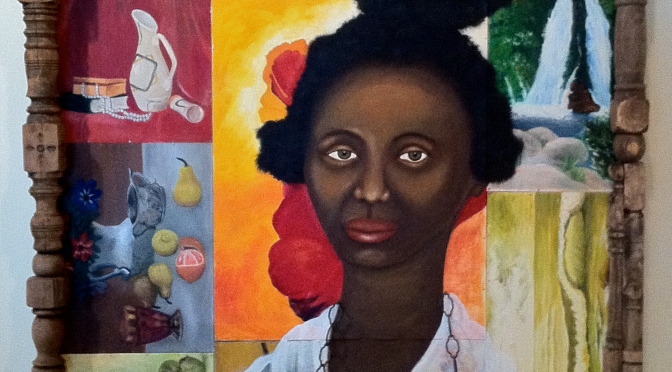
Image: “The Con Art of Peter Sewally” by Lezley Saar

Read more records preserved from the many trials of Peter Sewally in “The People vs Mary Jones: Rethinking Race, Sex and Gender through 19th-Century Court Records” via the NYC Archives.

Sort through a few clippings of Mary’s subsequent exploits at the Digital Transgender Archive.

DAY 7 — Willi Ninja

Greta Garbo, Marilyn Monroe, Marlene Dietrich, Joe DiMaggio, Marlon Brando, James Dean, Grace Kelly, Jean Harlow, Gene Kelly, Fred Astaire, Ginger Rogers, Rita Hayworth, Lauren Bacall, Katherine Hepburn, Lana Turner, and Bette Davis.

Notice anyone missing?

(Aside from a single Black person? I digress.)

If there’s one name that unequivocally belongs among those listed in Madonna’s “Vogue,” it’s Willi Ninja.

He’s frequently described as “the Godfather of vogueing,” but I’m not sure he’d care for that title because Willi Ninja was a mother, honey.

And he got it from his own. 

If you recall from Marie Van Britten Brown’s post, being a mother in Queens where Willi was born in 1961, was a tough gig. The borough was in the thick of a heroin epidemic, civil rights protests, and turmoil over the Vietnam War. Hardly what we’d call a “safe” neighborhood for raising children, but Ms. Esther Leake did her best. That included recognizing when her son (then known by William Roscoe Leake), who was a brilliantly budding dancer, was also quietly but deeply struggling with being “different” than the other boys on the block.

Willi never exactly “came out” to his mother. She coaxed him out, and not only supported his pursuits of dance and fashion, but encouraged them. Willi developed his own approach to voguing, the Harlem gay underground’s preeminent dance form, closely studying the movements of dancers like Michael Jackson and Fred Astaire, Olympic gymnasts, Asian martial artists, and the figures drawn in Kemetic hieroglyphics. (“Kemetic” refers to ancient Egypt, known as Kemet, or “black land”) And then he perfected it, diving headfirst into gay dance communities popping up around New York’s famous queer outdoor gathering places like Christopher Street Pier. 

Those spaces became the forerunners and foundations of New York’s LGBTQ ballroom culture. Technically, ballroom culture has existed globally for centuries, but its earliest appearances in New York were to flout laws against wearing “clothes associated with the opposite gender.” Though those early balls were integrated, the judge’s panels were all-white, driving African- and Latino-American dancers back to Harlem’s underground in the 60s and 70s where they established their own balls . Fresh off the heels of Marsha P. Johnson’s stand-off at Stonewall, New York’s gay culture had been empowered to stand its ground, and ballroom culture let them claim space where gender, race, sexuality, and class had no place to define them.

Having always known acceptance, thanks to his mother, in the ballrooms, Willi danced with a freedom and confidence unlike anyone else in the scene, and those iconic moves made him a fixture of New York ballroom culture. But the society Willi and his fellow pioneers rejoined outside of the balls cast all the glam and good vibes they celebrated inside into stark contrast.

There, LGBTQ teenagers outcast from their families after coming out or running away had nowhere else to go but the streets. Gentrification was beginning to push lower-income families in Brooklyn and Manhattan out of their homes already. Non-profit organizations and shelters in the midst of a Reaganomics depression had less to go around than ever. Unemployment was at an all-time high. If that New York was unsafe and uncertain for everyone, it was especially so for a 16-year-old transgender person.

From those circumstances, houses were born. Each “house” specializes in an aspect of ballroom culture. They’re headed by a mother or father, and its children are cared for with food, shelter, clothing, or simply love and encouragement, by all their brothers and sisters. And the House of Ninja grew to become one of the most long-lasting and well-respected of them all. Willi welcomed people from all walks of life into his house, becoming “mother” to one of the most inclusive houses in ballroom culture, even as it endures today. That influence Willi brought to ballroom is also reflected today in long-running and tremendously diverse TV representations of LGBTQ characters like those in “Pose,” “Ru-Paul’s Drag Race,” and “Queer Eye.”

As the ranks of his house expanded, so did Willi’s own dance skills, becoming so absolutely flawless and otherworldly that even mainstream entertainment took notice. Willi danced alongside Janet Jackson in two of her Rhythm Nation videos, walked runways for couturiers Thierry Mugler and Jean-Paul Gaultier, and even taught supermodels like Iman and Naomi Campbell how to own a catwalk in ways only he could.

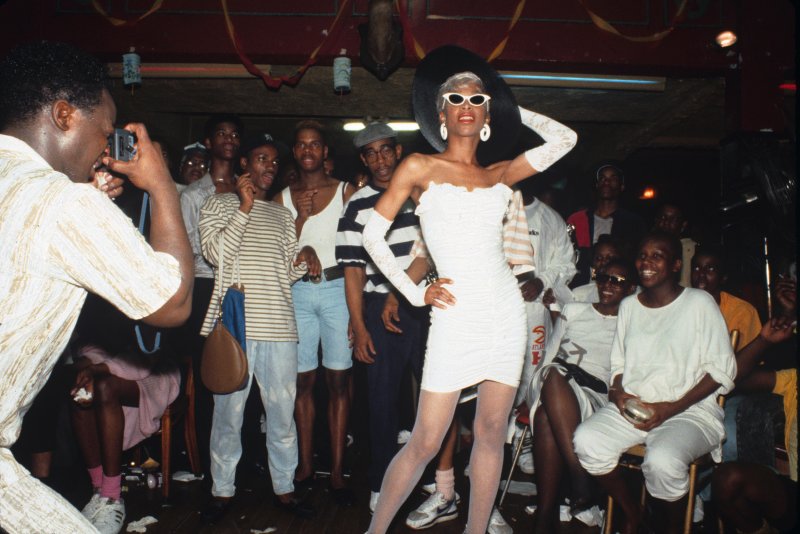
Of course, all of that was behind the scenes. If you’ve ever heard Willi Ninja’s name before, it is almost undoubtedly associated with the landmark documentary “Paris is Burning.” The film, preserved by the Library of Congress’s National Film Registry, is compiled from six years of study, interviews, first-person footage, and immersion into the African-American, Latino-American, gay and transgender communities forming New York ballroom culture. The filmmaker Jennie Livingston describes it not as a dance documentary, but a tale of “people who have a lot of prejudices against them and who have learned to survive with wit, dignity and energy.”

But not all did survive. Willi’s endlessly shooting star was snuffed out by yet another American social ill: the AIDS epidemic. In his 45 short years, Willi Ninja was instrumental in launching vogue and ballroom culture into the global phenomenon it is today, and brought the community, the triumphs and the plights of Black and Latino LGBTQ faces to the forefront of mainstream culture. Willi died on September 2, 2006 from AIDS-related heart failure, giving everything he had for his children, right down to the last beat. As family does, the House of Ninja returned that love, using their ballroom winnings to care for Willi’s mother in his absence.

All no thanks to Madonna.


KEEP GOING BLACK IN HISTORY:

If you’ve never seen “Paris is Burning,” have a look at the trailer where you’ll see a few of Willi’s moves & a bit of his personality.

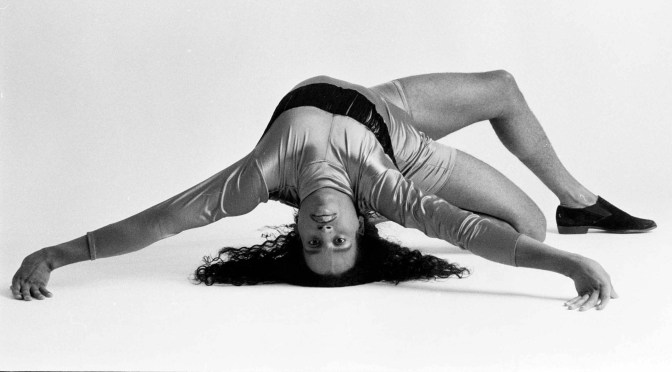
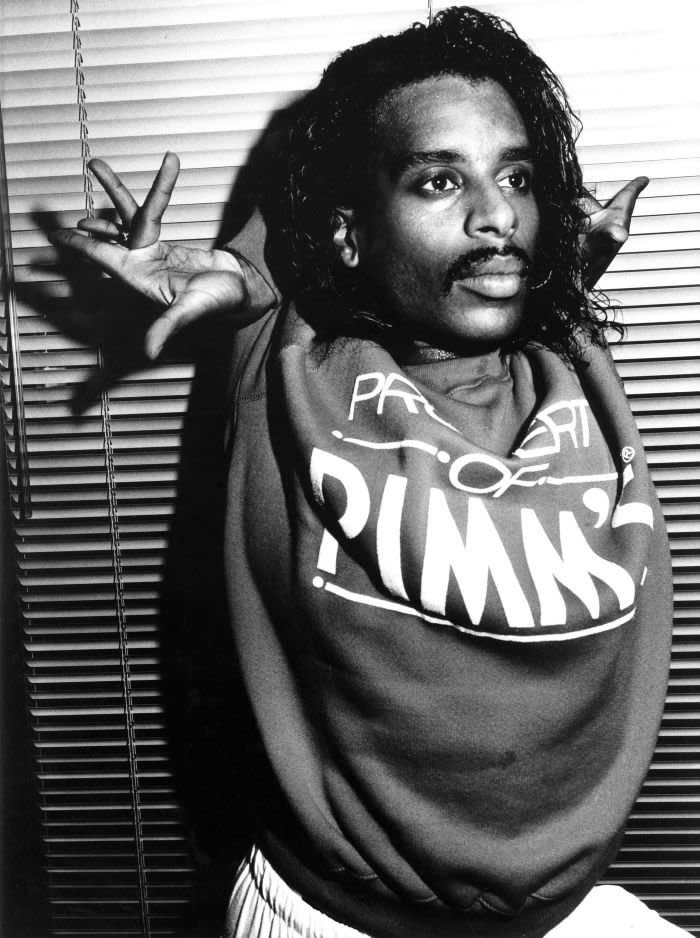
French photographer Chantal Regnault spent 3 years photographing Willi & the Harlem ballroom scene. This post’s cover photo is from her series, and accompanies Chantal’s first-person account of her ballroom experience, which you can read here.

TIME Magazine recognizes the history of voguing and the importance its culture still holds for marginalized people today.

Even the Financial Times has in-depth articles on “how the mainstream discovered voguing.” My how far we’ve come.

One last look as Vox spends a few minutes with a member of a house to dive into ballroom’s past, present and future.

DAY 22 — Gladys Bentley

Police swarmed the King’s Terrace nightclub in midtown Manhattan. Some upstanding citizen had reported a terrible crime in progress that 1934 night. A “masculine garbed smut-singing entertainer” and her “liberally painted male sepians with effeminate voices and gestures” were traipsing around the stage and right through the audience performing songs so lewd the devil himself would blush.

On the other hand, through the eyes of renowned black poet Langston Hughes, that same performer was an “amazing exhibition of musical energy – a large, dark, masculine lady, whose feet pounded the floor while her fingers pounded the keyboard – a perfect piece of African Sculpture, animated by her own rhythm.”

From the beginning, Gladys Bentley – or Bobbie Minton, depending on where you knew her from – seemed to have a knack for being different things to different people.

A full figure that she clothed in men’s attire, her reputation as a tomboy, and schoolgirl crushes on female teachers were the earliest indicators that Gladys was different from the other girls. Her parents sent her to specialist after specialist to be “fixed,” but when Gladys was 16, she fled their closed-minded Philadelphia home to find a new family in Harlem instead.

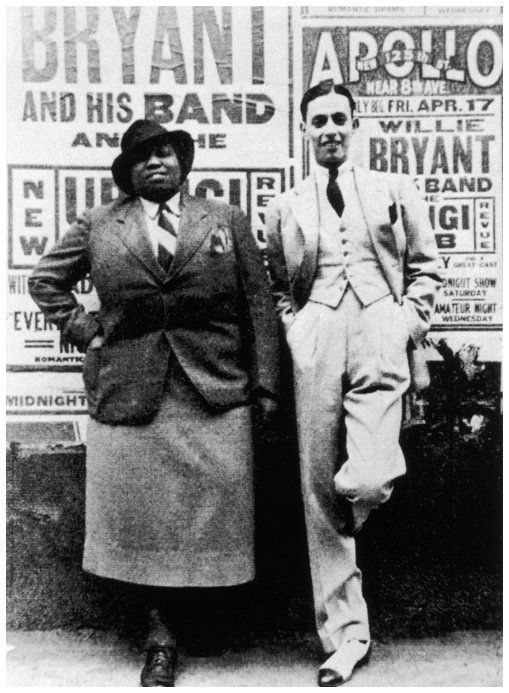
Gladys poses with bandleader Willie Bryant outside the Apollo Theater, April 17, 1936.

She arrived in 1923 during the Renaissance, and after a handful of small gigs around town, an opportunity that seemed tailor-made for her presented itself. The owners of The Clam House, one of Harlem’s most famous gay speakeasies, needed a new man as their sister bar’s nightly pianist, and as far as Gladys was concerned, she fit the qualifications. “But they want a boy,” a friend scolded her. “There’s no better time for them to start using a girl,” Gladys quipped. She arrived at her audition with her hair slicked down and in the finest suit a runaway teenager could find, where she proceeded to bring the owners, the staff and everybody within earshot to their feet in a standing ovation.

There could have been no better validation. But then again, when it came to validation for society’s free-thinkers, there was no better place than Harlem. During the Renaissance, creative, curious and ambitious black minds flocked to Harlem to join the growing collective of visual, performing and written artists flooding the American consciousness. The influx of those new ideas and Harlem’s never-dry, Prohibition-defying nightclubs together catered to and encouraged an “anything goes” atmosphere, drawing all sorts of eccentric subcultures to the heart of the action.

Gladys Bentley, photographed in a Harlem nightclub in 1940, courtesy of the Smithsonian.

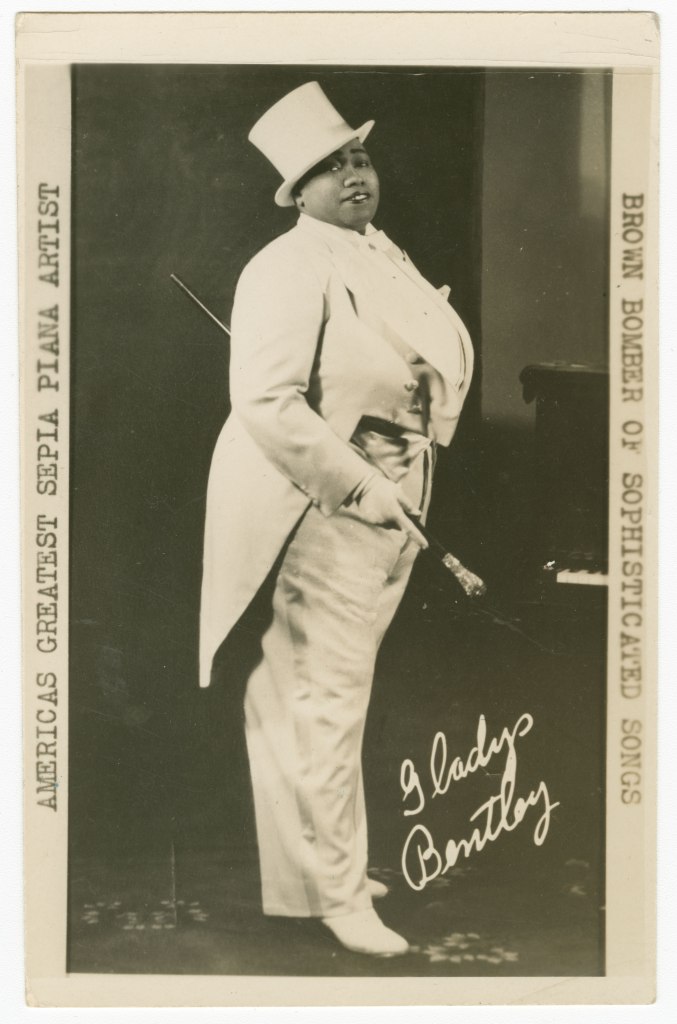
Here, Bobbie was free to be, and what she became was a Harlem legend in a white top hat and full tux, who stomped her feet with the same ferocity that she banged on her piano, transforming innocuous radio-friendly songs into lusty howlers, and unapologetically flirting with every woman in her audiences. In her own original songs, themes of female independence from gender norms and escaping abusive relationships dominated her lyrics, and her signature trumpet-scatting filled the space between. Crowds packed into the variety of clubs Bobbie headlined, hoping in particular to hear her barn-burner “Nothing Now Perplexes Like the Sexes, Because When You See Them Switch, You Can’t Tell Which is Which.”

But for Bobbie, that night at King’s Terrace and the padlock police used to shut the club down only symbolized the beginning of her end in New York. Financial woes plaguing the populace during the Great Depression in the 30s and the end of Prohibition brought the nightclub scene to a grinding halt. The woman who’d once boasted record deals, a $5,000 a month apartment on Park Avenue, and sold out every show would have to find a new home for herself and her act.

Luckily, her fame already preceded her nationwide with tours that took her to Pittsburgh, Cleveland, and as far as California, where she ultimately decided to move. As Los Angeles’ “Brown Bomber of Sophisticated Songs” and “America’s Greatest Sepia Piano Player” she once again dazzled audiences, but it was clear her Harlem heydays were long gone. Laws passed in California forced her to carry special permits to wear men’s clothes and increasing public distaste for non-gender-conforming people continued to stifle the flamboyant show that put Gladys on the map.

By the 1950s, black celebrities who dared to oppose social conventions were being dragged into and condemned at all-white government hearings, victims to McCarthyism and the Red Scare. Her already declining career couldn’t suffer another blow, and in 1952, Gladys submitted an editorial feature to EBONY Magazine, declaring herself cured of her “third sexuality.”

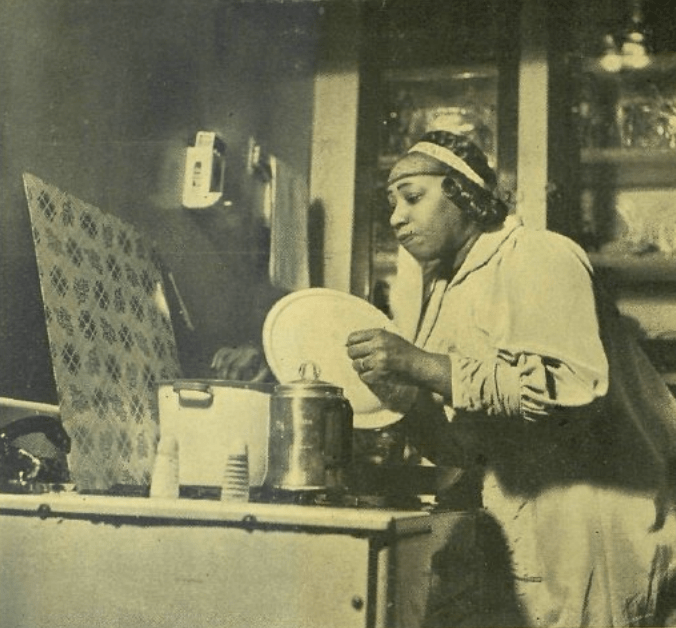
Gladys in a more traditional gender role from a spread in Ebony Magazine.

But in that same article, Gladys slipped a telling insight. “Some of us wear the symbols and badges of our non-conformity,’ she observed. “Others, seeking to avoid the censure of society, hide behind respectable fronts, haunted always by the fear of exposure and ostracism. Society shuns us. The unscrupulous exploit us. Very few people can understand us. In fact, a great number of us do not understand ourselves.“ For someone who claimed to have successfully extracted the “malignant growth festering inside,” her message of self-acceptance and inclusion rang loud and clear.

Sometime over the next 8 years, the bombastic life of Bobbie Minton was put away. Gladys married two different men in short-lived relationships, found religion, and lived with her mother until passing away in 1960 at only 52 years old. Whether Gladys truly found peace with her identity, no one could say, but her brief and once-fearlessly queer life inspired so many to live vibrantly, flout normality, and defy anyone standing in the way of the person they were born to be.


KEEP GOING BLACK IN HISTORY:

Listen to Gladys Bentley’s hit, “Worried Blues” and her signature trumpet vocalizations.

Get all the gossip on the extraordinary Gladys Bentley / Bobbie Minton from BUST Magazine.

Read Gladys’ own words via her EBONY Magazine essay “I am A Woman Again.”

DAY 25 — Bayard Rustin

Bayard Rustin literally wrote the book on successful protest organization. When an unbelievable 200,000 people participated in the civil rights March On Washington for Jobs and Freedom in August 1963, it was Bayard Rustin who’d planned EVERYTHING from advertising to uniting feuding speakers, and from barring violent racists to bathroom logistics. And there’s a reason that he’s been largely left out of history.

Bayard Rustin was openly gay.

If there was a person who most typified The Resistance of the time, it could be argued that it was him. In 1944, he was sentenced to 2 years in prison for refusing his World War II draft order due to his deep-seated, strictly non-violent Quaker faith. In 1953, he spent 60 days in jail for homosexuality (“sex perversion” was the specific charge). And 13 years before Rosa Parks had, Bayard was one of the first to refuse to give up his seat to white people on a Mississippi bus, a monumental action that led to the founding of the Southern Christian Leadership Coalition and his role as a key advisor to Dr. Martin Luther King.

But strangely enough, Bayard found himself fighting twice as hard against unlikely enemies. Because he was gay, both black and white people tried to blackmail him in efforts to discredit him. His skills were so revolutionary & so effective that white enemies like Senator Strom Thurmond knew that removing him from the movement would be devastating. The power he held within the movement was so great that heterosexual blacks didn’t feel that a gay man should have it & sought it for themselves.

But Bayard didn’t let that stop him one way or another. He knew that he was fighting at the intersection of two historic causes, both of which were too significant to be undermined. His partner, Walter Naegle recounted that “Bayard was willing to stand up for people — even though they had mistreated him — it was a matter of principle.”

Bayard & Walter. An interracial gay couple with a huge age difference. Such scandal.

After the Civil Rights and Voter Rights Acts were passed in the 60s, he was actively involved in the Gay Rights Movement, but felt compelled to take up a third cause. He became a vocal proponent of Workers’ Rights, demanding increased minimum wage (which was only a ridiculous 75 cents at the time) and federal programs to train & place unemployed workers.

Over the course of his life, Bayard successfully advanced the efforts of three of the most significant modern rights movements in the world, and few people recognized him. In 2013, just two months after the 50th anniversary of what Dr. King called “the greatest demonstration for freedom in American history,” President Obama posthumously awarded Bayard with the Presidential Medal of Freedom, an honor that Walter touchingly accepted on his behalf.

In a quote that sums up the person he was, the values he held, and the hopes he had for future generations, Bayard once said “We need, in every community, a group of angelic troublemakers.”


KEEP GOING BLACK IN HISTORY:

Take a moment to enjoy a short super reel of Bayard’s incredible speeches and the power he had to mobilize the people.

DAY 5 — Marsha P. Johnson

Marsha.jpg

(Ed. Note: Since this post was published, accounts of Marsha’s participation in the riot have shifted to reveal that she arrived after the violence had already begun. This revelation does not diminish Marsha’s contributions to the culture.)

In solidarity with #Stonewall this weekend, I want to introduce y’all to Miss Marsha “Pay It No Mind” Johnson.

Marsha was a transgender activist who founded Street Transgender Action Revolutionaries (STAR) to help prevent homelessness and violence against gay & trans people in New York, but is best known as the Queen Who Threw The Shot Glass Heard Around the World.

When the bar at the Stonewall Inn was raided on June 28, 1969, Marsha was the first of the patrons to defend other clubgoers against the police – some of whom were sexually assaulting patrons, all of whom were misusing a law about selling liquor in dance halls to publicly humiliate, harass and institutionalize LGBTQ people. When the police’s lineups began, Marsha interrupted by throwing a shot glass into a mirror and launching the Stonewall Riot. Even though her crew of street queens were some of the most outcast in the community, they stood up for everyone present at Stonewall that night.

Marsha wasn’t done though. She became an active and visible member of the Gay Liberation Front that allied & “welcome[d] any gay person, regardless of sex, race, age or social behavior” to enable the culture together to resist & rise together. What happened at Stonewall with just a moment of resistance from Marsha P. Johnson, gained momentum and became the spark for the modern-day fight for LGBTQIA rights as we know them today.

Marsha was also one of Andy Warhol’s muses – appearing many times in his 1975 series “Ladies and Gentlemen” both in paintings and in Polaroids, but in 1992, her body was suspiciously found in New York’s Hudson River, and no criminal investigation was conducted. Although Marsha’s life was snuffed out unceremoniously, it left incredible impact on the LGBTQIA community, many of whom still lovingly refer to her (much as her charges at STAR did) as the True Drag Mother.


KEEP GOING BLACK IN HISTORY:

While not totally historically accurate in its depiction, Drunk History featured a wildly hilarious take on the night Marsha launched the Shot Glass Heard Around the World.