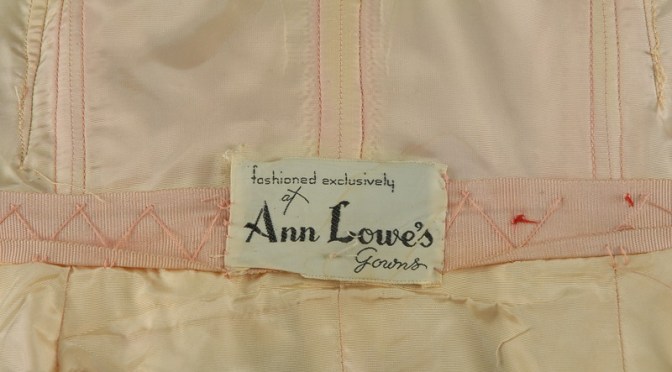

Jacqueline Bouvier’s perfect day couldn’t have gone worse for Ann Lowe.

She’d lavishly fit celebrities, debutantes, and wealthy women with last names like Rockefeller, DuPont, and Roosevelt, but the Kennedy wedding was the moment that made Ann’s over 4 decades of sewing and sacrifice all worthwhile.
And everything that could go wrong most certainly did.
Just 10 days before the 1953 American royal event of the century, a ruptured pipe flooded Ann’s Harlem studio, waterlogging 10 of the 15 dresses Jackie’s mother commissioned Ann to create – including the bride’s, which had taken 8 weeks to construct.
With no time for tears, Ann buckled down, hired backup, rush-ordered hundreds more yards of ivory and pink silk taffeta at a loss of thousands of dollars, and still remade all 10 dresses in record time, saving her business and her well-earned reputation as high society’s master dressmaker.
Only to be humiliated when she tried to personally hand-deliver them.
The staff at the bride’s family’s Newport, Rhode Island oceanfront estate only saw a black woman arriving at the front door, and attempted to intercept her creations and steer her to the rear service entrance instead. Well aware of her value and having already established good rapport with the Bouviers from past commissions, Ann insisted that the dresses go with her through the front door or not at all. Indeed they did.
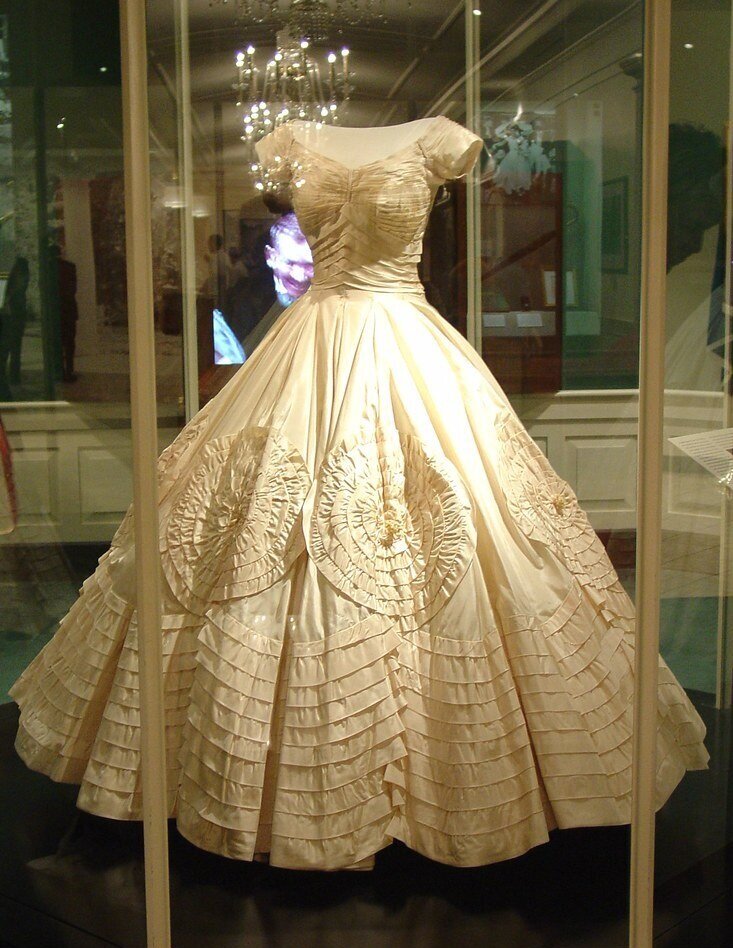
Finally, the moment nearly everyone had been waiting for arrived. Jackie’s first appearance before the public and press was breathtaking, and photos published in the classic pages of Life and TIME Magazines memorialized what’s now widely regarded among fashion and wedding industry professionals as one of the most iconic bridal gowns dresses of all time. “The oohs and ahs as they come in… that’s what I like to hear,” Ann told EBONY.
But stolen breaths and gasps of wonder were no comparison to awestruck journalists and photographers clamoring to ask the new First Lady what surely everyone would want to know: WHO was the designer of her exquisite gown? Ann’s heart stopped. Having come this far had been nothing short of a miracle, but behind the scenes, so much had been beyond her control, including one secret then yet to be revealed: Jackie HATED the dress.
The worldly socialite’s trips to Paris, where slender dark-haired women like her set trends in slim and simple silhouettes, had inspired her to be wed in a fitted and fashionable number. But John’s overly-involved father Ambassador Kennedy wouldn’t have it. His son would be married to a woman wearing something traditional, American-made, and the elder Kennedy saw to it, requiring his approval for every detail of the wedding, including the final dress sketch. Ann’s close collaboration with all of her brides ensured that Jackie’s opinion at least factored in, but what would she SAY?
“Oh, a colored dressmaker did it.”

Ann was heartbroken. Crestfallen. Utterly devastated. Not receiving credit for her designs was typical. When starlets like Olivia de Havilland walked the red carpets, they’d hoped everyone would believe they were donning the latest European fashions, not those made by a black woman in Harlem, even going so far as to have another designer’s label stitched in. But this was different. This had been Ann’s chance to go from “secret designer for the high society” to a household name. Instead, she’d been brushed aside by the most fashionable woman in the world.
Though her designs were among some of the most sought after of the time, Ann’s financial prowess left much to be desired, and the loss she’d taken from the Kennedy flood incident, combined with the fact that her race gave her little negotiating power with the most wealthy women in the world, continued to affect her bottom line. Despite gaining the favor of Christian Dior and designing in-house for Neiman Marcus, Henri Bendel, Saks Fifth Avenue, and of course, countless ladies of fame and fortune, by 1962, only 9 years after the Kennedy wedding, Ann was bankrupt. Too few profits, IRS troubles, and slowly failing vision that led to the removal of her right eye that same year, had together been too much to overcome, even though she’d regularly earned over $300,000 annually.
“I ran sobbing into the street,” Ann recalled, this time, with no dressmaking in the world distracting enough to dry her tears. In a spectacular and long overdue change of luck, she soon received notice that an anonymous donor had paid her entire $30,000 debt to the government and her suppliers. Until her dying day, Ann held fast to the belief that her benefactor was Mrs. Kennedy-Onassis, simply repaying what she owed.

Her spirits and coffers renewed, in 1968, Ann became the first black woman to open her own fashion label on New York’s illustrious Madison Avenue, but by 1972, working by describing designs to her assistants and stitching fine details through touch alone just couldn’t be sustained. Ann finally retired, ultimately passing away in 1981 as an 82-year-old legend to only a very few.
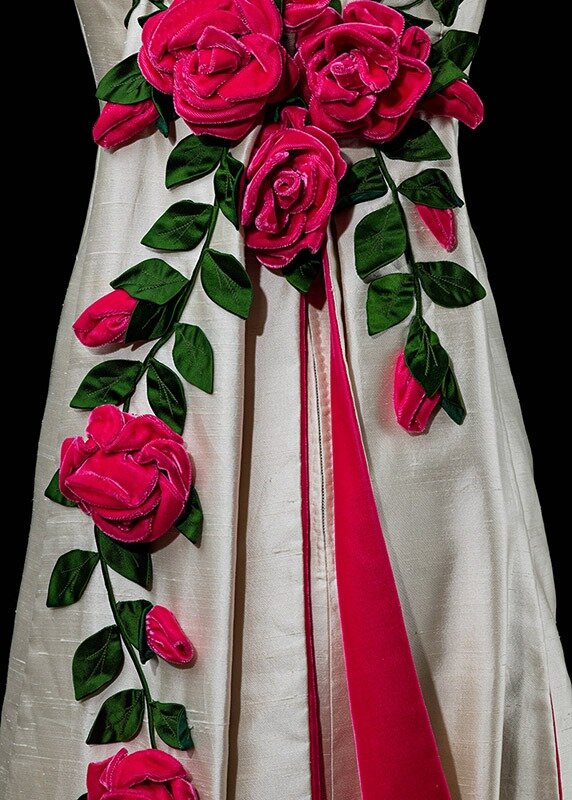
But when one of her dresses was exhibited at the newly-opened Smithsonian National Museum of African American History and Culture in Washington, D.C., Ann’s whole life came to light. One visitor’s tweet thread was all it took for major media outlets to uncover the heirlooms and finally honor the heritage of the vibrant black woman who clothed American royalty, proving that chic comes in all colors.



KEEP GOING BLACK IN HISTORY:

View the The Metropolitan Museum of Art, New York Costume Institute’s Ann Lowe collection.

Ann was commissioned as the exclusive designer for Ak-Sar-Ben, a Nebraska festival and ball. Read how her dresses came into such high demand for such a niche event here.

Read EBONY Magazine’s December 1966 interview with Ann and peek into her adorable studio.


 THE AMERICAN BLACKSTORY