Tag Archives: DISABILITY

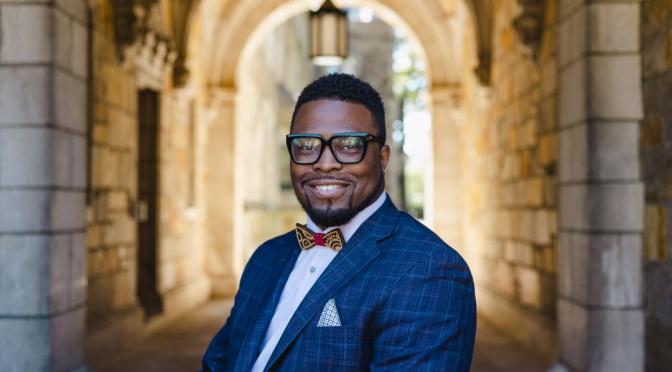
DAY 8 — Dr. Feranmi Okanlami

Dr. Feranmi Okanlami experiences discrimination every single day.

It’s not necessarily because he’s a Black man, but because he’s a Black man in a wheelchair.

“Until I started to live life on the other side of the stethoscope… I did not realize how ableist our world was, how inaccessible the world was and how I was unintentionally complicit to this world,” he told Good Morning America.

A different lifetime: Feranmi Okanlami in March 2007, courtesy of the Stanford Invitational.

Dr. O, as he’s nicknamed, didn’t always use a chair. Born in Nigeria and raised in Indiana, he’d graduated Stanford as an All-American track star and captain of his team, then medical school at Michigan, and worked as a third-year resident in orthopedic surgery at Connecticut’s Yale New Haven Hospital. Dr. O was on a brilliant path until a 2013 Fourth of July accident changed his mode of transportation, and then some.

“I jumped into the pool,” he said. “I didn’t do a backflip or anything like that. There was no diving board, but I hit either the ground or the side of the pool or someone’s leg. I can’t be completely sure, but immediately I was unable to move anything from my chest down.”

Most people with his cervical injury “are not expected to ever be able to walk or stand,” his mother Bunmi said.

Dr. O is a man with higher expectations.

“I have an interesting intersection of science and faith, such that even if doctors had said I would never walk again, I wasn’t going to let that limit what I hoped for my recovery,” he said. “I know there is so much we don’t know about spinal cord injury, and I know the Lord can work miracles.”

Dr. O in the operating room where miracles happen.

Two months and countless hours of physical therapy later, Dr. O gained the mobility to extend his leg. With time, he gained something else too: a Master’s degree in Engineering, Science and Technology Entrepreneurship from the University of Notre Dame. “[I was] looking for something I could do to stimulate myself intellectually while I was working myself physically,” he said. Dr. O even finished his medical residency.

After his injury, he accomplished everything he’d set out to do as an able-bodied person, and then some. But Dr. O also found that the outside world put up unnecessary physical barriers every step of the way.

He learned that medical school admissions require physical qualifications that prevent those with certain disabilities from even applying. That’s just one reason why only 2.7% of doctors identify as disabled compared to more than 20% nationwide.

He realized that there have been more advancements in high-end self-driving cars than in making standard vehicles more accessible.

And as an athlete in a wheelchair, finding a good pick-up basketball game was near impossible.

Dr. O suddenly had invaluable insight into the lives of so many of his patients. “I have one foot in one world and one wheelchair wheel in another,” he said. Disabled patients can better relate to disabled doctors, of course. But think of how other patients like the pregnant woman on bedrest, the aging person beginning to lose mobility, even the child with a broken limb might benefit from a doctor who’s compassionately vulnerable.

“How are we supposed to be able to talk to patients and tell them it’s okay, that life can still go on, while creating a culture where the providers themselves must come across as immune to the same ailments we treat our patients for?” he wondered. “My goal is trying to demonstrate to them, through one lens of disability, that we are all going to have our difficulties and our struggles and that’s what makes you human, and believe it or not, sometimes your patients will value seeing the human in you.”

Dr. O knew that the human experiences he’d faced as a newly disabled person weren’t unique to him. So he set about changing those experiences for the better.

Where other doctors rightfully fear being judged for their disabilities, Dr. O used his experience as a spinal trauma patient to help develop a device that makes spinal screw placements more accurate and efficient.

He uses his platform and privilege to be vocal about how airlines treat wheelchairs, reminding PBS that “People don’t think that this is a serious concern and it’s just a matter of finding space to put your wheelchair, like not having enough space for your luggage in the airplane. They miss the fact that this is individuals’ lives that are at stake.

And as Director of Adaptive Sports and Fitness at the University of Michigan, he’s doing his part to ensure that people with disabilities have the same access to physical and outdoor activities that others do.

“Too often, we are judged by what we cannot do, rather than what we can,” he said, speaking to his goal of “Disabusing Disability” and creating a world where equal access and diversity truly extend to everyone.

Dr. O’s dream is for Michigan to combine its talents in medicine, athletics and science to become the premier home for accessible sporting facilities, drawing Paralympic and other elite level athletes from all over the world.

He’s gained so much traction that others are stepping up to help make his dream a reality for countless more. Just last year, the Craig H. Neilsen Foundation, whose mission of “changing the world for those living with spinal cord injuries and the definition of what is possible” aligns perfectly with Dr. O’s, donated $1 million dollars to Michigan Adaptive Sports.

But he also recognizes that it doesn’t take millions to make a difference in medicine, just a change of attitude.

“It is not that every Black patient needs a Black doctor, nor that every patient with a disability needs a physician with a disability. Every patient deserves an empathetic doctor,” he said.

And he means EVERY patient. His work at Michigan has earned Dr. O a place on national boards like the Association of American Medical Colleges Steering Committee for Diversity and Inclusion, the National Medical Association’s Council on Medical Legislation, and even the White House Office for Health Equity and Inclusion.

They said he’d never walk again. Today, with assistive devices like his standing frame wheelchair, Dr. O can perform surgeries, stand before an audience, and yes, even walk. He’s working on running, but until then, catch him chasing disability discrimination out of medicine, and with a little luck, the world.

He’s faced worse odds.

Dr. O, just doing his job with a little assist.

KEEP GOING BLACK IN HISTORY:

Get more of Dr. O in GMA host Robin Roberts’s Facebook Watch series, “Thriver Thursday.”

Hear Dr. O and Dr. Lisa Iezzoni from Harvard Medical School and Massachusetts General Hospital discuss how “Medicine Is Failing Disabled Patients” at Science Friday.

Read more about how Dr. O and others practicing “seek to mend attitudes” in medicine.

Follow Dr. O’s journey on Instagram.

DAY 28 — Vilissa Thompson

Vilissa Thompson - Bringing Black Disability Awareness

“Children like you didn’t go to school when I was your age—you stayed at home.”

Vilissa Thompson’s grandmother Viola constantly reminded her that every day with her disability was an opportunity.

Back in her day well before Vilissa was born, Viola had seen black children with disabilities become disposable to others – left out of school, left out of activities, and resigned to watching life pass them by.

Viola refused to let that be Vilissa’s story too. Her granddaughter had been born with a genetic disorder called Osteogenesis Imperfecta (OI), better known as Brittle Bone Disease, and was only expected to live a few years at best. Overwhelmed with the prospects of being a single parent with a terminally ill child, Vilissa’s mother placed her in a children’s home where they’d have the support to care for her. But Viola refused. Rather than leave Vilissa to strangers, she’d love her, teach her and encourage her to lead a full and happy life, no matter how long it might be.

“My Grandmother ensured that I received a quality education and healthcare during a time when such rights were in their infancy. She knew that I deserved the same opportunities as everyone else, and her determination, unconditional love, and support were instrumental to my growth as a disabled young girl.”

They were also instrumental to Vilissa’s future calling.

Whether it was Viola’s nurturing or just Vilissa overcoming the odds, turns out, Vilissa had many more years to live and turn her story into one that made a difference for disabled people.

In 2012, she graduated with a Master’s degree in social work and founded her own organization the next year. Vilissa’s Ramp Your Voice “spotlight[s] the issues and barriers of disabled people, as well as create[s] effective social and political changes to ensure that all people have the ability to succeed and prosper, regardless of their ability, ethnicity, religion, educational level, or place of origin.”

Just as she’d had an advocate in her life, Ramp Your Voice helped Vilissa empower other disabled women of color, especially black women, to live their lives out loud instead of locked away – physically or mentally – and ashamed.

But one fateful day on Twitter, the community that Vilissa’d created in her little corner of the internet went global.

She, like so many other disabled women, were thrilled to see an article on xoJane about how disability and beauty were not mutually exclusive, but as they scrolled through, the story was that of three traditionally beautiful white women’s experiences in the world with their disabilities. It even included the line “If we don’t truly see the diversity, we don’t see the injustice. In race or gender this translates to things like discrimination and income inequality. In disability this can mean lack of accessibility, or issues of employability.”

It was an interesting take for an article that didn’t include a single person at the intersection of all of those issues, like a disabled black woman. So in one quick tweet, Vilissa called it out:

Unsurprisingly, Vilissa’s hashtag went viral, with over 13,000 tweets in 24 hours as more disabled voices joined the chorus:

#DisabilityTooWhite when you have to wait twice as long for a medical diagnosis or to receive adequate medical care b/c of medical racism.”

#DisabilityTooWhite when people still think ‘#autism is a white people thing’ and black children go undiagnosed”

#DisabilityTooWhite when so many disabled PoC, especially black folks, end up in jail because they’re being ‘odd in public’. Ex: Neli Latson”

Vilissa was stunned and spurred by the firestorm one little tweet had set off. “I don’t think I’ve seen so many disabled POC speak so freely about themselves in my life,” she recalled.

That tweet, backed by Vilissa’s strong academic pedigree and the bold spirit instilled in her by her grandmother, helped boost her visibility beyond a niche community and out into the world. Today, at 31, Vilissa’s a public disability rights expert, featured in media outlets worldwide speaking to the black disabled experience and how easily it’s excluded from both mainstream representation AND black social movements. And as if that’s not enough, she’s still hard at work as a social worker and now a disability rights consultant, challenging ableism at national, global and cultural levels to ensure that there’s an equal playing field for everyone, no matter what body they’re born in.


KEEP GOING BLACK IN HISTORY:

Find empowerment, education, inclusion, and self-advocacy for disabled people and their allies at Ramp Your Voice!

Vilissa’s Tools You Can Use section is filled with free or low-cost resources to help disabled individuals improve their quality of life.

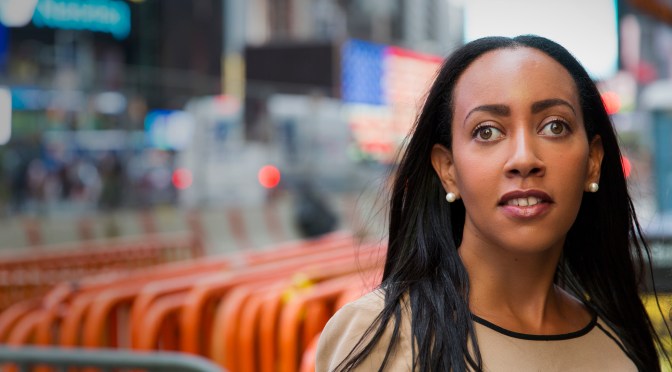
DAY 8 — Haben Girma

Haben1.jpg

30 years after her mother fled the Eritrean War, American-born Haben Girma graduated from Harvard Law School in 2013.

Then she was named a White House Champion of Change, an American working to advance technology, platforms, educational opportunities or spaces to empower other Americans.

Then she became a disability rights lawyer & helped win a major legal victory ensuring that people with disabilities had full access to e-commerce under the Americans with Disabilities Act.

And THEN she was chosen as one of 2016’s Forbes Under 30, that year’s brightest young entrepreneurs, breakout talents & change agents.

She’s accomplished incredible things in her 28 years.

Haben Girma is also deaf and blind.

In fact, she’s the first deaf-blind graduate of Harvard Law, where she found ways to innovate to succeed. But she knows that it’s the legal access & opportunity in America that made her success possible. Her older brother was also born deaf-blind, but in Eritrea, where schools told their mother he simply couldn’t be educated. Haben’s experiences with vastly different countries helped her recognize that her barriers weren’t in her disability, but in the physical, social & digital environments around her.

And that led to a key insight: there are over 1 billion people worldwide with a disability. Making the world accessible for them not only improves their quality of life in infinite ways, but also creates new disability-accommodating technologies that are ultimately beneficial to EVERYONE.

In 2016, Haben quit her law career to pursue advocacy full-time. When she’s not advocating, she’s a speaker & global consultant for companies like Google & Apple who recognizing the opportunities they have to improve the lives of disabled people and in turn, change the world.


KEEP GOING BLACK IN HISTORY:

Enjoy more of Haben in her 2014 TED Talk about why her work matters.