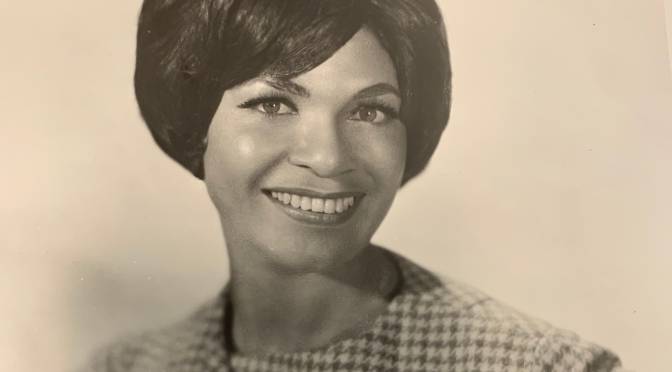
June Bacon-Bercey was called by a lot of things, but there was one she simply could not abide: weather girl.
“My mom was always about definitions. When she was called a weather girl, she would smile and say how proud she was to be a meteorologist,” her daughter Dail St. Claire says.

After all, June earned it. Because June Bacon-Bercey was the first African-American woman to graduate with a degree in meteorology, and the first female broadcast meteorologist in the United States.

Words matter here because June wasn’t the first African-American woman to present the weather on broadcast TV. That designation belongs to Dianne White Clatto, an Avon saleswoman whose poise and beauty earned her a spot in front of the camera, even though she had no idea what to do. “‘When those two red lights come on, start talking.’ And I said, ‘About what?’,” she recounted. “And they said, ‘Preferably something about the weather.’ ”
But June’s fascination with the weather was spurred by much higher stakes. Just a child when the atomic bombs were dropped on Hiroshima and Nagasaki, she wondered what effects nuclear fallout might have on the global atmosphere.
That curiosity propelled her through earning one math degree (with honors) in Kansas before transferring to UCLA for her 4-year degree in atmospheric sciences, where she was highly encouraged to seek another field.
“When I chose my major, [they] advised me to go into home economics… I got a D in home economics and an A in thermodynamics.”
Earning that degree despite her naysayers, June immediately put it to work at the National Meteorological Center (now the National Oceanic Aviation Administration), then at tech/aerospace corporation Sperry Rand (now Unisys), and at the United States Atomic Energy Commission (now the U.S. Department of Energy) while earning a journalism degree at night school, before finally joining a Buffalo NBC affiliate in 1970 as their science broadcast reporter. It didn’t take long for June to gain national exposure thanks to her coverage of the Attica prison uprising in 1971.

But why not the weather? All of her training was PRECISELY why June was adamantly against broadcasting the weather. Before women broke into the field of atmospheric science, news stations hired “weather girls” like Dianne to broadcast the day’s highs and lows. These women weren’t actually expected to know anything about the weather, and in the worst cases, were trotted out in swimsuits to sensationalize summer segments. June found it wholly demeaning, and she soundly refused. Until the day that her station’s weatherman got caught up in a scandal, and the station manager, knowing June’s wide-ranging talents and skilled background, begged her to step in.

“All hell broke loose at the station when our weather guy robbed the bank, and they needed someone who was there to fill in for the day,” she recounted. “I already knew from my calculations that there was going to be a heat wave. When the heat wave hit the next day, the job was mine.”

Little did her station manager know that June’s forecasted heat wave would usher in a whole new era of equality for women—especially Black women and other women of color on broadcast television. By 1972, June was honored as both the first female and African-American recipient of the American Meteorological Society Seal of Approval for Excellence in Television Weathercasting.
4 years after a chance occurrence found her breaking weather barriers on TV, June thirsted for more science, and took her talents back to the NOAA. But her passion for paving the way persisted.

She became a contestant on a game show called “The $128,000 Question,” winning $64,000 after correctly answering a series of questions about John Philip Souza, her favorite composer. June studied ruthlessly with the goal of using her prize money to establish a scholarship fund for women of color studying meteorology. “That was my plan at the beginning, and it’s still my plan,” she told the Washington Post after her win. “I was discouraged (from becoming a meteorologist), and other women were discouraged. If they feel they’ve got some money behind them, it might be better.”

With that seed money, The June Bacon-Bercey Scholarship In Atmospheric Sciences For Women was established. Working into her 80s, June never ceased earning awards and degrees, serving her country in meteorology, and creating ways for more underrepresented faces to be seen in the atmospheric sciences. “She made personal sacrifices for those who would come after her to give them a fighting chance at success in her field,” Dorothy Tucker, president of the National Association of Black Journalists, said. Her trail blazed so brightly in fact, that just last year, the American Meteorological Society officially renamed their most prestigious and coveted Broadcaster of the Year award to the June Bacon-Bercey Award for Broadcast Meteorology in recognition of her impact on the field.
June passed away in 2019, leaving a stunning legacy as proof of her dedication to making science more equitable, but even she acknowledged that one person can only do so much. “Society, too, has a moral obligation to put aside the past myths about black Americans not only in the meteorological field but in all of the technical fields.”
Until that day is fully realized, her daughter Dail continues sharing June’s story saying, “Her legacy serves as inspiration for all and is a powerful example of our limitless capability and strength.”
Of that, there is a 100% chance.
KEEP GOING BLACK IN HISTORY:
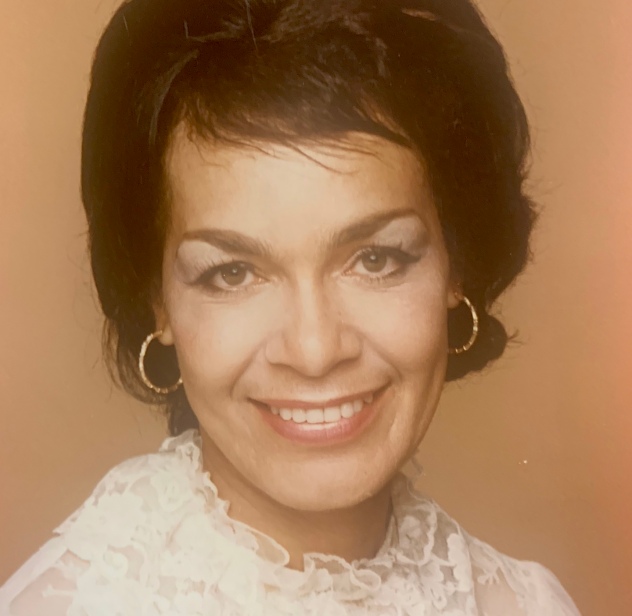
Visit AccuWeather for “the untold story of the 1st American woman to become a TV meteorologist.”
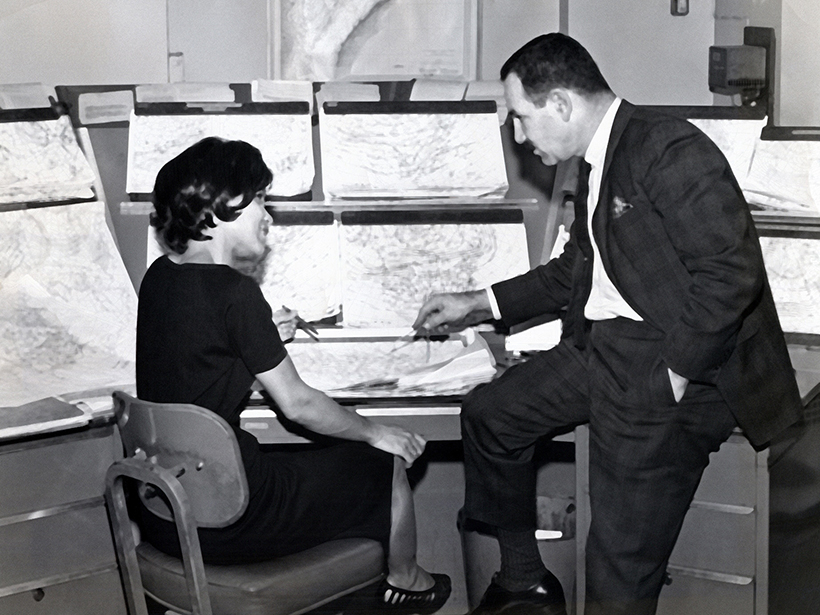
EOS, the American Geophysical Union‘s news site, thoroughly details of June’s life and accomplishments.

 THE AMERICAN BLACKSTORY