Tag Archives: COUTURE FASHION

DAY 17 — Ann Lowe

Ann Lowe - White Society’s Secret Seamstress

Jacqueline Bouvier’s perfect day couldn’t have gone worse for Ann Lowe.

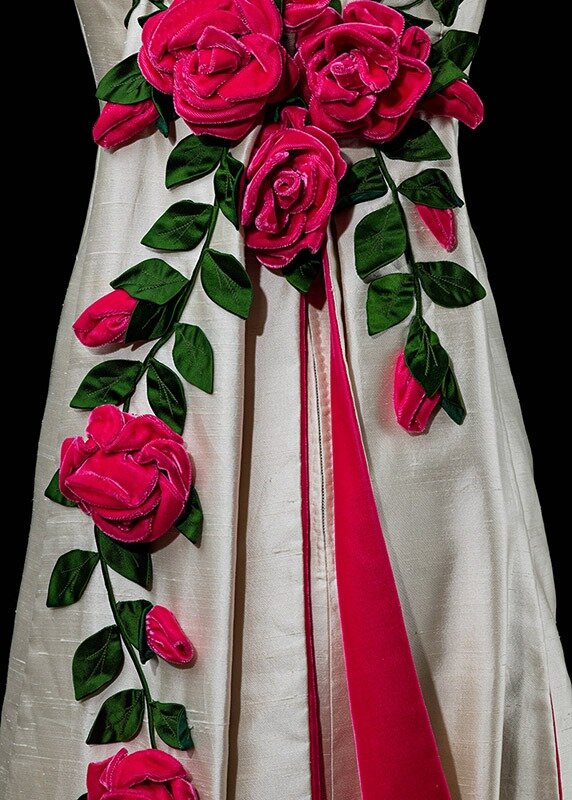
The cover of an article in the 1964 Saturday Evening Post captures Ann carefully detailing her signature flowers.

She’d lavishly fit celebrities, debutantes, and wealthy women with last names like Rockefeller, DuPont, and Roosevelt, but the Kennedy wedding was the moment that made Ann’s over 4 decades of sewing and sacrifice all worthwhile.

And everything that could go wrong most certainly did.

Just 10 days before the 1953 American royal event of the century, a ruptured pipe flooded Ann’s Harlem studio, waterlogging 10 of the 15 dresses Jackie’s mother commissioned Ann to create – including the bride’s, which had taken 8 weeks to construct.

With no time for tears, Ann buckled down, hired backup, rush-ordered hundreds more yards of ivory and pink silk taffeta at a loss of thousands of dollars, and still remade all 10 dresses in record time, saving her business and her well-earned reputation as high society’s master dressmaker.

Only to be humiliated when she tried to personally hand-deliver them.

The staff at the bride’s family’s Newport, Rhode Island oceanfront estate only saw a black woman arriving at the front door, and attempted to intercept her creations and steer her to the rear service entrance instead. Well aware of her value and having already established good rapport with the Bouviers from past commissions, Ann insisted that the dresses go with her through the front door or not at all. Indeed they did.
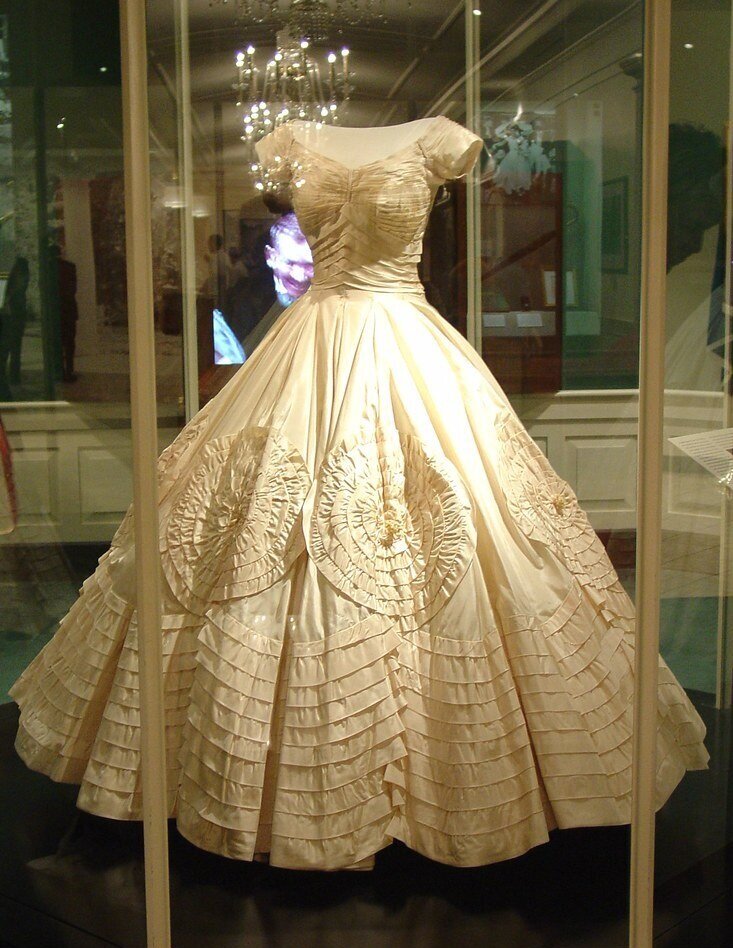
Jackie’s opinions on her wedding gown’s portrait neckline and “lampshade” skirt didn’t stop the gown from making a stunning attraction at the John F. Kennedy Presidential Library and Museum.

Finally, the moment nearly everyone had been waiting for arrived. Jackie’s first appearance before the public and press was breathtaking, and photos published in the classic pages of Life and TIME Magazines memorialized what’s now widely regarded among fashion and wedding industry professionals as one of the most iconic bridal gowns dresses of all time. “The oohs and ahs as they come in… that’s what I like to hear,” Ann told EBONY.

But stolen breaths and gasps of wonder were no comparison to awestruck journalists and photographers clamoring to ask the new First Lady what surely everyone would want to know: WHO was the designer of her exquisite gown? Ann’s heart stopped. Having come this far had been nothing short of a miracle, but behind the scenes, so much had been beyond her control, including one secret then yet to be revealed: Jackie HATED the dress.

The worldly socialite’s trips to Paris, where slender dark-haired women like her set trends in slim and simple silhouettes, had inspired her to be wed in a fitted and fashionable number. But John’s overly-involved father Ambassador Kennedy wouldn’t have it. His son would be married to a woman wearing something traditional, American-made, and the elder Kennedy saw to it, requiring his approval for every detail of the wedding, including the final dress sketch. Ann’s close collaboration with all of her brides ensured that Jackie’s opinion at least factored in, but what would she SAY?

“Oh, a colored dressmaker did it.”

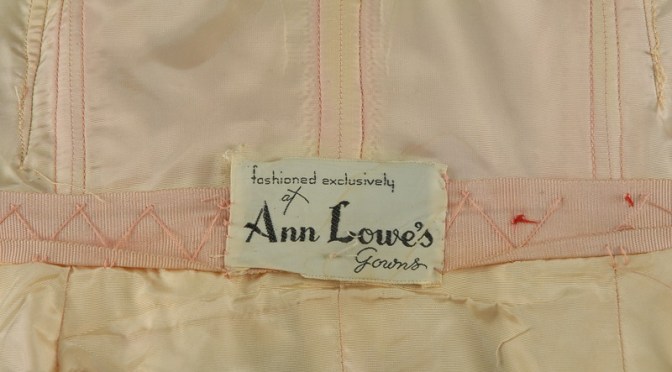
Actress Olivia de Havilland won her 1947 Oscar in a dress Ann Lowe not only made, but also hand-painted. The label inside bore the name of designer Sonia Rosenberg, who’d styled de Havilland and contracted Ann’s work.

Ann was heartbroken. Crestfallen. Utterly devastated. Not receiving credit for her designs was typical. When starlets like Olivia de Havilland walked the red carpets, they’d hoped everyone would believe they were donning the latest European fashions, not those made by a black woman in Harlem, even going so far as to have another designer’s label stitched in. But this was different. This had been Ann’s chance to go from “secret designer for the high society” to a household name. Instead, she’d been brushed aside by the most fashionable woman in the world.

Though her designs were among some of the most sought after of the time, Ann’s financial prowess left much to be desired, and the loss she’d taken from the Kennedy flood incident, combined with the fact that her race gave her little negotiating power with the most wealthy women in the world, continued to affect her bottom line. Despite gaining the favor of Christian Dior and designing in-house for Neiman Marcus, Henri Bendel, Saks Fifth Avenue, and of course, countless ladies of fame and fortune, by 1962, only 9 years after the Kennedy wedding, Ann was bankrupt. Too few profits, IRS troubles, and slowly failing vision that led to the removal of her right eye that same year, had together been too much to overcome, even though she’d regularly earned over $300,000 annually.

“I ran sobbing into the street,” Ann recalled, this time, with no dressmaking in the world distracting enough to dry her tears. In a spectacular and long overdue change of luck, she soon received notice that an anonymous donor had paid her entire $30,000 debt to the government and her suppliers. Until her dying day, Ann held fast to the belief that her benefactor was Mrs. Kennedy-Onassis, simply repaying what she owed.

Her spirits and coffers renewed, in 1968, Ann became the first black woman to open her own fashion label on New York’s illustrious Madison Avenue, but by 1972, working by describing designs to her assistants and stitching fine details through touch alone just couldn’t be sustained. Ann finally retired, ultimately passing away in 1981 as an 82-year-old legend to only a very few.

But when one of her dresses was exhibited at the newly-opened Smithsonian National Museum of African American History and Culture in Washington, D.C., Ann’s whole life came to light. One visitor’s tweet thread was all it took for major media outlets to uncover the heirlooms and finally honor the heritage of the vibrant black woman who clothed American royalty, proving that chic comes in all colors.


KEEP GOING BLACK IN HISTORY:

View the The Metropolitan Museum of Art, New York Costume Institute’s Ann Lowe collection.

Ann was commissioned as the exclusive designer for Ak-Sar-Ben, a Nebraska festival and ball. Read how her dresses came into such high demand for such a niche event here.

Read EBONY Magazine’s December 1966 interview with Ann and peek into her adorable studio.

DAY 6 — Christopher John Rogers

Christopher John Rogers - The Black Fashionista with Southern Flair

Emblazoned across the back of a sheer fuchsia Christopher John Rogers ensemble, in vintage script lettering and thousands of painstakingly placed blue & purple Swarovski crystals is a single word:

“DRAMA!”

That extravagant expression reveals not only his approach to fashion with his voluminous and kaleidoscopic designs, but also a few simple truths about his eccentric perspective.

“I grew up gay, black, Southern Baptist and my grandmother was the head of our church,” the 25-year-old explains. “For me, there’s nothing wrong with effortful dressing.”

It seems that some of fashion’s most esteemed names agreed when they awarded him the prestigious 2019 Council of Fashion Designers of America (CFDA) / Vogue Fashion Fund, a prize designed “to help emerging American design talent find continued success in the business of fashion” with an intensive design mentorship and $400,000 pocket change, too.

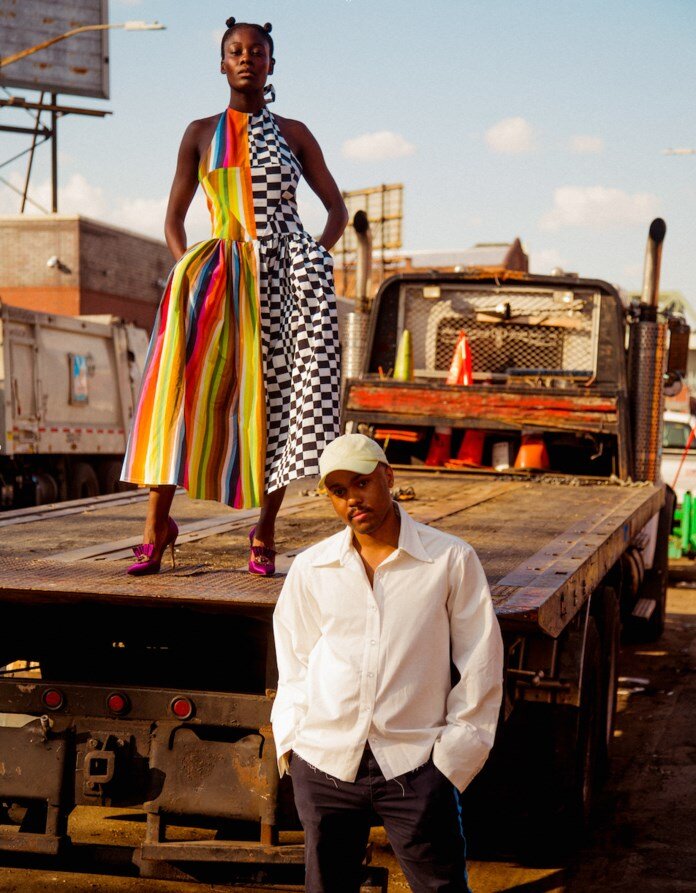
It’s a monumental accomplishment for the Baton Rouge, Louisiana designer who only just debuted at 2018’s New York Fashion Week with a collection that he delightfully characterized as “a debutante ball thrown at Stonehenge and illustrated by Dr. Seuss,” and sewed from his Brooklyn living room while working full-time at Diane von Furstenberg. His win goes deeper than what’s on the surface, though. On Christopher John’s runways, the models themselves complete his vivid vision, running the gamut of race, gender and age. Recognizing his work so prominently is in turn a recognition of the diversity he brings to a woefully misrepresentative industry.

“I’ve always known variety to be standard,” he recalls, and it shows in every detail of his presentation. “’Inclusion’ and ‘diversity’ are trending right now, but I feel like there’s also a real opportunity to encourage permanence on that front by celebrating the excellence and hard work of those people. The more colorful the room is, the better everything is for everyone.”

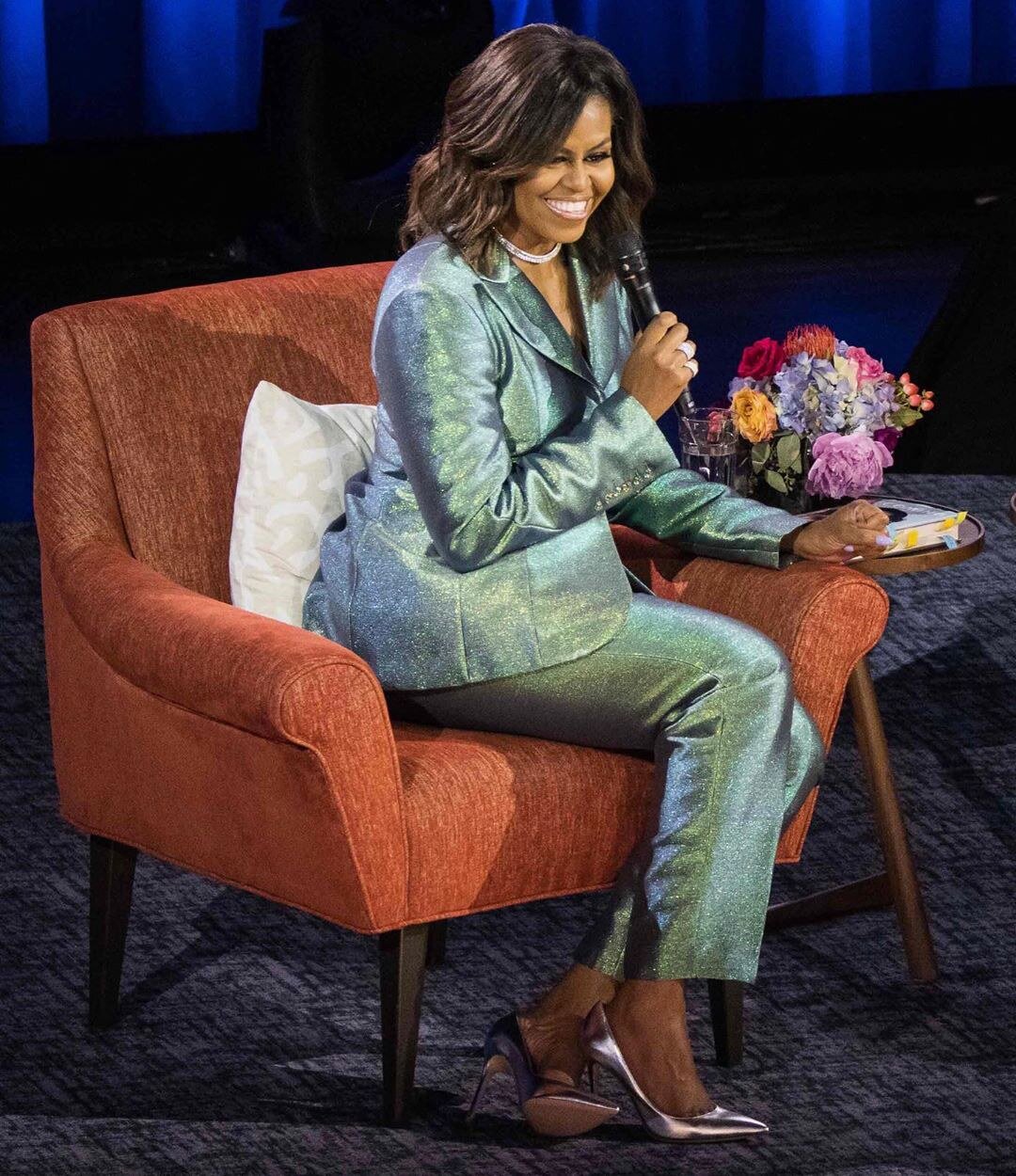
And so far, his brand of color and variety have kept Christopher John Rogers in high demand. Since his NYFW debut, he’s dressed some of the most famous and fashionable black women in the world – Tracee Ellis Ross, SZA, Regina King, Lizzo and former First Lady Michelle Obama (after whose message he says, “I immediately threw my phone across the room”) among them. True to his desire to better things for everyone, this year, Christopher John’s ready-to-wear designs will be sold in stores nationwide and online, and almost certainly inspired by one of the many key messages in his collections: “It’s not about a girl wearing a suit or a guy wearing a heel, it’s about fully embodying the nuances of yourself when dressing up. It’s about you feeling yourself.”


KEEP GOING BLACK IN HISTORY:

Follow Christopher John on Instagram.

Browse Christopher John Rogers’ bold collections at his website here.

DAY 3 — Virgil Abloh

Virgil Abloh - LV VIP

Virgil Abloh grew up a middle-class, private-schooled skater kid, graduated college with a B.S. in civil engineering and a Master’s in architecture, and then switched gears to become an intern at Italian luxury giant Fendi.

But he still couldn’t get into a fashion show.

Virgil had been turned away at the door of fashion’s biggest brands often enough that he’d even perfected his strategy of circling the block to try again later. “We got into about 60 percent of those shows. Even when I just walked into a luxury store, people would look at me like I didn’t belong there,” he recounts.

But accustomed to not fitting in, Virgil plunged ahead. When he was hired as creative director of Kanye West’s creative agency, his art direction for “Watch the Throne” earned him a 2011 Grammy nomination for Best Recording Package. Such a major creative success gave him the confidence for solo experiments in fashion, which he began with $40 of Ralph Lauren deadstock that he screen-printed with his own designs and resold for over $550 a piece until he was hungry for something more.

Virgil collaborated with Nike to design Serena Williams’ striking and celebrated 2018 U.S. Open tennis dress.

And so, in 2013, his original brand Off-White c/o Virgil Abloh, the world’s first luxury label designed and owned by a black American, was born. The very next year, Off-White debuted at Paris Fashion Week, and has since become a global phenomenon with 10 standalone stores on 4 continents, and beat out the likes of Prada, Gucci, Balenciaga, and Versace to top the list of 2018’s hottest luxury brands. Virgil’s collaborations have included home goods for IKEA, kicks for Converse, museum exhibitions with famed Japanese artist Takashi Murakami…

…and that was all BEFORE he was tapped to become the first black person to ever serve as menswear artistic director of Louis Vuitton. He’s not only the first in LV’s 165-year history, but the third in leadership at ANY French heritage fashion house.

“When I was growing up, I didn’t know that I could be showing in Paris, because I didn’t see anyone doing that who looked like me. Now we are the establishment. I’m legitimately like, ‘Who can we empower next?’” The access to fashion’s upper echelons that Virgil was initially denied is a now hallmark of his brand. His runways are often streamed on his Instagram, he has fashion “How To” videos on his brand website, and under his creative guidance, black faces that might once have been turned away from fashion shows are now the symbol of luxury.

Virgil at center, styling for his first LV runway show based on The Wizard of Oz.

KEEP GOING BLACK IN HISTORY:

Go behind the scenes at the installation & opening of Virgil’s 2018 exhibition with Takashi Murakami at the Gagosian Art Museum.

Take a virtual visit of Virgil’s 2019 “Figures of Speech” exhibit at the Museum of Contemporary Art Chicago.

His dynamic and innovative Off-White c/o Virgil Abloh runway art direction makes Virgil’s runways entirely unexpected & well worth the watch.

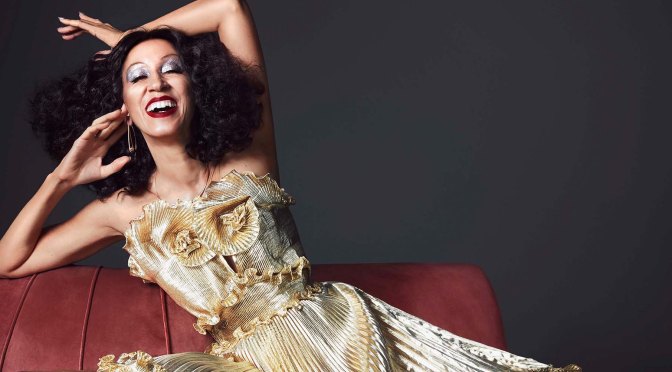
DAY 17 — Pat Cleveland

Pat Cleveland - International Cover Girl

“Patricia, we have very few colored girls in our agency. The only reason I took you is because Oleg Cassini recommended you. But I really think you will never make it in the modeling business. You see, you don’t look like an American. Your face is not pretty. Your nose is strange.”

Pat Cleveland was 18 in the late 60s when she sat in the Ford Models Manhattan headquarters, listening to the company’s founder tell her that her beauty, her allies & her goals didn’t matter because she was black.

But she kind of already knew that. Pat’s career started at 14 with the Ebony Fashion Fair Tour, a traveling showcase of black models in high fashion. In northern states & abroad, the tour drew middle- and upper-class black audiences in droves. In the South, they attracted an entirely different crowd. In Arkansas, the KKK threw Molotov cocktails at their bus & one of the girls was nearly raped. Even using a restroom and going for a walk turned violent against them.

But working with black agencies had been limiting too, because for the black culture of the time, darker skin was in. (Although she did appear in Essence Magazine repeatedly.) She was too light-skinned to be successful on one hand, and too dark-skinned on another. Since the problem was with American society, not Pat’s skin, she solved it the only way she knew how & left for Paris, home to many black creatives seeking opportunities they weren’t afforded in America.

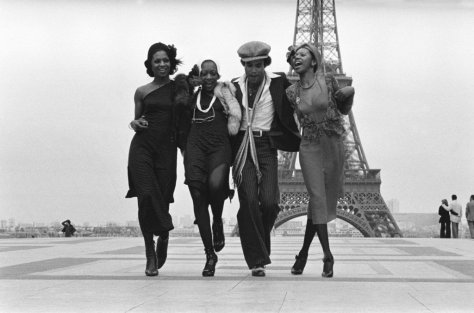
Her success was almost immediate. She graced runways for designers like Yves Saint Laurent, KENZO, KARL LAGERFELD, Halston, and Valentino; posed for Andy Warhol, Salvador Dali & illustrator Antonio Lopez; and appeared in high-end fashion magazines regularly. And once she was in demand, she leveraged that success & refused to return to the U.S. until a black model had appeared on the cover of American Vogue. (Ms. Beverly Johnson became their first in 1984.)

Before pioneering black models like Iman, Naomi Sims, and Beverly Johnson, there was Pat Cleveland, and as early as 1980, she was recognized as the world’s first black supermodel, strange nose and all.


KEEP GOING BLACK IN HISTORY:

Vogue Paris created a reel of Pat’s runway walks as a Chloé model from 1978-1986, looking completely fabulous in her own skin.

Listen in or read through NPR’s interview about the tradition of black American migration to Paris since the 19th Century.