Tag Archives: BLACK BAGS

BLACK BAGS, Vol. 4 — Fanm Djanm

If a photograph of Ellen Valenton ever existed, it didn’t survive nearly two centuries.

So I have no idea if she left her house in New Orleans’ 10th Ward wearing a tignon. 

But Ellen was exactly who Tignon Laws were designed to oppress.

New Orleans’ femmes des couleur libre—free women of color—held a unique social status. They owned their own property and businesses, exercised their legal rights, and some achieved a net worth upward of $10,000.

With all this access, they’d become white men’s companions, white women’s competition, and total chaos to a social hierarchy established on skin color.

And Ellen DID leave a glimpse of that chaos behind.

Starting with the 1860 U.S. Census, she and her daughters are magically “white” then “negro” over and over again.

So, since they weren’t always clearly identifiable and could all use a visible reminder of their place, women of color — whether light or dark, free or enslaved — were forced to identify as a “slave class” whose hair would be covered in public with “tignons.”

But the moment Empress Joséphine Bonaparte saw women of all skin colors wearing gorgeous tignons and started wearing one of her own, the femmes des couleur libre’s Scarlet Letter was suddenly mainstream fashion.

So I can’t know for sure if Ellen wore a tignon for the culture, for the style, or if she refused altogether.

But I’m absolutely certain of the rest.

Because Ellen Valenton is my great-great-great-grandmother.
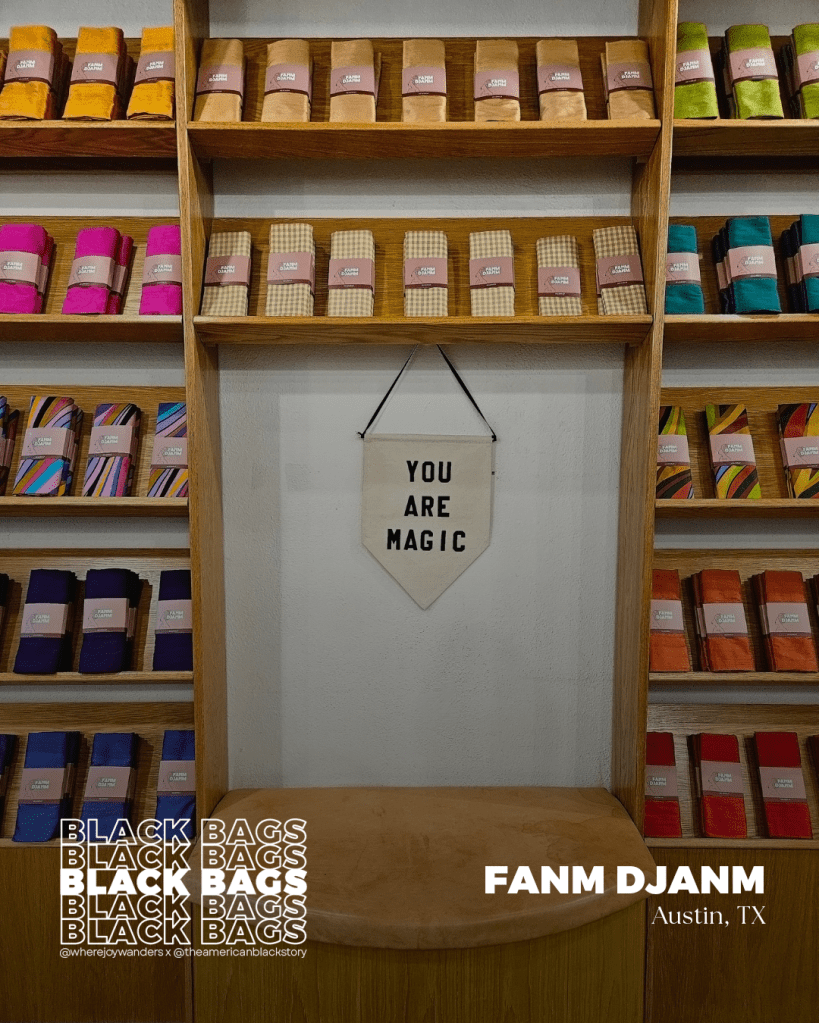
So I walked into @fanmdjanm (Haitian Kreyol for “strong woman”) less focused on spending money than what I had to gain.

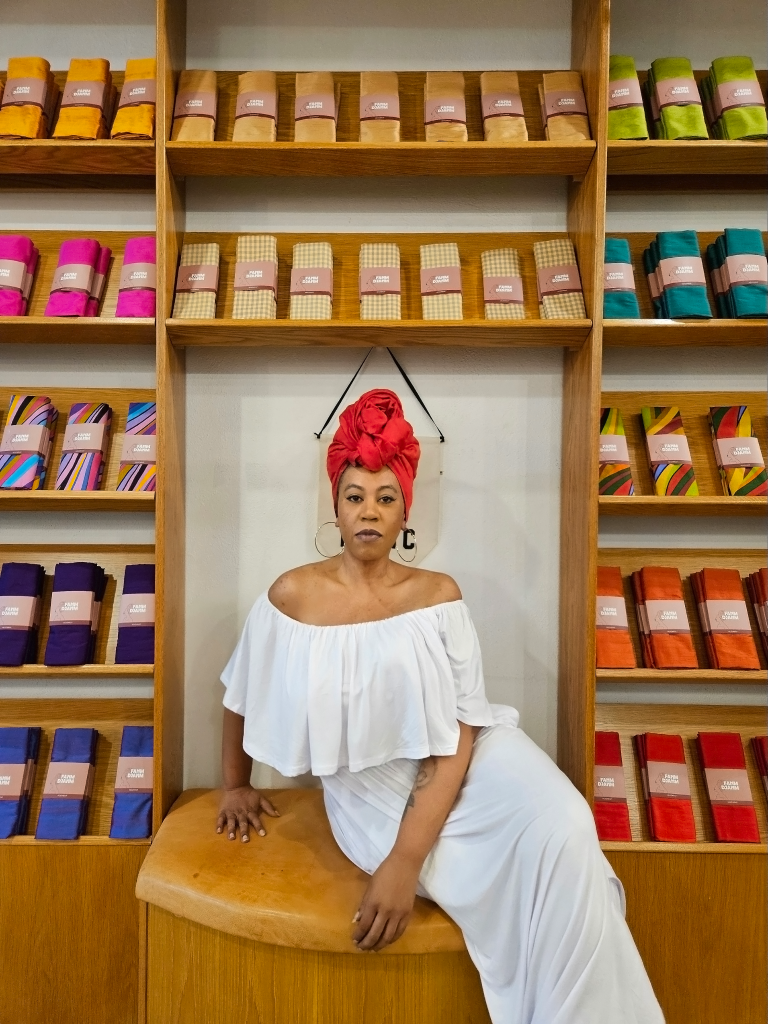
Rich silk, crisp cotton, and buttery jersey lined a full wall like paint samples of both vibrant color and vivid history, with each one calling to mind some photograph, painting, or real life experience with women across the African diaspora.

But I can only imagine Ellen.

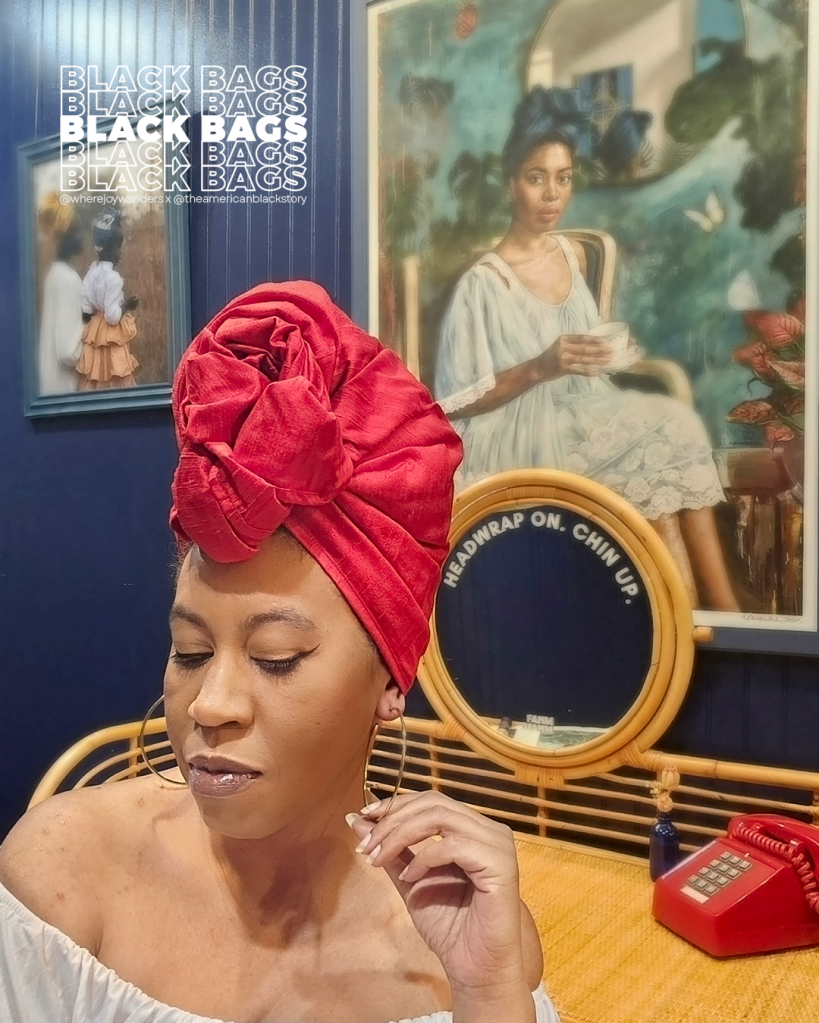
And when I do, a portrait comes to mind: Jacques Amans’ “Creole in a Red Headdress.”
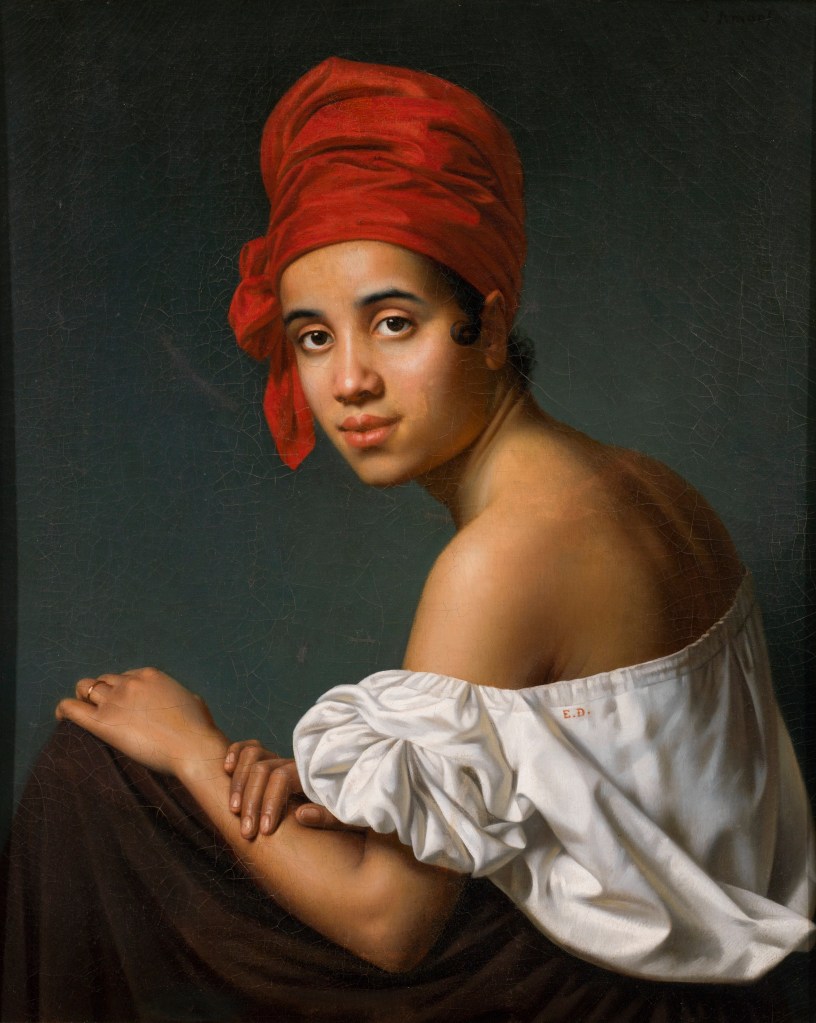
I wonder how many other women walk into Fanm Djanm with that same vision.

And how many more walk out completely unaware that their paper bag is carrying a crown.
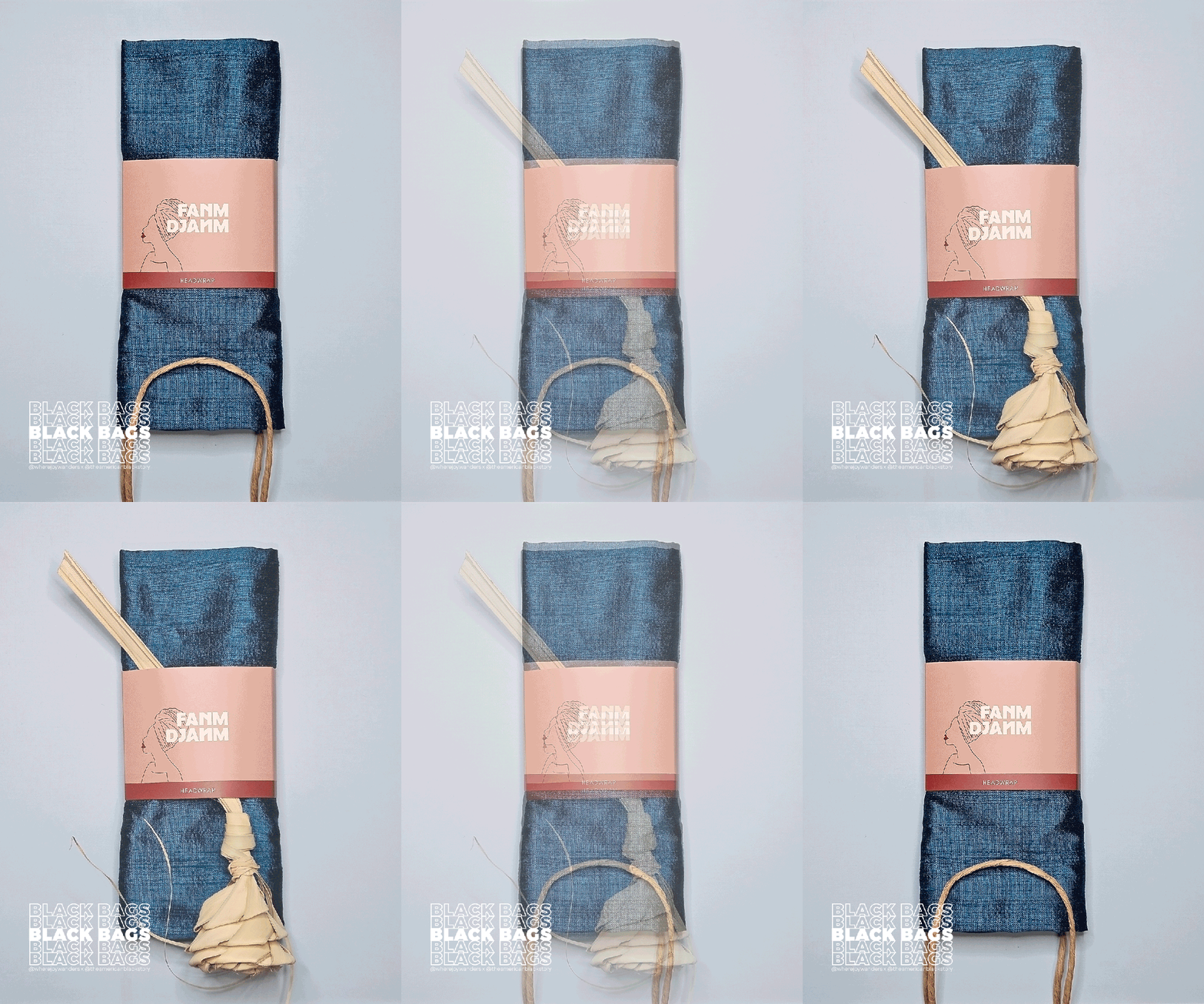
Find one to fit you at fanmdjanm.com. 🖤

BLACK BAGS, Vol. 3 — BLK MKT VINTAGE | SUPPLEMENTAL

BLACK BAGS, Vol 3. — BLK MKT Vintage | SUPPLEMENTAL

I’ve got over 15 years of education and experience in Advertising.

That makes me Old Head and Baby Girl at the same damn time.

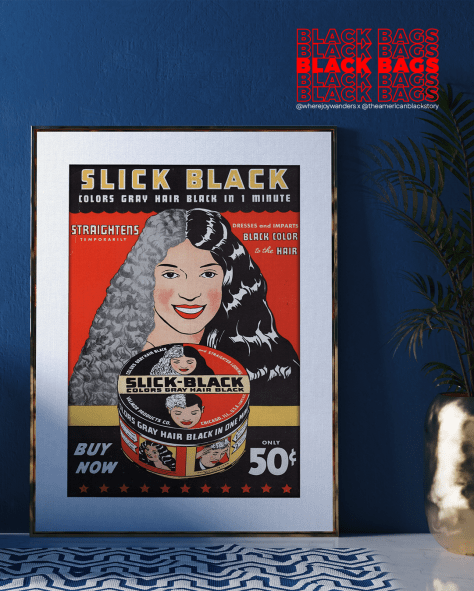
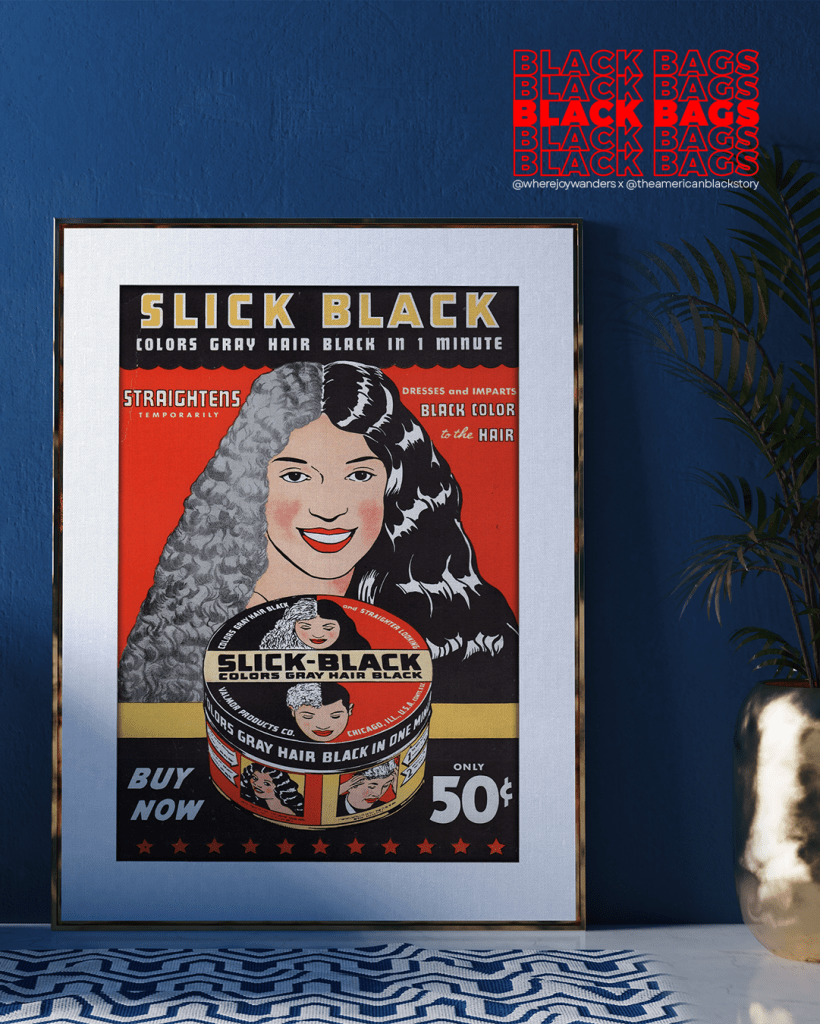
Still, enough that I should have known the name “Charles Dawson” WAY BEFORE this vintage Slick Black Hair Color broadside from BLK MKT Vintage arrived at my door.

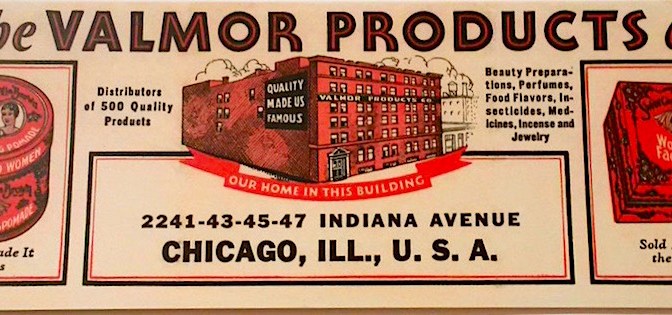
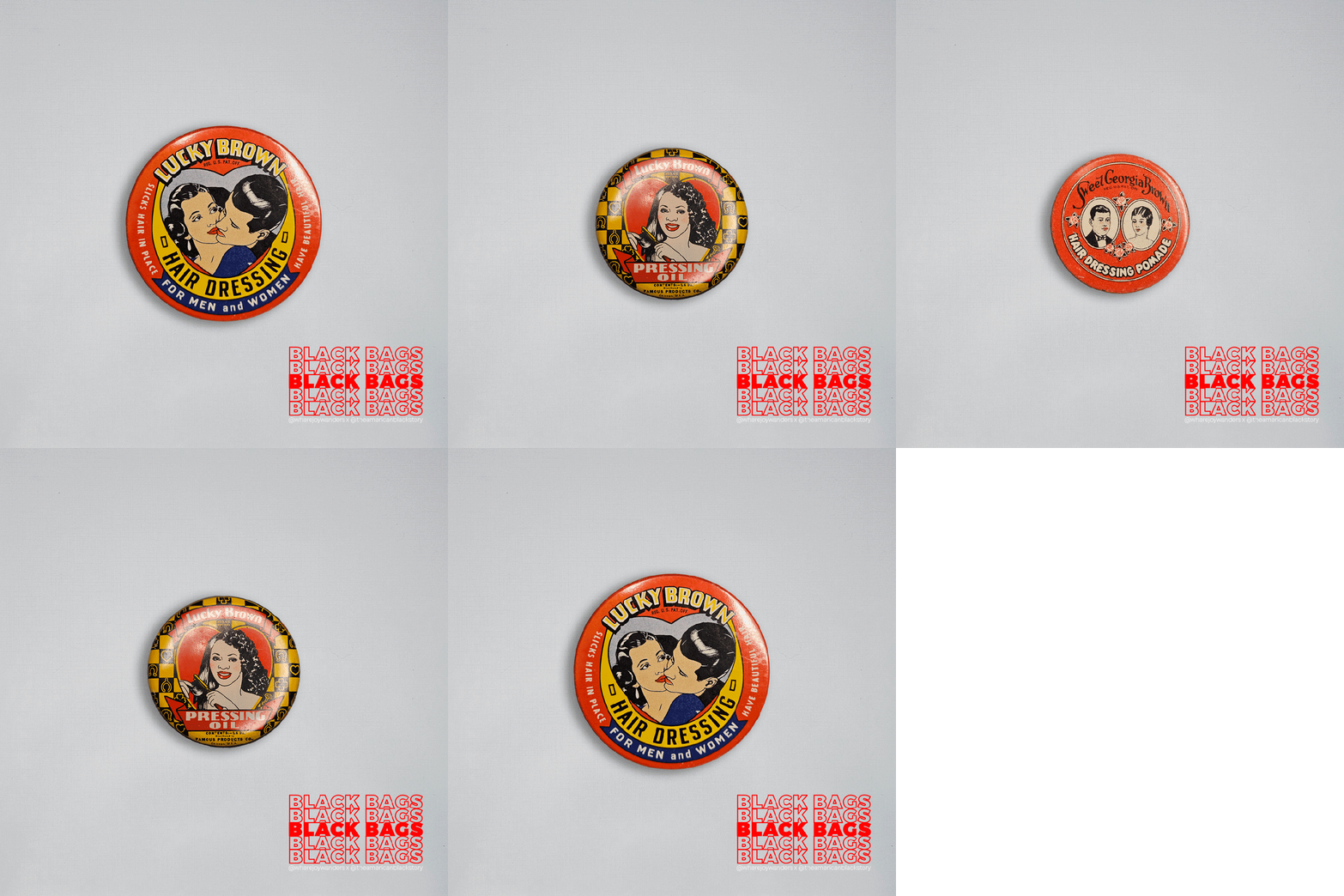
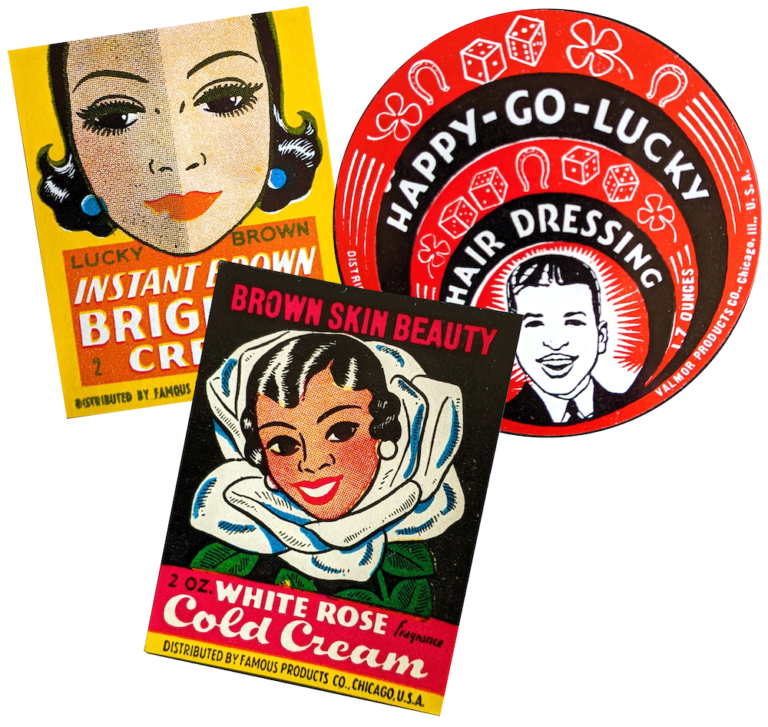
During the Great Depression — nearly 40 years before “Black was Beautiful”— Black designer Charles Dawson created gorgeous packaging targeting Black and Latino consumers for Chicago’s Jewish-owned Valmor Products.

And not just a handful of niche hair pomades.

Valmor’s subsidiaries included Lucky Brown, Peachy Brown, Sweet Georgia Brown, Madam Jones, King Novelty, Famous Products Company, and many, many more.

Hundreds of face creams, hair products, perfumes & body oils, toothpastes, lotions, and home goods spanning global mail-order catalog, direct-to-consumer, and national drugstore distribution.

With people of color front and center on nearly every label.

Headquartered in one of the cities that put advertising on the map.

Charles Dawson was more than a graphic designer.

He was the Black beauty blueprint.

And I had to stumble across an 80-year-old+ rarity to even learn his name.

Yesterday, I dropped a term that might be unfamiliar: SANKOFA.

It’s a Ghanian word whose literal translation is “it is not taboo to fetch what is at risk of being left behind.”

Put simply, “go back and get it.”

Since the day BLK MKT Vintage introduced me to Charles Dawson, I’ve collected several of his originals, each one highlighting his stunning illustrations, signature primary colors, and exceptional talent at balancing bold design and a staggering amount of copy.

Nobody ever taught me about Charles Dawson’s work. Let alone his successor Jay Johnson.

And if I had a dollar… I’d be a billionaire.

Because they’re just a couple among countless legends nearly erased by who gets to tell the story.

And among many reasons I’m thankful to BLK MKT Vintage for helping me go back and get them. 🖤
There’s so much more waiting at blkmktvintage.com, and more of Charles Dawson at Design Observer and the Made in Chicago Museum.


BLACK BAGS, Vol. 3 — BLK MKT VINTAGE

BLK MKT Vintage has seen more of my paychecks than the other three BLACK BAGS shops combined.

Theirs is also the only one I’ve never actually set foot into, and just one reason I try to avoid the phrase “next time.”

I mean… I WAS IN BROOKLYN AND EVERYTHINGGGG!

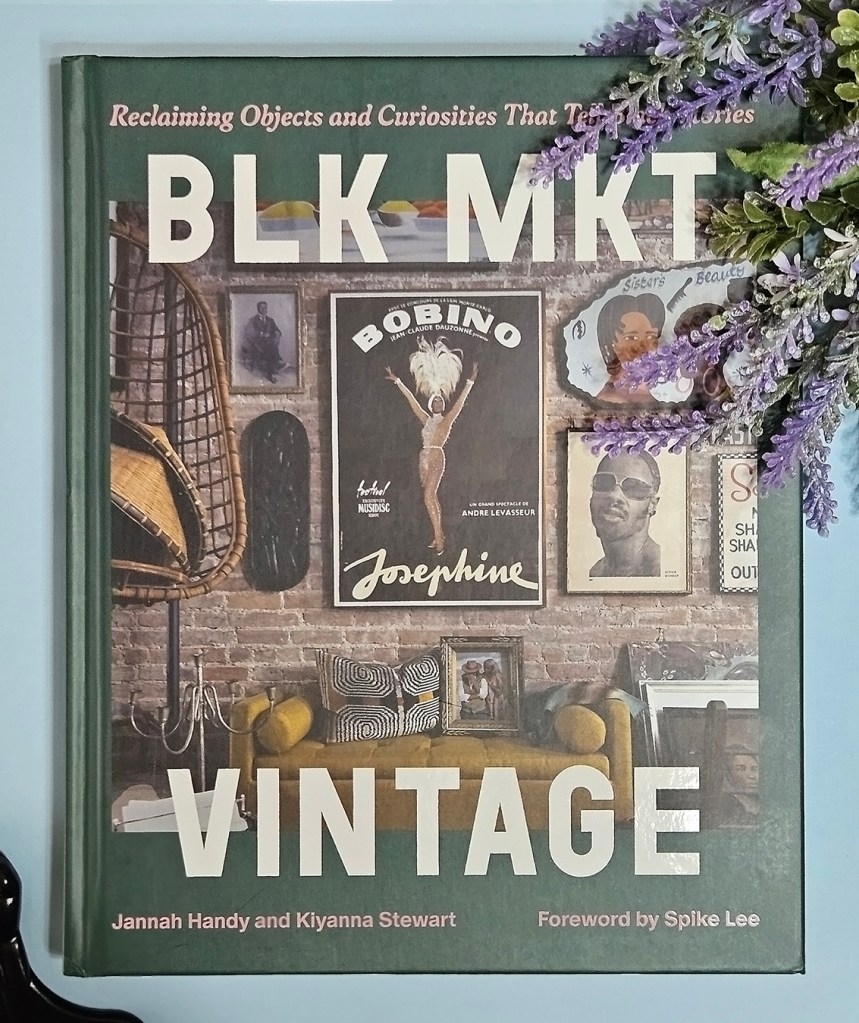
And then NY street photographer Louis Mendez said he wanted to get a picture of me with Spike Lee. 🤷🏽‍♀️

I regret (almost) nothing.

It even felt like fate that when I went looking for Brooklyn’s Black history, it found me instead.

(TSA and my bank account were also fully on board with fate, tbh.)

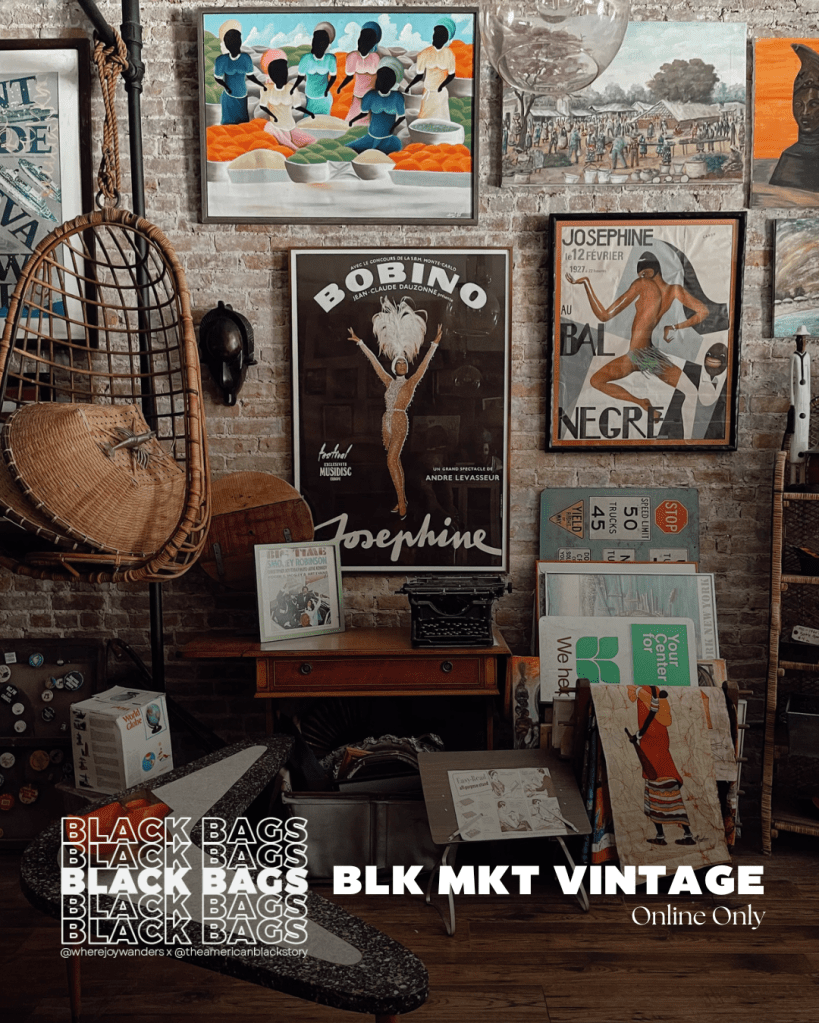
Until… BLK MKT Vintage closed their gorgeous brick-and-mortar, home to “collectibles, cast-offs and curiosities, which represent the richness of Black history.”

My inner antiquer will NEVER recover.

Sure, there’s no shortage of antique piles to comb for treasures.

Those treasures, though, so rarely reflect ME.

Discarded drawers overflow with beautifully illustrated Victorian postcards, maybe five of which feature a dignified representation of Blackness.

Gibson Girls, Norman Rockwell families, and feathered blonde hair grin from vintage ads, as if Coca-Cola and Budweiser bottles were labeled “Whites Only” too.

But BLK MKT Vintage curates ephemera that specifically bears witness to the Black lived experience.

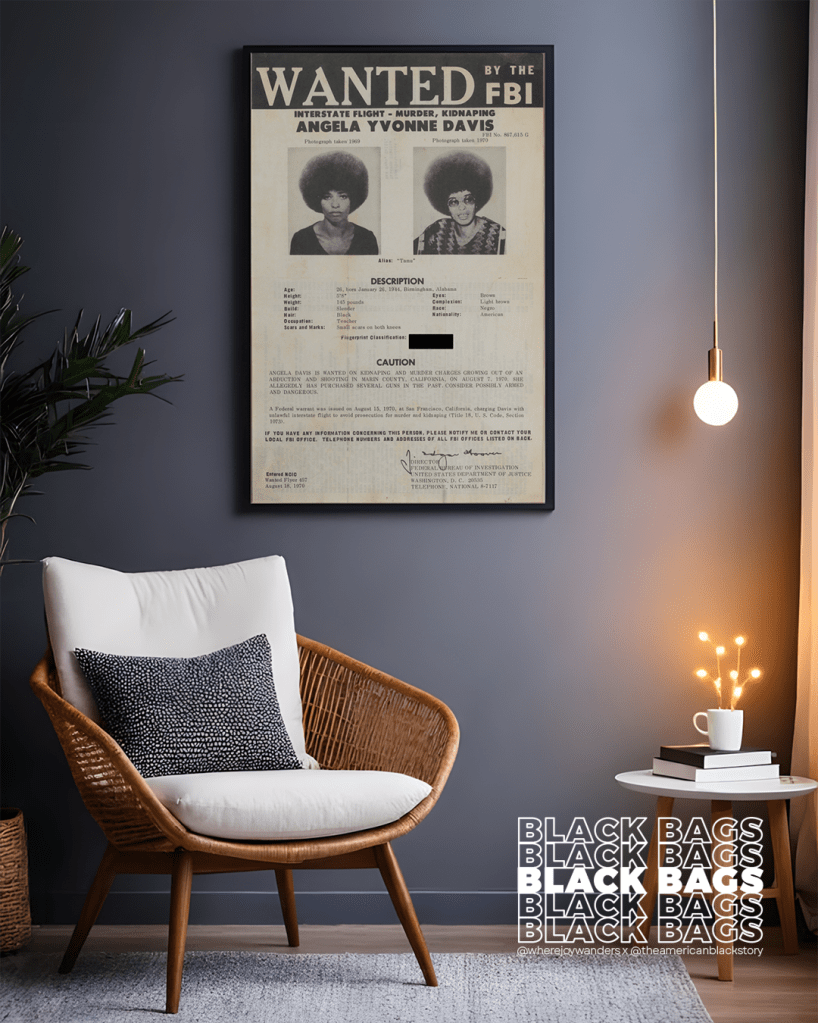
In my case, that’s an original Angela Davis FBI wanted poster and a 1930’s Slick Black hair product ad, two of my most prized BLK MKT Vintage finds.

But they also sell books, photographs, movie memorabilia, home decor and other meaningful cultural objects.

BLK MKT Vintage is the repository where there’s more to Black Americana than Bojangles, pickaninnies, and Aunt Jemima.

It’s a library of the Black diaspora from afros and Maya Angelou to Zambian art and Ziggy Marley.

Scattered throughout, general antiques like Kodak cameras, mid-century tins, even tourism bumper stickers, give BLK MKT Vintage’s inventory added depth that mirrors the Black American experience in itself — we stand at the intersection of American culture. So do they.

And nothing would please me more than helping discover something that fits you at blkmktvintage.com 🖤


BLACK BAGS, Vol. 2 — just add honey

Atlanta’s full of Black legacies & landmarks.

It’s also home to my favorite place to indulge in a tradition that’s been almost entirely erased.

But it’s not exclusive to Atlanta.

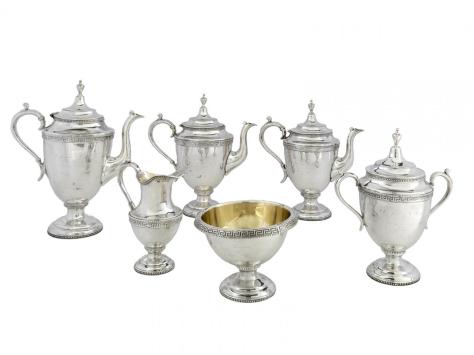
It fits in a teacup.

So, how is tea Black History when the only drink more common is water? (And maybe Coca-Cola?)

It’s community. Comfort. Contemplation.

It’s all the things enslaved Black people were forbidden.

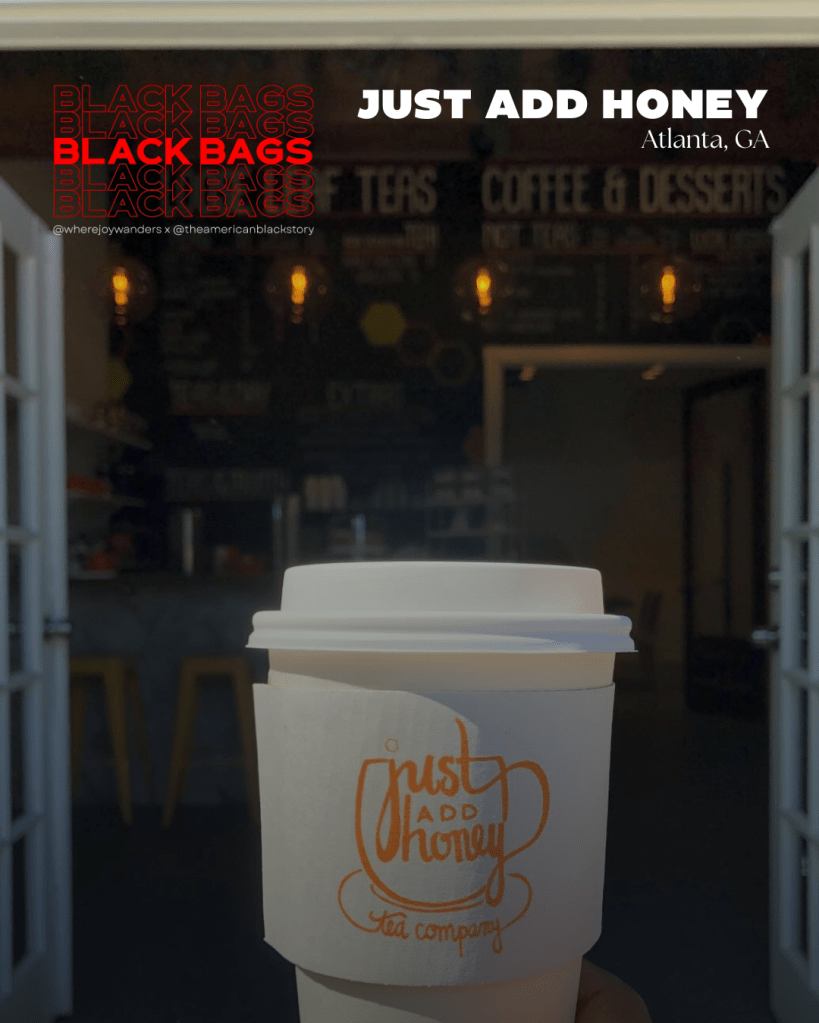
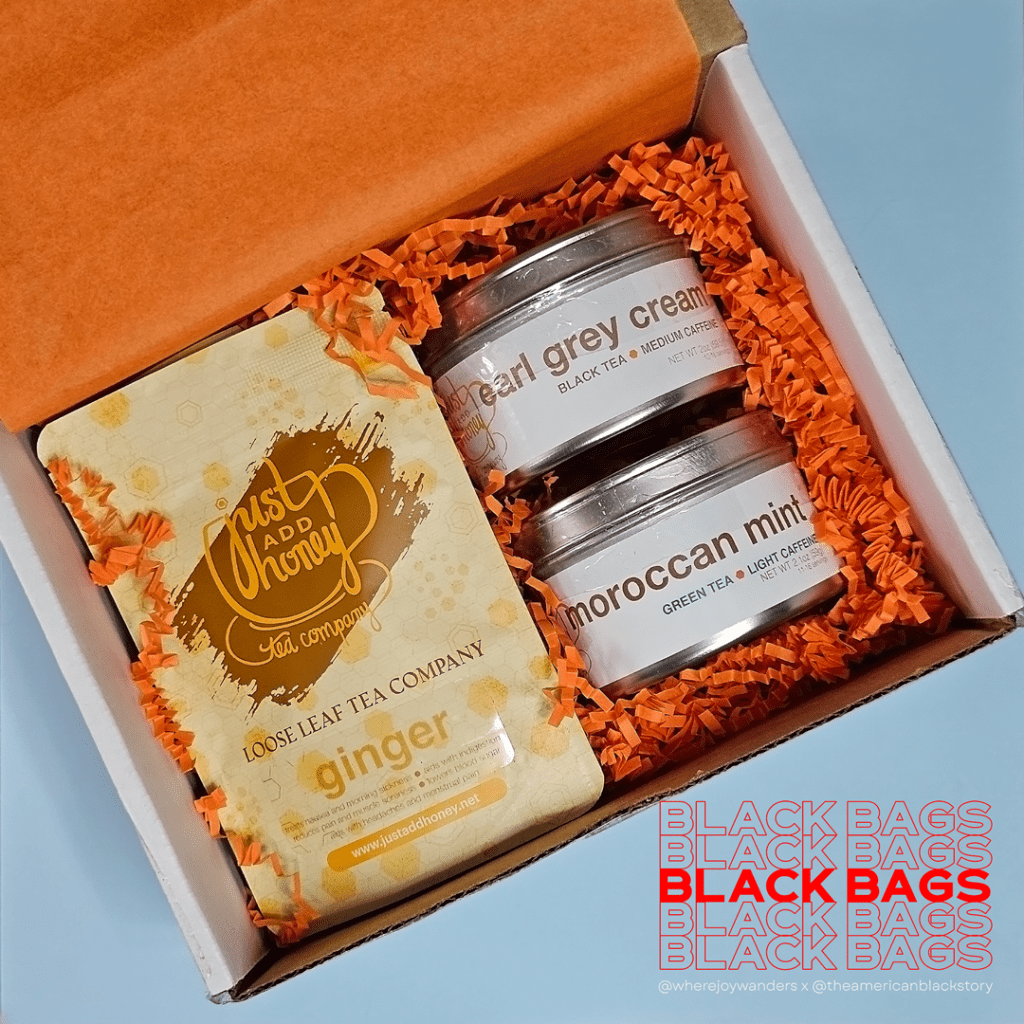
But today, the husband/wife duo at @justaddhoney are reclaiming all of that.

Their tea room, steps from the Eastern Beltline, is only 7 years old, but there’s centuries of subversion behind it.

I didn’t know that when I stepped in or out with my very first cup and bag.

MOST people don’t because like so many Black traditions, this one grew in secret.

All that remains of it are stories handed down by a few surviving families, a handful of objects, and the businesses born from its legacy.

Every February 15th, after the enslavers’ lavish Valentine’s events, Black Americans held their own tea parties.

But they weren’t allowed to gather en masse so invitations took clever shape.

While the ladies prepared to host, the men visited neighboring houses to “borrow a tea cup.”

One-by-one, guests arrived with their plantation china hand-me-downs for a simple pleasure nearly everyone else in the world freely enjoyed.

But even “freedom” didn’t mean moving freely.

Between southern slave patrols and Jim Crow laws, there was no safer place to meet, whether with white abolitionists or each other, than over an intimate cup of civilization.

And when the Black church became a pillar for the Civil Rights Movement, it wasn’t the only service turned strategy.

Segregated tea rooms transformed a practice once secret by necessity into a public revenue stream for Black women, America’s first working experts in the household arts.

Tea’s significantly shaped every corner of the world we live in.

But after today, I’m certain your next cup hits just a little differently, especially filled by people whose ancestors always tasted its power.

Black History’s served in all sorts of varieties at justaddhoney.net. 🖤


BLACK BAGS, Vol. 1 — DENIM TEARS | SUPPLEMENTAL

Look closely in my “Black Bags” posts and you’ll find the occasional Easter egg.

This might be my favorite of them.

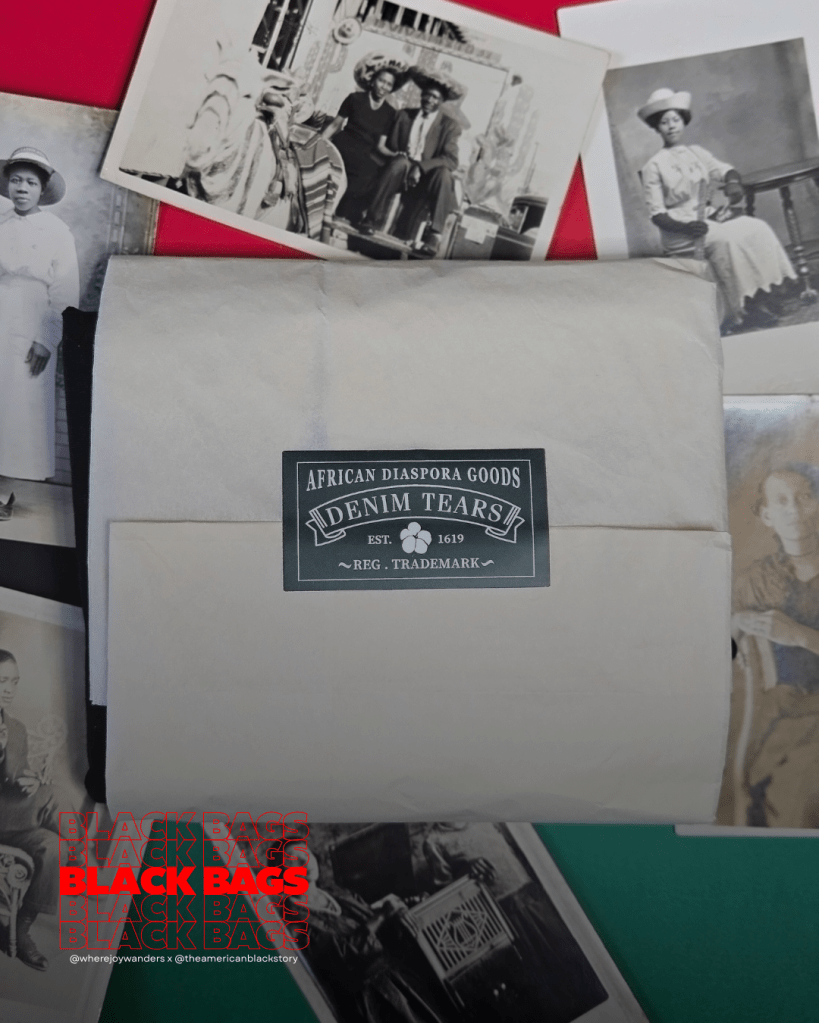
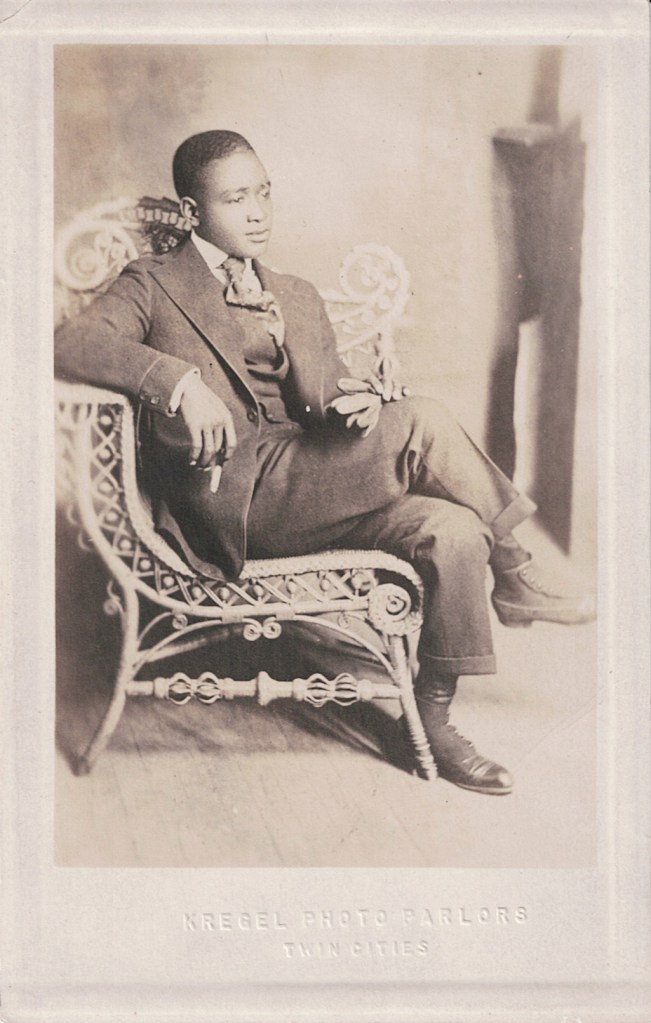
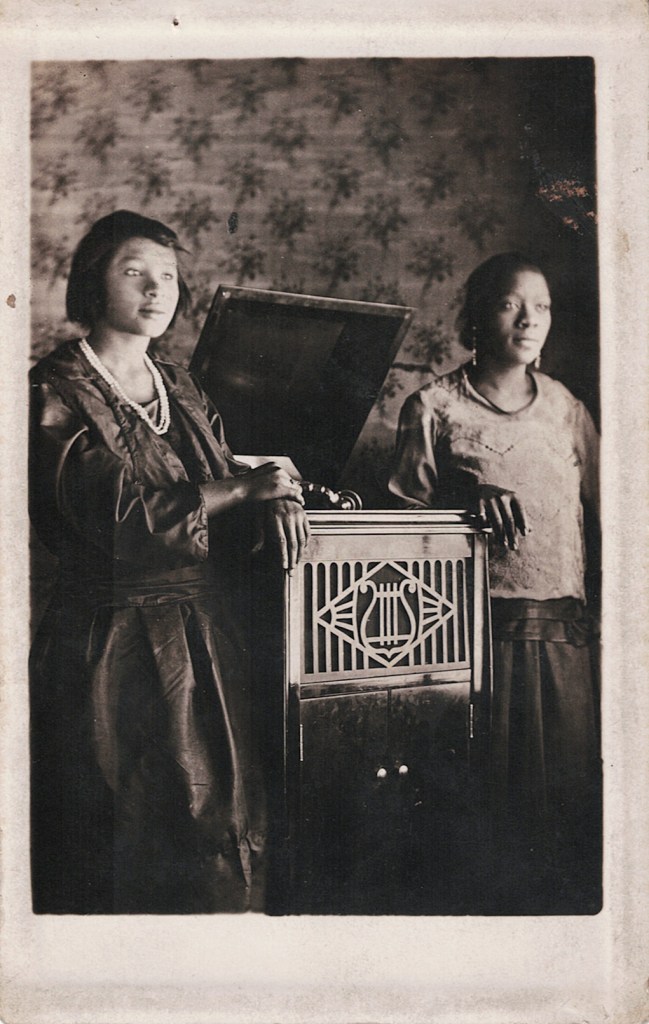
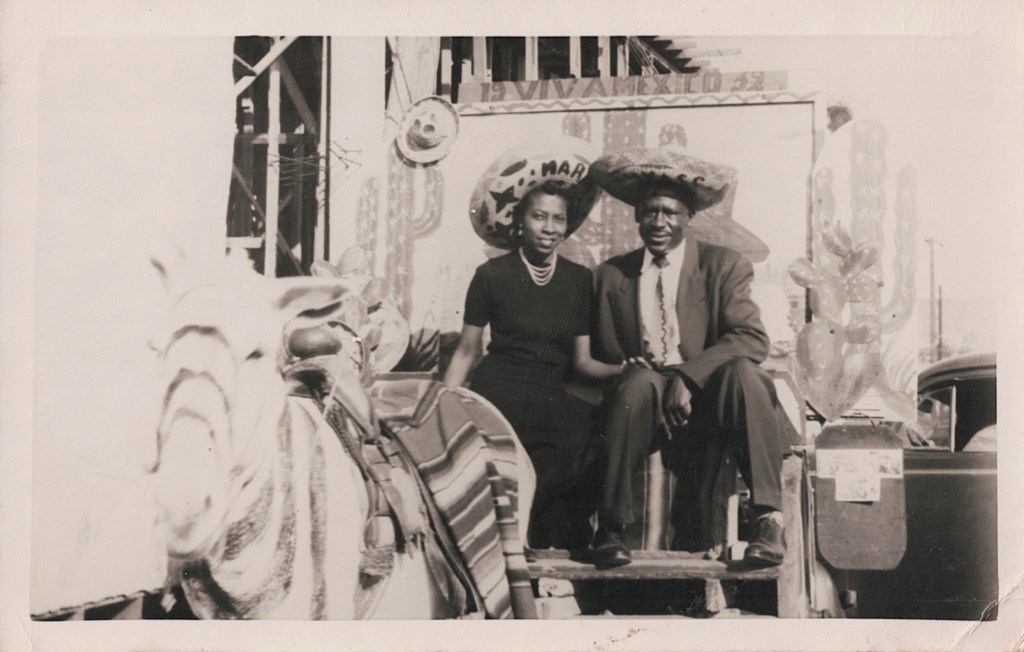
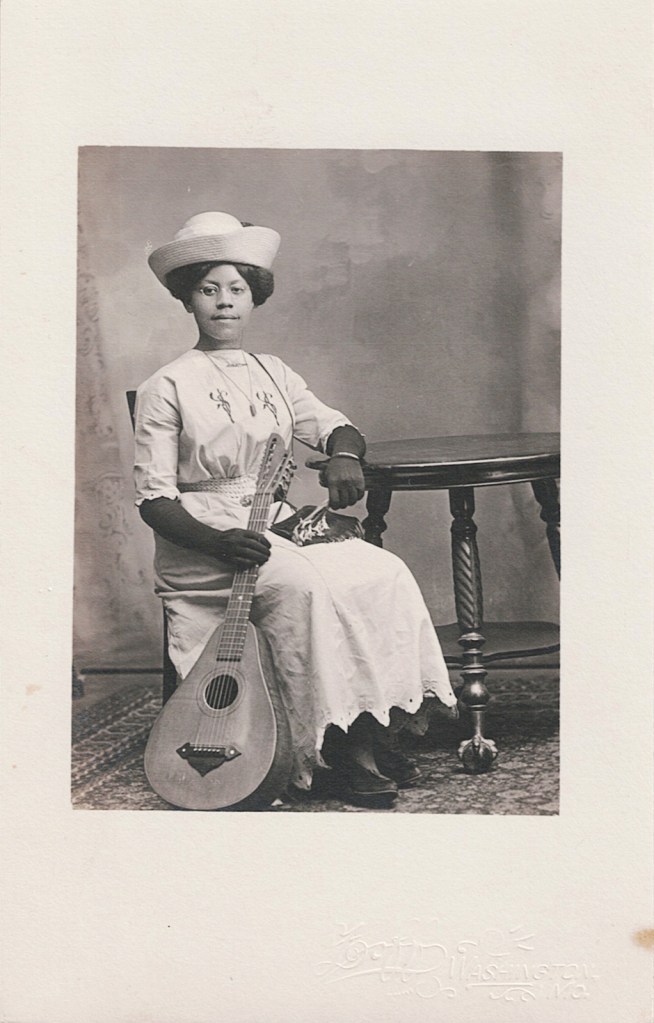
In my last post, peeking from behind my neatly wrapped @denimtears parcel, very real postcard photographs—some even embossed with the studio’s logo—have stories of their own.

These are the faces of the Met Museum’s Superfine exhibit and Denim Tears, hidden behind the veil of American History.

An immaculate gentleman, fitted even to the buttons on his heeled shoes.

Sisters in satin and lace, gazing from a beautiful Victrola.

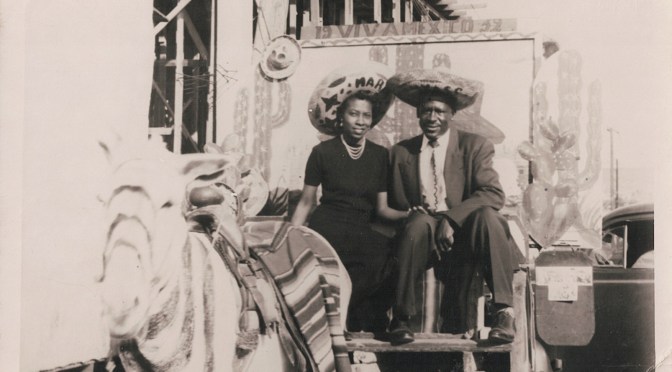
Lovers—maybe even honeymooners?—riding a donkey cart in Mexico.

A bespectacled musician accessorized with elbow-length gloves, perhaps to hide the wear to her hands?

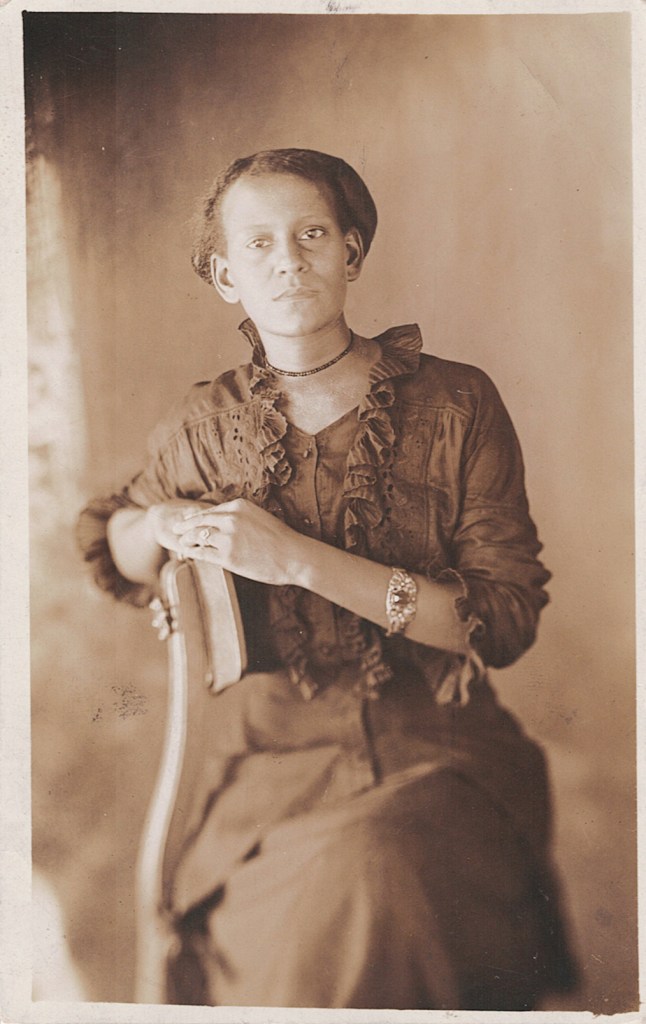
A woman dressed all in black, whose ruffled lace waistcoat is only outdone by the exquisite jeweled bracelet and ring on her hands.

Photographs of Black people from days past already seem rare.

Photographs of them dressed in and surrounded by such luxury feel priceless.

But these five only scratch the surface of my collection.

And Superfine, hosted in the Met Museum’s premier gallery, only housed a fraction of the finery owned, made and inspired by Black Americans.

Denim Tears is their legacy.

And all three—the photographs, the exhibit, and the brand—bear witness that creative, adventurous, romantic, bespoke, affluent, and deserving have never been synonymous with “white.”


KEEP GOING BLACK IN HISTORY:

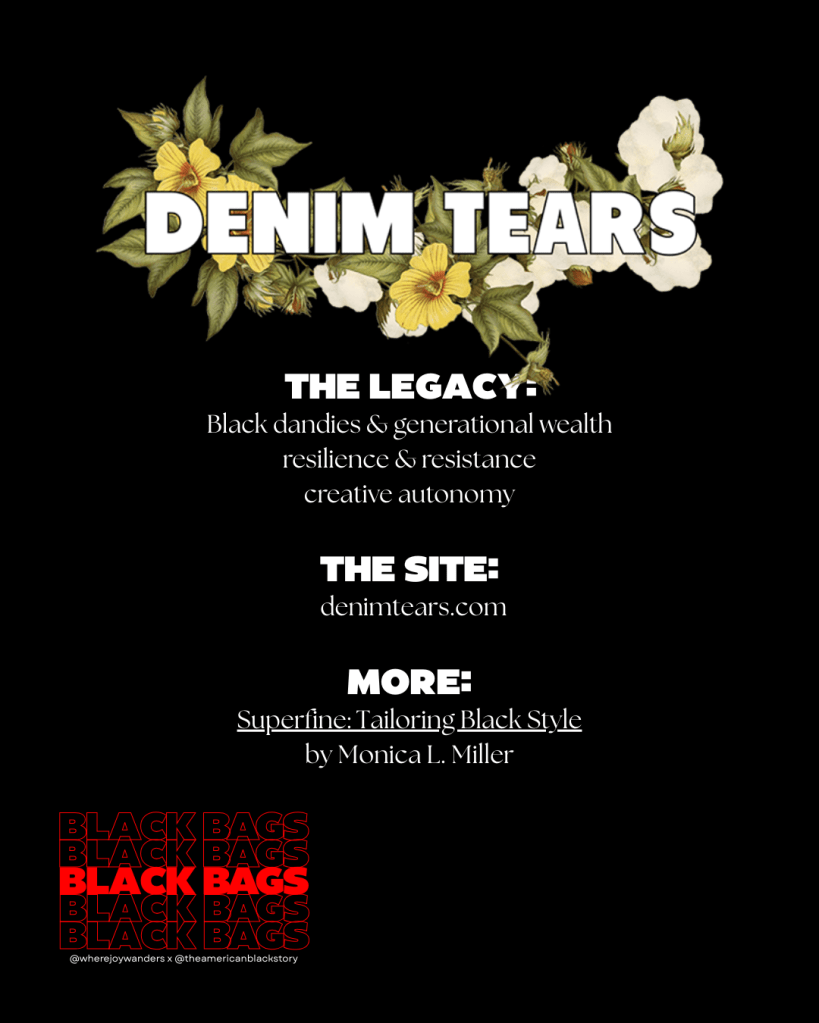
Get your African Diaspora Goods at denimtears.com

For more photos like these, follow curator at the @schomburgcenter and author, Kimberly Annece Henderson at @emalineandthem.

BLACK BAGS, Vol. 1 — DENIM TEARS

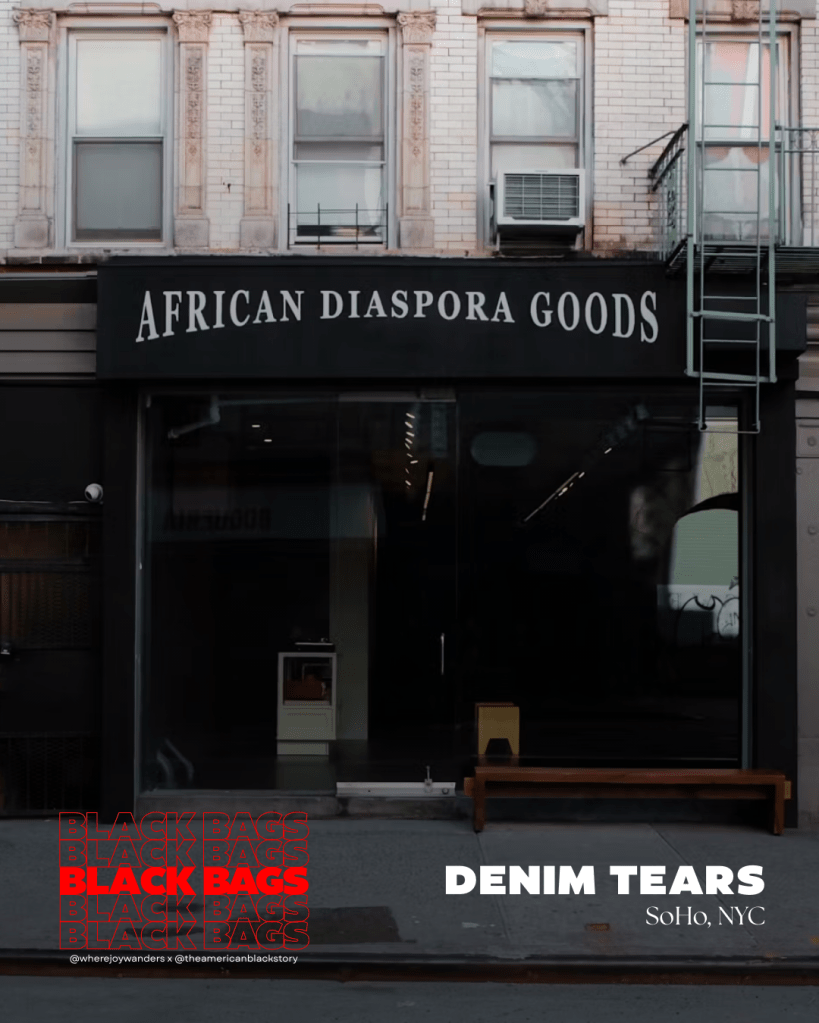
Just around the corner from the likes of Chloë and Alexander Wang, a simple, black sign stands in sharp contrast to its Spring Street neighbors, holding space for an unexpected commodity:

“AFRICAN DIASPORA GOODS.”

There wasn’t a matching sign outside of Gallery 999 at the Met Museum, but my involuntary double-take was surely the same.

Especially after I’d barely escaped the museum gift shop with my life. 

Spanning multiple tables outside of the Superfine: Tailoring Black Style exhibit, @denimtears wouldn’t even let me come up for air.

Union Jack and American flag sweaters redesigned in Pan-African green, red, and black.

Plush, leather watermelon wallets in collaboration with Commęs des Garçon and logo baseball hats reminiscent of 1990s Ralph Lauren.

A single t-shirt featuring Andre Leon Talley, Jean-Michel Basquiat, and Andre Walker, makeup-smudged at the collar, hung deep on a rack.

I snatched it like the last loaf of bread before the apocalypse.

And despite being almost that poor… NEXT STOP: 176 Spring Street. 

Between the Met Museum merch table and a Denim Tears ensemble featured in the Superfine exhibit (which remains in the Met’s permanent collection), the thread was clear.

Bespoke, imaginative clothing in luxurious fabrics, designed for Black bodies but accessible to anybody with swag (and the money to pay for it).

But on Spring Street, brand new themes like a Black Poseidon threatening a schooner daring to sail the Middle Passage, or cheeky Cotton Club dancers, come to life on shirts.

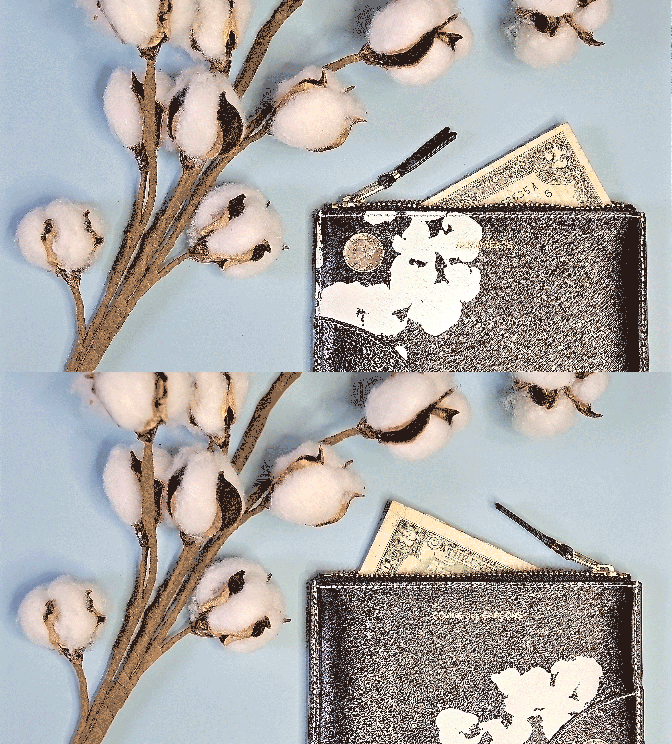
The brand’s signature cotton wreath design adorned sweats in every color, a symbol of cotton’s significance to the fashion industry, and a tribute to the enslaved people who made that possible.

Even the Denim Tears name honors the trials and tribulations Black people have overcome while still serving as the standard in fashion and culture.

If money and carry-on capacity were no object, I’d have taken one of everything.

Before I even walked into Denim Tears, I was a fan.

Since I walked out, that’s MS. Princess of Black Power, you ragamuffins.

Put your power on at denimtears.com 🖤


Introducing “Black Bags”

Most years, my general existence at @wherejoywanders and my storytelling at @theamericanblackstory tend to inadvertently overlap.

But celebrating 100 years of Black History Month felt like a time to be more intentional.

Because as much as it pains this writer to say it, marking another 100 is going to take more than telling stories.

Especially in an era where books are banned, files are redacted, sources are silenced, and the truth is simply rewritten daily.

It’s going to take solidarity.

So I’m gathering all of my skillsets to deliver something new this February.

“Black Bags” combines my travels, my Black Americana, and my brand storytelling to spotlight businesses making Black History mainstream.

Come turn your 28 days into 365 with me and my favorite Black-owned & operated shops each Monday (starting tonight) on IG at @theamericanblackstory, @wherejoywanders, and here at theamericanblackstory.com