
Before President Barbie could run, a woman named Kitty dreamed big.
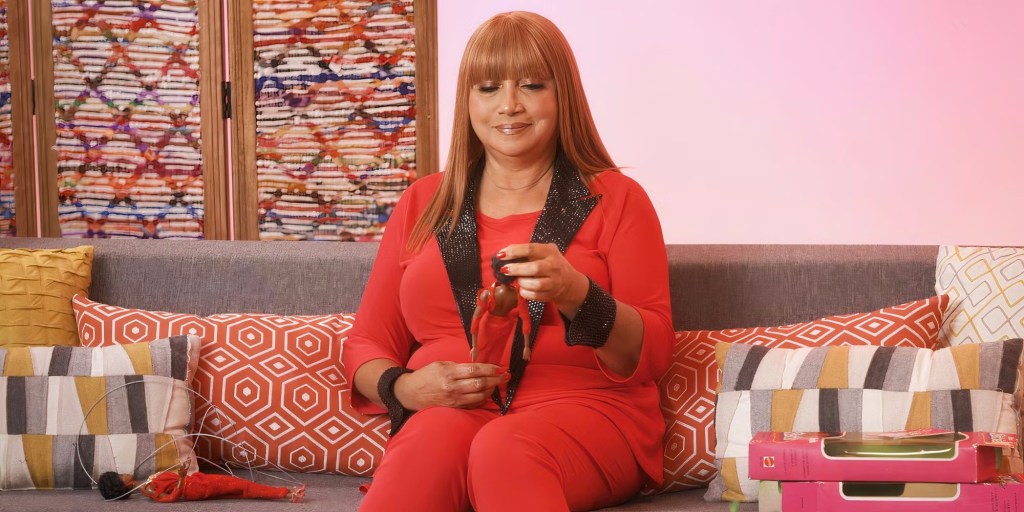
Louvenia “Kitty” Black was born in the late 1940s before Barbie existed.
But even then, she’d sit at home in Spartanburg, SC, coloring paper dolls into her own image.
It’d be 12 more years before Barbie came on the scene in 1959, and 7 more before Francie—Mattel’s first “Black” doll—was released in 1967.
“Black” because Francie was essentially a Barbie in blackface. Skin color aside, Francie was indistinguishable from her white counterpart.
Two years later, Christie was introduced as the Civil Rights Movement swept the nation. Her unique face mold and hair styles finally gave Black women a progressive, fashionable vision of themselves in mainstream toys, but…
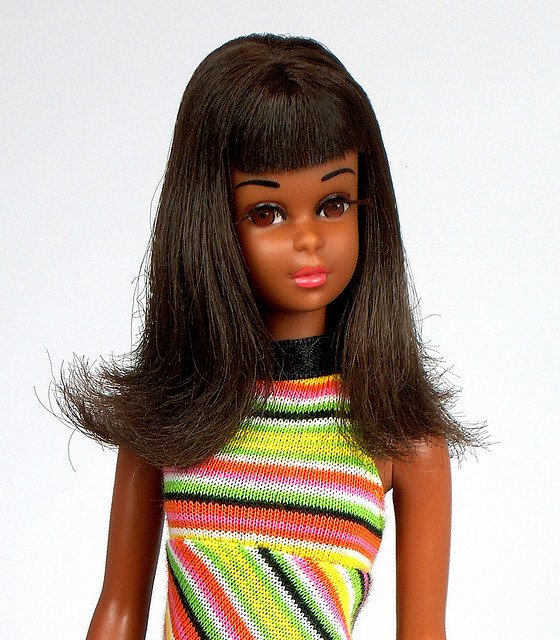

Francie, Christie, Curtis, Cara, Brad and all the other Black skinned dolls Mattel introduced weren’t Barbie.
Barbie had shifted from just a doll to a symbol of what was possible for modern women. Even Mattel’s other white dolls were still just sidekicks.
That is, until 1980—four years after Kitty Perkins walked through the door, and two years after Mattel promoted her to Principle Designer.
Kitty didn’t even own a Barbie before before her 1976 interview with Mattel. But she bought one, made six outfits for her—all of which were subsequently put into production—and was hired on the spot.

It was Kitty’s presence at Mattel that made an authentic Black Barbie an actual possibility, and it all boiled down to one simple desire: “I wanted my Black Barbie doll to look more like me.”
“I had a person that was in the hair department, a sculptor, a face painter, and most of their direction would come from me because I was Black,” she recounted to the New York Post.
It was 1980, and for the first time in American history, children of ALL races saw ordinary store shelves consistently stocked with Black dolls that were fashionable, authentic, and most importantly, beautiful.

Some people probably ignored her, some probably hated her, but for others, especially those who’d lived the Doll Test first-hand, Black Barbies were monumental.
At the same rate, some Black girls didn’t want a Barbie. She’d been a white doll for so long that some people didn’t care that Mattel finally got around to representing them.
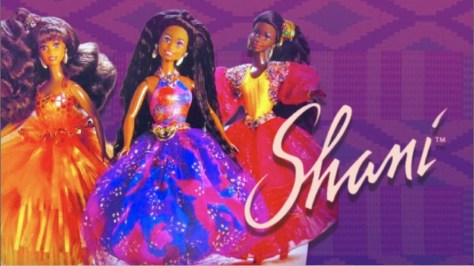
In 1991, Shani & Friends, a Mattel subsidiary also led by Kitty, introduced an entirely new line of Afrocentric Black dolls. From their clothes and jewelry featuring African prints and hoops, even down to their names borrowed from Swahili and real-life Black Barbie Nichelle Nichols, everything about Shani & Friends was inspired by the diaspora. The trio even had different body molds. And though they only lasted 3 years as an independent line, Shani, Asha, and Nichelle’s face and body sculpts were reintegrated into the Barbie line to increase their range of representation.
By 1989, nine years after the first Black Barbie found shelves, Mattel sold 22 million Barbies globally that year alone. By 2021, that number was 86 million, or 186 Barbies every MINUTE.
Today, you can buy a Barbie in almost every single physical representation you wish. They come in all colors—including vitiligo, all shapes and sizes, and even have a range of disabilities from prosthetic users to Down’s syndrome.

And though you can find just about any Barbie these days, in 2019, Mattel’s best-seller was Black with an Afro.
Kitty retired from Mattel in 2004 after 30 years leading Barbie’s design, but the company’s commitment to diversity is stronger than ever, and so are their profits.
Barbie isn’t just a doll these days. She’s graced countless cartoons and movies (including 2023’s live action), costumes, self-care products, bags and accessories and so much more. If it exists, Barbie’s probably been there.
And Barbie certainly wouldn’t be the doll she is without the Black woman who made Barbie more like her.

KEEP GOING BLACK IN HISTORY:

Learn more about Kitty’s life and work at ScreenRant.
 THE AMERICAN BLACKSTORY