DAY 12 — Brandon P. Fleming

Brandon P. Fleming - Diversifying Harvard

Walking onto the campus of Harvard University, 26-year-old Brandon Fleming was overcome with the gravity of his past, present and future. After dropping out of high school due to a basketball injury, finally landing at one of the most prestigious universities in the world to coach their highly acclaimed debate program seemed surreal. He’d put in work to recover from the feeling of crippling failure and arrive at this proud moment. But being here, in such dramatic contrast from where he’d come, Brandon couldn’t help but remember so many just like him. And for that matter, a question began to form – one that surely he wasn’t the first to ask… where WERE all the black people?

And soon after came an answer: why wonder, when he could bring them along?

His experience tutoring students in Georgia had given him first-hand knowledge of just how much things could change for kids who were given the tools and opportunity to succeed. But without intervention, that was most unlikely in Atlanta, the Bloomberg-described “inequality capital of the United States.” So with his past and present circumstances well in mind, a little persuasion and lots of fundraising, the permission of his new employers at the Harvard Debate Council Summer Workshops, and the help of countless other professionals who’d been in his shoes elsewhere, Brandon created an intensive 10-month “diversity pipeline to recruit, train & feed students of color into the Harvard Debate Council’s Summer Institute” – a program he named the Harvard Debate Council Diversity Project.

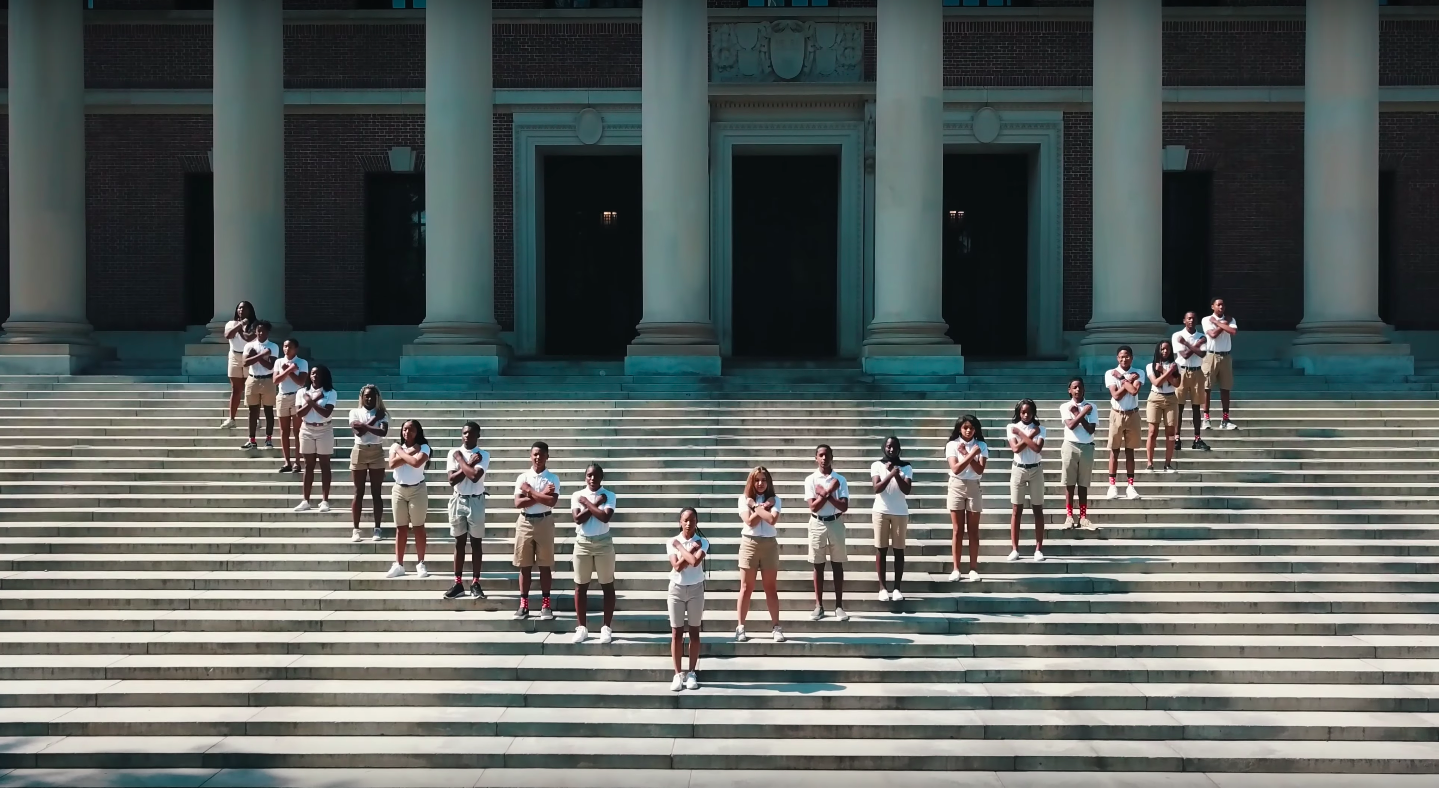
Designed to help Atlanta’s best, brightest and most marginalized “gain a level playing field in society and leading academic, social, and political institutions” where black Americans are still struggling for representation, Brandon’s coaching has led 120 students in his Harvard Diversity Project to do much more than just level the playing field. In their inaugural 2018 summer cohort at Harvard, the Diversity Project WON, becoming the only all-black debate team in the program’s now 128-year history to do so.

Their success might have shocked the other 100 competing teams from 15 countries, and perhaps even the Atlanta kids themselves. The viral news on nearly every media outlet was proof that it shocked the country. But of course, the one person who wasn’t surprised at all was their coach, Brandon Fleming.

From day one, he knew that compared to the preparatory and internationally educated students they were competing against, his were “just as good, just as talented & it [was] up to us to create opportunities for them to show the world exactly that.”

But Brandon’s always been clear that when it comes to opportunity, there’s only so much that he or Harvard can do. “Be intrusive in places that are not inclusive,” he insists. “Trailblazers don’t wait for opportunities – they create them.”

And intrude they have. Not only did Brandon’s second year cohort at the Harvard Debate Council Summer Tournament win AGAIN in 2019, his championship team went undefeated, by all accounts dominating the competition.

In words shared by one of his scholars, Brandon identified that “academic debate is the single most powerful tool that equips students to increase standardized testing, gpa, and overall college readiness but most importantly, the intellectual and socioemotional skills needed to emerge as world leaders and changemakers.”

And when it comes to being a changemaker, the man who embodies his mantra “excellence is attainable” by inviting black students to claim their seat with him at one of the oldest and most exclusive debate circles in America couldn’t be a better example of how much can change for so many when just one makes himself heard.

The Harvard Debate Council Diversity Project students are changing the narrative about black Americans by combining scholarship and culture.

KEEP GOING BLACK IN HISTORY:

Learn more about the Harvard Diversity Project and donate to their efforts here.

Watch the students of the Harvard Debate Council Diversity Project shine while sharing their experience themselves.
Listen to founder Brandon Fleming share how coming so far has prepared him for helping others.

DAY 11 — Marie Van Britten Brown

Between civil rights, gay rights, and war protests, the New York City of the 1960s seemed in constant unrest.

Marie Van Brittan Brown just wanted to go to work and come home.

As a wife, mother and nurse, caring for others was a round-the-clock task, and in the little downtime she had, feeling safe in her own home didn’t seem like much for 43-year-old Marie to ask.

But with riots and crime falling so close to her Queens doorstep and an overextended police force, the chain lock on Marie’s front door was barely an obstacle to the discontent outside threatening the peaceful home she’d made for her babies. Like so many working parents, opposing schedules between Marie and her electronics tech husband often found them passing each other in the night, and spending her alone time wondering who might be on the other side of the door didn’t sit well with her.

So she stepped up.

And when she did, Marie’s creation didn’t just protect her family – it’s protecting yours, too.

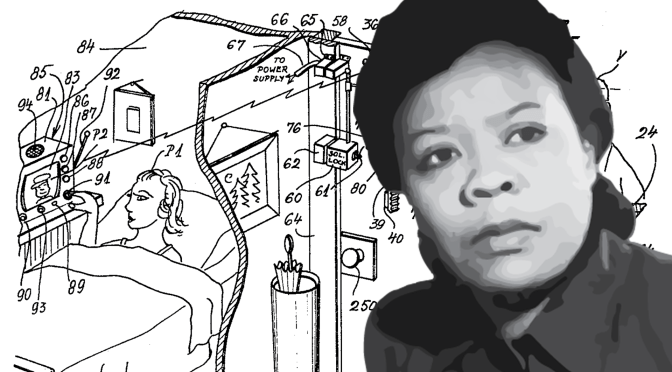
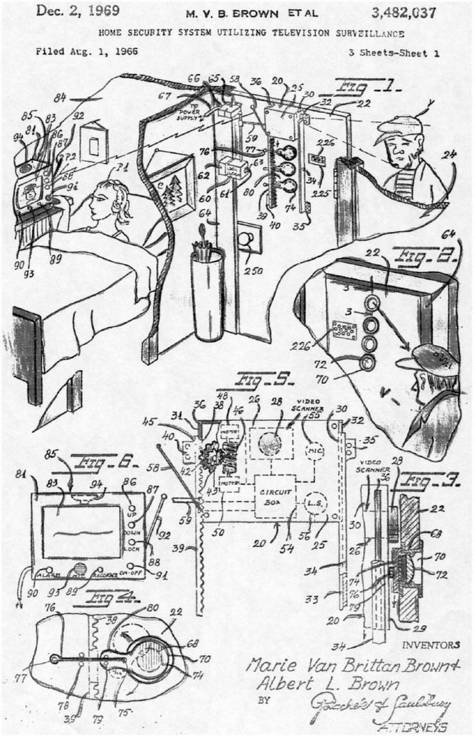
On August 1, 1966, Mrs. Brown’s “Home Security System Utilizing Television Surveillance” was filed with the United States Patent and Trademark Office, and three years later when it was approved, the mother of 2 became the mother of modern home security as well.

Sketching a concept with the working mother in mind, Marie designed the system to operate from one central and special place to her: the bed. When the little ones climbed in or she’d just gotten settled after a long shift, the last thing she wanted to do was make herself more vulnerable to the world by leaving her bed to crack the front door. Her design took every one of those considerations in mind.

Fitted with 4 peepholes and a cabinet housing a video camera, the door’s mechanical system could be remotely operated to put her face-to-face with tall strangers or her children’s tiny playmates, and even unlock to welcome trusted guests in. An integrated audio channel allowed two-way communication with visitors as well, and should what she saw or heard give her cause for alarm, Marie’s system was so sophisticated, it could alert the authorities too.

Just days after her patent was approved, Marie, her husband and her original concept sketch were photographed for the pages of The New York Times, which had already recognized the magnitude of her achievement. After pages and pages of newsprint, department store ads and classifieds, Marie and Albert Brown appear in a rare image of the quiet couple, one of the few photographs found there at all.

While little else is known about them and Marie passed away in 1999, the Browns’ 54-year-old invention is still a global technology. In a market that’s expected to be valued at $75 billion by 2032, most modern home security patents – some filed as recently as 2013 – still reference Marie’s original design.

That design has even been broken down into its components to create the everyday security measures we take for granted. Remote-controlled doors and gates, button-trigger alarms, closed-circuit video monitors, and even instant alerts to home security agencies from your open front door each reference Marie’s patent in their builds. But the design isn’t only operational on the small scale. Global security firms, multi-unit dwellings, and military communication and surveillance systems all utilize the invention born from one mother’s necessity to protect her own.


KEEP GOING BLACK IN HISTORY:

Follow the evolution of Marie’s design to today’s Ring doorbell and the social implications of a Black woman’s design being used for surveillance rather than safety.

“You could imagine that in the late ’60s and early ’70s, as a Black woman, she wasn’t going to get accolades and money because the world wasn’t built for us in that way.” Read on about what Marie built in a world that wasn’t built to recognize her.

DAY 10 — Sepia Magazine

Sepia Magazine - Putting Melanin in Print

In the spectrum of great black publications like JET Magazine and EBONY, there’s one often left out of the conversation: Sepia Magazine.

For almost 40 years, Sepia pushed the boundaries of design, content, and photography in black publications, positioning itself as a LIFE Magazine for black readers.

Where Jet covered a wide range of general interest topics, and Ebony documented current events in news, culture and entertainment, Sepia took a decidedly different tack, turning its pages into a in-depth, photojournalistic view into the lives of everyday black people and celebrities in arts, music and civil rights in particular.

First published one year after Ebony in 1946, Fort Worth, TX headquartered Sepia entered the black publishing landscape during a curious time for America. Although they’d suffered racism in their own armed forces, black soldiers and the valor with which they fought for a country that still hadn’t afforded them full civil rights had been recognized globally and back in the States. Those unexpected but significant gains in equality, and the fact that a newly enfranchised black populace naturally wanted to be more informed about its government, led to one of the biggest black publication booms in American history.

And while Ebony and later, Jet, had things covered on the national front, the pages of Sepia were where black Americans could feel seen and heard. Headlines like “The Black School That’s the Best in Los Angeles,” “The Ghetto Through the Eyes of Youthful Photographers,” and “The Black Chinese: How Africa and the Orient mixed in the U.S.” are just a small smattering of the diverse topics Sepia featured. So keenly were they attuned to the mindset of the middle-class black American that they soon became the highest selling magazine among that demographic. That targeting strategy paid off two-fold in that black soldiers still fighting wars abroad could browse its pages for a true temperature check on the state of affairs at home, and vice versa.

Sepia’s dual and rather polar audiences provided the opportunity to establish a dialogue unlike that of any American publication. Their column “Our Men in Vietnam” gave black soldiers a platform to sound off about their experiences in the United States military. Whether writing about the continued racism in their ranks, or having personal reservations about their role in white Western imperialism, black soldiers found a safe space in Sepia’s column that encouraged them to send their “experiences, heartaches and joys while fighting communism” and black Americans could sympathize with them like never before.

Although Sepia’s staff and content was primarily black, its original owner was a Jewish man, and that culturally rich start to the magazine led to content that eventually expanded to include Hispanic and Asian Americans as well, as their communities often faced the same institutional racism. It also gave Sepia an interesting new perspective from which they could tackle issues of racism – one they pushed to its absolute limit in their stunning exposé, “Life As a Negro.”

After controversially semi-permanently darkening his skin, a white Sepia contributor named John Howard Griffin traveled the Deep South for 6 weeks as a black man, and so eye-opening was the experience that when the magazine series ended, he expanded upon it in his iconic 1961 book, Black Like Me. John himself admitted that upon undertaking this “anthropological study” as he called it, he was embarrassed to find that even “[his] own prejudices, at the emotional level, were hopelessly ingrained in [him].” In response, one black reviewer wrote “since there are white people who doubt everything a Negro says, perhaps now they will hear us when we say the plight of the American Negro is a disgrace.” In the 1977 reprint of his book, John’s epilogue astutely and mournfully pointed out that in the years since that original printing, his “personal experience was that whites still didn’t hear.”

The 7-month long series further solidified and legitimized Sepia’s place in the American landscape and the black American experience it so richly captured. With its ambitious journalism alongside beautifully photographed moments, Sepia simultaneously shared the essence of black America and exposed a quintessentially American contradiction that John Howard Griffin himself articulated so well: “those who embrace the strangely shallow dream of white supremacy are the true killers of society based on freedom, equality and justice.” Sepia published its last issue in 1983 after being bought out by Ebony and quietly shut down, but in the 37 years that it graced newsstands, black households, and trenches worldwide, the magazine carved out a space where blackness had permission to be complex, curious, and most of all, authentic.


KEEP GOING BLACK IN HISTORY:

Read some of the letters from Sepia’s armed forces column in the essay “Our Men in Vietnam: Black Media as a Source of the Afro-American Experience in Southeast Asia”.

Read the Smithsonian’s chronicle of John Howard Griffin’s Sepia Magazine series-turned-book, “Black Like Me” here.
View a small selection of Sepia photos featured at the Rock & Roll Hall of Fame in their Flickr album.
Watch the Fort Worth Public Library’s brief vignette on their 2017 Sepia Magazine photography exhibit here.
DAY 9 — Hair Love

“Hair Love” - A Crowning Achievement in Film

“It’s just hair, it’ll grow back,” or so the saying goes.

But millions of little black girls’ and womens’ earliest memories are of their daily hair ritual beginning and ending at their parents’ feet.

And black boys, well-groomed by cultural standards, regularly submit to biased dress codes that force a choice between their educational and extracurricular activities or their hair.

Between daddy-daughter videos and the national news, Matthew Cherry saw commenters and media outlets sharing raw reactions to hallmarks of black hair as though they were novel occurrences. But in black communities, “hair is such an intimate thing,” he told Good Morning America. Where the world saw viral moments and dress code violations, Matthew saw centuries of culture, tradition, and most of all, love.

It inspired him to capture all of that emotion in a creative suite he ultimately titled “Hair Love.”

“Hair Love is more than a film. It is more than a book. It is the buoyed confidence of a little black kid. It is the flickering screen commanding the rapt attention of a little black girl who sees herself. It is the collective embrace of a young loc’d black boy discriminated against at his school. It is the ally of a progressive law,” he explains.

The CROWN Act currently being legislated in California “recognizes that continuing to enforce a Eurocentric image of professionalism through purportedly race-neutral grooming policies that disparately impact Black individuals and exclude them from some workplaces is in direct opposition to equity and opportunity for all.” Its language is intended to extend to housing and school codes for full protections against the policing of black hair in any government-regulated setting.

The irony of that legislation isn’t lost on black Americans familiar with 18th-century “Tignon Laws” that attempted to dehumanize black women by forcing them to cover their hair under penalty of arrest, but ultimately backfired when their extravagant hair wraps became fashionable and coveted by everyone. Past and present, hair that’s regulated, exoticized, appropriated and misunderstood also runs deep throughout the history of black American culture.

So it’s no wonder that when Matthew pitched it to her, Sony Pictures Animation’s Executive Vice President of Creative (and black woman) Karen Rupert Toliver saw something truly special in “Hair Love” and the universal black experiences it communicated – something she knew had to be shared. “I think images are so important to changing people’s perceptions [of others] and changing their own perceptions of themselves,” she says. And Matthew agreed that “if you focus on how you’re affecting the culture and you’re affecting change… even if [awards] don’t come, you’re still doing great work.”

But tonight, at a ceremony with fewer black nominees than it’s seen in the last 3 years, The Academy Award for 2020’s Best Animated Short DID come.

For a not-quite-7-minute short that Matthew created for the purpose of “see[ing] more representation in animation, but also wanting to normalize black hair,” this evening’s win was monumental in the hearts of black people, in the extremely white landscape of the Oscars, and surely in the future history books of a country still learning through the centuries that “just hair” can mean so much more.

KEEP GOING BLACK IN HISTORY:

Grab tissues before you press play. You’ve been warned.

DAY 8 — Henry Box Brown

Henry Brown - An Out-of-the-Box Escape Plan

In the months he spent writing letters, devising plans and scheduling secret rendezvous, Henry Brown was resolved to “conquer or die.”

But as he lay terrified and motionless to avoid detection, confined to a 3 x 2 x 2.5 foot crate onboard a steam ship en route to Philadelphia in 1849, Henry was convinced that the latter would indeed be his fate. “I felt my eyes swelling as though they would burst from their sockets,… and a cold sweat coming over me that seemed to be warning that death was about to terminate my earthly miseries,” he later recalled.

And there was nothing but misery. The only joy in Henry’s enslaved life – his pregnant wife Nancy and their three small children – had been torn away, sold to a distant plantation. “My agony was now complete, she with whom I had traveled the journey of life in chains … and the dear little pledges God had given us I could see plainly must now be separated from me forever, and I must continue, desolate and alone, to drag my chains through the world.”

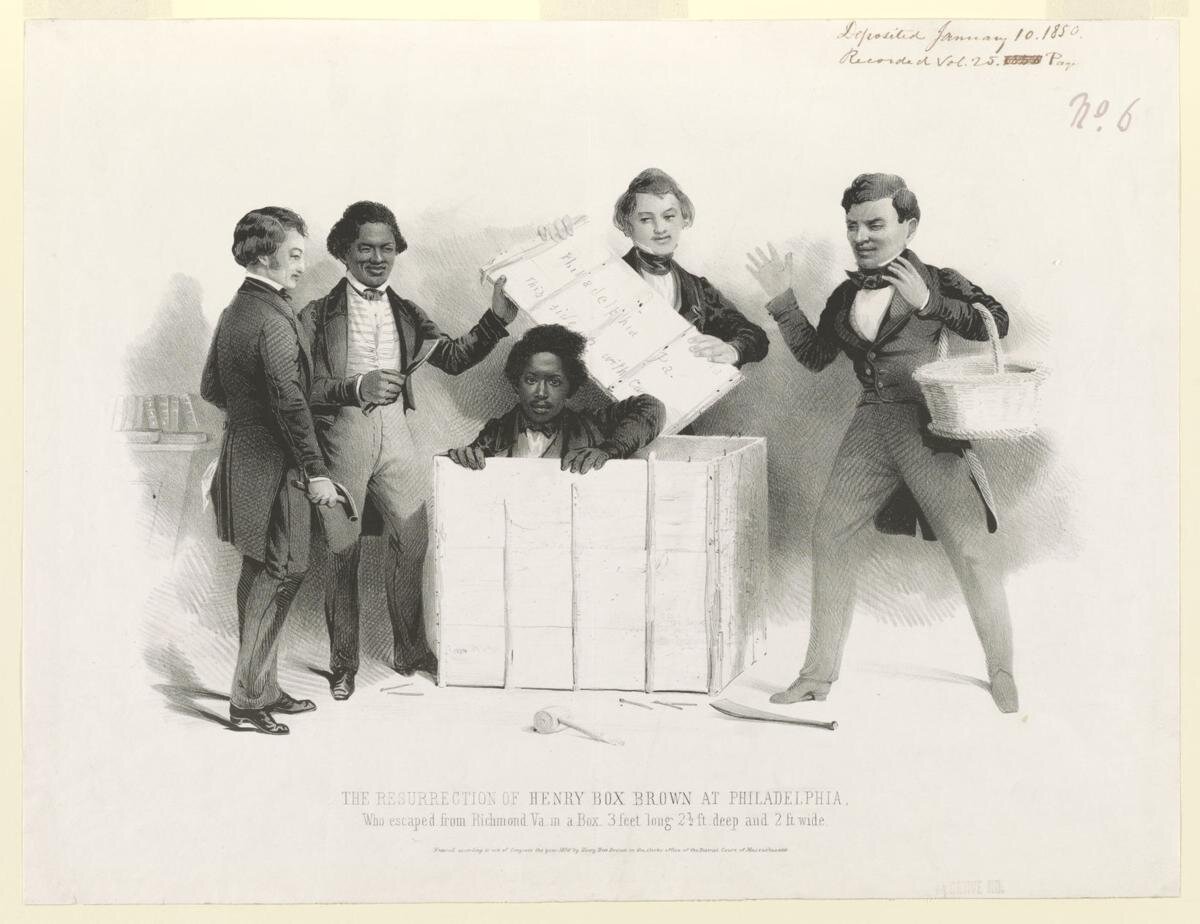
With that utter sorrow in his heart and nothing left to lose, Henry was ready to risk his physical and mental well-being if that’s what it took to escape what he’d endured. And so, with the help of a number of abolitionists and today’s equivalent of $2700 to cover his transport fees, Henry left Richmond, VA and never looked back. Packing only a small bladder canteen and a couple of biscuits, he spent 27 hours contorted into an express crate addressed to a trusted member of the Pennsylvania Anti-Slavery Society 244 miles away.

“If you have never been deprived of your liberty, as I was,” he wrote in his memoir, “you cannot realize the power of that hope of freedom, which was to me indeed, an anchor to the soul both sure and steadfast.”

Henry transfixed his thoughts on that hope the entire journey, trying not to move or make a sound, and praying he wouldn’t suffocate before he arrived, whenever that might be.

Luckily, on the morning of March 30, Henry’s hope of freedom was realized when from outside of the darkness, there came a polite knock and four short words:

“All right in there?”

And with a little help, Henry climbed out of his box, exhausted, drenched in sweat, but alive.

The tale of the man who’d shipped himself out of slavery swept through the abolitionist community like wildfire. Many wanted to publicize Henry’s fantastic getaway, hoping it’d inspire others to devise their own similarly ambitious plans for escape. Others like Frederick Douglass saw greater strategy in keeping the details quiet, utilizing this covert operation to free as many others as possible themselves.

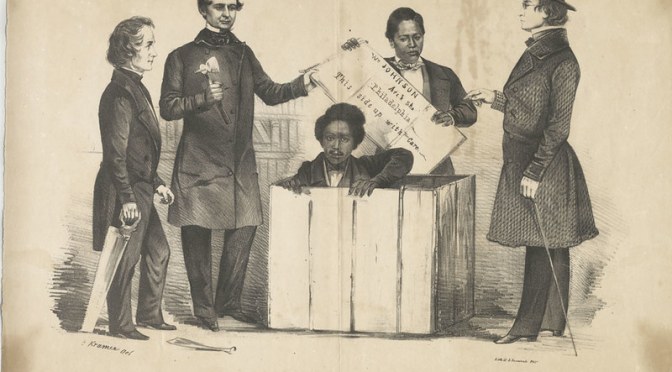
In the end, it was decided that Henry’s story would go public. And for a short time, Henry’s past miseries were replaced by his newfound freedom and fame. A memoir was written, lithographs memorializing his “resurrection” were printed, and “Henry Box Brown’s Mirror of Slavery,” a stage show complete with dioramas depicting various scenes from Henry’s life alongside his original, full-sized shipping box, played to New England audiences until October 1850, when enslavement threatened again.

The newly-passed Fugitive Slave Act entitled slave owners and the federal government to retrieve and punish escaped slaves, even if they’d found freedom in northern states. For a man who’d earned fame because of his daring escape and whose livelihood depended on retelling that story, it spelled grave danger. This time, Henry determined to put even more distance between him and his former life, sailing to England as a free man.

He continued to perform there, remarried, and eventually returned to the States, but his real work had been done. Henry Brown’s widely publicized escape made him a symbol of the Underground Railroad’s growing power and massive organization efforts, and inspired many more slaves, freedmen and abolitionists with the courage to be creative in the fight for life, liberty and the pursuit of happiness, even if it meant risking everything, every step of the way.


KEEP GOING BLACK IN HISTORY:

Read the “Narrative of the Life of Henry Box Brown” written by the man himself here.

DAY 7 — Black Herman

Black Herman - Dark Magic

Ladies, gentlemen, and non-conforming friends! Read closely, for the man I’m about to introduce was an instigator of illusion, master of mysticism, and a benefactor of black advancement the likes of which the early 1900s had never seen.

Come and read of the great enigma, Black Herman.

A traveling ruse is where young Benjamin Rucker’s fortuitous future first took shape. While his mentor and fellow black magician Prince Herman drew crowds with his sleight-of-hand roadshow, 17-year-old Benjamin oversaw the real money-making part of their venture: African tonics to satisfy the superstitions of both black and white audiences.

Black Herman performs for a captive audience.

Upon Prince Herman’s departure to the afterlife in 1910, Benjamin took the moniker for himself, dispensed with the side hustle, and immersed himself in magic as “Black Herman.” One part of the original show he preserved was the tie to his roots. Intertwined in his traditional magic act were hallmarks of the black experience, African religion and voodoo practice. Audiences flocked to be mesmerized by the show that only a magician of Black Herman’s caliber and race could put on. His fantastic escapes from impossible rope bindings were passed down from African tribes who evaded enslaving captors, he crooned. His communion with the spirit world could only be attempted by those with intensive mystical training by Zulu priests, he warned. And no Klansman could be his match as he was an immortal black being, insusceptible to the physical assaults of white men. Make no bones about it, Black Herman became a legend in the eyes of audiences, newspapers, and even among other magicians who nicknamed him “Black Houdini.”

So all-encompassing was the god-like persona that Black Herman built for himself, even institutional racism became a part of his marvelous lore. Repeated arrests and imprisonments for performing his act, despite white magicians regularly performing with impunity, only lent themselves to the tale that Black Herman couldn’t be held by even the most fearsome human authority.

Unbelievably diligent and favored by fortune, Black Herman eventually made a home for himself in the heart of the Harlem Renaissance, where steeped in the rising black cultural class and befriended by the likes of Marcus Garvey and Booker T. Washington, his dedication to the black cause only grew with his celebrity. In 1923, his show having exceeded his wildest dreams and sole capabilities, Black Herman employed as many as 50 black men and women in his production, and transformed his profits into loans for black business owners. Behind his dark persona, Black Herman’s devout Christianity inspired substantial donations to churches, especially those active in the civil rights movement.

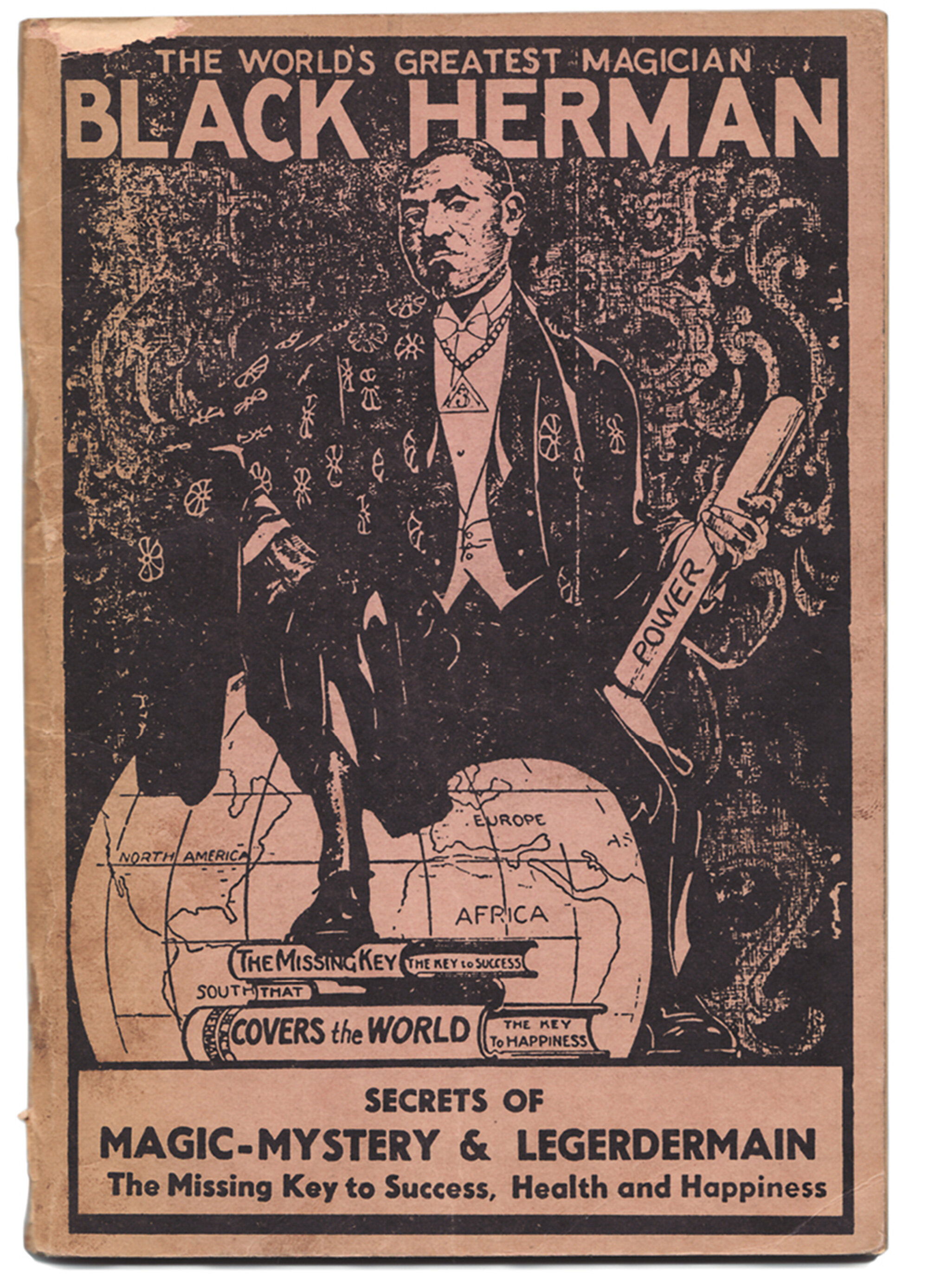
Having conjured up a rather comfortable life for himself, Black Herman reincorporated his early experiences into a whole new series of ventures. To protect from the threat of outside forces, he purchased his own printing company for the production of his widely circulated 1925 book, “Secrets of Magic, Mystery, and Legerdemain,” sold at his shows and even by mail. Voodoo potions and African tonics, incense and other spiritual ephemera were included in Black Herman’s menagerie of self-produced goods available to the public. And when Black Herman predicted a great financial disaster, advising his audiences to cease their Wall Street activities and put their money into more tangible commodities, the 1929 Black Friday Stock Market Crash diverted that money right into his pocket, and by extension, once again, the black community.

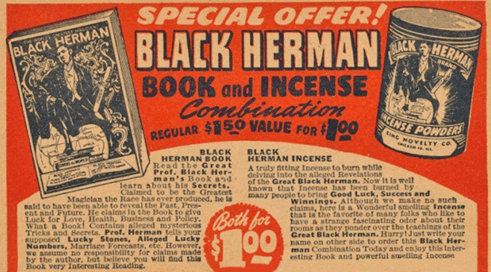
An ad for a Black Herman book and incense bundle offers the best that life has to offer.
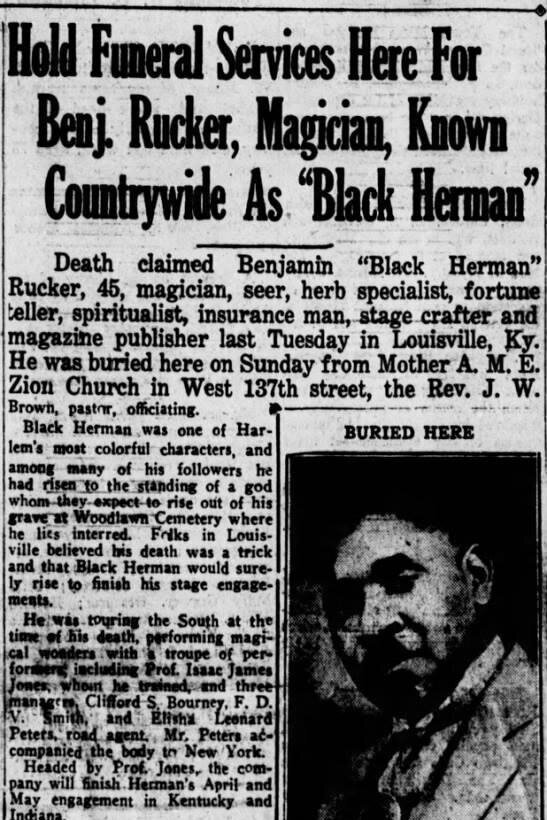
The New York Age, a black newspaper published from 1887 to 1960, dedicated tremendous column space to documenting Benjamin “Black Herman” Rucker’s life and passing. Click through to newspapers.com to read it in full.

Despite his claims of immortality, Death eventually came for Black Herman. Ever a man enshrouded in mystery, even the circumstances of his 1934 demise at only 45 years old are questionable. Some report that he collapsed in the middle of a stage show, baffling audiences who weren’t sure if it was part of the act. Others report that he had a premonition of his death, wrote a letter to his wife, and upon signing it, died in his bed. Either way, so widely regarded was Black Herman’s showmanship, particularly in his variation of the “Buried Alive” trick that saw him resurrected after three days in the grave, no one believed that he was actually dead until his assistant arranged for a public viewing where thousands astonished by Black Herman could see the proof with their own eyes.

Or did they? As many as 5 different men reportedly masqueraded as Black Herman during his imprisonments and after his death, though none came close to matching his character in either performance or virtue. In perhaps his greatest feat of all, Black Herman inspired and embodied a whole race’s determination to transcend the limitations of an oppressive society and be recognized as truly amazing.


KEEP GOING BLACK IN HISTORY:

DAY 6 — Christopher John Rogers

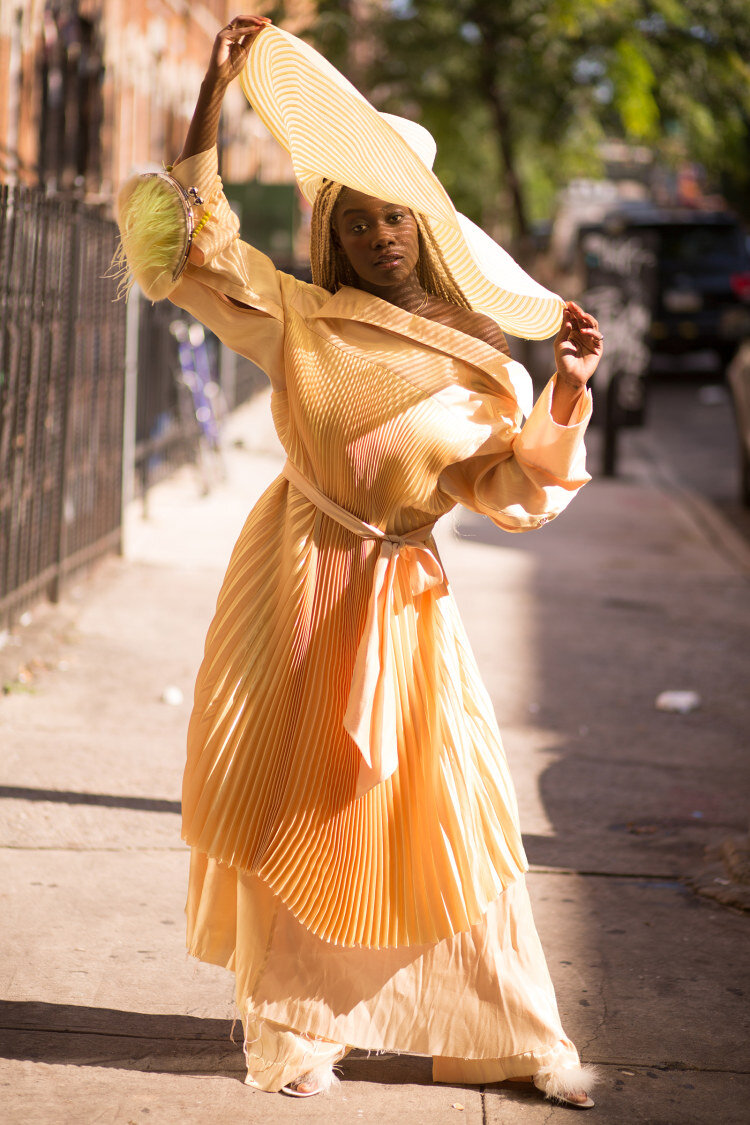
Christopher John Rogers - The Black Fashionista with Southern Flair

Emblazoned across the back of a sheer fuchsia Christopher John Rogers ensemble, in vintage script lettering and thousands of painstakingly placed blue & purple Swarovski crystals is a single word:

“DRAMA!”

That extravagant expression reveals not only his approach to fashion with his voluminous and kaleidoscopic designs, but also a few simple truths about his eccentric perspective.

“I grew up gay, black, Southern Baptist and my grandmother was the head of our church,” the 25-year-old explains. “For me, there’s nothing wrong with effortful dressing.”

It seems that some of fashion’s most esteemed names agreed when they awarded him the prestigious 2019 Council of Fashion Designers of America (CFDA) / Vogue Fashion Fund, a prize designed “to help emerging American design talent find continued success in the business of fashion” with an intensive design mentorship and $400,000 pocket change, too.

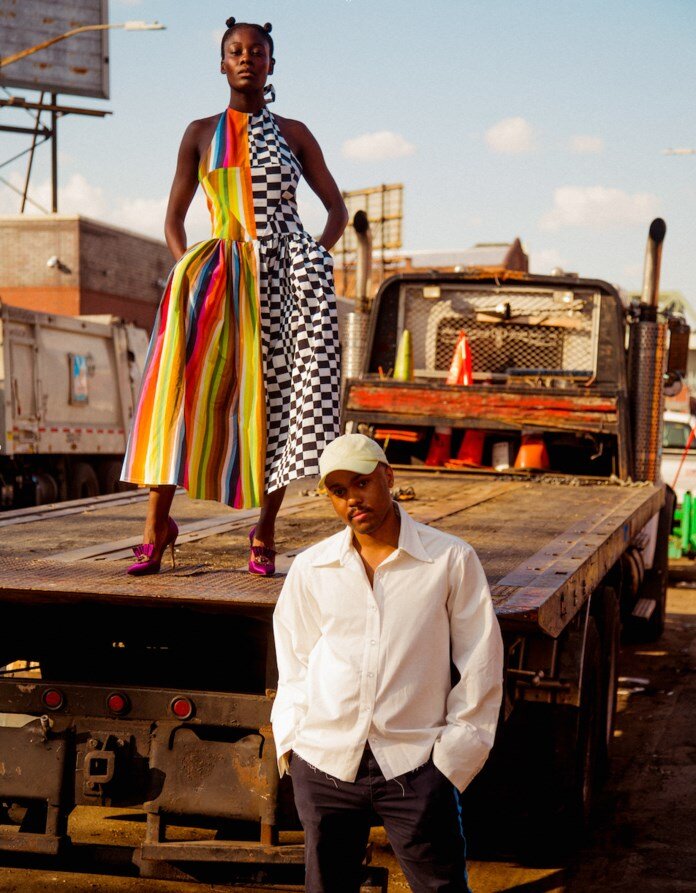
It’s a monumental accomplishment for the Baton Rouge, Louisiana designer who only just debuted at 2018’s New York Fashion Week with a collection that he delightfully characterized as “a debutante ball thrown at Stonehenge and illustrated by Dr. Seuss,” and sewed from his Brooklyn living room while working full-time at Diane von Furstenberg. His win goes deeper than what’s on the surface, though. On Christopher John’s runways, the models themselves complete his vivid vision, running the gamut of race, gender and age. Recognizing his work so prominently is in turn a recognition of the diversity he brings to a woefully misrepresentative industry.

“I’ve always known variety to be standard,” he recalls, and it shows in every detail of his presentation. “’Inclusion’ and ‘diversity’ are trending right now, but I feel like there’s also a real opportunity to encourage permanence on that front by celebrating the excellence and hard work of those people. The more colorful the room is, the better everything is for everyone.”

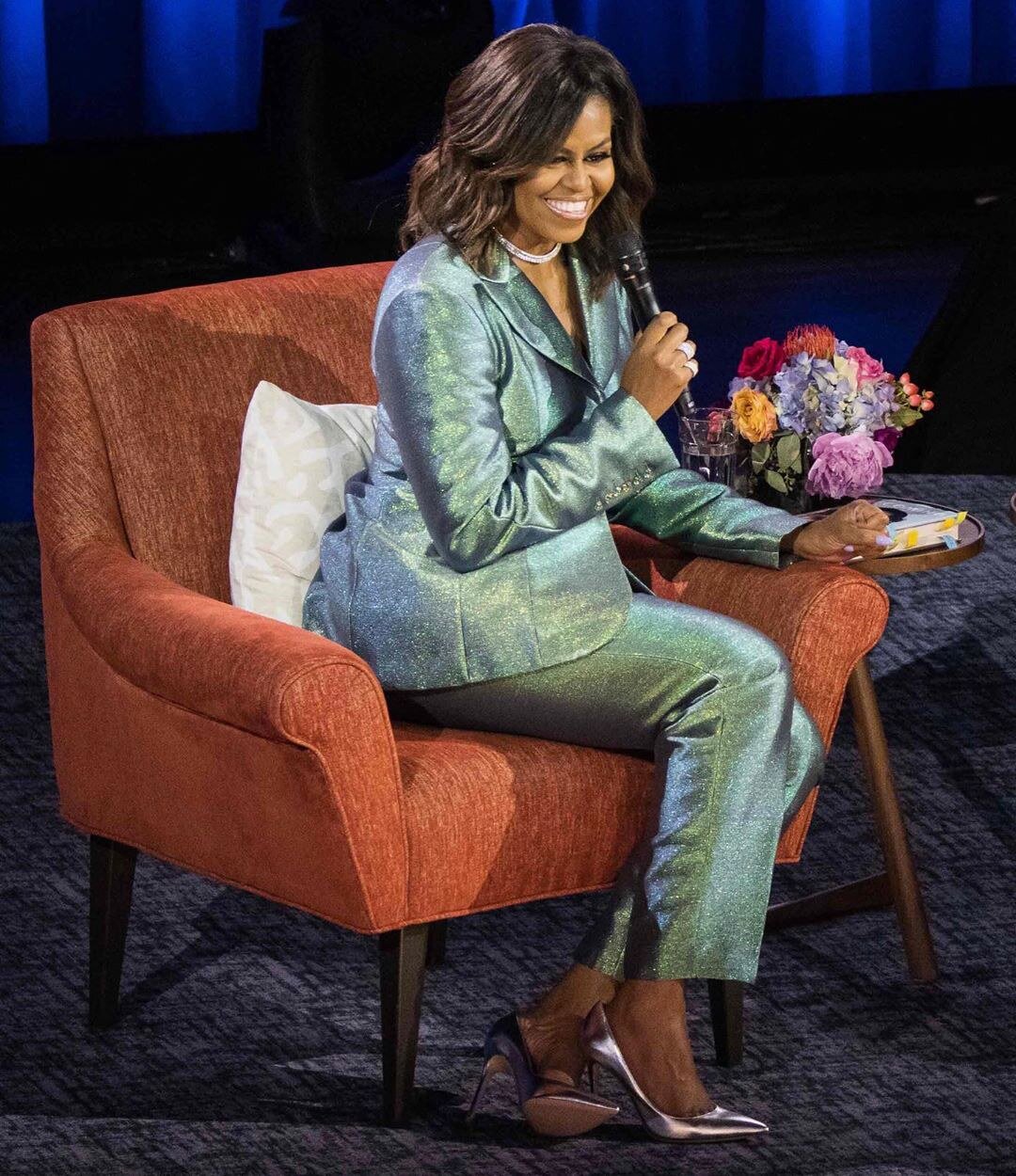
And so far, his brand of color and variety have kept Christopher John Rogers in high demand. Since his NYFW debut, he’s dressed some of the most famous and fashionable black women in the world – Tracee Ellis Ross, SZA, Regina King, Lizzo and former First Lady Michelle Obama (after whose message he says, “I immediately threw my phone across the room”) among them. True to his desire to better things for everyone, this year, Christopher John’s ready-to-wear designs will be sold in stores nationwide and online, and almost certainly inspired by one of the many key messages in his collections: “It’s not about a girl wearing a suit or a guy wearing a heel, it’s about fully embodying the nuances of yourself when dressing up. It’s about you feeling yourself.”


KEEP GOING BLACK IN HISTORY:

Follow Christopher John on Instagram.

Browse Christopher John Rogers’ bold collections at his website here.

DAY 5 — Hazel Scott

Hazel Scott - The Civil Rights Movement’s Shining Star

She could transform Beethoven and Debussy into swing music, single-handedly derail a movie production for days, and charm millions of TV viewers in her own nationally syndicated program.

But all of her talent, charisma, and determination couldn’t free Hazel Scott from the wrath of the 1950 House Un-American Activities Committee accusing her as an enemy of democracy.

She was a renaissance woman who wore many hats, but communist subversive was never one of them.

She’d once quite plainly reminded her husband, civil rights leader Adam Clayton Powell Jr., that “it ha[d] never been [her] practice to choose the popular course.” And it was that flair for being exceptional that had led to both her fame and her political predicament.

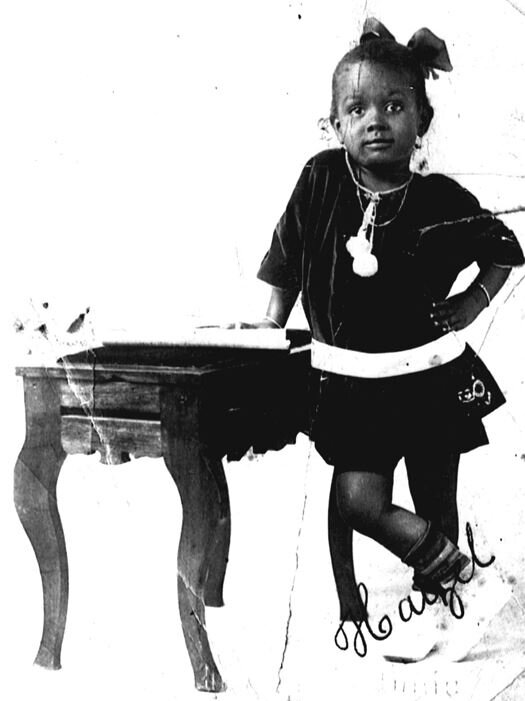
At just 3 or 4 years old, sweet baby Hazel gave the world an early glimpse of exactly who she would become.

She’d displayed such a budding talent for classical piano that in 1928, 8-year-old Hazel didn’t just audition for The Juilliard School; she stopped the school’s founder in his tracks and left the auditioner awestruck, saying “I am in the presence of a genius.”

Like her piano playing, Hazel’s personality was magnetic, a combination that made her nearly unstoppable. Her teenage years were a musical whirlwind, seeing her perform in historically monumental venues like the 1939 New York World’s Fair, at Roseland Ballroom with Count Basie, and eventually, Cafe Society, New York’s first integrated nightclub, where at 19 years old, she succeeded Billie Holiday as the headliner and was favored by First Lady Eleanor Roosevelt.

With that kind of attention, Hollywood soon came calling, and Hazel acted and performed as herself, right up until she was personally blacklisted by the president of Columbia Pictures. On the set of “The Heat’s On” starring Mae West, a scene where other black actresses wore dirty aprons so angered her that Hazel refused to return to the set, delaying filming for days. (It worked; those women are seen in lovely floral dresses in the final production.)

You see, Hazel wasn’t just an incredible musician; she was a staunch civil rights advocate. Her talent afforded her exceptions that few others might have received and she took advantage of it. She’d refused to perform in any segregated venue, was escorted (but not arrested!) from an Austin restaurant by the Texas Rangers when she made a scene after discovering it was segregated, and included riders in her acting contracts ensuring that she never played a derogatory role and had full creative control over her wardrobe and characters.

In spite of, or perhaps because of, her admitted boldness for a black female performer of the time, by the time she was 25, Hazel Scott was a jazz legend, earning the equivalent of over $1 million dollars a year between her tours, standing performances, and acting jobs.

Her universal popularity among black and white audiences made her such a sensation that she signed on as the first black person to solo host a nationally syndicated television program, “The Hazel Scott Show.” It was the summer of 1950 and Hazel was in the prime of her life.

This one-sheet announcing the premiere of “The Hazel Scott Show” advertised a single Friday night show, but by the time she faced the House Un-American Activities Committee, Hazel charmed viewers three times weekly on Mondays, Wednesdays and Fridays.

By September 22 of that same year, Hazel would trade her piano bench for a congressional witness stand. Accused of supporting communists by performing at their events, endorsing politicians who’d also been endorsed by communists, and suspected of being a communist herself due to her dedication to equal rights, Hazel implored the committee to “protect those Americans who have honestly, wholesomely, and unselfishly tried to perfect this country and make the guaranties in our Constitution live.” But in the paranoia of the World War II Red Scare, the damage had been done.

Sponsors and advertisers fled, the network cancelled her show despite its tremendous success, and while Hazel continued to perform globally and fight for civil rights, her career never recovered. But most of all, her dream of using her talent and the privileges it afforded as a weapon to dismantle black stereotypes, was utterly dashed just as it had truly come to fruition.

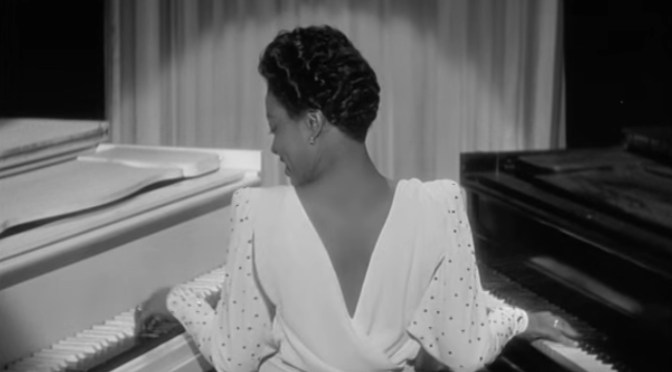
Hazel emanated light whether she was seated at her piano or championing civil rights.

Her light was dimmed for shining too brightly, but as her biographer wrote, “with Hazel Scott, there would be no obsequious smiles, no hunched shoulders, downcast eyes, or shuffling of any kind.” Having lived to see enormous strides in racial equality, particularly in the performing arts, Hazel Scott passed away in 1981 with an unflinching pride in her work and herself, a shining example of modern black female empowerment who once proclaimed, “Who ever walked behind anyone to freedom? If we can’t go hand in hand, I don’t want to go.”


KEEP GOING BLACK IN HISTORY:

Go in depth into Hazel’s life in Narratively’s detailed article here!

Read a vivid 1942 TIME magazine review of one of Hazel’s Cafe Society performances here.

Watch Hazel dazzle on 2 grand pianos in this clip from “The Heat’s On” that Alicia Keys once paid tribute.

Listen to Hazel, who immigrated to New York from Trinidad as a 4-year-old, tell Philadelphia radio station WFIL “What America Means to Me”.

DAY 4 — Liz Montague

Liz Montague - Drawing on Her Experience

Liz Montague doesn’t eat her feelings. She’s proud to say that she draws them instead.

But after a few years in the design industry, the young cartoonist who centers black characters in her art found herself with one particular feeling that most marginalized creatives can’t escape: “the white male perspective is the universal perspective, and everyone else is niche.”

So as a black woman with something to say, she did just that – with a strongly worded letter to the editorial desk of The New Yorker, famously known for its excellence – and limited creative viewpoints – in cartooning.

Liz brings a fresh, black perspective to current events and news satire.

Little did she know that letter would land in the inbox of the New Yorker’s brand new and first ever female cartoon editor, Emma Allen, who couldn’t have agreed with Liz more. When Emma took the refreshing step of asking for suggestions on diverse up-and-coming cartoonists for possible inclusion, Liz took a deep breath, a leap of faith, and responded boldly:

“Me.”

And that’s the story of how in 2019, 23-year-old Liz Montague became the first ever black female cartoonist published in the New Yorker.

But Liz’s hand up was far from a hand out. As a weekly magazine, the New Yorker receives thousands of cartoon submissions per issue, and only selects 10 to 20 for publication. Last year, an impressive 4 of those belonged to first-timer Liz, but she’s transparent about the fact that in such a competitive pool, the publication of those 4 was only after submitting over 150 cartoons and drawing countless more. Perhaps she’s TOO humble though. One of those 4 cartoons made the New Yorker’s Top 25 Cartoons of 2019 as voted by its 2.4 million Instagram followers.

Liz’s top 25 cartoon of 2019 according to The New Yorker’s Instagram followers. Read more about it here.

“It’s a dream come true,” she marvels, but the gravity of her accomplishments isn’t lost on her either. “Unfortunately, the standard for people of color is that we don’t get to tell our own stories,” and having the rare privilege to be a black woman in creative control of her storytelling is something she says “I don’t take for granted. I don’t take that lightly.”

And she’s got a vast portfolio to prove it. When she’s not putting in work to make the New Yorker’s pages more inclusive, she’s drawing for her weekly comic in the Washington City Paper, “Liz at Large.” There and on her Instagram, she’s practicing self-care through illustration – sketching out her inner anxieties, personal victories, shower thoughts, and encouraging herself too. It’s also where she doubles down on her commitment to diversity, using bright colors and simple text blocks in nearly all of her panels to make her comics as accessible to all readers as possible.

It’s a labor of love that means more to Liz than just likes, laughs or critical acclaim. It’s how she’s dedicated her gift to a world where it’s perhaps more important than ever that “stories lead to understanding, understanding leads to empathy, and empathy leads to equality.”


KEEP GOING BLACK IN HISTORY:

Follow the hilarious adventures of “Liz at Large” on Instagram!

Explore Liz’s published and unpublished cartoons (and her award-winning digital senior thesis, “Cyber Black Girl”) on her site here!

DAY 3 — Amoy Antunet Shepherd

Amoy Antunet - Black Girl Science

Metabotropic. Transient Receptor Potential Cation Channel Subfamily M Member 8. Gamma aminobutyric acid.

Most people would be hard-pressed to pronounce those terms, let alone define them, but Amoy AntuNet Shepherd rattles them off with ease.

That she knows them at all makes her rather impressive.

That she’s only 9 years old and teaching them to millions worldwide makes her extraordinary.

“If you scratch out the science stuff, I’m actually pretty normal,” she quips.

It’s hard to scratch out the science stuff when it comes to little Amoy though, because between games of Minecraft, she’s dissecting sheep brains, experimenting with pH balances, and even has a neuroscience mentor in Dr. Farah Lubin at UAB – The University of Alabama at Birmingham.

But there’s someone else that she turns to when she wants to get hands-on:

“My daddy will teach me.”

That’s because when Amoy was only 3 years old, her dad realized that her fascination with his college biology studies was more than just childlike curiosity; it was a gift. And one that he gleefully encouraged, teaching her the parts of his microscope, how to handle it safely, and eventually, how to collect, examine and identify samples. All on her own.

But she didn’t stop there. Those adventures with her microscope opened a whole new world of questions that needed answers. Before her dad knew it, Amoy wanted her own equipment and his guidance in conducting experiments, too. It was when she started narrating those experiments like a teacher presenting to her class that his spur-of-the-moment decision to record her little lessons led to her own Facebook channel, Science for children with Amoy AntuNet. With her natural charm, enthusiasm for science, and absolutely infectious smile, that either of them was surprised when Amoy’s videos started racking up thousands, and then millions of views is hard to believe.

Amoy is a tiny force presenting at an Alzheimer’s conference.

Today, having grown her scientific knowledge, her lab and her social media following, she’s advanced to teaching adults, too. As the keynote speaker at last year’s Triangle Uplift Foundation Youth Innovation Summit, opener at the 2018 UAB Neuroscience Roadmap Scholars Program, and TV personality appearing on The Kelly Clarkson Show, The View, CNN, BBC News and many more outlets, Amoy’s shared the wonder of science with people many years her elder.

But despite her media success, Amoy’s sticking to science, not celebrity. She hopes to keep teaching other kids while she lays the groundwork for a career in neuroscience “to learn about Multiple Sclerosis so I can help sick people like my aunt,” and that her headstart helps her to become the hands behind the world’s first brain transplant.

They’re lofty aspirations for such a tiny girl, but what she’s accomplished in her few short years only reinforces her resolve that anything is possible when you “act on your potential.”


KEEP GOING BLACK IN HISTORY:

Follow Amoy on Facebook and Instagram!

Watch her dazzle the world in her BBC appearance here!
Let Amoy teach you why York Peppermint Patties give you the sensation!

Get a lesson from Amoy about the neurotransmitter GABA on her Facebook video here!