Category Archives: THE AMERICAN BLACKSTORY 2017

DAY 8 — Haben Girma

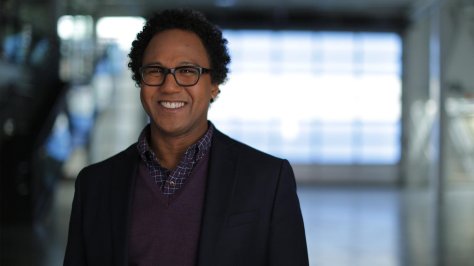
Haben1.jpg

30 years after her mother fled the Eritrean War, American-born Haben Girma graduated from Harvard Law School in 2013.

Then she was named a White House Champion of Change, an American working to advance technology, platforms, educational opportunities or spaces to empower other Americans.

Then she became a disability rights lawyer & helped win a major legal victory ensuring that people with disabilities had full access to e-commerce under the Americans with Disabilities Act.

And THEN she was chosen as one of 2016’s Forbes Under 30, that year’s brightest young entrepreneurs, breakout talents & change agents.

She’s accomplished incredible things in her 28 years.

Haben Girma is also deaf and blind.

In fact, she’s the first deaf-blind graduate of Harvard Law, where she found ways to innovate to succeed. But she knows that it’s the legal access & opportunity in America that made her success possible. Her older brother was also born deaf-blind, but in Eritrea, where schools told their mother he simply couldn’t be educated. Haben’s experiences with vastly different countries helped her recognize that her barriers weren’t in her disability, but in the physical, social & digital environments around her.

And that led to a key insight: there are over 1 billion people worldwide with a disability. Making the world accessible for them not only improves their quality of life in infinite ways, but also creates new disability-accommodating technologies that are ultimately beneficial to EVERYONE.

In 2016, Haben quit her law career to pursue advocacy full-time. When she’s not advocating, she’s a speaker & global consultant for companies like Google & Apple who recognizing the opportunities they have to improve the lives of disabled people and in turn, change the world.


KEEP GOING BLACK IN HISTORY:

Enjoy more of Haben in her 2014 TED Talk about why her work matters.

DAY 7 — Ruby Bridges

Norman Rockwell’s painting of Ruby Bridges being escorted to school and the real photograph.

You might recognize little Ruby Bridges from her depiction in this iconic Norman Rockwell painting, or you might even recognize her by name as the first black child to attend an all-white public school in the South.

Neither of these things tells her entire truth. Because truthfully, that day, Ruby didn’t desegregate anything.

When 6-year-old Ruby Bridges went to William J. Frantz Elementary School in New Orleans on November 14, 1960, she thought the rowdy crowd gathered nearby was there for Mardi Gras. In her innocence, she didn’t realize they were there because of her.

Ruby’s first day of school was spent in the principal’s office because no one else came to school that day. Ruby’s second day, a woman in the crowd threatened to poison her & federal marshals warned her to only eat food from home. By the end of the first week, Ruby’s school, which had an enrollment of almost 1,000 at the beginning of the year, had dwindled down to just three: Ruby and two white girls.

Ruby & her two schoolmates didn’t attend class or recess together, and only one teacher would even accept her as a student. Each of the girls were taught in a separate classroom, and although she could hear the others playing sometimes, Ruby wasn’t allowed to join them. It wasn’t until her second year that Ruby attended a single class with another child.

Although public schools were desegregated on paper in the 1954 Brown v. Board of Education Supreme Court case, many schools in the South technically remained segregated for much longer. In fact, the Texas Legislature fought integration until 1965 under threat of losing federal funds. My own school district in Beaumont, Texas didn’t fully integrate until court-ordered by the Justice Department in 1975, a task they were still trying to achieve through the 80s.

As for Ruby, she’s currently in the process of doing the work she was first sent to Frantz Elementary to do – she’s converting it into the Ruby Bridges School to “educate leaders for the 21st century who are committed to social justice, community service, equality, racial healing and nonviolence.”


KEEP GOING BLACK IN HISTORY:

Take 3 more minutes to actually hear & see the things Ruby experienced on her way to school through a PBS short featuring real footage from 1960, and a present-day interview with Ruby too.

In 2013, the school Ruby “desegregated” reopened as her very own Akili Aademy of New Orleans created to “prepare scholars to excel in rigorous high schools, to succeed in college, and to strengthen their community-oriented character.”

DAY 6 — Dr. Andre Fenton

andre.jpg

The human mind is still vastly uncharted, but if you want directions, ask Dr. Andre Fenton.

He’s one of two scientists credited with the discovery of PKM-zeta, the physical molecule linked to human memory. It might not sound like much, but in 2006, Science magazine identified it as one of the ten most important breakthroughs in any discipline of science that year.

When Dr. Fenton was researching, he asked three questions:

How do brains store information in memory?

How do they sort relevant and irrelevant information?

How can we record electrical activity from individual brain cells in human subjects?

PKM-zeta is one piece of that puzzle. Because they can identify it, they can also limit and increase it. Limiting the levels of PKM-zeta in the brain affects the long-term memories it can access. Increasing PKM-zeta results in higher and faster levels of long-term memory access.

So what?

So now we have a crucial piece of the puzzle in diseases that affect brain function & memory. Alzheimer’s can now be evaluated from a physical level instead of just an electrical one, and theoretically stopped or even reversed, because of his work. People suffering from traumatic brain injury now have hope of recovering long lost memories because of his work. These things are still far on the horizon, but they’re real possibilities now because of his work.

That was in 2006. Today, Dr. Fenton is back in the lab as a Professor of Neural Science at New York University. He’s applying his research to autism to determine how neurons and PKM-zeta might interact differently in people on the spectrum, hopefully allowing us to understand and engage with them better than ever before.

He writes, “It seems there is nothing better to do for myself, and possibly everyone else, than to think clearly and well. I work to understand the nuts and bolts of how thinking works.”


KEEP GOING BLACK IN HISTORY:

In 2013, Dr. Fenton spoke at the Smithsonian “The Future Is Here” Conference. Read his write up and watch his talk here.

PBS’s NOVA has a whole page dedicated to Dr. Fenton’s science videos and blog posts. Dive in here.

DAY 5 — Marsha P. Johnson

Marsha.jpg

(Ed. Note: Since this post was published, accounts of Marsha’s participation in the riot have shifted to reveal that she arrived after the violence had already begun. This revelation does not diminish Marsha’s contributions to the culture.)

In solidarity with #Stonewall this weekend, I want to introduce y’all to Miss Marsha “Pay It No Mind” Johnson.

Marsha was a transgender activist who founded Street Transgender Action Revolutionaries (STAR) to help prevent homelessness and violence against gay & trans people in New York, but is best known as the Queen Who Threw The Shot Glass Heard Around the World.

When the bar at the Stonewall Inn was raided on June 28, 1969, Marsha was the first of the patrons to defend other clubgoers against the police – some of whom were sexually assaulting patrons, all of whom were misusing a law about selling liquor in dance halls to publicly humiliate, harass and institutionalize LGBTQ people. When the police’s lineups began, Marsha interrupted by throwing a shot glass into a mirror and launching the Stonewall Riot. Even though her crew of street queens were some of the most outcast in the community, they stood up for everyone present at Stonewall that night.

Marsha wasn’t done though. She became an active and visible member of the Gay Liberation Front that allied & “welcome[d] any gay person, regardless of sex, race, age or social behavior” to enable the culture together to resist & rise together. What happened at Stonewall with just a moment of resistance from Marsha P. Johnson, gained momentum and became the spark for the modern-day fight for LGBTQIA rights as we know them today.

Marsha was also one of Andy Warhol’s muses – appearing many times in his 1975 series “Ladies and Gentlemen” both in paintings and in Polaroids, but in 1992, her body was suspiciously found in New York’s Hudson River, and no criminal investigation was conducted. Although Marsha’s life was snuffed out unceremoniously, it left incredible impact on the LGBTQIA community, many of whom still lovingly refer to her (much as her charges at STAR did) as the True Drag Mother.


KEEP GOING BLACK IN HISTORY:

While not totally historically accurate in its depiction, Drunk History featured a wildly hilarious take on the night Marsha launched the Shot Glass Heard Around the World.

DAY 4 — Drs. Vince & Vance Moss

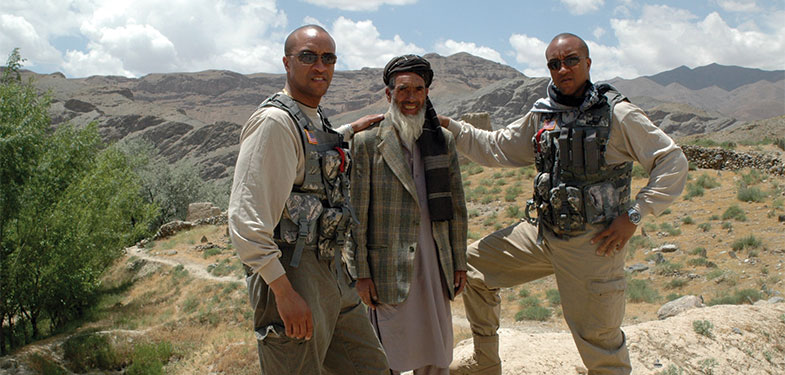
Moss.jpg

Vance & Vincent Moss are twins. And surgeons. And heroes.

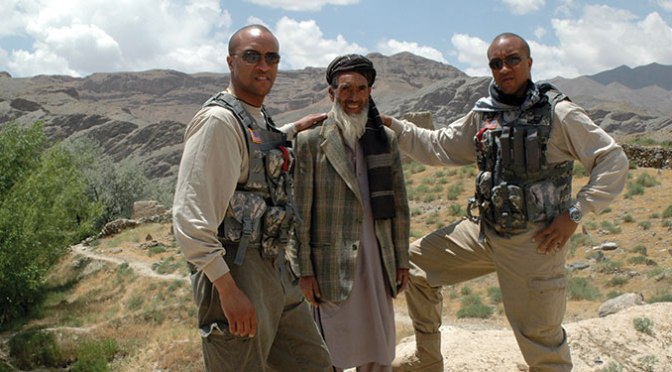
Back in 2006, when they were treating injured veterans at Ft. Bliss and Ft. Jackson as part of their duties in the U.S. Army Reserves Medical Corps, the vets told them stories of how the people who really needed help were the innocent Afghani civilians who’d been injured too, but had no sufficient medical services or facilities. The women & children were in especially dire need.

The brothers went to Army leadership to make a special request to provide their services in treating those civilians, but while the Army supported them, it couldn’t send them in an official capacity. So the brothers hired their own intelligence and security, bought their own medical supplies, chartered their own plane and went.

In between their duties in the Reserves and their joint practice at home as a urology specialist & kidney transplant surgeon (Vince) and a cardiothoracic surgeon (Vance), they’ve treated well over 6,000 Afghanis and performed surgery on 2,000 of them. Their service has been emotional and dangerous, putting them and their patients in dangerous situations – they’ve been robbed, they’ve negotiated with drug lords, and operated in caves, but they’re currently planning another trip to provide free care to anyone who needs them and anyone they can reach. Their rapport with the locals in the regions they serve has allowed them access to places that Army forces couldn’t go themselves.

In recognition of their service that’s included several active duty tours in Operation Enduring Freedom, the brothers have been promoted to Major and received the Army Commendation Medal for distinguishing themselves through heroism, meritorious achievement or meritorious service.


KEEP GOING BLACK IN HISTORY:

DAY 3 — Jackie Ormes

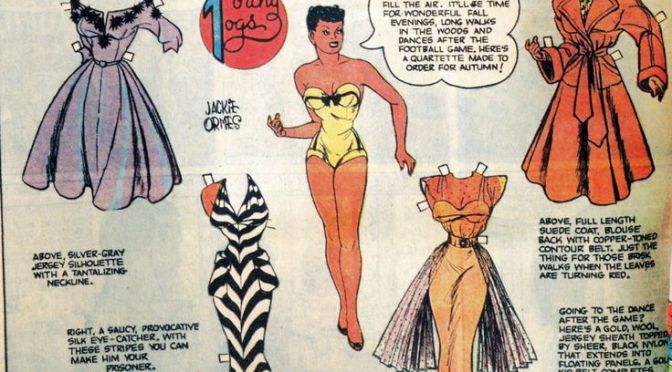
Jackie Ormes - Cartoonist

Zelda “Jackie” Ormes was the first black woman to become a professional cartoonist.

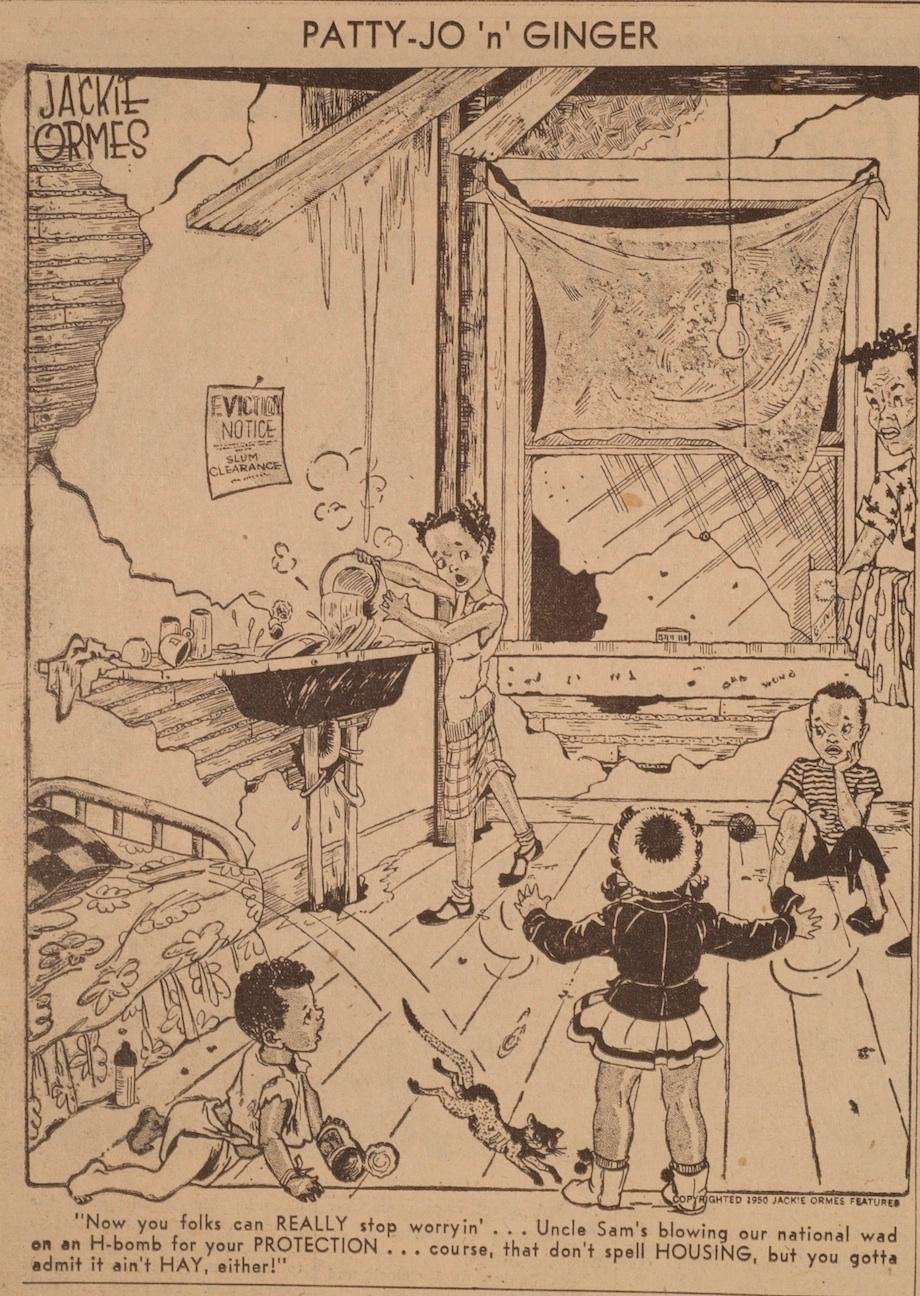
In 1937’s America, her cartoons boldly challenged stereotypes of women & black people. Her initial comic, “Torchy Brown,” was the first depiction of an independent, single black woman in a syndicated comic strip AND the first syndicated comic strip drawn by a black woman. Her next comic, “Patty-Jo ‘n Ginger” fearlessly tackled racism, sexism, class, the environment, politics and other intersectional issues with humorous truth.

Torchy was later developed into a fashionable comic paper doll, and in 1947, Ormes created a Patty-Jo doll so that black girls could play with dolls that actually looked like them, instead of choosing between racist pickaninny dolls or white-skinned dolls.

The audacity of a liberal, black, educated, middle-class woman carrying herself with confidence in a white American society & depicting her characters in her own image, landed her squarely into the McCarthy Investigations and the FBI’s COINTELPRO program, both of which were disavowed but not without having caused irreparable damage to black America (see the FBI & CIA assassination attempts against MLK, see also Black Panthers).

In 1956, she retired from cartooning to become an advocate and volunteer in Chicago. After her death in 1985, the Ormes Society was created to promote the inclusion of black women in comics and animation, as well as that of black female characters in sequential art and cartoons. Jackie Ormes’ comics forever impacted the way black women appeared in pop culture & the way black girls learned to see themselves, and in 2014 she was posthumously inducted into the National Association of Black Journalists (NABJ) Hall of Fame for her pioneering work.


KEEP GOING BLACK IN HISTORY:

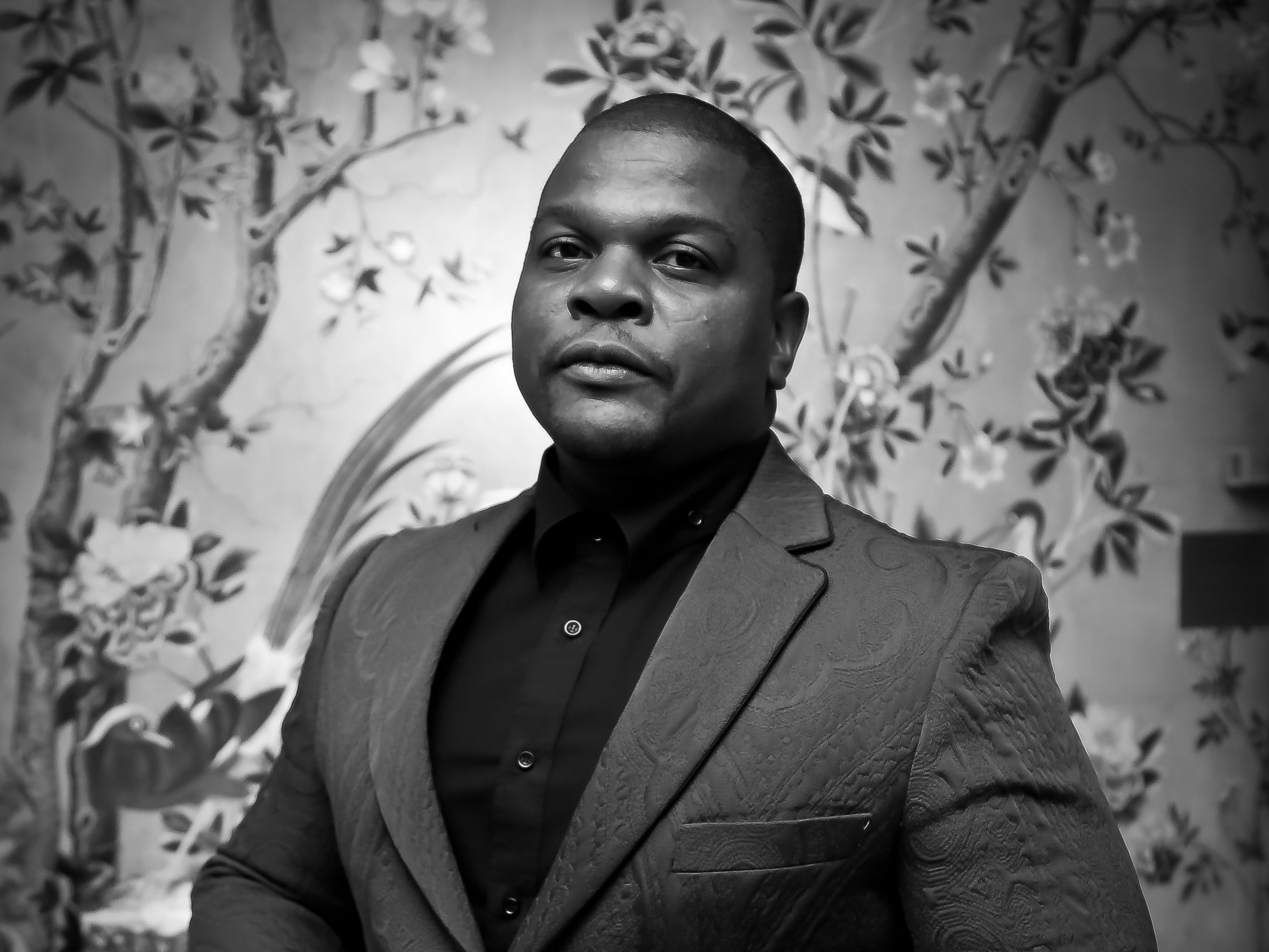
DAY 2 — Kehinde Wiley

Kehinde Wiley - Artist, painter, scupltor
Kehinde’s stained glass rendering of “Mary, Comforter of the Afflicted I” (2016).

Kehinde Wiley creates vibrant images of black & brown bodies in classical & religious scenes reminiscent of historical masterpieces. His work has been featured in exhibitions domestically and abroad, including his most recent at the Paris Museum of Fine Arts.

And in Lucious’ office in Fox’s Empire. 😂

“Bound” – 6 ft. bronze sculpture (2014)

He writes, “I loved when I walked into Los Angeles County Museum of Art as a kid and seeing Kerry James Marshall’s grand barbershop painting. But it was thrown into very sharp relief when thinking about the absence of other black images in that museum. There was something absolutely heroic and fascinating about being able to feel a certain relationship to the institution and the fact that these people happen to look like me on some level.”

He continues, “At its best, what art does is, it points to WHO we as human beings and WHAT we as human beings value. And if Black Lives Matter, they deserve to be in paintings.”

Kehinde’s “Princess Victoire of Saxe-Coburg-Gotha” (2012) vs. the painting of the same name by Edwin Landseer (1839)

KEEP GOING BLACK IN HISTORY:

Follow along with what’s keeping Kehinde busy these days on his Instagram.

DAY 1 — Diane Nash

Diane Nash.jpg

Diane Nash was a founding member of the Student Nonviolent Coordinating Committee (SNCC) and leader of the original “Rock Hill Nine” – nine students arrested for staging a sit-in at a lunch counter that refused service to black people. (She also led their continued civil disobedience in refusing to pay any fine or bail to an oppressive system.)

She said that she never saw Dr. King as her leader, but her equal, and was such a driving force in the Alabama Freedom Marches & Rides that when Assistant to the Attorney General John Seigenthaler called her personally to dissuade their participation, he described the conversation as such:

“I’m saying, ‘You’re going to get somebody killed.’ She said, ‘You don’t understand’ — and she’s right, I didn’t understand — ‘You don’t understand, we signed our wills last night.’ ”


KEEP GOING BLACK IN HISTORY:
Enjoy a brief Diane Nash bio, narrated by the illustrious Angela Bassett.