
Babies and cowboys have a reputation for being hard-headed.
So Ezekiel Mitchell’s mother was out of luck from the start when her baby quit football for the rodeo instead. Sorry, Waylon & Willie, you tried.
Most kids hop on YouTube to search for how to change a tire, or build a computer, or use chopsticks. Meanwhile, teenage Zeke used the platform to learn how to ride a bull. He even built his own mechanical practice bull right in the yard of his parents Texas home. His mother was NOT pleased.
His parents offered up roping and even bronc riding as alternatives, but Zeke was set on the rush of bull riding.
“It’s like driving a truck off a cliff and then trying to steer it down. I love taking that complete and utter chaos and being able to control it for once. For those eight seconds at a time.”
Those 8 seconds of chaos are a lot of pressure for anyone, but especially when you’re driving change as the only Black rider in the room.
In fact, Zeke Mitchell is the ONLY African-American rider at the elite level on the entire Professional Bull Riders circuit.
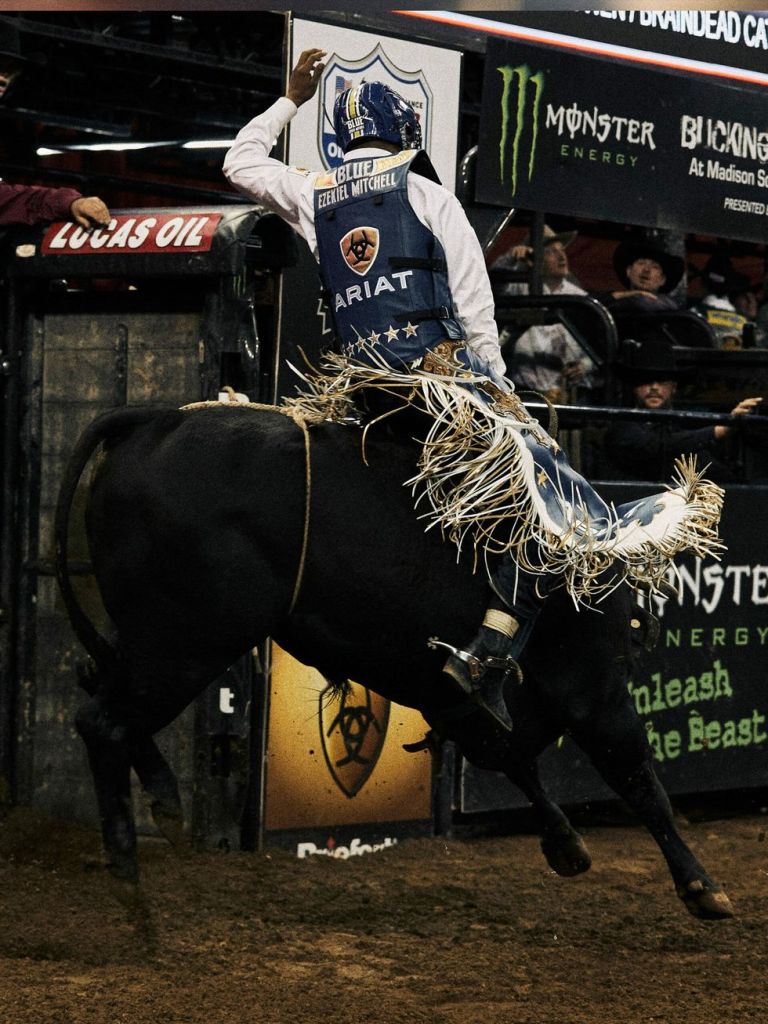
“The truth is there are people who hate me because I’m Black, but times change and they have to accept it. Y’all can hate all you want. I don’t care. I’m going to be me. I’m here to ride bull and that’s about it.”
Because regardless of the eyes on him, Zeke’s only got eyes for one thing: the PBR championship title. And he’s ranked as high as second in his race for it.

But when he set that goal, even he didn’t know he was shooting for something historic. 1982 was the first and only year in professional bull riding’s history that a World Championship winner was African-American. Charlie Sampson is a recipient of the PBR Ring of Honor, the highest award a rider can receive.
Though Zeke, Charlie and others like them are anomalies today, that wasn’t always the case: at one point, at least 25% of cowboys were Black.
As it was furthest from Union troops, Texas was slavery’s final stronghold, and nearly 90,000 Texans enlisted in the Confederate Army. In their absence, those they were fighting to keep enslaved tended to the state’s ranches, farms and other agricultural businesses. Though their war was lost, Texans still in need of skilled labor were willing to pay for it rather than see their family ranches fall into disrepair. But take a look at any piece of cowboy lore, cinema, or ephemera, and aside from Bass Reeves, Nat Love, and Bill Pickett, you’ll find a distinct lack of color.

“Cowboy” Mike Searles, a professor emeritus at Augusta State University puts it well. “If something is not in the popular imagination, it does not exist,” he says. In recent years, movies and documentaries like Posse, Django Unchained, Concrete Cowboy, and the Harder They Fall have begun to tell those stories. But why weren’t those stories included in the great American narrative sooner? “The West was where white men were able to show their courage. But if a black man could be heroic and have all the attributes that you give to the best qualities in men, then how was it possible to treat a black man as subservient or as a non-person?”

On a very small level, Denard Butler, another Black rodeo competitor, can relate to the treatment those early cowboys must have received. “When you’re black and competing in places like San Juan Capistrano, California; Price, Utah; and Prescott, Arizona… you will hear the N-word. A lot. I use it for power. I feed off it. I tell myself, ‘You’re going to read about me. You’re going to get sick of seeing me.’ I want it more than most, and so I use it as fuel.”

Zeke embraces his differences too. “I don’t fit the mold, but you don’t have to fit the mold,” he says. In fact, he’s intent on breaking it. Zeke Mitchell wears flashy riding gear, cares about growing his social following (he even has a 10-part Snapchat series), and hopes not only that he’ll win a title, but that he’ll become a star doing it, simply for the sake of bringing more people like him into the sport.
That infectious spirit and star power even brought his most reluctant supporter back into the fold: his mother Janie. “Every time I talk to Zeke, I tell him, ‘I’m proud of you, and you didn’t let anyone stop you, not even your mama.’
KEEP GOING BLACK IN HISTORY:

Watch Zeke’s 10-episode long exclusive Snapchat series, “Life By the Horns”
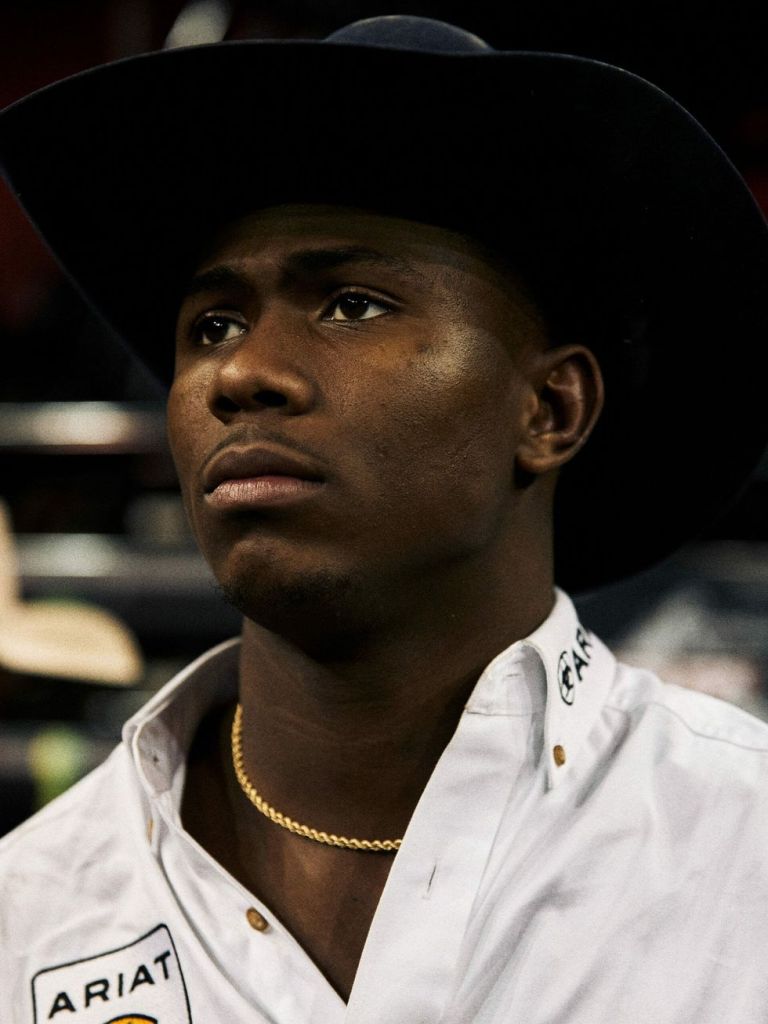
Zeke’s got such a high profile in riding that even GQ Magazine’s done a great feature on him.

If you’re interested in more modern day representations of Black cowboys, I recommend following eightsecs on Instagram.
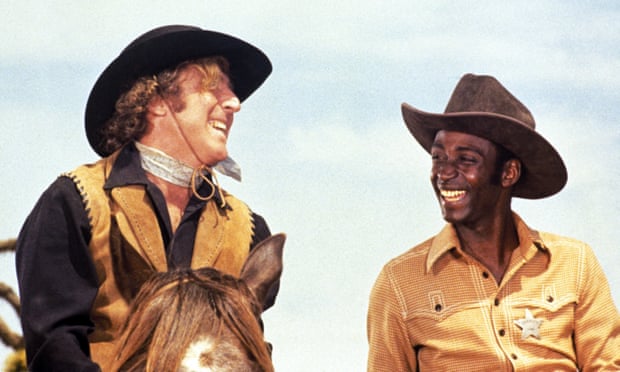
The Guardian also creates a detailed timeline of Black cowboys’ cinematic representations.
 THE AMERICAN BLACKSTORY