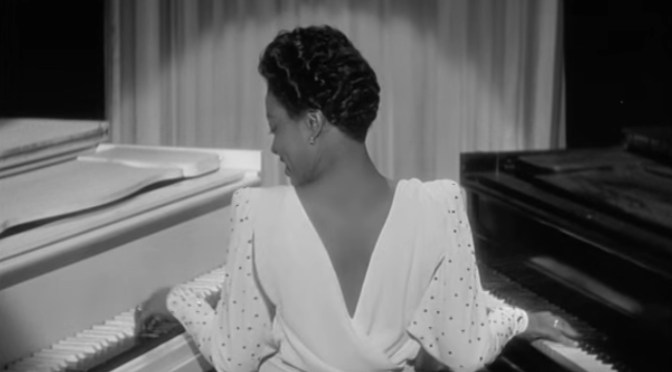

She could transform Beethoven and Debussy into swing music, single-handedly derail a movie production for days, and charm millions of TV viewers in her own nationally syndicated program.
But all of her talent, charisma, and determination couldn’t free Hazel Scott from the wrath of the 1950 House Un-American Activities Committee accusing her as an enemy of democracy.
She was a renaissance woman who wore many hats, but communist subversive was never one of them.
She’d once quite plainly reminded her husband, civil rights leader Adam Clayton Powell Jr., that “it ha[d] never been [her] practice to choose the popular course.” And it was that flair for being exceptional that had led to both her fame and her political predicament.
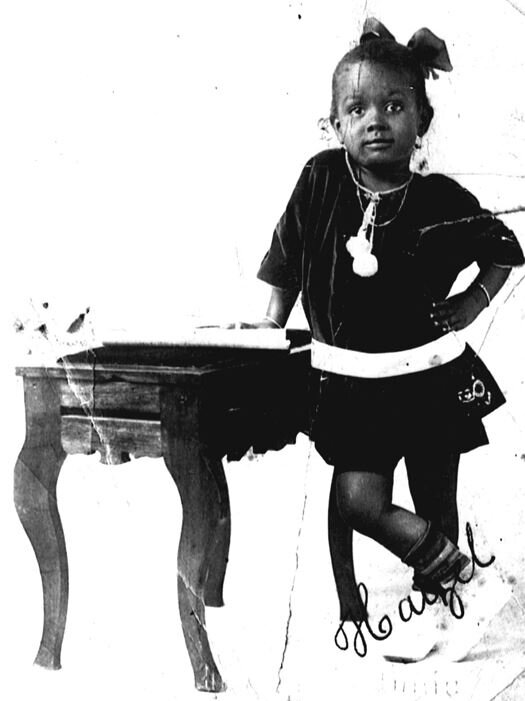
She’d displayed such a budding talent for classical piano that in 1928, 8-year-old Hazel didn’t just audition for The Juilliard School; she stopped the school’s founder in his tracks and left the auditioner awestruck, saying “I am in the presence of a genius.”
Like her piano playing, Hazel’s personality was magnetic, a combination that made her nearly unstoppable. Her teenage years were a musical whirlwind, seeing her perform in historically monumental venues like the 1939 New York World’s Fair, at Roseland Ballroom with Count Basie, and eventually, Cafe Society, New York’s first integrated nightclub, where at 19 years old, she succeeded Billie Holiday as the headliner and was favored by First Lady Eleanor Roosevelt.
With that kind of attention, Hollywood soon came calling, and Hazel acted and performed as herself, right up until she was personally blacklisted by the president of Columbia Pictures. On the set of “The Heat’s On” starring Mae West, a scene where other black actresses wore dirty aprons so angered her that Hazel refused to return to the set, delaying filming for days. (It worked; those women are seen in lovely floral dresses in the final production.)
You see, Hazel wasn’t just an incredible musician; she was a staunch civil rights advocate. Her talent afforded her exceptions that few others might have received and she took advantage of it. She’d refused to perform in any segregated venue, was escorted (but not arrested!) from an Austin restaurant by the Texas Rangers when she made a scene after discovering it was segregated, and included riders in her acting contracts ensuring that she never played a derogatory role and had full creative control over her wardrobe and characters.
In spite of, or perhaps because of, her admitted boldness for a black female performer of the time, by the time she was 25, Hazel Scott was a jazz legend, earning the equivalent of over $1 million dollars a year between her tours, standing performances, and acting jobs.
Her universal popularity among black and white audiences made her such a sensation that she signed on as the first black person to solo host a nationally syndicated television program, “The Hazel Scott Show.” It was the summer of 1950 and Hazel was in the prime of her life.

By September 22 of that same year, Hazel would trade her piano bench for a congressional witness stand. Accused of supporting communists by performing at their events, endorsing politicians who’d also been endorsed by communists, and suspected of being a communist herself due to her dedication to equal rights, Hazel implored the committee to “protect those Americans who have honestly, wholesomely, and unselfishly tried to perfect this country and make the guaranties in our Constitution live.” But in the paranoia of the World War II Red Scare, the damage had been done.
Sponsors and advertisers fled, the network cancelled her show despite its tremendous success, and while Hazel continued to perform globally and fight for civil rights, her career never recovered. But most of all, her dream of using her talent and the privileges it afforded as a weapon to dismantle black stereotypes, was utterly dashed just as it had truly come to fruition.

Her light was dimmed for shining too brightly, but as her biographer wrote, “with Hazel Scott, there would be no obsequious smiles, no hunched shoulders, downcast eyes, or shuffling of any kind.” Having lived to see enormous strides in racial equality, particularly in the performing arts, Hazel Scott passed away in 1981 with an unflinching pride in her work and herself, a shining example of modern black female empowerment who once proclaimed, “Who ever walked behind anyone to freedom? If we can’t go hand in hand, I don’t want to go.”
KEEP GOING BLACK IN HISTORY:


Read a vivid 1942 TIME magazine review of one of Hazel’s Cafe Society performances here.

Listen to Hazel, who immigrated to New York from Trinidad as a 4-year-old, tell Philadelphia radio station WFIL “What America Means to Me”.
 THE AMERICAN BLACKSTORY