

“Contestants must be of good health and of the white race.”
Rule 7 of the Miss America Pageant Handbook had been on paper since 1930, and finally overturned in 1950, but here it was 1970 and still not a single black contestant.
Even that hadn’t been without a fight though. Two years beforehand, the NAACP had challenged the lack of diversity in the pageant, and the Miss America organization had responded less enthusiastically than they’d hoped. So black entrepreneurs created their own Miss Black America Pageant in 1968 and held it in Atlantic City on the very same day as their counterpart to point out the hypocrisy in a “Miss America” without women of color, and to challenge European beauty standards that automatically disqualified black women’s dark skin, full lips, round noses, kinky hair and thick curves.

At the same time, feminists from all races were protesting the existence of the Miss America Pageant altogether, with white women likening it to a meat market and women of color calling it “racism with roses,” in reference to their official and unofficial exclusion for so many years.
Amidst all this ongoing unrest, a black ballet dancer from New York won the title of Miss Iowa 1970, allowing her to compete as the Miss America Pageant’s first black contestant in their then 50-year history.
Cheryl Adrienne Browne was only in Iowa to attend Luther College at her pastor’s recommendation. She had participated in the pageant to win scholarship money to support her while she was away from her family, and was just as surprised as anyone else when she actually won both the swimsuit and talent competitions, and then the whole thing.
But that success didn’t come without its share of obstacles, too. When she wasn’t fighting the criticism that a black woman wasn’t worthy of a pageant win, she had to answer to those who didn’t want a non-native Iowan representing them, and those who fell into both camps. Between this and the other protests, there was so much controversy surrounding Cheryl’s win that even other Miss America contestants couldn’t help but notice the increased security presence in and around their rehearsals, travel routes and hotels.

On September 12, 1970, Cheryl didn’t win the Miss America 1971 crown. She didn’t even place in the Top 10. But she did go on to represent the pageant on USO tours in one of the last groups to visit Vietnam, and served as a judge to bring equality to subsequent competitions. Today, she’s very humble about her place in history, saying “I don’t feel I personally changed the pageant, but I feel that my presence expanded people’s minds and their acceptance. And, in subsequent years, they were much more open to African-American candidates.”
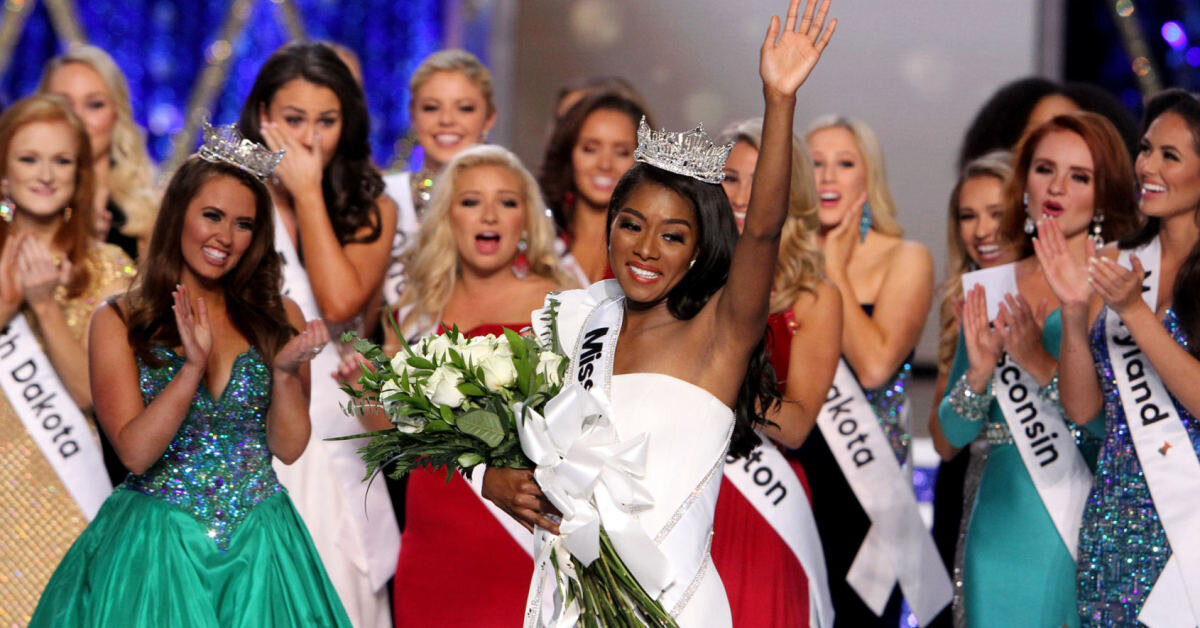
And indeed they were. 13 years later, Vanessa Williams was crowned the first black Miss America in 1983, and there have been 8 more since, including this year’s Nia Franklin, all living proof that beauty, talent and brains know no racial boundaries.
KEEP GOING BLACK IN HISTORY:
 THE AMERICAN BLACKSTORY