

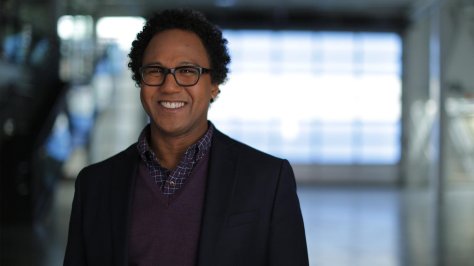
The human mind is still vastly uncharted, but if you want directions, ask Dr. Andre Fenton.
He’s one of two scientists credited with the discovery of PKM-zeta, the physical molecule linked to human memory. It might not sound like much, but in 2006, Science magazine identified it as one of the ten most important breakthroughs in any discipline of science that year.
When Dr. Fenton was researching, he asked three questions:
How do brains store information in memory?
How do they sort relevant and irrelevant information?
How can we record electrical activity from individual brain cells in human subjects?
PKM-zeta is one piece of that puzzle. Because they can identify it, they can also limit and increase it. Limiting the levels of PKM-zeta in the brain affects the long-term memories it can access. Increasing PKM-zeta results in higher and faster levels of long-term memory access.
So what?
So now we have a crucial piece of the puzzle in diseases that affect brain function & memory. Alzheimer’s can now be evaluated from a physical level instead of just an electrical one, and theoretically stopped or even reversed, because of his work. People suffering from traumatic brain injury now have hope of recovering long lost memories because of his work. These things are still far on the horizon, but they’re real possibilities now because of his work.
That was in 2006. Today, Dr. Fenton is back in the lab as a Professor of Neural Science at New York University. He’s applying his research to autism to determine how neurons and PKM-zeta might interact differently in people on the spectrum, hopefully allowing us to understand and engage with them better than ever before.
He writes, “It seems there is nothing better to do for myself, and possibly everyone else, than to think clearly and well. I work to understand the nuts and bolts of how thinking works.”
KEEP GOING BLACK IN HISTORY:

In 2013, Dr. Fenton spoke at the Smithsonian “The Future Is Here” Conference. Read his write up and watch his talk here.
PBS’s NOVA has a whole page dedicated to Dr. Fenton’s science videos and blog posts. Dive in here.
 THE AMERICAN BLACKSTORY